
Kindergarten Science Body Parts Worksheet for Kids -Free Downloadable PDF
Help your child learn body parts with our free downloadable PDF worksheet! Perfect for Pre-K, Kindergarten, homeschool parents, and teachers—fun, engaging, and easy to use. Download now! It is completely aligned with U.S Curriculum.
Each page is designed to be simple, engaging, and developmentally appropriate for young learners.
Click below to access the Free Kindergarten Science Body Parts Worksheet for Kids
Kindergarten Science Body Parts Worksheet for Kids
Learning about the human body is an exciting and important part of early childhood education. The Kindergarten Science Body Parts Worksheet for Kids is designed to help young learners explore basic body parts through simple, engaging, and age-appropriate activities. This printable resource is ideal for U.S. parents, kindergarten teachers, and homeschool families who want to introduce science concepts in a fun and approachable way.
At the kindergarten level, children are naturally curious about how their bodies work and how different parts help them move, see, hear, and interact with the world. Body parts worksheets support early science learning while also strengthening vocabulary, observation skills, and confidence. With clear visuals and guided practice, students can recognize, name, and understand common body parts in a structured and supportive format that encourages active participation and discussion.
What Students Will Learn?
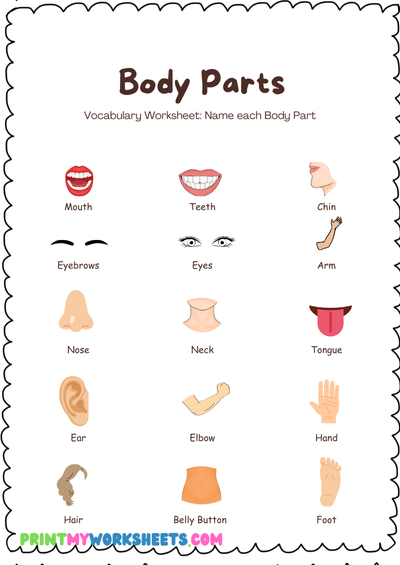
These worksheets focus on building foundational science knowledge by introducing children to common external body parts such as the head, eyes, ears, hands, legs, and feet. Students learn to identify and name body parts using simple words that align with kindergarten reading and comprehension levels.
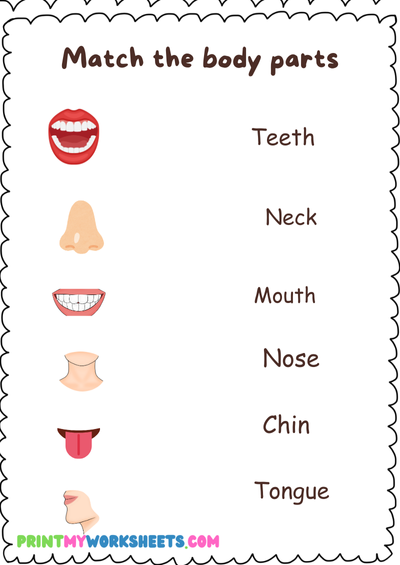
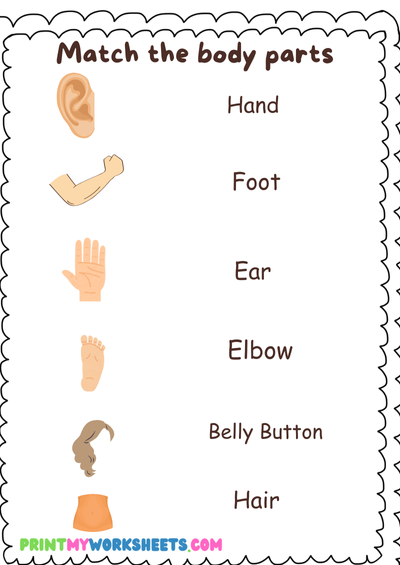
Activities may include labeling pictures, matching body parts to their names, coloring, tracing, and drawing. These tasks help reinforce recognition while improving fine motor skills and visual awareness. Some pages encourage students to connect body parts with their functions, such as using eyes to see or hands to hold objects.
The worksheets support structured learning by presenting one concept at a time, allowing children to focus without feeling overwhelmed. Instructions are clear and easy to follow, making them suitable for independent practice or guided instruction. The content fits kindergarten expectations by combining science exploration with early literacy and hands-on learning.
Educational Value & Skill Development
The Free Kindergarten Science Body Parts Worksheet for Kids provides strong educational value by combining science instruction with early learning skill development. Academically, students build science vocabulary and develop an understanding of themselves and their physical features. This early exposure lays the groundwork for future lessons on health, biology, and personal care.
Cognitively, learning about body parts helps children develop observation skills and memory. Matching and labeling activities encourage attention to detail and logical thinking. These tasks also support language development as students learn to use correct terms when speaking or answering questions.
Confidence and independence grow as students successfully complete worksheets on their own. The predictable format allows children to feel comfortable with the tasks, which encourages repeated practice. Over time, these activities help students feel more confident discussing science topics and participating in classroom conversations, supporting long-term academic growth.
Why Focus on Science Body Parts?
Understanding body parts is an essential early science skill because it helps children become aware of their own bodies and how they function. In kindergarten, students are developing self-awareness and learning how to describe the world around them. Body parts lessons support this growth by connecting science concepts to everyday experiences.
Learning about the human body also supports health and safety awareness. Children who can identify body parts are better prepared to communicate needs, follow instructions, and participate in physical activities. Repetition and guided practice help reinforce understanding and build lasting knowledge.
These worksheets align with U.S. kindergarten science and health standards by encouraging observation, vocabulary development, and simple explanations. Focusing on body parts at this stage supports both academic learning and personal development.
How to Use These Worksheets?
These worksheets are flexible and easy to use in a variety of learning settings. In classrooms, teachers can include them in science centers, morning work, or thematic units about the human body. Worksheets can be completed individually or discussed as a group to encourage sharing and participation.
Homeschool families can use the worksheets as part of daily science lessons or combine them with hands-on activities such as singing songs, reading books, or pointing to body parts during movement games. The free printable PDF format makes it easy to print multiple copies.
The Free Kindergarten Science Body Parts Worksheet for Kids is also useful for small-group instruction, early finishers, or extra practice at home. Its simple layout supports independent learning while allowing adults to guide discussion when needed.
Related Worksheets / Extensions:
Students who enjoy learning about the human body may also benefit from worksheets on the five senses, healthy habits, or basic life science topics. Pairing body parts worksheets with songs, movement activities, or storybooks can help reinforce understanding.
The Free Kindergarten Science Body Parts Worksheet for Kids works well as part of a larger kindergarten science unit. Related worksheets and extensions encourage curiosity, hands-on exploration, and continued skill development across science and early learning subjects.
You may also like :
Frequently Asked Questions
Q1. Is this worksheet free to download?
Yes, this worksheet is 100% free to download and print. No account, subscription, or payment is required. Click the Download Now button to get your free PDF instantly.
Q2. What format is this worksheet available in?
This worksheet is available as a printable PDF file. It is black-and-white, printer-friendly, and works on any standard home or classroom printer using A4 or US Letter paper.
Q3. Can I use this worksheet for both classroom and home learning?
Yes, these worksheets are designed for use by classroom teachers, homeschool parents, and tutors. They can be used as morning work, homework, revision practice, or learning centre activities.
Q4. Is this science worksheet suitable for classroom experiments?
This worksheet is designed as a written activity to reinforce science concepts taught in class. It works well as a follow-up to experiments or demonstrations.
Q5. Is this aligned with Next Generation Science Standards (NGSS)?
This worksheet supports key science concepts covered in U.S. elementary and middle school science curricula, including NGSS-aligned topics.