
Alphabet Animal Coloring Worksheets for Kindergarten | Free Downloadable PDF
Alphabet Animal Coloring Worksheets for Kindergarten
It is created for kindergarten students, homeschool parents, and teachers in the US. This engaging worksheet combines alphabet recognition, animal exploration, and early math skills through creative, hands-on activities.
Coloring activities also strengthen hand–eye coordination, pencil control, and fine motor muscles, preparing kids for handwriting success. The fun animal designs keep children motivated and focused while reinforcing letter formation and vocabulary skills. Parents and teachers love how easily these worksheets fit into daily literacy centers, morning work, or quiet time activities.
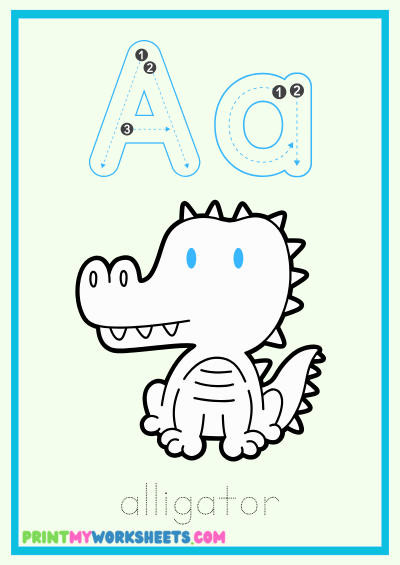
Each worksheet features a letter of the alphabet paired with an adorable animal (A for Alligator, B for Bear, C for Cat, and more), helping children connect letter recognition with familiar animal names and beginning sounds. This connection supports phonemic awareness, a key step in early reading development.
Affordable, easy to print, and enjoyable for all skill levels, this Animal Alphabet Coloring Book for Kindergarten gives parents a powerful resource that blends literacy, creativity, and motor development. It’s a must-have for preparing young learners for preschool and kindergarten success.
Alphabet Animal Coloring Worksheets for Kindergarten
These are free to download and print, they’re a convenient resource for busy parents, preschool teachers, and homeschoolers. You can use them to create an engaging alphabet book, decorate classroom walls, or send them home for extra practice.
Why an Animal Alphabet Coloring Book for Kindergarten is helpful for kids :
Builds Strong Letter Recognition: Each page pairs a letter with a fun animal, helping children remember alphabet shapes and sounds more easily.
Boosts Phonemic Awareness: Kids connect letters with beginning sounds (A for Alligator, B for Bear), supporting early reading and vocabulary growth.
Strengthens Fine Motor Skills: Coloring within lines improves pencil grip, hand–eye coordination, and muscle control needed for handwriting.
Encourages Creativity & Focus: Cute animal illustrations keep kids engaged, making learning enjoyable and improving attention span through meaningful activity.This Animal Alphabet Coloring Book is perfect for early learners, making it an excellent choice for preschool, kindergarten, or homeschooling. It helps build confidence, independence, and essential readiness skills for reading and writing. Parents can easily fit it into daily routines—whether during morning warm-ups, bedtime wind-downs, or weekend learning sessions. Its versatility also makes it ideal for mixed age groups, supporting preschoolers, kindergarteners, and even early first graders who need extra alphabet practice. Best of all, it promotes meaningful, screen-free learning by offering a hands-on, creative activity that keeps children engaged and focused while strengthening foundational literacy skills.
This free downloadable PDF is perfect for homeschool lessons, classroom centers, or at-home learning fun.
You may also like :
[gallery ids="6266,5913,5243"]Frequently Asked Questions
Q1. Is this worksheet free to download?Yes, this worksheet is 100% free to download and print. No account, subscription, or payment is required. Click the Download Now button to get your free PDF instantly.Q2. What format is this worksheet available in?This worksheet is available as a printable PDF file. It is black-and-white, printer-friendly, and works on any standard home or classroom printer using A4 or US Letter paper.Q3. Can I use this worksheet for both classroom and home learning?Yes, these worksheets are designed for use by classroom teachers, homeschool parents, and tutors. They can be used as morning work, homework, revision practice, or learning centre activities.Q4. What skills does coloring develop in young children?Coloring activities develop fine motor skills, pencil grip, hand-eye coordination, colour recognition, and focus — all essential skills for early childhood development.Q5. Is this coloring worksheet themed around learning content?Yes, our coloring worksheets are designed to combine creative activity with educational content such as alphabet recognition, numbers, animals, and seasonal themes.Alphabet Animal Coloring Worksheets for Kindergarten | Free Downloadable PDF
Alphabet Animal Coloring Worksheets for Kindergarten
It is created for kindergarten students, homeschool parents, and teachers in the US. This engaging worksheet combines alphabet recognition, animal exploration, and early math skills through creative, hands-on activities.
Coloring activities also strengthen hand–eye coordination, pencil control, and fine motor muscles, preparing kids for handwriting success. The fun animal designs keep children motivated and focused while reinforcing letter formation and vocabulary skills. Parents and teachers love how easily these worksheets fit into daily literacy centers, morning work, or quiet time activities.
Each worksheet features a letter of the alphabet paired with an adorable animal (A for Alligator, B for Bear, C for Cat, and more), helping children connect letter recognition with familiar animal names and beginning sounds. This connection supports phonemic awareness, a key step in early reading development.
Affordable, easy to print, and enjoyable for all skill levels, this Animal Alphabet Coloring Book for Kindergarten gives parents a powerful resource that blends literacy, creativity, and motor development. It’s a must-have for preparing young learners for preschool and kindergarten success.
Alphabet Animal Coloring Worksheets for Kindergarten
These are free to download and print, they’re a convenient resource for busy parents, preschool teachers, and homeschoolers. You can use them to create an engaging alphabet book, decorate classroom walls, or send them home for extra practice.
Why an Animal Alphabet Coloring Book for Kindergarten is helpful for kids :
Builds Strong Letter Recognition: Each page pairs a letter with a fun animal, helping children remember alphabet shapes and sounds more easily.
Boosts Phonemic Awareness: Kids connect letters with beginning sounds (A for Alligator, B for Bear), supporting early reading and vocabulary growth.
Strengthens Fine Motor Skills: Coloring within lines improves pencil grip, hand–eye coordination, and muscle control needed for handwriting.
Encourages Creativity & Focus: Cute animal illustrations keep kids engaged, making learning enjoyable and improving attention span through meaningful activity.This Animal Alphabet Coloring Book is perfect for early learners, making it an excellent choice for preschool, kindergarten, or homeschooling. It helps build confidence, independence, and essential readiness skills for reading and writing. Parents can easily fit it into daily routines—whether during morning warm-ups, bedtime wind-downs, or weekend learning sessions. Its versatility also makes it ideal for mixed age groups, supporting preschoolers, kindergarteners, and even early first graders who need extra alphabet practice. Best of all, it promotes meaningful, screen-free learning by offering a hands-on, creative activity that keeps children engaged and focused while strengthening foundational literacy skills.
This free downloadable PDF is perfect for homeschool lessons, classroom centers, or at-home learning fun.
You may also like :
[gallery ids="6266,5913,5243"]Frequently Asked Questions
Q1. Is this worksheet free to download?Yes, this worksheet is 100% free to download and print. No account, subscription, or payment is required. Click the Download Now button to get your free PDF instantly.Q2. What format is this worksheet available in?This worksheet is available as a printable PDF file. It is black-and-white, printer-friendly, and works on any standard home or classroom printer using A4 or US Letter paper.Q3. Can I use this worksheet for both classroom and home learning?Yes, these worksheets are designed for use by classroom teachers, homeschool parents, and tutors. They can be used as morning work, homework, revision practice, or learning centre activities.Q4. What skills does coloring develop in young children?Coloring activities develop fine motor skills, pencil grip, hand-eye coordination, colour recognition, and focus — all essential skills for early childhood development.Q5. Is this coloring worksheet themed around learning content?Yes, our coloring worksheets are designed to combine creative activity with educational content such as alphabet recognition, numbers, animals, and seasonal themes.
CVC Sentences Worksheets PDF — 100 Free Printable for Kindergarten
Kindergarten CVC Reading Sentences Worksheets PDF
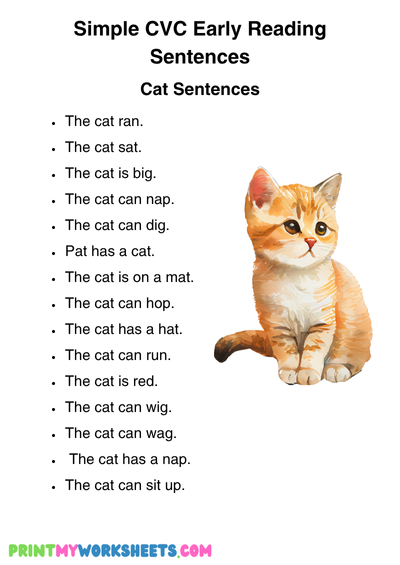
Learning to read is one of the most important milestones in kindergarten, and early success depends on strong phonics instruction. These CVC reading sentences worksheets are created to help young learners move from sounding out individual words to reading simple, meaningful sentences with confidence. Designed for U.S. parents, classroom teachers, and homeschool families, this free printable resource supports daily phonics practice in a clear and approachable way. The Kindergarten CVC Reading Sentences Worksheets PDF focuses on consonant-vowel-consonant word patterns that are commonly taught in kindergarten classrooms. At this stage, children are developing the ability to blend sounds smoothly and recognize short vowel words automatically. Practicing CVC words within sentences helps students understand how phonics skills apply to real reading. These worksheets provide structured, age-appropriate reading practice that supports early literacy development and prepares children for more complex reading tasks ahead.
What Students Will Learn ?
These worksheets are designed with clear learning goals that align with kindergarten reading expectations. Students will practice reading simple sentences that include common CVC words, early sight words, and predictable sentence patterns. Each activity encourages children to blend sounds, recognize word families, and build fluency through repetition. By working with short sentences rather than isolated words, students begin to understand how words work together to convey meaning. The worksheets support left-to-right tracking, proper spacing between words, and basic sentence structure, all of which are essential reading skills at this level. Activities are intentionally structured to allow for independent practice, making them suitable for children who are still developing confidence as readers. With regular use, students strengthen decoding skills, improve word recognition, and develop early comprehension. These outcomes support reading readiness and help kindergarten learners build a solid foundation for future literacy instruction.If your child is learning CVC sentences, you may also want to practice with these related CVC worksheets:
[caption id="attachment_7193" align="alignnone" width="212"]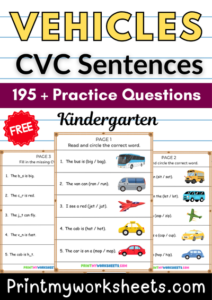 Kindergarten Vehicles CVC Sentences Worksheets PDF[/caption][caption id="attachment_6966" align="alignnone" width="212"]
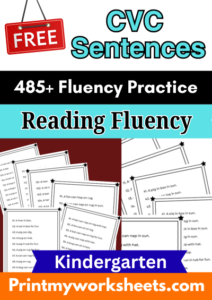 Kindergarten CVC Reading Fluency Sentences Worksheets[/caption]
Educational Value & Skill Development
Strong phonics instruction plays a key role in early academic success, and these worksheets are designed to support that growth in meaningful ways. Reading CVC sentences helps children develop phonemic awareness by reinforcing the connection between sounds and letters. As students repeatedly decode short vowel words in sentence form, they begin to read more smoothly and accurately, supporting early fluency development. The Kindergarten CVC Reading Sentences Worksheets PDF also encourage cognitive skills such as attention, memory, and problem-solving as children work through each sentence. Reading simple text builds confidence and motivates young learners to engage more actively with reading tasks. In addition to literacy skills, these worksheets support fine motor development when students track words, point to text, or complete written responses. By combining phonics practice with sentence-level reading, this resource supports a natural progression from sound recognition to meaningful reading, helping children become more confident and independent learners.Why Focus on CVC Reading Sentences?
CVC reading sentences are a critical step in early literacy instruction because they bridge the gap between word decoding and actual reading. In kindergarten, students are expected to apply phonics skills in real reading situations, not just recognize individual sounds. CVC words are often the first words children can successfully decode, making them ideal for early sentence reading. Practicing these words in sentence form helps students understand context, build comprehension, and recognize patterns in language. This approach aligns with early learning standards commonly used across U.S. schools, which emphasize phonics, decoding, and basic comprehension. Repetition is especially important for young learners, as repeated exposure to similar sentence structures strengthens memory and automaticity. Regular practice with CVC sentences supports smoother reading and prepares students for longer texts in first grade. Focusing on this skill helps ensure children develop a strong and confident start in reading.How to Use These Worksheets ?
These CVC reading sentence worksheets are flexible and easy to use in a variety of learning settings. In homeschool environments, they can be used as part of a daily phonics routine or reading lesson. Classroom teachers may incorporate them into morning work, literacy centers, small group instruction, or independent practice time. The worksheets are also helpful for extra practice or review, allowing students to reinforce skills they have already learned. Because the Kindergarten CVC Reading Sentences Worksheets PDF is provided as a free printable PDF, it is simple to download, print, and reuse throughout the school year. Parents can use the worksheets for short reading sessions at home, while teachers can print multiple copies for classroom use. The straightforward design makes them easy to implement without extensive preparation or additional materials.Explore more Kindergarten worksheets :
[gallery ids="5088,5083,6603"]Related Worksheets / Extensions :
You may also like exploring additional phonics and early reading resources that support skill progression. Related worksheets may include CVC word reading activities, short vowel word families, phonics sentence comprehension pages, or early sight word practice. These extensions help reinforce the same foundational skills while adding variety to reading instruction. Families and teachers looking to build a complete phonics practice routine can pair this resource with other early literacy worksheets for consistent reinforcement. The Kindergarten CVC Reading Sentences Worksheets PDF also works well alongside printable activities for phonemic awareness, word blending, and early writing. Using related worksheets together supports steady skill development and helps young learners gain confidence as they continue building their reading abilities.Frequently Asked Questions
Q1. Is this worksheet free to download?Yes, this worksheet is available as a free printable PDF for personal and classroom use.Q2. Does this worksheet include an answer key?Yes, an answer key is included to help teachers and parents quickly check student work.Q3. What grade level is this worksheet for?This worksheet is designed for Kindergarten students and aligns with grade-level english standards.Q4. Can I use this worksheet for homeschooling?Absolutely! It is perfect for homeschooling, classroom practice, homework, and test prep.CVC Sentences Worksheets PDF — 100 Free Printable for Kindergarten
Kindergarten CVC Reading Sentences Worksheets PDF
Learning to read is one of the most important milestones in kindergarten, and early success depends on strong phonics instruction. These CVC reading sentences worksheets are created to help young learners move from sounding out individual words to reading simple, meaningful sentences with confidence. Designed for U.S. parents, classroom teachers, and homeschool families, this free printable resource supports daily phonics practice in a clear and approachable way. The Kindergarten CVC Reading Sentences Worksheets PDF focuses on consonant-vowel-consonant word patterns that are commonly taught in kindergarten classrooms. At this stage, children are developing the ability to blend sounds smoothly and recognize short vowel words automatically. Practicing CVC words within sentences helps students understand how phonics skills apply to real reading. These worksheets provide structured, age-appropriate reading practice that supports early literacy development and prepares children for more complex reading tasks ahead.
What Students Will Learn ?
These worksheets are designed with clear learning goals that align with kindergarten reading expectations. Students will practice reading simple sentences that include common CVC words, early sight words, and predictable sentence patterns. Each activity encourages children to blend sounds, recognize word families, and build fluency through repetition. By working with short sentences rather than isolated words, students begin to understand how words work together to convey meaning. The worksheets support left-to-right tracking, proper spacing between words, and basic sentence structure, all of which are essential reading skills at this level. Activities are intentionally structured to allow for independent practice, making them suitable for children who are still developing confidence as readers. With regular use, students strengthen decoding skills, improve word recognition, and develop early comprehension. These outcomes support reading readiness and help kindergarten learners build a solid foundation for future literacy instruction.If your child is learning CVC sentences, you may also want to practice with these related CVC worksheets:
[caption id="attachment_7193" align="alignnone" width="212"] Kindergarten Vehicles CVC Sentences Worksheets PDF[/caption][caption id="attachment_6966" align="alignnone" width="212"] Kindergarten CVC Reading Fluency Sentences Worksheets[/caption]Educational Value & Skill Development
Strong phonics instruction plays a key role in early academic success, and these worksheets are designed to support that growth in meaningful ways. Reading CVC sentences helps children develop phonemic awareness by reinforcing the connection between sounds and letters. As students repeatedly decode short vowel words in sentence form, they begin to read more smoothly and accurately, supporting early fluency development. The Kindergarten CVC Reading Sentences Worksheets PDF also encourage cognitive skills such as attention, memory, and problem-solving as children work through each sentence. Reading simple text builds confidence and motivates young learners to engage more actively with reading tasks. In addition to literacy skills, these worksheets support fine motor development when students track words, point to text, or complete written responses. By combining phonics practice with sentence-level reading, this resource supports a natural progression from sound recognition to meaningful reading, helping children become more confident and independent learners.Why Focus on CVC Reading Sentences?
CVC reading sentences are a critical step in early literacy instruction because they bridge the gap between word decoding and actual reading. In kindergarten, students are expected to apply phonics skills in real reading situations, not just recognize individual sounds. CVC words are often the first words children can successfully decode, making them ideal for early sentence reading. Practicing these words in sentence form helps students understand context, build comprehension, and recognize patterns in language. This approach aligns with early learning standards commonly used across U.S. schools, which emphasize phonics, decoding, and basic comprehension. Repetition is especially important for young learners, as repeated exposure to similar sentence structures strengthens memory and automaticity. Regular practice with CVC sentences supports smoother reading and prepares students for longer texts in first grade. Focusing on this skill helps ensure children develop a strong and confident start in reading.How to Use These Worksheets ?
These CVC reading sentence worksheets are flexible and easy to use in a variety of learning settings. In homeschool environments, they can be used as part of a daily phonics routine or reading lesson. Classroom teachers may incorporate them into morning work, literacy centers, small group instruction, or independent practice time. The worksheets are also helpful for extra practice or review, allowing students to reinforce skills they have already learned. Because the Kindergarten CVC Reading Sentences Worksheets PDF is provided as a free printable PDF, it is simple to download, print, and reuse throughout the school year. Parents can use the worksheets for short reading sessions at home, while teachers can print multiple copies for classroom use. The straightforward design makes them easy to implement without extensive preparation or additional materials.Explore more Kindergarten worksheets :
[gallery ids="5088,5083,6603"]Related Worksheets / Extensions :
You may also like exploring additional phonics and early reading resources that support skill progression. Related worksheets may include CVC word reading activities, short vowel word families, phonics sentence comprehension pages, or early sight word practice. These extensions help reinforce the same foundational skills while adding variety to reading instruction. Families and teachers looking to build a complete phonics practice routine can pair this resource with other early literacy worksheets for consistent reinforcement. The Kindergarten CVC Reading Sentences Worksheets PDF also works well alongside printable activities for phonemic awareness, word blending, and early writing. Using related worksheets together supports steady skill development and helps young learners gain confidence as they continue building their reading abilities.Frequently Asked Questions
Q1. Is this worksheet free to download?Yes, this worksheet is available as a free printable PDF for personal and classroom use.Q2. Does this worksheet include an answer key?Yes, an answer key is included to help teachers and parents quickly check student work.Q3. What grade level is this worksheet for?This worksheet is designed for Kindergarten students and aligns with grade-level english standards.Q4. Can I use this worksheet for homeschooling?Absolutely! It is perfect for homeschooling, classroom practice, homework, and test prep.
Dot-to-Dot Tracing and Coloring Worksheets PDF for Kindergarten | Free Downloadable
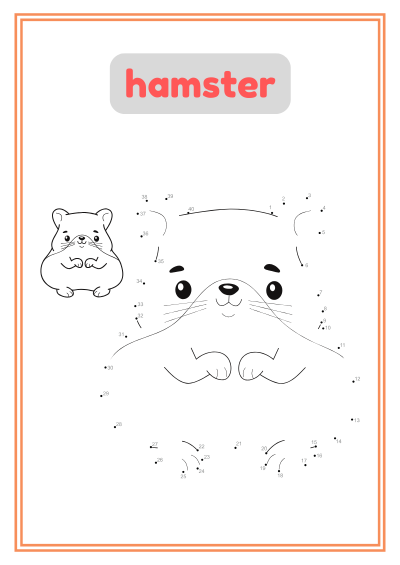
Dot-to-Dot Tracing and Coloring Worksheets PDF for Kindergarten
It is designed especially for kindergarten students, homeschool parents, and teachers across the US. This fun-filled worksheet helps kids develop essential early learning skills while sparking creativity and curiosity.
Children will connect the dots to form adorable pictures, trace shapes, and color them while exploring comparison concepts like size, height, and weight. These activities help children improve fine motor skills, number recognition, hand-eye coordination, and observation, while also reinforcing early math concepts in a playful way.
Why are dot-to-dot and comparison activities important? Connecting dots supports number sequencing and logical thinking, while comparing objects enhances problem-solving and critical reasoning. This combination encourages kids to focus, count carefully, and understand relationships between objects—key skills for early math development.
With bright, easy-to-follow designs and age-appropriate exercises, this free printable PDF is perfect for classroom learning, homeschool practice, or at-home creative fun.
You may also like :
[gallery ids="5923,6266,5914"]Frequently Asked Questions
Q1. Is this worksheet free to download?Yes, this worksheet is 100% free to download and print. No account, subscription, or payment is required. Click the Download Now button to get your free PDF instantly.Q2. What format is this worksheet available in?This worksheet is available as a printable PDF file. It is black-and-white, printer-friendly, and works on any standard home or classroom printer using A4 or US Letter paper.Q3. Can I use this worksheet for both classroom and home learning?Yes, these worksheets are designed for use by classroom teachers, homeschool parents, and tutors. They can be used as morning work, homework, revision practice, or learning centre activities.Q4. Can this coloring worksheet be used as a classroom activity?Yes, this worksheet works well as a quiet time activity, early finisher work, morning warm-up, or take-home creative activity.Q5. Is this coloring worksheet themed around learning content?Yes, our coloring worksheets are designed to combine creative activity with educational content such as alphabet recognition, numbers, animals, and seasonal themes.Dot-to-Dot Tracing and Coloring Worksheets PDF for Kindergarten | Free Downloadable
Dot-to-Dot Tracing and Coloring Worksheets PDF for Kindergarten
It is designed especially for kindergarten students, homeschool parents, and teachers across the US. This fun-filled worksheet helps kids develop essential early learning skills while sparking creativity and curiosity.
Children will connect the dots to form adorable pictures, trace shapes, and color them while exploring comparison concepts like size, height, and weight. These activities help children improve fine motor skills, number recognition, hand-eye coordination, and observation, while also reinforcing early math concepts in a playful way.
Why are dot-to-dot and comparison activities important? Connecting dots supports number sequencing and logical thinking, while comparing objects enhances problem-solving and critical reasoning. This combination encourages kids to focus, count carefully, and understand relationships between objects—key skills for early math development.
With bright, easy-to-follow designs and age-appropriate exercises, this free printable PDF is perfect for classroom learning, homeschool practice, or at-home creative fun.
You may also like :
[gallery ids="5923,6266,5914"]Frequently Asked Questions
Q1. Is this worksheet free to download?Yes, this worksheet is 100% free to download and print. No account, subscription, or payment is required. Click the Download Now button to get your free PDF instantly.Q2. What format is this worksheet available in?This worksheet is available as a printable PDF file. It is black-and-white, printer-friendly, and works on any standard home or classroom printer using A4 or US Letter paper.Q3. Can I use this worksheet for both classroom and home learning?Yes, these worksheets are designed for use by classroom teachers, homeschool parents, and tutors. They can be used as morning work, homework, revision practice, or learning centre activities.Q4. Can this coloring worksheet be used as a classroom activity?Yes, this worksheet works well as a quiet time activity, early finisher work, morning warm-up, or take-home creative activity.Q5. Is this coloring worksheet themed around learning content?Yes, our coloring worksheets are designed to combine creative activity with educational content such as alphabet recognition, numbers, animals, and seasonal themes.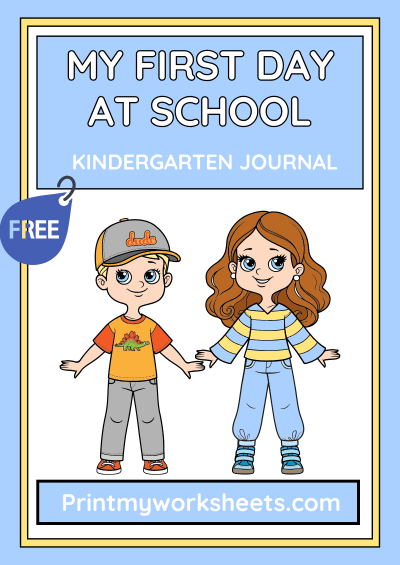

First Day at School Worksheets Kindergarten PDF – Free
Make the first day of Kindergarten a memorable learning experience with our First Day at School Worksheet, a free downloadable PDF created to support social-emotional learning and creative expression for young learners. This engaging and age-appropriate worksheet allows children to reflect on their emotions, draw a self-portrait, and write a sentence or two about their very first day in school.
Designed with U.S. Kindergarten curriculum and homeschool needs in mind, this worksheet helps build foundational literacy, emotional awareness, and communication skills in early learners. It also provides teachers and parents a valuable insight into the thoughts and feelings of their students during a milestone moment.
✅ Why This Worksheet Matters:
The first day of school is a mix of excitement, curiosity, and sometimes anxiety for kids. Giving children a structured way to reflect and express their experience through drawing and writing supports:
Emotional regulation
Language development
Memory building
Confidence boosting
Children gain more than literacy practice—they learn to make sense of their world.
✅ What’s Inside the Worksheet:
✔ Title: “My First Day at School”
✔ Drawing space for a self-portrait or classroom scene
✔ Sentence prompt: “I felt ________________ on my first day.”
✔ Optional fill-ins like “My teacher’s name is…” or “I made a friend named…”
✔ Black-and-white print-friendly format
✔ Designed for U.S. Letter size (8.5 x 11)
✅ Skills Developed:
📚 Early writing
✍️ Fine motor skills
🧠 Emotional expression
🎨 Creativity through drawing
🗣️ Oral language development
👩🏫 Classroom integration for SEL (social-emotional learning)
✅ Why Teach About the First Day of School:
💬 Promotes Self-Awareness: Helps children understand and name their emotions.
✍️ Strengthens Communication: Combines drawing and writing to support dual literacy modes.
💡 Boosts Engagement: Students feel seen and valued when encouraged to share personal stories.
📖 Supports Routine Building: Journaling can become part of daily or weekly learning routines.
✅ How Teachers and Parents Can Use This:
Ice-breaker activity on Day 1
Shared group reflection on the whiteboard
Included in “My School Year” memory books
SEL activity during circle time
Sent home for family reflection and discussion
✅ Target Audience:
Kindergarten classrooms
Homeschool educators
Daycare centers
After-school programs
Parents building first-week routines
Speech and language therapists
Download and print today to give your little learners the head start they deserve!
You may also like :
[gallery ids="4931,4693,4724"]Frequently Asked Questions
Q1. What format is this worksheet available in?This worksheet is available as a printable PDF file. It is black-and-white, printer-friendly, and works on any standard home or classroom printer using A4 or US Letter paper.Q2. Is this worksheet free to download?Yes, this worksheet is 100% free to download and print. No account, subscription, or payment is required. Click the Download Now button to get your free PDF instantly.Q3. Can I use this worksheet for both classroom and home learning?Yes, these worksheets are designed for use by classroom teachers, homeschool parents, and tutors. They can be used as morning work, homework, revision practice, or learning centre activities.Q4. Can this worksheet be used for phonics instruction?Yes, this worksheet supports phonics-based reading instruction and is suitable for early readers building letter-sound recognition skills.Q5. Is this worksheet suitable for ESL or ELL students?This worksheet can be used as a supplemental resource for ESL and ELL students, particularly for vocabulary building and language pattern practice.First Day at School Worksheets Kindergarten PDF – Free
Make the first day of Kindergarten a memorable learning experience with our First Day at School Worksheet, a free downloadable PDF created to support social-emotional learning and creative expression for young learners. This engaging and age-appropriate worksheet allows children to reflect on their emotions, draw a self-portrait, and write a sentence or two about their very first day in school.
Designed with U.S. Kindergarten curriculum and homeschool needs in mind, this worksheet helps build foundational literacy, emotional awareness, and communication skills in early learners. It also provides teachers and parents a valuable insight into the thoughts and feelings of their students during a milestone moment.
✅ Why This Worksheet Matters:
The first day of school is a mix of excitement, curiosity, and sometimes anxiety for kids. Giving children a structured way to reflect and express their experience through drawing and writing supports:
Emotional regulation
Language development
Memory building
Confidence boosting
Children gain more than literacy practice—they learn to make sense of their world.
✅ What’s Inside the Worksheet:
✔ Title: “My First Day at School”
✔ Drawing space for a self-portrait or classroom scene
✔ Sentence prompt: “I felt ________________ on my first day.”
✔ Optional fill-ins like “My teacher’s name is…” or “I made a friend named…”
✔ Black-and-white print-friendly format
✔ Designed for U.S. Letter size (8.5 x 11)
✅ Skills Developed:
📚 Early writing
✍️ Fine motor skills
🧠 Emotional expression
🎨 Creativity through drawing
🗣️ Oral language development
👩🏫 Classroom integration for SEL (social-emotional learning)
✅ Why Teach About the First Day of School:
💬 Promotes Self-Awareness: Helps children understand and name their emotions.
✍️ Strengthens Communication: Combines drawing and writing to support dual literacy modes.
💡 Boosts Engagement: Students feel seen and valued when encouraged to share personal stories.
📖 Supports Routine Building: Journaling can become part of daily or weekly learning routines.
✅ How Teachers and Parents Can Use This:
Ice-breaker activity on Day 1
Shared group reflection on the whiteboard
Included in “My School Year” memory books
SEL activity during circle time
Sent home for family reflection and discussion
✅ Target Audience:
Kindergarten classrooms
Homeschool educators
Daycare centers
After-school programs
Parents building first-week routines
Speech and language therapists
Download and print today to give your little learners the head start they deserve!
You may also like :
[gallery ids="4931,4693,4724"]Frequently Asked Questions
Q1. What format is this worksheet available in?This worksheet is available as a printable PDF file. It is black-and-white, printer-friendly, and works on any standard home or classroom printer using A4 or US Letter paper.Q2. Is this worksheet free to download?Yes, this worksheet is 100% free to download and print. No account, subscription, or payment is required. Click the Download Now button to get your free PDF instantly.Q3. Can I use this worksheet for both classroom and home learning?Yes, these worksheets are designed for use by classroom teachers, homeschool parents, and tutors. They can be used as morning work, homework, revision practice, or learning centre activities.Q4. Can this worksheet be used for phonics instruction?Yes, this worksheet supports phonics-based reading instruction and is suitable for early readers building letter-sound recognition skills.Q5. Is this worksheet suitable for ESL or ELL students?This worksheet can be used as a supplemental resource for ESL and ELL students, particularly for vocabulary building and language pattern practice.
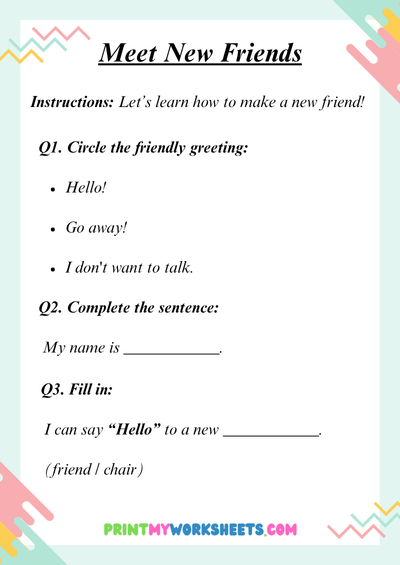
First Day of Kindergarten Worksheets | Free Downloadable PDF
Make the first day of school exciting and comfortable with our First Day of Kindergarten Worksheets, created for young learners, homeschool families, and kindergarten teachers across the United States. These printable PDF worksheets help children talk about how they feel, share information about themselves, draw pictures of themselves, practice writing their names, remember their first day of school, and feel happy and confident in their classroom. The activities are designed to encourage self-expression, communication, creativity, early writing, and positive classroom experiences through simple, child-friendly exercises.
These no-prep worksheets are perfect for the first week of kindergarten, classroom morning work, homeschool activities, beginning-of-year lessons, student introductions, and back-to-school learning. Teachers and parents can easily download and print the pages for use at school or home. Children can reflect on their feelings, introduce themselves, practice their names, and create personal drawings while becoming familiar with their new learning environment. Whether you're preparing students for their first classroom experience or helping them transition into kindergarten, these worksheets provide meaningful opportunities to build confidence and encourage participation. Download the Free First Day of Kindergarten Worksheets PDF and make the beginning of kindergarten a positive, engaging, and memorable learning experience.
Frequently Asked Questions
Q1. Is this worksheet free to download?Yes, this worksheet is 100% free to download and print. No account, subscription, or payment is required. Click the Download Now button to get your free PDF instantly.Q2. What format is this worksheet available in?This worksheet is available as a printable PDF file. It is black-and-white, printer-friendly, and works on any standard home or classroom printer using A4 or US Letter paper.Q3. Can I use this worksheet for both classroom and home learning?Yes, these worksheets are designed for use by classroom teachers, homeschool parents, and tutors. They can be used as morning work, homework, revision practice, or learning centre activities.Q4. Is this worksheet aligned with Common Core ELA standards?Yes, this English worksheet is aligned with U.S. Common Core English Language Arts standards and supports foundational literacy development.Q5. Can this worksheet be used for phonics instruction?Yes, this worksheet supports phonics-based reading instruction and is suitable for early readers building letter-sound recognition skills.First Day of Kindergarten Worksheets | Free Downloadable PDF
Make the first day of school exciting and comfortable with our First Day of Kindergarten Worksheets, created for young learners, homeschool families, and kindergarten teachers across the United States. These printable PDF worksheets help children talk about how they feel, share information about themselves, draw pictures of themselves, practice writing their names, remember their first day of school, and feel happy and confident in their classroom. The activities are designed to encourage self-expression, communication, creativity, early writing, and positive classroom experiences through simple, child-friendly exercises.
These no-prep worksheets are perfect for the first week of kindergarten, classroom morning work, homeschool activities, beginning-of-year lessons, student introductions, and back-to-school learning. Teachers and parents can easily download and print the pages for use at school or home. Children can reflect on their feelings, introduce themselves, practice their names, and create personal drawings while becoming familiar with their new learning environment. Whether you're preparing students for their first classroom experience or helping them transition into kindergarten, these worksheets provide meaningful opportunities to build confidence and encourage participation. Download the Free First Day of Kindergarten Worksheets PDF and make the beginning of kindergarten a positive, engaging, and memorable learning experience.
Frequently Asked Questions
Q1. Is this worksheet free to download?Yes, this worksheet is 100% free to download and print. No account, subscription, or payment is required. Click the Download Now button to get your free PDF instantly.Q2. What format is this worksheet available in?This worksheet is available as a printable PDF file. It is black-and-white, printer-friendly, and works on any standard home or classroom printer using A4 or US Letter paper.Q3. Can I use this worksheet for both classroom and home learning?Yes, these worksheets are designed for use by classroom teachers, homeschool parents, and tutors. They can be used as morning work, homework, revision practice, or learning centre activities.Q4. Is this worksheet aligned with Common Core ELA standards?Yes, this English worksheet is aligned with U.S. Common Core English Language Arts standards and supports foundational literacy development.Q5. Can this worksheet be used for phonics instruction?Yes, this worksheet supports phonics-based reading instruction and is suitable for early readers building letter-sound recognition skills.
Kindergarten A–Z Phonics Worksheets PDF | Free English Downloadable
Kindergarten A–Z Phonics Worksheets PDF
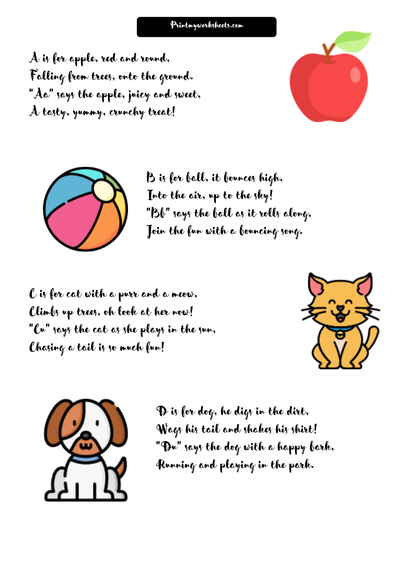
Building a strong foundation in reading begins with understanding letters and their sounds. The Kindergarten A–Z Phonics Worksheets PDF is designed to help young learners develop essential phonics skills through structured and engaging activities. These printable worksheets are created for U.S. teachers, parents, and homeschool families who want to support early literacy development in a clear and effective way.
In kindergarten, students are introduced to the alphabet and begin connecting letters with their corresponding sounds. This process is a key step in learning how to read and write. Practicing phonics from A to Z helps children recognize letters, understand sound patterns, and build confidence in decoding simple words.
The Kindergarten A–Z Phonics Worksheets PDF provides a comprehensive set of activities that guide students through each letter of the alphabet. With consistent practice, children learn to identify letters, associate them with sounds, and begin forming words. These worksheets support early reading development while making learning enjoyable and easy to follow.
What Students Will Learn?
A–Z phonics worksheets provide kindergarten students with structured opportunities to learn and practice letter recognition and sound association. These activities are carefully designed to match the developmental level of young learners.
Students begin by identifying uppercase and lowercase letters from A to Z. Recognizing both forms of each letter helps build familiarity and prepares students for reading and writing tasks.
Each worksheet focuses on a specific letter and its corresponding sound. Students practice saying the sound aloud, which strengthens phonemic awareness and helps them understand how letters represent sounds in words.
Activities often include tracing letters, circling the correct letter, and matching letters with pictures that begin with the same sound. For example, students may match the letter “B” with images like “ball” or “bird.”
Students also practice identifying beginning sounds in simple words. This helps them understand how sounds connect to letters and prepares them for reading short words.
Some worksheets include simple word-building activities that allow students to combine sounds and form basic words.
Through these structured exercises, kindergarten learners develop essential phonics skills that support early reading success.
Educational Value & Skill Development
The Kindergarten A–Z Phonics Worksheets PDF supports key areas of early literacy development and provides a strong foundation for reading and writing.
One of the primary benefits is improving letter recognition. By practicing each letter from A to Z, students become familiar with the alphabet and can quickly identify letters in different contexts.
The Kindergarten A–Z Phonics Worksheets PDF also strengthens phonemic awareness. Students learn to recognize individual sounds in words and understand how these sounds are represented by letters.
These worksheets help develop early decoding skills. As students connect letters with sounds, they begin to read simple words by blending sounds together.
Another important benefit is improving fine motor skills. Activities such as tracing letters and writing simple words help children develop hand control and coordination needed for writing.
Phonics practice also supports vocabulary development. When students match letters with pictures and words, they expand their understanding of language and word meanings.
Additionally, these worksheets build confidence. As children successfully complete activities and recognize letters and sounds, they feel more comfortable with reading tasks.
By combining visual, auditory, and hands-on activities, these worksheets provide a well-rounded approach to early literacy learning.
Why Focus on A–Z Phonics?
Phonics is one of the most important components of early reading instruction. Learning letter-sound relationships helps children understand how words are formed and how to read them.
Focusing on A–Z phonics ensures that students have a complete understanding of the alphabet. This knowledge is essential for recognizing words, spelling, and reading fluently.
In kindergarten classrooms across the United States, phonics instruction is a core part of the curriculum. Teachers use structured activities to help students connect letters with sounds and build early reading skills.
Learning phonics also supports writing development. When students understand how sounds correspond to letters, they can begin to write simple words independently.
Repetition and practice are key to mastering phonics. Regular exposure to letter sounds helps students remember and apply what they have learned.
Phonics activities also make learning interactive and engaging. Matching, tracing, and sound recognition tasks keep students actively involved in the learning process.
By focusing on A–Z phonics, students build a strong literacy foundation that supports reading comprehension and academic success in later grades.
How to Use These Worksheets?
The Kindergarten A–Z Phonics Worksheets PDF can be used in a variety of educational settings, including classrooms, homeschool environments, and independent learning activities.
Teachers often include phonics worksheets as part of daily literacy instruction. Students may complete one letter-focused worksheet each day to gradually build their understanding of the alphabet.
In classroom settings, teachers can guide students through activities such as identifying sounds, tracing letters, and matching pictures with beginning sounds.
Parents who homeschool can incorporate these worksheets into daily reading practice. Children can work on one or two letters at a time while reviewing previously learned sounds.
Because the worksheets are available as a free printable PDF, they are easy to download and print for repeated use. Teachers and parents can revisit the worksheets for review and reinforcement.
These worksheets also work well for small group instruction. Students can practice phonics together while receiving support and feedback from a teacher or parent.
The printable format allows for flexible use, making it easy to adapt the worksheets to different learning styles and needs.
Related Worksheets / Extensions:
You may also like:
• Kindergarten sight words worksheets
• Beginning sounds worksheets for early readers
• Letter tracing worksheets for handwriting practice
• CVC word worksheets for phonics development
• Early reading comprehension worksheets for kindergarten
The Kindergarten A–Z Phonics Worksheets PDF pairs well with other early literacy resources that focus on word building, sight words, and reading comprehension. Combining these materials helps students strengthen multiple language skills at the same time.
Teachers and parents can extend learning by encouraging children to practice letter sounds during everyday activities, such as identifying letters in books or objects around the home.
With consistent practice, kindergarten students develop strong phonics skills that prepare them for reading, writing, and continued academic success.
Frequently Asked Questions
Q1. Is this worksheet free to download?Yes, this worksheet is 100% free to download and print. No account, subscription, or payment is required. Click the Download Now button to get your free PDF instantly.Q2. What format is this worksheet available in?This worksheet is available as a printable PDF file. It is black-and-white, printer-friendly, and works on any standard home or classroom printer using A4 or US Letter paper.Q3. Can I use this worksheet for both classroom and home learning?Yes, these worksheets are designed for use by classroom teachers, homeschool parents, and tutors. They can be used as morning work, homework, revision practice, or learning centre activities.Q4. Is this worksheet aligned with Common Core ELA standards?Yes, this English worksheet is aligned with U.S. Common Core English Language Arts standards and supports foundational literacy development.Q5. Can this worksheet be used for phonics instruction?Yes, this worksheet supports phonics-based reading instruction and is suitable for early readers building letter-sound recognition skills.Kindergarten A–Z Phonics Worksheets PDF | Free English Downloadable
Kindergarten A–Z Phonics Worksheets PDF
Building a strong foundation in reading begins with understanding letters and their sounds. The Kindergarten A–Z Phonics Worksheets PDF is designed to help young learners develop essential phonics skills through structured and engaging activities. These printable worksheets are created for U.S. teachers, parents, and homeschool families who want to support early literacy development in a clear and effective way.
In kindergarten, students are introduced to the alphabet and begin connecting letters with their corresponding sounds. This process is a key step in learning how to read and write. Practicing phonics from A to Z helps children recognize letters, understand sound patterns, and build confidence in decoding simple words.
The Kindergarten A–Z Phonics Worksheets PDF provides a comprehensive set of activities that guide students through each letter of the alphabet. With consistent practice, children learn to identify letters, associate them with sounds, and begin forming words. These worksheets support early reading development while making learning enjoyable and easy to follow.
What Students Will Learn?
A–Z phonics worksheets provide kindergarten students with structured opportunities to learn and practice letter recognition and sound association. These activities are carefully designed to match the developmental level of young learners.
Students begin by identifying uppercase and lowercase letters from A to Z. Recognizing both forms of each letter helps build familiarity and prepares students for reading and writing tasks.
Each worksheet focuses on a specific letter and its corresponding sound. Students practice saying the sound aloud, which strengthens phonemic awareness and helps them understand how letters represent sounds in words.
Activities often include tracing letters, circling the correct letter, and matching letters with pictures that begin with the same sound. For example, students may match the letter “B” with images like “ball” or “bird.”
Students also practice identifying beginning sounds in simple words. This helps them understand how sounds connect to letters and prepares them for reading short words.
Some worksheets include simple word-building activities that allow students to combine sounds and form basic words.
Through these structured exercises, kindergarten learners develop essential phonics skills that support early reading success.
Educational Value & Skill Development
The Kindergarten A–Z Phonics Worksheets PDF supports key areas of early literacy development and provides a strong foundation for reading and writing.
One of the primary benefits is improving letter recognition. By practicing each letter from A to Z, students become familiar with the alphabet and can quickly identify letters in different contexts.
The Kindergarten A–Z Phonics Worksheets PDF also strengthens phonemic awareness. Students learn to recognize individual sounds in words and understand how these sounds are represented by letters.
These worksheets help develop early decoding skills. As students connect letters with sounds, they begin to read simple words by blending sounds together.
Another important benefit is improving fine motor skills. Activities such as tracing letters and writing simple words help children develop hand control and coordination needed for writing.
Phonics practice also supports vocabulary development. When students match letters with pictures and words, they expand their understanding of language and word meanings.
Additionally, these worksheets build confidence. As children successfully complete activities and recognize letters and sounds, they feel more comfortable with reading tasks.
By combining visual, auditory, and hands-on activities, these worksheets provide a well-rounded approach to early literacy learning.
Why Focus on A–Z Phonics?
Phonics is one of the most important components of early reading instruction. Learning letter-sound relationships helps children understand how words are formed and how to read them.
Focusing on A–Z phonics ensures that students have a complete understanding of the alphabet. This knowledge is essential for recognizing words, spelling, and reading fluently.
In kindergarten classrooms across the United States, phonics instruction is a core part of the curriculum. Teachers use structured activities to help students connect letters with sounds and build early reading skills.
Learning phonics also supports writing development. When students understand how sounds correspond to letters, they can begin to write simple words independently.
Repetition and practice are key to mastering phonics. Regular exposure to letter sounds helps students remember and apply what they have learned.
Phonics activities also make learning interactive and engaging. Matching, tracing, and sound recognition tasks keep students actively involved in the learning process.
By focusing on A–Z phonics, students build a strong literacy foundation that supports reading comprehension and academic success in later grades.
How to Use These Worksheets?
The Kindergarten A–Z Phonics Worksheets PDF can be used in a variety of educational settings, including classrooms, homeschool environments, and independent learning activities.
Teachers often include phonics worksheets as part of daily literacy instruction. Students may complete one letter-focused worksheet each day to gradually build their understanding of the alphabet.
In classroom settings, teachers can guide students through activities such as identifying sounds, tracing letters, and matching pictures with beginning sounds.
Parents who homeschool can incorporate these worksheets into daily reading practice. Children can work on one or two letters at a time while reviewing previously learned sounds.
Because the worksheets are available as a free printable PDF, they are easy to download and print for repeated use. Teachers and parents can revisit the worksheets for review and reinforcement.
These worksheets also work well for small group instruction. Students can practice phonics together while receiving support and feedback from a teacher or parent.
The printable format allows for flexible use, making it easy to adapt the worksheets to different learning styles and needs.
Related Worksheets / Extensions:
You may also like:
• Kindergarten sight words worksheets
• Beginning sounds worksheets for early readers
• Letter tracing worksheets for handwriting practice
• CVC word worksheets for phonics development
• Early reading comprehension worksheets for kindergarten
The Kindergarten A–Z Phonics Worksheets PDF pairs well with other early literacy resources that focus on word building, sight words, and reading comprehension. Combining these materials helps students strengthen multiple language skills at the same time.
Teachers and parents can extend learning by encouraging children to practice letter sounds during everyday activities, such as identifying letters in books or objects around the home.
With consistent practice, kindergarten students develop strong phonics skills that prepare them for reading, writing, and continued academic success.
Frequently Asked Questions
Q1. Is this worksheet free to download?Yes, this worksheet is 100% free to download and print. No account, subscription, or payment is required. Click the Download Now button to get your free PDF instantly.Q2. What format is this worksheet available in?This worksheet is available as a printable PDF file. It is black-and-white, printer-friendly, and works on any standard home or classroom printer using A4 or US Letter paper.Q3. Can I use this worksheet for both classroom and home learning?Yes, these worksheets are designed for use by classroom teachers, homeschool parents, and tutors. They can be used as morning work, homework, revision practice, or learning centre activities.Q4. Is this worksheet aligned with Common Core ELA standards?Yes, this English worksheet is aligned with U.S. Common Core English Language Arts standards and supports foundational literacy development.Q5. Can this worksheet be used for phonics instruction?Yes, this worksheet supports phonics-based reading instruction and is suitable for early readers building letter-sound recognition skills.
Kindergarten Addition Math Worksheets Fun | Free Downloadable
Kindergarten Addition Math Worksheets Fun
The Kindergarten Addition Math Worksheets Fun resource is designed to make early math learning engaging and enjoyable for young learners. These worksheets are perfect for U.S. parents, teachers, and homeschool families who want to introduce addition in a playful and structured way.
At the kindergarten level, children are just beginning to understand numbers and basic math operations. Learning addition through fun and interactive worksheets helps build a strong foundation while keeping students motivated and interested. These activities combine simple math problems with engaging formats that make learning feel like play.
The Kindergarten Addition Math Worksheets Fun set supports early number skills, helping children recognize patterns, count objects, and understand how numbers combine. By practicing regularly, students develop confidence and familiarity with addition, which is essential for future math success.
What Students Will Learn ?
These kindergarten addition worksheets are carefully designed to introduce young learners to basic addition concepts in an age-appropriate and engaging way.
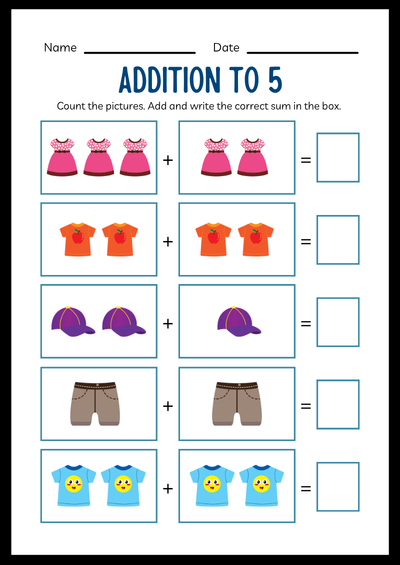
Students will begin by learning how to combine small numbers using visual aids such as objects, pictures, and counting strategies. This helps them understand the concept of “adding” in a concrete and meaningful way.
The worksheets include simple addition problems with numbers typically ranging from 0 to 10. These activities allow students to practice counting forward and recognizing number relationships.
Children will also work on identifying number pairs and understanding how two numbers come together to form a total. This builds early number sense and helps students become comfortable with basic math operations.
Some activities include matching, coloring, and tracing, which keep students engaged while reinforcing learning. These interactive elements are especially important for kindergarten learners who benefit from hands-on experiences.
The worksheets are structured to support gradual learning, starting with simple problems and progressing to slightly more challenging ones. This ensures that students build confidence as they move forward.
Overall, these activities help create a strong foundation in addition while keeping learning enjoyable and stress-free.
Educational Value & Skill Development
The Kindergarten Addition Math Worksheets Fun resource provides valuable opportunities for both academic and cognitive development.
One of the main benefits is the development of number sense. Students learn how numbers relate to each other and how they can be combined to form new values. This understanding is essential for all future math learning.
These worksheets also support fine motor skills through activities like tracing numbers and coloring. These skills are important for writing and overall coordination.
Cognitive development is enhanced as students practice counting, recognizing patterns, and solving simple problems. These activities encourage children to think logically and make connections.
The Kindergarten Addition Math Worksheets Fun set also helps build confidence. As students successfully complete problems, they gain a sense of achievement and become more willing to try new challenges.
Additionally, these worksheets promote independence. Children can work through many of the activities on their own, allowing them to develop self-reliance and focus.
By combining learning with fun, these worksheets create a positive experience that encourages a lifelong interest in math.
Why Focus on Kindergarten Addition Math Worksheets Fun?
Addition is one of the first and most important math skills that children learn. It serves as the foundation for more advanced topics such as subtraction, multiplication, and problem-solving.
At the kindergarten level, it is important to introduce addition in a way that is both engaging and easy to understand. Fun and interactive worksheets help children stay interested while learning new concepts.
Repetition plays a key role in mastering addition. Regular practice allows students to become familiar with number combinations and improves accuracy over time.
These early experiences with math also help shape a child’s attitude toward learning. When math is presented in a fun and supportive way, students are more likely to develop a positive mindset.
In U.S. education standards, kindergarten students are expected to begin understanding addition and applying it in simple situations. These worksheets align with those expectations by providing structured and meaningful practice.
Focusing on addition at this stage helps ensure that students are prepared for future math learning and confident in their abilities.
How to Use These Worksheets?
The Kindergarten Addition Math Worksheets Fun can be used in a variety of learning settings to support early math development.
In classrooms, teachers can use these worksheets during math centers, small group instruction, or independent work time. They are also helpful for reinforcing lessons and providing extra practice.
For homeschool families, these worksheets can be included in daily routines. Parents can guide children through activities or allow them to complete tasks independently.
The free printable PDF format makes these worksheets easy to download, print, and reuse. This flexibility allows for consistent practice without additional preparation.
These worksheets are also suitable for small group activities, where students can work together and discuss their answers. This encourages collaboration and communication.
They can be used as review tools to reinforce previously learned concepts or as introductory activities for new topics.
With their simple layout and engaging format, these worksheets are easy to integrate into any learning plan.
Related Worksheets / Extensions:
Frequently Asked Questions
Q1. Is this worksheet free to download?Yes, this worksheet is 100% free to download and print. No account, subscription, or payment is required. Click the Download Now button to get your free PDF instantly.Q2. What format is this worksheet available in?This worksheet is available as a printable PDF file. It is black-and-white, printer-friendly, and works on any standard home or classroom printer using A4 or US Letter paper.Q3. Do I need to create an account to download this worksheet?No account or sign-up is required. All worksheets on Print My Worksheets are freely accessible to teachers, parents, and homeschool families without any registration.Q4. Does this math worksheet include an answer key?Yes, an answer key is included in the PDF so parents and teachers can quickly check student responses without manual calculation.Q5. Is this worksheet suitable for extra practice or exam preparation?Yes, this worksheet is ideal for supplemental practice, homework reinforcement, test preparation, and homeschool math lessons.Kindergarten Addition Math Worksheets Fun | Free Downloadable
Kindergarten Addition Math Worksheets Fun
The Kindergarten Addition Math Worksheets Fun resource is designed to make early math learning engaging and enjoyable for young learners. These worksheets are perfect for U.S. parents, teachers, and homeschool families who want to introduce addition in a playful and structured way.
At the kindergarten level, children are just beginning to understand numbers and basic math operations. Learning addition through fun and interactive worksheets helps build a strong foundation while keeping students motivated and interested. These activities combine simple math problems with engaging formats that make learning feel like play.
The Kindergarten Addition Math Worksheets Fun set supports early number skills, helping children recognize patterns, count objects, and understand how numbers combine. By practicing regularly, students develop confidence and familiarity with addition, which is essential for future math success.
What Students Will Learn ?
These kindergarten addition worksheets are carefully designed to introduce young learners to basic addition concepts in an age-appropriate and engaging way.
Students will begin by learning how to combine small numbers using visual aids such as objects, pictures, and counting strategies. This helps them understand the concept of “adding” in a concrete and meaningful way.
The worksheets include simple addition problems with numbers typically ranging from 0 to 10. These activities allow students to practice counting forward and recognizing number relationships.
Children will also work on identifying number pairs and understanding how two numbers come together to form a total. This builds early number sense and helps students become comfortable with basic math operations.
Some activities include matching, coloring, and tracing, which keep students engaged while reinforcing learning. These interactive elements are especially important for kindergarten learners who benefit from hands-on experiences.
The worksheets are structured to support gradual learning, starting with simple problems and progressing to slightly more challenging ones. This ensures that students build confidence as they move forward.
Overall, these activities help create a strong foundation in addition while keeping learning enjoyable and stress-free.
Educational Value & Skill Development
The Kindergarten Addition Math Worksheets Fun resource provides valuable opportunities for both academic and cognitive development.
One of the main benefits is the development of number sense. Students learn how numbers relate to each other and how they can be combined to form new values. This understanding is essential for all future math learning.
These worksheets also support fine motor skills through activities like tracing numbers and coloring. These skills are important for writing and overall coordination.
Cognitive development is enhanced as students practice counting, recognizing patterns, and solving simple problems. These activities encourage children to think logically and make connections.
The Kindergarten Addition Math Worksheets Fun set also helps build confidence. As students successfully complete problems, they gain a sense of achievement and become more willing to try new challenges.
Additionally, these worksheets promote independence. Children can work through many of the activities on their own, allowing them to develop self-reliance and focus.
By combining learning with fun, these worksheets create a positive experience that encourages a lifelong interest in math.
Why Focus on Kindergarten Addition Math Worksheets Fun?
Addition is one of the first and most important math skills that children learn. It serves as the foundation for more advanced topics such as subtraction, multiplication, and problem-solving.
At the kindergarten level, it is important to introduce addition in a way that is both engaging and easy to understand. Fun and interactive worksheets help children stay interested while learning new concepts.
Repetition plays a key role in mastering addition. Regular practice allows students to become familiar with number combinations and improves accuracy over time.
These early experiences with math also help shape a child’s attitude toward learning. When math is presented in a fun and supportive way, students are more likely to develop a positive mindset.
In U.S. education standards, kindergarten students are expected to begin understanding addition and applying it in simple situations. These worksheets align with those expectations by providing structured and meaningful practice.
Focusing on addition at this stage helps ensure that students are prepared for future math learning and confident in their abilities.
How to Use These Worksheets?
The Kindergarten Addition Math Worksheets Fun can be used in a variety of learning settings to support early math development.
In classrooms, teachers can use these worksheets during math centers, small group instruction, or independent work time. They are also helpful for reinforcing lessons and providing extra practice.
For homeschool families, these worksheets can be included in daily routines. Parents can guide children through activities or allow them to complete tasks independently.
The free printable PDF format makes these worksheets easy to download, print, and reuse. This flexibility allows for consistent practice without additional preparation.
These worksheets are also suitable for small group activities, where students can work together and discuss their answers. This encourages collaboration and communication.
They can be used as review tools to reinforce previously learned concepts or as introductory activities for new topics.
With their simple layout and engaging format, these worksheets are easy to integrate into any learning plan.
Related Worksheets / Extensions:
Frequently Asked Questions
Q1. Is this worksheet free to download?Yes, this worksheet is 100% free to download and print. No account, subscription, or payment is required. Click the Download Now button to get your free PDF instantly.Q2. What format is this worksheet available in?This worksheet is available as a printable PDF file. It is black-and-white, printer-friendly, and works on any standard home or classroom printer using A4 or US Letter paper.Q3. Do I need to create an account to download this worksheet?No account or sign-up is required. All worksheets on Print My Worksheets are freely accessible to teachers, parents, and homeschool families without any registration.Q4. Does this math worksheet include an answer key?Yes, an answer key is included in the PDF so parents and teachers can quickly check student responses without manual calculation.Q5. Is this worksheet suitable for extra practice or exam preparation?Yes, this worksheet is ideal for supplemental practice, homework reinforcement, test preparation, and homeschool math lessons.
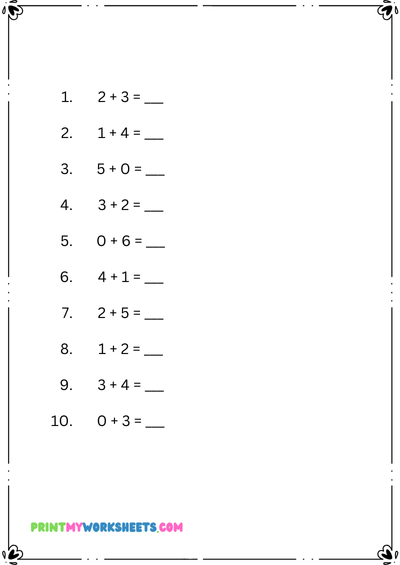
Kindergarten Addition Worksheets PDF | Free Math Downloadable
Kindergarten Addition Worksheets PDF
Early math experiences shape how children feel about numbers and learning in general. The Kindergarten Addition Worksheets PDF is created to introduce young learners to basic addition concepts in a gentle, supportive way. This printable worksheet set is designed for U.S. parents, kindergarten teachers, and homeschool families who want to build early math skills through clear and engaging practice.
In kindergarten, children are just beginning to understand how numbers work together. Addition helps students learn that numbers can be combined to make new amounts, laying the groundwork for future math learning. These worksheets focus on simple addition using pictures, objects, and small numbers to make learning meaningful and approachable. With a predictable layout and child-friendly activities, this free printable PDF supports hands-on learning while helping students gain confidence. Whether used at home or in the classroom, these worksheets encourage positive math habits at an important stage of development.
What Students Will Learn?
These worksheets are designed to help kindergarten students understand the basic idea of addition as putting groups together. Children learn to combine two small sets of objects and count the total, building a clear connection between numbers and quantities. Early activities focus on visual models, such as pictures, dots, or simple objects, to help students see how addition works.
Students may practice adding within small number ranges, often using numbers up to five or ten. Activities can include counting pictures, drawing lines to match groups, or writing simple number sentences with support. These tasks help children understand that addition is not just about numbers on a page but about real quantities they can see and count.
The worksheets support structured learning by using consistent formats and clear instructions. This predictability helps young learners feel comfortable and focused. The activities align with age-appropriate expectations for kindergarten math, supporting early number sense, counting skills, and one-to-one correspondence. Through regular practice, students begin to recognize addition patterns and develop confidence in solving simple math problems.
Educational Value & Skill Development
Early addition practice supports a wide range of academic and developmental skills. Using the Kindergarten Addition Worksheets PDF helps children strengthen number sense while building a foundation for future math learning. Understanding how numbers combine prepares students for subtraction, problem-solving, and more advanced math concepts in later grades.
These worksheets also support cognitive development by encouraging logical thinking and attention. When children count objects and combine groups, they practice sequencing, memory, and focus. Visual addition activities help students make sense of abstract ideas in a concrete way, which is especially important for young learners.
The Kindergarten Addition Worksheets PDF also helps build confidence and independence. Familiar formats and repeated practice allow children to work successfully on their own, increasing their comfort with math tasks. Completing worksheets gives students a sense of accomplishment and encourages a positive attitude toward learning.
Skill progression is carefully supported. Mastery of simple addition prepares children for working with larger numbers and more complex operations in first grade. These worksheets ensure that students develop a strong base before moving on to new challenges.
Why Focus on Kindergarten Addition?
Addition is one of the first math operations children learn, and it plays a critical role in early number understanding. In kindergarten, students begin to see how numbers relate to one another and how combining groups changes quantity. This understanding is essential for building strong math skills.
Focusing on addition helps children develop problem-solving abilities and number flexibility. When students understand that numbers can be added together in different ways, they are better prepared to tackle new math concepts later on. Addition also supports real-life skills, such as counting toys, snacks, or steps during daily routines.
Repetition and guided practice are especially important at this age. Worksheets provide a consistent and structured way for students to practice addition until it becomes familiar. These activities align with early learning standards used across the United States, which emphasize number sense, counting, and basic operations. By strengthening addition skills early, children gain confidence and readiness for future math learning.
How to Use These Worksheets?
These printable addition worksheets are flexible and easy to use in a variety of learning settings. In homeschool environments, they can be included as part of a daily math routine or used for short practice sessions that match a child’s attention span. Parents can work alongside their child, counting objects together and discussing answers.
In classrooms, teachers may use the worksheets during math centers, small-group instruction, or independent work time. They also work well as warm-up activities or review after hands-on math lessons.
The Kindergarten Addition Worksheets PDF is provided as a free printable PDF, making it simple to download and reuse throughout the school year. Pages can be printed multiple times or placed in sheet protectors for repeated practice using crayons or dry-erase markers. This reusability allows educators and families to adapt instruction to individual learning needs while maintaining consistent practice.
Related Worksheets / Extensions:
Frequently Asked Questions
Q1. What format is this worksheet available in?This worksheet is available as a printable PDF file. It is black-and-white, printer-friendly, and works on any standard home or classroom printer using A4 or US Letter paper.Q2. Is this worksheet free to download?Yes, this worksheet is 100% free to download and print. No account, subscription, or payment is required. Click the Download Now button to get your free PDF instantly.Q3. Can I use this worksheet for both classroom and home learning?Yes, these worksheets are designed for use by classroom teachers, homeschool parents, and tutors. They can be used as morning work, homework, revision practice, or learning centre activities.Q4. Is this worksheet suitable for extra practice or exam preparation?Yes, this worksheet is ideal for supplemental practice, homework reinforcement, test preparation, and homeschool math lessons.Q5. How long does it take to complete this math worksheet?Most students complete this worksheet in 10 to 20 minutes depending on grade level and familiarity with the topic.Kindergarten Addition Worksheets PDF | Free Math Downloadable
Kindergarten Addition Worksheets PDF
Early math experiences shape how children feel about numbers and learning in general. The Kindergarten Addition Worksheets PDF is created to introduce young learners to basic addition concepts in a gentle, supportive way. This printable worksheet set is designed for U.S. parents, kindergarten teachers, and homeschool families who want to build early math skills through clear and engaging practice.
In kindergarten, children are just beginning to understand how numbers work together. Addition helps students learn that numbers can be combined to make new amounts, laying the groundwork for future math learning. These worksheets focus on simple addition using pictures, objects, and small numbers to make learning meaningful and approachable. With a predictable layout and child-friendly activities, this free printable PDF supports hands-on learning while helping students gain confidence. Whether used at home or in the classroom, these worksheets encourage positive math habits at an important stage of development.
What Students Will Learn?
These worksheets are designed to help kindergarten students understand the basic idea of addition as putting groups together. Children learn to combine two small sets of objects and count the total, building a clear connection between numbers and quantities. Early activities focus on visual models, such as pictures, dots, or simple objects, to help students see how addition works.
Students may practice adding within small number ranges, often using numbers up to five or ten. Activities can include counting pictures, drawing lines to match groups, or writing simple number sentences with support. These tasks help children understand that addition is not just about numbers on a page but about real quantities they can see and count.
The worksheets support structured learning by using consistent formats and clear instructions. This predictability helps young learners feel comfortable and focused. The activities align with age-appropriate expectations for kindergarten math, supporting early number sense, counting skills, and one-to-one correspondence. Through regular practice, students begin to recognize addition patterns and develop confidence in solving simple math problems.
Educational Value & Skill Development
Early addition practice supports a wide range of academic and developmental skills. Using the Kindergarten Addition Worksheets PDF helps children strengthen number sense while building a foundation for future math learning. Understanding how numbers combine prepares students for subtraction, problem-solving, and more advanced math concepts in later grades.
These worksheets also support cognitive development by encouraging logical thinking and attention. When children count objects and combine groups, they practice sequencing, memory, and focus. Visual addition activities help students make sense of abstract ideas in a concrete way, which is especially important for young learners.
The Kindergarten Addition Worksheets PDF also helps build confidence and independence. Familiar formats and repeated practice allow children to work successfully on their own, increasing their comfort with math tasks. Completing worksheets gives students a sense of accomplishment and encourages a positive attitude toward learning.
Skill progression is carefully supported. Mastery of simple addition prepares children for working with larger numbers and more complex operations in first grade. These worksheets ensure that students develop a strong base before moving on to new challenges.
Why Focus on Kindergarten Addition?
Addition is one of the first math operations children learn, and it plays a critical role in early number understanding. In kindergarten, students begin to see how numbers relate to one another and how combining groups changes quantity. This understanding is essential for building strong math skills.
Focusing on addition helps children develop problem-solving abilities and number flexibility. When students understand that numbers can be added together in different ways, they are better prepared to tackle new math concepts later on. Addition also supports real-life skills, such as counting toys, snacks, or steps during daily routines.
Repetition and guided practice are especially important at this age. Worksheets provide a consistent and structured way for students to practice addition until it becomes familiar. These activities align with early learning standards used across the United States, which emphasize number sense, counting, and basic operations. By strengthening addition skills early, children gain confidence and readiness for future math learning.
How to Use These Worksheets?
These printable addition worksheets are flexible and easy to use in a variety of learning settings. In homeschool environments, they can be included as part of a daily math routine or used for short practice sessions that match a child’s attention span. Parents can work alongside their child, counting objects together and discussing answers.
In classrooms, teachers may use the worksheets during math centers, small-group instruction, or independent work time. They also work well as warm-up activities or review after hands-on math lessons.
The Kindergarten Addition Worksheets PDF is provided as a free printable PDF, making it simple to download and reuse throughout the school year. Pages can be printed multiple times or placed in sheet protectors for repeated practice using crayons or dry-erase markers. This reusability allows educators and families to adapt instruction to individual learning needs while maintaining consistent practice.
Related Worksheets / Extensions:
Frequently Asked Questions
Q1. What format is this worksheet available in?This worksheet is available as a printable PDF file. It is black-and-white, printer-friendly, and works on any standard home or classroom printer using A4 or US Letter paper.Q2. Is this worksheet free to download?Yes, this worksheet is 100% free to download and print. No account, subscription, or payment is required. Click the Download Now button to get your free PDF instantly.Q3. Can I use this worksheet for both classroom and home learning?Yes, these worksheets are designed for use by classroom teachers, homeschool parents, and tutors. They can be used as morning work, homework, revision practice, or learning centre activities.Q4. Is this worksheet suitable for extra practice or exam preparation?Yes, this worksheet is ideal for supplemental practice, homework reinforcement, test preparation, and homeschool math lessons.Q5. How long does it take to complete this math worksheet?Most students complete this worksheet in 10 to 20 minutes depending on grade level and familiarity with the topic.
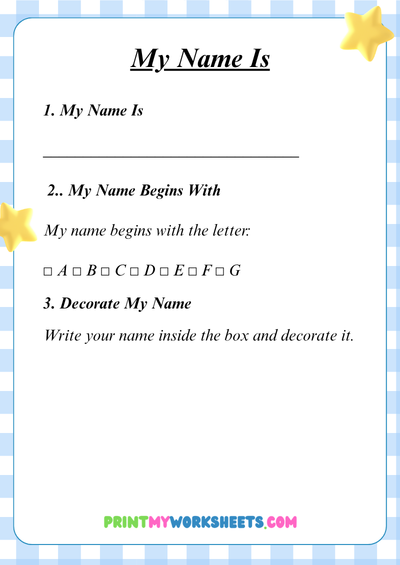
Kindergarten All About Me Worksheets | Free Downloadable PDF
Help kindergarten children discover and celebrate what makes them unique with our Kindergarten All About Me Worksheets , designed for homeschool families, classroom teachers, and young learners across the United States. These printable PDF worksheets provide engaging opportunities for children to talk about themselves, share personal information, express their feelings, draw pictures, practice writing their names, and explore their likes, interests, and individual qualities.
The activities encourage self-expression, communication, creativity, early writing, and confidence while helping children become comfortable participating in classroom conversations. These worksheets are especially useful during the beginning of the school year, back-to-school activities, classroom introductions, first-week lessons, homeschool learning, and getting-to-know-you activities.
Parents and teachers can easily download and print these no-prep resources for use at home or in the classroom. Simple, age-appropriate prompts give children opportunities to communicate about themselves while developing foundational literacy and social-emotional learning skills.
Whether you're welcoming a new kindergarten class or helping your child prepare for school, All About Me Worksheets provide a fun and meaningful way for children to introduce themselves and learn more about their classmates. Download the Free Kindergarten All About Me Worksheets PDF and make self-discovery an enjoyable part of early learning.
Frequently Asked Questions
Q1. Is this worksheet free to download?Yes, this worksheet is 100% free to download and print. No account, subscription, or payment is required. Click the Download Now button to get your free PDF instantly.Q2. What format is this worksheet available in?This worksheet is available as a printable PDF file. It is black-and-white, printer-friendly, and works on any standard home or classroom printer using A4 or US Letter paper.Q3. Can I use this worksheet for both classroom and home learning?Yes, these worksheets are designed for use by classroom teachers, homeschool parents, and tutors. They can be used as morning work, homework, revision practice, or learning centre activities.Q4. Is this worksheet aligned with Common Core ELA standards?Yes, this English worksheet is aligned with U.S. Common Core English Language Arts standards and supports foundational literacy development.Q5. Can this worksheet be used for phonics instruction?Yes, this worksheet supports phonics-based reading instruction and is suitable for early readers building letter-sound recognition skills.Kindergarten All About Me Worksheets | Free Downloadable PDF
Help kindergarten children discover and celebrate what makes them unique with our Kindergarten All About Me Worksheets , designed for homeschool families, classroom teachers, and young learners across the United States. These printable PDF worksheets provide engaging opportunities for children to talk about themselves, share personal information, express their feelings, draw pictures, practice writing their names, and explore their likes, interests, and individual qualities.
The activities encourage self-expression, communication, creativity, early writing, and confidence while helping children become comfortable participating in classroom conversations. These worksheets are especially useful during the beginning of the school year, back-to-school activities, classroom introductions, first-week lessons, homeschool learning, and getting-to-know-you activities.
Parents and teachers can easily download and print these no-prep resources for use at home or in the classroom. Simple, age-appropriate prompts give children opportunities to communicate about themselves while developing foundational literacy and social-emotional learning skills.
Whether you're welcoming a new kindergarten class or helping your child prepare for school, All About Me Worksheets provide a fun and meaningful way for children to introduce themselves and learn more about their classmates. Download the Free Kindergarten All About Me Worksheets PDF and make self-discovery an enjoyable part of early learning.
Frequently Asked Questions
Q1. Is this worksheet free to download?Yes, this worksheet is 100% free to download and print. No account, subscription, or payment is required. Click the Download Now button to get your free PDF instantly.Q2. What format is this worksheet available in?This worksheet is available as a printable PDF file. It is black-and-white, printer-friendly, and works on any standard home or classroom printer using A4 or US Letter paper.Q3. Can I use this worksheet for both classroom and home learning?Yes, these worksheets are designed for use by classroom teachers, homeschool parents, and tutors. They can be used as morning work, homework, revision practice, or learning centre activities.Q4. Is this worksheet aligned with Common Core ELA standards?Yes, this English worksheet is aligned with U.S. Common Core English Language Arts standards and supports foundational literacy development.Q5. Can this worksheet be used for phonics instruction?Yes, this worksheet supports phonics-based reading instruction and is suitable for early readers building letter-sound recognition skills.
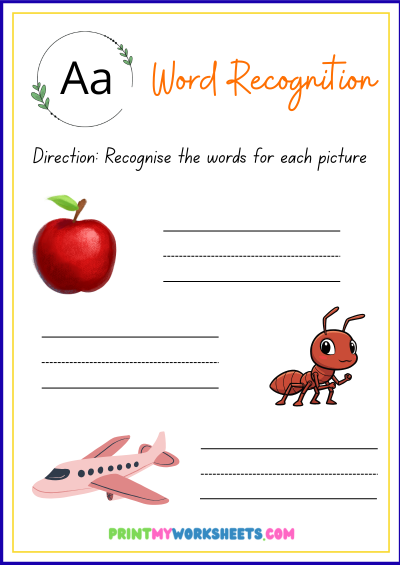
Kindergarten Alphabet Identify Word Worksheets PDF – Letter Recognition and Early Phonics Practice
Kindergarten Alphabet Identify Word Worksheets PDF | Free Downloadable PDF
Early literacy development begins with helping children recognize letters and connect them to meaningful words. The Kindergarten Alphabet Identify Word Worksheets PDF is designed to support young learners as they begin identifying letters of the alphabet and matching them with simple, familiar words. This printable worksheet set is ideal for U.S. parents, kindergarten teachers, and homeschool families who want structured, age-appropriate practice for early reading skills.
At the kindergarten level, children are learning to recognize uppercase and lowercase letters while building vocabulary and visual recognition. Alphabet identify word activities help bridge the gap between letter knowledge and word understanding. By using clear images, simple instructions, and repetition, these worksheets encourage confidence and independence. This skill is essential at this stage because it supports reading readiness, phonics development, and early comprehension, laying a strong foundation for future language learning.
What Students Will Learn?
These worksheets focus on helping kindergarten students identify letters of the alphabet and match them to corresponding words. Students practice recognizing letter shapes, connecting letters with beginning sounds, and visually identifying correct word matches. This reinforces both alphabet knowledge and early vocabulary.
Activities may include circling the word that starts with a given letter, matching pictures to words, tracing letters alongside images, and identifying the correct word from a small group of options. These tasks support structured learning by breaking down concepts into simple, manageable steps that young learners can understand.
The worksheets are designed to meet age-appropriate expectations by using familiar objects and words that children already encounter in daily life. Instructions are simple, visuals are clear, and the layout avoids distractions. This approach helps students stay focused while building early literacy skills that prepare them for phonics, reading, and writing activities in later grades.
Educational Value & Skill Development
The Kindergarten Alphabet Identify Word Worksheets PDF offers strong educational value by supporting multiple areas of early development. Academically, these worksheets strengthen letter recognition, word identification, and early reading readiness. Children learn to associate letters with words, which is a key step toward decoding and comprehension.
From a cognitive perspective, matching letters to words enhances memory, attention, and visual discrimination. Students practice making choices, comparing options, and identifying correct answers, all of which support critical thinking skills. Repeated exposure helps reinforce learning and build automatic recognition.
Confidence and independence grow as students complete worksheets successfully on their own. Familiar formats and consistent instructions allow children to feel comfortable with tasks, encouraging them to engage more actively. Over time, these activities support skill progression from simple letter recognition to more advanced phonics and reading tasks, creating a smooth transition into first-grade literacy expectations.
Why Focus on Alphabet Identify Word?
Identifying letters and matching them to words is a foundational literacy skill for kindergarten students. This skill helps children understand that letters have meaning and are connected to spoken language. When students can identify words associated with letters, they begin to recognize patterns in language and build early reading confidence.
This focus supports future learning by preparing students for phonics instruction, decoding, and spelling. Repetition and guided practice help reinforce connections between letters and words, making learning more effective. Alphabet identify word activities also align with U.S. kindergarten literacy standards, which emphasize letter recognition, vocabulary development, and early reading skills.
By practicing this skill consistently, children develop a strong base for reading comprehension and written expression, supporting long-term academic success.
How to Use These Worksheets?
These worksheets are flexible and easy to incorporate into different learning environments. In classrooms, teachers can use them during literacy centers, small-group instruction, morning work, or as independent practice. The clear layout allows students to work independently while teachers provide guidance as needed.
Homeschool families can include these worksheets in daily reading lessons or use them as a supplement to phonics instruction. The free printable PDF format makes it easy to print multiple copies or reuse pages for review. Parents can sit with children to discuss answers or allow independent completion to build confidence.
The Kindergarten Alphabet Identify Word Worksheets PDF also works well for review, early finishers, or additional support. Its simple structure makes it suitable for repeated use without overwhelming young learners.
Related Worksheets / Extensions:
Frequently Asked Questions
Q1. What format is this worksheet available in?This worksheet is available as a printable PDF file. It is black-and-white, printer-friendly, and works on any standard home or classroom printer using A4 or US Letter paper.Q2. Is this worksheet free to download?Yes, this worksheet is 100% free to download and print. No account, subscription, or payment is required. Click the Download Now button to get your free PDF instantly.Q3. Can I use this worksheet for both classroom and home learning?Yes, these worksheets are designed for use by classroom teachers, homeschool parents, and tutors. They can be used as morning work, homework, revision practice, or learning centre activities.Q4. Is this worksheet aligned with Common Core ELA standards?Yes, this English worksheet is aligned with U.S. Common Core English Language Arts standards and supports foundational literacy development.Q5. Can this worksheet be used for phonics instruction?Yes, this worksheet supports phonics-based reading instruction and is suitable for early readers building letter-sound recognition skills.Kindergarten Alphabet Identify Word Worksheets PDF – Letter Recognition and Early Phonics Practice
Kindergarten Alphabet Identify Word Worksheets PDF | Free Downloadable PDF
Early literacy development begins with helping children recognize letters and connect them to meaningful words. The Kindergarten Alphabet Identify Word Worksheets PDF is designed to support young learners as they begin identifying letters of the alphabet and matching them with simple, familiar words. This printable worksheet set is ideal for U.S. parents, kindergarten teachers, and homeschool families who want structured, age-appropriate practice for early reading skills.
At the kindergarten level, children are learning to recognize uppercase and lowercase letters while building vocabulary and visual recognition. Alphabet identify word activities help bridge the gap between letter knowledge and word understanding. By using clear images, simple instructions, and repetition, these worksheets encourage confidence and independence. This skill is essential at this stage because it supports reading readiness, phonics development, and early comprehension, laying a strong foundation for future language learning.
What Students Will Learn?
These worksheets focus on helping kindergarten students identify letters of the alphabet and match them to corresponding words. Students practice recognizing letter shapes, connecting letters with beginning sounds, and visually identifying correct word matches. This reinforces both alphabet knowledge and early vocabulary.
Activities may include circling the word that starts with a given letter, matching pictures to words, tracing letters alongside images, and identifying the correct word from a small group of options. These tasks support structured learning by breaking down concepts into simple, manageable steps that young learners can understand.
The worksheets are designed to meet age-appropriate expectations by using familiar objects and words that children already encounter in daily life. Instructions are simple, visuals are clear, and the layout avoids distractions. This approach helps students stay focused while building early literacy skills that prepare them for phonics, reading, and writing activities in later grades.
Educational Value & Skill Development
The Kindergarten Alphabet Identify Word Worksheets PDF offers strong educational value by supporting multiple areas of early development. Academically, these worksheets strengthen letter recognition, word identification, and early reading readiness. Children learn to associate letters with words, which is a key step toward decoding and comprehension.
From a cognitive perspective, matching letters to words enhances memory, attention, and visual discrimination. Students practice making choices, comparing options, and identifying correct answers, all of which support critical thinking skills. Repeated exposure helps reinforce learning and build automatic recognition.
Confidence and independence grow as students complete worksheets successfully on their own. Familiar formats and consistent instructions allow children to feel comfortable with tasks, encouraging them to engage more actively. Over time, these activities support skill progression from simple letter recognition to more advanced phonics and reading tasks, creating a smooth transition into first-grade literacy expectations.
Why Focus on Alphabet Identify Word?
Identifying letters and matching them to words is a foundational literacy skill for kindergarten students. This skill helps children understand that letters have meaning and are connected to spoken language. When students can identify words associated with letters, they begin to recognize patterns in language and build early reading confidence.
This focus supports future learning by preparing students for phonics instruction, decoding, and spelling. Repetition and guided practice help reinforce connections between letters and words, making learning more effective. Alphabet identify word activities also align with U.S. kindergarten literacy standards, which emphasize letter recognition, vocabulary development, and early reading skills.
By practicing this skill consistently, children develop a strong base for reading comprehension and written expression, supporting long-term academic success.
How to Use These Worksheets?
These worksheets are flexible and easy to incorporate into different learning environments. In classrooms, teachers can use them during literacy centers, small-group instruction, morning work, or as independent practice. The clear layout allows students to work independently while teachers provide guidance as needed.
Homeschool families can include these worksheets in daily reading lessons or use them as a supplement to phonics instruction. The free printable PDF format makes it easy to print multiple copies or reuse pages for review. Parents can sit with children to discuss answers or allow independent completion to build confidence.
The Kindergarten Alphabet Identify Word Worksheets PDF also works well for review, early finishers, or additional support. Its simple structure makes it suitable for repeated use without overwhelming young learners.
Related Worksheets / Extensions:
Frequently Asked Questions
Q1. What format is this worksheet available in?This worksheet is available as a printable PDF file. It is black-and-white, printer-friendly, and works on any standard home or classroom printer using A4 or US Letter paper.Q2. Is this worksheet free to download?Yes, this worksheet is 100% free to download and print. No account, subscription, or payment is required. Click the Download Now button to get your free PDF instantly.Q3. Can I use this worksheet for both classroom and home learning?Yes, these worksheets are designed for use by classroom teachers, homeschool parents, and tutors. They can be used as morning work, homework, revision practice, or learning centre activities.Q4. Is this worksheet aligned with Common Core ELA standards?Yes, this English worksheet is aligned with U.S. Common Core English Language Arts standards and supports foundational literacy development.Q5. Can this worksheet be used for phonics instruction?Yes, this worksheet supports phonics-based reading instruction and is suitable for early readers building letter-sound recognition skills.
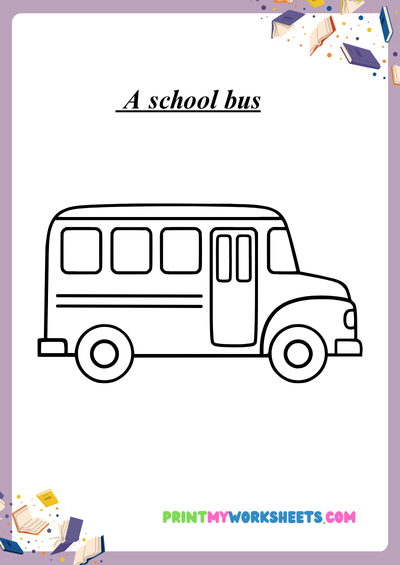
Kindergarten Back to School Coloring Worksheets | Free Downloadable PDF
Make the new school year exciting with our Kindergarten Back to School Coloring Worksheets, designed for homeschool families, teachers, and kindergarten students across the United States. These downloadable PDF worksheets combine creativity and early learning to help young children enjoy fun back-to-school activities while becoming familiar with the school environment.
Children can color school-themed pages featuring familiar classroom ideas, school supplies, learning spaces, and back-to-school experiences. Coloring activities encourage creativity, focus, fine motor development, pencil control, and self-expression while giving children an enjoyable way to prepare for kindergarten.
These no-prep worksheets are perfect for the first day of school, back-to-school week, classroom centers, morning work, homeschool activities, quiet time, early finishers, and beginning-of-year celebrations. Parents and teachers can easily download and print the PDF worksheets for convenient use at home or in the classroom.
Back-to-school coloring provides a relaxed activity that can help children feel comfortable and excited about returning to school. Whether you're preparing your child for their first kindergarten experience or looking for engaging classroom activities, these worksheets provide an easy and enjoyable learning resource.
Download the Free Kindergarten Back to School Coloring Worksheets PDF today and give young learners a creative way to celebrate the new school year while developing important early-learning and fine-motor skills.Frequently Asked Questions
Q1. Is this worksheet free to download?Yes, this worksheet is 100% free to download and print. No account, subscription, or payment is required. Click the Download Now button to get your free PDF instantly.Q2. What format is this worksheet available in?This worksheet is available as a printable PDF file. It is black-and-white, printer-friendly, and works on any standard home or classroom printer using A4 or US Letter paper.Q3. Can I use this worksheet for both classroom and home learning?Yes, these worksheets are designed for use by classroom teachers, homeschool parents, and tutors. They can be used as morning work, homework, revision practice, or learning centre activities.Q4. Is this worksheet aligned with Common Core ELA standards?Yes, this English worksheet is aligned with U.S. Common Core English Language Arts standards and supports foundational literacy development.Q5. Can this worksheet be used for phonics instruction?Yes, this worksheet supports phonics-based reading instruction and is suitable for early readers building letter-sound recognition skills.Kindergarten Back to School Coloring Worksheets | Free Downloadable PDF
Make the new school year exciting with our Kindergarten Back to School Coloring Worksheets, designed for homeschool families, teachers, and kindergarten students across the United States. These downloadable PDF worksheets combine creativity and early learning to help young children enjoy fun back-to-school activities while becoming familiar with the school environment.
Children can color school-themed pages featuring familiar classroom ideas, school supplies, learning spaces, and back-to-school experiences. Coloring activities encourage creativity, focus, fine motor development, pencil control, and self-expression while giving children an enjoyable way to prepare for kindergarten.
These no-prep worksheets are perfect for the first day of school, back-to-school week, classroom centers, morning work, homeschool activities, quiet time, early finishers, and beginning-of-year celebrations. Parents and teachers can easily download and print the PDF worksheets for convenient use at home or in the classroom.
Back-to-school coloring provides a relaxed activity that can help children feel comfortable and excited about returning to school. Whether you're preparing your child for their first kindergarten experience or looking for engaging classroom activities, these worksheets provide an easy and enjoyable learning resource.
Download the Free Kindergarten Back to School Coloring Worksheets PDF today and give young learners a creative way to celebrate the new school year while developing important early-learning and fine-motor skills.Frequently Asked Questions
Q1. Is this worksheet free to download?Yes, this worksheet is 100% free to download and print. No account, subscription, or payment is required. Click the Download Now button to get your free PDF instantly.Q2. What format is this worksheet available in?This worksheet is available as a printable PDF file. It is black-and-white, printer-friendly, and works on any standard home or classroom printer using A4 or US Letter paper.Q3. Can I use this worksheet for both classroom and home learning?Yes, these worksheets are designed for use by classroom teachers, homeschool parents, and tutors. They can be used as morning work, homework, revision practice, or learning centre activities.Q4. Is this worksheet aligned with Common Core ELA standards?Yes, this English worksheet is aligned with U.S. Common Core English Language Arts standards and supports foundational literacy development.Q5. Can this worksheet be used for phonics instruction?Yes, this worksheet supports phonics-based reading instruction and is suitable for early readers building letter-sound recognition skills.
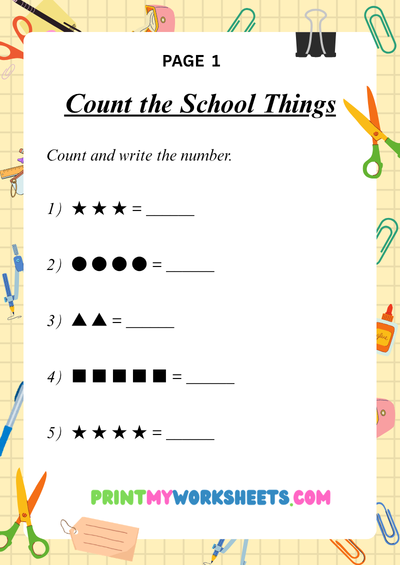
Kindergarten Back to School Math Worksheets | Free Downloadable PDF
Make the start of the school year exciting with our Kindergarten Back to School Math Worksheets, designed for homeschool families, teachers, and kindergarten students across the United States. These downloadable PDF worksheets provide engaging, age-appropriate math practice that helps children review foundational skills while getting ready for a new school year.
Students can practice counting, number recognition, number writing, comparing numbers, patterns, shapes, addition, subtraction, and other essential kindergarten math concepts through simple and enjoyable activities. These worksheets encourage mathematical thinking, accuracy, confidence, and independent learning while providing valuable practice with skills children may have learned before summer break.
These no-prep worksheets are perfect for kindergarten classrooms, homeschool math lessons, back-to-school activities, morning work, math centers, homework, tutoring, first-week activities, and independent practice. Parents and teachers can easily download and print the PDF worksheets for convenient use at home or in the classroom.
Back-to-school math review gives children an opportunity to refresh foundational concepts and transition smoothly into their new learning routine. Whether you're preparing your child before the first day or reinforcing skills during the first weeks of school, these worksheets offer practical and engaging practice.
Download the Free Kindergarten Back to School Math Worksheets PDF today and help young learners strengthen essential math skills while starting the new school year with confidence and enthusiasm.Frequently Asked Questions
Q1. Is this worksheet free to download?Yes, this worksheet is 100% free to download and print. No account, subscription, or payment is required. Click the Download Now button to get your free PDF instantly.Q2. What format is this worksheet available in?This worksheet is available as a printable PDF file. It is black-and-white, printer-friendly, and works on any standard home or classroom printer using A4 or US Letter paper.Q3. Can I use this worksheet for both classroom and home learning?Yes, these worksheets are designed for use by classroom teachers, homeschool parents, and tutors. They can be used as morning work, homework, revision practice, or learning centre activities.Q4. Is this worksheet suitable for extra practice or exam preparation?Yes, this worksheet is ideal for supplemental practice, homework reinforcement, test preparation, and homeschool math lessons.Q5. Can this worksheet be used for differentiated instruction?Yes, teachers can assign this worksheet to students who need extra practice or use it as an enrichment activity for advanced learners.Kindergarten Back to School Math Worksheets | Free Downloadable PDF
Make the start of the school year exciting with our Kindergarten Back to School Math Worksheets, designed for homeschool families, teachers, and kindergarten students across the United States. These downloadable PDF worksheets provide engaging, age-appropriate math practice that helps children review foundational skills while getting ready for a new school year.
Students can practice counting, number recognition, number writing, comparing numbers, patterns, shapes, addition, subtraction, and other essential kindergarten math concepts through simple and enjoyable activities. These worksheets encourage mathematical thinking, accuracy, confidence, and independent learning while providing valuable practice with skills children may have learned before summer break.
These no-prep worksheets are perfect for kindergarten classrooms, homeschool math lessons, back-to-school activities, morning work, math centers, homework, tutoring, first-week activities, and independent practice. Parents and teachers can easily download and print the PDF worksheets for convenient use at home or in the classroom.
Back-to-school math review gives children an opportunity to refresh foundational concepts and transition smoothly into their new learning routine. Whether you're preparing your child before the first day or reinforcing skills during the first weeks of school, these worksheets offer practical and engaging practice.
Download the Free Kindergarten Back to School Math Worksheets PDF today and help young learners strengthen essential math skills while starting the new school year with confidence and enthusiasm.Frequently Asked Questions
Q1. Is this worksheet free to download?Yes, this worksheet is 100% free to download and print. No account, subscription, or payment is required. Click the Download Now button to get your free PDF instantly.Q2. What format is this worksheet available in?This worksheet is available as a printable PDF file. It is black-and-white, printer-friendly, and works on any standard home or classroom printer using A4 or US Letter paper.Q3. Can I use this worksheet for both classroom and home learning?Yes, these worksheets are designed for use by classroom teachers, homeschool parents, and tutors. They can be used as morning work, homework, revision practice, or learning centre activities.Q4. Is this worksheet suitable for extra practice or exam preparation?Yes, this worksheet is ideal for supplemental practice, homework reinforcement, test preparation, and homeschool math lessons.Q5. Can this worksheet be used for differentiated instruction?Yes, teachers can assign this worksheet to students who need extra practice or use it as an enrichment activity for advanced learners.
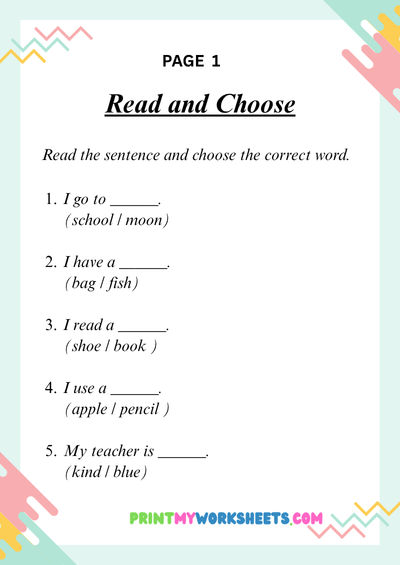
Kindergarten Back to School Reading Worksheets | Free Downloadable PDF
Make the beginning of the school year exciting with our Kindergarten Back to School Reading Worksheets, designed for homeschool families, teachers, and kindergarten students across the United States. These downloadable PDF worksheets provide engaging, age-appropriate reading activities that help children review foundational literacy skills and confidently transition into a new school year.
Students can practice letter recognition, beginning sounds, phonics, sight words, vocabulary, word recognition, simple sentences, and early reading skills through fun and structured activities. These worksheets encourage children to strengthen their reading foundations while developing confidence, language skills, and independent learning habits.
These no-prep worksheets are perfect for kindergarten classrooms, homeschool reading lessons, back-to-school activities, literacy centers, morning work, homework, tutoring sessions, and first-week learning activities. Parents and teachers can easily download and print the PDF worksheets for convenient use at home or in the classroom.
Back-to-school reading practice gives children an opportunity to refresh skills learned previously and prepare for new literacy challenges. Whether you're preparing your child before the first day or reinforcing reading skills during the first weeks of school, these worksheets provide practical and engaging learning opportunities.
Download the Free Kindergarten Back to School Reading Worksheets PDF today and help young learners strengthen early literacy skills, build reading confidence, and start the new school year ready to learn.Frequently Asked Questions
Q1. Is this worksheet free to download?Yes, this worksheet is 100% free to download and print. No account, subscription, or payment is required. Click the Download Now button to get your free PDF instantly.Q2. What format is this worksheet available in?This worksheet is available as a printable PDF file. It is black-and-white, printer-friendly, and works on any standard home or classroom printer using A4 or US Letter paper.Q3. Can I use this worksheet for both classroom and home learning?Yes, these worksheets are designed for use by classroom teachers, homeschool parents, and tutors. They can be used as morning work, homework, revision practice, or learning centre activities.Q4. Is this worksheet aligned with Common Core ELA standards?Yes, this English worksheet is aligned with U.S. Common Core English Language Arts standards and supports foundational literacy development.Q5. Can this worksheet be used for phonics instruction?Yes, this worksheet supports phonics-based reading instruction and is suitable for early readers building letter-sound recognition skills.Kindergarten Back to School Reading Worksheets | Free Downloadable PDF
Make the beginning of the school year exciting with our Kindergarten Back to School Reading Worksheets, designed for homeschool families, teachers, and kindergarten students across the United States. These downloadable PDF worksheets provide engaging, age-appropriate reading activities that help children review foundational literacy skills and confidently transition into a new school year.
Students can practice letter recognition, beginning sounds, phonics, sight words, vocabulary, word recognition, simple sentences, and early reading skills through fun and structured activities. These worksheets encourage children to strengthen their reading foundations while developing confidence, language skills, and independent learning habits.
These no-prep worksheets are perfect for kindergarten classrooms, homeschool reading lessons, back-to-school activities, literacy centers, morning work, homework, tutoring sessions, and first-week learning activities. Parents and teachers can easily download and print the PDF worksheets for convenient use at home or in the classroom.
Back-to-school reading practice gives children an opportunity to refresh skills learned previously and prepare for new literacy challenges. Whether you're preparing your child before the first day or reinforcing reading skills during the first weeks of school, these worksheets provide practical and engaging learning opportunities.
Download the Free Kindergarten Back to School Reading Worksheets PDF today and help young learners strengthen early literacy skills, build reading confidence, and start the new school year ready to learn.Frequently Asked Questions
Q1. Is this worksheet free to download?Yes, this worksheet is 100% free to download and print. No account, subscription, or payment is required. Click the Download Now button to get your free PDF instantly.Q2. What format is this worksheet available in?This worksheet is available as a printable PDF file. It is black-and-white, printer-friendly, and works on any standard home or classroom printer using A4 or US Letter paper.Q3. Can I use this worksheet for both classroom and home learning?Yes, these worksheets are designed for use by classroom teachers, homeschool parents, and tutors. They can be used as morning work, homework, revision practice, or learning centre activities.Q4. Is this worksheet aligned with Common Core ELA standards?Yes, this English worksheet is aligned with U.S. Common Core English Language Arts standards and supports foundational literacy development.Q5. Can this worksheet be used for phonics instruction?Yes, this worksheet supports phonics-based reading instruction and is suitable for early readers building letter-sound recognition skills.
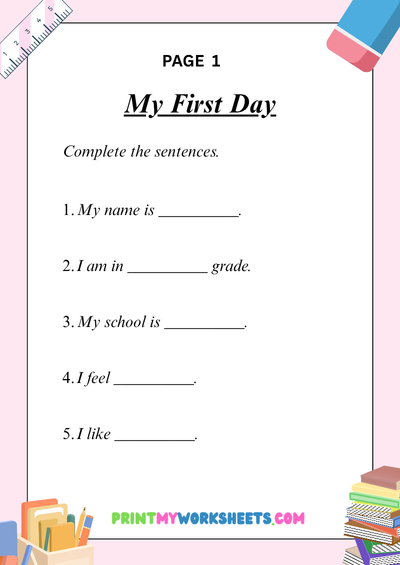
Kindergarten Back to School Writing Worksheets | Free Downloadable PDF
Build essential vocabulary and school-readiness skills with our Kindergarten Back to School Writing Worksheets, designed for homeschool families, teachers, and kindergarten students across the United States. These downloadable PDF worksheets introduce young learners to familiar school-related words through simple, engaging, and age-appropriate activities.
Children can practice recognizing and using vocabulary related to classrooms, teachers, classmates, school supplies, learning spaces, and everyday school routines. These activities help strengthen word recognition, communication, early literacy, listening skills, and confidence while helping children become more familiar with their school environment.
These no-prep worksheets are ideal for kindergarten classrooms, homeschool lessons, back-to-school activities, morning work, literacy centers, vocabulary practice, homework, and independent learning. Parents and teachers can easily download and print the PDF worksheets for convenient use at home or in the classroom.
Learning school vocabulary helps children connect new words with familiar experiences and supports effective communication in everyday school situations. Whether your child is preparing for kindergarten, learning school-related words for the first time, or reviewing familiar vocabulary, these worksheets provide meaningful opportunities for practice.
Download the Free Kindergarten School Vocabulary Worksheets PDF today and help young learners expand their vocabulary, strengthen early literacy skills, and feel more confident communicating about school through fun, structured learning activities.Frequently Asked Questions
Q1. Is this worksheet free to download?Yes, this worksheet is 100% free to download and print. No account, subscription, or payment is required. Click the Download Now button to get your free PDF instantly.Q2. What format is this worksheet available in?This worksheet is available as a printable PDF file. It is black-and-white, printer-friendly, and works on any standard home or classroom printer using A4 or US Letter paper.Q3. Can I use this worksheet for both classroom and home learning?Yes, these worksheets are designed for use by classroom teachers, homeschool parents, and tutors. They can be used as morning work, homework, revision practice, or learning centre activities.Q4. Is this worksheet aligned with Common Core ELA standards?Yes, this English worksheet is aligned with U.S. Common Core English Language Arts standards and supports foundational literacy development.Q5. Can this worksheet be used for phonics instruction?Yes, this worksheet supports phonics-based reading instruction and is suitable for early readers building letter-sound recognition skills.Kindergarten Back to School Writing Worksheets | Free Downloadable PDF
Build essential vocabulary and school-readiness skills with our Kindergarten Back to School Writing Worksheets, designed for homeschool families, teachers, and kindergarten students across the United States. These downloadable PDF worksheets introduce young learners to familiar school-related words through simple, engaging, and age-appropriate activities.
Children can practice recognizing and using vocabulary related to classrooms, teachers, classmates, school supplies, learning spaces, and everyday school routines. These activities help strengthen word recognition, communication, early literacy, listening skills, and confidence while helping children become more familiar with their school environment.
These no-prep worksheets are ideal for kindergarten classrooms, homeschool lessons, back-to-school activities, morning work, literacy centers, vocabulary practice, homework, and independent learning. Parents and teachers can easily download and print the PDF worksheets for convenient use at home or in the classroom.
Learning school vocabulary helps children connect new words with familiar experiences and supports effective communication in everyday school situations. Whether your child is preparing for kindergarten, learning school-related words for the first time, or reviewing familiar vocabulary, these worksheets provide meaningful opportunities for practice.
Download the Free Kindergarten School Vocabulary Worksheets PDF today and help young learners expand their vocabulary, strengthen early literacy skills, and feel more confident communicating about school through fun, structured learning activities.Frequently Asked Questions
Q1. Is this worksheet free to download?Yes, this worksheet is 100% free to download and print. No account, subscription, or payment is required. Click the Download Now button to get your free PDF instantly.Q2. What format is this worksheet available in?This worksheet is available as a printable PDF file. It is black-and-white, printer-friendly, and works on any standard home or classroom printer using A4 or US Letter paper.Q3. Can I use this worksheet for both classroom and home learning?Yes, these worksheets are designed for use by classroom teachers, homeschool parents, and tutors. They can be used as morning work, homework, revision practice, or learning centre activities.Q4. Is this worksheet aligned with Common Core ELA standards?Yes, this English worksheet is aligned with U.S. Common Core English Language Arts standards and supports foundational literacy development.Q5. Can this worksheet be used for phonics instruction?Yes, this worksheet supports phonics-based reading instruction and is suitable for early readers building letter-sound recognition skills.
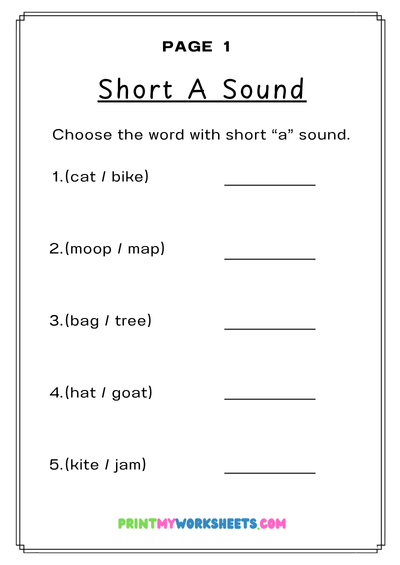
Kindergarten Beginning Sounds Worksheets Free PDF
Support early literacy success with our engaging Kindergarten Beginning Sounds Worksheets designed for kids, homeschool parents, teachers, and classrooms following the US curriculum. These free downloadable PDF worksheets help young learners recognize and practice beginning letter sounds through fun and interactive phonics activities that make learning enjoyable and effective.
Learning beginning sounds is an essential step in developing strong reading and writing skills. These worksheets help children connect letters with their sounds, improve phonemic awareness, strengthen pronunciation, and build vocabulary confidence. Recognizing beginning sounds also supports early decoding skills, spelling development, and reading fluency, creating a strong foundation for future literacy success.
The printable worksheets include picture matching, letter-sound recognition activities, tracing exercises, cut-and-paste tasks, coloring activities, and phonics games that keep kindergarten students engaged and motivated. These activities are perfect for homeschool lessons, classroom literacy centers, homework practice, independent learning, and extra phonics review.
The easy-to-download PDF format allows parents and teachers to quickly print educational resources anytime for flexible learning at home or school. These beginning sounds worksheets encourage children to become confident readers while improving listening, speaking, and language development skills.
Download our free Kindergarten English Beginning Sounds Worksheets today and make early phonics learning fun, interactive, and rewarding for young learners.
Frequently Asked Questions
Q1. Is this worksheet free to download?Yes, this worksheet is 100% free to download and print. No account, subscription, or payment is required. Click the Download Now button to get your free PDF instantly.Q2. What format is this worksheet available in?This worksheet is available as a printable PDF file. It is black-and-white, printer-friendly, and works on any standard home or classroom printer using A4 or US Letter paper.Q3. Do I need to create an account to download this worksheet?No account or sign-up is required. All worksheets on Print My Worksheets are freely accessible to teachers, parents, and homeschool families without any registration.Q4. Is this worksheet aligned with Common Core ELA standards?Yes, this English worksheet is aligned with U.S. Common Core English Language Arts standards and supports foundational literacy development.Q5. Can this worksheet be used for phonics instruction?Yes, this worksheet supports phonics-based reading instruction and is suitable for early readers building letter-sound recognition skills.Kindergarten Beginning Sounds Worksheets Free PDF
Support early literacy success with our engaging Kindergarten Beginning Sounds Worksheets designed for kids, homeschool parents, teachers, and classrooms following the US curriculum. These free downloadable PDF worksheets help young learners recognize and practice beginning letter sounds through fun and interactive phonics activities that make learning enjoyable and effective.
Learning beginning sounds is an essential step in developing strong reading and writing skills. These worksheets help children connect letters with their sounds, improve phonemic awareness, strengthen pronunciation, and build vocabulary confidence. Recognizing beginning sounds also supports early decoding skills, spelling development, and reading fluency, creating a strong foundation for future literacy success.
The printable worksheets include picture matching, letter-sound recognition activities, tracing exercises, cut-and-paste tasks, coloring activities, and phonics games that keep kindergarten students engaged and motivated. These activities are perfect for homeschool lessons, classroom literacy centers, homework practice, independent learning, and extra phonics review.
The easy-to-download PDF format allows parents and teachers to quickly print educational resources anytime for flexible learning at home or school. These beginning sounds worksheets encourage children to become confident readers while improving listening, speaking, and language development skills.
Download our free Kindergarten English Beginning Sounds Worksheets today and make early phonics learning fun, interactive, and rewarding for young learners.
Frequently Asked Questions
Q1. Is this worksheet free to download?Yes, this worksheet is 100% free to download and print. No account, subscription, or payment is required. Click the Download Now button to get your free PDF instantly.Q2. What format is this worksheet available in?This worksheet is available as a printable PDF file. It is black-and-white, printer-friendly, and works on any standard home or classroom printer using A4 or US Letter paper.Q3. Do I need to create an account to download this worksheet?No account or sign-up is required. All worksheets on Print My Worksheets are freely accessible to teachers, parents, and homeschool families without any registration.Q4. Is this worksheet aligned with Common Core ELA standards?Yes, this English worksheet is aligned with U.S. Common Core English Language Arts standards and supports foundational literacy development.Q5. Can this worksheet be used for phonics instruction?Yes, this worksheet supports phonics-based reading instruction and is suitable for early readers building letter-sound recognition skills.
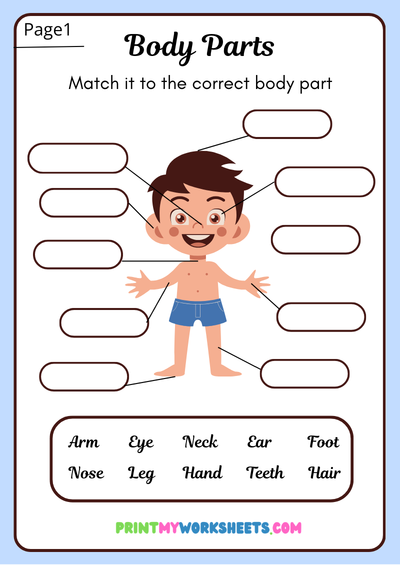
Kindergarten Body Parts Worksheets PDF Free | English Downloadable
Kindergarten Body Parts Worksheets PDF Free
The Kindergarten Body Parts Worksheets PDF Free resource is designed to help young learners identify and understand basic body parts in a simple, engaging way. This free printable PDF is ideal for U.S. parents, teachers, and homeschool families who want structured, age-appropriate activities that support early science and vocabulary development.
In kindergarten, children begin learning about themselves and the world around them. Understanding body parts is an important part of early education because it builds self-awareness, strengthens vocabulary, and supports communication skills. When students can correctly name parts of the body, they are better able to describe actions, feelings, and physical needs.
This worksheet collection provides interactive practice through labeling, matching, tracing, and simple writing activities. With repeated exposure and guided instruction, children gain confidence while building foundational knowledge that connects to health, science, and language learning.
What Students Will Learn?
These kindergarten body parts worksheets focus on helping students recognize, name, and describe common body parts. Activities are designed to match the developmental stage of kindergarten learners, using clear visuals and simple instructions.
Students will learn to:
Identify major body parts such as head, arms, legs, hands, and feet
Match pictures to correct body part names
Trace and write simple vocabulary words
Label parts of the body on diagrams
Understand how different body parts help us move and function
Strengthen listening and speaking skills through vocabulary practice
The worksheets include a variety of activity types to keep children engaged. Some pages may ask students to circle the correct word, while others encourage drawing lines to match labels to pictures. These varied formats help reinforce understanding through repetition and visual learning.
The activities align with U.S. kindergarten standards in science and English Language Arts. By combining vocabulary development with simple labeling exercises, students strengthen both language and conceptual understanding in an integrated way.
Educational Value & Skill Development
The Kindergarten Body Parts Worksheets PDF Free supports academic growth while encouraging curiosity about the human body. Learning body part names builds early science knowledge and strengthens communication skills.
Academically, students expand their vocabulary by connecting words to visual representations. Recognizing and labeling body parts helps children understand how language describes the physical world. This knowledge supports reading comprehension when body-related words appear in stories or informational texts.
Cognitively, labeling and matching activities improve memory and visual discrimination skills. Children learn to observe carefully and identify differences between similar images. These skills are important for early literacy development.
Fine motor skills are also strengthened through tracing and writing practice. As students trace vocabulary words, they develop better pencil control and hand coordination, which are essential for writing readiness.
Confidence grows as children correctly identify and name parts of the body. This self-awareness supports social-emotional development, as students gain language to express needs and describe physical experiences. Through structured and supportive practice, young learners build a strong foundation for future science and language learning.
Why Focus on Body Parts?
Learning about body parts is an important component of early childhood education. In kindergarten, children are naturally curious about how their bodies work and how they move. Providing structured learning opportunities supports that curiosity in a meaningful way.
Understanding body parts helps children communicate clearly. When students can say “arm,” “knee,” or “shoulder,” they can describe actions, injuries, or physical sensations more accurately. This improves both classroom communication and everyday interactions.
Repetition and guided practice help reinforce vocabulary retention. Seeing body part names in print and connecting them to pictures strengthens understanding and memory.
This skill also connects to health education and personal safety awareness. When children can correctly name parts of the body, they are better equipped to understand instructions and express themselves clearly.
Building foundational science vocabulary in kindergarten prepares students for more detailed lessons about the human body in later grades.
How to Use These Worksheets?
The Kindergarten Body Parts Worksheets PDF Free can be used in classrooms, homeschool settings, and small-group instruction. Teachers may introduce the topic during science lessons or health units, then assign worksheets for reinforcement.
In homeschool environments, parents can use these pages as part of a weekly science or vocabulary routine. Reviewing the names of body parts aloud before beginning the worksheet helps strengthen oral language skills.
Since the resource is provided as a free printable PDF, it can be easily downloaded and printed whenever needed. Pages may be reused for review throughout the school year.
These worksheets also work well for independent practice or literacy centers. Students can complete labeling and matching tasks on their own while reinforcing vocabulary. The simple layout makes the activities manageable for young learners.
Related Worksheets / Extensions:
You may also like:
Kindergarten five senses worksheets
Preschool health and hygiene activities
Kindergarten vocabulary building worksheets
Early science worksheets for young learners
First grade human body worksheets
The Kindergarten Body Parts Worksheets PDF Free pairs well with additional early science and vocabulary resources. Combining body part identification with lessons about the five senses or healthy habits creates a well-rounded learning experience. With consistent practice and guided instruction, children build essential vocabulary and gain confidence in understanding themselves and the world around them.
You may also like:
[gallery ids="7066,6966,6689"]Frequently Asked Questions
Q1. What format is this worksheet available in?This worksheet is available as a printable PDF file. It is black-and-white, printer-friendly, and works on any standard home or classroom printer using A4 or US Letter paper.Q2. Is this worksheet free to download?Yes, this worksheet is 100% free to download and print. No account, subscription, or payment is required. Click the Download Now button to get your free PDF instantly.Q3. Can I use this worksheet for both classroom and home learning?Yes, these worksheets are designed for use by classroom teachers, homeschool parents, and tutors. They can be used as morning work, homework, revision practice, or learning centre activities.Q4.Q4. Is this worksheet aligned with Common Core ELA standards?Yes, this English worksheet is aligned with U.S. Common Core English Language Arts standards and supports foundational literacy development.Q5. Can this worksheet be used for phonics instruction?Yes, this worksheet supports phonics-based reading instruction and is suitable for early readers building letter-sound recognition skills.Kindergarten Body Parts Worksheets PDF Free | English Downloadable
Kindergarten Body Parts Worksheets PDF Free
The Kindergarten Body Parts Worksheets PDF Free resource is designed to help young learners identify and understand basic body parts in a simple, engaging way. This free printable PDF is ideal for U.S. parents, teachers, and homeschool families who want structured, age-appropriate activities that support early science and vocabulary development.
In kindergarten, children begin learning about themselves and the world around them. Understanding body parts is an important part of early education because it builds self-awareness, strengthens vocabulary, and supports communication skills. When students can correctly name parts of the body, they are better able to describe actions, feelings, and physical needs.
This worksheet collection provides interactive practice through labeling, matching, tracing, and simple writing activities. With repeated exposure and guided instruction, children gain confidence while building foundational knowledge that connects to health, science, and language learning.
What Students Will Learn?
These kindergarten body parts worksheets focus on helping students recognize, name, and describe common body parts. Activities are designed to match the developmental stage of kindergarten learners, using clear visuals and simple instructions.
Students will learn to:
Identify major body parts such as head, arms, legs, hands, and feet
Match pictures to correct body part names
Trace and write simple vocabulary words
Label parts of the body on diagrams
Understand how different body parts help us move and function
Strengthen listening and speaking skills through vocabulary practice
The worksheets include a variety of activity types to keep children engaged. Some pages may ask students to circle the correct word, while others encourage drawing lines to match labels to pictures. These varied formats help reinforce understanding through repetition and visual learning.
The activities align with U.S. kindergarten standards in science and English Language Arts. By combining vocabulary development with simple labeling exercises, students strengthen both language and conceptual understanding in an integrated way.
Educational Value & Skill Development
The Kindergarten Body Parts Worksheets PDF Free supports academic growth while encouraging curiosity about the human body. Learning body part names builds early science knowledge and strengthens communication skills.
Academically, students expand their vocabulary by connecting words to visual representations. Recognizing and labeling body parts helps children understand how language describes the physical world. This knowledge supports reading comprehension when body-related words appear in stories or informational texts.
Cognitively, labeling and matching activities improve memory and visual discrimination skills. Children learn to observe carefully and identify differences between similar images. These skills are important for early literacy development.
Fine motor skills are also strengthened through tracing and writing practice. As students trace vocabulary words, they develop better pencil control and hand coordination, which are essential for writing readiness.
Confidence grows as children correctly identify and name parts of the body. This self-awareness supports social-emotional development, as students gain language to express needs and describe physical experiences. Through structured and supportive practice, young learners build a strong foundation for future science and language learning.
Why Focus on Body Parts?
Learning about body parts is an important component of early childhood education. In kindergarten, children are naturally curious about how their bodies work and how they move. Providing structured learning opportunities supports that curiosity in a meaningful way.
Understanding body parts helps children communicate clearly. When students can say “arm,” “knee,” or “shoulder,” they can describe actions, injuries, or physical sensations more accurately. This improves both classroom communication and everyday interactions.
Repetition and guided practice help reinforce vocabulary retention. Seeing body part names in print and connecting them to pictures strengthens understanding and memory.
This skill also connects to health education and personal safety awareness. When children can correctly name parts of the body, they are better equipped to understand instructions and express themselves clearly.
Building foundational science vocabulary in kindergarten prepares students for more detailed lessons about the human body in later grades.
How to Use These Worksheets?
The Kindergarten Body Parts Worksheets PDF Free can be used in classrooms, homeschool settings, and small-group instruction. Teachers may introduce the topic during science lessons or health units, then assign worksheets for reinforcement.
In homeschool environments, parents can use these pages as part of a weekly science or vocabulary routine. Reviewing the names of body parts aloud before beginning the worksheet helps strengthen oral language skills.
Since the resource is provided as a free printable PDF, it can be easily downloaded and printed whenever needed. Pages may be reused for review throughout the school year.
These worksheets also work well for independent practice or literacy centers. Students can complete labeling and matching tasks on their own while reinforcing vocabulary. The simple layout makes the activities manageable for young learners.
Related Worksheets / Extensions:
You may also like:
Kindergarten five senses worksheets
Preschool health and hygiene activities
Kindergarten vocabulary building worksheets
Early science worksheets for young learners
First grade human body worksheets
The Kindergarten Body Parts Worksheets PDF Free pairs well with additional early science and vocabulary resources. Combining body part identification with lessons about the five senses or healthy habits creates a well-rounded learning experience. With consistent practice and guided instruction, children build essential vocabulary and gain confidence in understanding themselves and the world around them.
You may also like:
[gallery ids="7066,6966,6689"]Frequently Asked Questions
Q1. What format is this worksheet available in?This worksheet is available as a printable PDF file. It is black-and-white, printer-friendly, and works on any standard home or classroom printer using A4 or US Letter paper.Q2. Is this worksheet free to download?Yes, this worksheet is 100% free to download and print. No account, subscription, or payment is required. Click the Download Now button to get your free PDF instantly.Q3. Can I use this worksheet for both classroom and home learning?Yes, these worksheets are designed for use by classroom teachers, homeschool parents, and tutors. They can be used as morning work, homework, revision practice, or learning centre activities.Q4.Q4. Is this worksheet aligned with Common Core ELA standards?Yes, this English worksheet is aligned with U.S. Common Core English Language Arts standards and supports foundational literacy development.Q5. Can this worksheet be used for phonics instruction?Yes, this worksheet supports phonics-based reading instruction and is suitable for early readers building letter-sound recognition skills.
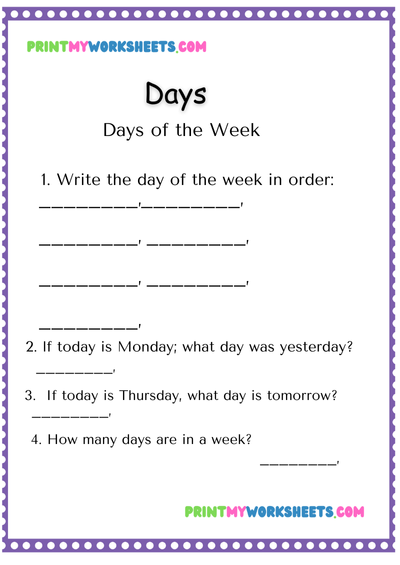
Kindergarten Calendar Worksheets PDF | Free Downloadable
Kindergarten Calendar Worksheets PDF
Understanding how calendars work is an important part of early learning. The Kindergarten Calendar Worksheets PDF helps young students explore concepts related to days, weeks, and months through simple and engaging activities. These printable worksheets are designed for U.S. parents, teachers, and homeschool families who want to introduce time awareness and daily routines in a way that is easy for kindergarten learners to understand.
At the kindergarten level, students begin learning how time is organized. They start recognizing the days of the week, identifying months of the year, and understanding how calendars help people keep track of events and schedules. Calendar activities allow children to connect classroom learning with everyday experiences.
The Kindergarten Calendar Worksheets PDF provides structured practice that supports early understanding of time concepts. Through interactive exercises, children learn how to read a basic calendar, identify important dates, and recognize patterns within the weekly and monthly structure. These worksheets encourage curiosity while helping students develop practical skills that support both academic learning and daily life.
What Students Will Learn?
Calendar worksheets help kindergarten students develop early time awareness and organizational skills. These activities introduce children to the structure of a calendar and teach them how to recognize patterns in days, weeks, and months.
Students will begin by learning the names of the days of the week. Activities may ask them to identify today, yesterday, or tomorrow, helping them understand how days follow a predictable order.
Children also practice recognizing the months of the year. These exercises help students understand how months repeat in a yearly cycle and how they relate to seasons and holidays.
Many activities involve reading a simple calendar grid. Students may locate specific dates, identify the first day of the month, or count the number of days in a week. These exercises strengthen both number recognition and logical thinking.
Calendar worksheets may also include tasks such as marking special dates, circling the correct day, or completing missing days in a sequence. These activities encourage students to pay attention to patterns and order.
Through these structured exercises, kindergarten learners develop a clearer understanding of how time is organized and how calendars help people plan events and activities.
Educational Value & Skill Development
The Kindergarten Calendar Worksheets PDF supports multiple areas of early childhood learning that are important for academic and daily life skills.
One of the most valuable benefits is time awareness. Young learners begin to understand how days and weeks are organized and how events happen within a structured timeline. This understanding helps children become more aware of routines and schedules.
Calendar activities also support early math development. When students count days, recognize numbers on a calendar, and follow weekly patterns, they strengthen their number recognition and sequencing skills.
The Kindergarten Calendar Worksheets PDF also encourages logical thinking and pattern recognition. Students must examine the order of days and identify where specific dates belong on a calendar grid.
These worksheets also help build organizational skills. Children learn that calendars are tools used to plan events, remember important days, and track activities.
Additionally, calendar exercises support vocabulary development. Students become familiar with words such as week, month, today, tomorrow, and yesterday.
By practicing these concepts regularly, kindergarten students build a stronger understanding of time and develop important skills that support both academic learning and everyday routines.
Why Focus on Calendar Worksheets?
Learning how to use a calendar helps children understand how time is structured in daily life. Calendars are used in schools, homes, and communities to organize events, track schedules, and remember important dates.
For young learners, understanding the sequence of days and months helps them build a sense of routine. Knowing what day it is or when a special event will occur gives children a clearer understanding of how time moves forward.
Calendar activities also support early math and sequencing skills. When students recognize that days follow a consistent order, they begin to understand patterns and relationships within numbers.
These activities also encourage real-world connections. Students can relate calendar learning to birthdays, holidays, school events, and family plans.
In kindergarten classrooms across the United States, calendar time is often part of the daily routine. Teachers use calendars to review the date, discuss the day of the week, and count the days of the month.
Providing additional worksheet practice helps reinforce these concepts and allows students to apply what they learn during classroom calendar discussions.
How to Use These Worksheets?
The Kindergarten Calendar Worksheets PDF can be used in a variety of learning environments, including classrooms, homeschool lessons, and independent learning activities.
Teachers often incorporate calendar worksheets into morning routines. After discussing the date as a class, students may complete an activity that reinforces the concept being taught.
Small group instruction is another effective way to use these worksheets. Educators can guide students as they read the calendar, identify dates, and discuss the order of days and weeks.
Parents who homeschool can include calendar activities in their daily learning schedule. Children may practice identifying the day of the week, counting the days of the month, or marking important events.
Because the worksheets are provided as a free printable PDF, they can be downloaded and printed easily whenever needed. Teachers and parents can reuse them for review or extra practice.
These worksheets are also useful for independent practice. Students can complete them quietly while reinforcing their understanding of how calendars organize time.
Related Worksheets / Extensions:
You may also like:
• Kindergarten days of the week worksheets
• Months of the year practice worksheets
• Number sequencing worksheets for early learners
• Kindergarten time and routine worksheets
• Early math pattern worksheets for kindergarten students
The Kindergarten Calendar Worksheets PDF can be combined with other early learning activities that focus on time concepts, number patterns, and daily routines. Practicing these skills together helps children build a stronger understanding of how time is organized.
Teachers and parents can extend learning by encouraging students to look at real calendars at home or in the classroom. Asking questions such as “What day is tomorrow?” or “How many days are in this week?” helps reinforce calendar knowledge.
With regular practice, kindergarten students become more comfortable identifying days, weeks, and months. These early experiences help children develop a stronger sense of time and prepare them for more advanced learning in future grades.
You may also like :
[gallery ids="4658,4724,4693"]Frequently Asked Questions
Q1. Is this worksheet free to download?Yes, this worksheet is 100% free to download and print. No account, subscription, or payment is required. Click the Download Now button to get your free PDF instantly.Q2. What format is this worksheet available in?This worksheet is available as a printable PDF file. It is black-and-white, printer-friendly, and works on any standard home or classroom printer using A4 or US Letter paper.Q3. Can I use this worksheet for both classroom and home learning?Yes, these worksheets are designed for use by classroom teachers, homeschool parents, and tutors. They can be used as morning work, homework, revision practice, or learning centre activities.Q4. Is this science worksheet suitable for classroom experiments?This worksheet is designed as a written activity to reinforce science concepts taught in class. It works well as a follow-up to experiments or demonstrations.Q5. Is this aligned with Next Generation Science Standards (NGSS)?This worksheet supports key science concepts covered in U.S. elementary and middle school science curricula, including NGSS-aligned topics.Kindergarten Calendar Worksheets PDF | Free Downloadable
Kindergarten Calendar Worksheets PDF
Understanding how calendars work is an important part of early learning. The Kindergarten Calendar Worksheets PDF helps young students explore concepts related to days, weeks, and months through simple and engaging activities. These printable worksheets are designed for U.S. parents, teachers, and homeschool families who want to introduce time awareness and daily routines in a way that is easy for kindergarten learners to understand.
At the kindergarten level, students begin learning how time is organized. They start recognizing the days of the week, identifying months of the year, and understanding how calendars help people keep track of events and schedules. Calendar activities allow children to connect classroom learning with everyday experiences.
The Kindergarten Calendar Worksheets PDF provides structured practice that supports early understanding of time concepts. Through interactive exercises, children learn how to read a basic calendar, identify important dates, and recognize patterns within the weekly and monthly structure. These worksheets encourage curiosity while helping students develop practical skills that support both academic learning and daily life.
What Students Will Learn?
Calendar worksheets help kindergarten students develop early time awareness and organizational skills. These activities introduce children to the structure of a calendar and teach them how to recognize patterns in days, weeks, and months.
Students will begin by learning the names of the days of the week. Activities may ask them to identify today, yesterday, or tomorrow, helping them understand how days follow a predictable order.
Children also practice recognizing the months of the year. These exercises help students understand how months repeat in a yearly cycle and how they relate to seasons and holidays.
Many activities involve reading a simple calendar grid. Students may locate specific dates, identify the first day of the month, or count the number of days in a week. These exercises strengthen both number recognition and logical thinking.
Calendar worksheets may also include tasks such as marking special dates, circling the correct day, or completing missing days in a sequence. These activities encourage students to pay attention to patterns and order.
Through these structured exercises, kindergarten learners develop a clearer understanding of how time is organized and how calendars help people plan events and activities.
Educational Value & Skill Development
The Kindergarten Calendar Worksheets PDF supports multiple areas of early childhood learning that are important for academic and daily life skills.
One of the most valuable benefits is time awareness. Young learners begin to understand how days and weeks are organized and how events happen within a structured timeline. This understanding helps children become more aware of routines and schedules.
Calendar activities also support early math development. When students count days, recognize numbers on a calendar, and follow weekly patterns, they strengthen their number recognition and sequencing skills.
The Kindergarten Calendar Worksheets PDF also encourages logical thinking and pattern recognition. Students must examine the order of days and identify where specific dates belong on a calendar grid.
These worksheets also help build organizational skills. Children learn that calendars are tools used to plan events, remember important days, and track activities.
Additionally, calendar exercises support vocabulary development. Students become familiar with words such as week, month, today, tomorrow, and yesterday.
By practicing these concepts regularly, kindergarten students build a stronger understanding of time and develop important skills that support both academic learning and everyday routines.
Why Focus on Calendar Worksheets?
Learning how to use a calendar helps children understand how time is structured in daily life. Calendars are used in schools, homes, and communities to organize events, track schedules, and remember important dates.
For young learners, understanding the sequence of days and months helps them build a sense of routine. Knowing what day it is or when a special event will occur gives children a clearer understanding of how time moves forward.
Calendar activities also support early math and sequencing skills. When students recognize that days follow a consistent order, they begin to understand patterns and relationships within numbers.
These activities also encourage real-world connections. Students can relate calendar learning to birthdays, holidays, school events, and family plans.
In kindergarten classrooms across the United States, calendar time is often part of the daily routine. Teachers use calendars to review the date, discuss the day of the week, and count the days of the month.
Providing additional worksheet practice helps reinforce these concepts and allows students to apply what they learn during classroom calendar discussions.
How to Use These Worksheets?
The Kindergarten Calendar Worksheets PDF can be used in a variety of learning environments, including classrooms, homeschool lessons, and independent learning activities.
Teachers often incorporate calendar worksheets into morning routines. After discussing the date as a class, students may complete an activity that reinforces the concept being taught.
Small group instruction is another effective way to use these worksheets. Educators can guide students as they read the calendar, identify dates, and discuss the order of days and weeks.
Parents who homeschool can include calendar activities in their daily learning schedule. Children may practice identifying the day of the week, counting the days of the month, or marking important events.
Because the worksheets are provided as a free printable PDF, they can be downloaded and printed easily whenever needed. Teachers and parents can reuse them for review or extra practice.
These worksheets are also useful for independent practice. Students can complete them quietly while reinforcing their understanding of how calendars organize time.
Related Worksheets / Extensions:
You may also like:
• Kindergarten days of the week worksheets
• Months of the year practice worksheets
• Number sequencing worksheets for early learners
• Kindergarten time and routine worksheets
• Early math pattern worksheets for kindergarten students
The Kindergarten Calendar Worksheets PDF can be combined with other early learning activities that focus on time concepts, number patterns, and daily routines. Practicing these skills together helps children build a stronger understanding of how time is organized.
Teachers and parents can extend learning by encouraging students to look at real calendars at home or in the classroom. Asking questions such as “What day is tomorrow?” or “How many days are in this week?” helps reinforce calendar knowledge.
With regular practice, kindergarten students become more comfortable identifying days, weeks, and months. These early experiences help children develop a stronger sense of time and prepare them for more advanced learning in future grades.
You may also like :
[gallery ids="4658,4724,4693"]Frequently Asked Questions
Q1. Is this worksheet free to download?Yes, this worksheet is 100% free to download and print. No account, subscription, or payment is required. Click the Download Now button to get your free PDF instantly.Q2. What format is this worksheet available in?This worksheet is available as a printable PDF file. It is black-and-white, printer-friendly, and works on any standard home or classroom printer using A4 or US Letter paper.Q3. Can I use this worksheet for both classroom and home learning?Yes, these worksheets are designed for use by classroom teachers, homeschool parents, and tutors. They can be used as morning work, homework, revision practice, or learning centre activities.Q4. Is this science worksheet suitable for classroom experiments?This worksheet is designed as a written activity to reinforce science concepts taught in class. It works well as a follow-up to experiments or demonstrations.Q5. Is this aligned with Next Generation Science Standards (NGSS)?This worksheet supports key science concepts covered in U.S. elementary and middle school science curricula, including NGSS-aligned topics.

Kindergarten Christmas CVC Worksheets PDF – Holiday Phonics Practice with Answer Key
Kindergarten Christmas CVC Worksheets PDF
These worksheets are designed especially for US teachers, homeschool parents, and young learners. These worksheets help children build strong phonics skills by practicing CVC words (consonant–vowel–consonant), such as cat, map, sun, and log, all within a cheerful Christmas theme. With engaging holiday images like stockings, ornaments, Santa hats, and winter scenes, kids stay motivated while developing essential early literacy foundations.
CVC word practice is a critical step in learning to read. These worksheets help children blend sounds, segment words, identify beginning–middle–ending sounds, and match pictures to simple words. The Christmas theme makes learning more enjoyable, helping students stay focused and excited during the holiday season. Activities include tracing, writing, matching, filling in missing letters, and reading simple sentences with CVC words.
Perfect for classroom centers, small-group phonics lessons, morning work, or at-home holiday learning, these worksheets support kindergarten reading standards and build confidence in young readers. Homeschool parents appreciate the easy-to-use printable format and skill-building practice that strengthens decoding and spelling.
Download the free PDF to spark holiday joy while helping your kindergartener master foundational reading skills through Christmas-themed CVC activities.
You may also like:
[gallery ids="6329,5915,5913"]Frequently Asked Questions
Q1. What format is this worksheet available in?This worksheet is available as a printable PDF file. It is black-and-white, printer-friendly, and works on any standard home or classroom printer using A4 or US Letter paper.Q2. Is this worksheet free to download?Yes, this worksheet is 100% free to download and print. No account, subscription, or payment is required. Click the Download Now button to get your free PDF instantly.Q3. Can I use this worksheet for both classroom and home learning?Yes, these worksheets are designed for use by classroom teachers, homeschool parents, and tutors. They can be used as morning work, homework, revision practice, or learning centre activities.Q4. Can this worksheet be used for phonics instruction?Yes, this worksheet supports phonics-based reading instruction and is suitable for early readers building letter-sound recognition skills.Q5. Is this worksheet suitable for ESL or ELL students?This worksheet can be used as a supplemental resource for ESL and ELL students, particularly for vocabulary building and language pattern practice.Kindergarten Christmas CVC Worksheets PDF – Holiday Phonics Practice with Answer Key
Kindergarten Christmas CVC Worksheets PDF
These worksheets are designed especially for US teachers, homeschool parents, and young learners. These worksheets help children build strong phonics skills by practicing CVC words (consonant–vowel–consonant), such as cat, map, sun, and log, all within a cheerful Christmas theme. With engaging holiday images like stockings, ornaments, Santa hats, and winter scenes, kids stay motivated while developing essential early literacy foundations.
CVC word practice is a critical step in learning to read. These worksheets help children blend sounds, segment words, identify beginning–middle–ending sounds, and match pictures to simple words. The Christmas theme makes learning more enjoyable, helping students stay focused and excited during the holiday season. Activities include tracing, writing, matching, filling in missing letters, and reading simple sentences with CVC words.
Perfect for classroom centers, small-group phonics lessons, morning work, or at-home holiday learning, these worksheets support kindergarten reading standards and build confidence in young readers. Homeschool parents appreciate the easy-to-use printable format and skill-building practice that strengthens decoding and spelling.
Download the free PDF to spark holiday joy while helping your kindergartener master foundational reading skills through Christmas-themed CVC activities.
You may also like:
[gallery ids="6329,5915,5913"]Frequently Asked Questions
Q1. What format is this worksheet available in?This worksheet is available as a printable PDF file. It is black-and-white, printer-friendly, and works on any standard home or classroom printer using A4 or US Letter paper.Q2. Is this worksheet free to download?Yes, this worksheet is 100% free to download and print. No account, subscription, or payment is required. Click the Download Now button to get your free PDF instantly.Q3. Can I use this worksheet for both classroom and home learning?Yes, these worksheets are designed for use by classroom teachers, homeschool parents, and tutors. They can be used as morning work, homework, revision practice, or learning centre activities.Q4. Can this worksheet be used for phonics instruction?Yes, this worksheet supports phonics-based reading instruction and is suitable for early readers building letter-sound recognition skills.Q5. Is this worksheet suitable for ESL or ELL students?This worksheet can be used as a supplemental resource for ESL and ELL students, particularly for vocabulary building and language pattern practice.
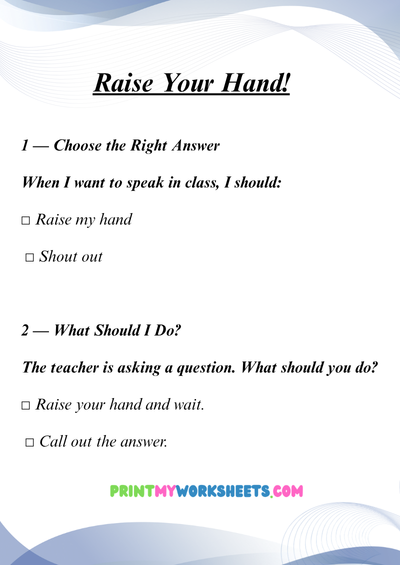
Kindergarten Classroom Rules Printable Worksheets | Free Downloadable PDF
Help young learners understand positive classroom behavior with our Kindergarten Classroom Rules Printable Worksheets , designed for homeschool families, teachers, and kindergarten students across the United States. These downloadable PDF worksheets provide simple, age-appropriate activities that introduce important classroom expectations and encourage children to become respectful, responsible, and ready to learn.
Students can practice identifying classroom rules, recognizing appropriate and inappropriate behaviors, following directions, taking turns, listening to teachers and classmates, keeping hands to themselves, using kind words, sharing materials, and helping maintain a safe learning environment. The activities support early social-emotional learning, communication, responsibility, and classroom readiness.
These no-prep worksheets are ideal for kindergarten classrooms, homeschool lessons, back-to-school activities, classroom management instruction, morning work, learning centers, first-week activities, and review sessions. Parents and teachers can easily download and print the PDF worksheets for convenient use at home or school.
Teaching classroom rules early helps children understand expectations and develop positive habits that support successful learning. Whether you are introducing rules at the beginning of the school year or reinforcing them throughout the year, these worksheets provide practical opportunities for discussion and practice.
Download the Free Kindergarten Classroom Rules Worksheets PDF today and help children learn important classroom expectations while building confidence, cooperation, responsibility, and positive learning habits.Frequently Asked Questions
Q1. Is this worksheet free to download?Yes, this worksheet is 100% free to download and print. No account, subscription, or payment is required. Click the Download Now button to get your free PDF instantly.Q2. What format is this worksheet available in?This worksheet is available as a printable PDF file. It is black-and-white, printer-friendly, and works on any standard home or classroom printer using A4 or US Letter paper.Q3. Can I use this worksheet for both classroom and home learning?Yes, these worksheets are designed for use by classroom teachers, homeschool parents, and tutors. They can be used as morning work, homework, revision practice, or learning centre activities.Q4. Is this worksheet aligned with Common Core ELA standards?Yes, this English worksheet is aligned with U.S. Common Core English Language Arts standards and supports foundational literacy development.Q5. Can this worksheet be used for phonics instruction?Yes, this worksheet supports phonics-based reading instruction and is suitable for early readers building letter-sound recognition skills.Kindergarten Classroom Rules Printable Worksheets | Free Downloadable PDF
Help young learners understand positive classroom behavior with our Kindergarten Classroom Rules Printable Worksheets , designed for homeschool families, teachers, and kindergarten students across the United States. These downloadable PDF worksheets provide simple, age-appropriate activities that introduce important classroom expectations and encourage children to become respectful, responsible, and ready to learn.
Students can practice identifying classroom rules, recognizing appropriate and inappropriate behaviors, following directions, taking turns, listening to teachers and classmates, keeping hands to themselves, using kind words, sharing materials, and helping maintain a safe learning environment. The activities support early social-emotional learning, communication, responsibility, and classroom readiness.
These no-prep worksheets are ideal for kindergarten classrooms, homeschool lessons, back-to-school activities, classroom management instruction, morning work, learning centers, first-week activities, and review sessions. Parents and teachers can easily download and print the PDF worksheets for convenient use at home or school.
Teaching classroom rules early helps children understand expectations and develop positive habits that support successful learning. Whether you are introducing rules at the beginning of the school year or reinforcing them throughout the year, these worksheets provide practical opportunities for discussion and practice.
Download the Free Kindergarten Classroom Rules Worksheets PDF today and help children learn important classroom expectations while building confidence, cooperation, responsibility, and positive learning habits.Frequently Asked Questions
Q1. Is this worksheet free to download?Yes, this worksheet is 100% free to download and print. No account, subscription, or payment is required. Click the Download Now button to get your free PDF instantly.Q2. What format is this worksheet available in?This worksheet is available as a printable PDF file. It is black-and-white, printer-friendly, and works on any standard home or classroom printer using A4 or US Letter paper.Q3. Can I use this worksheet for both classroom and home learning?Yes, these worksheets are designed for use by classroom teachers, homeschool parents, and tutors. They can be used as morning work, homework, revision practice, or learning centre activities.Q4. Is this worksheet aligned with Common Core ELA standards?Yes, this English worksheet is aligned with U.S. Common Core English Language Arts standards and supports foundational literacy development.Q5. Can this worksheet be used for phonics instruction?Yes, this worksheet supports phonics-based reading instruction and is suitable for early readers building letter-sound recognition skills.
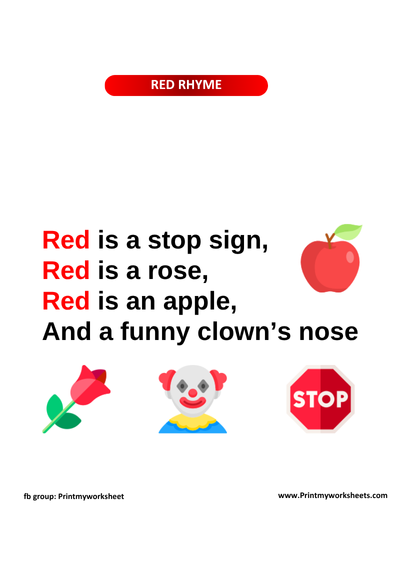
Kindergarten Color Rhymes Worksheets PDF | Free English Downloadable
Brighten up your child’s learning journey with our Kindergarten Color Rhymes Worksheets PDF—a free, printable PDF resource designed to help early learners recognize colors, improve vocabulary, and develop language fluency through rhyme. Ideal for U.S. homeschool families, preschool educators, and kindergarten teachers, this fun and colorful worksheet introduces key color words through catchy rhyming verses.
Each rhyme reinforces a specific color concept, helping children connect visual cues with spoken and written language. The playful tone and repetition make it easier for young learners to remember new words and confidently use them in everyday conversation. These rhymes also build listening, comprehension, and pre-reading skills—making them a perfect addition to circle time, literacy centers, or quiet reading moments at home.
Why are color rhymes so effective? They combine phonemic awareness with visual learning, support oral language development, and engage both hemispheres of the brain. Learning colors through rhymes builds foundational vocabulary and sets the stage for reading success.
Printable and easy to integrate into any lesson plan, this worksheet supports Common Core Kindergarten ELA goals and encourages joyful, hands-on learning.
🎨 Download the Free English Color Rhymes PDF now and turn color learning into a sing-song adventure your kindergartener will love!
Download and print today to give your little learners the head start they deserve!
You may also like :
[gallery ids="4518,4528,4465"]Frequently Asked Questions
Q1. What format is this worksheet available in?This worksheet is available as a printable PDF file. It is black-and-white, printer-friendly, and works on any standard home or classroom printer using A4 or US Letter paper.Q2. Is this worksheet free to download?Yes, this worksheet is 100% free to download and print. No account, subscription, or payment is required. Click the Download Now button to get your free PDF instantly.Q3. Can I use this worksheet for both classroom and home learning?Yes, these worksheets are designed for use by classroom teachers, homeschool parents, and tutors. They can be used as morning work, homework, revision practice, or learning centre activities.Q4. What skills does coloring develop in young children?Coloring activities develop fine motor skills, pencil grip, hand-eye coordination, colour recognition, and focus — all essential skills for early childhood development.Q5. Can this coloring worksheet be used as a classroom activity?Yes, this worksheet works well as a quiet time activity, early finisher work, morning warm-up, or take-home creative activity.Kindergarten Color Rhymes Worksheets PDF | Free English Downloadable
Brighten up your child’s learning journey with our Kindergarten Color Rhymes Worksheets PDF—a free, printable PDF resource designed to help early learners recognize colors, improve vocabulary, and develop language fluency through rhyme. Ideal for U.S. homeschool families, preschool educators, and kindergarten teachers, this fun and colorful worksheet introduces key color words through catchy rhyming verses.
Each rhyme reinforces a specific color concept, helping children connect visual cues with spoken and written language. The playful tone and repetition make it easier for young learners to remember new words and confidently use them in everyday conversation. These rhymes also build listening, comprehension, and pre-reading skills—making them a perfect addition to circle time, literacy centers, or quiet reading moments at home.
Why are color rhymes so effective? They combine phonemic awareness with visual learning, support oral language development, and engage both hemispheres of the brain. Learning colors through rhymes builds foundational vocabulary and sets the stage for reading success.
Printable and easy to integrate into any lesson plan, this worksheet supports Common Core Kindergarten ELA goals and encourages joyful, hands-on learning.
🎨 Download the Free English Color Rhymes PDF now and turn color learning into a sing-song adventure your kindergartener will love!
Download and print today to give your little learners the head start they deserve!