
3rd Grade 3-Digit and 4-Digit Addition Worksheets PDF | Free Math Downloadable
Give your child the tools to master advanced addition with our 3rd Grade 3-Digit and 4-Digit Addition Worksheets PDF, carefully designed for the US curriculum and perfect for homeschool parents, teachers, and tutors.
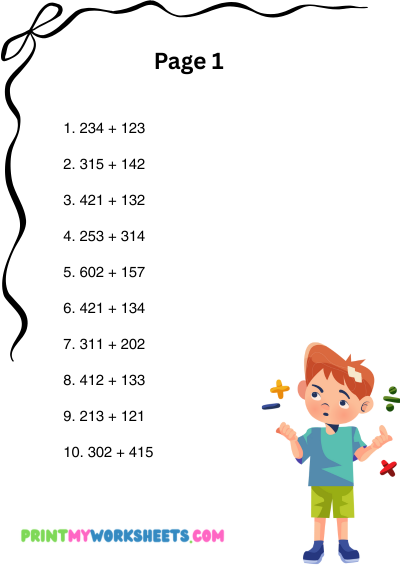
These worksheets focus on building confidence with larger numbers by practicing 3-digit and 4-digit addition problems. Activities include vertical addition, word problems, addition without regrouping, and regrouping challenges. With clear instructions, large number formats, and plenty of practice opportunities, these worksheets help students develop fluency and accuracy in multi-digit addition.
Why are 3-digit and 4-digit addition worksheets important in 3rd grade? At this level, children are transitioning from basic arithmetic to more complex math concepts. Mastering multi-digit addition strengthens number sense, logical thinking, and problem-solving skills. It also prepares students for subtraction with borrowing, multiplication, and division in later grades.
Our free printable PDF is easy to download, print, and use at home or in classrooms. With engaging exercises and answer keys included, kids can practice independently or in group settings while building confidence in math.
Download today to help your child develop strong foundational skills for success in both schoolwork and real-life problem-solving.
Download and print today to give your little learners the head start they deserve!
You may also like :
[gallery ids="5981,5987,5946"] 3rd Grade 3-Digit and 4-Digit Addition Worksheets PDF | Free Math Downloadable
Give your child the tools to master advanced addition with our 3rd Grade 3-Digit and 4-Digit Addition Worksheets PDF, carefully designed for the US curriculum and perfect for homeschool parents, teachers, and tutors.
These worksheets focus on building confidence with larger numbers by practicing 3-digit and 4-digit addition problems. Activities include vertical addition, word problems, addition without regrouping, and regrouping challenges. With clear instructions, large number formats, and plenty of practice opportunities, these worksheets help students develop fluency and accuracy in multi-digit addition.
Why are 3-digit and 4-digit addition worksheets important in 3rd grade? At this level, children are transitioning from basic arithmetic to more complex math concepts. Mastering multi-digit addition strengthens number sense, logical thinking, and problem-solving skills. It also prepares students for subtraction with borrowing, multiplication, and division in later grades.
Our free printable PDF is easy to download, print, and use at home or in classrooms. With engaging exercises and answer keys included, kids can practice independently or in group settings while building confidence in math.
Download today to help your child develop strong foundational skills for success in both schoolwork and real-life problem-solving.
Download and print today to give your little learners the head start they deserve!
You may also like :
[gallery ids="5981,5987,5946"]
3rd Grade 3-Digit and 4-Digit Number Worksheets PDF | Free Math Downloadable
Strengthen your child’s number sense and math fluency with our 3rd Grade 3-Digit and 4-Digit Number Worksheets PDF, specially created for the US curriculum and ideal for homeschool parents, teachers, and tutors.
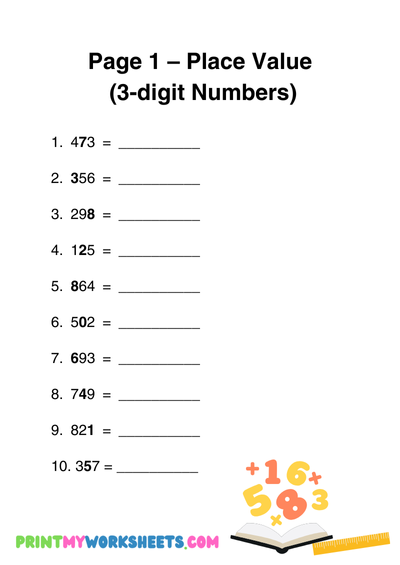
These worksheets help children practice reading, writing, and comparing 3-digit and 4-digit numbers while reinforcing place value understanding. Activities include expanded form, number ordering, skip counting, greater than/less than, and problem-solving with large numbers. Each worksheet is designed with clear layouts and engaging exercises to make learning effective and fun.
Why are 3-digit and 4-digit number worksheets important in 3rd grade? At this stage, students transition from basic arithmetic to more advanced math. Mastering larger numbers builds confidence and prepares them for multiplication, division, fractions, and higher-level problem-solving. These skills also support real-life applications such as handling money, measurement, and data interpretation.
Our free printable PDF makes it simple to download, print, and use at home or in classrooms. With a variety of exercises and answer keys included, these worksheets encourage independent learning and practice while keeping kids motivated.
Download today and give your child the tools to build strong math foundations with confidence.
Download and print today to give your little learners the head start they deserve!
You may also like :
[gallery ids="5949,5956,5582"] 3rd Grade 3-Digit and 4-Digit Number Worksheets PDF | Free Math Downloadable
Strengthen your child’s number sense and math fluency with our 3rd Grade 3-Digit and 4-Digit Number Worksheets PDF, specially created for the US curriculum and ideal for homeschool parents, teachers, and tutors.
These worksheets help children practice reading, writing, and comparing 3-digit and 4-digit numbers while reinforcing place value understanding. Activities include expanded form, number ordering, skip counting, greater than/less than, and problem-solving with large numbers. Each worksheet is designed with clear layouts and engaging exercises to make learning effective and fun.
Why are 3-digit and 4-digit number worksheets important in 3rd grade? At this stage, students transition from basic arithmetic to more advanced math. Mastering larger numbers builds confidence and prepares them for multiplication, division, fractions, and higher-level problem-solving. These skills also support real-life applications such as handling money, measurement, and data interpretation.
Our free printable PDF makes it simple to download, print, and use at home or in classrooms. With a variety of exercises and answer keys included, these worksheets encourage independent learning and practice while keeping kids motivated.
Download today and give your child the tools to build strong math foundations with confidence.
Download and print today to give your little learners the head start they deserve!
You may also like :
[gallery ids="5949,5956,5582"]
3rd Grade Antonyms Worksheets PDF | Free English Downloadable
Help your child strengthen their vocabulary and language skills with our 3rd Grade Antonyms Worksheets PDF, designed for the US curriculum and perfect for homeschool parents, teachers, and tutors.
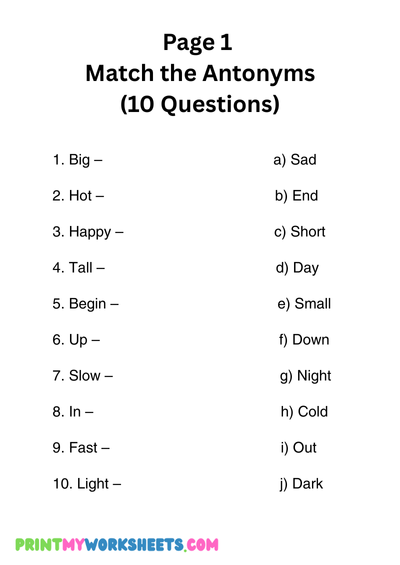
Antonyms are words with opposite meanings, such as hot/cold, big/small, or happy/sad. These worksheets feature engaging activities like word matching, fill-in-the-blank sentences, and sentence rewriting exercises that make learning fun and interactive. By practicing antonyms, children expand their vocabulary, improve reading comprehension, and develop stronger writing skills.
Why focus on antonyms in 3rd grade? At this level, students are transitioning to more complex reading and writing tasks. Understanding antonyms not only helps them interpret text with greater accuracy but also teaches them how to add variety and depth to their writing. Antonym practice encourages critical thinking by allowing kids to see contrasts and relationships between words.
Our free printable PDF is easy to download, print, and use at home or in classrooms. With kid-friendly layouts and answer keys included, these worksheets encourage independent practice while keeping learning enjoyable.
Download and print today to give your little learners the head start they deserve!
You may also like :
[gallery ids="5987,6134,6141"] 3rd Grade Antonyms Worksheets PDF | Free English Downloadable
Help your child strengthen their vocabulary and language skills with our 3rd Grade Antonyms Worksheets PDF, designed for the US curriculum and perfect for homeschool parents, teachers, and tutors.
Antonyms are words with opposite meanings, such as hot/cold, big/small, or happy/sad. These worksheets feature engaging activities like word matching, fill-in-the-blank sentences, and sentence rewriting exercises that make learning fun and interactive. By practicing antonyms, children expand their vocabulary, improve reading comprehension, and develop stronger writing skills.
Why focus on antonyms in 3rd grade? At this level, students are transitioning to more complex reading and writing tasks. Understanding antonyms not only helps them interpret text with greater accuracy but also teaches them how to add variety and depth to their writing. Antonym practice encourages critical thinking by allowing kids to see contrasts and relationships between words.
Our free printable PDF is easy to download, print, and use at home or in classrooms. With kid-friendly layouts and answer keys included, these worksheets encourage independent practice while keeping learning enjoyable.
Download and print today to give your little learners the head start they deserve!
You may also like :
[gallery ids="5987,6134,6141"]
3rd Grade Commonly Confused Words Worksheets PDF | Free English Downloadable
3rd Grade Commonly Confused Words Worksheets PDF
Clear communication depends on choosing the right words, especially when different words sound alike or look similar. The 3rd Grade Commonly Confused Words Worksheets PDF is designed to help students understand and correctly use words that are often mixed up in reading and writing. This printable worksheet set is created for U.S. parents, classroom teachers, and homeschool families who want to strengthen language skills in a practical and age-appropriate way.
By third grade, students are reading longer passages and writing more detailed sentences. At this stage, confusion between similar words can affect comprehension and written expression. These worksheets focus on helping learners recognize differences in meaning and usage through guided practice. With clear instructions and consistent structure, this free printable PDF supports grammar development while helping students become more confident readers and writers. It is suitable for classroom instruction, small-group learning, or independent practice at home.
What Students Will Learn?
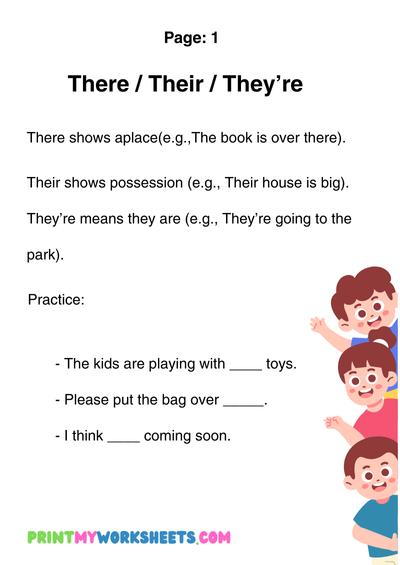
These worksheets help students identify and correctly use words that are commonly confused in everyday language. Learners practice distinguishing between words that sound the same but have different meanings, as well as words that look similar but are used in different contexts. Examples may include word pairs that require careful reading and thinking about sentence meaning.
Activities are designed to build understanding step by step. Students may match words to definitions, choose the correct word to complete a sentence, or correct errors in short passages. These tasks encourage students to slow down and think about how word choice affects meaning.
The worksheets support structured learning through predictable layouts and clear examples. This consistency helps students stay focused and reduces confusion. Activities are aligned with age-appropriate expectations, reinforcing vocabulary development, grammar awareness, and reading comprehension. By practicing with commonly confused words regularly, students gain confidence and accuracy, which supports stronger writing and clearer communication across all subjects.
Educational Value & Skill Development
Understanding word meaning is essential for strong literacy skills. The 3rd Grade Commonly Confused Words Worksheets PDF supports academic growth by helping students develop precision in both reading and writing. When students can distinguish between similar words, they are better able to understand text and express ideas clearly.
Using the 3rd Grade Commonly Confused Words Worksheets PDF also supports cognitive development. Students must analyze context, recall definitions, and apply reasoning to choose the correct word. This process strengthens attention, memory, and problem-solving skills.
Confidence and independence grow as learners successfully complete activities and begin to notice improvements in their writing. Repeated exposure to challenging word pairs helps reduce errors and builds long-term understanding. Students become more willing to revise their work and check for accuracy.
Skill progression is an important benefit. Mastery of commonly confused words in third grade prepares students for more advanced grammar and vocabulary work in later grades. These worksheets help build a strong foundation for spelling, editing, and reading comprehension tasks that become increasingly complex over time.
Why Focus on Commonly Confused Words?
Commonly confused words can be challenging because they often sound alike or look similar but have different meanings. In third grade, students are expected to read with greater understanding and write with more clarity. Confusing words can interfere with both of these goals.
Focusing on this skill helps students become more careful readers and writers. When learners understand how word meaning changes based on spelling or context, they are better equipped to interpret sentences accurately. This awareness also supports spelling and editing skills.
Repetition and guided practice are especially important for mastering word usage. Worksheets provide a structured way for students to practice identifying and correcting mistakes. These activities align with U.S. language arts standards, which emphasize vocabulary development, word relationships, and accurate language use. Strengthening this skill early helps students approach reading and writing tasks with confidence and precision.
How to Use These Worksheets?
These printable language worksheets are flexible and easy to use in a variety of learning settings. In homeschool environments, they can be included as part of a daily language arts routine or used for targeted practice when a child struggles with word choice. Parents can review answers with students and discuss why certain words are correct.
In classrooms, teachers may use the worksheets during whole-group lessons, small-group instruction, literacy centers, or independent work time. They also work well for homework assignments or review sessions before assessments.
The 3rd Grade Commonly Confused Words Worksheets PDF is available as a free printable PDF, making it simple to download and reuse throughout the school year. Pages can be printed multiple times or placed in sheet protectors for repeated practice, allowing for consistent reinforcement without additional preparation.
Related Worksheets / Extensions:
3rd Grade Commonly Confused Words Worksheets PDF | Free English Downloadable
3rd Grade Commonly Confused Words Worksheets PDF
Clear communication depends on choosing the right words, especially when different words sound alike or look similar. The 3rd Grade Commonly Confused Words Worksheets PDF is designed to help students understand and correctly use words that are often mixed up in reading and writing. This printable worksheet set is created for U.S. parents, classroom teachers, and homeschool families who want to strengthen language skills in a practical and age-appropriate way.
By third grade, students are reading longer passages and writing more detailed sentences. At this stage, confusion between similar words can affect comprehension and written expression. These worksheets focus on helping learners recognize differences in meaning and usage through guided practice. With clear instructions and consistent structure, this free printable PDF supports grammar development while helping students become more confident readers and writers. It is suitable for classroom instruction, small-group learning, or independent practice at home.
What Students Will Learn?
These worksheets help students identify and correctly use words that are commonly confused in everyday language. Learners practice distinguishing between words that sound the same but have different meanings, as well as words that look similar but are used in different contexts. Examples may include word pairs that require careful reading and thinking about sentence meaning.
Activities are designed to build understanding step by step. Students may match words to definitions, choose the correct word to complete a sentence, or correct errors in short passages. These tasks encourage students to slow down and think about how word choice affects meaning.
The worksheets support structured learning through predictable layouts and clear examples. This consistency helps students stay focused and reduces confusion. Activities are aligned with age-appropriate expectations, reinforcing vocabulary development, grammar awareness, and reading comprehension. By practicing with commonly confused words regularly, students gain confidence and accuracy, which supports stronger writing and clearer communication across all subjects.
Educational Value & Skill Development
Understanding word meaning is essential for strong literacy skills. The 3rd Grade Commonly Confused Words Worksheets PDF supports academic growth by helping students develop precision in both reading and writing. When students can distinguish between similar words, they are better able to understand text and express ideas clearly.
Using the 3rd Grade Commonly Confused Words Worksheets PDF also supports cognitive development. Students must analyze context, recall definitions, and apply reasoning to choose the correct word. This process strengthens attention, memory, and problem-solving skills.
Confidence and independence grow as learners successfully complete activities and begin to notice improvements in their writing. Repeated exposure to challenging word pairs helps reduce errors and builds long-term understanding. Students become more willing to revise their work and check for accuracy.
Skill progression is an important benefit. Mastery of commonly confused words in third grade prepares students for more advanced grammar and vocabulary work in later grades. These worksheets help build a strong foundation for spelling, editing, and reading comprehension tasks that become increasingly complex over time.
Why Focus on Commonly Confused Words?
Commonly confused words can be challenging because they often sound alike or look similar but have different meanings. In third grade, students are expected to read with greater understanding and write with more clarity. Confusing words can interfere with both of these goals.
Focusing on this skill helps students become more careful readers and writers. When learners understand how word meaning changes based on spelling or context, they are better equipped to interpret sentences accurately. This awareness also supports spelling and editing skills.
Repetition and guided practice are especially important for mastering word usage. Worksheets provide a structured way for students to practice identifying and correcting mistakes. These activities align with U.S. language arts standards, which emphasize vocabulary development, word relationships, and accurate language use. Strengthening this skill early helps students approach reading and writing tasks with confidence and precision.
How to Use These Worksheets?
These printable language worksheets are flexible and easy to use in a variety of learning settings. In homeschool environments, they can be included as part of a daily language arts routine or used for targeted practice when a child struggles with word choice. Parents can review answers with students and discuss why certain words are correct.
In classrooms, teachers may use the worksheets during whole-group lessons, small-group instruction, literacy centers, or independent work time. They also work well for homework assignments or review sessions before assessments.
The 3rd Grade Commonly Confused Words Worksheets PDF is available as a free printable PDF, making it simple to download and reuse throughout the school year. Pages can be printed multiple times or placed in sheet protectors for repeated practice, allowing for consistent reinforcement without additional preparation.
Related Worksheets / Extensions:
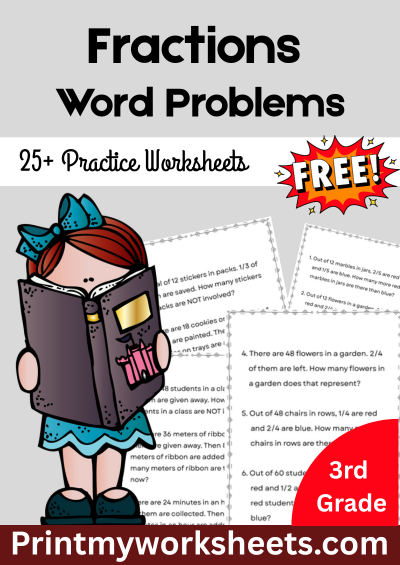
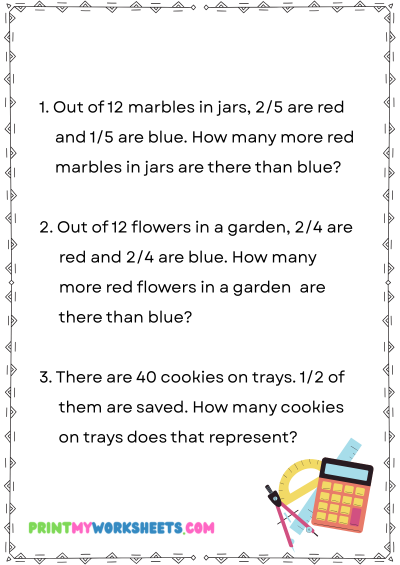
3rd Grade Fractions Word Problems Worksheets PDF – Math Practice Pack for Review, Test Prep & Daily Spiral Work
3rd Grade Fractions Word Problems Worksheets PDF
These worksheets are designed to help students understand fractions through real-life math situations. These free downloadable PDF worksheets are ideal for US homeschool parents, elementary teachers, and third-grade students learning to apply fraction concepts in meaningful ways.
Fractions can be challenging when taught only through numbers. Word problems help students connect fractions to everyday experiences such as sharing food, dividing objects, or measuring quantities. These worksheets guide students step by step in reading problems, identifying key information, and choosing the correct fraction operations.
Learning fractions through word problems strengthens problem-solving skills, logical reasoning, and reading comprehension. Students learn how to analyze questions, determine what is being asked, and explain their thinking. This approach builds deeper understanding rather than memorization and prepares students for more advanced math topics.
Each worksheet includes age-appropriate fraction word problems involving halves, thirds, fourths, and simple fraction comparisons. Clear layouts and visual support help students stay focused and confident while solving problems.
The printable PDF format makes these worksheets easy to use for classroom lessons, homeschooling routines, math centers, homework assignments, or independent practice. Whether reinforcing fraction concepts or preparing for assessments, these worksheets provide an effective, engaging, and completely free resource aligned with US Grade 3 math standards.
You may also like:
[gallery ids="6141,6750,5987"] 3rd Grade Fractions Word Problems Worksheets PDF – Math Practice Pack for Review, Test Prep & Daily Spiral Work
3rd Grade Fractions Word Problems Worksheets PDF
These worksheets are designed to help students understand fractions through real-life math situations. These free downloadable PDF worksheets are ideal for US homeschool parents, elementary teachers, and third-grade students learning to apply fraction concepts in meaningful ways.
Fractions can be challenging when taught only through numbers. Word problems help students connect fractions to everyday experiences such as sharing food, dividing objects, or measuring quantities. These worksheets guide students step by step in reading problems, identifying key information, and choosing the correct fraction operations.
Learning fractions through word problems strengthens problem-solving skills, logical reasoning, and reading comprehension. Students learn how to analyze questions, determine what is being asked, and explain their thinking. This approach builds deeper understanding rather than memorization and prepares students for more advanced math topics.
Each worksheet includes age-appropriate fraction word problems involving halves, thirds, fourths, and simple fraction comparisons. Clear layouts and visual support help students stay focused and confident while solving problems.
The printable PDF format makes these worksheets easy to use for classroom lessons, homeschooling routines, math centers, homework assignments, or independent practice. Whether reinforcing fraction concepts or preparing for assessments, these worksheets provide an effective, engaging, and completely free resource aligned with US Grade 3 math standards.
You may also like:
[gallery ids="6141,6750,5987"]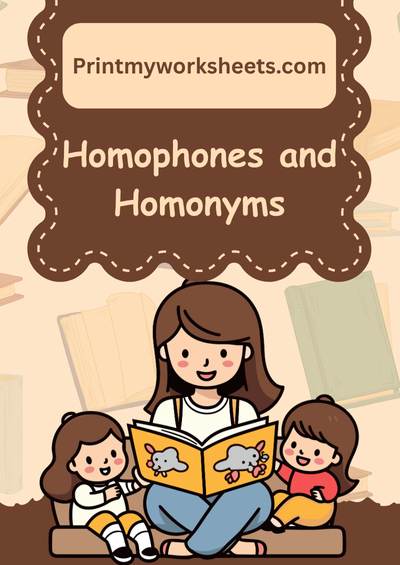
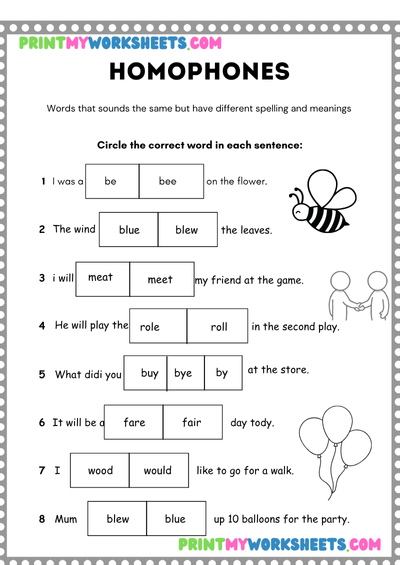
3rd Grade Homophones & Homonyms Worksheet | Free Printable PDF
3rd Grade Homophones & Homonyms Worksheet
Understanding words that sound alike or share spellings but have different meanings is an important milestone in upper elementary language development. This 3rd Grade Homophones & Homonyms Worksheet is designed to help students in the United States strengthen their vocabulary, spelling awareness, and reading comprehension through clear, structured practice. Created for parents, teachers, and homeschool families, this printable resource focuses on helping third graders recognize and correctly use commonly confused words in context.
At this grade level, students are reading longer texts, writing more detailed sentences, and encountering new vocabulary across subjects. Confusion between similar-sounding or similar-looking words can impact both comprehension and written expression. These worksheets provide guided practice that helps students slow down, analyze word meaning, and apply correct usage. With a student-friendly format and age-appropriate activities, this free printable PDF supports consistent learning at home or in the classroom while reinforcing essential English language skills.
What Students Will Learn?
These worksheets focus on helping students clearly understand the differences between homophones and homonyms and how they function in everyday reading and writing. Students learn to identify words that sound the same but have different meanings and spellings, as well as words that share spelling but differ in meaning depending on context.
Activities are designed to strengthen word recognition and meaning through sentence-based practice. Students may match words to definitions, choose the correct word to complete a sentence, or analyze short passages where meaning depends on proper word choice. These exercises encourage careful reading and thoughtful decision-making.
The worksheets support structured learning by progressing from simple word identification to more applied usage. This gradual approach aligns well with third-grade expectations, where students are expected to demonstrate growing independence with vocabulary skills. Clear instructions and consistent layouts help students focus on the task rather than the format. By practicing regularly, learners build stronger language awareness and become more confident in distinguishing between commonly confused words in both reading and writing tasks.
Educational Value & Skill Development
Strong vocabulary skills are closely connected to reading comprehension, writing clarity, and overall academic success. The 3rd Grade Homophones & Homonyms Worksheet supports these areas by encouraging students to think critically about word meaning and usage. Rather than relying on sound alone, students learn to use context clues and sentence structure to determine the correct word.
This type of practice supports cognitive development by strengthening attention to detail, memory, and reasoning skills. Students must compare meanings, recall definitions, and apply knowledge accurately. Over time, this repeated exposure helps reduce common errors in spelling and word choice.
The worksheets also build confidence and independence. As students successfully complete activities on their own, they gain trust in their language skills. This confidence often transfers to classroom discussions, written assignments, and standardized assessments.
Skill progression is another key benefit. Mastery of homophones and homonyms in third grade prepares students for more advanced vocabulary work in later grades, including figurative language, nuanced word meanings, and complex reading passages. These worksheets provide a solid foundation for that continued growth.
Why Focus on Homophones & Homonyms?
Homophones and homonyms can be challenging for students because they require careful attention to meaning rather than just pronunciation or spelling. In third grade, students are expected to move beyond basic decoding and begin reading for deeper understanding. Confusion between similar words can interrupt comprehension and weaken writing quality.
Focusing on this skill helps students become more precise readers and writers. When learners understand how word meaning changes based on spelling or context, they are better equipped to interpret sentences accurately. This skill is especially important as reading materials become more complex in later grades.
Repetition and guided practice are essential for mastering these concepts. Worksheets provide a safe space for students to make mistakes, receive feedback, and improve through consistent exposure. These activities align with early language standards used across the United States, which emphasize vocabulary development, word relationships, and language conventions. Building these skills now supports smoother transitions into upper elementary and middle school language arts expectations.
How to Use These Worksheets?
These printable worksheets are flexible and can be used in many learning environments. In homeschool settings, they work well as part of a weekly language arts routine or as focused practice when a child struggles with word confusion. Parents can review answers together with students to encourage discussion about word meaning.
In classrooms, teachers can use the worksheets during whole-group instruction, small-group rotations, or independent practice time. They are also suitable for homework assignments or quick review activities before quizzes.
The 3rd Grade Homophones & Homonyms Worksheet is provided as a free printable PDF, making it easy to download and reuse throughout the school year. Pages can be printed as needed or used with sheet protectors for repeated practice. This reusability allows educators and families to adapt the worksheets to individual learning needs while maintaining consistency.
Related Worksheets / Extensions:
To continue building language skills, you may also explore related grammar and vocabulary worksheets. Activities focused on synonyms, antonyms, prefixes, and suffixes help expand word knowledge and reinforce meaning. Reading comprehension passages that include challenging vocabulary can also support real-world application.
The 3rd Grade Homophones & Homonyms Worksheet pairs well with writing exercises where students create their own sentences using similar-sounding words correctly. You may also consider exploring the same topic for second grade as review or fourth grade as an extension, allowing students to strengthen skills across multiple levels.
You may also like :
[gallery ids="5372,5413,5576"] 3rd Grade Homophones & Homonyms Worksheet | Free Printable PDF
3rd Grade Homophones & Homonyms Worksheet
Understanding words that sound alike or share spellings but have different meanings is an important milestone in upper elementary language development. This 3rd Grade Homophones & Homonyms Worksheet is designed to help students in the United States strengthen their vocabulary, spelling awareness, and reading comprehension through clear, structured practice. Created for parents, teachers, and homeschool families, this printable resource focuses on helping third graders recognize and correctly use commonly confused words in context.
At this grade level, students are reading longer texts, writing more detailed sentences, and encountering new vocabulary across subjects. Confusion between similar-sounding or similar-looking words can impact both comprehension and written expression. These worksheets provide guided practice that helps students slow down, analyze word meaning, and apply correct usage. With a student-friendly format and age-appropriate activities, this free printable PDF supports consistent learning at home or in the classroom while reinforcing essential English language skills.
What Students Will Learn?
These worksheets focus on helping students clearly understand the differences between homophones and homonyms and how they function in everyday reading and writing. Students learn to identify words that sound the same but have different meanings and spellings, as well as words that share spelling but differ in meaning depending on context.
Activities are designed to strengthen word recognition and meaning through sentence-based practice. Students may match words to definitions, choose the correct word to complete a sentence, or analyze short passages where meaning depends on proper word choice. These exercises encourage careful reading and thoughtful decision-making.
The worksheets support structured learning by progressing from simple word identification to more applied usage. This gradual approach aligns well with third-grade expectations, where students are expected to demonstrate growing independence with vocabulary skills. Clear instructions and consistent layouts help students focus on the task rather than the format. By practicing regularly, learners build stronger language awareness and become more confident in distinguishing between commonly confused words in both reading and writing tasks.
Educational Value & Skill Development
Strong vocabulary skills are closely connected to reading comprehension, writing clarity, and overall academic success. The 3rd Grade Homophones & Homonyms Worksheet supports these areas by encouraging students to think critically about word meaning and usage. Rather than relying on sound alone, students learn to use context clues and sentence structure to determine the correct word.
This type of practice supports cognitive development by strengthening attention to detail, memory, and reasoning skills. Students must compare meanings, recall definitions, and apply knowledge accurately. Over time, this repeated exposure helps reduce common errors in spelling and word choice.
The worksheets also build confidence and independence. As students successfully complete activities on their own, they gain trust in their language skills. This confidence often transfers to classroom discussions, written assignments, and standardized assessments.
Skill progression is another key benefit. Mastery of homophones and homonyms in third grade prepares students for more advanced vocabulary work in later grades, including figurative language, nuanced word meanings, and complex reading passages. These worksheets provide a solid foundation for that continued growth.
Why Focus on Homophones & Homonyms?
Homophones and homonyms can be challenging for students because they require careful attention to meaning rather than just pronunciation or spelling. In third grade, students are expected to move beyond basic decoding and begin reading for deeper understanding. Confusion between similar words can interrupt comprehension and weaken writing quality.
Focusing on this skill helps students become more precise readers and writers. When learners understand how word meaning changes based on spelling or context, they are better equipped to interpret sentences accurately. This skill is especially important as reading materials become more complex in later grades.
Repetition and guided practice are essential for mastering these concepts. Worksheets provide a safe space for students to make mistakes, receive feedback, and improve through consistent exposure. These activities align with early language standards used across the United States, which emphasize vocabulary development, word relationships, and language conventions. Building these skills now supports smoother transitions into upper elementary and middle school language arts expectations.
How to Use These Worksheets?
These printable worksheets are flexible and can be used in many learning environments. In homeschool settings, they work well as part of a weekly language arts routine or as focused practice when a child struggles with word confusion. Parents can review answers together with students to encourage discussion about word meaning.
In classrooms, teachers can use the worksheets during whole-group instruction, small-group rotations, or independent practice time. They are also suitable for homework assignments or quick review activities before quizzes.
The 3rd Grade Homophones & Homonyms Worksheet is provided as a free printable PDF, making it easy to download and reuse throughout the school year. Pages can be printed as needed or used with sheet protectors for repeated practice. This reusability allows educators and families to adapt the worksheets to individual learning needs while maintaining consistency.
Related Worksheets / Extensions:
To continue building language skills, you may also explore related grammar and vocabulary worksheets. Activities focused on synonyms, antonyms, prefixes, and suffixes help expand word knowledge and reinforce meaning. Reading comprehension passages that include challenging vocabulary can also support real-world application.
The 3rd Grade Homophones & Homonyms Worksheet pairs well with writing exercises where students create their own sentences using similar-sounding words correctly. You may also consider exploring the same topic for second grade as review or fourth grade as an extension, allowing students to strengthen skills across multiple levels.
You may also like :
[gallery ids="5372,5413,5576"]
3rd Grade Literature and Story Elements Worksheets PDF | Free English Downloadable
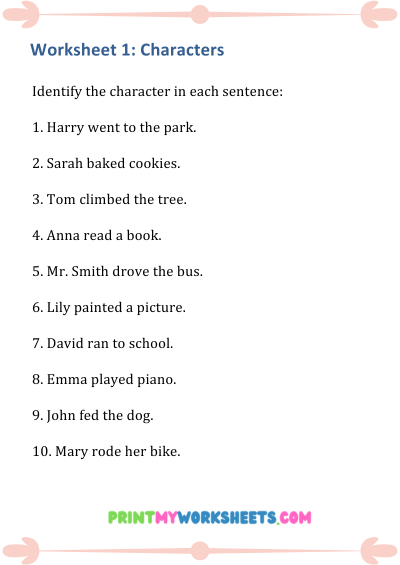
Enhance your child’s reading comprehension with our 3rd Grade Literature and Story Elements Worksheets PDF | Free English Downloadable, crafted for the US curriculum and perfect for homeschool parents, teachers, and tutors.
These worksheets introduce key story elements, including characters, setting, plot, conflict, and theme. Students learn how to identify and analyze these elements in passages, short stories, and fables. Activities include graphic organizers, multiple-choice questions, short responses, and creative exercises that encourage critical thinking and deeper engagement with text. By working through these worksheets, children improve their ability to understand narrative structure and appreciate literature.
Why are story elements important in 3rd grade? At this stage, students transition from basic reading to more complex comprehension. Recognizing story elements helps them interpret text meaningfully, summarize effectively, and think critically about characters and events. It also strengthens vocabulary, writing, and overall communication skills. These skills are essential not only for English but also for success in other subjects.
Perfect for classroom lessons, homeschool practice, or independent study, this free printable PDF is easy to download and use. With guided activities and answer keys included, children can practice independently or with support.
Download and print today to give your little learners the head start they deserve!
You may also like:
[gallery ids="5949,6141,5956"] 3rd Grade Literature and Story Elements Worksheets PDF | Free English Downloadable
Enhance your child’s reading comprehension with our 3rd Grade Literature and Story Elements Worksheets PDF | Free English Downloadable, crafted for the US curriculum and perfect for homeschool parents, teachers, and tutors.
These worksheets introduce key story elements, including characters, setting, plot, conflict, and theme. Students learn how to identify and analyze these elements in passages, short stories, and fables. Activities include graphic organizers, multiple-choice questions, short responses, and creative exercises that encourage critical thinking and deeper engagement with text. By working through these worksheets, children improve their ability to understand narrative structure and appreciate literature.
Why are story elements important in 3rd grade? At this stage, students transition from basic reading to more complex comprehension. Recognizing story elements helps them interpret text meaningfully, summarize effectively, and think critically about characters and events. It also strengthens vocabulary, writing, and overall communication skills. These skills are essential not only for English but also for success in other subjects.
Perfect for classroom lessons, homeschool practice, or independent study, this free printable PDF is easy to download and use. With guided activities and answer keys included, children can practice independently or with support.
Download and print today to give your little learners the head start they deserve!
You may also like:
[gallery ids="5949,6141,5956"]
3rd Grade Long and Short Vowel Sounds Worksheet | Free Spelling & Phonics PDF Downloadable
3rd Grade Long and Short Vowel Sounds Worksheet
The 3rd Grade Long and Short Vowel Sounds Worksheet is designed to help students strengthen their understanding of vowel patterns and pronunciation through focused, skill-based practice. This free printable PDF is ideal for U.S. parents, classroom teachers, and homeschool families who want structured phonics reinforcement at the third grade level.
By third grade, students are expected to read with greater fluency and accuracy. Mastering long and short vowel sounds plays a key role in improving decoding skills, spelling patterns, and overall reading comprehension. When students can confidently distinguish between vowel sounds, they are better prepared to tackle multisyllabic words and more complex texts. This worksheet supports foundational phonics skills while encouraging independent learning and meaningful literacy growth in both classroom and home settings.
What Students Will Learn?
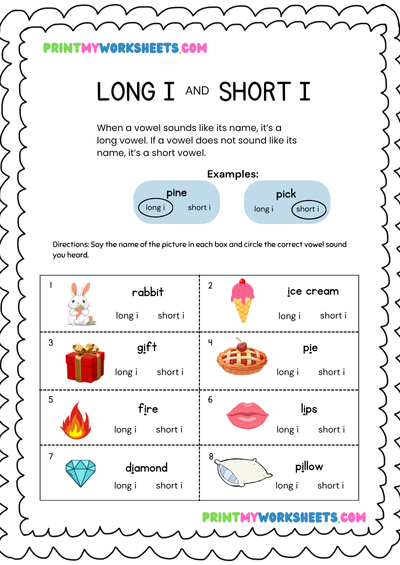
This vowel-focused worksheet helps students clearly identify, compare, and apply long and short vowel sounds in different word contexts. Learners practice distinguishing between similar spellings that produce different sounds, such as short “a” in cat and long “a” in cake.
Activities may include sorting words by vowel sound, circling correct spellings, completing sentences with the appropriate word choice, and identifying vowel patterns such as silent “e,” vowel teams, and open syllables. Students also practice reading short passages and highlighting specific vowel sounds to reinforce recognition in connected text.
The structured format allows students to move from simple word identification to more applied tasks, such as writing their own examples or correcting incorrect vowel usage. These exercises align with U.S. third grade language arts standards, which emphasize decoding multisyllabic words and understanding common spelling-sound correspondences.
Through guided practice and repetition, students strengthen both their reading fluency and spelling accuracy while building confidence in phonics skills.
Educational Value & Skill Development
The 3rd Grade Long and Short Vowel Sounds Worksheet provides meaningful phonics practice that supports reading development in multiple ways. Academically, understanding vowel patterns improves word recognition and reading speed. When students can quickly identify vowel sounds, they spend less time decoding and more time focusing on comprehension.
This type of phonics work also strengthens spelling skills. Recognizing patterns such as silent “e” or vowel digraphs helps students make logical spelling choices rather than guessing. Over time, consistent practice leads to greater independence in both reading and writing tasks.
Cognitively, identifying vowel sounds requires attention to detail and pattern recognition. Students learn to analyze word structures, compare similar spellings, and apply rules in new situations. These skills support critical thinking and language processing.
Confidence plays a significant role in literacy development. As students successfully complete phonics exercises and notice improvement in their reading, they become more willing to tackle challenging texts. This worksheet offers structured repetition that encourages steady progress while maintaining engagement appropriate for third graders.
Why Focus on Long and Short Vowel Sounds?
Vowel sounds form the foundation of English word pronunciation. Even small differences in vowel sounds can completely change the meaning of a word. For example, confusing short and long vowels may lead to reading errors that affect comprehension.
In third grade, students move beyond basic phonics into more complex spelling patterns and longer words. A strong grasp of vowel distinctions helps them decode unfamiliar words with greater accuracy. It also supports fluency, as students no longer need to pause frequently to determine pronunciation.
Repetition and guided practice are essential for mastering vowel patterns. Regular review ensures that students retain the difference between common patterns such as CVC (consonant-vowel-consonant) words and silent “e” words. Continued exposure builds automaticity and prepares learners for advanced vocabulary and reading materials in later grades.
How to Use These Worksheets?
The 3rd Grade Long and Short Vowel Sounds Worksheet can be used in a variety of educational settings. In the classroom, teachers may incorporate the worksheet into literacy centers, small group instruction, or independent practice time. It works well as a review tool before spelling assessments or reading fluency checks.
For homeschool families, the worksheet can be part of a daily phonics routine. Parents can begin by reviewing vowel rules aloud, then allow the student to complete the page independently. Afterward, discussing answers together helps reinforce learning and clarify misunderstandings.
Because this resource is provided as a free printable PDF, it is easy to download and print as needed. Educators and parents can reuse the worksheet throughout the year for reinforcement. The clear, black-and-white layout keeps students focused on the task and minimizes distractions, making it suitable for both guided instruction and independent review.
Related Worksheets / Extensions:
You may also like:
-
Short vowel review worksheets for earlier grades
-
Long vowel teams and diphthongs practice
-
Multisyllabic word decoding worksheets
-
3rd grade spelling pattern activities
-
Reading comprehension worksheets with phonics integration
The 3rd Grade Long and Short Vowel Sounds Worksheet pairs well with broader phonics and spelling units to create a complete literacy practice plan. Rotating vowel-focused activities throughout the school year ensures steady improvement in reading accuracy and fluency. Continued reinforcement of vowel distinctions helps students approach more advanced texts with confidence and clarity as they progress through elementary school.
You may also like :
[gallery ids="5961,5939,5570"] 3rd Grade Long and Short Vowel Sounds Worksheet | Free Spelling & Phonics PDF Downloadable
3rd Grade Long and Short Vowel Sounds Worksheet
The 3rd Grade Long and Short Vowel Sounds Worksheet is designed to help students strengthen their understanding of vowel patterns and pronunciation through focused, skill-based practice. This free printable PDF is ideal for U.S. parents, classroom teachers, and homeschool families who want structured phonics reinforcement at the third grade level.
By third grade, students are expected to read with greater fluency and accuracy. Mastering long and short vowel sounds plays a key role in improving decoding skills, spelling patterns, and overall reading comprehension. When students can confidently distinguish between vowel sounds, they are better prepared to tackle multisyllabic words and more complex texts. This worksheet supports foundational phonics skills while encouraging independent learning and meaningful literacy growth in both classroom and home settings.
What Students Will Learn?
This vowel-focused worksheet helps students clearly identify, compare, and apply long and short vowel sounds in different word contexts. Learners practice distinguishing between similar spellings that produce different sounds, such as short “a” in cat and long “a” in cake.
Activities may include sorting words by vowel sound, circling correct spellings, completing sentences with the appropriate word choice, and identifying vowel patterns such as silent “e,” vowel teams, and open syllables. Students also practice reading short passages and highlighting specific vowel sounds to reinforce recognition in connected text.
The structured format allows students to move from simple word identification to more applied tasks, such as writing their own examples or correcting incorrect vowel usage. These exercises align with U.S. third grade language arts standards, which emphasize decoding multisyllabic words and understanding common spelling-sound correspondences.
Through guided practice and repetition, students strengthen both their reading fluency and spelling accuracy while building confidence in phonics skills.
Educational Value & Skill Development
The 3rd Grade Long and Short Vowel Sounds Worksheet provides meaningful phonics practice that supports reading development in multiple ways. Academically, understanding vowel patterns improves word recognition and reading speed. When students can quickly identify vowel sounds, they spend less time decoding and more time focusing on comprehension.
This type of phonics work also strengthens spelling skills. Recognizing patterns such as silent “e” or vowel digraphs helps students make logical spelling choices rather than guessing. Over time, consistent practice leads to greater independence in both reading and writing tasks.
Cognitively, identifying vowel sounds requires attention to detail and pattern recognition. Students learn to analyze word structures, compare similar spellings, and apply rules in new situations. These skills support critical thinking and language processing.
Confidence plays a significant role in literacy development. As students successfully complete phonics exercises and notice improvement in their reading, they become more willing to tackle challenging texts. This worksheet offers structured repetition that encourages steady progress while maintaining engagement appropriate for third graders.
Why Focus on Long and Short Vowel Sounds?
Vowel sounds form the foundation of English word pronunciation. Even small differences in vowel sounds can completely change the meaning of a word. For example, confusing short and long vowels may lead to reading errors that affect comprehension.
In third grade, students move beyond basic phonics into more complex spelling patterns and longer words. A strong grasp of vowel distinctions helps them decode unfamiliar words with greater accuracy. It also supports fluency, as students no longer need to pause frequently to determine pronunciation.
Repetition and guided practice are essential for mastering vowel patterns. Regular review ensures that students retain the difference between common patterns such as CVC (consonant-vowel-consonant) words and silent “e” words. Continued exposure builds automaticity and prepares learners for advanced vocabulary and reading materials in later grades.
How to Use These Worksheets?
The 3rd Grade Long and Short Vowel Sounds Worksheet can be used in a variety of educational settings. In the classroom, teachers may incorporate the worksheet into literacy centers, small group instruction, or independent practice time. It works well as a review tool before spelling assessments or reading fluency checks.
For homeschool families, the worksheet can be part of a daily phonics routine. Parents can begin by reviewing vowel rules aloud, then allow the student to complete the page independently. Afterward, discussing answers together helps reinforce learning and clarify misunderstandings.
Because this resource is provided as a free printable PDF, it is easy to download and print as needed. Educators and parents can reuse the worksheet throughout the year for reinforcement. The clear, black-and-white layout keeps students focused on the task and minimizes distractions, making it suitable for both guided instruction and independent review.
Related Worksheets / Extensions:
You may also like:
-
Short vowel review worksheets for earlier grades
-
Long vowel teams and diphthongs practice
-
Multisyllabic word decoding worksheets
-
3rd grade spelling pattern activities
-
Reading comprehension worksheets with phonics integration
The 3rd Grade Long and Short Vowel Sounds Worksheet pairs well with broader phonics and spelling units to create a complete literacy practice plan. Rotating vowel-focused activities throughout the school year ensures steady improvement in reading accuracy and fluency. Continued reinforcement of vowel distinctions helps students approach more advanced texts with confidence and clarity as they progress through elementary school.
You may also like :
[gallery ids="5961,5939,5570"]
3rd Grade Math Olympiad Worksheets – Printable Workbook with Solutions
3rd Grade Math Olympiad Worksheets
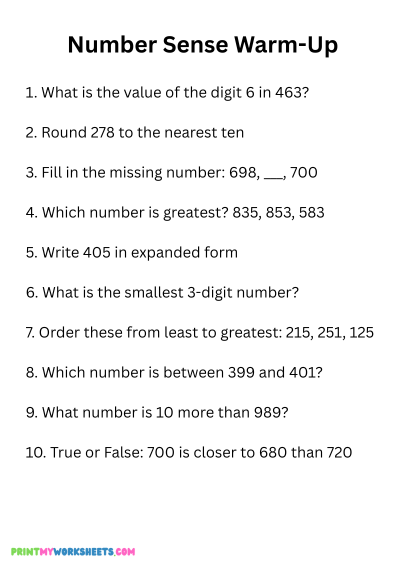
Set your third grader on the path towards academic achievement with our Maths Olympiad Practice Worksheets – specially crafted to stimulate advanced math thinking and inspire higher order skills, these are available as a Free Downloadable PDF. These are skill-building worksheets that are geared towards more than the rote learning of mathematics, aiding in the development of logical reasoning, mental math, problem-solving, and analytical skills. This resource is in support of the U.S. Common Core Standards, ensuring that learners are able to apply classroom concepts and skills to real-life problems. Irrespective of whether your child attends a public school, is homeschooled, or is gearing up for the national math competitions such as MOEMS or Math Kangaroo, this worksheet will provide the right amount of structure alongside healthy challenges. Why 3rd Grade is the Optimal Time for Early Olympiad Exposure Students in 3rd grade are making the leap from simple arithmetic to more advanced concepts such as fractions, area, and even multi-step calculations. This is an ideal moment to encourage and nurture confidence along with the abundant creative thinking with the math-fueled reasoning Olympiad-styled problems. This is what our worksheets will enable learners to do: Complete complex word problems in chronological steps Identify recurring sequences of numbers Formulate logical approaches Enhance mathematics related language, comprehension, and prepare for advanced challenges.💡 Benefits for Kids, Parents & Educators
-
🧠 Enhances problem-solving confidence
-
🎯 Prepares for Olympiad contests
-
📘 Complements school curriculum
-
✍️ Improves test-taking strategies
-
🏡 Perfect for home learning and enrichment
These are core skills needed not only for exams but for lifelong learning success.
Download and print today to give your little learners the head start they deserve!
You may also like :
[gallery ids="4503,4501,4508"] 3rd Grade Math Olympiad Worksheets – Printable Workbook with Solutions
3rd Grade Math Olympiad Worksheets
Set your third grader on the path towards academic achievement with our Maths Olympiad Practice Worksheets – specially crafted to stimulate advanced math thinking and inspire higher order skills, these are available as a Free Downloadable PDF. These are skill-building worksheets that are geared towards more than the rote learning of mathematics, aiding in the development of logical reasoning, mental math, problem-solving, and analytical skills. This resource is in support of the U.S. Common Core Standards, ensuring that learners are able to apply classroom concepts and skills to real-life problems. Irrespective of whether your child attends a public school, is homeschooled, or is gearing up for the national math competitions such as MOEMS or Math Kangaroo, this worksheet will provide the right amount of structure alongside healthy challenges. Why 3rd Grade is the Optimal Time for Early Olympiad Exposure Students in 3rd grade are making the leap from simple arithmetic to more advanced concepts such as fractions, area, and even multi-step calculations. This is an ideal moment to encourage and nurture confidence along with the abundant creative thinking with the math-fueled reasoning Olympiad-styled problems. This is what our worksheets will enable learners to do: Complete complex word problems in chronological steps Identify recurring sequences of numbers Formulate logical approaches Enhance mathematics related language, comprehension, and prepare for advanced challenges.💡 Benefits for Kids, Parents & Educators
-
🧠 Enhances problem-solving confidence
-
🎯 Prepares for Olympiad contests
-
📘 Complements school curriculum
-
✍️ Improves test-taking strategies
-
🏡 Perfect for home learning and enrichment
These are core skills needed not only for exams but for lifelong learning success.
Download and print today to give your little learners the head start they deserve!
You may also like :
[gallery ids="4503,4501,4508"]
3rd Grade Multiplication Tables 1–3 Worksheet | Free PDF Download for Kids
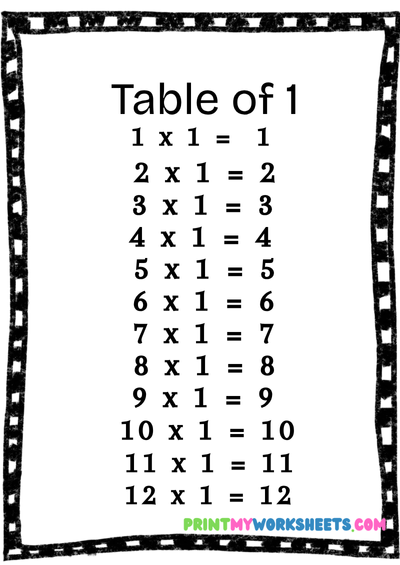
3rd Grade Multiplication Tables 1–3 Worksheet
The 3rd Grade Multiplication Tables 1–3 Worksheet is designed to help students build a strong foundation in early multiplication skills. This free printable PDF is ideal for U.S. parents, teachers, and homeschool families who want structured, grade-level practice that aligns with elementary math standards.
In 3rd grade, students transition from repeated addition to understanding multiplication as equal groups and arrays. Mastering multiplication tables 1 through 3 is a key milestone that supports more advanced multiplication facts later in the year. This worksheet provides focused practice that helps children develop speed, accuracy, and confidence with basic multiplication facts. Through clear instructions and engaging exercises, students strengthen their understanding of number patterns and relationships while reinforcing essential math skills that are critical for long-term success.
What Students Will Learn?
With this multiplication resource, students focus on mastering the 1, 2, and 3 times tables through structured and progressive activities. They practice recognizing multiplication patterns, solving basic fact problems, and understanding multiplication as repeated addition.
Activities may include fill-in-the-blank equations, matching problems, number line multiplication, and simple word problems involving equal groups. Students also practice writing multiplication sentences based on visual models such as arrays or groups of objects. These exercises help connect conceptual understanding with memorization of facts.
The worksheet supports structured learning by starting with straightforward multiplication problems and gradually increasing difficulty. Students move from guided examples to independent practice, reinforcing both conceptual and procedural knowledge. This approach aligns with 3rd grade math expectations in the United States, where fluency with basic multiplication facts is a core objective.
By focusing on smaller sets of multiplication tables, students can build accuracy and confidence before progressing to higher-number facts.
Educational Value & Skill Development
The 3rd Grade Multiplication Tables 1–3 Worksheet provides meaningful academic benefits beyond simple fact memorization. Understanding early multiplication tables strengthens number sense and prepares students for more complex mathematical operations such as multi-digit multiplication and division.
Academically, students develop fluency with foundational multiplication facts. Fluency means they can solve problems accurately and efficiently without relying solely on counting strategies. This skill becomes increasingly important as math problems grow more complex in later grades.
Cognitively, practicing multiplication facts improves memory, concentration, and pattern recognition. Students begin to notice relationships between numbers, such as skip counting and repeated addition patterns. These observations strengthen logical reasoning skills.
As students gain confidence in solving multiplication problems independently, they become more comfortable tackling new mathematical challenges. Regular practice supports long-term retention and reduces frustration when students encounter more advanced multiplication and division concepts in upper elementary grades.
Why Focus on Multiplication Tables 1–3?
Early mastery of basic multiplication tables sets the stage for success in elementary mathematics. The 1, 2, and 3 times tables are often the first multiplication facts introduced in 3rd grade, making them essential building blocks for future learning.
When students fully understand these foundational facts, they are better prepared to learn higher multiplication tables with confidence. Strong fluency also supports division skills, as division is directly connected to multiplication. Without a solid understanding of these early facts, students may struggle with multi-step word problems, fractions, and later algebraic reasoning.
Repetition and guided practice are critical at this stage. Children benefit from repeated exposure to multiplication patterns through structured exercises. Consistent practice helps move knowledge from short-term memory to long-term understanding.
Building confidence with early multiplication tables helps students approach math with a positive attitude and readiness for more advanced topics.
How to Use These Worksheets?
The 3rd Grade Multiplication Tables 1–3 Worksheet can be used in a variety of instructional settings. In classrooms, teachers may assign it as guided practice after introducing multiplication concepts. It works well for small group instruction, math centers, homework assignments, or review sessions.
Homeschool families can incorporate the worksheet into daily or weekly math lessons. Parents may review skip counting and repeated addition before allowing students to complete the practice problems independently. Afterward, reviewing answers together reinforces understanding and corrects misconceptions.
Because this resource is provided as a free printable PDF, it is easy to download and print as needed. Teachers can provide additional copies for reinforcement or assessment preparation. The reusable format makes it convenient for ongoing practice throughout the school year.
The clear layout and focused content make it suitable for both structured lessons and independent practice time.
Related Worksheets / Extensions:
You may also like:
-
3rd grade multiplication tables 4–6 worksheets
-
Multiplication and division fact families practice
-
Array and equal groups visual models worksheets
-
Multi-digit multiplication introduction worksheets
The 3rd Grade Multiplication Tables 1–3 Worksheet pairs well with additional fact fluency resources and word problem practice. Expanding practice to higher multiplication tables and related division concepts helps students develop a complete understanding of multiplication relationships. By building on these foundational skills, learners strengthen their overall math fluency and prepare for more advanced problem-solving in upper elementary grades.
You may also like :
[gallery ids="5168,5381,5582"] 3rd Grade Multiplication Tables 1–3 Worksheet | Free PDF Download for Kids
3rd Grade Multiplication Tables 1–3 Worksheet
The 3rd Grade Multiplication Tables 1–3 Worksheet is designed to help students build a strong foundation in early multiplication skills. This free printable PDF is ideal for U.S. parents, teachers, and homeschool families who want structured, grade-level practice that aligns with elementary math standards.
In 3rd grade, students transition from repeated addition to understanding multiplication as equal groups and arrays. Mastering multiplication tables 1 through 3 is a key milestone that supports more advanced multiplication facts later in the year. This worksheet provides focused practice that helps children develop speed, accuracy, and confidence with basic multiplication facts. Through clear instructions and engaging exercises, students strengthen their understanding of number patterns and relationships while reinforcing essential math skills that are critical for long-term success.
What Students Will Learn?
With this multiplication resource, students focus on mastering the 1, 2, and 3 times tables through structured and progressive activities. They practice recognizing multiplication patterns, solving basic fact problems, and understanding multiplication as repeated addition.
Activities may include fill-in-the-blank equations, matching problems, number line multiplication, and simple word problems involving equal groups. Students also practice writing multiplication sentences based on visual models such as arrays or groups of objects. These exercises help connect conceptual understanding with memorization of facts.
The worksheet supports structured learning by starting with straightforward multiplication problems and gradually increasing difficulty. Students move from guided examples to independent practice, reinforcing both conceptual and procedural knowledge. This approach aligns with 3rd grade math expectations in the United States, where fluency with basic multiplication facts is a core objective.
By focusing on smaller sets of multiplication tables, students can build accuracy and confidence before progressing to higher-number facts.
Educational Value & Skill Development
The 3rd Grade Multiplication Tables 1–3 Worksheet provides meaningful academic benefits beyond simple fact memorization. Understanding early multiplication tables strengthens number sense and prepares students for more complex mathematical operations such as multi-digit multiplication and division.
Academically, students develop fluency with foundational multiplication facts. Fluency means they can solve problems accurately and efficiently without relying solely on counting strategies. This skill becomes increasingly important as math problems grow more complex in later grades.
Cognitively, practicing multiplication facts improves memory, concentration, and pattern recognition. Students begin to notice relationships between numbers, such as skip counting and repeated addition patterns. These observations strengthen logical reasoning skills.
As students gain confidence in solving multiplication problems independently, they become more comfortable tackling new mathematical challenges. Regular practice supports long-term retention and reduces frustration when students encounter more advanced multiplication and division concepts in upper elementary grades.
Why Focus on Multiplication Tables 1–3?
Early mastery of basic multiplication tables sets the stage for success in elementary mathematics. The 1, 2, and 3 times tables are often the first multiplication facts introduced in 3rd grade, making them essential building blocks for future learning.
When students fully understand these foundational facts, they are better prepared to learn higher multiplication tables with confidence. Strong fluency also supports division skills, as division is directly connected to multiplication. Without a solid understanding of these early facts, students may struggle with multi-step word problems, fractions, and later algebraic reasoning.
Repetition and guided practice are critical at this stage. Children benefit from repeated exposure to multiplication patterns through structured exercises. Consistent practice helps move knowledge from short-term memory to long-term understanding.
Building confidence with early multiplication tables helps students approach math with a positive attitude and readiness for more advanced topics.
How to Use These Worksheets?
The 3rd Grade Multiplication Tables 1–3 Worksheet can be used in a variety of instructional settings. In classrooms, teachers may assign it as guided practice after introducing multiplication concepts. It works well for small group instruction, math centers, homework assignments, or review sessions.
Homeschool families can incorporate the worksheet into daily or weekly math lessons. Parents may review skip counting and repeated addition before allowing students to complete the practice problems independently. Afterward, reviewing answers together reinforces understanding and corrects misconceptions.
Because this resource is provided as a free printable PDF, it is easy to download and print as needed. Teachers can provide additional copies for reinforcement or assessment preparation. The reusable format makes it convenient for ongoing practice throughout the school year.
The clear layout and focused content make it suitable for both structured lessons and independent practice time.
Related Worksheets / Extensions:
You may also like:
-
3rd grade multiplication tables 4–6 worksheets
-
Multiplication and division fact families practice
-
Array and equal groups visual models worksheets
-
Multi-digit multiplication introduction worksheets
The 3rd Grade Multiplication Tables 1–3 Worksheet pairs well with additional fact fluency resources and word problem practice. Expanding practice to higher multiplication tables and related division concepts helps students develop a complete understanding of multiplication relationships. By building on these foundational skills, learners strengthen their overall math fluency and prepare for more advanced problem-solving in upper elementary grades.
You may also like :
[gallery ids="5168,5381,5582"]
3rd Grade Multiplication Tables 10–12 Worksheet | Free PDF Download for Kids
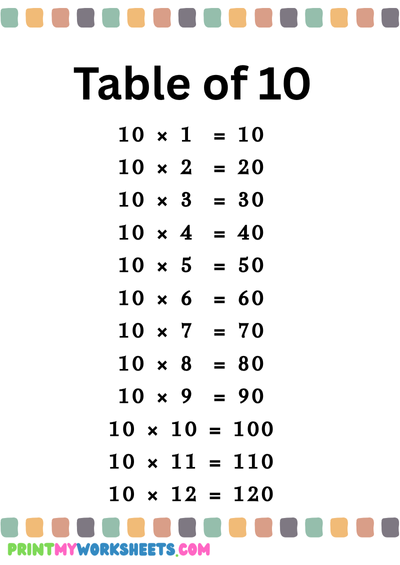
3rd Grade Multiplication Tables 10–12 Worksheet
The 3rd Grade Multiplication Tables 10–12 Worksheet is designed to help students strengthen their fluency with higher multiplication facts in a clear and structured format. This free printable PDF supports U.S. parents, teachers, and homeschool families who want focused practice on the 10, 11, and 12 times tables.
By third grade, students are expected to develop automatic recall of multiplication facts within 100. While many learners feel comfortable with earlier tables, mastering 10–12 requires consistent review and guided practice. Building confidence with these higher fact families prepares students for multi-digit multiplication, long division, and multi-step word problems. This worksheet provides age-appropriate exercises that reinforce accuracy, number sense, and pattern recognition while encouraging independent math practice in both classroom and home settings.
What Students Will Learn?
This multiplication resource helps students build fluency with the 10, 11, and 12 times tables through structured and meaningful practice. Students strengthen their ability to recall multiplication facts quickly and accurately while recognizing patterns that make calculations easier.
Activities may include fact drills, skip counting exercises, matching products to equations, fill-in-the-blank problems, and mixed practice sets. Students also encounter real-world word problems that require them to apply multiplication knowledge in practical situations, reinforcing conceptual understanding.
The worksheet begins with targeted practice on individual tables before progressing to mixed multiplication problems. This approach supports gradual mastery and ensures students are not overwhelmed. Learners explore helpful strategies such as recognizing the simple pattern in multiplying by 10, identifying repeated digits when multiplying by 11, and breaking apart numbers when working with 12.
These exercises align with U.S. third grade math standards that emphasize understanding multiplication as repeated addition and arrays, as well as developing fact fluency.
Educational Value & Skill Development
The 3rd Grade Multiplication Tables 10–12 Worksheet supports essential math development in several ways. Academically, fluency with these higher tables allows students to solve more complex problems efficiently. When multiplication facts are automatic, students can focus on higher-level reasoning rather than basic calculations.
Multiplying by 10, 11, and 12 builds a strong foundation for place value understanding. For example, multiplying by 10 reinforces knowledge of zero placement and digit shifts, while multiplying by 11 and 12 introduces patterns that deepen number sense. These skills directly support future topics such as multi-digit multiplication and long division.
Cognitively, practicing multiplication strengthens working memory, concentration, and logical thinking. Students learn to detect patterns, check their answers for reasonableness, and use mental math strategies. This type of structured repetition improves retention and supports long-term mastery.
As learners become more comfortable with advanced fact sets, their confidence grows. Success in mastering multiplication tables helps reduce math anxiety and encourages a positive attitude toward future math challenges in upper elementary grades.
Why Focus on Multiplication Tables 10–12?
The 10, 11, and 12 times tables serve as a bridge between basic multiplication and more advanced operations. Although multiplying by 10 may seem straightforward, understanding why it works builds strong place value awareness. The 11 and 12 tables introduce new patterns and larger products, helping students expand their mental math skills.
Mastery of these tables is especially important because they frequently appear in multi-step word problems and real-life applications. Whether calculating total items in grouped sets or solving measurement-based problems, students rely on these facts for efficiency and accuracy.
Repetition and structured review are essential. Regular practice ensures that students retain multiplication facts and can recall them quickly. Worksheets that combine focused drills with mixed practice encourage both accuracy and flexibility.
Strong fluency with these higher tables prepares students for division, fractions, and more complex numerical reasoning in later grades.
How to Use These Worksheets?
The 3rd Grade Multiplication Tables 10–12 Worksheet can be used in classrooms, homeschool programs, or for extra practice at home. Teachers may incorporate the worksheet into daily math warm-ups, small group instruction, or independent work time. Timed practice sessions can help students build speed while maintaining accuracy.
In homeschool settings, parents can use the worksheet as part of a weekly multiplication routine. Reviewing strategies before beginning—such as discussing patterns in the 11 table—helps reinforce conceptual understanding. After completing the page, checking answers together supports reflection and correction.
Because the worksheet is provided as a free printable PDF, it is easy to download and print as needed. Families and educators can reuse the pages for review throughout the school year. The simple, print-friendly design allows students to focus on math without visual distractions, making it ideal for repeated practice and skill reinforcement.
Related Worksheets / Extensions:
You may also like:
-
Multiplication tables 1–3 worksheets for foundational practice
-
Multiplication tables 4–6 worksheets for skill progression
-
Multiplication tables 7–9 worksheets for intermediate fluency
-
Division fact family worksheets
-
Mixed multiplication and division word problem practice
The 3rd Grade Multiplication Tables 10–12 Worksheet pairs well with earlier table sets to build complete multiplication mastery. Rotating through different fact groups helps students retain knowledge and strengthen long-term fluency. Continued review ensures that multiplication skills remain strong as students move into more advanced math concepts in upper elementary grades.
You may also like:
[gallery ids="5442,5387,5372"] 3rd Grade Multiplication Tables 10–12 Worksheet | Free PDF Download for Kids
3rd Grade Multiplication Tables 10–12 Worksheet
The 3rd Grade Multiplication Tables 10–12 Worksheet is designed to help students strengthen their fluency with higher multiplication facts in a clear and structured format. This free printable PDF supports U.S. parents, teachers, and homeschool families who want focused practice on the 10, 11, and 12 times tables.
By third grade, students are expected to develop automatic recall of multiplication facts within 100. While many learners feel comfortable with earlier tables, mastering 10–12 requires consistent review and guided practice. Building confidence with these higher fact families prepares students for multi-digit multiplication, long division, and multi-step word problems. This worksheet provides age-appropriate exercises that reinforce accuracy, number sense, and pattern recognition while encouraging independent math practice in both classroom and home settings.
What Students Will Learn?
This multiplication resource helps students build fluency with the 10, 11, and 12 times tables through structured and meaningful practice. Students strengthen their ability to recall multiplication facts quickly and accurately while recognizing patterns that make calculations easier.
Activities may include fact drills, skip counting exercises, matching products to equations, fill-in-the-blank problems, and mixed practice sets. Students also encounter real-world word problems that require them to apply multiplication knowledge in practical situations, reinforcing conceptual understanding.
The worksheet begins with targeted practice on individual tables before progressing to mixed multiplication problems. This approach supports gradual mastery and ensures students are not overwhelmed. Learners explore helpful strategies such as recognizing the simple pattern in multiplying by 10, identifying repeated digits when multiplying by 11, and breaking apart numbers when working with 12.
These exercises align with U.S. third grade math standards that emphasize understanding multiplication as repeated addition and arrays, as well as developing fact fluency.
Educational Value & Skill Development
The 3rd Grade Multiplication Tables 10–12 Worksheet supports essential math development in several ways. Academically, fluency with these higher tables allows students to solve more complex problems efficiently. When multiplication facts are automatic, students can focus on higher-level reasoning rather than basic calculations.
Multiplying by 10, 11, and 12 builds a strong foundation for place value understanding. For example, multiplying by 10 reinforces knowledge of zero placement and digit shifts, while multiplying by 11 and 12 introduces patterns that deepen number sense. These skills directly support future topics such as multi-digit multiplication and long division.
Cognitively, practicing multiplication strengthens working memory, concentration, and logical thinking. Students learn to detect patterns, check their answers for reasonableness, and use mental math strategies. This type of structured repetition improves retention and supports long-term mastery.
As learners become more comfortable with advanced fact sets, their confidence grows. Success in mastering multiplication tables helps reduce math anxiety and encourages a positive attitude toward future math challenges in upper elementary grades.
Why Focus on Multiplication Tables 10–12?
The 10, 11, and 12 times tables serve as a bridge between basic multiplication and more advanced operations. Although multiplying by 10 may seem straightforward, understanding why it works builds strong place value awareness. The 11 and 12 tables introduce new patterns and larger products, helping students expand their mental math skills.
Mastery of these tables is especially important because they frequently appear in multi-step word problems and real-life applications. Whether calculating total items in grouped sets or solving measurement-based problems, students rely on these facts for efficiency and accuracy.
Repetition and structured review are essential. Regular practice ensures that students retain multiplication facts and can recall them quickly. Worksheets that combine focused drills with mixed practice encourage both accuracy and flexibility.
Strong fluency with these higher tables prepares students for division, fractions, and more complex numerical reasoning in later grades.
How to Use These Worksheets?
The 3rd Grade Multiplication Tables 10–12 Worksheet can be used in classrooms, homeschool programs, or for extra practice at home. Teachers may incorporate the worksheet into daily math warm-ups, small group instruction, or independent work time. Timed practice sessions can help students build speed while maintaining accuracy.
In homeschool settings, parents can use the worksheet as part of a weekly multiplication routine. Reviewing strategies before beginning—such as discussing patterns in the 11 table—helps reinforce conceptual understanding. After completing the page, checking answers together supports reflection and correction.
Because the worksheet is provided as a free printable PDF, it is easy to download and print as needed. Families and educators can reuse the pages for review throughout the school year. The simple, print-friendly design allows students to focus on math without visual distractions, making it ideal for repeated practice and skill reinforcement.
Related Worksheets / Extensions:
You may also like:
-
Multiplication tables 1–3 worksheets for foundational practice
-
Multiplication tables 4–6 worksheets for skill progression
-
Multiplication tables 7–9 worksheets for intermediate fluency
-
Division fact family worksheets
-
Mixed multiplication and division word problem practice
The 3rd Grade Multiplication Tables 10–12 Worksheet pairs well with earlier table sets to build complete multiplication mastery. Rotating through different fact groups helps students retain knowledge and strengthen long-term fluency. Continued review ensures that multiplication skills remain strong as students move into more advanced math concepts in upper elementary grades.
You may also like:
[gallery ids="5442,5387,5372"]
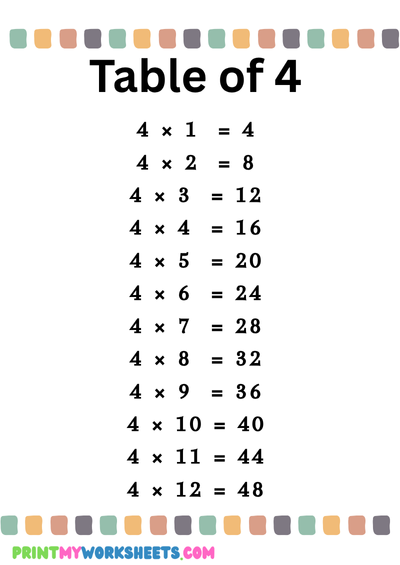
3rd Grade Multiplication Tables 4–6 Worksheet | Free PDF Download for Kids
3rd Grade Multiplication Tables 4–6 Worksheet
The 3rd Grade Multiplication Tables 4–6 Worksheet is designed to help students strengthen their understanding of essential multiplication facts in a clear and structured way. This free printable PDF is ideal for U.S. parents, classroom teachers, and homeschool families looking to build fluency with multiplication tables in a focused format.
In 3rd grade, students move beyond introductory multiplication and begin mastering larger fact sets. Learning the 4, 5, and 6 times tables is a critical step in developing math fluency and preparing for more advanced multiplication and division concepts. This worksheet provides targeted practice that supports accuracy, speed, and confidence. With consistent practice, students develop a stronger number sense and a deeper understanding of multiplication patterns, laying the groundwork for long-term mathematical success.
What Students Will Learn?
This multiplication resource focuses on helping students master the 4, 5, and 6 times tables through structured and progressive practice. Students work on recalling multiplication facts, identifying number patterns, and solving equations that reinforce conceptual understanding.
Activities may include fill-in-the-blank problems, timed fact drills, matching multiplication expressions to products, and simple word problems involving equal groups. Students may also practice interpreting arrays and visual models that demonstrate how multiplication represents repeated addition.
The worksheet supports structured learning by beginning with guided examples and moving toward independent problem-solving. Students first review multiplication patterns—such as skip counting by fours, fives, and sixes—before applying those patterns to solve equations. This progression aligns with U.S. 3rd grade math standards, which emphasize fluency within 100 and a clear understanding of multiplication as a foundational operation.
By concentrating on this specific range of tables, students gain focused practice that supports both memorization and conceptual mastery.
Educational Value & Skill Development
The 3rd Grade Multiplication Tables 4–6 Worksheet plays an important role in strengthening both academic and cognitive skills. Multiplication fluency is a major milestone in elementary math, and these tables form the bridge between beginner facts and more complex multi-digit operations.
Academically, students improve their ability to quickly recall multiplication facts without relying solely on counting strategies. This automaticity frees up mental space for solving multi-step problems and understanding more advanced math topics, including division, fractions, and area models.
From a cognitive standpoint, practicing multiplication enhances memory, concentration, and logical reasoning. Students begin to recognize patterns, such as the relationship between multiplication and repeated addition or the connection between multiplication and division. These insights deepen overall mathematical understanding.
As learners gain accuracy and confidence, they are more willing to tackle challenging problems. Building success with multiplication tables 4 through 6 helps students feel capable and prepared for the next stages of math learning.
Why Focus on Multiplication Tables 4–6?
The 4, 5, and 6 times tables represent a significant step forward in 3rd grade math instruction. While earlier tables introduce the concept of multiplication, these facts require stronger recall and a deeper understanding of number relationships.
Mastery of these multiplication tables supports future math learning in several ways. Students who confidently know their facts can solve division problems more easily, since division is directly related to multiplication. Strong fact fluency also helps with multi-digit multiplication and word problems that require efficient calculations.
Repetition and guided practice are essential for long-term retention. When students regularly review multiplication patterns and solve varied problem types, they strengthen both memory and understanding. Consistent exposure ensures that these foundational skills remain strong throughout the school year.
Focusing on these tables ensures students are fully prepared to move on to higher multiplication facts and more advanced mathematical reasoning.
How to Use These Worksheets?
The 3rd Grade Multiplication Tables 4–6 Worksheet can be used in multiple instructional settings. In a classroom, teachers may introduce the multiplication tables during whole-group instruction and then assign the worksheet for guided practice or independent work. It works well for math centers, homework, review sessions, and formative assessment.
Homeschool families can incorporate the worksheet into weekly math lessons. Parents might begin by reviewing skip counting patterns before allowing students to complete the exercises independently. Reviewing answers together helps reinforce understanding and correct errors.
Because this resource is available as a free printable PDF, it is simple to download and print as needed. Educators can use multiple copies for ongoing review throughout the year. The print-friendly format makes it easy to store and reuse as part of a consistent multiplication practice routine.
You may also like :
[gallery ids="4501,4503,4508"] 3rd Grade Multiplication Tables 4–6 Worksheet | Free PDF Download for Kids
3rd Grade Multiplication Tables 4–6 Worksheet
The 3rd Grade Multiplication Tables 4–6 Worksheet is designed to help students strengthen their understanding of essential multiplication facts in a clear and structured way. This free printable PDF is ideal for U.S. parents, classroom teachers, and homeschool families looking to build fluency with multiplication tables in a focused format.
In 3rd grade, students move beyond introductory multiplication and begin mastering larger fact sets. Learning the 4, 5, and 6 times tables is a critical step in developing math fluency and preparing for more advanced multiplication and division concepts. This worksheet provides targeted practice that supports accuracy, speed, and confidence. With consistent practice, students develop a stronger number sense and a deeper understanding of multiplication patterns, laying the groundwork for long-term mathematical success.
What Students Will Learn?
This multiplication resource focuses on helping students master the 4, 5, and 6 times tables through structured and progressive practice. Students work on recalling multiplication facts, identifying number patterns, and solving equations that reinforce conceptual understanding.
Activities may include fill-in-the-blank problems, timed fact drills, matching multiplication expressions to products, and simple word problems involving equal groups. Students may also practice interpreting arrays and visual models that demonstrate how multiplication represents repeated addition.
The worksheet supports structured learning by beginning with guided examples and moving toward independent problem-solving. Students first review multiplication patterns—such as skip counting by fours, fives, and sixes—before applying those patterns to solve equations. This progression aligns with U.S. 3rd grade math standards, which emphasize fluency within 100 and a clear understanding of multiplication as a foundational operation.
By concentrating on this specific range of tables, students gain focused practice that supports both memorization and conceptual mastery.
Educational Value & Skill Development
The 3rd Grade Multiplication Tables 4–6 Worksheet plays an important role in strengthening both academic and cognitive skills. Multiplication fluency is a major milestone in elementary math, and these tables form the bridge between beginner facts and more complex multi-digit operations.
Academically, students improve their ability to quickly recall multiplication facts without relying solely on counting strategies. This automaticity frees up mental space for solving multi-step problems and understanding more advanced math topics, including division, fractions, and area models.
From a cognitive standpoint, practicing multiplication enhances memory, concentration, and logical reasoning. Students begin to recognize patterns, such as the relationship between multiplication and repeated addition or the connection between multiplication and division. These insights deepen overall mathematical understanding.
As learners gain accuracy and confidence, they are more willing to tackle challenging problems. Building success with multiplication tables 4 through 6 helps students feel capable and prepared for the next stages of math learning.
Why Focus on Multiplication Tables 4–6?
The 4, 5, and 6 times tables represent a significant step forward in 3rd grade math instruction. While earlier tables introduce the concept of multiplication, these facts require stronger recall and a deeper understanding of number relationships.
Mastery of these multiplication tables supports future math learning in several ways. Students who confidently know their facts can solve division problems more easily, since division is directly related to multiplication. Strong fact fluency also helps with multi-digit multiplication and word problems that require efficient calculations.
Repetition and guided practice are essential for long-term retention. When students regularly review multiplication patterns and solve varied problem types, they strengthen both memory and understanding. Consistent exposure ensures that these foundational skills remain strong throughout the school year.
Focusing on these tables ensures students are fully prepared to move on to higher multiplication facts and more advanced mathematical reasoning.
How to Use These Worksheets?
The 3rd Grade Multiplication Tables 4–6 Worksheet can be used in multiple instructional settings. In a classroom, teachers may introduce the multiplication tables during whole-group instruction and then assign the worksheet for guided practice or independent work. It works well for math centers, homework, review sessions, and formative assessment.
Homeschool families can incorporate the worksheet into weekly math lessons. Parents might begin by reviewing skip counting patterns before allowing students to complete the exercises independently. Reviewing answers together helps reinforce understanding and correct errors.
Because this resource is available as a free printable PDF, it is simple to download and print as needed. Educators can use multiple copies for ongoing review throughout the year. The print-friendly format makes it easy to store and reuse as part of a consistent multiplication practice routine.
You may also like :
[gallery ids="4501,4503,4508"]
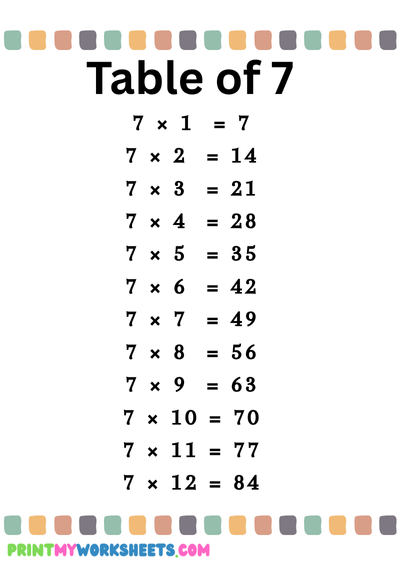
3rd Grade Multiplication Tables 7–9 Worksheet | Free PDF Download for Kids
3rd Grade Multiplication Tables 7–9 Worksheet
The 3rd Grade Multiplication Tables 7–9 Worksheet is designed to help students build strong multiplication fluency with some of the most challenging fact sets in third grade math. This free printable PDF is created for U.S. parents, classroom teachers, and homeschool families who want structured, focused practice on the 7, 8, and 9 times tables.
By 3rd grade, students are expected to move toward automatic recall of multiplication facts within 100. The 7–9 tables often require extra attention because they involve larger products and more complex number patterns. Consistent practice at this stage strengthens math confidence and prepares students for multi-digit multiplication, division, and word problems. This worksheet provides clear, age-appropriate exercises that reinforce understanding while encouraging independent problem-solving and steady skill growth.
What Students Will Learn?
This multiplication resource helps students master the 7, 8, and 9 times tables through guided and independent practice. Students focus on building accuracy, speed, and confidence while solving multiplication equations within 100.
Activities may include fact fluency drills, skip counting exercises, matching problems to correct products, and solving equations in both vertical and horizontal formats. Some pages may also include word problems that apply multiplication tables to real-world scenarios, helping students connect math skills to everyday situations.
The worksheet follows a structured learning approach. Students begin by reviewing multiplication patterns, such as skip counting by 7s, 8s, and 9s. From there, they progress to solving mixed fact problems that require flexible thinking. This gradual increase in complexity supports mastery rather than memorization alone.
The exercises align with U.S. 3rd grade math standards, which emphasize understanding multiplication as repeated addition, recognizing number relationships, and developing fluency with essential facts.
Educational Value & Skill Development
The 3rd Grade Multiplication Tables 7–9 Worksheet supports both academic achievement and cognitive development. These fact sets are often considered more challenging, which makes focused practice especially valuable.
Academically, mastering these tables improves students’ ability to solve larger multiplication and division problems efficiently. When students can quickly recall 7, 8, and 9 facts, they are better prepared for multi-step word problems and more advanced math topics in later grades.
From a cognitive perspective, practicing multiplication strengthens working memory, attention to detail, and logical reasoning. Students learn to recognize patterns within multiplication tables, such as the digit patterns found in multiples of 9. Identifying these patterns deepens conceptual understanding and supports long-term retention.
As students experience success with more complex fact sets, their confidence increases. This sense of achievement encourages persistence and builds a positive attitude toward math learning. Strong fluency at this stage lays a foundation for future topics such as fractions, ratios, and algebraic reasoning.
Why Focus on Multiplication Tables 7–9?
The 7, 8, and 9 times tables represent an important milestone in 3rd grade mathematics. While earlier tables may feel more familiar, these higher tables require deeper focus and consistent repetition to achieve mastery.
Students who confidently know these multiplication facts can solve division problems more accurately and efficiently. Since division is directly related to multiplication, fact fluency supports both operations equally. Additionally, quick recall allows students to focus on problem-solving strategies rather than basic calculations.
Repetition and guided practice are essential for long-term success. When students revisit multiplication patterns regularly, they strengthen neural connections that support memory and recall. Structured worksheets provide the repetition necessary for mastery while offering varied problem types that maintain engagement.
By prioritizing these fact sets, students build a complete understanding of multiplication tables, preparing them for upper elementary math expectations.
How to Use These Worksheets?
The 3rd Grade Multiplication Tables 7–9 Worksheet can be used in a variety of educational settings. In classrooms, teachers may introduce the multiplication tables during direct instruction and assign the worksheet for guided practice, math centers, or homework. It also works well for timed fluency practice or weekly review sessions.
In homeschool environments, parents can use the worksheet as part of a structured math routine. Reviewing skip counting strategies before completing the exercises helps reinforce patterns. After independent practice, discussing mistakes together supports deeper understanding.
Because this resource is provided as a free printable PDF, it is easy to download and print as needed. Educators can reuse the worksheets throughout the year to reinforce learning. The print-friendly design allows families and teachers to build a consistent practice routine that supports steady improvement and long-term retention.
Related Worksheets / Extensions:
3rd Grade Multiplication Tables 7–9 Worksheet | Free PDF Download for Kids
3rd Grade Multiplication Tables 7–9 Worksheet
The 3rd Grade Multiplication Tables 7–9 Worksheet is designed to help students build strong multiplication fluency with some of the most challenging fact sets in third grade math. This free printable PDF is created for U.S. parents, classroom teachers, and homeschool families who want structured, focused practice on the 7, 8, and 9 times tables.
By 3rd grade, students are expected to move toward automatic recall of multiplication facts within 100. The 7–9 tables often require extra attention because they involve larger products and more complex number patterns. Consistent practice at this stage strengthens math confidence and prepares students for multi-digit multiplication, division, and word problems. This worksheet provides clear, age-appropriate exercises that reinforce understanding while encouraging independent problem-solving and steady skill growth.
What Students Will Learn?
This multiplication resource helps students master the 7, 8, and 9 times tables through guided and independent practice. Students focus on building accuracy, speed, and confidence while solving multiplication equations within 100.
Activities may include fact fluency drills, skip counting exercises, matching problems to correct products, and solving equations in both vertical and horizontal formats. Some pages may also include word problems that apply multiplication tables to real-world scenarios, helping students connect math skills to everyday situations.
The worksheet follows a structured learning approach. Students begin by reviewing multiplication patterns, such as skip counting by 7s, 8s, and 9s. From there, they progress to solving mixed fact problems that require flexible thinking. This gradual increase in complexity supports mastery rather than memorization alone.
The exercises align with U.S. 3rd grade math standards, which emphasize understanding multiplication as repeated addition, recognizing number relationships, and developing fluency with essential facts.
Educational Value & Skill Development
The 3rd Grade Multiplication Tables 7–9 Worksheet supports both academic achievement and cognitive development. These fact sets are often considered more challenging, which makes focused practice especially valuable.
Academically, mastering these tables improves students’ ability to solve larger multiplication and division problems efficiently. When students can quickly recall 7, 8, and 9 facts, they are better prepared for multi-step word problems and more advanced math topics in later grades.
From a cognitive perspective, practicing multiplication strengthens working memory, attention to detail, and logical reasoning. Students learn to recognize patterns within multiplication tables, such as the digit patterns found in multiples of 9. Identifying these patterns deepens conceptual understanding and supports long-term retention.
As students experience success with more complex fact sets, their confidence increases. This sense of achievement encourages persistence and builds a positive attitude toward math learning. Strong fluency at this stage lays a foundation for future topics such as fractions, ratios, and algebraic reasoning.
Why Focus on Multiplication Tables 7–9?
The 7, 8, and 9 times tables represent an important milestone in 3rd grade mathematics. While earlier tables may feel more familiar, these higher tables require deeper focus and consistent repetition to achieve mastery.
Students who confidently know these multiplication facts can solve division problems more accurately and efficiently. Since division is directly related to multiplication, fact fluency supports both operations equally. Additionally, quick recall allows students to focus on problem-solving strategies rather than basic calculations.
Repetition and guided practice are essential for long-term success. When students revisit multiplication patterns regularly, they strengthen neural connections that support memory and recall. Structured worksheets provide the repetition necessary for mastery while offering varied problem types that maintain engagement.
By prioritizing these fact sets, students build a complete understanding of multiplication tables, preparing them for upper elementary math expectations.
How to Use These Worksheets?
The 3rd Grade Multiplication Tables 7–9 Worksheet can be used in a variety of educational settings. In classrooms, teachers may introduce the multiplication tables during direct instruction and assign the worksheet for guided practice, math centers, or homework. It also works well for timed fluency practice or weekly review sessions.
In homeschool environments, parents can use the worksheet as part of a structured math routine. Reviewing skip counting strategies before completing the exercises helps reinforce patterns. After independent practice, discussing mistakes together supports deeper understanding.
Because this resource is provided as a free printable PDF, it is easy to download and print as needed. Educators can reuse the worksheets throughout the year to reinforce learning. The print-friendly design allows families and teachers to build a consistent practice routine that supports steady improvement and long-term retention.
Related Worksheets / Extensions:
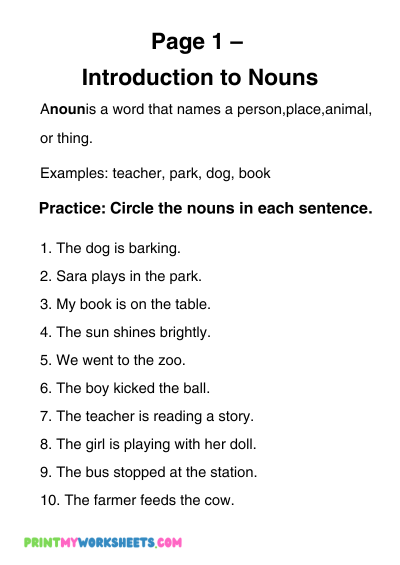
3rd Grade Nouns and Their Types Worksheets PDF | Free English Downloadable
Help your child master the basics of grammar with our 3rd Grade Nouns and Their Types Worksheets PDF designed to support the US curriculum and ideal for homeschool parents, teachers, and tutors.
These worksheets introduce children to the concept of nouns—words that name people, places, things, and ideas—and their different types, such as common nouns, proper nouns, collective nouns, and abstract nouns. Through engaging exercises like sorting activities, fill-in-the-blank questions, word identification, and sentence writing, kids learn to recognize and correctly use nouns in everyday communication.
Why focus on nouns and their types in 3rd grade? Understanding nouns lays the foundation for strong grammar, reading, and writing skills. By mastering nouns, children improve their ability to construct sentences, express ideas clearly, and build vocabulary. These worksheets also encourage critical thinking as students classify words and apply them in context.
Our free printable PDF is easy to download and perfect for home practice, classroom use, or small-group activities. With colorful, kid-friendly designs and answer keys provided, these worksheets make grammar practice enjoyable and effective.
Download today and help your child strengthen their grammar foundation while boosting confidence in reading and writing.
Download and print today to give your little learners the head start they deserve!
You may also like :
[gallery ids="5949,6134,5981"] 3rd Grade Nouns and Their Types Worksheets PDF | Free English Downloadable
Help your child master the basics of grammar with our 3rd Grade Nouns and Their Types Worksheets PDF designed to support the US curriculum and ideal for homeschool parents, teachers, and tutors.
These worksheets introduce children to the concept of nouns—words that name people, places, things, and ideas—and their different types, such as common nouns, proper nouns, collective nouns, and abstract nouns. Through engaging exercises like sorting activities, fill-in-the-blank questions, word identification, and sentence writing, kids learn to recognize and correctly use nouns in everyday communication.
Why focus on nouns and their types in 3rd grade? Understanding nouns lays the foundation for strong grammar, reading, and writing skills. By mastering nouns, children improve their ability to construct sentences, express ideas clearly, and build vocabulary. These worksheets also encourage critical thinking as students classify words and apply them in context.
Our free printable PDF is easy to download and perfect for home practice, classroom use, or small-group activities. With colorful, kid-friendly designs and answer keys provided, these worksheets make grammar practice enjoyable and effective.
Download today and help your child strengthen their grammar foundation while boosting confidence in reading and writing.
Download and print today to give your little learners the head start they deserve!
You may also like :
[gallery ids="5949,6134,5981"]

3rd Grade Past Tense Worksheets PDF – Easy Grammar Practice for Home Learning
3rd Grade Past Tense Worksheets PDF
These worksheets are designed to help students understand and correctly use past tense verbs in everyday writing and reading. These free downloadable PDF worksheets are ideal for US homeschool parents, elementary teachers, and third-grade learners strengthening their grammar skills.
Understanding past tense verbs is essential for clear communication. These worksheets focus on both regular and irregular past tense forms, helping students learn how actions that already happened are expressed correctly in sentences. Through structured practice, students gain confidence in forming past tense verbs and using them in context.
Learning past tense improves writing clarity, storytelling, and reading comprehension. When students correctly use past tense verbs, their sentences make more sense, and their writing becomes more accurate and engaging. These skills are especially important for narrative writing, personal stories, and classroom assignments. Mastery of past tense also supports success on grammar assessments and standardized tests.
Each worksheet includes age-appropriate activities such as verb identification, sentence completion, correcting verb errors, and writing practice. The printable PDF format makes these worksheets easy to use in classrooms, homeschooling routines, homework assignments, or independent practice.
Whether reinforcing grammar lessons or building strong writing foundations, these worksheets provide an effective, engaging, and completely free resource aligned with US curriculum standards.
You may also like:
[gallery ids="5949,6141,6134"] 3rd Grade Past Tense Worksheets PDF – Easy Grammar Practice for Home Learning
3rd Grade Past Tense Worksheets PDF
These worksheets are designed to help students understand and correctly use past tense verbs in everyday writing and reading. These free downloadable PDF worksheets are ideal for US homeschool parents, elementary teachers, and third-grade learners strengthening their grammar skills.
Understanding past tense verbs is essential for clear communication. These worksheets focus on both regular and irregular past tense forms, helping students learn how actions that already happened are expressed correctly in sentences. Through structured practice, students gain confidence in forming past tense verbs and using them in context.
Learning past tense improves writing clarity, storytelling, and reading comprehension. When students correctly use past tense verbs, their sentences make more sense, and their writing becomes more accurate and engaging. These skills are especially important for narrative writing, personal stories, and classroom assignments. Mastery of past tense also supports success on grammar assessments and standardized tests.
Each worksheet includes age-appropriate activities such as verb identification, sentence completion, correcting verb errors, and writing practice. The printable PDF format makes these worksheets easy to use in classrooms, homeschooling routines, homework assignments, or independent practice.
Whether reinforcing grammar lessons or building strong writing foundations, these worksheets provide an effective, engaging, and completely free resource aligned with US curriculum standards.
You may also like:
[gallery ids="5949,6141,6134"]
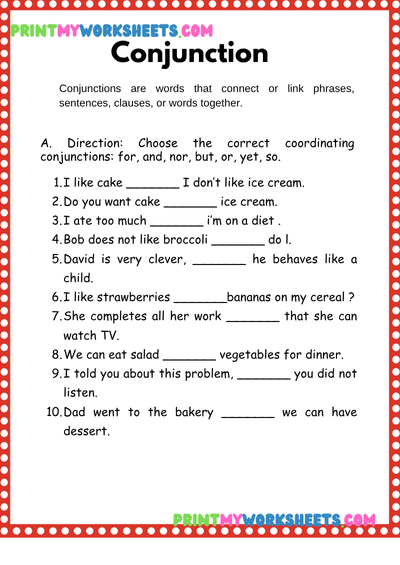
3rd Grade Prepositions and Conjunctions Worksheet | Free PDF Download for Kids
3rd Grade Prepositions and Conjunctions Worksheet
Understanding how words connect ideas and show relationships in sentences is an important step in language development. The 3rd Grade Prepositions and Conjunctions Worksheet is designed to help students build clear and meaningful sentences through focused grammar practice. This printable resource is created for U.S. parents, classroom teachers, and homeschool families who want to strengthen foundational English skills in a structured, age-appropriate way.
At the third-grade level, students are expected to write longer sentences, read more complex passages, and explain their ideas clearly. Prepositions and conjunctions play a key role in helping students describe location, time, and relationships between ideas. These worksheets provide guided activities that help learners recognize and use these parts of speech correctly. With a simple layout and clear instructions, this free printable PDF supports both classroom instruction and at-home practice while building confidence in grammar and sentence structure.
What Students Will Learn?
These worksheets focus on helping students understand how prepositions and conjunctions function within sentences. Students learn to identify common prepositions that show position, direction, and time, such as words that explain where something is or when something happens. They also practice recognizing conjunctions that join words, phrases, or ideas to create smoother, more complete sentences.
Activities are designed to move from recognition to application. Early tasks may ask students to circle or underline the correct word, while later activities encourage them to choose the best word to complete a sentence or rewrite sentences using appropriate connectors. This progression helps students understand not just what these words are, but how they are used in context.
The worksheets support structured learning by using consistent formats and clear examples. This predictability helps third-grade students stay focused and reduces confusion. The activities align with grade-level expectations by encouraging correct sentence structure, improved writing clarity, and stronger reading comprehension. Through regular practice, students gain the skills needed to express ideas more clearly and confidently.
Educational Value & Skill Development
Grammar instruction plays a significant role in helping students communicate effectively. The 3rd Grade Prepositions and Conjunctions Worksheet supports academic growth by strengthening sentence structure and clarity. When students understand how to connect ideas and describe relationships accurately, both their writing and reading comprehension improve.
These worksheets also support cognitive development by encouraging students to analyze sentence meaning. Choosing the correct preposition or conjunction requires careful thinking about context, logic, and flow. This type of decision-making helps build attention to detail and reasoning skills.
Confidence and independence grow as students become more comfortable working with grammar rules. Completing activities successfully helps learners trust their abilities and apply these skills in other writing tasks. Over time, students begin to use prepositions and conjunctions naturally in their own sentences without relying heavily on prompts.
Skill progression is another important benefit. Mastery of these grammar concepts in third grade prepares students for more advanced language skills in later grades, including complex sentences, paragraph writing, and detailed explanations across subject areas.
Why Focus on Prepositions and Conjunctions?
Prepositions and conjunctions are essential building blocks of clear communication. They help students explain where, when, and how things happen, and they connect ideas smoothly within sentences. In third grade, students move beyond simple sentences and begin working with more detailed writing and reading tasks.
Focusing on these grammar skills helps prevent common errors such as run-on sentences or unclear descriptions. When students understand how words work together, they can express ideas more accurately and confidently. This understanding also supports reading comprehension, as students are better able to follow relationships between ideas in texts.
Repetition and guided practice are especially important when learning grammar concepts. Worksheets provide a structured way for students to practice consistently and apply rules in different contexts. These activities align with English language standards used across the United States, which emphasize sentence structure, grammar usage, and clear written expression. Developing these skills early supports long-term success in language arts.
How to Use These Worksheets?
These printable grammar worksheets are flexible and easy to use in many learning settings. In homeschool environments, they can be included as part of a regular language arts lesson or used for targeted practice when a child needs extra support. Parents can review completed pages with their child to discuss why certain word choices work best.
In classrooms, teachers may use the worksheets for whole-group instruction, small-group rotations, or independent practice. They are also helpful for homework assignments or quick reviews before writing activities.
The 3rd Grade Prepositions and Conjunctions Worksheet is available as a free printable PDF, making it easy to download and reuse throughout the school year. Because the 3rd Grade Prepositions and Conjunctions Worksheet is print-friendly, pages can be used multiple times or placed in sheet protectors for repeated practice. This flexibility allows educators and families to adapt instruction to different learning needs.
You may also like :
[gallery ids="4503,5358,5168"] 3rd Grade Prepositions and Conjunctions Worksheet | Free PDF Download for Kids
3rd Grade Prepositions and Conjunctions Worksheet
Understanding how words connect ideas and show relationships in sentences is an important step in language development. The 3rd Grade Prepositions and Conjunctions Worksheet is designed to help students build clear and meaningful sentences through focused grammar practice. This printable resource is created for U.S. parents, classroom teachers, and homeschool families who want to strengthen foundational English skills in a structured, age-appropriate way.
At the third-grade level, students are expected to write longer sentences, read more complex passages, and explain their ideas clearly. Prepositions and conjunctions play a key role in helping students describe location, time, and relationships between ideas. These worksheets provide guided activities that help learners recognize and use these parts of speech correctly. With a simple layout and clear instructions, this free printable PDF supports both classroom instruction and at-home practice while building confidence in grammar and sentence structure.
What Students Will Learn?
These worksheets focus on helping students understand how prepositions and conjunctions function within sentences. Students learn to identify common prepositions that show position, direction, and time, such as words that explain where something is or when something happens. They also practice recognizing conjunctions that join words, phrases, or ideas to create smoother, more complete sentences.
Activities are designed to move from recognition to application. Early tasks may ask students to circle or underline the correct word, while later activities encourage them to choose the best word to complete a sentence or rewrite sentences using appropriate connectors. This progression helps students understand not just what these words are, but how they are used in context.
The worksheets support structured learning by using consistent formats and clear examples. This predictability helps third-grade students stay focused and reduces confusion. The activities align with grade-level expectations by encouraging correct sentence structure, improved writing clarity, and stronger reading comprehension. Through regular practice, students gain the skills needed to express ideas more clearly and confidently.
Educational Value & Skill Development
Grammar instruction plays a significant role in helping students communicate effectively. The 3rd Grade Prepositions and Conjunctions Worksheet supports academic growth by strengthening sentence structure and clarity. When students understand how to connect ideas and describe relationships accurately, both their writing and reading comprehension improve.
These worksheets also support cognitive development by encouraging students to analyze sentence meaning. Choosing the correct preposition or conjunction requires careful thinking about context, logic, and flow. This type of decision-making helps build attention to detail and reasoning skills.
Confidence and independence grow as students become more comfortable working with grammar rules. Completing activities successfully helps learners trust their abilities and apply these skills in other writing tasks. Over time, students begin to use prepositions and conjunctions naturally in their own sentences without relying heavily on prompts.
Skill progression is another important benefit. Mastery of these grammar concepts in third grade prepares students for more advanced language skills in later grades, including complex sentences, paragraph writing, and detailed explanations across subject areas.
Why Focus on Prepositions and Conjunctions?
Prepositions and conjunctions are essential building blocks of clear communication. They help students explain where, when, and how things happen, and they connect ideas smoothly within sentences. In third grade, students move beyond simple sentences and begin working with more detailed writing and reading tasks.
Focusing on these grammar skills helps prevent common errors such as run-on sentences or unclear descriptions. When students understand how words work together, they can express ideas more accurately and confidently. This understanding also supports reading comprehension, as students are better able to follow relationships between ideas in texts.
Repetition and guided practice are especially important when learning grammar concepts. Worksheets provide a structured way for students to practice consistently and apply rules in different contexts. These activities align with English language standards used across the United States, which emphasize sentence structure, grammar usage, and clear written expression. Developing these skills early supports long-term success in language arts.
How to Use These Worksheets?
These printable grammar worksheets are flexible and easy to use in many learning settings. In homeschool environments, they can be included as part of a regular language arts lesson or used for targeted practice when a child needs extra support. Parents can review completed pages with their child to discuss why certain word choices work best.
In classrooms, teachers may use the worksheets for whole-group instruction, small-group rotations, or independent practice. They are also helpful for homework assignments or quick reviews before writing activities.
The 3rd Grade Prepositions and Conjunctions Worksheet is available as a free printable PDF, making it easy to download and reuse throughout the school year. Because the 3rd Grade Prepositions and Conjunctions Worksheet is print-friendly, pages can be used multiple times or placed in sheet protectors for repeated practice. This flexibility allows educators and families to adapt instruction to different learning needs.
You may also like :
[gallery ids="4503,5358,5168"]
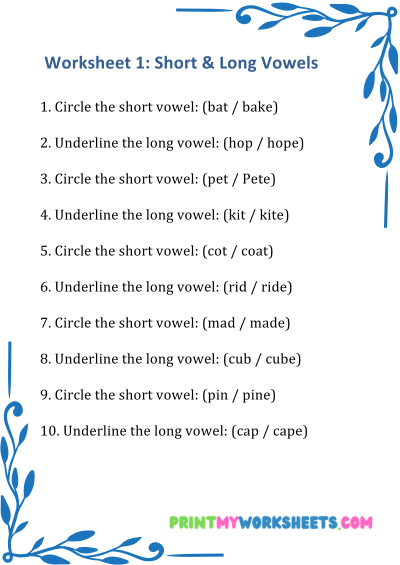
3rd Grade Reading Fluency and Phonics Part-2 Worksheets | Free English Downloadable PDF
Support your child’s reading journey with our 3rd Grade Reading Fluency and Phonics Part-2 Worksheets | Free English Downloadable PDF, created for the US curriculum and designed for homeschool parents, teachers, and tutors.
This Part-2 set builds on the foundation of our first fluency and phonics worksheets, offering more advanced practice to help students strengthen their literacy skills. Activities include decoding multisyllabic words, recognizing complex vowel patterns, consonant blends, digraphs, and fluency passages with comprehension questions. Students are encouraged to read aloud, track their speed, and practice accuracy while improving understanding.
Why is additional fluency and phonics practice important in 3rd grade? At this level, children are moving from basic reading to developing reading stamina, accuracy, and comprehension. These worksheets provide extra reinforcement for tricky word patterns and reading fluency, ensuring students build confidence, vocabulary, and critical thinking skills needed for independent reading and academic success.
Perfect for homeschool learning, classroom lessons, or tutoring support, this free printable PDF is easy to download, print, and integrate into daily practice.
Download and print today to give your little learners the head start they deserve!
You may also like:
[gallery ids="5981,5946,5939"] 3rd Grade Reading Fluency and Phonics Part-2 Worksheets | Free English Downloadable PDF
Support your child’s reading journey with our 3rd Grade Reading Fluency and Phonics Part-2 Worksheets | Free English Downloadable PDF, created for the US curriculum and designed for homeschool parents, teachers, and tutors.
This Part-2 set builds on the foundation of our first fluency and phonics worksheets, offering more advanced practice to help students strengthen their literacy skills. Activities include decoding multisyllabic words, recognizing complex vowel patterns, consonant blends, digraphs, and fluency passages with comprehension questions. Students are encouraged to read aloud, track their speed, and practice accuracy while improving understanding.
Why is additional fluency and phonics practice important in 3rd grade? At this level, children are moving from basic reading to developing reading stamina, accuracy, and comprehension. These worksheets provide extra reinforcement for tricky word patterns and reading fluency, ensuring students build confidence, vocabulary, and critical thinking skills needed for independent reading and academic success.
Perfect for homeschool learning, classroom lessons, or tutoring support, this free printable PDF is easy to download, print, and integrate into daily practice.
Download and print today to give your little learners the head start they deserve!
You may also like:
[gallery ids="5981,5946,5939"]
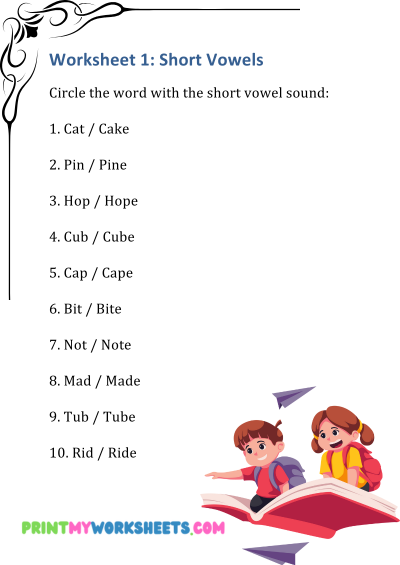
3rd Grade Reading Fluency and Phonics Worksheets PDF | Free English Downloadable
Support your child’s reading journey with our 3rd Grade Reading Fluency and Phonics Worksheets PDF | Free English Downloadable , created to align with the US curriculum and ideal for homeschool parents, teachers, and tutors.
These worksheets focus on two essential literacy skills: phonics and fluency. Activities include decoding words using phonics patterns, practicing vowel sounds, consonant blends, digraphs, and spelling patterns, along with short passages that encourage repeated reading to build fluency. Students also engage in comprehension questions to ensure they not only read quickly but also understand what they are reading.
Why are phonics and fluency important in 3rd grade? At this level, children transition from “learning to read” to “reading to learn.” Strong phonics skills improve word recognition, decoding, and spelling, while fluency practice boosts reading speed, accuracy, and expression. Together, these skills foster reading confidence, better comprehension, and academic success across all subjects.
Perfect for classroom lessons, homeschool practice, or tutoring sessions, this free printable PDF is easy to download, print, and use anytime. With engaging layouts and answer keys included, kids can practice independently or with support.
Download and print today to give your little learners the head start they deserve!
You may also like:
[caption id="attachment_5949" align="alignnone" width="212"] 3rd Grade Multiplication Tables 10–12[/caption]
[caption id="attachment_5168" align="alignnone" width="212"]
3rd Grade Multiplication Tables 10–12[/caption]
[caption id="attachment_5168" align="alignnone" width="212"] 3rd Grade Math Olympiad Worksheets PDF[/caption]
[caption id="attachment_5372" align="alignnone" width="212"]
3rd Grade Math Olympiad Worksheets PDF[/caption]
[caption id="attachment_5372" align="alignnone" width="212"] 3rd Grade 3-Digit and 4-Digit Number Worksheets PDF[/caption]
 3rd Grade Reading Fluency and Phonics Worksheets PDF | Free English Downloadable
Support your child’s reading journey with our 3rd Grade Reading Fluency and Phonics Worksheets PDF | Free English Downloadable , created to align with the US curriculum and ideal for homeschool parents, teachers, and tutors.
These worksheets focus on two essential literacy skills: phonics and fluency. Activities include decoding words using phonics patterns, practicing vowel sounds, consonant blends, digraphs, and spelling patterns, along with short passages that encourage repeated reading to build fluency. Students also engage in comprehension questions to ensure they not only read quickly but also understand what they are reading.
Why are phonics and fluency important in 3rd grade? At this level, children transition from “learning to read” to “reading to learn.” Strong phonics skills improve word recognition, decoding, and spelling, while fluency practice boosts reading speed, accuracy, and expression. Together, these skills foster reading confidence, better comprehension, and academic success across all subjects.
Perfect for classroom lessons, homeschool practice, or tutoring sessions, this free printable PDF is easy to download, print, and use anytime. With engaging layouts and answer keys included, kids can practice independently or with support.
Download and print today to give your little learners the head start they deserve!
You may also like:
[caption id="attachment_5949" align="alignnone" width="212"] 3rd Grade Multiplication Tables 10–12[/caption]
[caption id="attachment_5168" align="alignnone" width="212"] 3rd Grade Math Olympiad Worksheets PDF[/caption]
[caption id="attachment_5372" align="alignnone" width="212"] 3rd Grade 3-Digit and 4-Digit Number Worksheets PDF[/caption]
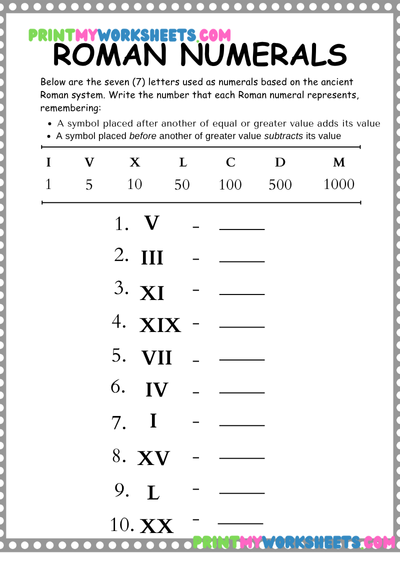
3rd Grade Roman Numerals 1-30 Worksheet | Free Printable PDF
3rd Grade Roman Numerals 1-30 Worksheet
Learning Roman numerals helps students understand how numbers have been represented across history while strengthening number sense and pattern recognition. The 3rd Grade Roman Numerals 1-30 Worksheet is designed to give students clear, structured practice with reading, writing, and identifying Roman numerals from 1 to 30. This printable resource is ideal for U.S. parents, classroom teachers, and homeschool families looking for an easy-to-use math activity that supports foundational number skills.
At the third-grade level, students are expected to expand their understanding of numbers beyond standard forms. Roman numerals are commonly introduced in elementary math standards, clocks, book chapters, timelines, and everyday contexts. These worksheets provide guided exposure that helps students become comfortable recognizing symbols such as I, V, X, and combinations that represent values up to 30. With age-appropriate exercises and a simple layout, this free printable PDF supports independent practice, small-group instruction, and review, helping students build confidence with an important math concept.
What Students Will Learn?
These worksheets focus on helping students understand how Roman numerals work and how they connect to standard numbers. Students learn to identify Roman numeral symbols and recognize how different combinations represent values from 1 through 30. Early activities emphasize recognition and matching, allowing learners to become familiar with the symbols before moving into more applied tasks.
As students progress, they practice converting standard numbers into Roman numerals and Roman numerals into standard numbers. This two-way practice strengthens understanding and helps prevent memorization without meaning. Some activities may include filling in missing numerals, selecting correct answers, or writing numerals independently.
The worksheets are designed to support structured learning with a gradual increase in difficulty. Clear instructions and consistent formatting help students focus on the math rather than the layout. The activities align well with third-grade expectations, supporting number sense, logical thinking, and attention to detail. By practicing Roman numerals within a limited and manageable range, students build a strong foundation that prepares them for more advanced math concepts later on.
Educational Value & Skill Development
Understanding Roman numerals supports more than just math knowledge; it also strengthens reasoning and pattern recognition skills. The 3rd Grade Roman Numerals 1-30 Worksheet helps students analyze how symbols combine to form values, encouraging them to think critically rather than rely on rote memorization. This analytical approach supports deeper learning and long-term retention.
Academically, these worksheets reinforce number awareness and strengthen connections between different number systems. Students learn that numbers can be represented in multiple ways, which supports flexibility in thinking and problem-solving. This understanding is helpful not only in math but also in reading, history, and real-world contexts where Roman numerals appear.
Cognitively, the activities encourage focus, sequencing, and comparison. Students must pay close attention to symbol order and value, which helps build concentration and accuracy. Completing worksheets independently also supports confidence and responsibility.
As students gain mastery within the 1–30 range, they are better prepared to recognize Roman numerals in higher numbers later on. This progression supports smooth skill development and readiness for future grade-level math expectations.
Why Focus on Roman Numerals 1–30?
Roman numerals are a key part of elementary math standards and are often introduced in the upper elementary grades. Focusing on numerals from 1 to 30 allows students to learn the system without becoming overwhelmed. This limited range helps learners understand how symbols repeat and combine to represent different values.
Developing this skill supports future learning in both math and other subjects. Roman numerals commonly appear on clocks, outlines, book chapters, and historical dates. When students recognize these numerals confidently, they are better equipped to interpret information across academic areas.
Repetition and guided practice are essential when learning a new number system. Worksheets provide a structured way for students to practice consistently, receive feedback, and correct mistakes. These activities align with early math learning standards used across the United States, which emphasize number representation, pattern recognition, and reasoning. By mastering Roman numerals early, students build a strong foundation that supports continued success in mathematics.
How to Use These Worksheets?
These printable worksheets are flexible and easy to integrate into different learning environments. In homeschool settings, they can be used as part of a math lesson or as focused practice when introducing Roman numerals. Parents can work alongside students, reviewing answers and discussing patterns together.
In classrooms, teachers may use the worksheets for whole-class instruction, math centers, small-group practice, or independent work. They are also helpful for review sessions or quick assessments to check understanding.
The 3rd Grade Roman Numerals 1-30 Worksheet is provided as a free printable PDF, making it simple to download and reuse throughout the school year. Pages can be printed multiple times or placed in sheet protectors for repeated practice with dry-erase markers. This reusability allows educators and families to adapt the worksheets to different learning needs while maintaining consistent instruction.
Related Worksheets / Extensions:
3rd Grade Roman Numerals 1-30 Worksheet | Free Printable PDF
3rd Grade Roman Numerals 1-30 Worksheet
Learning Roman numerals helps students understand how numbers have been represented across history while strengthening number sense and pattern recognition. The 3rd Grade Roman Numerals 1-30 Worksheet is designed to give students clear, structured practice with reading, writing, and identifying Roman numerals from 1 to 30. This printable resource is ideal for U.S. parents, classroom teachers, and homeschool families looking for an easy-to-use math activity that supports foundational number skills.
At the third-grade level, students are expected to expand their understanding of numbers beyond standard forms. Roman numerals are commonly introduced in elementary math standards, clocks, book chapters, timelines, and everyday contexts. These worksheets provide guided exposure that helps students become comfortable recognizing symbols such as I, V, X, and combinations that represent values up to 30. With age-appropriate exercises and a simple layout, this free printable PDF supports independent practice, small-group instruction, and review, helping students build confidence with an important math concept.
What Students Will Learn?
These worksheets focus on helping students understand how Roman numerals work and how they connect to standard numbers. Students learn to identify Roman numeral symbols and recognize how different combinations represent values from 1 through 30. Early activities emphasize recognition and matching, allowing learners to become familiar with the symbols before moving into more applied tasks.
As students progress, they practice converting standard numbers into Roman numerals and Roman numerals into standard numbers. This two-way practice strengthens understanding and helps prevent memorization without meaning. Some activities may include filling in missing numerals, selecting correct answers, or writing numerals independently.
The worksheets are designed to support structured learning with a gradual increase in difficulty. Clear instructions and consistent formatting help students focus on the math rather than the layout. The activities align well with third-grade expectations, supporting number sense, logical thinking, and attention to detail. By practicing Roman numerals within a limited and manageable range, students build a strong foundation that prepares them for more advanced math concepts later on.
Educational Value & Skill Development
Understanding Roman numerals supports more than just math knowledge; it also strengthens reasoning and pattern recognition skills. The 3rd Grade Roman Numerals 1-30 Worksheet helps students analyze how symbols combine to form values, encouraging them to think critically rather than rely on rote memorization. This analytical approach supports deeper learning and long-term retention.
Academically, these worksheets reinforce number awareness and strengthen connections between different number systems. Students learn that numbers can be represented in multiple ways, which supports flexibility in thinking and problem-solving. This understanding is helpful not only in math but also in reading, history, and real-world contexts where Roman numerals appear.
Cognitively, the activities encourage focus, sequencing, and comparison. Students must pay close attention to symbol order and value, which helps build concentration and accuracy. Completing worksheets independently also supports confidence and responsibility.
As students gain mastery within the 1–30 range, they are better prepared to recognize Roman numerals in higher numbers later on. This progression supports smooth skill development and readiness for future grade-level math expectations.
Why Focus on Roman Numerals 1–30?
Roman numerals are a key part of elementary math standards and are often introduced in the upper elementary grades. Focusing on numerals from 1 to 30 allows students to learn the system without becoming overwhelmed. This limited range helps learners understand how symbols repeat and combine to represent different values.
Developing this skill supports future learning in both math and other subjects. Roman numerals commonly appear on clocks, outlines, book chapters, and historical dates. When students recognize these numerals confidently, they are better equipped to interpret information across academic areas.
Repetition and guided practice are essential when learning a new number system. Worksheets provide a structured way for students to practice consistently, receive feedback, and correct mistakes. These activities align with early math learning standards used across the United States, which emphasize number representation, pattern recognition, and reasoning. By mastering Roman numerals early, students build a strong foundation that supports continued success in mathematics.
How to Use These Worksheets?
These printable worksheets are flexible and easy to integrate into different learning environments. In homeschool settings, they can be used as part of a math lesson or as focused practice when introducing Roman numerals. Parents can work alongside students, reviewing answers and discussing patterns together.
In classrooms, teachers may use the worksheets for whole-class instruction, math centers, small-group practice, or independent work. They are also helpful for review sessions or quick assessments to check understanding.
The 3rd Grade Roman Numerals 1-30 Worksheet is provided as a free printable PDF, making it simple to download and reuse throughout the school year. Pages can be printed multiple times or placed in sheet protectors for repeated practice with dry-erase markers. This reusability allows educators and families to adapt the worksheets to different learning needs while maintaining consistent instruction.
Related Worksheets / Extensions:
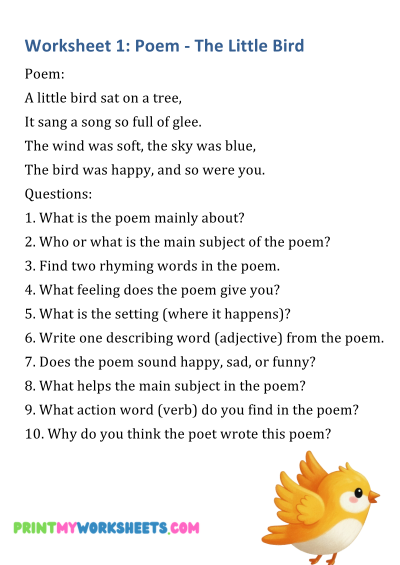
3rd Grade Short Poems Worksheets PDF | Free Downloadable
Introduce your child to the beauty of poetry with our 3rd Grade Short Poems Worksheets PDF, designed for US homeschool parents, teachers, and classrooms. These engaging worksheets help young learners explore language, rhythm, and emotion through short, age-appropriate poems that make reading fun and meaningful.
Each worksheet includes carefully selected short poems followed by comprehension questions, vocabulary exercises, and creative response activities. Kids will learn how to identify rhyme schemes, describe feelings, and understand poetic elements like similes, metaphors, and imagery. These activities not only enhance reading comprehension but also build vocabulary, imagination, and writing skills.
Why teach short poems in 3rd grade? Poetry helps children connect emotionally with language, improving both reading fluency and self-expression. It encourages creativity, strengthens listening skills, and introduces them to literary rhythm and structure in an enjoyable way.
Perfect for classroom reading lessons, homeschool practice, or at-home enrichment, this free downloadable PDF makes poetry approachable and exciting for young learners.
Download and print today to give your little learners the head start they deserve!
3rd Grade Short Poems Worksheets PDF | Free Downloadable
Introduce your child to the beauty of poetry with our 3rd Grade Short Poems Worksheets PDF, designed for US homeschool parents, teachers, and classrooms. These engaging worksheets help young learners explore language, rhythm, and emotion through short, age-appropriate poems that make reading fun and meaningful.
Each worksheet includes carefully selected short poems followed by comprehension questions, vocabulary exercises, and creative response activities. Kids will learn how to identify rhyme schemes, describe feelings, and understand poetic elements like similes, metaphors, and imagery. These activities not only enhance reading comprehension but also build vocabulary, imagination, and writing skills.
Why teach short poems in 3rd grade? Poetry helps children connect emotionally with language, improving both reading fluency and self-expression. It encourages creativity, strengthens listening skills, and introduces them to literary rhythm and structure in an enjoyable way.
Perfect for classroom reading lessons, homeschool practice, or at-home enrichment, this free downloadable PDF makes poetry approachable and exciting for young learners.
Download and print today to give your little learners the head start they deserve!