
Pre-K Number Tracing Worksheets PDF | Free Math Downloadable
Pre-K Number Tracing Worksheets PDF | Free Math Downloadable
Pre-K Numbers 1–10 Tracing Worksheets PDF | Free Math Downloadable
Pre-K Numbers 1–10 Tracing Worksheets PDF
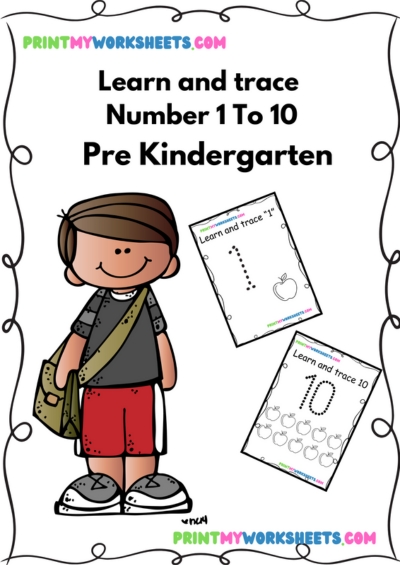
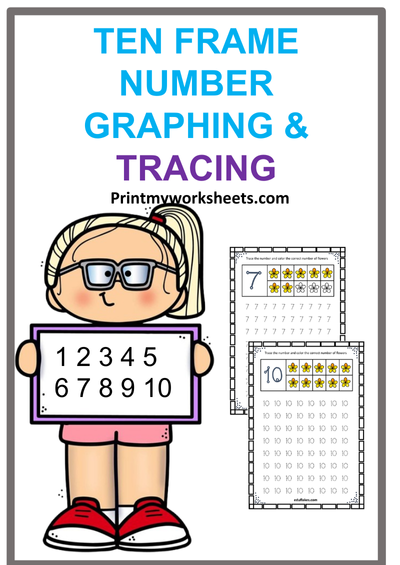
Early math skills begin with recognizing and writing numbers, and structured practice plays an important role in this process. The Pre-K Numbers 1–10 Tracing Worksheets PDF is designed to help preschool learners develop number recognition and writing skills through simple and engaging tracing activities. These printable worksheets are ideal for U.S. parents, teachers, and homeschool families looking to support early math development in a clear and hands-on way.
In Pre-K, children are introduced to numbers 1 through 10 as part of foundational math learning. Learning to trace numbers helps young learners understand number shapes, develop fine motor skills, and build confidence in early writing tasks. Repetition and guided practice are essential at this stage to help children remember and recognize each number.
The Pre-K Numbers 1–10 Tracing Worksheets PDF provides structured activities that guide students through tracing and identifying numbers. With consistent practice, children gain confidence in writing numbers while building the skills needed for counting and basic math concepts.
What Students Will Learn?
Numbers 1–10 tracing worksheets help preschool students develop early math and writing skills through guided practice. These activities are designed to match the developmental needs of young learners.
Students begin by recognizing numbers from 1 to 10. Each worksheet focuses on a specific number, allowing children to become familiar with its shape and appearance.
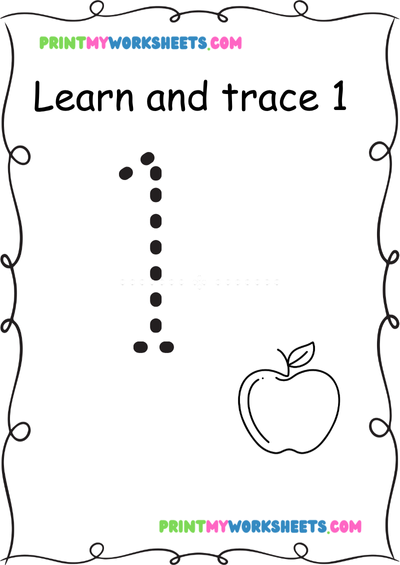
Tracing activities guide students to follow dotted lines that form each number. This helps children understand how numbers are written while developing proper writing habits.
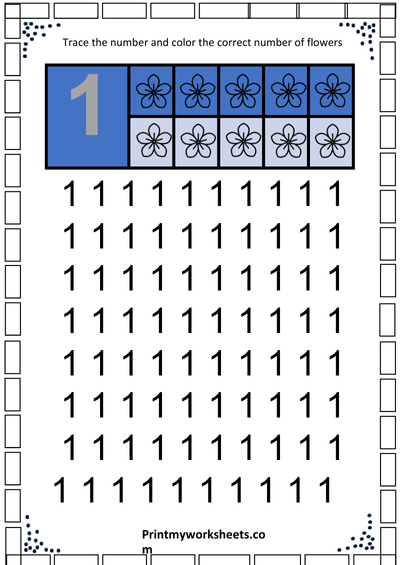
Many worksheets include counting elements such as objects or pictures that match the number being traced. For example, students may trace the number “3” and then count three apples or stars.
Students also practice identifying numbers by matching them with groups of objects. This reinforces number recognition and builds a connection between numbers and quantities.
Some activities include coloring or circling numbers, which adds variety and keeps students engaged.
Through these exercises, preschool learners develop number recognition, counting skills, and early writing abilities that are essential for future math learning.
Educational Value & Skill Development
The Pre-K Numbers 1–10 Tracing Worksheets PDF supports several key developmental areas for preschool students.
One of the most important benefits is improving number recognition. Repeated exposure to numbers helps children quickly identify and remember each number from 1 to 10.
The Pre-K Numbers 1–10 Tracing Worksheets PDF also strengthens fine motor skills. Tracing numbers requires controlled hand movements, which helps develop the muscles needed for writing.
These worksheets also support early counting skills. By connecting numbers with objects, students learn that numbers represent quantities.
Another important benefit is building writing readiness. Practicing number formation prepares children for writing both numbers and letters in future lessons.
Tracing activities also improve focus and attention. Completing each worksheet requires concentration, helping students develop patience and task completion skills.
Additionally, these worksheets build confidence. As children successfully trace and recognize numbers, they feel more comfortable with math concepts and independent learning.
By combining tracing, counting, and recognition activities, these worksheets provide a strong foundation for early math development.
Why Focus on Numbers 1–10 Tracing?
Learning numbers 1 through 10 is one of the first steps in early math education. These numbers form the foundation for counting, addition, and other math skills introduced in later grades.
Tracing numbers helps children understand how numbers are formed. This visual and physical practice makes it easier for students to remember number shapes.
In preschool classrooms across the United States, tracing activities are commonly used to introduce writing skills. These activities provide guided support that helps children learn correct number formation.
Repetition is essential at this stage. Regular tracing practice allows students to become more comfortable with numbers and improves their ability to write them independently.
Numbers 1–10 are also important for everyday learning. Children use these numbers to count objects, understand quantities, and solve simple problems.
Tracing activities also support coordination and motor development. As children trace numbers, they improve hand control and prepare for more advanced writing tasks.
Focusing on number tracing helps students build confidence while developing the foundational skills needed for future math success.
How to Use These Worksheets?
The Pre-K Numbers 1–10 Tracing Worksheets PDF can be used in various learning environments, including preschool classrooms, homeschool settings, and early learning centers.
Teachers often include tracing worksheets as part of daily math routines. Students can practice one number at a time, gradually building familiarity with all numbers from 1 to 10.
In classroom settings, teachers may demonstrate how to trace each number before students begin working independently. This guidance helps ensure proper number formation.
Parents who homeschool can incorporate these worksheets into daily learning sessions. Children can trace numbers while counting objects or identifying numbers in their surroundings.
Because the worksheets are available as a free printable PDF, they can be easily downloaded and printed for repeated use. Teachers and parents can revisit the worksheets for additional practice and review.
These worksheets are also suitable for small group instruction. Students can practice together while receiving support and encouragement.
The printable format allows flexibility, making it easy to adapt the worksheets to different learning needs and schedules.
Related Worksheets / Extensions:
You may also like:
• Preschool counting worksheets
• Number recognition worksheets for early learners
• Pre-K math worksheets for basic number skills
• Shape and counting worksheets for preschool students
• Early addition worksheets for kindergarten readiness
The Pre-K Numbers 1–10 Tracing Worksheets PDF works well alongside other early math resources that focus on counting, number recognition, and simple problem-solving. Combining these activities helps children develop a well-rounded understanding of numbers.
Teachers and parents can extend learning by encouraging children to count everyday objects such as toys, fruits, or steps. These real-life connections reinforce number understanding and make learning more meaningful.
With consistent practice, preschool learners build confidence in recognizing and writing numbers, preparing them for more advanced math skills in kindergarten and beyond.
You may also like :
[gallery ids="5911,6280,6308"] Pre-K Numbers 1–10 Tracing Worksheets PDF | Free Math Downloadable
Pre-K Numbers 1–10 Tracing Worksheets PDF
Early math skills begin with recognizing and writing numbers, and structured practice plays an important role in this process. The Pre-K Numbers 1–10 Tracing Worksheets PDF is designed to help preschool learners develop number recognition and writing skills through simple and engaging tracing activities. These printable worksheets are ideal for U.S. parents, teachers, and homeschool families looking to support early math development in a clear and hands-on way.
In Pre-K, children are introduced to numbers 1 through 10 as part of foundational math learning. Learning to trace numbers helps young learners understand number shapes, develop fine motor skills, and build confidence in early writing tasks. Repetition and guided practice are essential at this stage to help children remember and recognize each number.
The Pre-K Numbers 1–10 Tracing Worksheets PDF provides structured activities that guide students through tracing and identifying numbers. With consistent practice, children gain confidence in writing numbers while building the skills needed for counting and basic math concepts.
What Students Will Learn?
Numbers 1–10 tracing worksheets help preschool students develop early math and writing skills through guided practice. These activities are designed to match the developmental needs of young learners.
Students begin by recognizing numbers from 1 to 10. Each worksheet focuses on a specific number, allowing children to become familiar with its shape and appearance.
Tracing activities guide students to follow dotted lines that form each number. This helps children understand how numbers are written while developing proper writing habits.
Many worksheets include counting elements such as objects or pictures that match the number being traced. For example, students may trace the number “3” and then count three apples or stars.
Students also practice identifying numbers by matching them with groups of objects. This reinforces number recognition and builds a connection between numbers and quantities.
Some activities include coloring or circling numbers, which adds variety and keeps students engaged.
Through these exercises, preschool learners develop number recognition, counting skills, and early writing abilities that are essential for future math learning.
Educational Value & Skill Development
The Pre-K Numbers 1–10 Tracing Worksheets PDF supports several key developmental areas for preschool students.
One of the most important benefits is improving number recognition. Repeated exposure to numbers helps children quickly identify and remember each number from 1 to 10.
The Pre-K Numbers 1–10 Tracing Worksheets PDF also strengthens fine motor skills. Tracing numbers requires controlled hand movements, which helps develop the muscles needed for writing.
These worksheets also support early counting skills. By connecting numbers with objects, students learn that numbers represent quantities.
Another important benefit is building writing readiness. Practicing number formation prepares children for writing both numbers and letters in future lessons.
Tracing activities also improve focus and attention. Completing each worksheet requires concentration, helping students develop patience and task completion skills.
Additionally, these worksheets build confidence. As children successfully trace and recognize numbers, they feel more comfortable with math concepts and independent learning.
By combining tracing, counting, and recognition activities, these worksheets provide a strong foundation for early math development.
Why Focus on Numbers 1–10 Tracing?
Learning numbers 1 through 10 is one of the first steps in early math education. These numbers form the foundation for counting, addition, and other math skills introduced in later grades.
Tracing numbers helps children understand how numbers are formed. This visual and physical practice makes it easier for students to remember number shapes.
In preschool classrooms across the United States, tracing activities are commonly used to introduce writing skills. These activities provide guided support that helps children learn correct number formation.
Repetition is essential at this stage. Regular tracing practice allows students to become more comfortable with numbers and improves their ability to write them independently.
Numbers 1–10 are also important for everyday learning. Children use these numbers to count objects, understand quantities, and solve simple problems.
Tracing activities also support coordination and motor development. As children trace numbers, they improve hand control and prepare for more advanced writing tasks.
Focusing on number tracing helps students build confidence while developing the foundational skills needed for future math success.
How to Use These Worksheets?
The Pre-K Numbers 1–10 Tracing Worksheets PDF can be used in various learning environments, including preschool classrooms, homeschool settings, and early learning centers.
Teachers often include tracing worksheets as part of daily math routines. Students can practice one number at a time, gradually building familiarity with all numbers from 1 to 10.
In classroom settings, teachers may demonstrate how to trace each number before students begin working independently. This guidance helps ensure proper number formation.
Parents who homeschool can incorporate these worksheets into daily learning sessions. Children can trace numbers while counting objects or identifying numbers in their surroundings.
Because the worksheets are available as a free printable PDF, they can be easily downloaded and printed for repeated use. Teachers and parents can revisit the worksheets for additional practice and review.
These worksheets are also suitable for small group instruction. Students can practice together while receiving support and encouragement.
The printable format allows flexibility, making it easy to adapt the worksheets to different learning needs and schedules.
Related Worksheets / Extensions:
You may also like:
• Preschool counting worksheets
• Number recognition worksheets for early learners
• Pre-K math worksheets for basic number skills
• Shape and counting worksheets for preschool students
• Early addition worksheets for kindergarten readiness
The Pre-K Numbers 1–10 Tracing Worksheets PDF works well alongside other early math resources that focus on counting, number recognition, and simple problem-solving. Combining these activities helps children develop a well-rounded understanding of numbers.
Teachers and parents can extend learning by encouraging children to count everyday objects such as toys, fruits, or steps. These real-life connections reinforce number understanding and make learning more meaningful.
With consistent practice, preschool learners build confidence in recognizing and writing numbers, preparing them for more advanced math skills in kindergarten and beyond.
You may also like :
[gallery ids="5911,6280,6308"]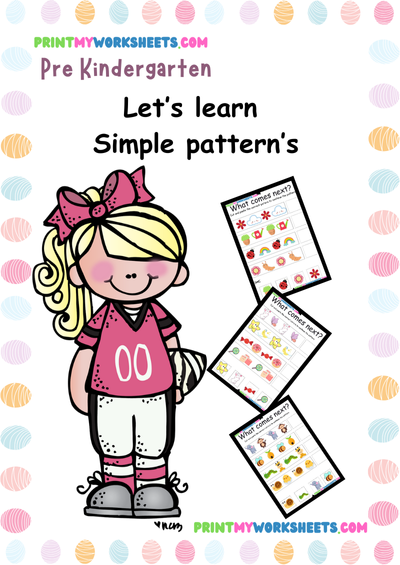
Pre-K Pattern Worksheets PDF | Free Math Downloadable
Pre-K Pattern Worksheets PDF
The Pre-K Pattern Worksheets PDF is a helpful early learning resource designed to introduce young children to the concept of patterns in a fun and structured way. These free printable worksheets are ideal for U.S. parents, preschool teachers, and homeschool families who want to support early math and cognitive development through engaging activities.
Recognizing patterns is one of the foundational skills children develop before learning more advanced math concepts. At the Pre-K level, students begin identifying simple repeating sequences using colors, shapes, pictures, and objects. These early experiences help children understand how patterns work in everyday learning.
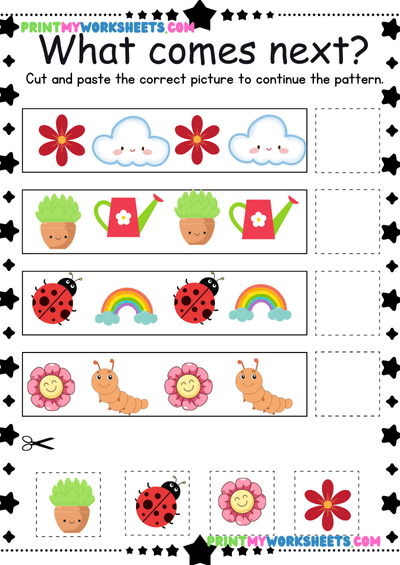
The Pre-K Pattern Worksheets PDF provides structured practice that allows children to explore patterns through clear and age-appropriate activities. Students practice identifying repeating sequences, completing missing elements, and recognizing patterns in visual forms. These exercises encourage observation, logical thinking, and early problem-solving skills.
With consistent practice, young learners begin to recognize patterns quickly and confidently, preparing them for future math concepts such as counting, sequencing, and early algebraic thinking.
What Students Will Learn?
Pattern worksheets help Pre-K students understand how sequences repeat and how objects can follow a predictable order. Learning to recognize patterns is an important early math skill that supports logical thinking and observation.
Students begin by identifying simple repeating patterns such as AB, AAB, or ABC patterns using shapes, colors, and pictures. These basic patterns allow children to see how objects repeat in a sequence.
Many activities ask students to complete unfinished patterns by identifying what comes next. This encourages children to carefully observe the sequence and determine the correct continuation.
Other exercises may include matching patterns, circling repeating groups, or coloring objects to complete a pattern. These activities strengthen visual recognition and attention to detail.
The worksheets are designed with simple instructions and clear illustrations that support independent practice. Young learners can easily follow the patterns and understand what they need to do to complete each activity.
Through repeated practice with engaging visuals, children develop a stronger understanding of sequencing and logical order. These early pattern-recognition activities support foundational math skills that children will build upon throughout elementary school.
Educational Value & Skill Development
The Pre-K Pattern Worksheets PDF supports several areas of early childhood development, particularly in the areas of mathematics, cognitive skills, and visual recognition.
One of the main benefits is strengthening logical thinking. When children recognize patterns, they learn to identify relationships between objects and predict what will come next in a sequence.
Pattern recognition also supports early problem-solving skills. Students must carefully analyze a sequence and determine which object completes the pattern correctly. This process encourages critical thinking and reasoning.
Another important benefit is visual discrimination. Children practice noticing differences in shapes, colors, and images, which helps improve attention to detail.
The Pre-K Pattern Worksheets PDF also supports early math readiness. Patterns are closely connected to later math concepts such as counting, number patterns, and early algebra. By learning to recognize sequences early, students develop a foundation for future mathematical learning.
In addition to academic benefits, these activities help build confidence in young learners. Completing patterns successfully encourages children to continue exploring and learning through hands-on practice.
Over time, repeated exposure to patterns helps students become more comfortable recognizing sequences in both classroom activities and everyday situations.
Why Focus on Pattern Recognition?
Pattern recognition is a fundamental skill in early childhood education because it helps children understand how sequences and relationships work. Recognizing patterns allows students to identify order, predict outcomes, and organize information logically.
For preschool learners, patterns often appear through simple visual sequences such as alternating colors, repeating shapes, or picture patterns. These early activities make learning interactive and engaging.
Developing pattern recognition also supports early mathematical thinking. Understanding how patterns repeat prepares children for more advanced topics such as number sequences, multiplication patterns, and algebraic reasoning in later grades.
Patterns also appear frequently in everyday life. Children may notice patterns in music, clothing designs, nature, and daily routines. Recognizing these patterns helps them connect classroom learning with real-world observations.
Repetition and guided practice are important when teaching pattern recognition. When students repeatedly identify and complete patterns, they become more confident in recognizing sequences independently.
Early exposure to pattern activities aligns with preschool learning standards in the United States. These skills help prepare children for kindergarten math and problem-solving tasks.
How to Use These Worksheets?
The Pre-K Pattern Worksheets PDF can be used in a variety of learning environments, including preschool classrooms, homeschool settings, and small-group learning activities.
Teachers often include pattern worksheets as part of early math centers or hands-on learning stations. Students can complete pattern activities independently or work together in small groups to identify repeating sequences.
Teachers may guide students through the first few exercises by discussing what they observe in the pattern. Asking questions such as “What comes next?” or “What repeats?” helps children think about the sequence more carefully.
Parents who homeschool can include these worksheets as part of daily preschool activities. Children may practice identifying patterns through coloring, circling, or drawing objects that complete a sequence.
Because the worksheets are available as a free printable PDF, they are easy to download and print whenever needed. Families and educators can reuse the worksheets for additional practice sessions or review activities.
The clear layout and simple instructions also make the worksheets suitable for independent practice. Young learners can work through the activities at their own pace while strengthening early math skills.
Related Worksheets / Extensions:
Pre-K Pattern Worksheets PDF | Free Math Downloadable
Pre-K Pattern Worksheets PDF
The Pre-K Pattern Worksheets PDF is a helpful early learning resource designed to introduce young children to the concept of patterns in a fun and structured way. These free printable worksheets are ideal for U.S. parents, preschool teachers, and homeschool families who want to support early math and cognitive development through engaging activities.
Recognizing patterns is one of the foundational skills children develop before learning more advanced math concepts. At the Pre-K level, students begin identifying simple repeating sequences using colors, shapes, pictures, and objects. These early experiences help children understand how patterns work in everyday learning.
The Pre-K Pattern Worksheets PDF provides structured practice that allows children to explore patterns through clear and age-appropriate activities. Students practice identifying repeating sequences, completing missing elements, and recognizing patterns in visual forms. These exercises encourage observation, logical thinking, and early problem-solving skills.
With consistent practice, young learners begin to recognize patterns quickly and confidently, preparing them for future math concepts such as counting, sequencing, and early algebraic thinking.
What Students Will Learn?
Pattern worksheets help Pre-K students understand how sequences repeat and how objects can follow a predictable order. Learning to recognize patterns is an important early math skill that supports logical thinking and observation.
Students begin by identifying simple repeating patterns such as AB, AAB, or ABC patterns using shapes, colors, and pictures. These basic patterns allow children to see how objects repeat in a sequence.
Many activities ask students to complete unfinished patterns by identifying what comes next. This encourages children to carefully observe the sequence and determine the correct continuation.
Other exercises may include matching patterns, circling repeating groups, or coloring objects to complete a pattern. These activities strengthen visual recognition and attention to detail.
The worksheets are designed with simple instructions and clear illustrations that support independent practice. Young learners can easily follow the patterns and understand what they need to do to complete each activity.
Through repeated practice with engaging visuals, children develop a stronger understanding of sequencing and logical order. These early pattern-recognition activities support foundational math skills that children will build upon throughout elementary school.
Educational Value & Skill Development
The Pre-K Pattern Worksheets PDF supports several areas of early childhood development, particularly in the areas of mathematics, cognitive skills, and visual recognition.
One of the main benefits is strengthening logical thinking. When children recognize patterns, they learn to identify relationships between objects and predict what will come next in a sequence.
Pattern recognition also supports early problem-solving skills. Students must carefully analyze a sequence and determine which object completes the pattern correctly. This process encourages critical thinking and reasoning.
Another important benefit is visual discrimination. Children practice noticing differences in shapes, colors, and images, which helps improve attention to detail.
The Pre-K Pattern Worksheets PDF also supports early math readiness. Patterns are closely connected to later math concepts such as counting, number patterns, and early algebra. By learning to recognize sequences early, students develop a foundation for future mathematical learning.
In addition to academic benefits, these activities help build confidence in young learners. Completing patterns successfully encourages children to continue exploring and learning through hands-on practice.
Over time, repeated exposure to patterns helps students become more comfortable recognizing sequences in both classroom activities and everyday situations.
Why Focus on Pattern Recognition?
Pattern recognition is a fundamental skill in early childhood education because it helps children understand how sequences and relationships work. Recognizing patterns allows students to identify order, predict outcomes, and organize information logically.
For preschool learners, patterns often appear through simple visual sequences such as alternating colors, repeating shapes, or picture patterns. These early activities make learning interactive and engaging.
Developing pattern recognition also supports early mathematical thinking. Understanding how patterns repeat prepares children for more advanced topics such as number sequences, multiplication patterns, and algebraic reasoning in later grades.
Patterns also appear frequently in everyday life. Children may notice patterns in music, clothing designs, nature, and daily routines. Recognizing these patterns helps them connect classroom learning with real-world observations.
Repetition and guided practice are important when teaching pattern recognition. When students repeatedly identify and complete patterns, they become more confident in recognizing sequences independently.
Early exposure to pattern activities aligns with preschool learning standards in the United States. These skills help prepare children for kindergarten math and problem-solving tasks.
How to Use These Worksheets?
The Pre-K Pattern Worksheets PDF can be used in a variety of learning environments, including preschool classrooms, homeschool settings, and small-group learning activities.
Teachers often include pattern worksheets as part of early math centers or hands-on learning stations. Students can complete pattern activities independently or work together in small groups to identify repeating sequences.
Teachers may guide students through the first few exercises by discussing what they observe in the pattern. Asking questions such as “What comes next?” or “What repeats?” helps children think about the sequence more carefully.
Parents who homeschool can include these worksheets as part of daily preschool activities. Children may practice identifying patterns through coloring, circling, or drawing objects that complete a sequence.
Because the worksheets are available as a free printable PDF, they are easy to download and print whenever needed. Families and educators can reuse the worksheets for additional practice sessions or review activities.
The clear layout and simple instructions also make the worksheets suitable for independent practice. Young learners can work through the activities at their own pace while strengthening early math skills.
Related Worksheets / Extensions:

Pre-K Shapes and Colors Worksheets PDF – Free Fun Preschool Learning Activities at Home
Pre-K Shapes and Colors Worksheets PDF
The Pre-K Shapes and Colors Worksheets PDF is a fun and developmentally appropriate printable resource designed to help young learners build early math foundations. Created for U.S. parents, preschool teachers, and homeschool families, this worksheet set introduces essential shape and color recognition skills in a simple, engaging format.
In Pre-K, children begin learning how to identify basic shapes like circles, squares, triangles, and rectangles while also recognizing and naming common colors. These early skills form the foundation for later math concepts, visual discrimination, and problem-solving abilities. With clear directions and playful activities, this printable PDF supports hands-on learning while keeping tasks manageable for preschool-aged children. Whether used in a classroom center or at home, these worksheets provide structured practice that aligns with early childhood learning standards in the United States.
What Students Will Learn?
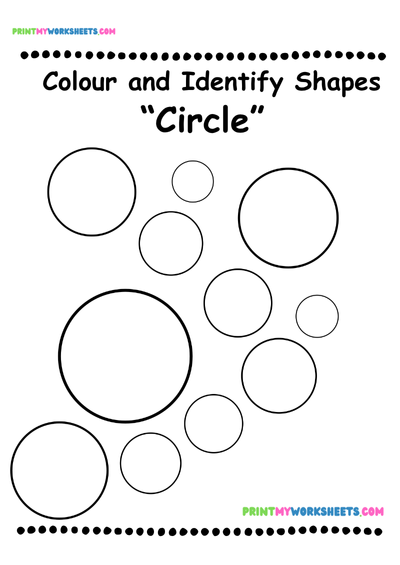
These preschool worksheets focus on helping children recognize, name, and match common shapes and colors. Students practice identifying basic shapes such as circles, squares, triangles, rectangles, and ovals. They also work on recognizing primary and secondary colors through guided activities.
Children may complete tasks such as coloring specific shapes based on instructions, matching shapes to everyday objects, sorting pictures by color, or tracing simple shape outlines. These activities encourage visual recognition and reinforce vocabulary development at the same time.
The worksheets are designed with clear instructions and uncluttered layouts so young learners can focus on one skill at a time. Structured repetition helps children remember shape names and color words while developing early attention and listening skills. Each activity supports age-appropriate expectations for Pre-K learners, providing practice that strengthens foundational math and pre-reading abilities.
Educational Value & Skill Development
The Pre-K Shapes and Colors Worksheets PDF supports both academic growth and cognitive development in young children. Recognizing shapes and colors is one of the first steps in building early math readiness. When children learn to sort, match, and identify visual patterns, they begin developing important classification and reasoning skills.
Shape recognition strengthens spatial awareness. Children learn to notice differences in sides, corners, and curves, which later supports geometry concepts in elementary school. Color identification helps improve observation skills and descriptive language. When a child can describe an object as a “red circle” or a “blue square,” they are combining vocabulary with visual understanding.
These activities also improve fine motor development. Coloring, tracing, and circling shapes help strengthen hand muscles needed for writing. As children successfully complete each worksheet, they gain confidence in their abilities. This sense of achievement encourages independence and a positive attitude toward learning.
Consistent practice with visual discrimination activities builds focus and memory retention. Over time, children become more comfortable identifying details and following simple multi-step directions, which supports overall school readiness.
Why Focus on Shapes and Colors?
Shapes and colors are core components of early childhood education. Before children can understand numbers or read words, they must first develop strong visual recognition skills. Identifying shapes and colors helps children make sense of the world around them.
Learning shapes supports early geometry foundations. Recognizing circles, squares, and triangles prepares children for more advanced mathematical thinking in later grades. Color recognition builds vocabulary and strengthens descriptive language, which supports communication and literacy development.
Repetition and guided practice are essential at the Pre-K level. Young learners benefit from repeated exposure to the same concepts in slightly different formats. This steady reinforcement builds long-term memory and confidence.
Additionally, shape and color activities align with early learning standards across the United States. Preschool programs emphasize sorting, matching, and identifying attributes as key readiness skills. Focused worksheets provide a structured way to practice these foundational concepts in a clear and supportive format.
How to Use These Worksheets?
The Pre-K Shapes and Colors Worksheets PDF is designed for flexibility and ease of use. In preschool classrooms, teachers can include the worksheets as part of math centers, morning work, or small-group instruction. They also work well during shape or color theme weeks.
Homeschool families can incorporate these pages into a daily learning routine. Parents may introduce one shape or color at a time, discussing examples found around the home before completing the worksheet. For added engagement, children can use crayons, markers, or colored pencils to complete activities.
Because this resource is provided as a free printable PDF, it can be downloaded quickly and printed as needed. Pages may be reused with different coloring tools or laminated for repeated practice with dry-erase markers. The simple design ensures that children can work independently with minimal assistance once they understand the directions.
Related Worksheets / Extensions:
You may also like:
-
Pre-K number tracing worksheets
-
Preschool counting and sorting activities
-
Alphabet tracing practice pages
-
Kindergarten shape identification worksheets
The Pre-K Shapes and Colors Worksheets PDF can be paired with other early math and literacy printables to create a well-rounded preschool learning plan. Combining shape and color practice with counting, letter recognition, and fine motor activities ensures balanced development across key readiness areas. Regular, short practice sessions help young learners build confidence and establish a strong foundation for kindergarten and beyond.
You may also like:
[gallery ids="6959,6951,6923"] Pre-K Shapes and Colors Worksheets PDF – Free Fun Preschool Learning Activities at Home
Pre-K Shapes and Colors Worksheets PDF
The Pre-K Shapes and Colors Worksheets PDF is a fun and developmentally appropriate printable resource designed to help young learners build early math foundations. Created for U.S. parents, preschool teachers, and homeschool families, this worksheet set introduces essential shape and color recognition skills in a simple, engaging format.
In Pre-K, children begin learning how to identify basic shapes like circles, squares, triangles, and rectangles while also recognizing and naming common colors. These early skills form the foundation for later math concepts, visual discrimination, and problem-solving abilities. With clear directions and playful activities, this printable PDF supports hands-on learning while keeping tasks manageable for preschool-aged children. Whether used in a classroom center or at home, these worksheets provide structured practice that aligns with early childhood learning standards in the United States.
What Students Will Learn?
These preschool worksheets focus on helping children recognize, name, and match common shapes and colors. Students practice identifying basic shapes such as circles, squares, triangles, rectangles, and ovals. They also work on recognizing primary and secondary colors through guided activities.
Children may complete tasks such as coloring specific shapes based on instructions, matching shapes to everyday objects, sorting pictures by color, or tracing simple shape outlines. These activities encourage visual recognition and reinforce vocabulary development at the same time.
The worksheets are designed with clear instructions and uncluttered layouts so young learners can focus on one skill at a time. Structured repetition helps children remember shape names and color words while developing early attention and listening skills. Each activity supports age-appropriate expectations for Pre-K learners, providing practice that strengthens foundational math and pre-reading abilities.
Educational Value & Skill Development
The Pre-K Shapes and Colors Worksheets PDF supports both academic growth and cognitive development in young children. Recognizing shapes and colors is one of the first steps in building early math readiness. When children learn to sort, match, and identify visual patterns, they begin developing important classification and reasoning skills.
Shape recognition strengthens spatial awareness. Children learn to notice differences in sides, corners, and curves, which later supports geometry concepts in elementary school. Color identification helps improve observation skills and descriptive language. When a child can describe an object as a “red circle” or a “blue square,” they are combining vocabulary with visual understanding.
These activities also improve fine motor development. Coloring, tracing, and circling shapes help strengthen hand muscles needed for writing. As children successfully complete each worksheet, they gain confidence in their abilities. This sense of achievement encourages independence and a positive attitude toward learning.
Consistent practice with visual discrimination activities builds focus and memory retention. Over time, children become more comfortable identifying details and following simple multi-step directions, which supports overall school readiness.
Why Focus on Shapes and Colors?
Shapes and colors are core components of early childhood education. Before children can understand numbers or read words, they must first develop strong visual recognition skills. Identifying shapes and colors helps children make sense of the world around them.
Learning shapes supports early geometry foundations. Recognizing circles, squares, and triangles prepares children for more advanced mathematical thinking in later grades. Color recognition builds vocabulary and strengthens descriptive language, which supports communication and literacy development.
Repetition and guided practice are essential at the Pre-K level. Young learners benefit from repeated exposure to the same concepts in slightly different formats. This steady reinforcement builds long-term memory and confidence.
Additionally, shape and color activities align with early learning standards across the United States. Preschool programs emphasize sorting, matching, and identifying attributes as key readiness skills. Focused worksheets provide a structured way to practice these foundational concepts in a clear and supportive format.
How to Use These Worksheets?
The Pre-K Shapes and Colors Worksheets PDF is designed for flexibility and ease of use. In preschool classrooms, teachers can include the worksheets as part of math centers, morning work, or small-group instruction. They also work well during shape or color theme weeks.
Homeschool families can incorporate these pages into a daily learning routine. Parents may introduce one shape or color at a time, discussing examples found around the home before completing the worksheet. For added engagement, children can use crayons, markers, or colored pencils to complete activities.
Because this resource is provided as a free printable PDF, it can be downloaded quickly and printed as needed. Pages may be reused with different coloring tools or laminated for repeated practice with dry-erase markers. The simple design ensures that children can work independently with minimal assistance once they understand the directions.
Related Worksheets / Extensions:
You may also like:
-
Pre-K number tracing worksheets
-
Preschool counting and sorting activities
-
Alphabet tracing practice pages
-
Kindergarten shape identification worksheets
The Pre-K Shapes and Colors Worksheets PDF can be paired with other early math and literacy printables to create a well-rounded preschool learning plan. Combining shape and color practice with counting, letter recognition, and fine motor activities ensures balanced development across key readiness areas. Regular, short practice sessions help young learners build confidence and establish a strong foundation for kindergarten and beyond.
You may also like:
[gallery ids="6959,6951,6923"]
Pre-K Shapes Worksheets PDF – Free Fun Home Learning Activities for Preschool
Pre-K Shapes Worksheets PDF
Learning shapes is one of the earliest and most important math skills for young children. The Pre-K Shapes Worksheets PDF is thoughtfully created to help preschool learners build strong shape recognition skills through simple, engaging, and age-appropriate activities. Designed for U.S. parents, teachers, and homeschool families, these worksheets provide structured practice that supports early math development in a fun and approachable way.
At the Pre-K level, children are just beginning to understand how shapes appear in their environment. Identifying circles, squares, triangles, and other basic shapes helps children make sense of the world around them while strengthening visual awareness and early problem-solving skills. These printable worksheets give children repeated exposure to shapes through hands-on activities that encourage observation, comparison, and recognition. With a clear layout and simple instructions, they support confident learning while preparing children for kindergarten readiness.
What Students Will Learn?
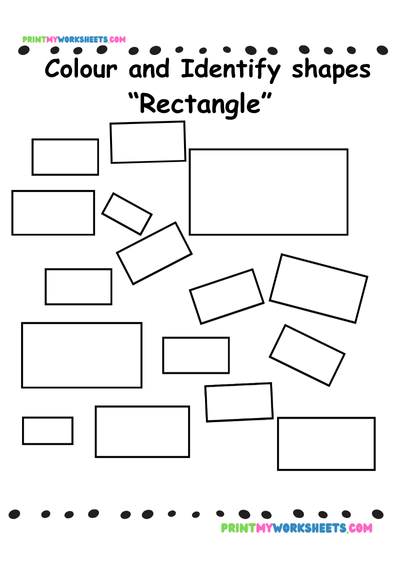
These worksheets focus on introducing and reinforcing basic two-dimensional shapes in a way that is developmentally appropriate for preschool learners. Children learn to recognize common shapes such as circles, squares, rectangles, triangles, and ovals by identifying them in different formats and contexts. Activities may include matching shapes, coloring specific shapes, tracing outlines, and finding shapes within pictures.
The worksheets are designed to support structured learning by presenting one concept at a time. This allows young learners to focus without feeling overwhelmed. Visual cues and clear directions help children understand what is expected, even if they are still developing early reading skills. The Pre-K Shapes Worksheets PDF supports age-appropriate expectations by keeping activities short, engaging, and easy to repeat.
Through consistent practice, children gain confidence in identifying shapes independently while developing early math vocabulary and visual discrimination skills.
Educational Value & Skill Development
The Pre-K Shapes Worksheets PDF provides meaningful educational value by supporting both academic learning and overall developmental growth. Academically, shape recognition is a foundational math skill that supports geometry concepts taught in later grades. Early exposure helps children understand attributes such as sides, corners, and curves, which are essential for future problem-solving.
Cognitively, working with shapes strengthens visual-spatial awareness and classification skills. Children learn to notice similarities and differences, an important early thinking skill. Activities such as tracing and coloring shapes also support fine motor development, helping children build hand strength and coordination needed for writing.
Completing worksheets independently builds confidence and encourages children to take pride in their learning. Repeated practice helps skills become familiar and automatic, allowing children to progress naturally. These worksheets support a smooth skill progression from simple shape recognition to more complex early math concepts introduced in kindergarten.
Why Focus on Shapes?
Shapes are one of the first math concepts young children encounter, and they play a vital role in early learning. Recognizing shapes helps children understand their surroundings, from identifying signs and objects to building with blocks and puzzles. Shape knowledge also supports early geometry, spatial reasoning, and problem-solving skills.
At the Pre-K level, repetition and guided practice are key. Children need multiple opportunities to see, touch, and work with shapes to truly understand them. Shape activities align with early learning standards across the United States, which emphasize foundational math skills, visual awareness, and hands-on exploration.
By focusing on shapes early, children develop confidence and curiosity about math. These skills create a strong base for future learning in areas such as measurement, patterns, and geometry.
How to Use These Worksheets?
These worksheets are flexible and easy to use in a variety of learning environments. In preschool classrooms, teachers can include them in math centers, morning work, or small-group activities. The simple layout allows children to work independently while teachers provide guidance as needed.
Homeschool families can use the Pre-K Shapes Worksheets PDF as part of daily learning routines or short practice sessions. Since the worksheets are provided as a free printable PDF, they are easy to download, print, and reuse. Parents may choose to laminate pages or place them in sheet protectors for repeated use with dry-erase markers.
These worksheets also work well for review, extra practice, or early intervention support, allowing children to learn at their own pace.
Related Worksheets / Extensions:
Pre-K Shapes Worksheets PDF – Free Fun Home Learning Activities for Preschool
Pre-K Shapes Worksheets PDF
Learning shapes is one of the earliest and most important math skills for young children. The Pre-K Shapes Worksheets PDF is thoughtfully created to help preschool learners build strong shape recognition skills through simple, engaging, and age-appropriate activities. Designed for U.S. parents, teachers, and homeschool families, these worksheets provide structured practice that supports early math development in a fun and approachable way.
At the Pre-K level, children are just beginning to understand how shapes appear in their environment. Identifying circles, squares, triangles, and other basic shapes helps children make sense of the world around them while strengthening visual awareness and early problem-solving skills. These printable worksheets give children repeated exposure to shapes through hands-on activities that encourage observation, comparison, and recognition. With a clear layout and simple instructions, they support confident learning while preparing children for kindergarten readiness.
What Students Will Learn?
These worksheets focus on introducing and reinforcing basic two-dimensional shapes in a way that is developmentally appropriate for preschool learners. Children learn to recognize common shapes such as circles, squares, rectangles, triangles, and ovals by identifying them in different formats and contexts. Activities may include matching shapes, coloring specific shapes, tracing outlines, and finding shapes within pictures.
The worksheets are designed to support structured learning by presenting one concept at a time. This allows young learners to focus without feeling overwhelmed. Visual cues and clear directions help children understand what is expected, even if they are still developing early reading skills. The Pre-K Shapes Worksheets PDF supports age-appropriate expectations by keeping activities short, engaging, and easy to repeat.
Through consistent practice, children gain confidence in identifying shapes independently while developing early math vocabulary and visual discrimination skills.
Educational Value & Skill Development
The Pre-K Shapes Worksheets PDF provides meaningful educational value by supporting both academic learning and overall developmental growth. Academically, shape recognition is a foundational math skill that supports geometry concepts taught in later grades. Early exposure helps children understand attributes such as sides, corners, and curves, which are essential for future problem-solving.
Cognitively, working with shapes strengthens visual-spatial awareness and classification skills. Children learn to notice similarities and differences, an important early thinking skill. Activities such as tracing and coloring shapes also support fine motor development, helping children build hand strength and coordination needed for writing.
Completing worksheets independently builds confidence and encourages children to take pride in their learning. Repeated practice helps skills become familiar and automatic, allowing children to progress naturally. These worksheets support a smooth skill progression from simple shape recognition to more complex early math concepts introduced in kindergarten.
Why Focus on Shapes?
Shapes are one of the first math concepts young children encounter, and they play a vital role in early learning. Recognizing shapes helps children understand their surroundings, from identifying signs and objects to building with blocks and puzzles. Shape knowledge also supports early geometry, spatial reasoning, and problem-solving skills.
At the Pre-K level, repetition and guided practice are key. Children need multiple opportunities to see, touch, and work with shapes to truly understand them. Shape activities align with early learning standards across the United States, which emphasize foundational math skills, visual awareness, and hands-on exploration.
By focusing on shapes early, children develop confidence and curiosity about math. These skills create a strong base for future learning in areas such as measurement, patterns, and geometry.
How to Use These Worksheets?
These worksheets are flexible and easy to use in a variety of learning environments. In preschool classrooms, teachers can include them in math centers, morning work, or small-group activities. The simple layout allows children to work independently while teachers provide guidance as needed.
Homeschool families can use the Pre-K Shapes Worksheets PDF as part of daily learning routines or short practice sessions. Since the worksheets are provided as a free printable PDF, they are easy to download, print, and reuse. Parents may choose to laminate pages or place them in sheet protectors for repeated use with dry-erase markers.
These worksheets also work well for review, extra practice, or early intervention support, allowing children to learn at their own pace.
Related Worksheets / Extensions:
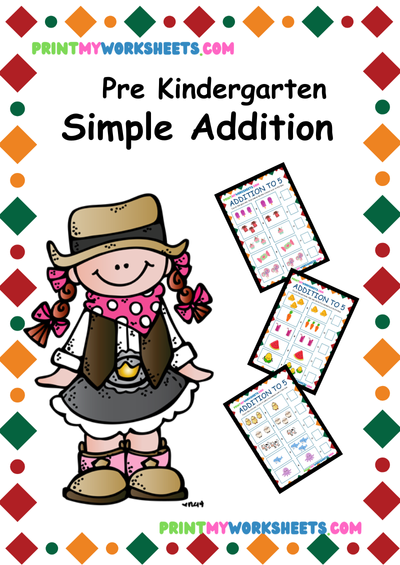
Pre-K Simple Addition Worksheets PDF – Easy Home Math Practice for Preschoolers
Pre-K Simple Addition Worksheets PDF
Early math experiences shape how children feel about numbers for years to come. The Pre-K Simple Addition Worksheets PDF is created to introduce young learners to basic addition concepts in a gentle, engaging, and age-appropriate way. Designed specifically for U.S. parents, preschool teachers, and homeschool families, this worksheet set helps children explore numbers through hands-on practice that feels approachable and encouraging.
At the Pre-Kindergarten level, children are just beginning to understand quantity, counting, and how numbers relate to one another. Simple addition builds on these early skills by showing children that numbers can be combined to make new totals. Using visual supports, clear layouts, and guided activities, these worksheets help children make sense of addition without pressure or confusion. As a free printable PDF, this resource fits easily into daily routines, offering consistent practice that supports confidence, curiosity, and a strong foundation for future math learning.
What Students Will Learn?
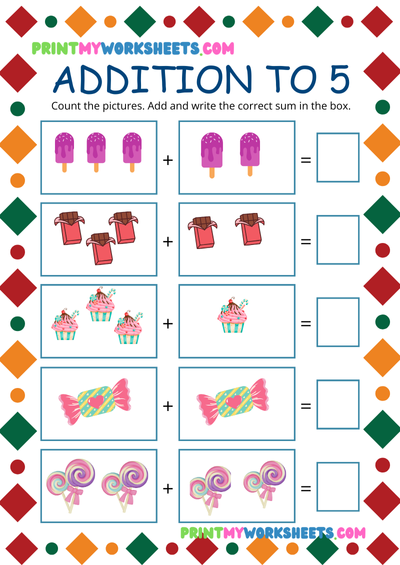
These worksheets focus on introducing the concept of adding small numbers in a clear and supportive way. Children learn that addition means putting groups together and finding how many there are in all. Activities are designed to reinforce counting skills while gently introducing number combinations.
Students work with simple visuals such as objects, pictures, or number representations to help them see how quantities combine. Tasks may include counting groups, matching totals, filling in missing numbers, or circling correct answers. These activities support structured learning by guiding children step by step through the addition process.
The worksheets are carefully aligned with Pre-Kindergarten developmental expectations. Instructions are simple, visuals are easy to interpret, and numbers stay within a beginner-friendly range. This ensures children can focus on understanding the concept rather than feeling overwhelmed. Through repeated exposure and guided practice, learners begin to recognize patterns in numbers and develop early problem-solving skills that prepare them for kindergarten math.
Educational Value & Skill Development
The Pre-K Simple Addition Worksheets PDF provides meaningful educational value by supporting early math readiness and cognitive growth. Academically, these worksheets strengthen number sense, helping children understand how numbers relate to one another. This foundational knowledge is essential for later math skills such as subtraction, place value, and problem-solving.
From a cognitive development perspective, simple addition activities enhance logical thinking, memory, and attention. Children practice focusing on tasks, following directions, and completing steps in sequence. Visual addition exercises also support spatial awareness and visual processing skills.
Confidence and independence grow as children successfully complete addition problems on their own. When tasks are developmentally appropriate, learners experience success more often, which builds positive attitudes toward math. Over time, students progress from counting objects to recognizing simple number combinations. This gradual skill development ensures children are well-prepared for more formal math instruction in kindergarten and beyond.
Why Focus on Simple Addition?
Simple addition is one of the first math concepts children encounter beyond counting. It helps young learners understand that numbers represent quantities that can be combined and compared. This understanding is essential for building strong number sense.
Focusing on addition in Pre-K supports future academic success by laying the groundwork for more advanced math concepts. Children who understand basic addition are better prepared to tackle subtraction, word problems, and number relationships in later grades.
Repetition and guided practice are especially important at this stage of development. Young children learn best through consistent exposure and hands-on experiences. Addition worksheets provide a structured way to reinforce learning while keeping activities predictable and manageable. These skills align with U.S. early learning standards, which emphasize counting, understanding quantities, and beginning operations. Early practice helps ensure a smooth transition into kindergarten math expectations.
How to Use These Worksheets?
These worksheets are designed to be flexible and easy to use in a variety of learning settings. In preschool classrooms, teachers can include them during math centers, small-group instruction, or quiet work time. They are also effective as review activities after hands-on counting lessons.
For homeschool families, the worksheets offer a simple way to introduce addition concepts at home. Parents can work alongside their child, talking through each problem and counting objects together. As confidence grows, children can complete pages independently for reinforcement.
The Pre-K Simple Addition Worksheets PDF is available as a free printable PDF, making it easy to download, print, and reuse as needed. Pages can be revisited multiple times or used selectively based on a child’s readiness level. This adaptability allows families and educators to tailor instruction to each learner’s pace.
Related Worksheets / Extensions:
To extend learning, children may also benefit from counting worksheets, number recognition activities, or shape and pattern resources. Hands-on activities such as using blocks, toys, or snacks for addition practice can reinforce concepts learned on paper. Simple math games that involve combining groups also support understanding.
The Pre-K Simple Addition Worksheets PDF pairs well with other early math resources that focus on counting and number sense. Together, these materials help young learners build a strong, positive foundation in math while developing confidence and curiosity that will support their learning journey in kindergarten and beyond.
You may also like :
[gallery ids="5836,5343,4642"] Pre-K Simple Addition Worksheets PDF – Easy Home Math Practice for Preschoolers
Pre-K Simple Addition Worksheets PDF
Early math experiences shape how children feel about numbers for years to come. The Pre-K Simple Addition Worksheets PDF is created to introduce young learners to basic addition concepts in a gentle, engaging, and age-appropriate way. Designed specifically for U.S. parents, preschool teachers, and homeschool families, this worksheet set helps children explore numbers through hands-on practice that feels approachable and encouraging.
At the Pre-Kindergarten level, children are just beginning to understand quantity, counting, and how numbers relate to one another. Simple addition builds on these early skills by showing children that numbers can be combined to make new totals. Using visual supports, clear layouts, and guided activities, these worksheets help children make sense of addition without pressure or confusion. As a free printable PDF, this resource fits easily into daily routines, offering consistent practice that supports confidence, curiosity, and a strong foundation for future math learning.
What Students Will Learn?
These worksheets focus on introducing the concept of adding small numbers in a clear and supportive way. Children learn that addition means putting groups together and finding how many there are in all. Activities are designed to reinforce counting skills while gently introducing number combinations.
Students work with simple visuals such as objects, pictures, or number representations to help them see how quantities combine. Tasks may include counting groups, matching totals, filling in missing numbers, or circling correct answers. These activities support structured learning by guiding children step by step through the addition process.
The worksheets are carefully aligned with Pre-Kindergarten developmental expectations. Instructions are simple, visuals are easy to interpret, and numbers stay within a beginner-friendly range. This ensures children can focus on understanding the concept rather than feeling overwhelmed. Through repeated exposure and guided practice, learners begin to recognize patterns in numbers and develop early problem-solving skills that prepare them for kindergarten math.
Educational Value & Skill Development
The Pre-K Simple Addition Worksheets PDF provides meaningful educational value by supporting early math readiness and cognitive growth. Academically, these worksheets strengthen number sense, helping children understand how numbers relate to one another. This foundational knowledge is essential for later math skills such as subtraction, place value, and problem-solving.
From a cognitive development perspective, simple addition activities enhance logical thinking, memory, and attention. Children practice focusing on tasks, following directions, and completing steps in sequence. Visual addition exercises also support spatial awareness and visual processing skills.
Confidence and independence grow as children successfully complete addition problems on their own. When tasks are developmentally appropriate, learners experience success more often, which builds positive attitudes toward math. Over time, students progress from counting objects to recognizing simple number combinations. This gradual skill development ensures children are well-prepared for more formal math instruction in kindergarten and beyond.
Why Focus on Simple Addition?
Simple addition is one of the first math concepts children encounter beyond counting. It helps young learners understand that numbers represent quantities that can be combined and compared. This understanding is essential for building strong number sense.
Focusing on addition in Pre-K supports future academic success by laying the groundwork for more advanced math concepts. Children who understand basic addition are better prepared to tackle subtraction, word problems, and number relationships in later grades.
Repetition and guided practice are especially important at this stage of development. Young children learn best through consistent exposure and hands-on experiences. Addition worksheets provide a structured way to reinforce learning while keeping activities predictable and manageable. These skills align with U.S. early learning standards, which emphasize counting, understanding quantities, and beginning operations. Early practice helps ensure a smooth transition into kindergarten math expectations.
How to Use These Worksheets?
These worksheets are designed to be flexible and easy to use in a variety of learning settings. In preschool classrooms, teachers can include them during math centers, small-group instruction, or quiet work time. They are also effective as review activities after hands-on counting lessons.
For homeschool families, the worksheets offer a simple way to introduce addition concepts at home. Parents can work alongside their child, talking through each problem and counting objects together. As confidence grows, children can complete pages independently for reinforcement.
The Pre-K Simple Addition Worksheets PDF is available as a free printable PDF, making it easy to download, print, and reuse as needed. Pages can be revisited multiple times or used selectively based on a child’s readiness level. This adaptability allows families and educators to tailor instruction to each learner’s pace.
Related Worksheets / Extensions:
To extend learning, children may also benefit from counting worksheets, number recognition activities, or shape and pattern resources. Hands-on activities such as using blocks, toys, or snacks for addition practice can reinforce concepts learned on paper. Simple math games that involve combining groups also support understanding.
The Pre-K Simple Addition Worksheets PDF pairs well with other early math resources that focus on counting and number sense. Together, these materials help young learners build a strong, positive foundation in math while developing confidence and curiosity that will support their learning journey in kindergarten and beyond.
You may also like :
[gallery ids="5836,5343,4642"]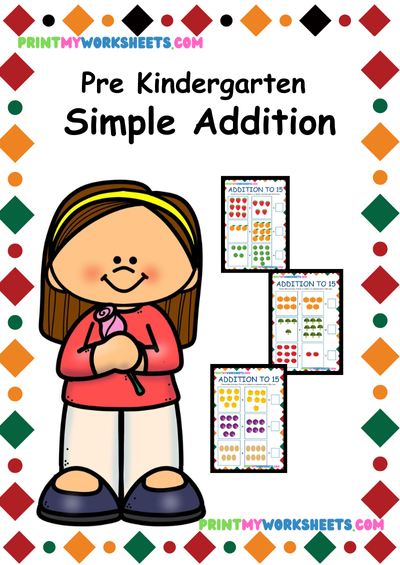
Pre-K Simple Addition Worksheets PDF | Free Math IV Downloadable
Pre-K Simple Addition Worksheets PDF
The Pre-K Simple Addition Worksheets PDF is designed to introduce young learners to early math concepts in a fun and developmentally appropriate way. Created for U.S. parents, preschool teachers, and homeschool families, this free printable PDF helps children begin understanding how numbers work together through simple addition activities.
At the Pre-K level, children are just starting to explore counting, number recognition, and basic number relationships. Simple addition lays the groundwork for future math success by helping children see how two small groups can combine to make a larger group. Through visual models, pictures, and hands-on counting opportunities, these worksheets support early math confidence. The structured yet playful format makes it easy for children to practice combining numbers while building foundational skills that will support kindergarten and beyond.
What Students Will Learn?
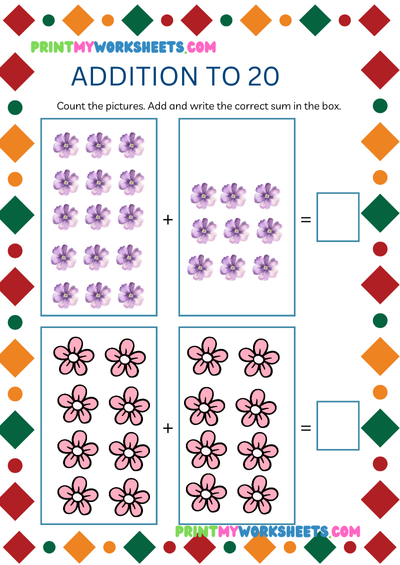
These early math worksheets focus on helping children understand the concept of addition as “putting together.” Students practice counting small groups of objects, combining two sets, and identifying the total. Activities may include picture-based addition problems, counting illustrations, tracing numbers, and matching number sentences to visual models.
Young learners develop one-to-one correspondence as they count each object carefully. They begin recognizing number combinations within 5 and within 10, depending on readiness. The worksheets are structured to move gradually from concrete visuals to simple number sentences, helping children connect pictures to written math expressions.
The activities are designed with preschool development in mind. Large numbers, clear images, and uncluttered layouts allow children to focus without feeling overwhelmed. By practicing these early addition skills, children strengthen number sense and prepare for more formal math instruction in kindergarten.
Educational Value & Skill Development
The Pre-K Simple Addition Worksheets PDF supports both academic and cognitive development during an important early learning stage. When children combine two small groups and count the total, they begin building foundational math reasoning skills.
Simple addition strengthens number sense, which is the ability to understand how numbers relate to one another. Children learn that numbers represent quantities and that combining quantities changes the total. This concept becomes essential in later grades when students work with larger numbers and more complex operations.
These worksheets also support fine motor development. As children trace numbers, circle answers, or draw lines to match sets, they practice pencil control and hand coordination. Following directions and completing tasks independently encourages focus and attention.
Confidence grows as children successfully solve problems. Early math success helps reduce anxiety about numbers and encourages a positive attitude toward learning. Over time, repeated practice with small addition problems builds familiarity and comfort, setting the stage for smooth transitions into kindergarten math lessons.
Why Focus on Simple Addition?
Simple addition is one of the first formal math skills children encounter. Understanding how numbers combine is essential for future math development. Before children can subtract, work with larger sums, or solve word problems, they must first grasp the idea of adding small groups together.
Practicing early addition supports logical thinking. Children learn to observe two groups, count each one, and determine the total. This step-by-step process strengthens sequencing skills and attention to detail.
Repetition is especially important at the Pre-K level. Young learners benefit from seeing similar problem types multiple times in different formats. Whether counting animals, fruits, or shapes, the repetition reinforces understanding while keeping activities engaging.
Building strong addition foundations in preschool helps children enter kindergarten with greater readiness. Early exposure to combining numbers supports classroom learning expectations and aligns with early childhood math standards used across the United States.
How to Use These Worksheets?
The Pre-K Simple Addition Worksheets PDF can be used in multiple learning environments. In preschool classrooms, teachers may incorporate these pages into math centers, small-group instruction, or morning work routines. The visual format makes them suitable for guided practice with teacher support.
Homeschool families can use the worksheets as part of a daily math routine. Parents may encourage children to use physical objects, such as small toys or counters, alongside the printed problems to create a hands-on experience. This helps children connect concrete objects to written numbers.
Because this resource is a free printable PDF, it can be downloaded quickly and printed as needed. Pages may be reused for review, extra practice, or reinforcement before moving on to more advanced math skills.
The flexible design also allows children to work independently once they understand the directions. Whether used for review, enrichment, or initial instruction, these worksheets provide consistent practice in early addition concepts.
Related Worksheets / Extensions:
Pre-K Simple Addition Worksheets PDF | Free Math IV Downloadable
Pre-K Simple Addition Worksheets PDF
The Pre-K Simple Addition Worksheets PDF is designed to introduce young learners to early math concepts in a fun and developmentally appropriate way. Created for U.S. parents, preschool teachers, and homeschool families, this free printable PDF helps children begin understanding how numbers work together through simple addition activities.
At the Pre-K level, children are just starting to explore counting, number recognition, and basic number relationships. Simple addition lays the groundwork for future math success by helping children see how two small groups can combine to make a larger group. Through visual models, pictures, and hands-on counting opportunities, these worksheets support early math confidence. The structured yet playful format makes it easy for children to practice combining numbers while building foundational skills that will support kindergarten and beyond.
What Students Will Learn?
These early math worksheets focus on helping children understand the concept of addition as “putting together.” Students practice counting small groups of objects, combining two sets, and identifying the total. Activities may include picture-based addition problems, counting illustrations, tracing numbers, and matching number sentences to visual models.
Young learners develop one-to-one correspondence as they count each object carefully. They begin recognizing number combinations within 5 and within 10, depending on readiness. The worksheets are structured to move gradually from concrete visuals to simple number sentences, helping children connect pictures to written math expressions.
The activities are designed with preschool development in mind. Large numbers, clear images, and uncluttered layouts allow children to focus without feeling overwhelmed. By practicing these early addition skills, children strengthen number sense and prepare for more formal math instruction in kindergarten.
Educational Value & Skill Development
The Pre-K Simple Addition Worksheets PDF supports both academic and cognitive development during an important early learning stage. When children combine two small groups and count the total, they begin building foundational math reasoning skills.
Simple addition strengthens number sense, which is the ability to understand how numbers relate to one another. Children learn that numbers represent quantities and that combining quantities changes the total. This concept becomes essential in later grades when students work with larger numbers and more complex operations.
These worksheets also support fine motor development. As children trace numbers, circle answers, or draw lines to match sets, they practice pencil control and hand coordination. Following directions and completing tasks independently encourages focus and attention.
Confidence grows as children successfully solve problems. Early math success helps reduce anxiety about numbers and encourages a positive attitude toward learning. Over time, repeated practice with small addition problems builds familiarity and comfort, setting the stage for smooth transitions into kindergarten math lessons.
Why Focus on Simple Addition?
Simple addition is one of the first formal math skills children encounter. Understanding how numbers combine is essential for future math development. Before children can subtract, work with larger sums, or solve word problems, they must first grasp the idea of adding small groups together.
Practicing early addition supports logical thinking. Children learn to observe two groups, count each one, and determine the total. This step-by-step process strengthens sequencing skills and attention to detail.
Repetition is especially important at the Pre-K level. Young learners benefit from seeing similar problem types multiple times in different formats. Whether counting animals, fruits, or shapes, the repetition reinforces understanding while keeping activities engaging.
Building strong addition foundations in preschool helps children enter kindergarten with greater readiness. Early exposure to combining numbers supports classroom learning expectations and aligns with early childhood math standards used across the United States.
How to Use These Worksheets?
The Pre-K Simple Addition Worksheets PDF can be used in multiple learning environments. In preschool classrooms, teachers may incorporate these pages into math centers, small-group instruction, or morning work routines. The visual format makes them suitable for guided practice with teacher support.
Homeschool families can use the worksheets as part of a daily math routine. Parents may encourage children to use physical objects, such as small toys or counters, alongside the printed problems to create a hands-on experience. This helps children connect concrete objects to written numbers.
Because this resource is a free printable PDF, it can be downloaded quickly and printed as needed. Pages may be reused for review, extra practice, or reinforcement before moving on to more advanced math skills.
The flexible design also allows children to work independently once they understand the directions. Whether used for review, enrichment, or initial instruction, these worksheets provide consistent practice in early addition concepts.
Related Worksheets / Extensions:
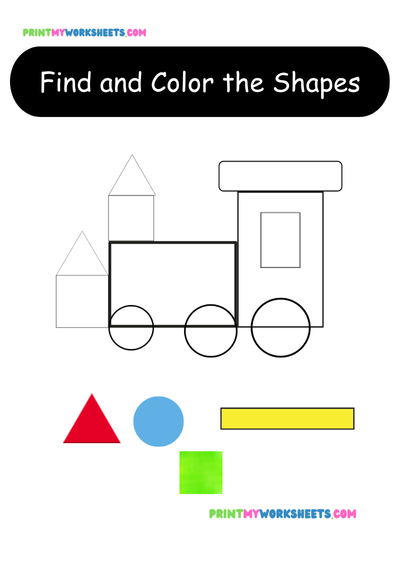
Pre-Kindergarten Color Quest Shapes – Fun Shape Learning Game for Home Practice
Pre-Kindergarten Color Quest Shapes
Early math learning in Pre-Kindergarten is all about exploration, recognition, and joyful discovery. The Pre-Kindergarten Color Quest Shapes worksheet is thoughtfully designed to help young learners identify, sort, and explore basic shapes through engaging color-based activities. Created for U.S. parents, teachers, and homeschool families, this free printable PDF supports early math development in a fun, low-pressure way that feels more like play than practice.
At the Pre-Kindergarten level, children are just beginning to notice shapes in their environment—circles in wheels, squares in windows, and triangles in signs. Combining shape recognition with color exploration strengthens visual perception and early problem-solving skills. The Pre-Kindergarten Color Quest Shapes worksheets guide children through hands-on activities that encourage observation, matching, and decision-making. With simple instructions and child-friendly layouts, these worksheets help young learners build confidence while developing essential early math and cognitive skills that prepare them for kindergarten success.
What Students Will Learn?
These worksheets are designed to introduce foundational shape concepts in a structured yet playful format. Children will learn to recognize common shapes such as circles, squares, triangles, rectangles, and ovals. Through guided activities, students explore how shapes look, how they differ, and how they can be identified using visual cues like color and size.
Activities include matching shapes to colors, identifying shapes within pictures, tracing simple shapes, and following color-based directions. These tasks support structured learning by helping children focus on one concept at a time while reinforcing it through repetition. Visual prompts and minimal text make the worksheets accessible for non-readers and early readers alike.
The activities align well with age-appropriate expectations for Pre-Kindergarten learners. Children are encouraged to observe carefully, make choices, and complete tasks independently or with light guidance. This balance supports early learning routines while allowing flexibility for different learning styles and developmental stages.
Educational Value & Skill Development
The Pre-Kindergarten Color Quest Shapes worksheets offer strong educational value by supporting multiple areas of early development. Academically, shape recognition is a key math readiness skill that prepares children for geometry concepts in later grades. Understanding shapes helps children categorize objects, recognize patterns, and make sense of their surroundings.
Cognitively, these activities strengthen visual discrimination, attention to detail, and memory. When children identify shapes based on color cues, they practice following directions and processing multiple pieces of information at once. This builds early executive functioning skills in an age-appropriate way.
Confidence and independence grow as children complete activities successfully. Simple tasks with clear outcomes help learners feel capable and motivated. Over time, students progress from basic recognition to applying shape knowledge in more complex ways, such as finding shapes within scenes or sorting by attributes. These gradual skill-building opportunities create a strong foundation for future math learning and classroom readiness.
Why Focus on Color Quest Shapes?
Shape recognition is one of the earliest math skills children develop, and it plays a crucial role in overall cognitive growth. Learning shapes helps children understand spatial relationships, compare objects, and describe the world around them. When shapes are combined with color-based activities, learning becomes more engaging and memorable for young learners.
This skill supports future academic success by laying the groundwork for geometry, problem-solving, and even early reading skills, as shape awareness contributes to letter recognition. Repetition and guided practice are especially important at the Pre-K level, where children learn best through consistent exposure and hands-on exploration.
Color-and-shape activities align closely with U.S. early learning standards, which emphasize identifying shapes, sorting objects, and following simple directions. By focusing on these skills early, children develop the confidence and familiarity they need to transition smoothly into kindergarten math instruction.
How to Use These Worksheets?
These worksheets are flexible and easy to use across a variety of learning environments. In classrooms, teachers can incorporate them into math centers, morning work, or small-group instruction. They work well as part of a themed unit on shapes, colors, or early math exploration.
For homeschool families, the worksheets provide a simple way to introduce or reinforce shape concepts at home. Parents can sit alongside their child to talk about shapes and colors or encourage independent work for short practice sessions. The Pre-Kindergarten Color Quest Shapes activities are ideal for keeping learning playful while still purposeful.
Because the worksheets are offered as a free printable PDF, they are easy to download and reuse. Pages can be printed multiple times for continued practice or used selectively based on a child’s readiness level. This adaptability makes them a practical resource for both structured lessons and informal learning moments.
Related Worksheets / Extensions:
To extend learning beyond this resource, children may also enjoy worksheets focused on color recognition, patterning, or counting with shapes. Shape scavenger hunts around the classroom or home can reinforce concepts learned on paper. Simple art activities, such as creating pictures using cut-out shapes, further support hands-on learning.
The Pre-Kindergarten Color Quest Shapes worksheets pair well with other early math and fine motor skill resources. Together, these activities help young learners build confidence, curiosity, and a strong foundation for future math success in a fun and supportive way.
You may also like:
[gallery ids="5848,5836,5393"] Pre-Kindergarten Color Quest Shapes – Fun Shape Learning Game for Home Practice
Pre-Kindergarten Color Quest Shapes
Early math learning in Pre-Kindergarten is all about exploration, recognition, and joyful discovery. The Pre-Kindergarten Color Quest Shapes worksheet is thoughtfully designed to help young learners identify, sort, and explore basic shapes through engaging color-based activities. Created for U.S. parents, teachers, and homeschool families, this free printable PDF supports early math development in a fun, low-pressure way that feels more like play than practice.
At the Pre-Kindergarten level, children are just beginning to notice shapes in their environment—circles in wheels, squares in windows, and triangles in signs. Combining shape recognition with color exploration strengthens visual perception and early problem-solving skills. The Pre-Kindergarten Color Quest Shapes worksheets guide children through hands-on activities that encourage observation, matching, and decision-making. With simple instructions and child-friendly layouts, these worksheets help young learners build confidence while developing essential early math and cognitive skills that prepare them for kindergarten success.
What Students Will Learn?
These worksheets are designed to introduce foundational shape concepts in a structured yet playful format. Children will learn to recognize common shapes such as circles, squares, triangles, rectangles, and ovals. Through guided activities, students explore how shapes look, how they differ, and how they can be identified using visual cues like color and size.
Activities include matching shapes to colors, identifying shapes within pictures, tracing simple shapes, and following color-based directions. These tasks support structured learning by helping children focus on one concept at a time while reinforcing it through repetition. Visual prompts and minimal text make the worksheets accessible for non-readers and early readers alike.
The activities align well with age-appropriate expectations for Pre-Kindergarten learners. Children are encouraged to observe carefully, make choices, and complete tasks independently or with light guidance. This balance supports early learning routines while allowing flexibility for different learning styles and developmental stages.
Educational Value & Skill Development
The Pre-Kindergarten Color Quest Shapes worksheets offer strong educational value by supporting multiple areas of early development. Academically, shape recognition is a key math readiness skill that prepares children for geometry concepts in later grades. Understanding shapes helps children categorize objects, recognize patterns, and make sense of their surroundings.
Cognitively, these activities strengthen visual discrimination, attention to detail, and memory. When children identify shapes based on color cues, they practice following directions and processing multiple pieces of information at once. This builds early executive functioning skills in an age-appropriate way.
Confidence and independence grow as children complete activities successfully. Simple tasks with clear outcomes help learners feel capable and motivated. Over time, students progress from basic recognition to applying shape knowledge in more complex ways, such as finding shapes within scenes or sorting by attributes. These gradual skill-building opportunities create a strong foundation for future math learning and classroom readiness.
Why Focus on Color Quest Shapes?
Shape recognition is one of the earliest math skills children develop, and it plays a crucial role in overall cognitive growth. Learning shapes helps children understand spatial relationships, compare objects, and describe the world around them. When shapes are combined with color-based activities, learning becomes more engaging and memorable for young learners.
This skill supports future academic success by laying the groundwork for geometry, problem-solving, and even early reading skills, as shape awareness contributes to letter recognition. Repetition and guided practice are especially important at the Pre-K level, where children learn best through consistent exposure and hands-on exploration.
Color-and-shape activities align closely with U.S. early learning standards, which emphasize identifying shapes, sorting objects, and following simple directions. By focusing on these skills early, children develop the confidence and familiarity they need to transition smoothly into kindergarten math instruction.
How to Use These Worksheets?
These worksheets are flexible and easy to use across a variety of learning environments. In classrooms, teachers can incorporate them into math centers, morning work, or small-group instruction. They work well as part of a themed unit on shapes, colors, or early math exploration.
For homeschool families, the worksheets provide a simple way to introduce or reinforce shape concepts at home. Parents can sit alongside their child to talk about shapes and colors or encourage independent work for short practice sessions. The Pre-Kindergarten Color Quest Shapes activities are ideal for keeping learning playful while still purposeful.
Because the worksheets are offered as a free printable PDF, they are easy to download and reuse. Pages can be printed multiple times for continued practice or used selectively based on a child’s readiness level. This adaptability makes them a practical resource for both structured lessons and informal learning moments.
Related Worksheets / Extensions:
To extend learning beyond this resource, children may also enjoy worksheets focused on color recognition, patterning, or counting with shapes. Shape scavenger hunts around the classroom or home can reinforce concepts learned on paper. Simple art activities, such as creating pictures using cut-out shapes, further support hands-on learning.
The Pre-Kindergarten Color Quest Shapes worksheets pair well with other early math and fine motor skill resources. Together, these activities help young learners build confidence, curiosity, and a strong foundation for future math success in a fun and supportive way.
You may also like:
[gallery ids="5848,5836,5393"]

Simple Addition Worksheets PDF for Kindergarten | Maths III Free Downloadable
Make early math learning fun and engaging with our Simple Addition Worksheets PDF for Kindergarten on Comparing Size, Height & Weight, designed especially for kindergarten students. This worksheet introduces children to basic addition while helping them understand real-world measurement concepts like size, height, and weight through fun, visual activities.
Each page includes colorful illustrations, counting exercises, and comparison problems that encourage critical thinking and observation skills. Children will practice adding objects, identifying which items are taller, shorter, heavier, or lighter, and solving simple math problems in an interactive way. These hands-on activities make math exciting, relatable, and easy to grasp for young learners.
Why are addition and comparison activities important in kindergarten? Learning to add and compare builds a strong foundation for logical reasoning, number recognition, and early problem-solving. It also develops fine motor skills, focus, and real-world understanding of math concepts.
Perfect for homeschooling, classroom teaching, or at-home practice, this free downloadable PDF is easy to print and reuse. Designed according to early math standards, it helps kids gain confidence in both addition and measurement while enjoying every activity.
You may also like :
[gallery ids="4543,4548,4605"] Simple Addition Worksheets PDF for Kindergarten | Maths III Free Downloadable
Make early math learning fun and engaging with our Simple Addition Worksheets PDF for Kindergarten on Comparing Size, Height & Weight, designed especially for kindergarten students. This worksheet introduces children to basic addition while helping them understand real-world measurement concepts like size, height, and weight through fun, visual activities.
Each page includes colorful illustrations, counting exercises, and comparison problems that encourage critical thinking and observation skills. Children will practice adding objects, identifying which items are taller, shorter, heavier, or lighter, and solving simple math problems in an interactive way. These hands-on activities make math exciting, relatable, and easy to grasp for young learners.
Why are addition and comparison activities important in kindergarten? Learning to add and compare builds a strong foundation for logical reasoning, number recognition, and early problem-solving. It also develops fine motor skills, focus, and real-world understanding of math concepts.
Perfect for homeschooling, classroom teaching, or at-home practice, this free downloadable PDF is easy to print and reuse. Designed according to early math standards, it helps kids gain confidence in both addition and measurement while enjoying every activity.