
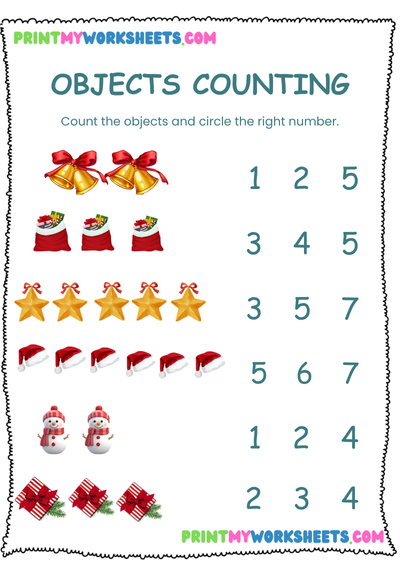
Kindergarten Counting and Number Writing Worksheets PDF – Early Math Practice with Answer Key
Help your child build number fluency with our Kindergarten Counting and Number Writing Worksheets PDF! This printable helps kids count objects and write the correct numeral, strengthening early math and handwriting skills.
Perfect for homeschool, classroom, or extra practice, this worksheet supports:
-
Number writing from 1–20
-
Counting accuracy and one-to-one correspondence
-
Kindergarten Common Core math standards
Key Features:
-
Printable PDF (U.S. Letter size – 8.5” x 11”)
-
Fun images to count and color
-
Trace and write numerals independently
-
Great for home, classroom, and tutoring use
🖍️ Download now and help your child become a confident counter and number writer!
Simply visit the page, download the PDF via Google Drive, and print it for easy practice.
You may also like :
[gallery ids="6329,5915,5914"] Kindergarten Counting and Number Writing Worksheets PDF – Early Math Practice with Answer Key
Help your child build number fluency with our Kindergarten Counting and Number Writing Worksheets PDF! This printable helps kids count objects and write the correct numeral, strengthening early math and handwriting skills.
Perfect for homeschool, classroom, or extra practice, this worksheet supports:
-
Number writing from 1–20
-
Counting accuracy and one-to-one correspondence
-
Kindergarten Common Core math standards
Key Features:
-
Printable PDF (U.S. Letter size – 8.5” x 11”)
-
Fun images to count and color
-
Trace and write numerals independently
-
Great for home, classroom, and tutoring use
🖍️ Download now and help your child become a confident counter and number writer!
Simply visit the page, download the PDF via Google Drive, and print it for easy practice.
You may also like :
[gallery ids="6329,5915,5914"]
Kindergarten Counting Worksheets PDF | Free Math Downloadable
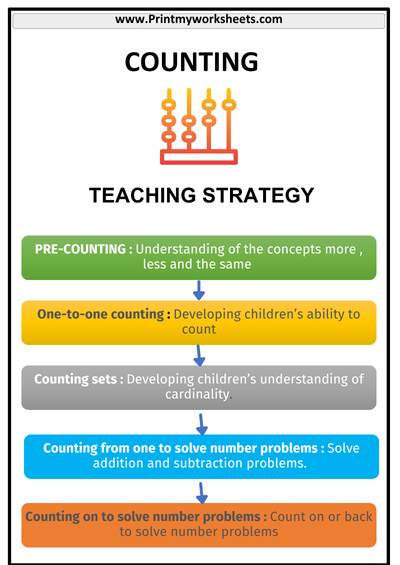
Start your child’s math journey with confidence using our Kindergarten Counting Worksheets PDF—a free downloadable PDF designed for early learners in the U.S. This engaging worksheet helps young children practice number recognition, one-to-one correspondence, and counting from 1 to 20 through fun, hands-on activities.
Ideal for homeschool parents, kindergarten teachers, and early childhood educators, this worksheet includes colorful visuals, count-and-color activities, and traceable numbers that build both fine motor skills and early math understanding. By encouraging kids to count objects, match numbers, and trace digits, this worksheet supports foundational math concepts in a playful and meaningful way.
Why is counting so important in kindergarten? Counting forms the base of all future math skills. It teaches number order, quantity understanding, and introduces the idea that numbers represent value—key principles aligned with Common Core Kindergarten Math Standards.
Children who master basic counting are better prepared for addition, subtraction, place value, and problem-solving in higher grades. Our worksheet helps reinforce these skills while making math fun and approachable.
🎯 Download the FREE Maths Counting Basics Worksheet today and give your kindergartener a strong foundation in numbers through joyful, screen-free learning!
Download and print today to give your little learners the head start they deserve!
You may also like :
[gallery ids="5923,5908,5326"] Kindergarten Counting Worksheets PDF | Free Math Downloadable
Start your child’s math journey with confidence using our Kindergarten Counting Worksheets PDF—a free downloadable PDF designed for early learners in the U.S. This engaging worksheet helps young children practice number recognition, one-to-one correspondence, and counting from 1 to 20 through fun, hands-on activities.
Ideal for homeschool parents, kindergarten teachers, and early childhood educators, this worksheet includes colorful visuals, count-and-color activities, and traceable numbers that build both fine motor skills and early math understanding. By encouraging kids to count objects, match numbers, and trace digits, this worksheet supports foundational math concepts in a playful and meaningful way.
Why is counting so important in kindergarten? Counting forms the base of all future math skills. It teaches number order, quantity understanding, and introduces the idea that numbers represent value—key principles aligned with Common Core Kindergarten Math Standards.
Children who master basic counting are better prepared for addition, subtraction, place value, and problem-solving in higher grades. Our worksheet helps reinforce these skills while making math fun and approachable.
🎯 Download the FREE Maths Counting Basics Worksheet today and give your kindergartener a strong foundation in numbers through joyful, screen-free learning!
Download and print today to give your little learners the head start they deserve!
You may also like :
[gallery ids="5923,5908,5326"]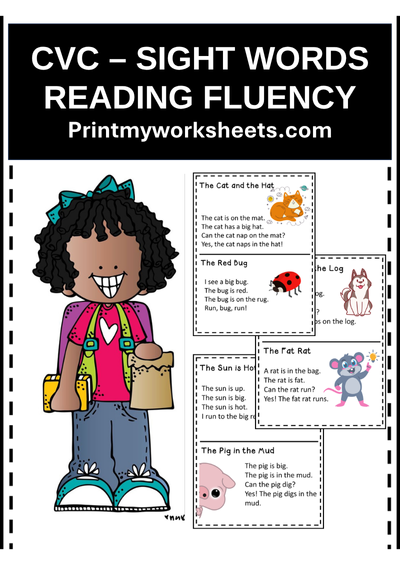
Kindergarten CVC and Sight Words Worksheets PDF | Free Downloadable
Kindergarten CVC and Sight Words Worksheets PDF
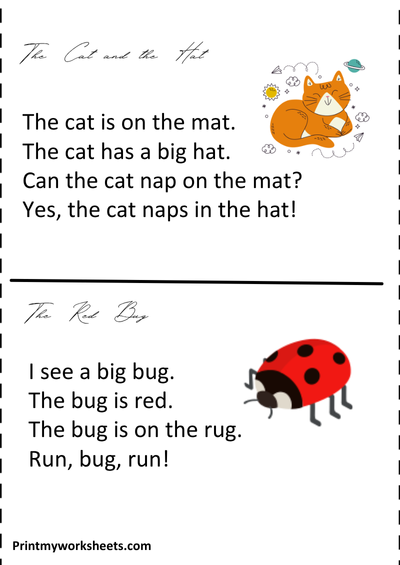
Early reading success depends on strong phonics skills and instant recognition of common words. This Kindergarten CVC and Sight Words Worksheets PDF set is designed to help kindergarten learners build confidence as they begin reading independently. Created for U.S. parents, teachers, and homeschool families, these printable worksheets provide structured, age-appropriate practice that supports foundational literacy development.
At the kindergarten level, children are learning to blend consonant-vowel-consonant (CVC) words while also memorizing frequently used sight words. When these skills are practiced together, students become more fluent readers who can focus on meaning instead of decoding every word. This resource offers simple, repeatable activities that help young learners recognize word patterns, read smoothly, and gain confidence with early text. Whether used in a classroom, homeschool setting, or for extra practice at home, these worksheets support consistent learning in a calm, supportive way that fits naturally into daily instruction.
What Students Will Learn ?
These worksheets focus on helping kindergarten students develop essential early reading skills through clear, structured activities. Learners practice blending sounds in simple CVC words while also strengthening their ability to recognize high-frequency sight words automatically.
Activities are designed to support phonemic awareness, letter-sound relationships, and word recognition. Students work with short vowel sounds, common consonant patterns, and simple word families that are developmentally appropriate for kindergarten. Sight word exercises encourage repeated exposure to words children see often in early readers, helping them read more smoothly and with greater confidence.
Each worksheet follows a predictable format, which helps young learners understand expectations and work more independently over time. The progression from identifying sounds to reading full words supports structured learning and aligns with common U.S. kindergarten literacy goals. These activities are intentionally simple, allowing students to focus on accuracy and fluency without feeling overwhelmed.
Educational Value & Skill Development
Consistent phonics and sight word practice plays a major role in early academic growth. When children regularly engage with activities like those in the Kindergarten CVC and Sight Words Worksheets PDF, they strengthen both decoding and word recognition skills at the same time. This combination supports smoother reading and better comprehension as students move through early texts.
Academically, these worksheets help reinforce foundational reading skills that are necessary across all subject areas. Cognitively, students develop memory, attention, and pattern recognition as they work through repeated word structures. The predictable layout helps reduce frustration and builds confidence, especially for learners who are just beginning to read on their own.
As children experience success with short, manageable tasks, they become more willing to attempt new words and read independently. This gradual skill progression supports fluency development while encouraging a positive attitude toward reading. Over time, students begin to rely less on adult support and more on their own abilities, which is an important milestone in kindergarten literacy development.
Why Focus on CVC and Sight Words Fluency Practice ?
Kindergarten is the stage where reading foundations are formed. CVC words teach children how sounds blend together, while sight words help them read common words instantly without stopping to decode. Together, these skills allow young readers to build fluency and confidence early on.
Fluency is not about speed; it is about accuracy and ease. When children can recognize words quickly, they can focus on understanding what they read. Repetition and guided practice are essential at this age, as young learners need frequent exposure to the same patterns to internalize them.
These skills also support future grades. Strong early phonics and sight word knowledge prepares students for longer words, more complex sentences, and reading comprehension tasks in first grade and beyond. The structured practice provided through worksheets aligns with early learning standards commonly used in U.S. classrooms and helps ensure children are ready for the next stage of literacy instruction.
How to Use These Worksheets ?
These worksheets are designed to be flexible and easy to use in a variety of learning environments. In classrooms, teachers can include them during literacy centers, small group instruction, morning work, or independent practice time. The clear format allows students to work with minimal guidance once they understand the routine.
Homeschool families can incorporate the pages into daily reading lessons or use them as targeted practice for specific skills. Parents may also use the worksheets for short review sessions at home to reinforce classroom learning. Because the files are provided as a free printable PDF, they are easy to download, print, and reuse as needed.
The Kindergarten CVC and Sight Words Worksheets PDF work well for review, reinforcement, or skill-building throughout the school year. They can also be revisited during school breaks to help maintain reading skills. Their simple design makes them practical for repeated use without additional preparation.
What’s Included in This PDF ?
-
Multiple printable worksheets focused on early reading skills
-
Activities that combine phonics and sight word practice
-
Simple, kid-friendly layout for young learners
-
Black-and-white, print-friendly pages
-
Clear instructions suitable for independent or guided work
-
Designed to align with U.S. kindergarten literacy expectations
-
Free downloadable PDF format for easy access
You may also like :
[gallery ids="5913,5914,5915"]Related Worksheets / Extensions :
You may also like exploring additional early literacy resources that support reading development. Phonics worksheets focusing on letter sounds, word families, or short vowels can help reinforce decoding skills. Sight word tracing and matching activities provide extra exposure for children who need more repetition.
Using the Kindergarten CVC and Sight Words Worksheets PDF alongside early reading comprehension pages or beginning sentence reading activities can create a balanced literacy routine. These extensions allow students to apply their skills in different contexts, supporting steady growth and confidence as they continue their reading journey.
Kindergarten CVC and Sight Words Worksheets PDF | Free Downloadable
Kindergarten CVC and Sight Words Worksheets PDF
Early reading success depends on strong phonics skills and instant recognition of common words. This Kindergarten CVC and Sight Words Worksheets PDF set is designed to help kindergarten learners build confidence as they begin reading independently. Created for U.S. parents, teachers, and homeschool families, these printable worksheets provide structured, age-appropriate practice that supports foundational literacy development.
At the kindergarten level, children are learning to blend consonant-vowel-consonant (CVC) words while also memorizing frequently used sight words. When these skills are practiced together, students become more fluent readers who can focus on meaning instead of decoding every word. This resource offers simple, repeatable activities that help young learners recognize word patterns, read smoothly, and gain confidence with early text. Whether used in a classroom, homeschool setting, or for extra practice at home, these worksheets support consistent learning in a calm, supportive way that fits naturally into daily instruction.
What Students Will Learn ?
These worksheets focus on helping kindergarten students develop essential early reading skills through clear, structured activities. Learners practice blending sounds in simple CVC words while also strengthening their ability to recognize high-frequency sight words automatically.
Activities are designed to support phonemic awareness, letter-sound relationships, and word recognition. Students work with short vowel sounds, common consonant patterns, and simple word families that are developmentally appropriate for kindergarten. Sight word exercises encourage repeated exposure to words children see often in early readers, helping them read more smoothly and with greater confidence.
Each worksheet follows a predictable format, which helps young learners understand expectations and work more independently over time. The progression from identifying sounds to reading full words supports structured learning and aligns with common U.S. kindergarten literacy goals. These activities are intentionally simple, allowing students to focus on accuracy and fluency without feeling overwhelmed.
Educational Value & Skill Development
Consistent phonics and sight word practice plays a major role in early academic growth. When children regularly engage with activities like those in the Kindergarten CVC and Sight Words Worksheets PDF, they strengthen both decoding and word recognition skills at the same time. This combination supports smoother reading and better comprehension as students move through early texts.
Academically, these worksheets help reinforce foundational reading skills that are necessary across all subject areas. Cognitively, students develop memory, attention, and pattern recognition as they work through repeated word structures. The predictable layout helps reduce frustration and builds confidence, especially for learners who are just beginning to read on their own.
As children experience success with short, manageable tasks, they become more willing to attempt new words and read independently. This gradual skill progression supports fluency development while encouraging a positive attitude toward reading. Over time, students begin to rely less on adult support and more on their own abilities, which is an important milestone in kindergarten literacy development.
Why Focus on CVC and Sight Words Fluency Practice ?
Kindergarten is the stage where reading foundations are formed. CVC words teach children how sounds blend together, while sight words help them read common words instantly without stopping to decode. Together, these skills allow young readers to build fluency and confidence early on.
Fluency is not about speed; it is about accuracy and ease. When children can recognize words quickly, they can focus on understanding what they read. Repetition and guided practice are essential at this age, as young learners need frequent exposure to the same patterns to internalize them.
These skills also support future grades. Strong early phonics and sight word knowledge prepares students for longer words, more complex sentences, and reading comprehension tasks in first grade and beyond. The structured practice provided through worksheets aligns with early learning standards commonly used in U.S. classrooms and helps ensure children are ready for the next stage of literacy instruction.
How to Use These Worksheets ?
These worksheets are designed to be flexible and easy to use in a variety of learning environments. In classrooms, teachers can include them during literacy centers, small group instruction, morning work, or independent practice time. The clear format allows students to work with minimal guidance once they understand the routine.
Homeschool families can incorporate the pages into daily reading lessons or use them as targeted practice for specific skills. Parents may also use the worksheets for short review sessions at home to reinforce classroom learning. Because the files are provided as a free printable PDF, they are easy to download, print, and reuse as needed.
The Kindergarten CVC and Sight Words Worksheets PDF work well for review, reinforcement, or skill-building throughout the school year. They can also be revisited during school breaks to help maintain reading skills. Their simple design makes them practical for repeated use without additional preparation.
What’s Included in This PDF ?
-
Multiple printable worksheets focused on early reading skills
-
Activities that combine phonics and sight word practice
-
Simple, kid-friendly layout for young learners
-
Black-and-white, print-friendly pages
-
Clear instructions suitable for independent or guided work
-
Designed to align with U.S. kindergarten literacy expectations
-
Free downloadable PDF format for easy access
You may also like :
[gallery ids="5913,5914,5915"]Related Worksheets / Extensions :
You may also like exploring additional early literacy resources that support reading development. Phonics worksheets focusing on letter sounds, word families, or short vowels can help reinforce decoding skills. Sight word tracing and matching activities provide extra exposure for children who need more repetition.
Using the Kindergarten CVC and Sight Words Worksheets PDF alongside early reading comprehension pages or beginning sentence reading activities can create a balanced literacy routine. These extensions allow students to apply their skills in different contexts, supporting steady growth and confidence as they continue their reading journey.

Kindergarten CVC Reading Fluency Sentences Worksheets – Literacy Centers and Small Group Lessons
Kindergarten CVC Reading Fluency Sentences Worksheets
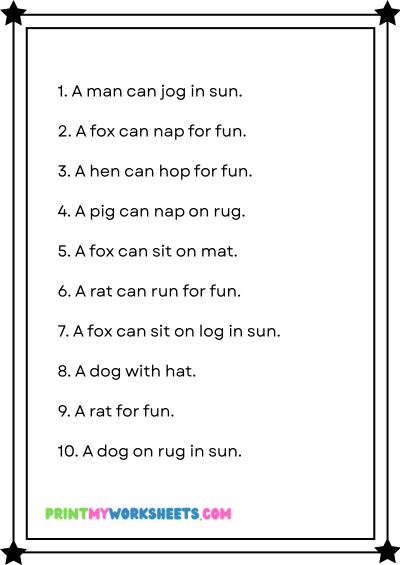
Building reading fluency is one of the most important goals in kindergarten literacy instruction. These Kindergarten CVC Reading Fluency Sentences Worksheets are designed to help young learners move from decoding individual words to reading short sentences with confidence and accuracy. Created for U.S. parents, classroom teachers, and homeschool families, this free printable PDF provides structured, age-appropriate reading practice that fits easily into daily learning routines.
At the kindergarten level, students are learning how sounds blend together and how words work within sentences. Practicing CVC-based sentences allows children to apply phonics skills in a meaningful context while developing smooth, steady reading habits. This worksheet set focuses on simple sentence structures that support repetition without frustration. With clear directions and a predictable layout, these worksheets help children strengthen fluency, build confidence, and develop early comprehension skills that are essential for success in first grade and beyond.
What Students Will Learn ?
This worksheet set supports kindergarten students as they develop reading fluency through consistent practice with short, decodable sentences. Students will learn how to read CVC-based sentences smoothly by blending sounds accurately and maintaining a steady reading pace. These activities help children move beyond word-by-word reading toward more natural sentence flow.
The worksheets include structured reading tasks that reinforce phonics skills while encouraging sentence-level reading. Students may read simple sentences aloud, track words from left to right, and practice recognizing familiar word patterns. The focus remains on accuracy and fluency rather than speed, helping children build strong foundational habits.
Each activity is designed to support structured learning. Sentences are short, clear, and developmentally appropriate for kindergarten learners. The worksheets fit well within U.S. kindergarten reading expectations by reinforcing phonics, fluency, and early comprehension skills. Whether used independently or with adult guidance, these activities support focused practice that helps students gain confidence and consistency in reading simple sentences.
Educational Value & Skill Development
Reading fluency practice provides significant academic and developmental benefits, and the Kindergarten CVC Reading Fluency Sentences Worksheets support growth across multiple areas. Academically, these worksheets help students strengthen decoding skills while learning to read connected text. Practicing sentence-level reading supports smoother transitions into more complex texts.
From a cognitive perspective, fluency practice improves attention, memory, and processing speed. Students learn to recognize word patterns quickly, reducing the effort required to decode each word. This allows them to focus more on meaning and comprehension as they read.
These worksheets also promote confidence and independence. Familiar sentence structures and predictable formats help children understand expectations and complete tasks successfully. As students experience repeated success, they develop a more positive attitude toward reading. Over time, consistent practice with Kindergarten CVC Reading Fluency Sentences Worksheets supports skill progression from decoding individual words to reading full sentences with clarity and confidence, preparing students for more advanced reading tasks in first grade.
Why Focus on Kindergarten CVC Reading Fluency Sentences Worksheets ?
Why Focus on Kindergarten CVC Reading Fluency Sentences Worksheets? Reading fluency is a key component of early literacy, and kindergarten is the ideal time to develop this skill. When children can read simple sentences smoothly, they are better prepared to understand what they read.
CVC-based sentences provide an effective starting point because they rely on consistent phonics patterns that young learners can decode successfully. Practicing these sentences helps students apply phonics skills in context, rather than in isolation. This supports a deeper understanding of how words work together to form meaning.
Repetition and guided practice are essential for fluency development. Children need multiple opportunities to read similar sentence structures before fluency becomes automatic. These worksheets align with early literacy expectations commonly used in U.S. schools by emphasizing accuracy, consistency, and confidence. Regular sentence-level practice helps bridge the gap between phonics instruction and independent reading, setting the stage for long-term reading success.
How to Use These Worksheets ?
These worksheets are flexible and easy to use in a variety of learning environments. In homeschool settings, parents can include them in daily reading routines, encouraging children to read sentences aloud and discuss meaning. This supports both fluency and comprehension.
In classrooms, teachers can use the worksheets during literacy centers, small-group instruction, or independent reading practice. They allow students to revisit fluency skills regularly. Because the resource is provided as a free printable PDF, it is easy to download and print as needed.
Pages can be reused by placing them in sheet protectors or laminating for repeated practice. For families and educators seeking structured fluency support, Kindergarten CVC Reading Fluency Sentences Worksheets offer a practical, consistent way to strengthen early reading skills.
What’s Included in This PDF ?
This printable worksheet set is designed to support kindergarten reading instruction with clarity and simplicity. Each page focuses on meaningful fluency practice without unnecessary distractions. Inside this PDF, you’ll find:
-
Multiple printable worksheets focused on CVC sentence reading
-
Sentence-level fluency activities for kindergarten learners
-
A kid-friendly layout that supports independent reading
-
Black-and-white, print-friendly pages
-
Content aligned with U.S. kindergarten literacy expectations
-
A free downloadable PDF format for easy access
You may also like:
[gallery ids="6895,6839,6689"]Related Worksheets / Extensions :
To support continued literacy development, you may want to pair these worksheets with other early reading resources. CVC word lists, phonics worksheets, and sight word practice pages can complement sentence fluency activities and provide balanced instruction.
You may also explore similar fluency resources for different grade levels or reading stages. Materials like Kindergarten CVC Reading Fluency Sentences Worksheets work well alongside year-round reading practice, helping students build accuracy, confidence, and comprehension through consistent, structured reading activities.
Kindergarten CVC Reading Fluency Sentences Worksheets – Literacy Centers and Small Group Lessons
Kindergarten CVC Reading Fluency Sentences Worksheets
Building reading fluency is one of the most important goals in kindergarten literacy instruction. These Kindergarten CVC Reading Fluency Sentences Worksheets are designed to help young learners move from decoding individual words to reading short sentences with confidence and accuracy. Created for U.S. parents, classroom teachers, and homeschool families, this free printable PDF provides structured, age-appropriate reading practice that fits easily into daily learning routines.
At the kindergarten level, students are learning how sounds blend together and how words work within sentences. Practicing CVC-based sentences allows children to apply phonics skills in a meaningful context while developing smooth, steady reading habits. This worksheet set focuses on simple sentence structures that support repetition without frustration. With clear directions and a predictable layout, these worksheets help children strengthen fluency, build confidence, and develop early comprehension skills that are essential for success in first grade and beyond.
What Students Will Learn ?
This worksheet set supports kindergarten students as they develop reading fluency through consistent practice with short, decodable sentences. Students will learn how to read CVC-based sentences smoothly by blending sounds accurately and maintaining a steady reading pace. These activities help children move beyond word-by-word reading toward more natural sentence flow.
The worksheets include structured reading tasks that reinforce phonics skills while encouraging sentence-level reading. Students may read simple sentences aloud, track words from left to right, and practice recognizing familiar word patterns. The focus remains on accuracy and fluency rather than speed, helping children build strong foundational habits.
Each activity is designed to support structured learning. Sentences are short, clear, and developmentally appropriate for kindergarten learners. The worksheets fit well within U.S. kindergarten reading expectations by reinforcing phonics, fluency, and early comprehension skills. Whether used independently or with adult guidance, these activities support focused practice that helps students gain confidence and consistency in reading simple sentences.
Educational Value & Skill Development
Reading fluency practice provides significant academic and developmental benefits, and the Kindergarten CVC Reading Fluency Sentences Worksheets support growth across multiple areas. Academically, these worksheets help students strengthen decoding skills while learning to read connected text. Practicing sentence-level reading supports smoother transitions into more complex texts.
From a cognitive perspective, fluency practice improves attention, memory, and processing speed. Students learn to recognize word patterns quickly, reducing the effort required to decode each word. This allows them to focus more on meaning and comprehension as they read.
These worksheets also promote confidence and independence. Familiar sentence structures and predictable formats help children understand expectations and complete tasks successfully. As students experience repeated success, they develop a more positive attitude toward reading. Over time, consistent practice with Kindergarten CVC Reading Fluency Sentences Worksheets supports skill progression from decoding individual words to reading full sentences with clarity and confidence, preparing students for more advanced reading tasks in first grade.
Why Focus on Kindergarten CVC Reading Fluency Sentences Worksheets ?
Why Focus on Kindergarten CVC Reading Fluency Sentences Worksheets? Reading fluency is a key component of early literacy, and kindergarten is the ideal time to develop this skill. When children can read simple sentences smoothly, they are better prepared to understand what they read.
CVC-based sentences provide an effective starting point because they rely on consistent phonics patterns that young learners can decode successfully. Practicing these sentences helps students apply phonics skills in context, rather than in isolation. This supports a deeper understanding of how words work together to form meaning.
Repetition and guided practice are essential for fluency development. Children need multiple opportunities to read similar sentence structures before fluency becomes automatic. These worksheets align with early literacy expectations commonly used in U.S. schools by emphasizing accuracy, consistency, and confidence. Regular sentence-level practice helps bridge the gap between phonics instruction and independent reading, setting the stage for long-term reading success.
How to Use These Worksheets ?
These worksheets are flexible and easy to use in a variety of learning environments. In homeschool settings, parents can include them in daily reading routines, encouraging children to read sentences aloud and discuss meaning. This supports both fluency and comprehension.
In classrooms, teachers can use the worksheets during literacy centers, small-group instruction, or independent reading practice. They allow students to revisit fluency skills regularly. Because the resource is provided as a free printable PDF, it is easy to download and print as needed.
Pages can be reused by placing them in sheet protectors or laminating for repeated practice. For families and educators seeking structured fluency support, Kindergarten CVC Reading Fluency Sentences Worksheets offer a practical, consistent way to strengthen early reading skills.
What’s Included in This PDF ?
This printable worksheet set is designed to support kindergarten reading instruction with clarity and simplicity. Each page focuses on meaningful fluency practice without unnecessary distractions. Inside this PDF, you’ll find:
-
Multiple printable worksheets focused on CVC sentence reading
-
Sentence-level fluency activities for kindergarten learners
-
A kid-friendly layout that supports independent reading
-
Black-and-white, print-friendly pages
-
Content aligned with U.S. kindergarten literacy expectations
-
A free downloadable PDF format for easy access
You may also like:
[gallery ids="6895,6839,6689"]Related Worksheets / Extensions :
To support continued literacy development, you may want to pair these worksheets with other early reading resources. CVC word lists, phonics worksheets, and sight word practice pages can complement sentence fluency activities and provide balanced instruction.
You may also explore similar fluency resources for different grade levels or reading stages. Materials like Kindergarten CVC Reading Fluency Sentences Worksheets work well alongside year-round reading practice, helping students build accuracy, confidence, and comprehension through consistent, structured reading activities.
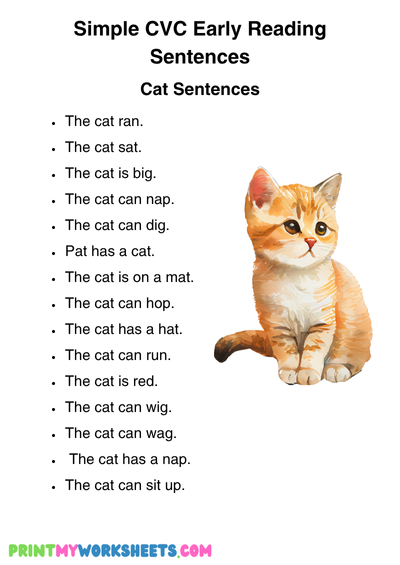
Kindergarten CVC Reading Sentences Worksheets PDF | Free Downloadable
Kindergarten CVC Reading Sentences Worksheets PDF
Learning to read is one of the most important milestones in kindergarten, and early success depends on strong phonics instruction. These CVC reading sentences worksheets are created to help young learners move from sounding out individual words to reading simple, meaningful sentences with confidence. Designed for U.S. parents, classroom teachers, and homeschool families, this free printable resource supports daily phonics practice in a clear and approachable way. The Kindergarten CVC Reading Sentences Worksheets PDF focuses on consonant-vowel-consonant word patterns that are commonly taught in kindergarten classrooms. At this stage, children are developing the ability to blend sounds smoothly and recognize short vowel words automatically. Practicing CVC words within sentences helps students understand how phonics skills apply to real reading. These worksheets provide structured, age-appropriate reading practice that supports early literacy development and prepares children for more complex reading tasks ahead.
What Students Will Learn ?
These worksheets are designed with clear learning goals that align with kindergarten reading expectations. Students will practice reading simple sentences that include common CVC words, early sight words, and predictable sentence patterns. Each activity encourages children to blend sounds, recognize word families, and build fluency through repetition. By working with short sentences rather than isolated words, students begin to understand how words work together to convey meaning. The worksheets support left-to-right tracking, proper spacing between words, and basic sentence structure, all of which are essential reading skills at this level. Activities are intentionally structured to allow for independent practice, making them suitable for children who are still developing confidence as readers. With regular use, students strengthen decoding skills, improve word recognition, and develop early comprehension. These outcomes support reading readiness and help kindergarten learners build a solid foundation for future literacy instruction.If your child is learning CVC sentences, you may also want to practice with these related CVC worksheets:
[caption id="attachment_7193" align="alignnone" width="212"] Kindergarten Vehicles CVC Sentences Worksheets PDF[/caption]
[caption id="attachment_6966" align="alignnone" width="212"]
Kindergarten Vehicles CVC Sentences Worksheets PDF[/caption]
[caption id="attachment_6966" align="alignnone" width="212"] Kindergarten CVC Reading Fluency Sentences Worksheets[/caption]
Educational Value & Skill Development
Strong phonics instruction plays a key role in early academic success, and these worksheets are designed to support that growth in meaningful ways. Reading CVC sentences helps children develop phonemic awareness by reinforcing the connection between sounds and letters. As students repeatedly decode short vowel words in sentence form, they begin to read more smoothly and accurately, supporting early fluency development. The Kindergarten CVC Reading Sentences Worksheets PDF also encourage cognitive skills such as attention, memory, and problem-solving as children work through each sentence. Reading simple text builds confidence and motivates young learners to engage more actively with reading tasks. In addition to literacy skills, these worksheets support fine motor development when students track words, point to text, or complete written responses. By combining phonics practice with sentence-level reading, this resource supports a natural progression from sound recognition to meaningful reading, helping children become more confident and independent learners.Why Focus on CVC Reading Sentences?
CVC reading sentences are a critical step in early literacy instruction because they bridge the gap between word decoding and actual reading. In kindergarten, students are expected to apply phonics skills in real reading situations, not just recognize individual sounds. CVC words are often the first words children can successfully decode, making them ideal for early sentence reading. Practicing these words in sentence form helps students understand context, build comprehension, and recognize patterns in language. This approach aligns with early learning standards commonly used across U.S. schools, which emphasize phonics, decoding, and basic comprehension. Repetition is especially important for young learners, as repeated exposure to similar sentence structures strengthens memory and automaticity. Regular practice with CVC sentences supports smoother reading and prepares students for longer texts in first grade. Focusing on this skill helps ensure children develop a strong and confident start in reading.How to Use These Worksheets ?
These CVC reading sentence worksheets are flexible and easy to use in a variety of learning settings. In homeschool environments, they can be used as part of a daily phonics routine or reading lesson. Classroom teachers may incorporate them into morning work, literacy centers, small group instruction, or independent practice time. The worksheets are also helpful for extra practice or review, allowing students to reinforce skills they have already learned. Because the Kindergarten CVC Reading Sentences Worksheets PDF is provided as a free printable PDF, it is simple to download, print, and reuse throughout the school year. Parents can use the worksheets for short reading sessions at home, while teachers can print multiple copies for classroom use. The straightforward design makes them easy to implement without extensive preparation or additional materials.Explore more Kindergarten worksheets :
[gallery ids="5088,5083,6603"]Related Worksheets / Extensions :
You may also like exploring additional phonics and early reading resources that support skill progression. Related worksheets may include CVC word reading activities, short vowel word families, phonics sentence comprehension pages, or early sight word practice. These extensions help reinforce the same foundational skills while adding variety to reading instruction. Families and teachers looking to build a complete phonics practice routine can pair this resource with other early literacy worksheets for consistent reinforcement. The Kindergarten CVC Reading Sentences Worksheets PDF also works well alongside printable activities for phonemic awareness, word blending, and early writing. Using related worksheets together supports steady skill development and helps young learners gain confidence as they continue building their reading abilities.Frequently Asked Questions
Q1. Is this worksheet free to download? Yes, this worksheet is available as a free printable PDF for personal and classroom use. Q2. Does this worksheet include an answer key? Yes, an answer key is included to help teachers and parents quickly check student work. Q3. What grade level is this worksheet for? This worksheet is designed for Kindergarten students and aligns with grade-level english standards. Q4. Can I use this worksheet for homeschooling? Absolutely! It is perfect for homeschooling, classroom practice, homework, and test prep. Kindergarten CVC Reading Sentences Worksheets PDF | Free Downloadable
Kindergarten CVC Reading Sentences Worksheets PDF
Learning to read is one of the most important milestones in kindergarten, and early success depends on strong phonics instruction. These CVC reading sentences worksheets are created to help young learners move from sounding out individual words to reading simple, meaningful sentences with confidence. Designed for U.S. parents, classroom teachers, and homeschool families, this free printable resource supports daily phonics practice in a clear and approachable way. The Kindergarten CVC Reading Sentences Worksheets PDF focuses on consonant-vowel-consonant word patterns that are commonly taught in kindergarten classrooms. At this stage, children are developing the ability to blend sounds smoothly and recognize short vowel words automatically. Practicing CVC words within sentences helps students understand how phonics skills apply to real reading. These worksheets provide structured, age-appropriate reading practice that supports early literacy development and prepares children for more complex reading tasks ahead.
What Students Will Learn ?
These worksheets are designed with clear learning goals that align with kindergarten reading expectations. Students will practice reading simple sentences that include common CVC words, early sight words, and predictable sentence patterns. Each activity encourages children to blend sounds, recognize word families, and build fluency through repetition. By working with short sentences rather than isolated words, students begin to understand how words work together to convey meaning. The worksheets support left-to-right tracking, proper spacing between words, and basic sentence structure, all of which are essential reading skills at this level. Activities are intentionally structured to allow for independent practice, making them suitable for children who are still developing confidence as readers. With regular use, students strengthen decoding skills, improve word recognition, and develop early comprehension. These outcomes support reading readiness and help kindergarten learners build a solid foundation for future literacy instruction.If your child is learning CVC sentences, you may also want to practice with these related CVC worksheets:
[caption id="attachment_7193" align="alignnone" width="212"] Kindergarten Vehicles CVC Sentences Worksheets PDF[/caption]
[caption id="attachment_6966" align="alignnone" width="212"] Kindergarten CVC Reading Fluency Sentences Worksheets[/caption]
Educational Value & Skill Development
Strong phonics instruction plays a key role in early academic success, and these worksheets are designed to support that growth in meaningful ways. Reading CVC sentences helps children develop phonemic awareness by reinforcing the connection between sounds and letters. As students repeatedly decode short vowel words in sentence form, they begin to read more smoothly and accurately, supporting early fluency development. The Kindergarten CVC Reading Sentences Worksheets PDF also encourage cognitive skills such as attention, memory, and problem-solving as children work through each sentence. Reading simple text builds confidence and motivates young learners to engage more actively with reading tasks. In addition to literacy skills, these worksheets support fine motor development when students track words, point to text, or complete written responses. By combining phonics practice with sentence-level reading, this resource supports a natural progression from sound recognition to meaningful reading, helping children become more confident and independent learners.Why Focus on CVC Reading Sentences?
CVC reading sentences are a critical step in early literacy instruction because they bridge the gap between word decoding and actual reading. In kindergarten, students are expected to apply phonics skills in real reading situations, not just recognize individual sounds. CVC words are often the first words children can successfully decode, making them ideal for early sentence reading. Practicing these words in sentence form helps students understand context, build comprehension, and recognize patterns in language. This approach aligns with early learning standards commonly used across U.S. schools, which emphasize phonics, decoding, and basic comprehension. Repetition is especially important for young learners, as repeated exposure to similar sentence structures strengthens memory and automaticity. Regular practice with CVC sentences supports smoother reading and prepares students for longer texts in first grade. Focusing on this skill helps ensure children develop a strong and confident start in reading.How to Use These Worksheets ?
These CVC reading sentence worksheets are flexible and easy to use in a variety of learning settings. In homeschool environments, they can be used as part of a daily phonics routine or reading lesson. Classroom teachers may incorporate them into morning work, literacy centers, small group instruction, or independent practice time. The worksheets are also helpful for extra practice or review, allowing students to reinforce skills they have already learned. Because the Kindergarten CVC Reading Sentences Worksheets PDF is provided as a free printable PDF, it is simple to download, print, and reuse throughout the school year. Parents can use the worksheets for short reading sessions at home, while teachers can print multiple copies for classroom use. The straightforward design makes them easy to implement without extensive preparation or additional materials.Explore more Kindergarten worksheets :
[gallery ids="5088,5083,6603"]Related Worksheets / Extensions :
You may also like exploring additional phonics and early reading resources that support skill progression. Related worksheets may include CVC word reading activities, short vowel word families, phonics sentence comprehension pages, or early sight word practice. These extensions help reinforce the same foundational skills while adding variety to reading instruction. Families and teachers looking to build a complete phonics practice routine can pair this resource with other early literacy worksheets for consistent reinforcement. The Kindergarten CVC Reading Sentences Worksheets PDF also works well alongside printable activities for phonemic awareness, word blending, and early writing. Using related worksheets together supports steady skill development and helps young learners gain confidence as they continue building their reading abilities.Frequently Asked Questions
Q1. Is this worksheet free to download? Yes, this worksheet is available as a free printable PDF for personal and classroom use. Q2. Does this worksheet include an answer key? Yes, an answer key is included to help teachers and parents quickly check student work. Q3. What grade level is this worksheet for? This worksheet is designed for Kindergarten students and aligns with grade-level english standards. Q4. Can I use this worksheet for homeschooling? Absolutely! It is perfect for homeschooling, classroom practice, homework, and test prep.

Kindergarten CVC Words Worksheets PDF | Free English I Downloadable
Kindergarten CVC Words Worksheets PDF
The Kindergarten CVC Words Worksheets PDF is a helpful learning resource designed to support early reading development for young learners. This free printable PDF is ideal for U.S. parents, kindergarten teachers, and homeschool families who want to strengthen foundational phonics skills through structured and engaging activities.
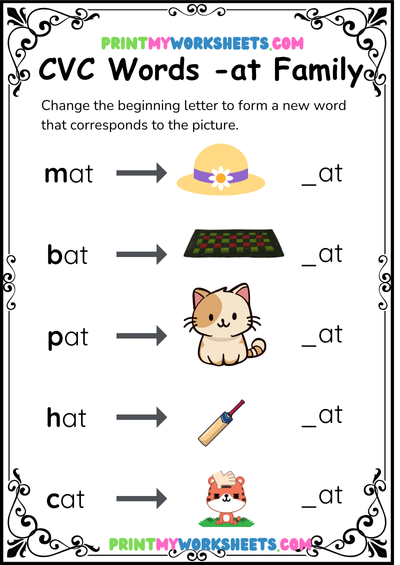
At the kindergarten level, children begin learning how letters work together to form simple words. CVC words—short words made of a consonant, vowel, and consonant—are often the first step in developing decoding and reading skills. Examples such as cat, dog, hat, and sun help children understand how individual sounds combine to create words.
The Kindergarten CVC Words Worksheets PDF provides targeted practice that helps children recognize letter sounds, blend phonemes, and build confidence in reading. These worksheets introduce simple word-building exercises, matching activities, and picture-supported learning tasks that make phonics practice clear and engaging. With consistent practice, young learners can strengthen their early reading abilities and gain confidence as beginning readers.
What Students Will Learn?
CVC word worksheets help kindergarten students build strong phonics foundations by introducing simple word structures that are easy for early readers to decode. These worksheets focus on helping children recognize individual letter sounds and combine them to form short, meaningful words.
Students will learn how to identify the beginning, middle, and ending sounds in short words. By practicing with common consonant-vowel-consonant combinations, children begin to understand how phonics patterns work in early reading.
Many worksheets include picture-supported activities that help children connect written words with visual representations. For example, students may match a word like cat with a picture of a cat or fill in missing letters to complete a word.
These exercises also introduce blending skills. Children practice sounding out each letter and then combining the sounds together to read the full word. This step is essential for early reading success.
The activities are designed to be age-appropriate for kindergarten learners. With simple instructions and clear layouts, the worksheets support structured practice while allowing students to develop reading skills gradually and confidently.
Educational Value & Skill Development
The Kindergarten CVC Words Worksheets PDF provides important support for early literacy development. Learning CVC words helps children understand how phonics works and prepares them for more advanced reading skills.
One of the most important benefits is phonemic awareness. Students learn to hear and identify individual sounds in words. Recognizing these sounds helps children decode new words as they encounter them in reading.
The worksheets also help strengthen letter recognition and sound association. When children repeatedly practice with simple words, they begin to understand how letters represent specific sounds in spoken language.
Another key benefit is improved reading confidence. Beginning readers often feel successful when they can read short, simple words independently. Each completed activity reinforces their ability to decode words and encourages them to keep practicing.
The Kindergarten CVC Words Worksheets PDF also supports spelling development. When students practice writing and completing CVC words, they begin to understand how sounds translate into written letters.
Through consistent phonics practice, these worksheets help children develop the foundational literacy skills needed for reading fluency and comprehension in later grades.
Why Focus on CVC Words?
CVC words are an essential starting point in early reading instruction because they introduce simple phonics patterns that are easy for young learners to understand. These short words allow children to practice blending sounds in a structured and predictable way.
Kindergarten students are just beginning to learn how letters and sounds work together. CVC word practice helps them recognize patterns and build confidence as they decode simple words independently.
Learning CVC words also helps children understand the relationship between spoken language and written text. When students hear the sounds in a word and then see the letters that represent those sounds, they develop stronger phonological awareness.
Another important benefit is repetition. Repeated exposure to common word patterns helps children recognize these words more quickly over time. This familiarity supports reading fluency and improves comprehension.
CVC word instruction aligns with early literacy standards in the United States, which emphasize phonics and decoding skills in kindergarten. Providing structured practice with simple words helps prepare students for more complex reading challenges in first grade and beyond.
How to Use These Worksheets?
The Kindergarten CVC Words Worksheets PDF can be used in several different learning environments, including classrooms, homeschool settings, and small-group literacy instruction.
In a classroom setting, teachers can incorporate these worksheets into phonics centers or reading stations. Students may work independently or in small groups to complete word-building and matching activities.
Teachers may also guide students through sounding out each letter in a word before blending the sounds together. This guided practice helps reinforce phonics concepts and improves decoding skills.
Homeschool families can use the worksheets as part of daily reading practice. Parents may read the words aloud with their child, encouraging them to repeat the sounds and blend the letters together.
Because the worksheets are provided as a free printable PDF, they can be downloaded and printed easily. This allows teachers and parents to reuse the worksheets for additional practice or review sessions.
These activities are also suitable for independent learning. The clear layout and picture-supported exercises allow children to practice reading skills without complicated instructions.
Related Worksheets / Extensions:
You may also like:
• Kindergarten phonics worksheets
• CVC word family worksheets
• Kindergarten sight words worksheets
• Beginning reading practice worksheets
• Kindergarten word-building activities
The Kindergarten CVC Words Worksheets PDF works well when combined with other early literacy resources such as sight word practice, phonics games, and word family activities. These additional exercises help reinforce the reading skills children are developing.
Teachers and parents may also extend learning by reading simple books that include CVC words. Encouraging children to recognize these words in stories helps strengthen reading comprehension and confidence.
With regular practice, kindergarten learners become more comfortable recognizing phonics patterns and decoding simple words. These early literacy skills form the foundation for strong reading development throughout elementary school.
You may also like :
[gallery ids="5083,5003,5007"] Kindergarten CVC Words Worksheets PDF | Free English I Downloadable
Kindergarten CVC Words Worksheets PDF
The Kindergarten CVC Words Worksheets PDF is a helpful learning resource designed to support early reading development for young learners. This free printable PDF is ideal for U.S. parents, kindergarten teachers, and homeschool families who want to strengthen foundational phonics skills through structured and engaging activities.
At the kindergarten level, children begin learning how letters work together to form simple words. CVC words—short words made of a consonant, vowel, and consonant—are often the first step in developing decoding and reading skills. Examples such as cat, dog, hat, and sun help children understand how individual sounds combine to create words.
The Kindergarten CVC Words Worksheets PDF provides targeted practice that helps children recognize letter sounds, blend phonemes, and build confidence in reading. These worksheets introduce simple word-building exercises, matching activities, and picture-supported learning tasks that make phonics practice clear and engaging. With consistent practice, young learners can strengthen their early reading abilities and gain confidence as beginning readers.
What Students Will Learn?
CVC word worksheets help kindergarten students build strong phonics foundations by introducing simple word structures that are easy for early readers to decode. These worksheets focus on helping children recognize individual letter sounds and combine them to form short, meaningful words.
Students will learn how to identify the beginning, middle, and ending sounds in short words. By practicing with common consonant-vowel-consonant combinations, children begin to understand how phonics patterns work in early reading.
Many worksheets include picture-supported activities that help children connect written words with visual representations. For example, students may match a word like cat with a picture of a cat or fill in missing letters to complete a word.
These exercises also introduce blending skills. Children practice sounding out each letter and then combining the sounds together to read the full word. This step is essential for early reading success.
The activities are designed to be age-appropriate for kindergarten learners. With simple instructions and clear layouts, the worksheets support structured practice while allowing students to develop reading skills gradually and confidently.
Educational Value & Skill Development
The Kindergarten CVC Words Worksheets PDF provides important support for early literacy development. Learning CVC words helps children understand how phonics works and prepares them for more advanced reading skills.
One of the most important benefits is phonemic awareness. Students learn to hear and identify individual sounds in words. Recognizing these sounds helps children decode new words as they encounter them in reading.
The worksheets also help strengthen letter recognition and sound association. When children repeatedly practice with simple words, they begin to understand how letters represent specific sounds in spoken language.
Another key benefit is improved reading confidence. Beginning readers often feel successful when they can read short, simple words independently. Each completed activity reinforces their ability to decode words and encourages them to keep practicing.
The Kindergarten CVC Words Worksheets PDF also supports spelling development. When students practice writing and completing CVC words, they begin to understand how sounds translate into written letters.
Through consistent phonics practice, these worksheets help children develop the foundational literacy skills needed for reading fluency and comprehension in later grades.
Why Focus on CVC Words?
CVC words are an essential starting point in early reading instruction because they introduce simple phonics patterns that are easy for young learners to understand. These short words allow children to practice blending sounds in a structured and predictable way.
Kindergarten students are just beginning to learn how letters and sounds work together. CVC word practice helps them recognize patterns and build confidence as they decode simple words independently.
Learning CVC words also helps children understand the relationship between spoken language and written text. When students hear the sounds in a word and then see the letters that represent those sounds, they develop stronger phonological awareness.
Another important benefit is repetition. Repeated exposure to common word patterns helps children recognize these words more quickly over time. This familiarity supports reading fluency and improves comprehension.
CVC word instruction aligns with early literacy standards in the United States, which emphasize phonics and decoding skills in kindergarten. Providing structured practice with simple words helps prepare students for more complex reading challenges in first grade and beyond.
How to Use These Worksheets?
The Kindergarten CVC Words Worksheets PDF can be used in several different learning environments, including classrooms, homeschool settings, and small-group literacy instruction.
In a classroom setting, teachers can incorporate these worksheets into phonics centers or reading stations. Students may work independently or in small groups to complete word-building and matching activities.
Teachers may also guide students through sounding out each letter in a word before blending the sounds together. This guided practice helps reinforce phonics concepts and improves decoding skills.
Homeschool families can use the worksheets as part of daily reading practice. Parents may read the words aloud with their child, encouraging them to repeat the sounds and blend the letters together.
Because the worksheets are provided as a free printable PDF, they can be downloaded and printed easily. This allows teachers and parents to reuse the worksheets for additional practice or review sessions.
These activities are also suitable for independent learning. The clear layout and picture-supported exercises allow children to practice reading skills without complicated instructions.
Related Worksheets / Extensions:
You may also like:
• Kindergarten phonics worksheets
• CVC word family worksheets
• Kindergarten sight words worksheets
• Beginning reading practice worksheets
• Kindergarten word-building activities
The Kindergarten CVC Words Worksheets PDF works well when combined with other early literacy resources such as sight word practice, phonics games, and word family activities. These additional exercises help reinforce the reading skills children are developing.
Teachers and parents may also extend learning by reading simple books that include CVC words. Encouraging children to recognize these words in stories helps strengthen reading comprehension and confidence.
With regular practice, kindergarten learners become more comfortable recognizing phonics patterns and decoding simple words. These early literacy skills form the foundation for strong reading development throughout elementary school.
You may also like :
[gallery ids="5083,5003,5007"]
Kindergarten CVC Words Worksheets PDF | Free English II Downloadable – Phonics Blending Practice Pack
Kindergarten CVC Words Worksheets PDF
The Kindergarten CVC Words Worksheets PDF is a helpful learning resource designed to support early reading development for young learners. This free printable PDF is ideal for U.S. parents, kindergarten teachers, and homeschool families who want to strengthen foundational phonics skills through structured and engaging activities.
At the kindergarten level, children begin learning how letters work together to form simple words. CVC words—short words made of a consonant, vowel, and consonant—are often the first step in developing decoding and reading skills. Examples such as cat, dog, hat, and sun help children understand how individual sounds combine to create words.
The Kindergarten CVC Words Worksheets PDF provides targeted practice that helps children recognize letter sounds, blend phonemes, and build confidence in reading. These worksheets introduce simple word-building exercises, matching activities, and picture-supported learning tasks that make phonics practice clear and engaging. With consistent practice, young learners can strengthen their early reading abilities and gain confidence as beginning readers.
What Students Will Learn?
CVC word worksheets help kindergarten students build strong phonics foundations by introducing simple word structures that are easy for early readers to decode. These worksheets focus on helping children recognize individual letter sounds and combine them to form short, meaningful words.
Students will learn how to identify the beginning, middle, and ending sounds in short words. By practicing with common consonant-vowel-consonant combinations, children begin to understand how phonics patterns work in early reading.
Many worksheets include picture-supported activities that help children connect written words with visual representations. For example, students may match a word like cat with a picture of a cat or fill in missing letters to complete a word.
These exercises also introduce blending skills. Children practice sounding out each letter and then combining the sounds together to read the full word. This step is essential for early reading success.
The activities are designed to be age-appropriate for kindergarten learners. With simple instructions and clear layouts, the worksheets support structured practice while allowing students to develop reading skills gradually and confidently.
Educational Value & Skill Development
The Kindergarten CVC Words Worksheets PDF provides important support for early literacy development. Learning CVC words helps children understand how phonics works and prepares them for more advanced reading skills.
One of the most important benefits is phonemic awareness. Students learn to hear and identify individual sounds in words. Recognizing these sounds helps children decode new words as they encounter them in reading.
The worksheets also help strengthen letter recognition and sound association. When children repeatedly practice with simple words, they begin to understand how letters represent specific sounds in spoken language.
Another key benefit is improved reading confidence. Beginning readers often feel successful when they can read short, simple words independently. Each completed activity reinforces their ability to decode words and encourages them to keep practicing.
The Kindergarten CVC Words Worksheets PDF also supports spelling development. When students practice writing and completing CVC words, they begin to understand how sounds translate into written letters.
Through consistent phonics practice, these worksheets help children develop the foundational literacy skills needed for reading fluency and comprehension in later grades.
Why Focus on CVC Words?
CVC words are an essential starting point in early reading instruction because they introduce simple phonics patterns that are easy for young learners to understand. These short words allow children to practice blending sounds in a structured and predictable way.
Kindergarten students are just beginning to learn how letters and sounds work together. CVC word practice helps them recognize patterns and build confidence as they decode simple words independently.
Learning CVC words also helps children understand the relationship between spoken language and written text. When students hear the sounds in a word and then see the letters that represent those sounds, they develop stronger phonological awareness.
Another important benefit is repetition. Repeated exposure to common word patterns helps children recognize these words more quickly over time. This familiarity supports reading fluency and improves comprehension.
CVC word instruction aligns with early literacy standards in the United States, which emphasize phonics and decoding skills in kindergarten. Providing structured practice with simple words helps prepare students for more complex reading challenges in first grade and beyond.
How to Use These Worksheets?
The Kindergarten CVC Words Worksheets PDF can be used in several different learning environments, including classrooms, homeschool settings, and small-group literacy instruction.
In a classroom setting, teachers can incorporate these worksheets into phonics centers or reading stations. Students may work independently or in small groups to complete word-building and matching activities.
Teachers may also guide students through sounding out each letter in a word before blending the sounds together. This guided practice helps reinforce phonics concepts and improves decoding skills.
Homeschool families can use the worksheets as part of daily reading practice. Parents may read the words aloud with their child, encouraging them to repeat the sounds and blend the letters together.
Because the worksheets are provided as a free printable PDF, they can be downloaded and printed easily. This allows teachers and parents to reuse the worksheets for additional practice or review sessions.
These activities are also suitable for independent learning. The clear layout and picture-supported exercises allow children to practice reading skills without complicated instructions.
Related Worksheets / Extensions:
You may also like:
• Kindergarten phonics worksheets
• CVC word family worksheets
• Kindergarten sight words worksheets
• Beginning reading practice worksheets
• Kindergarten word-building activities
The Kindergarten CVC Words Worksheets PDF works well when combined with other early literacy resources such as sight word practice, phonics games, and word family activities. These additional exercises help reinforce the reading skills children are developing.
Teachers and parents may also extend learning by reading simple books that include CVC words. Encouraging children to recognize these words in stories helps strengthen reading comprehension and confidence.
With regular practice, kindergarten learners become more comfortable recognizing phonics patterns and decoding simple words. These early literacy skills form the foundation for strong reading development throughout elementary school.
You may also like :
[gallery ids="5908,5913,5326"] Kindergarten CVC Words Worksheets PDF | Free English II Downloadable – Phonics Blending Practice Pack
Kindergarten CVC Words Worksheets PDF
The Kindergarten CVC Words Worksheets PDF is a helpful learning resource designed to support early reading development for young learners. This free printable PDF is ideal for U.S. parents, kindergarten teachers, and homeschool families who want to strengthen foundational phonics skills through structured and engaging activities.
At the kindergarten level, children begin learning how letters work together to form simple words. CVC words—short words made of a consonant, vowel, and consonant—are often the first step in developing decoding and reading skills. Examples such as cat, dog, hat, and sun help children understand how individual sounds combine to create words.
The Kindergarten CVC Words Worksheets PDF provides targeted practice that helps children recognize letter sounds, blend phonemes, and build confidence in reading. These worksheets introduce simple word-building exercises, matching activities, and picture-supported learning tasks that make phonics practice clear and engaging. With consistent practice, young learners can strengthen their early reading abilities and gain confidence as beginning readers.
What Students Will Learn?
CVC word worksheets help kindergarten students build strong phonics foundations by introducing simple word structures that are easy for early readers to decode. These worksheets focus on helping children recognize individual letter sounds and combine them to form short, meaningful words.
Students will learn how to identify the beginning, middle, and ending sounds in short words. By practicing with common consonant-vowel-consonant combinations, children begin to understand how phonics patterns work in early reading.
Many worksheets include picture-supported activities that help children connect written words with visual representations. For example, students may match a word like cat with a picture of a cat or fill in missing letters to complete a word.
These exercises also introduce blending skills. Children practice sounding out each letter and then combining the sounds together to read the full word. This step is essential for early reading success.
The activities are designed to be age-appropriate for kindergarten learners. With simple instructions and clear layouts, the worksheets support structured practice while allowing students to develop reading skills gradually and confidently.
Educational Value & Skill Development
The Kindergarten CVC Words Worksheets PDF provides important support for early literacy development. Learning CVC words helps children understand how phonics works and prepares them for more advanced reading skills.
One of the most important benefits is phonemic awareness. Students learn to hear and identify individual sounds in words. Recognizing these sounds helps children decode new words as they encounter them in reading.
The worksheets also help strengthen letter recognition and sound association. When children repeatedly practice with simple words, they begin to understand how letters represent specific sounds in spoken language.
Another key benefit is improved reading confidence. Beginning readers often feel successful when they can read short, simple words independently. Each completed activity reinforces their ability to decode words and encourages them to keep practicing.
The Kindergarten CVC Words Worksheets PDF also supports spelling development. When students practice writing and completing CVC words, they begin to understand how sounds translate into written letters.
Through consistent phonics practice, these worksheets help children develop the foundational literacy skills needed for reading fluency and comprehension in later grades.
Why Focus on CVC Words?
CVC words are an essential starting point in early reading instruction because they introduce simple phonics patterns that are easy for young learners to understand. These short words allow children to practice blending sounds in a structured and predictable way.
Kindergarten students are just beginning to learn how letters and sounds work together. CVC word practice helps them recognize patterns and build confidence as they decode simple words independently.
Learning CVC words also helps children understand the relationship between spoken language and written text. When students hear the sounds in a word and then see the letters that represent those sounds, they develop stronger phonological awareness.
Another important benefit is repetition. Repeated exposure to common word patterns helps children recognize these words more quickly over time. This familiarity supports reading fluency and improves comprehension.
CVC word instruction aligns with early literacy standards in the United States, which emphasize phonics and decoding skills in kindergarten. Providing structured practice with simple words helps prepare students for more complex reading challenges in first grade and beyond.
How to Use These Worksheets?
The Kindergarten CVC Words Worksheets PDF can be used in several different learning environments, including classrooms, homeschool settings, and small-group literacy instruction.
In a classroom setting, teachers can incorporate these worksheets into phonics centers or reading stations. Students may work independently or in small groups to complete word-building and matching activities.
Teachers may also guide students through sounding out each letter in a word before blending the sounds together. This guided practice helps reinforce phonics concepts and improves decoding skills.
Homeschool families can use the worksheets as part of daily reading practice. Parents may read the words aloud with their child, encouraging them to repeat the sounds and blend the letters together.
Because the worksheets are provided as a free printable PDF, they can be downloaded and printed easily. This allows teachers and parents to reuse the worksheets for additional practice or review sessions.
These activities are also suitable for independent learning. The clear layout and picture-supported exercises allow children to practice reading skills without complicated instructions.
Related Worksheets / Extensions:
You may also like:
• Kindergarten phonics worksheets
• CVC word family worksheets
• Kindergarten sight words worksheets
• Beginning reading practice worksheets
• Kindergarten word-building activities
The Kindergarten CVC Words Worksheets PDF works well when combined with other early literacy resources such as sight word practice, phonics games, and word family activities. These additional exercises help reinforce the reading skills children are developing.
Teachers and parents may also extend learning by reading simple books that include CVC words. Encouraging children to recognize these words in stories helps strengthen reading comprehension and confidence.
With regular practice, kindergarten learners become more comfortable recognizing phonics patterns and decoding simple words. These early literacy skills form the foundation for strong reading development throughout elementary school.
You may also like :
[gallery ids="5908,5913,5326"]
Kindergarten Daily Routine Worksheets PDF – Morning Work, Sequencing & Life Skills Activities for School and Home
Kindergarten Daily Routine Worksheets PDF
These worksheets are designed to help young learners understand, follow, and feel confident with everyday routines. These free downloadable PDF worksheets are perfect for US homeschool parents, kindergarten teachers, and families supporting early childhood development.
Daily routines play an important role in a child’s learning and emotional well-being. These worksheets introduce common daily activities such as waking up, brushing teeth, eating meals, going to school, cleaning up, and bedtime routines in a simple, visual, and child-friendly way. Understanding routines helps children feel secure, organized, and prepared for daily transitions.
Learning daily routines supports independence, time awareness, and responsibility at an early age. When children know what to expect throughout the day, they are more focused, confident, and ready to learn. These worksheets also strengthen early reading skills, vocabulary, sequencing, and comprehension by encouraging children to identify, order, and discuss routine activities.
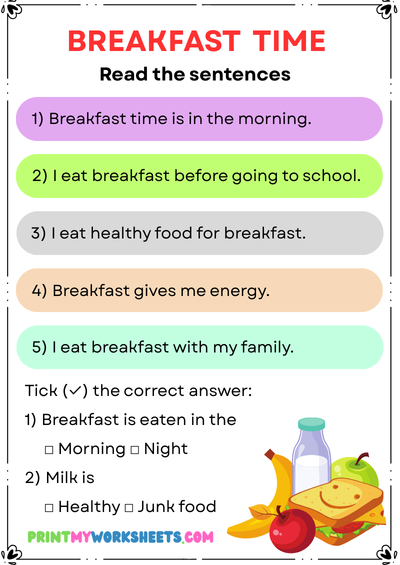
Each worksheet includes engaging activities such as matching routines, sequencing events, coloring, tracing, and simple writing tasks. The printable PDF format makes them ideal for classroom morning work, homeschooling schedules, social-emotional learning lessons, or at-home practice.
Whether teaching structure, building independence, or supporting school readiness, these daily routine worksheets provide an effective, engaging, and completely free resource aligned with US kindergarten learning standards.
You may also like:
[gallery ids="6689,6735,6603"] Kindergarten Daily Routine Worksheets PDF – Morning Work, Sequencing & Life Skills Activities for School and Home
Kindergarten Daily Routine Worksheets PDF
These worksheets are designed to help young learners understand, follow, and feel confident with everyday routines. These free downloadable PDF worksheets are perfect for US homeschool parents, kindergarten teachers, and families supporting early childhood development.
Daily routines play an important role in a child’s learning and emotional well-being. These worksheets introduce common daily activities such as waking up, brushing teeth, eating meals, going to school, cleaning up, and bedtime routines in a simple, visual, and child-friendly way. Understanding routines helps children feel secure, organized, and prepared for daily transitions.
Learning daily routines supports independence, time awareness, and responsibility at an early age. When children know what to expect throughout the day, they are more focused, confident, and ready to learn. These worksheets also strengthen early reading skills, vocabulary, sequencing, and comprehension by encouraging children to identify, order, and discuss routine activities.
Each worksheet includes engaging activities such as matching routines, sequencing events, coloring, tracing, and simple writing tasks. The printable PDF format makes them ideal for classroom morning work, homeschooling schedules, social-emotional learning lessons, or at-home practice.
Whether teaching structure, building independence, or supporting school readiness, these daily routine worksheets provide an effective, engaging, and completely free resource aligned with US kindergarten learning standards.
You may also like:
[gallery ids="6689,6735,6603"]
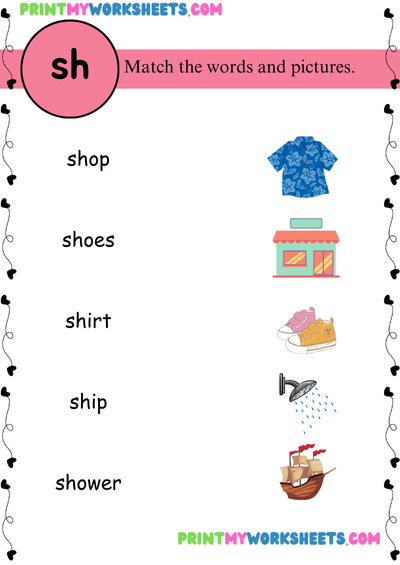
Kindergarten Digraphs Worksheets PDF – Free Early Vocabulary Practice
Our Kindergarten Digraphs Worksheets PDF are designed to help young learners build strong early reading skills through fun, structured phonics practice. These free downloadable PDF worksheets are perfect for US homeschool parents, kindergarten teachers, and children beginning their literacy journey.
Digraphs are two letters that come together to make one sound, such as sh, ch, th, and wh. Learning digraphs is an important step in phonics instruction because it helps children understand how sounds blend to form words. These worksheets introduce digraphs in a simple, child-friendly way using pictures, tracing, and matching activities.
Understanding digraph sounds improves phonemic awareness, which is essential for decoding words and developing reading fluency. When children recognize digraphs easily, they become more confident readers and spellers. These skills also support early writing development and listening comprehension.
Each worksheet includes engaging exercises like identifying digraph sounds, circling correct words, matching pictures, and simple word-building activities. The printable PDF format makes them ideal for classroom phonics lessons, homeschooling routines, literacy centers, or independent practice at home.
Whether used for daily practice or skill reinforcement, these worksheets provide an effective, engaging, and completely free resource aligned with US kindergarten literacy standards.
You may also like:
[gallery ids="6588,5923,6266"] Kindergarten Digraphs Worksheets PDF – Free Early Vocabulary Practice
Our Kindergarten Digraphs Worksheets PDF are designed to help young learners build strong early reading skills through fun, structured phonics practice. These free downloadable PDF worksheets are perfect for US homeschool parents, kindergarten teachers, and children beginning their literacy journey.
Digraphs are two letters that come together to make one sound, such as sh, ch, th, and wh. Learning digraphs is an important step in phonics instruction because it helps children understand how sounds blend to form words. These worksheets introduce digraphs in a simple, child-friendly way using pictures, tracing, and matching activities.
Understanding digraph sounds improves phonemic awareness, which is essential for decoding words and developing reading fluency. When children recognize digraphs easily, they become more confident readers and spellers. These skills also support early writing development and listening comprehension.
Each worksheet includes engaging exercises like identifying digraph sounds, circling correct words, matching pictures, and simple word-building activities. The printable PDF format makes them ideal for classroom phonics lessons, homeschooling routines, literacy centers, or independent practice at home.
Whether used for daily practice or skill reinforcement, these worksheets provide an effective, engaging, and completely free resource aligned with US kindergarten literacy standards.
You may also like:
[gallery ids="6588,5923,6266"]
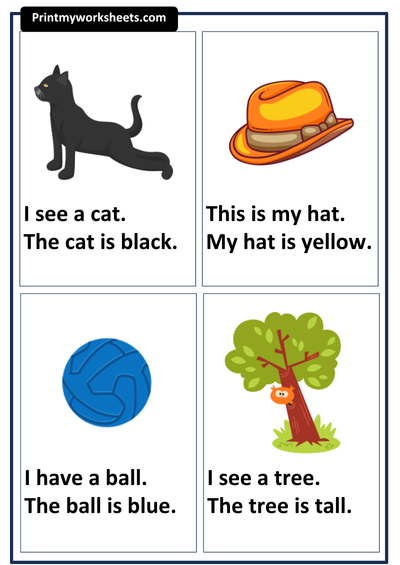
Kindergarten English Fluency Worksheets PDF | Free Downloadable
English Fluency Practice | Free Downloadable Kindergarten PDF Worksheet
Fluency is one of the foundational pillars of early literacy. This English Fluency Practice worksheet is carefully designed for Kindergarten and First Grade students across the US. Whether you are a homeschool parent, teacher, or tutor, this free downloadable PDF will support your young learners in building reading speed, expression, and comprehension skills.
Developed in alignment with early elementary English Language Arts standards, this fluency worksheet offers children the chance to practice common sight words, high-frequency sentences, and rhythmic patterns that improve automaticity in reading. The more fluent a child becomes, the easier it is to understand what they read, respond to questions, and build confidence in communication.
⭐ What’s Inside:
-
Repetitive sentence structures using sight words
-
Simple decodable sentences using CVC and word family patterns
-
Easy-to-read fluency strips for daily practice
-
Word list focus for high-frequency vocabulary
-
Mini reading passages with predictable structure
🎯 Why English Fluency Practice Matters:
Fluent readers can:
-
Decode words quickly and accurately
-
Read with expression and proper pacing
-
Understand what they read more effectively
-
Engage better in class and learning activities
Fluency isn’t just about speed—it’s about reading with meaning. That’s why this worksheet includes content that encourages oral practice, expression, and sight word retention.
👨🏫 Ideal For:
-
Homeschool parents looking for structured daily practice
-
Teachers integrating fluency into their literacy centers
-
ESL learners developing foundational reading confidence
-
Parents helping kids read aloud at home
Each worksheet is kid-friendly, printable, and can be reused as a weekly fluency warm-up. You can even cut out fluency strips and add them to flashcard rings or morning reading folders.
💡 Educational Benefits:
-
Increases sight word mastery
-
Improves oral reading fluency
-
Boosts comprehension through repetition
-
Strengthens sentence structure awareness
-
Builds confidence and speaking clarity
This free worksheet helps children transition from decoding to fluent reading, a vital step toward achieving literacy success. Download your free copy and get started today!
Download and print today to give your little learners the head start they deserve!
You may also like :
[gallery ids="5199,5088,5212"] Kindergarten English Fluency Worksheets PDF | Free Downloadable
English Fluency Practice | Free Downloadable Kindergarten PDF Worksheet
Fluency is one of the foundational pillars of early literacy. This English Fluency Practice worksheet is carefully designed for Kindergarten and First Grade students across the US. Whether you are a homeschool parent, teacher, or tutor, this free downloadable PDF will support your young learners in building reading speed, expression, and comprehension skills.
Developed in alignment with early elementary English Language Arts standards, this fluency worksheet offers children the chance to practice common sight words, high-frequency sentences, and rhythmic patterns that improve automaticity in reading. The more fluent a child becomes, the easier it is to understand what they read, respond to questions, and build confidence in communication.
⭐ What’s Inside:
-
Repetitive sentence structures using sight words
-
Simple decodable sentences using CVC and word family patterns
-
Easy-to-read fluency strips for daily practice
-
Word list focus for high-frequency vocabulary
-
Mini reading passages with predictable structure
🎯 Why English Fluency Practice Matters:
Fluent readers can:
-
Decode words quickly and accurately
-
Read with expression and proper pacing
-
Understand what they read more effectively
-
Engage better in class and learning activities
Fluency isn’t just about speed—it’s about reading with meaning. That’s why this worksheet includes content that encourages oral practice, expression, and sight word retention.
👨🏫 Ideal For:
-
Homeschool parents looking for structured daily practice
-
Teachers integrating fluency into their literacy centers
-
ESL learners developing foundational reading confidence
-
Parents helping kids read aloud at home
Each worksheet is kid-friendly, printable, and can be reused as a weekly fluency warm-up. You can even cut out fluency strips and add them to flashcard rings or morning reading folders.
💡 Educational Benefits:
-
Increases sight word mastery
-
Improves oral reading fluency
-
Boosts comprehension through repetition
-
Strengthens sentence structure awareness
-
Builds confidence and speaking clarity
This free worksheet helps children transition from decoding to fluent reading, a vital step toward achieving literacy success. Download your free copy and get started today!
Download and print today to give your little learners the head start they deserve!
You may also like :
[gallery ids="5199,5088,5212"]

Kindergarten English Spiral Review Worksheets PDF – Build Strong Early Literacy Skills
Kindergarten English Spiral Review Worksheets PDF
These worksheets are designed to help young learners build strong early language skills through consistent and engaging practice. These free downloadable PDF worksheets are perfect for US homeschool parents, kindergarten teachers, and children who benefit from repeated exposure to essential English concepts.
A spiral review approach allows students to revisit key skills regularly, helping them retain what they’ve learned over time. These worksheets cover foundational English topics such as letter recognition, phonics, sight words, basic sentence structure, and early grammar skills in a gradual, age-appropriate way. Repetition builds confidence and reduces learning gaps.
Learning English skills in kindergarten is critical because it lays the foundation for reading, writing, and communication in later grades. Spiral review worksheets help children strengthen memory, improve focus, and develop language fluency through short, manageable activities.
Each worksheet includes fun, hands-on exercises like tracing, matching, circling, and simple writing tasks to keep young learners engaged. The printable PDF format makes them ideal for classroom lessons, homeschooling routines, morning work, or independent practice at home.
Whether reinforcing daily lessons or supporting early learners, these worksheets provide a stress-free, effective, and completely free way to build essential English skills aligned with US kindergarten standards.
You may also like:
[gallery ids="6638,6603,6329"] Kindergarten English Spiral Review Worksheets PDF – Build Strong Early Literacy Skills
Kindergarten English Spiral Review Worksheets PDF
These worksheets are designed to help young learners build strong early language skills through consistent and engaging practice. These free downloadable PDF worksheets are perfect for US homeschool parents, kindergarten teachers, and children who benefit from repeated exposure to essential English concepts.
A spiral review approach allows students to revisit key skills regularly, helping them retain what they’ve learned over time. These worksheets cover foundational English topics such as letter recognition, phonics, sight words, basic sentence structure, and early grammar skills in a gradual, age-appropriate way. Repetition builds confidence and reduces learning gaps.
Learning English skills in kindergarten is critical because it lays the foundation for reading, writing, and communication in later grades. Spiral review worksheets help children strengthen memory, improve focus, and develop language fluency through short, manageable activities.
Each worksheet includes fun, hands-on exercises like tracing, matching, circling, and simple writing tasks to keep young learners engaged. The printable PDF format makes them ideal for classroom lessons, homeschooling routines, morning work, or independent practice at home.
Whether reinforcing daily lessons or supporting early learners, these worksheets provide a stress-free, effective, and completely free way to build essential English skills aligned with US kindergarten standards.
You may also like:
[gallery ids="6638,6603,6329"]
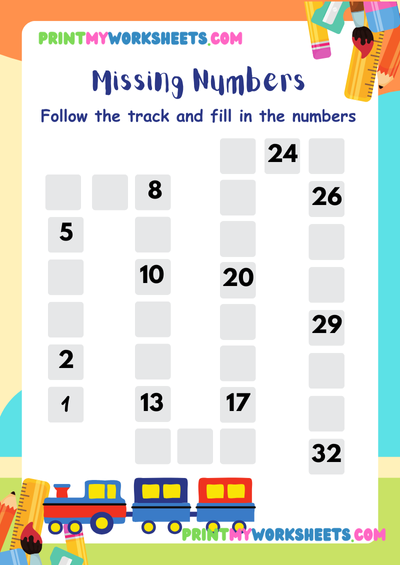
Kindergarten Missing Numbers Worksheets PDF – Easy Home Math Review Pack
Kindergarten Missing Numbers Worksheets PDF
The Kindergarten Missing Numbers Worksheets PDF is a helpful learning resource designed to support early math development in young learners. These free printable worksheets are ideal for U.S. parents, kindergarten teachers, and homeschool families who want to strengthen number recognition and counting skills through engaging activities.
In kindergarten, children begin developing a strong understanding of numbers and counting sequences. Learning to identify missing numbers helps students recognize number patterns and understand how numbers progress in order. This skill is an important step toward building early mathematical confidence and problem-solving abilities.
The Kindergarten Missing Numbers Worksheets PDF provides structured practice that allows students to complete number sequences by identifying the numbers that are missing. Through simple and visually clear exercises, children learn to recognize number patterns, practice counting forward, and improve their ability to organize numbers logically. These activities support early math learning while making practice enjoyable and accessible for young students.
What Students Will Learn?
Missing number worksheets help kindergarten students strengthen their understanding of number sequences and counting patterns. These activities introduce basic numerical order in a simple and engaging format that is appropriate for early learners.
Students practice identifying numbers that belong within a sequence. For example, they may see a series such as 1, 2, __, 4 and determine that the missing number is 3. This type of exercise helps children understand how numbers progress in order.
The worksheets also reinforce number recognition. By repeatedly observing and filling in numbers within sequences, students become more familiar with individual numbers and their placement in counting patterns.
Some activities may include visual aids such as number lines, pictures, or counting objects that help children connect numbers with quantities. These visuals support conceptual understanding and make the learning process more engaging.
Completing missing number activities also encourages logical thinking. Students must analyze the sequence and determine which number correctly completes the pattern.
With clear instructions and age-appropriate exercises, these worksheets support structured practice that helps kindergarten learners build strong early math skills.
Educational Value & Skill Development
The Kindergarten Missing Numbers Worksheets PDF supports several key areas of early childhood learning, particularly in mathematics and cognitive development.
One of the most important benefits is strengthening number sense. Number sense refers to a child’s ability to understand how numbers relate to one another. Missing number exercises help students recognize how numbers increase and follow predictable patterns.
These activities also improve counting skills. When children fill in missing numbers, they practice counting forward and understanding the correct order of numbers.
Another benefit is enhanced problem-solving ability. Students must observe the sequence, think carefully about the pattern, and determine the correct number that completes the series.
The Kindergarten Missing Numbers Worksheets PDF also helps improve concentration and attention to detail. Children must focus on the sequence and consider which number fits in the correct position.
These worksheets also support early math confidence. When children successfully complete number patterns, they gain confidence in their mathematical abilities and become more motivated to continue learning.
With repeated practice, young learners develop a stronger understanding of number relationships, which supports more advanced math concepts in future grades.
Why Focus on Missing Numbers?
Learning to identify missing numbers is a fundamental part of early math instruction. It helps children understand the structure and order of numbers, which is an essential foundation for later mathematical learning.
For kindergarten students, recognizing number sequences helps build familiarity with counting patterns. When children practice identifying missing numbers, they learn how numbers relate to each other in a logical progression.
This skill also supports early addition and subtraction concepts. Understanding that numbers follow a predictable order helps children later understand how numbers increase or decrease in simple calculations.
Missing number activities also promote pattern recognition. Students observe how numbers change within a sequence and determine the correct number needed to complete it.
Repetition is especially important in early math learning. Practicing number sequences regularly helps students develop automatic recognition of counting patterns.
Early math standards in the United States emphasize number recognition, counting, and sequencing in kindergarten. Providing structured practice with missing number exercises helps students build the skills needed for future math success.
How to Use These Worksheets?
The Kindergarten Missing Numbers Worksheets PDF can be used in a variety of learning environments, including classrooms, homeschool settings, and small-group math instruction.
Teachers may include these worksheets as part of math centers or daily number practice activities. Students can complete number sequences independently or work with classmates to identify missing numbers.
In small groups, teachers can guide students through number patterns and discuss how numbers increase step by step. Asking questions such as “What number comes next?” helps students think carefully about the sequence.
Parents who homeschool can use the worksheets as part of daily math routines. Children may practice counting aloud while filling in missing numbers to reinforce understanding.
Because the worksheets are available as a free printable PDF, they can be downloaded and printed easily for classroom or home use. Teachers and parents may reuse the worksheets for review activities or additional practice.
These worksheets are also suitable for independent learning. The clear layout and simple instructions allow young learners to practice number sequencing at their own pace.
Related Worksheets / Extensions:
You may also like:
• Kindergarten counting worksheets
• Number recognition worksheets for early learners
• Kindergarten number sequencing worksheets
• Early math pattern worksheets
• Simple addition worksheets for kindergarten
The Kindergarten Missing Numbers Worksheets PDF works well alongside other early math activities that focus on counting, number recognition, and pattern identification. Combining these exercises helps children build a stronger understanding of how numbers function within sequences.
Teachers and parents can also extend learning by using number lines, counting objects, or everyday activities that involve numbers. Encouraging children to count items, identify numbers in their environment, or create their own number sequences helps reinforce the concepts practiced in worksheets.
With regular practice, kindergarten students become more comfortable recognizing number patterns and identifying missing numbers. These foundational skills prepare them for more advanced math topics as they progress through elementary school.
You may also like :
[gallery ids="6329,5914,5913"] Kindergarten Missing Numbers Worksheets PDF – Easy Home Math Review Pack
Kindergarten Missing Numbers Worksheets PDF
The Kindergarten Missing Numbers Worksheets PDF is a helpful learning resource designed to support early math development in young learners. These free printable worksheets are ideal for U.S. parents, kindergarten teachers, and homeschool families who want to strengthen number recognition and counting skills through engaging activities.
In kindergarten, children begin developing a strong understanding of numbers and counting sequences. Learning to identify missing numbers helps students recognize number patterns and understand how numbers progress in order. This skill is an important step toward building early mathematical confidence and problem-solving abilities.
The Kindergarten Missing Numbers Worksheets PDF provides structured practice that allows students to complete number sequences by identifying the numbers that are missing. Through simple and visually clear exercises, children learn to recognize number patterns, practice counting forward, and improve their ability to organize numbers logically. These activities support early math learning while making practice enjoyable and accessible for young students.
What Students Will Learn?
Missing number worksheets help kindergarten students strengthen their understanding of number sequences and counting patterns. These activities introduce basic numerical order in a simple and engaging format that is appropriate for early learners.
Students practice identifying numbers that belong within a sequence. For example, they may see a series such as 1, 2, __, 4 and determine that the missing number is 3. This type of exercise helps children understand how numbers progress in order.
The worksheets also reinforce number recognition. By repeatedly observing and filling in numbers within sequences, students become more familiar with individual numbers and their placement in counting patterns.
Some activities may include visual aids such as number lines, pictures, or counting objects that help children connect numbers with quantities. These visuals support conceptual understanding and make the learning process more engaging.
Completing missing number activities also encourages logical thinking. Students must analyze the sequence and determine which number correctly completes the pattern.
With clear instructions and age-appropriate exercises, these worksheets support structured practice that helps kindergarten learners build strong early math skills.
Educational Value & Skill Development
The Kindergarten Missing Numbers Worksheets PDF supports several key areas of early childhood learning, particularly in mathematics and cognitive development.
One of the most important benefits is strengthening number sense. Number sense refers to a child’s ability to understand how numbers relate to one another. Missing number exercises help students recognize how numbers increase and follow predictable patterns.
These activities also improve counting skills. When children fill in missing numbers, they practice counting forward and understanding the correct order of numbers.
Another benefit is enhanced problem-solving ability. Students must observe the sequence, think carefully about the pattern, and determine the correct number that completes the series.
The Kindergarten Missing Numbers Worksheets PDF also helps improve concentration and attention to detail. Children must focus on the sequence and consider which number fits in the correct position.
These worksheets also support early math confidence. When children successfully complete number patterns, they gain confidence in their mathematical abilities and become more motivated to continue learning.
With repeated practice, young learners develop a stronger understanding of number relationships, which supports more advanced math concepts in future grades.
Why Focus on Missing Numbers?
Learning to identify missing numbers is a fundamental part of early math instruction. It helps children understand the structure and order of numbers, which is an essential foundation for later mathematical learning.
For kindergarten students, recognizing number sequences helps build familiarity with counting patterns. When children practice identifying missing numbers, they learn how numbers relate to each other in a logical progression.
This skill also supports early addition and subtraction concepts. Understanding that numbers follow a predictable order helps children later understand how numbers increase or decrease in simple calculations.
Missing number activities also promote pattern recognition. Students observe how numbers change within a sequence and determine the correct number needed to complete it.
Repetition is especially important in early math learning. Practicing number sequences regularly helps students develop automatic recognition of counting patterns.
Early math standards in the United States emphasize number recognition, counting, and sequencing in kindergarten. Providing structured practice with missing number exercises helps students build the skills needed for future math success.
How to Use These Worksheets?
The Kindergarten Missing Numbers Worksheets PDF can be used in a variety of learning environments, including classrooms, homeschool settings, and small-group math instruction.
Teachers may include these worksheets as part of math centers or daily number practice activities. Students can complete number sequences independently or work with classmates to identify missing numbers.
In small groups, teachers can guide students through number patterns and discuss how numbers increase step by step. Asking questions such as “What number comes next?” helps students think carefully about the sequence.
Parents who homeschool can use the worksheets as part of daily math routines. Children may practice counting aloud while filling in missing numbers to reinforce understanding.
Because the worksheets are available as a free printable PDF, they can be downloaded and printed easily for classroom or home use. Teachers and parents may reuse the worksheets for review activities or additional practice.
These worksheets are also suitable for independent learning. The clear layout and simple instructions allow young learners to practice number sequencing at their own pace.
Related Worksheets / Extensions:
You may also like:
• Kindergarten counting worksheets
• Number recognition worksheets for early learners
• Kindergarten number sequencing worksheets
• Early math pattern worksheets
• Simple addition worksheets for kindergarten
The Kindergarten Missing Numbers Worksheets PDF works well alongside other early math activities that focus on counting, number recognition, and pattern identification. Combining these exercises helps children build a stronger understanding of how numbers function within sequences.
Teachers and parents can also extend learning by using number lines, counting objects, or everyday activities that involve numbers. Encouraging children to count items, identify numbers in their environment, or create their own number sequences helps reinforce the concepts practiced in worksheets.
With regular practice, kindergarten students become more comfortable recognizing number patterns and identifying missing numbers. These foundational skills prepare them for more advanced math topics as they progress through elementary school.
You may also like :
[gallery ids="6329,5914,5913"]
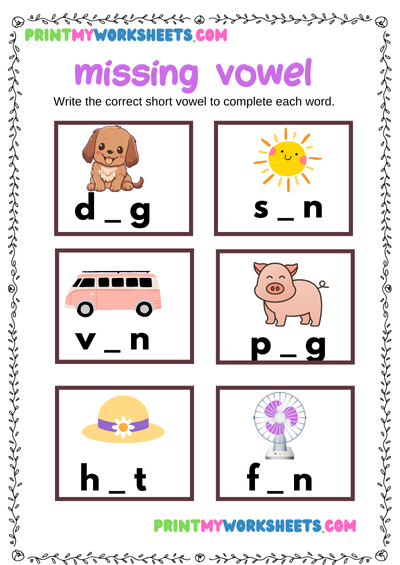
Kindergarten Missing Vowels Worksheets PDF – Phonics Practice with Answer Key
Kindergarten Missing Vowels Worksheets PDF
Early literacy skills begin with recognizing letters and understanding how they work together to form words. The Kindergarten Missing Vowels Worksheets PDF helps young learners practice identifying and completing words by filling in the correct vowel sounds. This engaging activity is designed for U.S. parents, teachers, and homeschool families who want to support early reading development in a structured and enjoyable way.
At the kindergarten level, children are developing foundational phonics skills that allow them to recognize simple words and understand how letters represent sounds. Vowels play a key role in this process because they appear in almost every word and influence pronunciation. These worksheets give students the opportunity to identify missing vowel sounds and complete familiar words.
The Kindergarten Missing Vowels Worksheets PDF provides simple word-building exercises that strengthen phonemic awareness, spelling confidence, and early reading abilities. By completing words with the correct vowels, children practice decoding language patterns while building the confidence they need to progress toward independent reading.
What Students Will Learn?
Missing vowel worksheets introduce kindergarten learners to one of the most important elements of early phonics: recognizing vowel sounds within simple words. These activities help students understand how vowels contribute to word formation and pronunciation.
Students practice identifying missing letters in simple three- or four-letter words. They are asked to look at a partially completed word and determine which vowel belongs in the blank space. This encourages children to think about how the word sounds and which vowel completes it correctly.
Many worksheets use familiar objects, animals, or everyday vocabulary words. These visuals help students connect the picture with the word, making the activity easier to understand and more engaging.
Children also develop spelling awareness as they practice completing words such as “c_t,” “d_g,” or “b_t.” Through repeated exposure, students begin recognizing common phonics patterns and vowel placements.
These exercises also strengthen phonemic awareness, which is the ability to hear and manipulate sounds within words. When children listen to a word and determine the missing vowel, they are actively building the skills required for reading fluency.
Over time, students gain greater confidence recognizing words and understanding how vowels function within them.
Educational Value & Skill Development
The Kindergarten Missing Vowels Worksheets PDF supports several important areas of early literacy development.
One of the most valuable benefits is phonics awareness. Kindergarten students are learning how letters represent sounds, and vowel recognition plays a major role in this process. Practicing missing vowel activities helps children hear and identify vowel sounds within words.
These worksheets also strengthen early reading skills. When students learn to recognize patterns in simple words, they begin decoding new words more easily. This skill becomes essential as reading tasks grow more complex in later grades.
Another important area of development is spelling awareness. Filling in missing vowels requires students to analyze the structure of a word and determine which letter fits correctly.
The Kindergarten Missing Vowels Worksheets PDF also encourages independent problem solving. Students must think carefully about each word and use their phonics knowledge to complete it correctly.
In addition, these worksheets support visual recognition and concentration. Students examine each word carefully, identify missing letters, and connect them with familiar vocabulary.
Through repeated practice, children build the foundational literacy skills that prepare them for reading, writing, and spelling activities in elementary school.
Why Focus on Missing Vowels?
Understanding vowels is a critical part of early reading development. While consonants often define the structure of words, vowels provide the sounds that allow words to be pronounced correctly.
Young learners often find vowels challenging because they appear in different positions and may represent different sounds. Practicing missing vowel activities helps children focus specifically on recognizing and using these important letters.
By identifying the missing vowel in a word, students develop phonemic awareness. They learn to listen for sounds within words and connect those sounds with specific letters.
These activities also reinforce common word patterns used in early phonics instruction. Words such as “cat,” “dog,” and “sun” help children recognize simple vowel sounds and develop decoding skills.
Repetition is an important part of early learning. Practicing vowel recognition regularly helps students remember patterns and apply them when reading new words.
These skills align with early literacy standards used in kindergarten classrooms across the United States, which emphasize phonics development, sound recognition, and basic word construction.
How to Use These Worksheets?
The Kindergarten Missing Vowels Worksheets PDF can be used in many different learning environments, including classrooms, homeschool lessons, and small group instruction.
Teachers often incorporate these worksheets into phonics practice sessions. Students can complete the activities individually or work together to identify the correct vowel for each word.
In small group settings, educators may guide students through the worksheet by sounding out each word together. This approach helps reinforce phonics instruction and encourages discussion about vowel sounds.
Parents who homeschool can use the worksheets as part of daily reading practice. Children may say the word aloud, listen carefully to its sound, and choose the vowel that completes it correctly.
Because the worksheets are provided as a free printable PDF, they can be downloaded quickly and printed whenever needed. Teachers may use them for literacy centers, early reading practice, or review sessions.
These worksheets can also serve as quiet independent work activities. Students can complete them at their own pace while practicing important phonics skills.
Related Worksheets / Extensions:
Kindergarten Missing Vowels Worksheets PDF – Phonics Practice with Answer Key
Kindergarten Missing Vowels Worksheets PDF
Early literacy skills begin with recognizing letters and understanding how they work together to form words. The Kindergarten Missing Vowels Worksheets PDF helps young learners practice identifying and completing words by filling in the correct vowel sounds. This engaging activity is designed for U.S. parents, teachers, and homeschool families who want to support early reading development in a structured and enjoyable way.
At the kindergarten level, children are developing foundational phonics skills that allow them to recognize simple words and understand how letters represent sounds. Vowels play a key role in this process because they appear in almost every word and influence pronunciation. These worksheets give students the opportunity to identify missing vowel sounds and complete familiar words.
The Kindergarten Missing Vowels Worksheets PDF provides simple word-building exercises that strengthen phonemic awareness, spelling confidence, and early reading abilities. By completing words with the correct vowels, children practice decoding language patterns while building the confidence they need to progress toward independent reading.
What Students Will Learn?
Missing vowel worksheets introduce kindergarten learners to one of the most important elements of early phonics: recognizing vowel sounds within simple words. These activities help students understand how vowels contribute to word formation and pronunciation.
Students practice identifying missing letters in simple three- or four-letter words. They are asked to look at a partially completed word and determine which vowel belongs in the blank space. This encourages children to think about how the word sounds and which vowel completes it correctly.
Many worksheets use familiar objects, animals, or everyday vocabulary words. These visuals help students connect the picture with the word, making the activity easier to understand and more engaging.
Children also develop spelling awareness as they practice completing words such as “c_t,” “d_g,” or “b_t.” Through repeated exposure, students begin recognizing common phonics patterns and vowel placements.
These exercises also strengthen phonemic awareness, which is the ability to hear and manipulate sounds within words. When children listen to a word and determine the missing vowel, they are actively building the skills required for reading fluency.
Over time, students gain greater confidence recognizing words and understanding how vowels function within them.
Educational Value & Skill Development
The Kindergarten Missing Vowels Worksheets PDF supports several important areas of early literacy development.
One of the most valuable benefits is phonics awareness. Kindergarten students are learning how letters represent sounds, and vowel recognition plays a major role in this process. Practicing missing vowel activities helps children hear and identify vowel sounds within words.
These worksheets also strengthen early reading skills. When students learn to recognize patterns in simple words, they begin decoding new words more easily. This skill becomes essential as reading tasks grow more complex in later grades.
Another important area of development is spelling awareness. Filling in missing vowels requires students to analyze the structure of a word and determine which letter fits correctly.
The Kindergarten Missing Vowels Worksheets PDF also encourages independent problem solving. Students must think carefully about each word and use their phonics knowledge to complete it correctly.
In addition, these worksheets support visual recognition and concentration. Students examine each word carefully, identify missing letters, and connect them with familiar vocabulary.
Through repeated practice, children build the foundational literacy skills that prepare them for reading, writing, and spelling activities in elementary school.
Why Focus on Missing Vowels?
Understanding vowels is a critical part of early reading development. While consonants often define the structure of words, vowels provide the sounds that allow words to be pronounced correctly.
Young learners often find vowels challenging because they appear in different positions and may represent different sounds. Practicing missing vowel activities helps children focus specifically on recognizing and using these important letters.
By identifying the missing vowel in a word, students develop phonemic awareness. They learn to listen for sounds within words and connect those sounds with specific letters.
These activities also reinforce common word patterns used in early phonics instruction. Words such as “cat,” “dog,” and “sun” help children recognize simple vowel sounds and develop decoding skills.
Repetition is an important part of early learning. Practicing vowel recognition regularly helps students remember patterns and apply them when reading new words.
These skills align with early literacy standards used in kindergarten classrooms across the United States, which emphasize phonics development, sound recognition, and basic word construction.
How to Use These Worksheets?
The Kindergarten Missing Vowels Worksheets PDF can be used in many different learning environments, including classrooms, homeschool lessons, and small group instruction.
Teachers often incorporate these worksheets into phonics practice sessions. Students can complete the activities individually or work together to identify the correct vowel for each word.
In small group settings, educators may guide students through the worksheet by sounding out each word together. This approach helps reinforce phonics instruction and encourages discussion about vowel sounds.
Parents who homeschool can use the worksheets as part of daily reading practice. Children may say the word aloud, listen carefully to its sound, and choose the vowel that completes it correctly.
Because the worksheets are provided as a free printable PDF, they can be downloaded quickly and printed whenever needed. Teachers may use them for literacy centers, early reading practice, or review sessions.
These worksheets can also serve as quiet independent work activities. Students can complete them at their own pace while practicing important phonics skills.
Related Worksheets / Extensions:


Kindergarten No-Prep Winter Math Worksheets PDF – Build Early Number Skills This Season
Kindergarten No-Prep Winter Math Worksheets PDF
These worksheets are designed to make math learning easy, engaging, and stress-free for young learners. These free downloadable PDF worksheets are perfect for US homeschool parents, kindergarten teachers, and families looking for simple, effective math practice during the winter season.
The NO-PREP format means teachers and parents can print and use the worksheets instantly—no cutting, laminating, or extra materials required. This packet focuses on essential kindergarten math skills such as number recognition, counting, comparing numbers, simple addition and subtraction, shapes, and patterns, all presented with fun winter-themed visuals.
Learning math through a winter-themed back-to-school packet helps re-engage students after breaks and supports smooth transitions back into classroom routines. Seasonal themes keep children motivated while reinforcing core math concepts through repetition and hands-on practice.
These worksheets also help build problem-solving skills, number sense, and confidence in early math. Clear instructions and age-appropriate activities make them ideal for independent work, math centers, homework, or small-group instruction.
The printable PDF format ensures flexibility for classrooms and homeschooling environments. Whether reinforcing daily lessons or providing extra winter practice, this NO-PREP math packet offers a practical, engaging, and completely free resource aligned with US kindergarten math standards.
You may also like:
[gallery ids="6329,6689,6588"] Kindergarten No-Prep Winter Math Worksheets PDF – Build Early Number Skills This Season
Kindergarten No-Prep Winter Math Worksheets PDF
These worksheets are designed to make math learning easy, engaging, and stress-free for young learners. These free downloadable PDF worksheets are perfect for US homeschool parents, kindergarten teachers, and families looking for simple, effective math practice during the winter season.
The NO-PREP format means teachers and parents can print and use the worksheets instantly—no cutting, laminating, or extra materials required. This packet focuses on essential kindergarten math skills such as number recognition, counting, comparing numbers, simple addition and subtraction, shapes, and patterns, all presented with fun winter-themed visuals.
Learning math through a winter-themed back-to-school packet helps re-engage students after breaks and supports smooth transitions back into classroom routines. Seasonal themes keep children motivated while reinforcing core math concepts through repetition and hands-on practice.
These worksheets also help build problem-solving skills, number sense, and confidence in early math. Clear instructions and age-appropriate activities make them ideal for independent work, math centers, homework, or small-group instruction.
The printable PDF format ensures flexibility for classrooms and homeschooling environments. Whether reinforcing daily lessons or providing extra winter practice, this NO-PREP math packet offers a practical, engaging, and completely free resource aligned with US kindergarten math standards.
You may also like:
[gallery ids="6329,6689,6588"]
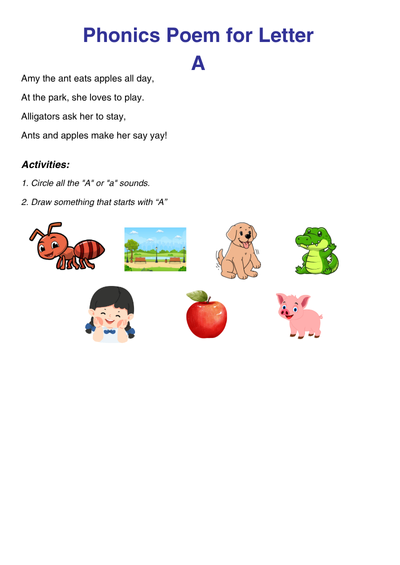
Kindergarten Phonics Poems A–Z PDF | Free Downloadable
Looking for an effective and enjoyable way to introduce letter sounds to your early learner? Our Kindergarten Phonics Poems A–Z PDF for Kindergarten is the perfect tool to bring phonics to life with rhythm and rhyme.
Each letter of the alphabet is represented with a short, catchy poem that features a key phonics sound and a focus word, like "A is for Apple that I like to eat" or "B is for Ball I kick with my feet." This format encourages sound association, early decoding, and memory retention, all critical for strong reading foundations.
These worksheets are aligned with early literacy objectives and ideal for:
-
Daily phonics warm-ups
-
Independent practice
-
Small group literacy centers
-
Morning journals or homework
-
Homeschool phonics lessons
This phonics pack reinforces:
-
Letter identification
-
Phonemic awareness
-
Vocabulary building
-
Reading fluency through repetition
Each poem is followed by:
-
A tracing activity (e.g., trace the letter A)
-
A coloring section (e.g., color the apple)
-
A sound identification question (e.g., circle the word that starts with A)
✅ Why Kids Should Learn Phonics with Poems:
🗣️ Rhythm helps retention – Rhymes make sounds easier to remember
📚 Reinforces letter-sound relationships
🧠 Improves listening skills and vocabulary
🎓 Builds phonemic awareness—a cornerstone of early reading success
🎨 Encourages creativity through reading, drawing, and interaction
✅ Who Can Use This:
-
Kindergarten teachers in U.S. classrooms
-
Homeschooling parents
-
Reading tutors
-
ESL/ELL instructors
-
Daycare centers
✅ File Format & Compatibility:
🖨️ PDF format, 8.5" x 11" U.S. Letter size
🖍️ Black-and-white print-friendly
📥 Easy to download, save, and print
Download and print today to give your little learners the head start they deserve!
You may also like :
[gallery ids="4429,4434,4513"] Kindergarten Phonics Poems A–Z PDF | Free Downloadable
Looking for an effective and enjoyable way to introduce letter sounds to your early learner? Our Kindergarten Phonics Poems A–Z PDF for Kindergarten is the perfect tool to bring phonics to life with rhythm and rhyme.
Each letter of the alphabet is represented with a short, catchy poem that features a key phonics sound and a focus word, like "A is for Apple that I like to eat" or "B is for Ball I kick with my feet." This format encourages sound association, early decoding, and memory retention, all critical for strong reading foundations.
These worksheets are aligned with early literacy objectives and ideal for:
-
Daily phonics warm-ups
-
Independent practice
-
Small group literacy centers
-
Morning journals or homework
-
Homeschool phonics lessons
This phonics pack reinforces:
-
Letter identification
-
Phonemic awareness
-
Vocabulary building
-
Reading fluency through repetition
Each poem is followed by:
-
A tracing activity (e.g., trace the letter A)
-
A coloring section (e.g., color the apple)
-
A sound identification question (e.g., circle the word that starts with A)
✅ Why Kids Should Learn Phonics with Poems:
🗣️ Rhythm helps retention – Rhymes make sounds easier to remember
📚 Reinforces letter-sound relationships
🧠 Improves listening skills and vocabulary
🎓 Builds phonemic awareness—a cornerstone of early reading success
🎨 Encourages creativity through reading, drawing, and interaction
✅ Who Can Use This:
-
Kindergarten teachers in U.S. classrooms
-
Homeschooling parents
-
Reading tutors
-
ESL/ELL instructors
-
Daycare centers
✅ File Format & Compatibility:
🖨️ PDF format, 8.5" x 11" U.S. Letter size
🖍️ Black-and-white print-friendly
📥 Easy to download, save, and print
Download and print today to give your little learners the head start they deserve!
You may also like :
[gallery ids="4429,4434,4513"]
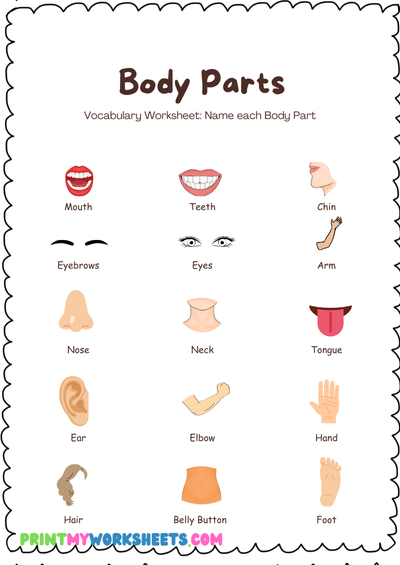
Kindergarten Science Body Parts Worksheet for Kids -Free Downloadable PDF
Kindergarten Science Body Parts Worksheet for Kids
Learning about the human body is an exciting and important part of early childhood education. The Kindergarten Science Body Parts Worksheet for Kids is designed to help young learners explore basic body parts through simple, engaging, and age-appropriate activities. This printable resource is ideal for U.S. parents, kindergarten teachers, and homeschool families who want to introduce science concepts in a fun and approachable way.
At the kindergarten level, children are naturally curious about how their bodies work and how different parts help them move, see, hear, and interact with the world. Body parts worksheets support early science learning while also strengthening vocabulary, observation skills, and confidence. With clear visuals and guided practice, students can recognize, name, and understand common body parts in a structured and supportive format that encourages active participation and discussion.
What Students Will Learn?
These worksheets focus on building foundational science knowledge by introducing children to common external body parts such as the head, eyes, ears, hands, legs, and feet. Students learn to identify and name body parts using simple words that align with kindergarten reading and comprehension levels.
Activities may include labeling pictures, matching body parts to their names, coloring, tracing, and drawing. These tasks help reinforce recognition while improving fine motor skills and visual awareness. Some pages encourage students to connect body parts with their functions, such as using eyes to see or hands to hold objects.
The worksheets support structured learning by presenting one concept at a time, allowing children to focus without feeling overwhelmed. Instructions are clear and easy to follow, making them suitable for independent practice or guided instruction. The content fits kindergarten expectations by combining science exploration with early literacy and hands-on learning.
Educational Value & Skill Development
The Free Kindergarten Science Body Parts Worksheet for Kids provides strong educational value by combining science instruction with early learning skill development. Academically, students build science vocabulary and develop an understanding of themselves and their physical features. This early exposure lays the groundwork for future lessons on health, biology, and personal care.
Cognitively, learning about body parts helps children develop observation skills and memory. Matching and labeling activities encourage attention to detail and logical thinking. These tasks also support language development as students learn to use correct terms when speaking or answering questions.
Confidence and independence grow as students successfully complete worksheets on their own. The predictable format allows children to feel comfortable with the tasks, which encourages repeated practice. Over time, these activities help students feel more confident discussing science topics and participating in classroom conversations, supporting long-term academic growth.
Why Focus on Science Body Parts?
Understanding body parts is an essential early science skill because it helps children become aware of their own bodies and how they function. In kindergarten, students are developing self-awareness and learning how to describe the world around them. Body parts lessons support this growth by connecting science concepts to everyday experiences.
Learning about the human body also supports health and safety awareness. Children who can identify body parts are better prepared to communicate needs, follow instructions, and participate in physical activities. Repetition and guided practice help reinforce understanding and build lasting knowledge.
These worksheets align with U.S. kindergarten science and health standards by encouraging observation, vocabulary development, and simple explanations. Focusing on body parts at this stage supports both academic learning and personal development.
How to Use These Worksheets?
These worksheets are flexible and easy to use in a variety of learning settings. In classrooms, teachers can include them in science centers, morning work, or thematic units about the human body. Worksheets can be completed individually or discussed as a group to encourage sharing and participation.
Homeschool families can use the worksheets as part of daily science lessons or combine them with hands-on activities such as singing songs, reading books, or pointing to body parts during movement games. The free printable PDF format makes it easy to print multiple copies.
The Free Kindergarten Science Body Parts Worksheet for Kids is also useful for small-group instruction, early finishers, or extra practice at home. Its simple layout supports independent learning while allowing adults to guide discussion when needed.
Related Worksheets / Extensions:
Students who enjoy learning about the human body may also benefit from worksheets on the five senses, healthy habits, or basic life science topics. Pairing body parts worksheets with songs, movement activities, or storybooks can help reinforce understanding.
The Free Kindergarten Science Body Parts Worksheet for Kids works well as part of a larger kindergarten science unit. Related worksheets and extensions encourage curiosity, hands-on exploration, and continued skill development across science and early learning subjects.
You may also like :
[gallery ids="5326,5212,5199"] Kindergarten Science Body Parts Worksheet for Kids -Free Downloadable PDF
Kindergarten Science Body Parts Worksheet for Kids
Learning about the human body is an exciting and important part of early childhood education. The Kindergarten Science Body Parts Worksheet for Kids is designed to help young learners explore basic body parts through simple, engaging, and age-appropriate activities. This printable resource is ideal for U.S. parents, kindergarten teachers, and homeschool families who want to introduce science concepts in a fun and approachable way.
At the kindergarten level, children are naturally curious about how their bodies work and how different parts help them move, see, hear, and interact with the world. Body parts worksheets support early science learning while also strengthening vocabulary, observation skills, and confidence. With clear visuals and guided practice, students can recognize, name, and understand common body parts in a structured and supportive format that encourages active participation and discussion.
What Students Will Learn?
These worksheets focus on building foundational science knowledge by introducing children to common external body parts such as the head, eyes, ears, hands, legs, and feet. Students learn to identify and name body parts using simple words that align with kindergarten reading and comprehension levels.
Activities may include labeling pictures, matching body parts to their names, coloring, tracing, and drawing. These tasks help reinforce recognition while improving fine motor skills and visual awareness. Some pages encourage students to connect body parts with their functions, such as using eyes to see or hands to hold objects.
The worksheets support structured learning by presenting one concept at a time, allowing children to focus without feeling overwhelmed. Instructions are clear and easy to follow, making them suitable for independent practice or guided instruction. The content fits kindergarten expectations by combining science exploration with early literacy and hands-on learning.
Educational Value & Skill Development
The Free Kindergarten Science Body Parts Worksheet for Kids provides strong educational value by combining science instruction with early learning skill development. Academically, students build science vocabulary and develop an understanding of themselves and their physical features. This early exposure lays the groundwork for future lessons on health, biology, and personal care.
Cognitively, learning about body parts helps children develop observation skills and memory. Matching and labeling activities encourage attention to detail and logical thinking. These tasks also support language development as students learn to use correct terms when speaking or answering questions.
Confidence and independence grow as students successfully complete worksheets on their own. The predictable format allows children to feel comfortable with the tasks, which encourages repeated practice. Over time, these activities help students feel more confident discussing science topics and participating in classroom conversations, supporting long-term academic growth.
Why Focus on Science Body Parts?
Understanding body parts is an essential early science skill because it helps children become aware of their own bodies and how they function. In kindergarten, students are developing self-awareness and learning how to describe the world around them. Body parts lessons support this growth by connecting science concepts to everyday experiences.
Learning about the human body also supports health and safety awareness. Children who can identify body parts are better prepared to communicate needs, follow instructions, and participate in physical activities. Repetition and guided practice help reinforce understanding and build lasting knowledge.
These worksheets align with U.S. kindergarten science and health standards by encouraging observation, vocabulary development, and simple explanations. Focusing on body parts at this stage supports both academic learning and personal development.
How to Use These Worksheets?
These worksheets are flexible and easy to use in a variety of learning settings. In classrooms, teachers can include them in science centers, morning work, or thematic units about the human body. Worksheets can be completed individually or discussed as a group to encourage sharing and participation.
Homeschool families can use the worksheets as part of daily science lessons or combine them with hands-on activities such as singing songs, reading books, or pointing to body parts during movement games. The free printable PDF format makes it easy to print multiple copies.
The Free Kindergarten Science Body Parts Worksheet for Kids is also useful for small-group instruction, early finishers, or extra practice at home. Its simple layout supports independent learning while allowing adults to guide discussion when needed.
Related Worksheets / Extensions:
Students who enjoy learning about the human body may also benefit from worksheets on the five senses, healthy habits, or basic life science topics. Pairing body parts worksheets with songs, movement activities, or storybooks can help reinforce understanding.
The Free Kindergarten Science Body Parts Worksheet for Kids works well as part of a larger kindergarten science unit. Related worksheets and extensions encourage curiosity, hands-on exploration, and continued skill development across science and early learning subjects.
You may also like :
[gallery ids="5326,5212,5199"]
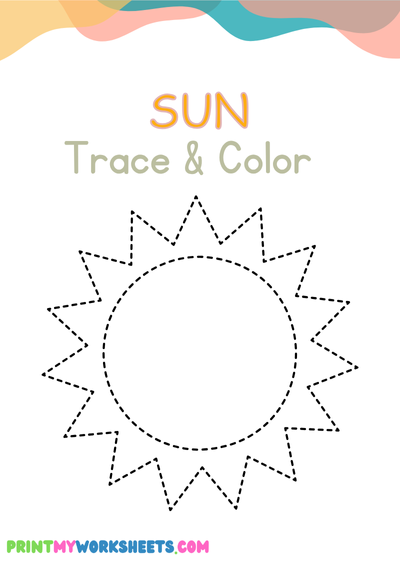
Kindergarten Science Solar System Worksheet for Kids – Free Downloadable PDF
Kindergarten Science Solar System Worksheet for Kids
Introducing young learners to science concepts helps spark curiosity and build a strong foundation for future learning. The Kindergarten Science Solar System Worksheet for Kids is designed to help children explore basic ideas about space in a simple and engaging way. This printable worksheet set is created for U.S. parents, kindergarten teachers, and homeschool families who want to introduce science topics through age-appropriate activities.
At the kindergarten level, students are naturally curious about the sun, moon, stars, and planets they hear about in stories and everyday conversations. Learning about the solar system helps children begin to understand the world beyond Earth while developing observation and thinking skills. These worksheets focus on introducing planets, the sun, and basic space vocabulary using clear visuals and simple prompts. With a child-friendly layout and structured activities, this free printable PDF makes early science learning approachable, helping young students build confidence and interest in exploring space.
What Students Will Learn?
These worksheets are designed to introduce kindergarten students to basic solar system concepts in a developmentally appropriate way. Children learn that the solar system includes the sun, planets, and other objects in space. Early activities help students recognize and name planets, identify the sun as the center of the solar system, and understand simple differences between Earth and other planets.
Activities may include matching pictures, coloring planets, tracing names, or identifying objects found in space. These tasks help students connect new vocabulary with visual representations, making abstract concepts easier to understand. Simple labeling exercises also support early reading and fine motor skills.
The worksheets support structured learning by using consistent formats and clear instructions. This predictability helps kindergarten students feel comfortable and focused as they complete each page. The content is aligned with age-appropriate expectations, emphasizing observation, vocabulary development, and curiosity rather than memorization. Through repeated exposure, children gain familiarity with solar system concepts while developing a positive attitude toward science learning.
Educational Value & Skill Development
Early science activities support more than content knowledge; they help develop important thinking and learning skills. The Kindergarten Science Solar System Worksheet for Kids encourages students to observe, compare, and talk about what they see. These foundational skills support scientific thinking and inquiry at an early age.
Academically, the worksheets introduce basic science vocabulary in a meaningful context. Children learn words such as sun, planet, and space while connecting them to images and simple explanations. This strengthens language development alongside science understanding.
Cognitively, activities such as matching and identifying objects support memory, attention, and visual discrimination. Coloring and tracing tasks help improve fine motor skills, which are essential for writing and classroom tasks.
The worksheets also support confidence and independence. When children complete pages successfully, they feel proud of their work and more willing to engage with new topics. Over time, these early experiences help students see science as interesting and accessible. This gradual skill development prepares children for more detailed science learning in later grades, including observation, questioning, and basic research skills.
Why Focus on Kindergarten Science Solar System?
Young children are naturally fascinated by the sky, the sun, and the idea of space. Introducing solar system concepts in kindergarten helps build on this curiosity in a structured and meaningful way. Learning about space encourages children to ask questions and think beyond their immediate environment.
Understanding basic solar system ideas also supports future science learning. As students move into higher grades, they will explore Earth science, astronomy, and physical science topics in more detail. Early exposure helps make these concepts feel familiar rather than overwhelming.
Repetition and guided practice are especially important for young learners. Worksheets provide consistent opportunities to revisit new ideas through simple activities. These practices align with early science learning standards used across the United States, which emphasize observation, exploration, and vocabulary development. By focusing on solar system concepts early, students develop curiosity and foundational knowledge that supports continued success in science.
How to Use These Worksheets?
These printable science worksheets are flexible and easy to use in a variety of learning environments. In homeschool settings, they can be included as part of a themed unit on space or used as a short science activity during the week. Parents can talk with their child about the pictures and encourage questions to deepen understanding.
In classrooms, teachers may use the worksheets during whole-group instruction, small-group activities, or independent work time. They also work well as part of a science center or as reinforcement after a read-aloud about space.
The Kindergarten Science Solar System Worksheet for Kids is provided as a free printable PDF, making it easy to download and reuse. Pages can be printed as needed or placed in sheet protectors for repeated use with crayons or dry-erase markers. This reusability allows educators and families to adapt the worksheets to different learning styles and routines.
Related Worksheets / Extensions:
To continue science learning, you may also explore worksheets focused on topics such as the sun and moon, day and night, seasons, or weather. These subjects connect naturally with solar system concepts and help children understand how space relates to daily life.
The Kindergarten Science Solar System Worksheet for Kids can also be paired with first-grade space worksheets as students progress. Extending learning across grade levels helps reinforce concepts and supports a smooth transition into more detailed science instruction. These related resources encourage curiosity, build confidence, and help young learners develop a lasting interest in science.
You may also like :
[gallery ids="5326,5199,5205"] Kindergarten Science Solar System Worksheet for Kids – Free Downloadable PDF
Kindergarten Science Solar System Worksheet for Kids
Introducing young learners to science concepts helps spark curiosity and build a strong foundation for future learning. The Kindergarten Science Solar System Worksheet for Kids is designed to help children explore basic ideas about space in a simple and engaging way. This printable worksheet set is created for U.S. parents, kindergarten teachers, and homeschool families who want to introduce science topics through age-appropriate activities.
At the kindergarten level, students are naturally curious about the sun, moon, stars, and planets they hear about in stories and everyday conversations. Learning about the solar system helps children begin to understand the world beyond Earth while developing observation and thinking skills. These worksheets focus on introducing planets, the sun, and basic space vocabulary using clear visuals and simple prompts. With a child-friendly layout and structured activities, this free printable PDF makes early science learning approachable, helping young students build confidence and interest in exploring space.
What Students Will Learn?
These worksheets are designed to introduce kindergarten students to basic solar system concepts in a developmentally appropriate way. Children learn that the solar system includes the sun, planets, and other objects in space. Early activities help students recognize and name planets, identify the sun as the center of the solar system, and understand simple differences between Earth and other planets.
Activities may include matching pictures, coloring planets, tracing names, or identifying objects found in space. These tasks help students connect new vocabulary with visual representations, making abstract concepts easier to understand. Simple labeling exercises also support early reading and fine motor skills.
The worksheets support structured learning by using consistent formats and clear instructions. This predictability helps kindergarten students feel comfortable and focused as they complete each page. The content is aligned with age-appropriate expectations, emphasizing observation, vocabulary development, and curiosity rather than memorization. Through repeated exposure, children gain familiarity with solar system concepts while developing a positive attitude toward science learning.
Educational Value & Skill Development
Early science activities support more than content knowledge; they help develop important thinking and learning skills. The Kindergarten Science Solar System Worksheet for Kids encourages students to observe, compare, and talk about what they see. These foundational skills support scientific thinking and inquiry at an early age.
Academically, the worksheets introduce basic science vocabulary in a meaningful context. Children learn words such as sun, planet, and space while connecting them to images and simple explanations. This strengthens language development alongside science understanding.
Cognitively, activities such as matching and identifying objects support memory, attention, and visual discrimination. Coloring and tracing tasks help improve fine motor skills, which are essential for writing and classroom tasks.
The worksheets also support confidence and independence. When children complete pages successfully, they feel proud of their work and more willing to engage with new topics. Over time, these early experiences help students see science as interesting and accessible. This gradual skill development prepares children for more detailed science learning in later grades, including observation, questioning, and basic research skills.
Why Focus on Kindergarten Science Solar System?
Young children are naturally fascinated by the sky, the sun, and the idea of space. Introducing solar system concepts in kindergarten helps build on this curiosity in a structured and meaningful way. Learning about space encourages children to ask questions and think beyond their immediate environment.
Understanding basic solar system ideas also supports future science learning. As students move into higher grades, they will explore Earth science, astronomy, and physical science topics in more detail. Early exposure helps make these concepts feel familiar rather than overwhelming.
Repetition and guided practice are especially important for young learners. Worksheets provide consistent opportunities to revisit new ideas through simple activities. These practices align with early science learning standards used across the United States, which emphasize observation, exploration, and vocabulary development. By focusing on solar system concepts early, students develop curiosity and foundational knowledge that supports continued success in science.
How to Use These Worksheets?
These printable science worksheets are flexible and easy to use in a variety of learning environments. In homeschool settings, they can be included as part of a themed unit on space or used as a short science activity during the week. Parents can talk with their child about the pictures and encourage questions to deepen understanding.
In classrooms, teachers may use the worksheets during whole-group instruction, small-group activities, or independent work time. They also work well as part of a science center or as reinforcement after a read-aloud about space.
The Kindergarten Science Solar System Worksheet for Kids is provided as a free printable PDF, making it easy to download and reuse. Pages can be printed as needed or placed in sheet protectors for repeated use with crayons or dry-erase markers. This reusability allows educators and families to adapt the worksheets to different learning styles and routines.
Related Worksheets / Extensions:
To continue science learning, you may also explore worksheets focused on topics such as the sun and moon, day and night, seasons, or weather. These subjects connect naturally with solar system concepts and help children understand how space relates to daily life.
The Kindergarten Science Solar System Worksheet for Kids can also be paired with first-grade space worksheets as students progress. Extending learning across grade levels helps reinforce concepts and supports a smooth transition into more detailed science instruction. These related resources encourage curiosity, build confidence, and help young learners develop a lasting interest in science.
You may also like :
[gallery ids="5326,5199,5205"]
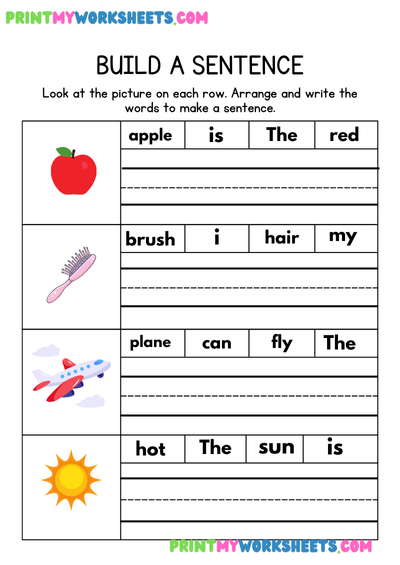
Kindergarten Sentence Building Worksheets PDF – Writing Practice with Answer Key
Kindergarten Sentence Building Worksheets PDF
The Kindergarten Sentence Building Worksheets PDF is designed to help young learners begin forming simple sentences with confidence. This free printable resource supports early literacy development by guiding children through structured sentence-building activities. It is especially useful for U.S. parents, kindergarten teachers, and homeschool families who want to strengthen foundational reading and writing skills.
At the kindergarten level, children are learning how words work together to express ideas. Sentence building helps students understand word order, grammar basics, and how language forms meaningful statements. Through guided practice, children begin to recognize how individual words combine to create complete sentences.
The Kindergarten Sentence Building Worksheets PDF introduces sentence structure in a simple and engaging way. Students practice arranging words, completing short sentences, and matching pictures with appropriate phrases. These activities make learning interactive while reinforcing early writing and reading skills. With regular practice, children gain confidence in constructing their own sentences and communicating ideas clearly.
What Students Will Learn?
Sentence building worksheets help kindergarten learners understand how words connect to form complete thoughts. At this stage, students are beginning to transition from recognizing individual words to using them in short written statements.
Through these activities, children practice identifying basic sentence components such as nouns, verbs, and descriptive words. They learn that sentences must follow a specific order to make sense. For example, students may practice arranging words like “The cat runs” rather than placing them randomly.
Many worksheets include picture-supported tasks that encourage students to match images with appropriate sentences. These activities help children understand how language relates to real-world objects and actions.
Students also practice reading short phrases and completing partially written sentences. These exercises strengthen both reading comprehension and writing skills.
The worksheets are designed with simple instructions and clear visual layouts to support early learners. With guided practice, children begin to recognize sentence patterns and gain confidence in expressing ideas through writing.
These activities also encourage language development by expanding vocabulary and helping students understand how different words contribute to meaning within a sentence.
Educational Value & Skill Development
The Kindergarten Sentence Building Worksheets PDF provides valuable support for developing early writing and reading skills. Sentence construction is an important step in helping children move from single-word recognition to complete written communication.
One of the key academic benefits is understanding sentence structure. When children practice arranging words into logical sequences, they develop an awareness of grammar and word order. This knowledge helps them read sentences more accurately and write their own ideas clearly.
These worksheets also strengthen reading comprehension. As students build sentences, they must think about how each word contributes to meaning. This encourages deeper engagement with language and improves understanding of written text.
Another benefit is vocabulary development. Sentence-building activities introduce new words in context, allowing students to learn how different terms function within a sentence.
The Kindergarten Sentence Building Worksheets PDF also supports cognitive development. Children practice sequencing, pattern recognition, and logical thinking while organizing words into meaningful statements.
Repeated practice builds confidence as students successfully construct sentences on their own. When children feel capable of expressing their ideas through writing, they become more motivated to engage with reading and language activities.
Why Focus on Sentence Building?
Sentence building is a crucial step in early literacy development because it teaches children how language works beyond individual words. Kindergarten students are beginning to understand that words combine to create meaningful messages.
By practicing sentence construction, children learn the importance of word order. They begin to recognize that rearranging words changes the meaning of a sentence. This awareness supports both reading comprehension and writing skills.
Sentence-building practice also helps students develop grammar awareness. Even simple sentences introduce concepts such as capitalization, punctuation, and subject-verb relationships.
Another important benefit is communication development. When children learn to form sentences, they gain the ability to express their thoughts, ideas, and experiences more clearly. This supports both academic learning and everyday communication.
Repetition plays an important role in mastering sentence structure. Regular practice helps children recognize patterns and become comfortable writing simple statements.
In the United States, early literacy standards emphasize sentence construction as part of kindergarten language development. Teaching children how to build sentences prepares them for more advanced writing tasks in later grades.How to Use These Worksheets?
The Kindergarten Sentence Building Worksheets PDF can be used in classrooms, homeschool settings, and small-group literacy instruction to support early writing practice.
Teachers can incorporate these worksheets into daily language arts activities. Students may complete sentence-building exercises during writing centers or reading stations. Teachers may guide students through each activity by discussing word order and sentence meaning.
In small groups, educators can encourage students to read the completed sentences aloud. This helps reinforce the connection between spoken language and written text.
Parents who homeschool can use these worksheets as part of a structured literacy routine. Children may begin by reading simple words and then arranging them into short sentences. Parents can support learning by discussing what each sentence means.
Because the worksheets are provided as a free printable PDF, they can be downloaded and printed quickly. This allows families and teachers to reuse the materials for practice sessions, homework activities, or review exercises.
The worksheets are also suitable for independent learning. Clear instructions and visual cues make it easy for young learners to follow along and complete the activities successfully.
Related Worksheets / Extensions:
Kindergarten Sentence Building Worksheets PDF – Writing Practice with Answer Key
Kindergarten Sentence Building Worksheets PDF
The Kindergarten Sentence Building Worksheets PDF is designed to help young learners begin forming simple sentences with confidence. This free printable resource supports early literacy development by guiding children through structured sentence-building activities. It is especially useful for U.S. parents, kindergarten teachers, and homeschool families who want to strengthen foundational reading and writing skills.
At the kindergarten level, children are learning how words work together to express ideas. Sentence building helps students understand word order, grammar basics, and how language forms meaningful statements. Through guided practice, children begin to recognize how individual words combine to create complete sentences.
The Kindergarten Sentence Building Worksheets PDF introduces sentence structure in a simple and engaging way. Students practice arranging words, completing short sentences, and matching pictures with appropriate phrases. These activities make learning interactive while reinforcing early writing and reading skills. With regular practice, children gain confidence in constructing their own sentences and communicating ideas clearly.
What Students Will Learn?
Sentence building worksheets help kindergarten learners understand how words connect to form complete thoughts. At this stage, students are beginning to transition from recognizing individual words to using them in short written statements.
Through these activities, children practice identifying basic sentence components such as nouns, verbs, and descriptive words. They learn that sentences must follow a specific order to make sense. For example, students may practice arranging words like “The cat runs” rather than placing them randomly.
Many worksheets include picture-supported tasks that encourage students to match images with appropriate sentences. These activities help children understand how language relates to real-world objects and actions.
Students also practice reading short phrases and completing partially written sentences. These exercises strengthen both reading comprehension and writing skills.
The worksheets are designed with simple instructions and clear visual layouts to support early learners. With guided practice, children begin to recognize sentence patterns and gain confidence in expressing ideas through writing.
These activities also encourage language development by expanding vocabulary and helping students understand how different words contribute to meaning within a sentence.
Educational Value & Skill Development
The Kindergarten Sentence Building Worksheets PDF provides valuable support for developing early writing and reading skills. Sentence construction is an important step in helping children move from single-word recognition to complete written communication.
One of the key academic benefits is understanding sentence structure. When children practice arranging words into logical sequences, they develop an awareness of grammar and word order. This knowledge helps them read sentences more accurately and write their own ideas clearly.
These worksheets also strengthen reading comprehension. As students build sentences, they must think about how each word contributes to meaning. This encourages deeper engagement with language and improves understanding of written text.
Another benefit is vocabulary development. Sentence-building activities introduce new words in context, allowing students to learn how different terms function within a sentence.
The Kindergarten Sentence Building Worksheets PDF also supports cognitive development. Children practice sequencing, pattern recognition, and logical thinking while organizing words into meaningful statements.
Repeated practice builds confidence as students successfully construct sentences on their own. When children feel capable of expressing their ideas through writing, they become more motivated to engage with reading and language activities.
Why Focus on Sentence Building?
Sentence building is a crucial step in early literacy development because it teaches children how language works beyond individual words. Kindergarten students are beginning to understand that words combine to create meaningful messages.
By practicing sentence construction, children learn the importance of word order. They begin to recognize that rearranging words changes the meaning of a sentence. This awareness supports both reading comprehension and writing skills.
Sentence-building practice also helps students develop grammar awareness. Even simple sentences introduce concepts such as capitalization, punctuation, and subject-verb relationships.
Another important benefit is communication development. When children learn to form sentences, they gain the ability to express their thoughts, ideas, and experiences more clearly. This supports both academic learning and everyday communication.
Repetition plays an important role in mastering sentence structure. Regular practice helps children recognize patterns and become comfortable writing simple statements.
In the United States, early literacy standards emphasize sentence construction as part of kindergarten language development. Teaching children how to build sentences prepares them for more advanced writing tasks in later grades.How to Use These Worksheets?
The Kindergarten Sentence Building Worksheets PDF can be used in classrooms, homeschool settings, and small-group literacy instruction to support early writing practice.
Teachers can incorporate these worksheets into daily language arts activities. Students may complete sentence-building exercises during writing centers or reading stations. Teachers may guide students through each activity by discussing word order and sentence meaning.
In small groups, educators can encourage students to read the completed sentences aloud. This helps reinforce the connection between spoken language and written text.
Parents who homeschool can use these worksheets as part of a structured literacy routine. Children may begin by reading simple words and then arranging them into short sentences. Parents can support learning by discussing what each sentence means.
Because the worksheets are provided as a free printable PDF, they can be downloaded and printed quickly. This allows families and teachers to reuse the materials for practice sessions, homework activities, or review exercises.
The worksheets are also suitable for independent learning. Clear instructions and visual cues make it easy for young learners to follow along and complete the activities successfully.
Related Worksheets / Extensions:
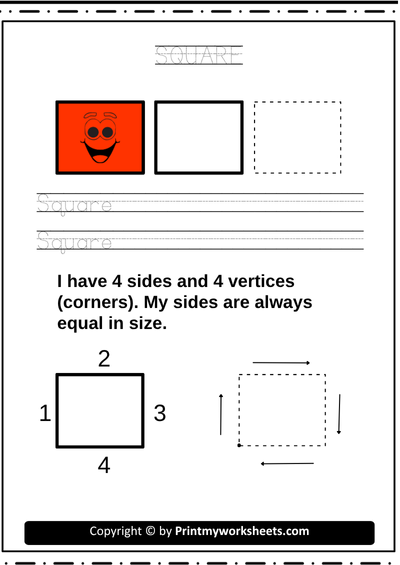
Kindergarten Shapes Worksheets PDF | Free Downloadable
Kindergarten Shapes Worksheets PDF
Learning about shapes is one of the first and most important math skills children develop in kindergarten. The Kindergarten Shapes Worksheets PDF is designed to introduce young learners to basic geometric shapes through engaging, age-appropriate activities. This free printable resource is ideal for U.S. parents, classroom teachers, and homeschool families looking to build a strong early math foundation.
In kindergarten, children begin recognizing and describing shapes they see in their everyday environment, such as circles, squares, triangles, and rectangles. These worksheets support that learning by providing structured practice that is both visual and hands-on. By working with shapes regularly, students strengthen observation skills, vocabulary, and early problem-solving abilities. The worksheets are easy to use, developmentally appropriate, and designed to help children feel confident as they explore math concepts in a fun and supportive way.
What Students Will Learn?
These worksheets help kindergarten students develop a clear understanding of basic shapes and how they appear in the world around them. Children practice identifying common shapes, matching shapes, and distinguishing between different forms based on size and orientation. Activities may include tracing shapes, coloring specific shapes, and finding shapes within pictures.
Students also begin learning shape-related vocabulary, such as sides, corners, and curves, in a simple and accessible way. Worksheets are structured to encourage focus and repetition, which is essential at this age. Each activity builds upon previous skills, allowing children to gradually improve recognition and confidence.
The activities are aligned with kindergarten-level expectations and designed to hold young learners’ attention without overwhelming them. Clear instructions and consistent layouts help children understand what is expected, supporting independent work as well as guided instruction with an adult.
Educational Value & Skill Development
The Kindergarten Shapes Worksheets PDF provides strong educational value by supporting both math readiness and overall cognitive development. Academically, shape recognition is a key component of early geometry and helps prepare students for more advanced math concepts in later grades, such as measurement and spatial reasoning.
Cognitively, working with shapes strengthens visual discrimination, attention to detail, and memory. Children learn to notice similarities and differences, which supports critical thinking skills. Fine motor skills are also reinforced through tracing and coloring activities, helping students develop better pencil control.
As children successfully complete activities, they gain confidence in their abilities and develop a positive attitude toward learning. Worksheets allow for self-paced practice, giving students the opportunity to revisit concepts as needed. This gradual skill progression helps ensure that learners feel supported while building a solid foundation in early math concepts.
Why Focus on Shapes?
Understanding shapes is essential for early math development and plays a significant role in how children perceive and interact with their environment. Shapes help children make sense of objects, patterns, and spatial relationships, which are important skills both inside and outside the classroom.
Focusing on shapes in kindergarten supports future learning in geometry, problem-solving, and even reading readiness, as students learn to recognize visual patterns. Repetition and guided practice are especially important at this stage, as young learners benefit from seeing and working with shapes in multiple ways.
Shape activities align with early learning standards used across the United States, emphasizing recognition, comparison, and description of shapes. By mastering these concepts early, students are better prepared for first-grade math and other academic challenges that require strong visual and analytical skills.
How to Use These Worksheets?
These worksheets are flexible and can be used in a variety of learning settings. In classrooms, teachers can incorporate them into math centers, small-group instruction, or whole-class lessons. They are also useful as morning work or review activities to reinforce previously taught concepts.
For homeschool families, the worksheets provide a structured and simple way to introduce shape concepts. Parents can work alongside their child, discussing shapes found around the house or outdoors to extend learning beyond the page. The Kindergarten Shapes Worksheets PDF can be printed multiple times, making it easy to revisit activities as skills develop.
As a free printable PDF, the worksheets are easy to download and store. They are designed for repeated use, making them a practical resource for ongoing practice and reinforcement throughout the school year.
Related Worksheets / Extensions:
Kindergarten Shapes Worksheets PDF | Free Downloadable
Kindergarten Shapes Worksheets PDF
Learning about shapes is one of the first and most important math skills children develop in kindergarten. The Kindergarten Shapes Worksheets PDF is designed to introduce young learners to basic geometric shapes through engaging, age-appropriate activities. This free printable resource is ideal for U.S. parents, classroom teachers, and homeschool families looking to build a strong early math foundation.
In kindergarten, children begin recognizing and describing shapes they see in their everyday environment, such as circles, squares, triangles, and rectangles. These worksheets support that learning by providing structured practice that is both visual and hands-on. By working with shapes regularly, students strengthen observation skills, vocabulary, and early problem-solving abilities. The worksheets are easy to use, developmentally appropriate, and designed to help children feel confident as they explore math concepts in a fun and supportive way.
What Students Will Learn?
These worksheets help kindergarten students develop a clear understanding of basic shapes and how they appear in the world around them. Children practice identifying common shapes, matching shapes, and distinguishing between different forms based on size and orientation. Activities may include tracing shapes, coloring specific shapes, and finding shapes within pictures.
Students also begin learning shape-related vocabulary, such as sides, corners, and curves, in a simple and accessible way. Worksheets are structured to encourage focus and repetition, which is essential at this age. Each activity builds upon previous skills, allowing children to gradually improve recognition and confidence.
The activities are aligned with kindergarten-level expectations and designed to hold young learners’ attention without overwhelming them. Clear instructions and consistent layouts help children understand what is expected, supporting independent work as well as guided instruction with an adult.
Educational Value & Skill Development
The Kindergarten Shapes Worksheets PDF provides strong educational value by supporting both math readiness and overall cognitive development. Academically, shape recognition is a key component of early geometry and helps prepare students for more advanced math concepts in later grades, such as measurement and spatial reasoning.
Cognitively, working with shapes strengthens visual discrimination, attention to detail, and memory. Children learn to notice similarities and differences, which supports critical thinking skills. Fine motor skills are also reinforced through tracing and coloring activities, helping students develop better pencil control.
As children successfully complete activities, they gain confidence in their abilities and develop a positive attitude toward learning. Worksheets allow for self-paced practice, giving students the opportunity to revisit concepts as needed. This gradual skill progression helps ensure that learners feel supported while building a solid foundation in early math concepts.
Why Focus on Shapes?
Understanding shapes is essential for early math development and plays a significant role in how children perceive and interact with their environment. Shapes help children make sense of objects, patterns, and spatial relationships, which are important skills both inside and outside the classroom.
Focusing on shapes in kindergarten supports future learning in geometry, problem-solving, and even reading readiness, as students learn to recognize visual patterns. Repetition and guided practice are especially important at this stage, as young learners benefit from seeing and working with shapes in multiple ways.
Shape activities align with early learning standards used across the United States, emphasizing recognition, comparison, and description of shapes. By mastering these concepts early, students are better prepared for first-grade math and other academic challenges that require strong visual and analytical skills.
How to Use These Worksheets?
These worksheets are flexible and can be used in a variety of learning settings. In classrooms, teachers can incorporate them into math centers, small-group instruction, or whole-class lessons. They are also useful as morning work or review activities to reinforce previously taught concepts.
For homeschool families, the worksheets provide a structured and simple way to introduce shape concepts. Parents can work alongside their child, discussing shapes found around the house or outdoors to extend learning beyond the page. The Kindergarten Shapes Worksheets PDF can be printed multiple times, making it easy to revisit activities as skills develop.
As a free printable PDF, the worksheets are easy to download and store. They are designed for repeated use, making them a practical resource for ongoing practice and reinforcement throughout the school year.
Related Worksheets / Extensions:
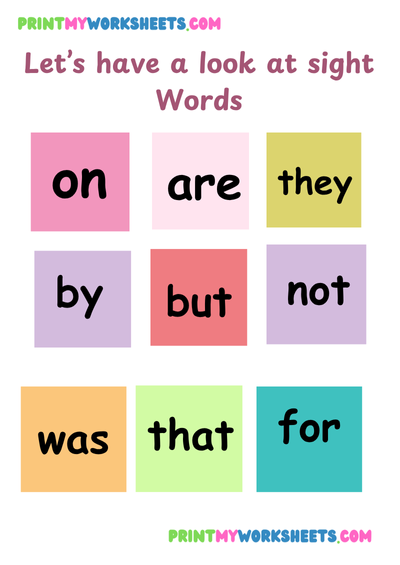
Kindergarten Sight Words Worksheet PDF – Easy Home Reading Review Pack
Kindergarten Sight Words Worksheet PDF
The Kindergarten Sight Words Worksheet PDF is designed to help young learners build early reading confidence through structured, engaging practice. This free printable PDF supports U.S. parents, teachers, and homeschool families who want to strengthen foundational literacy skills at home or in the classroom.
Sight words are high-frequency words that children are encouraged to recognize instantly without sounding them out. In kindergarten, students begin learning essential words such as “the,” “and,” “is,” and “can.” Mastering these common words allows children to read simple sentences more fluently and with greater understanding.
This worksheet collection provides clear, age-appropriate activities that help children recognize, read, trace, and write frequently used words. With consistent exposure and practice, young learners begin to build automatic word recognition skills, which are essential for reading success in first grade and beyond.
What Students Will Learn?
These kindergarten sight word worksheets focus on helping students quickly recognize and correctly use high-frequency words in context. The activities are carefully structured to match the developmental level of kindergarten learners.
Students will practice:
-
Identifying common high-frequency words
-
Tracing and writing sight words
-
Reading simple sentences that include familiar words
-
Matching words to pictures
-
Completing fill-in-the-blank sentences
-
Building short phrases using known vocabulary
The worksheets support gradual learning. Children begin by recognizing individual words, then progress to reading short phrases and sentences. This step-by-step approach ensures students feel successful while strengthening reading fluency.
Each activity is designed to be clear and manageable. Directions are simple, and tasks are visually organized to reduce frustration. By practicing word recognition in multiple ways—reading, writing, and matching—students reinforce learning through repetition.
Aligned with U.S. kindergarten literacy standards, these worksheets help develop early decoding skills while also strengthening vocabulary and comprehension. The goal is to build automatic recognition so students can focus more on understanding what they read.
Educational Value & Skill Development
The Kindergarten Sight Words Worksheet PDF supports essential early literacy development. Sight word mastery is a major milestone in kindergarten reading instruction, as it allows students to recognize frequently used words without decoding each letter.
Academically, recognizing common words quickly improves reading fluency. When children do not need to stop and sound out every word, they can read sentences more smoothly and with better expression. This builds comprehension because students can focus on meaning rather than decoding.
Cognitively, sight word practice strengthens memory and visual recognition skills. Repeated exposure helps students store words in long-term memory, making recall faster and more automatic.
Writing activities also improve fine motor skills and reinforce spelling patterns. When students trace and write words, they connect visual recognition with physical practice, strengthening retention.
Most importantly, confidence grows as children realize they can read sentences independently. Early reading success motivates students to practice more, which leads to steady progress throughout elementary school.
Why Focus on Sight Words?
Sight words form the foundation of early reading. In kindergarten classrooms across the United States, students are introduced to high-frequency word lists that appear often in children’s books and reading materials.
These words do not always follow standard phonics patterns, which means students benefit from memorizing them by sight. When children instantly recognize words like “you,” “was,” or “said,” their reading becomes smoother and more natural.
Repetition is essential. Seeing the same words in different contexts helps children build familiarity and recall. Guided practice, combined with independent review, ensures steady growth.
Strong sight word knowledge supports success in first grade and beyond. As reading materials become more complex, students rely on quick word recognition to maintain fluency and comprehension. Developing these skills early ensures a strong literacy foundation.
How to Use These Worksheets?
The Kindergarten Sight Words Worksheet PDF can be used in a variety of learning environments. Teachers may include the worksheets in literacy centers, small reading groups, or independent seatwork. They also work well for morning work or homework practice.
Homeschool families can incorporate the worksheets into a daily reading routine. Reviewing words aloud before completing the page helps reinforce pronunciation and recognition. Parents may also turn the activities into interactive games by timing word reading or creating simple flashcards.
Because this resource is provided as a free printable PDF, it can be downloaded and printed as needed. The pages can be reused throughout the year for review, especially before reading assessments or report periods.
These worksheets are ideal for reinforcement and extra practice. Students who need additional support can revisit word lists regularly, while confident readers can use the activities for fluency-building practice.
Related Worksheets / Extensions:
Kindergarten Sight Words Worksheet PDF – Easy Home Reading Review Pack
Kindergarten Sight Words Worksheet PDF
The Kindergarten Sight Words Worksheet PDF is designed to help young learners build early reading confidence through structured, engaging practice. This free printable PDF supports U.S. parents, teachers, and homeschool families who want to strengthen foundational literacy skills at home or in the classroom.
Sight words are high-frequency words that children are encouraged to recognize instantly without sounding them out. In kindergarten, students begin learning essential words such as “the,” “and,” “is,” and “can.” Mastering these common words allows children to read simple sentences more fluently and with greater understanding.
This worksheet collection provides clear, age-appropriate activities that help children recognize, read, trace, and write frequently used words. With consistent exposure and practice, young learners begin to build automatic word recognition skills, which are essential for reading success in first grade and beyond.
What Students Will Learn?
These kindergarten sight word worksheets focus on helping students quickly recognize and correctly use high-frequency words in context. The activities are carefully structured to match the developmental level of kindergarten learners.
Students will practice:
-
Identifying common high-frequency words
-
Tracing and writing sight words
-
Reading simple sentences that include familiar words
-
Matching words to pictures
-
Completing fill-in-the-blank sentences
-
Building short phrases using known vocabulary
The worksheets support gradual learning. Children begin by recognizing individual words, then progress to reading short phrases and sentences. This step-by-step approach ensures students feel successful while strengthening reading fluency.
Each activity is designed to be clear and manageable. Directions are simple, and tasks are visually organized to reduce frustration. By practicing word recognition in multiple ways—reading, writing, and matching—students reinforce learning through repetition.
Aligned with U.S. kindergarten literacy standards, these worksheets help develop early decoding skills while also strengthening vocabulary and comprehension. The goal is to build automatic recognition so students can focus more on understanding what they read.
Educational Value & Skill Development
The Kindergarten Sight Words Worksheet PDF supports essential early literacy development. Sight word mastery is a major milestone in kindergarten reading instruction, as it allows students to recognize frequently used words without decoding each letter.
Academically, recognizing common words quickly improves reading fluency. When children do not need to stop and sound out every word, they can read sentences more smoothly and with better expression. This builds comprehension because students can focus on meaning rather than decoding.
Cognitively, sight word practice strengthens memory and visual recognition skills. Repeated exposure helps students store words in long-term memory, making recall faster and more automatic.
Writing activities also improve fine motor skills and reinforce spelling patterns. When students trace and write words, they connect visual recognition with physical practice, strengthening retention.
Most importantly, confidence grows as children realize they can read sentences independently. Early reading success motivates students to practice more, which leads to steady progress throughout elementary school.
Why Focus on Sight Words?
Sight words form the foundation of early reading. In kindergarten classrooms across the United States, students are introduced to high-frequency word lists that appear often in children’s books and reading materials.
These words do not always follow standard phonics patterns, which means students benefit from memorizing them by sight. When children instantly recognize words like “you,” “was,” or “said,” their reading becomes smoother and more natural.
Repetition is essential. Seeing the same words in different contexts helps children build familiarity and recall. Guided practice, combined with independent review, ensures steady growth.
Strong sight word knowledge supports success in first grade and beyond. As reading materials become more complex, students rely on quick word recognition to maintain fluency and comprehension. Developing these skills early ensures a strong literacy foundation.
How to Use These Worksheets?
The Kindergarten Sight Words Worksheet PDF can be used in a variety of learning environments. Teachers may include the worksheets in literacy centers, small reading groups, or independent seatwork. They also work well for morning work or homework practice.
Homeschool families can incorporate the worksheets into a daily reading routine. Reviewing words aloud before completing the page helps reinforce pronunciation and recognition. Parents may also turn the activities into interactive games by timing word reading or creating simple flashcards.
Because this resource is provided as a free printable PDF, it can be downloaded and printed as needed. The pages can be reused throughout the year for review, especially before reading assessments or report periods.
These worksheets are ideal for reinforcement and extra practice. Students who need additional support can revisit word lists regularly, while confident readers can use the activities for fluency-building practice.