

1st Grade Missing Number Sequences Worksheets | Free Downloadable PDF
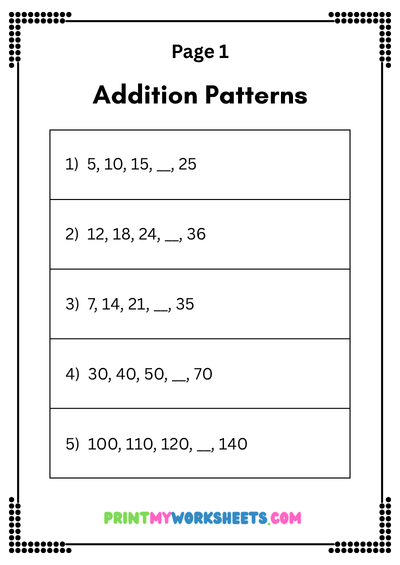
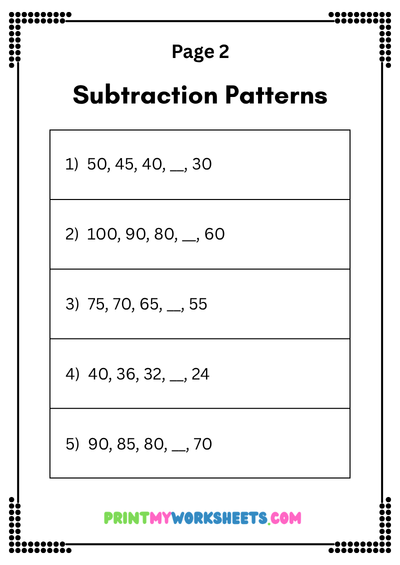
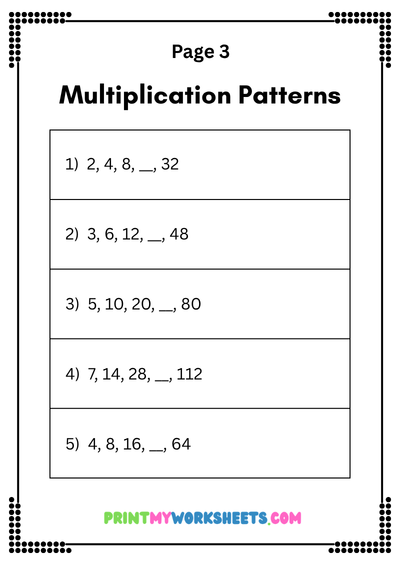
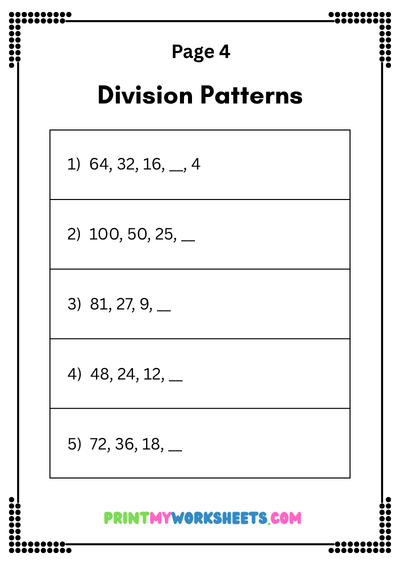
These free 1st Grade Missing Number Sequences Worksheets help kids master counting patterns, number order, and skip counting skills. Perfect for homeschool parents, teachers, and classrooms, the printable PDF activities improve problem-solving, logical thinking, and early math confidence while making learning fun, engaging, and easy for young learners. This is completely aligned with U.S Curriculum.
Click below to access the free 1st Grade Missing Number Sequences Worksheets
Continue Learning
Explore more worksheets to build your child’s English skills.

Help young learners build strong number sense with our fun and engaging 1st Grade Missing Number Sequences Worksheets . These free downloadable PDF worksheets are specially designed for kids, homeschool families, teachers, and classroom learning across the US curriculum. Children practice identifying missing numbers in counting patterns, skip counting activities, and number sequences while improving essential early math skills.
Learning missing number sequences helps first graders recognize patterns, understand number order, and develop logical thinking skills. These activities also strengthen addition readiness, problem-solving abilities, and mental math confidence. By practicing forward counting, backward counting, and skip counting, kids gain a deeper understanding of how numbers work together in everyday math.
These printable worksheets are perfect for morning work, homework, math centers, homeschooling, independent practice, and extra review. The easy-to-use PDF format allows parents and teachers to quickly print engaging math activities anytime. Bright and simple exercises keep children motivated while making learning enjoyable and stress-free.
Our Math Missing Number Sequences Worksheets encourage confidence, improve focus, and support foundational math success for first grade learners. Download these free printable worksheets today and make early math learning fun, interactive, and effective for kids.
Frequently Asked Questions
Q1. Is this worksheet free to download?
Yes, this worksheet is 100% free to download and print. No account, subscription, or payment is required. Click the Download Now button to get your free PDF instantly.
Q2. What format is this worksheet available in?
This worksheet is available as a printable PDF file. It is black-and-white, printer-friendly, and works on any standard home or classroom printer using A4 or US Letter paper.
Q3. Do I need to create an account to download this worksheet?
No account or sign-up is required. All worksheets on Print My Worksheets are freely accessible to teachers, parents, and homeschool families without any registration.
Q4. Does this math worksheet include an answer key?
Yes, an answer key is included in the PDF so parents and teachers can quickly check student responses without manual calculation.
Q5. Is this worksheet suitable for extra practice or exam preparation?
Yes, this worksheet is ideal for supplemental practice, homework reinforcement, test preparation, and homeschool math lessons.
Purchase now to read the book online.
Download NowYou may also like…
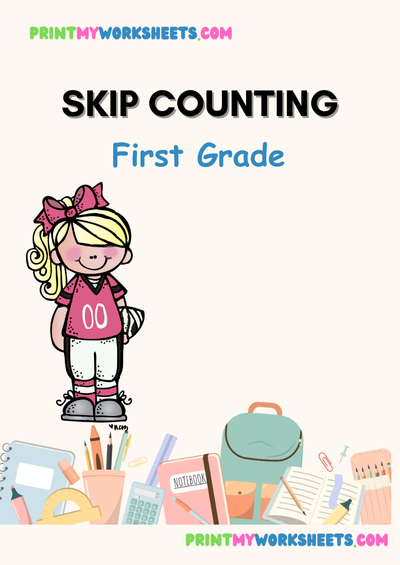
1st Grade Skip Counting Worksheets PDF | Free Math Downloadable
1st Grade Skip Counting Worksheets PDF
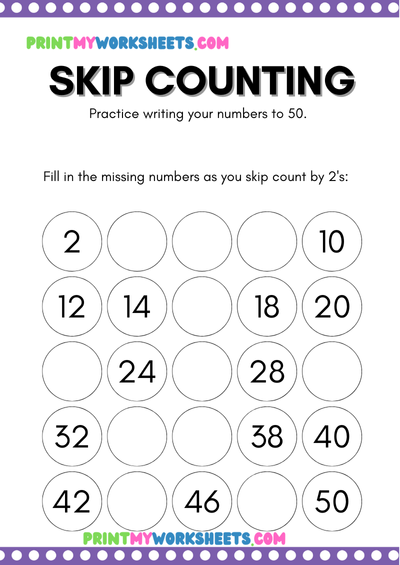
Learning number patterns is an important step in building strong math foundations. The 1st Grade Skip Counting Worksheets PDF helps young learners practice counting numbers in patterns such as 2s, 5s, and 10s. These free printable worksheets are designed for U.S. parents, teachers, and homeschool families who want to support early math skills through structured and engaging activities.
Skip counting introduces students to number sequences that go beyond counting by ones. Instead of moving one number at a time, students learn to count forward using consistent intervals. This skill helps children recognize patterns in numbers and understand how groups of numbers relate to one another.
The 1st Grade Skip Counting Worksheets PDF provides clear and age-appropriate exercises that guide students through counting patterns step by step. These worksheets allow first grade students to practice recognizing sequences, completing number patterns, and strengthening their understanding of how numbers work together. Regular practice with skip counting prepares students for more advanced math topics such as multiplication and number relationships in later grades.
What Students Will Learn?
Skip counting worksheets help first grade students develop a deeper understanding of number patterns and sequences. These activities provide structured opportunities for learners to practice counting beyond simple one-by-one number progression.
Students will practice counting by different intervals such as twos, fives, and tens. These patterns help children recognize relationships between numbers and build a stronger sense of numerical order. Learning these sequences also strengthens their understanding of how numbers grow within a pattern.
Many worksheets include activities where students fill in missing numbers within a sequence. For example, a number line might show 2, 4, ___, 8, encouraging the student to identify the missing value. These exercises help reinforce pattern recognition and logical thinking.
Children may also complete number charts, connect number patterns, or continue sequences by writing the next numbers in the series. These tasks require students to look carefully at the pattern and determine how the numbers increase.
Visual aids and structured layouts make the activities accessible for first grade learners. Through repeated practice, students develop confidence recognizing number patterns and understanding the structure of skip counting sequences.
Educational Value & Skill Development
The 1st Grade Skip Counting Worksheets PDF supports multiple areas of early mathematical development that are essential for young learners.
One of the most important benefits is strengthening number sense. Skip counting helps students understand how numbers relate to each other and how they increase in predictable patterns. This deeper understanding helps students move beyond simple counting and recognize structured number relationships.
Another key benefit is preparation for multiplication. Counting by groups such as twos, fives, or tens introduces the idea of repeated addition, which later becomes the foundation for multiplication concepts.
The 1st Grade Skip Counting Worksheets PDF also helps improve logical reasoning skills. Students must analyze number patterns and determine the next number in the sequence. This encourages critical thinking and problem-solving abilities.
These worksheets also promote confidence and independence in math learning. When students recognize number patterns successfully, they gain confidence in their mathematical abilities.
Additionally, writing numbers in sequences helps reinforce number formation and handwriting practice. This combination of pattern recognition and number writing supports both cognitive and motor skill development.
Together, these skills provide a strong mathematical foundation that supports continued learning throughout elementary school.
Why Focus on Skip Counting Worksheets?
Skip counting is an important math skill because it helps children understand number patterns and relationships. Instead of viewing numbers as isolated values, students begin to see how numbers connect through consistent intervals.
Learning skip counting also supports mental math development. When students become comfortable counting by groups, they can solve certain problems more quickly and efficiently.
This skill is also closely connected to multiplication and division concepts taught in later grades. When children practice counting by twos, fives, or tens, they are building early understanding of repeated groups.
Skip counting activities also help students recognize patterns in number charts and sequences. These patterns make math more predictable and easier to understand.
In first grade classrooms across the United States, skip counting is often introduced as part of early number sense instruction. Teachers use these patterns to help students explore how numbers grow and how mathematical relationships work.
Regular practice with skip counting helps students develop fluency with number sequences and builds confidence in solving simple math problems.
How to Use These Worksheets?
The 1st Grade Skip Counting Worksheets PDF can be used in many different learning environments, including classrooms, homeschool programs, and independent practice settings.
Teachers often include skip counting worksheets as part of math centers or daily practice activities. Students may complete the worksheets individually or work together in small groups to identify number patterns.
In classroom settings, educators may guide students through the sequence by counting aloud together before completing the worksheet. This collaborative approach helps reinforce the counting pattern.
Parents who homeschool can use the worksheets as part of their daily math routine. Children can practice writing missing numbers, identifying patterns, and reading number sequences aloud.
Because the worksheets are provided as a free printable PDF, they are easy to download and print whenever additional practice is needed. Teachers and parents can reuse them for review sessions or reinforcement activities.
These worksheets also work well as quiet independent work. Students can focus on completing number patterns while strengthening their understanding of skip counting concepts.
Related Worksheets / Extensions:
You may also like:
• First grade number patterns worksheets
• Counting by 2s, 5s, and 10s practice worksheets
• First grade number recognition worksheets
• Early addition and number sequence worksheets
• Math pattern worksheets for early elementary students
The 1st Grade Skip Counting Worksheets PDF pairs well with other early math resources that focus on number patterns and basic arithmetic skills. Combining skip counting with number charts, addition practice, and simple multiplication preparation can strengthen overall math understanding.
Teachers and parents can extend learning by encouraging students to practice skip counting in everyday situations, such as counting coins, grouping objects, or identifying patterns in calendars.
With consistent practice, first grade learners develop stronger number sense and become more comfortable recognizing patterns in numbers. These early skills create a solid mathematical foundation that supports more advanced concepts in future grades.
You may also like :
[gallery ids="4719,4736,4714"]Frequently Asked Questions
Q1. Is this worksheet free to download?Yes, this worksheet is 100% free to download and print. No account, subscription, or payment is required. Click the Download Now button to get your free PDF instantly.Q2. What format is this worksheet available in?This worksheet is available as a printable PDF file. It is black-and-white, printer-friendly, and works on any standard home or classroom printer using A4 or US Letter paper.Q3. Can I use this worksheet for both classroom and home learning?Yes, these worksheets are designed for use by classroom teachers, homeschool parents, and tutors. They can be used as morning work, homework, revision practice, or learning centre activities.Q4. Is this worksheet suitable for extra practice or exam preparation?Yes, this worksheet is ideal for supplemental practice, homework reinforcement, test preparation, and homeschool math lessons.Q5. Does this math worksheet include an answer key?Yes, an answer key is included in the PDF so parents and teachers can quickly check student responses without manual calculation.1st Grade Skip Counting Worksheets PDF | Free Math Downloadable
1st Grade Skip Counting Worksheets PDF
Learning number patterns is an important step in building strong math foundations. The 1st Grade Skip Counting Worksheets PDF helps young learners practice counting numbers in patterns such as 2s, 5s, and 10s. These free printable worksheets are designed for U.S. parents, teachers, and homeschool families who want to support early math skills through structured and engaging activities.
Skip counting introduces students to number sequences that go beyond counting by ones. Instead of moving one number at a time, students learn to count forward using consistent intervals. This skill helps children recognize patterns in numbers and understand how groups of numbers relate to one another.
The 1st Grade Skip Counting Worksheets PDF provides clear and age-appropriate exercises that guide students through counting patterns step by step. These worksheets allow first grade students to practice recognizing sequences, completing number patterns, and strengthening their understanding of how numbers work together. Regular practice with skip counting prepares students for more advanced math topics such as multiplication and number relationships in later grades.
What Students Will Learn?
Skip counting worksheets help first grade students develop a deeper understanding of number patterns and sequences. These activities provide structured opportunities for learners to practice counting beyond simple one-by-one number progression.
Students will practice counting by different intervals such as twos, fives, and tens. These patterns help children recognize relationships between numbers and build a stronger sense of numerical order. Learning these sequences also strengthens their understanding of how numbers grow within a pattern.
Many worksheets include activities where students fill in missing numbers within a sequence. For example, a number line might show 2, 4, ___, 8, encouraging the student to identify the missing value. These exercises help reinforce pattern recognition and logical thinking.
Children may also complete number charts, connect number patterns, or continue sequences by writing the next numbers in the series. These tasks require students to look carefully at the pattern and determine how the numbers increase.
Visual aids and structured layouts make the activities accessible for first grade learners. Through repeated practice, students develop confidence recognizing number patterns and understanding the structure of skip counting sequences.
Educational Value & Skill Development
The 1st Grade Skip Counting Worksheets PDF supports multiple areas of early mathematical development that are essential for young learners.
One of the most important benefits is strengthening number sense. Skip counting helps students understand how numbers relate to each other and how they increase in predictable patterns. This deeper understanding helps students move beyond simple counting and recognize structured number relationships.
Another key benefit is preparation for multiplication. Counting by groups such as twos, fives, or tens introduces the idea of repeated addition, which later becomes the foundation for multiplication concepts.
The 1st Grade Skip Counting Worksheets PDF also helps improve logical reasoning skills. Students must analyze number patterns and determine the next number in the sequence. This encourages critical thinking and problem-solving abilities.
These worksheets also promote confidence and independence in math learning. When students recognize number patterns successfully, they gain confidence in their mathematical abilities.
Additionally, writing numbers in sequences helps reinforce number formation and handwriting practice. This combination of pattern recognition and number writing supports both cognitive and motor skill development.
Together, these skills provide a strong mathematical foundation that supports continued learning throughout elementary school.
Why Focus on Skip Counting Worksheets?
Skip counting is an important math skill because it helps children understand number patterns and relationships. Instead of viewing numbers as isolated values, students begin to see how numbers connect through consistent intervals.
Learning skip counting also supports mental math development. When students become comfortable counting by groups, they can solve certain problems more quickly and efficiently.
This skill is also closely connected to multiplication and division concepts taught in later grades. When children practice counting by twos, fives, or tens, they are building early understanding of repeated groups.
Skip counting activities also help students recognize patterns in number charts and sequences. These patterns make math more predictable and easier to understand.
In first grade classrooms across the United States, skip counting is often introduced as part of early number sense instruction. Teachers use these patterns to help students explore how numbers grow and how mathematical relationships work.
Regular practice with skip counting helps students develop fluency with number sequences and builds confidence in solving simple math problems.
How to Use These Worksheets?
The 1st Grade Skip Counting Worksheets PDF can be used in many different learning environments, including classrooms, homeschool programs, and independent practice settings.
Teachers often include skip counting worksheets as part of math centers or daily practice activities. Students may complete the worksheets individually or work together in small groups to identify number patterns.
In classroom settings, educators may guide students through the sequence by counting aloud together before completing the worksheet. This collaborative approach helps reinforce the counting pattern.
Parents who homeschool can use the worksheets as part of their daily math routine. Children can practice writing missing numbers, identifying patterns, and reading number sequences aloud.
Because the worksheets are provided as a free printable PDF, they are easy to download and print whenever additional practice is needed. Teachers and parents can reuse them for review sessions or reinforcement activities.
These worksheets also work well as quiet independent work. Students can focus on completing number patterns while strengthening their understanding of skip counting concepts.
Related Worksheets / Extensions:
You may also like:
• First grade number patterns worksheets
• Counting by 2s, 5s, and 10s practice worksheets
• First grade number recognition worksheets
• Early addition and number sequence worksheets
• Math pattern worksheets for early elementary students
The 1st Grade Skip Counting Worksheets PDF pairs well with other early math resources that focus on number patterns and basic arithmetic skills. Combining skip counting with number charts, addition practice, and simple multiplication preparation can strengthen overall math understanding.
Teachers and parents can extend learning by encouraging students to practice skip counting in everyday situations, such as counting coins, grouping objects, or identifying patterns in calendars.
With consistent practice, first grade learners develop stronger number sense and become more comfortable recognizing patterns in numbers. These early skills create a solid mathematical foundation that supports more advanced concepts in future grades.
You may also like :
[gallery ids="4719,4736,4714"]Frequently Asked Questions
Q1. Is this worksheet free to download?Yes, this worksheet is 100% free to download and print. No account, subscription, or payment is required. Click the Download Now button to get your free PDF instantly.Q2. What format is this worksheet available in?This worksheet is available as a printable PDF file. It is black-and-white, printer-friendly, and works on any standard home or classroom printer using A4 or US Letter paper.Q3. Can I use this worksheet for both classroom and home learning?Yes, these worksheets are designed for use by classroom teachers, homeschool parents, and tutors. They can be used as morning work, homework, revision practice, or learning centre activities.Q4. Is this worksheet suitable for extra practice or exam preparation?Yes, this worksheet is ideal for supplemental practice, homework reinforcement, test preparation, and homeschool math lessons.Q5. Does this math worksheet include an answer key?Yes, an answer key is included in the PDF so parents and teachers can quickly check student responses without manual calculation.
1st Grade Length, Weight and Height Worksheets PDF – Free
1st Grade Length, Weight and Height Worksheets PDF
The 1st Grade Length, Weight and Height Worksheets PDF is designed to help young learners explore measurement concepts in a clear and age-appropriate way. This free printable PDF is ideal for U.S. parents, teachers, and homeschool families who want structured math practice aligned with first grade standards.
In first grade, students begin comparing and measuring objects using nonstandard and standard units. They learn to describe length, weight, and height using words such as longer, shorter, heavier, lighter, taller, and shorter. Developing these skills strengthens number sense and real-world math understanding. Measurement activities help children connect math to everyday life, whether they are comparing the height of classmates or weighing classroom objects. With guided practice and simple visual exercises, students gain confidence while building foundational skills that prepare them for more advanced measurement topics in later grades.
What Students Will Learn?
These first grade measurement worksheets focus on helping students understand how to compare and measure length, weight, and height using simple tools and visual models. Children practice identifying which object is longer or shorter, heavier or lighter, taller or shorter.
Students will learn how to:
Compare two objects using measurement vocabulary
Order objects from shortest to tallest
Identify heavier and lighter items
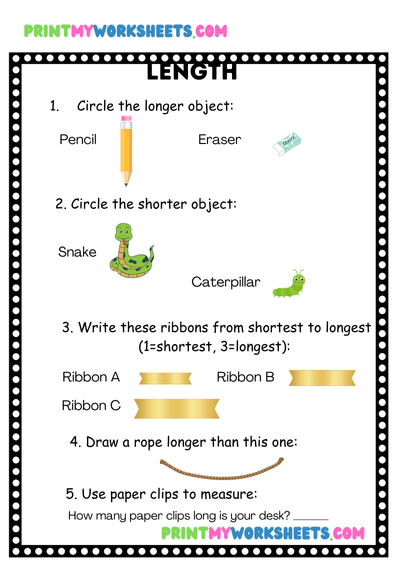
Use nonstandard units such as cubes or paper clips to measure length
Record measurements using numbers and simple charts
The activities move from visual comparisons to hands-on measuring practice. For example, students may circle the taller object, measure a line using cubes, or compare the weight of illustrated objects. These exercises help children understand that measurement is about comparing quantities in meaningful ways.
The worksheets align with U.S. first grade math standards, which emphasize understanding and describing measurable attributes. Through repeated practice, students become comfortable using correct measurement language and interpreting simple data related to size and weight.
Educational Value & Skill Development?
The 1st Grade Length, Weight and Height Worksheets PDF supports academic growth while strengthening critical thinking skills. Measurement activities encourage students to observe carefully, compare logically, and explain their reasoning.
Academically, first grade measurement is an essential step before learning to use rulers and scales in later grades. Understanding how to compare objects and describe measurable attributes prepares students for second grade topics such as standard units and more precise measurements.
Cognitively, comparing and measuring objects builds problem-solving skills. Students must analyze differences and make decisions based on observation. This supports logical reasoning and attention to detail. When children measure using nonstandard units, they also practice counting and addition skills, integrating multiple math concepts into one activity.
Confidence develops as students master measurement vocabulary and complete activities independently. Clear instructions and structured practice reduce confusion and support independent learning. Over time, students become more accurate in their comparisons and more confident in discussing mathematical ideas related to size and weight.
Why Focus on Length, Weight and Height?
Measurement is a practical math skill that students use daily, even outside the classroom. Understanding how to compare length, weight, and height helps children make sense of the world around them. They begin to notice which objects are taller, which items are heavier, and how sizes differ.
In first grade, students are expected to describe measurable attributes and compare objects directly. These early experiences build a foundation for future learning about inches, feet, pounds, and other standard units. Without a strong understanding of comparison and basic measurement concepts, later math lessons can feel abstract and difficult.
Repetition and guided practice help children internalize measurement vocabulary and concepts. By exploring these ideas in a structured worksheet format, students gain familiarity and build readiness for more advanced math topics in second and third grade.
How to Use These Worksheets?
The 1st Grade Length, Weight and Height Worksheets PDF can be used in multiple learning environments. In classrooms, teachers may include these worksheets during math centers, small group instruction, or independent practice time. They also work well as quick review activities at the start of a lesson.
Homeschool families can use the worksheets as part of a daily math routine. Begin by discussing real-life examples of length, weight, and height around the home. Then guide your child through the first few questions before encouraging independent work.
Because this resource is a free printable PDF, it can be downloaded and printed as needed. Teachers and parents can revisit the worksheets throughout the year for review and reinforcement. For repeated practice, pages can be placed in sheet protectors so students can use dry-erase markers.
The simple and print-friendly format keeps students focused on measurement tasks without unnecessary distractions.
Related Worksheets / Extensions:
Frequently Asked Questions
Q1. Is this worksheet free to download?Yes, this worksheet is 100% free to download and print. No account, subscription, or payment is required. Click the Download Now button to get your free PDF instantly.Q2. What format is this worksheet available in?This worksheet is available as a printable PDF file. It is black-and-white, printer-friendly, and works on any standard home or classroom printer using A4 or US Letter paper.Q3. Can I use this worksheet for both classroom and home learning?Yes, these worksheets are designed for use by classroom teachers, homeschool parents, and tutors. They can be used as morning work, homework, revision practice, or learning centre activities.Q4. Is this worksheet suitable for extra practice or exam preparation?Yes, this worksheet is ideal for supplemental practice, homework reinforcement, test preparation, and homeschool math lessons.Q5. Does this math worksheet include an answer key?Yes, an answer key is included in the PDF so parents and teachers can quickly check student responses without manual calculation.1st Grade Length, Weight and Height Worksheets PDF – Free
1st Grade Length, Weight and Height Worksheets PDF
The 1st Grade Length, Weight and Height Worksheets PDF is designed to help young learners explore measurement concepts in a clear and age-appropriate way. This free printable PDF is ideal for U.S. parents, teachers, and homeschool families who want structured math practice aligned with first grade standards.
In first grade, students begin comparing and measuring objects using nonstandard and standard units. They learn to describe length, weight, and height using words such as longer, shorter, heavier, lighter, taller, and shorter. Developing these skills strengthens number sense and real-world math understanding. Measurement activities help children connect math to everyday life, whether they are comparing the height of classmates or weighing classroom objects. With guided practice and simple visual exercises, students gain confidence while building foundational skills that prepare them for more advanced measurement topics in later grades.
What Students Will Learn?
These first grade measurement worksheets focus on helping students understand how to compare and measure length, weight, and height using simple tools and visual models. Children practice identifying which object is longer or shorter, heavier or lighter, taller or shorter.
Students will learn how to:
Compare two objects using measurement vocabulary
Order objects from shortest to tallest
Identify heavier and lighter items
Use nonstandard units such as cubes or paper clips to measure length
Record measurements using numbers and simple charts
The activities move from visual comparisons to hands-on measuring practice. For example, students may circle the taller object, measure a line using cubes, or compare the weight of illustrated objects. These exercises help children understand that measurement is about comparing quantities in meaningful ways.
The worksheets align with U.S. first grade math standards, which emphasize understanding and describing measurable attributes. Through repeated practice, students become comfortable using correct measurement language and interpreting simple data related to size and weight.
Educational Value & Skill Development?
The 1st Grade Length, Weight and Height Worksheets PDF supports academic growth while strengthening critical thinking skills. Measurement activities encourage students to observe carefully, compare logically, and explain their reasoning.
Academically, first grade measurement is an essential step before learning to use rulers and scales in later grades. Understanding how to compare objects and describe measurable attributes prepares students for second grade topics such as standard units and more precise measurements.
Cognitively, comparing and measuring objects builds problem-solving skills. Students must analyze differences and make decisions based on observation. This supports logical reasoning and attention to detail. When children measure using nonstandard units, they also practice counting and addition skills, integrating multiple math concepts into one activity.
Confidence develops as students master measurement vocabulary and complete activities independently. Clear instructions and structured practice reduce confusion and support independent learning. Over time, students become more accurate in their comparisons and more confident in discussing mathematical ideas related to size and weight.
Why Focus on Length, Weight and Height?
Measurement is a practical math skill that students use daily, even outside the classroom. Understanding how to compare length, weight, and height helps children make sense of the world around them. They begin to notice which objects are taller, which items are heavier, and how sizes differ.
In first grade, students are expected to describe measurable attributes and compare objects directly. These early experiences build a foundation for future learning about inches, feet, pounds, and other standard units. Without a strong understanding of comparison and basic measurement concepts, later math lessons can feel abstract and difficult.
Repetition and guided practice help children internalize measurement vocabulary and concepts. By exploring these ideas in a structured worksheet format, students gain familiarity and build readiness for more advanced math topics in second and third grade.
How to Use These Worksheets?
The 1st Grade Length, Weight and Height Worksheets PDF can be used in multiple learning environments. In classrooms, teachers may include these worksheets during math centers, small group instruction, or independent practice time. They also work well as quick review activities at the start of a lesson.
Homeschool families can use the worksheets as part of a daily math routine. Begin by discussing real-life examples of length, weight, and height around the home. Then guide your child through the first few questions before encouraging independent work.
Because this resource is a free printable PDF, it can be downloaded and printed as needed. Teachers and parents can revisit the worksheets throughout the year for review and reinforcement. For repeated practice, pages can be placed in sheet protectors so students can use dry-erase markers.
The simple and print-friendly format keeps students focused on measurement tasks without unnecessary distractions.
Related Worksheets / Extensions:
Frequently Asked Questions
Q1. Is this worksheet free to download?Yes, this worksheet is 100% free to download and print. No account, subscription, or payment is required. Click the Download Now button to get your free PDF instantly.Q2. What format is this worksheet available in?This worksheet is available as a printable PDF file. It is black-and-white, printer-friendly, and works on any standard home or classroom printer using A4 or US Letter paper.Q3. Can I use this worksheet for both classroom and home learning?Yes, these worksheets are designed for use by classroom teachers, homeschool parents, and tutors. They can be used as morning work, homework, revision practice, or learning centre activities.Q4. Is this worksheet suitable for extra practice or exam preparation?Yes, this worksheet is ideal for supplemental practice, homework reinforcement, test preparation, and homeschool math lessons.Q5. Does this math worksheet include an answer key?Yes, an answer key is included in the PDF so parents and teachers can quickly check student responses without manual calculation.
1st Grade Counting Forward and Backward Worksheets PDF
1st Grade Counting Forward and Backward Worksheets PDF
The 1st Grade Counting Forward and Backward Worksheets PDF is designed to help young learners build strong number sense through structured counting practice. This free printable PDF is ideal for U.S. parents, teachers, and homeschool families who want clear, standards-aligned math activities that support first grade learning goals.
Counting forward and backward is a foundational skill in first grade mathematics. Students are expected to confidently count within 120, starting at any given number, and understand how numbers increase and decrease in sequence. These worksheets provide guided practice that helps children recognize number patterns, fill in missing numbers, and strengthen their understanding of place value. By reinforcing counting skills early, students develop confidence and accuracy, which supports addition, subtraction, and more advanced math concepts in later grades.
What Students Will Learn?
These first grade counting worksheets focus on strengthening number sequencing skills in a clear and age-appropriate way. Students practice counting forward from various starting points and counting backward to build flexibility with numbers.
Through engaging exercises, children will learn how to:
Count forward within 120 starting from any number
Count backward from a given number
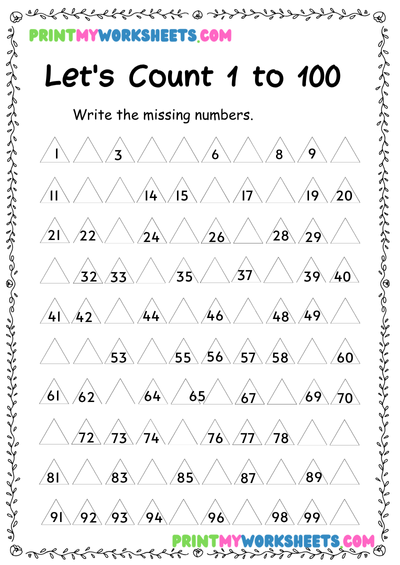
Identify missing numbers in a sequence
Understand patterns in number lines
Strengthen place value awareness
Activities include filling in number charts, completing counting sequences, and solving simple number puzzles. Students may count by ones to find the next number or determine which number comes before a given value. These exercises reinforce logical thinking and pattern recognition.
The worksheets are designed to meet first grade math standards in the United States. The structured format ensures that students progress gradually from basic counting tasks to more challenging number sequences. Repeated exposure helps children gain fluency and accuracy while building a deeper understanding of how numbers relate to one another.
Educational Value & Skill Development
The 1st Grade Counting Forward and Backward Worksheets PDF supports both academic growth and cognitive development. Counting is more than reciting numbers in order—it requires understanding number relationships and patterns.
Academically, counting forward and backward lays the groundwork for addition and subtraction. When students count forward, they are preparing to add. When they count backward, they are practicing the thinking process required for subtraction. These skills are directly connected to first grade math expectations and future grade-level standards.
Cognitively, counting sequences strengthen memory, concentration, and logical reasoning. Students must pay attention to patterns and determine what number comes next or before. This process supports critical thinking and problem-solving skills.
Confidence increases as children become more fluent with number sequences. Mastering counting within 120 helps students feel capable when tackling more complex math tasks. As they complete each page successfully, they develop independence and a stronger sense of mathematical understanding.
Why Focus on Counting Forward and Backward?
Counting forward and backward is a critical building block in early elementary math. In first grade, students move beyond counting from one and begin counting from any number. This shift requires deeper number understanding.
When children practice counting forward, they learn how numbers increase in predictable patterns. When they count backward, they understand how numbers decrease and how subtraction works conceptually. These skills connect directly to addition, subtraction, and place value lessons later in the year.
Consistent practice helps children recognize patterns within number sequences. This strengthens mental math abilities and prepares students for skip counting and multiplication in future grades. Repetition and guided instruction are essential at this stage because students are developing fluency and accuracy.
By mastering counting skills early, students build a strong mathematical foundation that supports long-term academic success.
How to Use These Worksheets?
The 1st Grade Counting Forward and Backward Worksheets PDF can be used in a variety of learning settings. In classrooms, teachers can incorporate these worksheets into math centers, small group instruction, or independent practice time. They also work well as quick review pages at the beginning or end of a lesson.
Homeschool families can include the worksheets as part of a daily math routine. Start by reviewing number sequences verbally, then allow your child to complete a worksheet independently. Encourage students to use number lines or hundred charts as needed.
Because this resource is a free printable PDF, it is easy to download and print for repeated use. Parents and teachers may print multiple copies for extra practice or laminate pages for reusable learning with dry-erase markers. The clear layout helps students focus on number patterns without distractions, making practice efficient and productive.
Related Worksheets / Extensions:
You may also like:
First grade addition and subtraction worksheets
Number bonds practice pages
Place value worksheets for first grade
Skip counting activities
Second grade number sequencing worksheets
The 1st Grade Counting Forward and Backward Worksheets PDF pairs well with other early math resources that focus on number sense and foundational skills. Combining counting practice with addition and place value activities helps students see how mathematical concepts connect. With consistent practice and review, children strengthen their understanding of number relationships and develop the confidence needed to succeed in higher-level math.
Frequently Asked Questions
Q1. Is this worksheet free to download?Yes, this worksheet is 100% free to download and print. No account, subscription, or payment is required. Click the Download Now button to get your free PDF instantly.Q2. What format is this worksheet available in?This worksheet is available as a printable PDF file. It is black-and-white, printer-friendly, and works on any standard home or classroom printer using A4 or US Letter paper.Q3. Can I use this worksheet for both classroom and home learning?Yes, these worksheets are designed for use by classroom teachers, homeschool parents, and tutors. They can be used as morning work, homework, revision practice, or learning centre activities.Q4. Is this worksheet suitable for extra practice or exam preparation?Yes, this worksheet is ideal for supplemental practice, homework reinforcement, test preparation, and homeschool math lessons.Q5. Does this math worksheet include an answer key?Yes, an answer key is included in the PDF so parents and teachers can quickly check student responses without manual calculation.1st Grade Counting Forward and Backward Worksheets PDF
1st Grade Counting Forward and Backward Worksheets PDF
The 1st Grade Counting Forward and Backward Worksheets PDF is designed to help young learners build strong number sense through structured counting practice. This free printable PDF is ideal for U.S. parents, teachers, and homeschool families who want clear, standards-aligned math activities that support first grade learning goals.
Counting forward and backward is a foundational skill in first grade mathematics. Students are expected to confidently count within 120, starting at any given number, and understand how numbers increase and decrease in sequence. These worksheets provide guided practice that helps children recognize number patterns, fill in missing numbers, and strengthen their understanding of place value. By reinforcing counting skills early, students develop confidence and accuracy, which supports addition, subtraction, and more advanced math concepts in later grades.
What Students Will Learn?
These first grade counting worksheets focus on strengthening number sequencing skills in a clear and age-appropriate way. Students practice counting forward from various starting points and counting backward to build flexibility with numbers.
Through engaging exercises, children will learn how to:
Count forward within 120 starting from any number
Count backward from a given number
Identify missing numbers in a sequence
Understand patterns in number lines
Strengthen place value awareness
Activities include filling in number charts, completing counting sequences, and solving simple number puzzles. Students may count by ones to find the next number or determine which number comes before a given value. These exercises reinforce logical thinking and pattern recognition.
The worksheets are designed to meet first grade math standards in the United States. The structured format ensures that students progress gradually from basic counting tasks to more challenging number sequences. Repeated exposure helps children gain fluency and accuracy while building a deeper understanding of how numbers relate to one another.
Educational Value & Skill Development
The 1st Grade Counting Forward and Backward Worksheets PDF supports both academic growth and cognitive development. Counting is more than reciting numbers in order—it requires understanding number relationships and patterns.
Academically, counting forward and backward lays the groundwork for addition and subtraction. When students count forward, they are preparing to add. When they count backward, they are practicing the thinking process required for subtraction. These skills are directly connected to first grade math expectations and future grade-level standards.
Cognitively, counting sequences strengthen memory, concentration, and logical reasoning. Students must pay attention to patterns and determine what number comes next or before. This process supports critical thinking and problem-solving skills.
Confidence increases as children become more fluent with number sequences. Mastering counting within 120 helps students feel capable when tackling more complex math tasks. As they complete each page successfully, they develop independence and a stronger sense of mathematical understanding.
Why Focus on Counting Forward and Backward?
Counting forward and backward is a critical building block in early elementary math. In first grade, students move beyond counting from one and begin counting from any number. This shift requires deeper number understanding.
When children practice counting forward, they learn how numbers increase in predictable patterns. When they count backward, they understand how numbers decrease and how subtraction works conceptually. These skills connect directly to addition, subtraction, and place value lessons later in the year.
Consistent practice helps children recognize patterns within number sequences. This strengthens mental math abilities and prepares students for skip counting and multiplication in future grades. Repetition and guided instruction are essential at this stage because students are developing fluency and accuracy.
By mastering counting skills early, students build a strong mathematical foundation that supports long-term academic success.
How to Use These Worksheets?
The 1st Grade Counting Forward and Backward Worksheets PDF can be used in a variety of learning settings. In classrooms, teachers can incorporate these worksheets into math centers, small group instruction, or independent practice time. They also work well as quick review pages at the beginning or end of a lesson.
Homeschool families can include the worksheets as part of a daily math routine. Start by reviewing number sequences verbally, then allow your child to complete a worksheet independently. Encourage students to use number lines or hundred charts as needed.
Because this resource is a free printable PDF, it is easy to download and print for repeated use. Parents and teachers may print multiple copies for extra practice or laminate pages for reusable learning with dry-erase markers. The clear layout helps students focus on number patterns without distractions, making practice efficient and productive.
Related Worksheets / Extensions:
You may also like:
First grade addition and subtraction worksheets
Number bonds practice pages
Place value worksheets for first grade
Skip counting activities
Second grade number sequencing worksheets
The 1st Grade Counting Forward and Backward Worksheets PDF pairs well with other early math resources that focus on number sense and foundational skills. Combining counting practice with addition and place value activities helps students see how mathematical concepts connect. With consistent practice and review, children strengthen their understanding of number relationships and develop the confidence needed to succeed in higher-level math.