
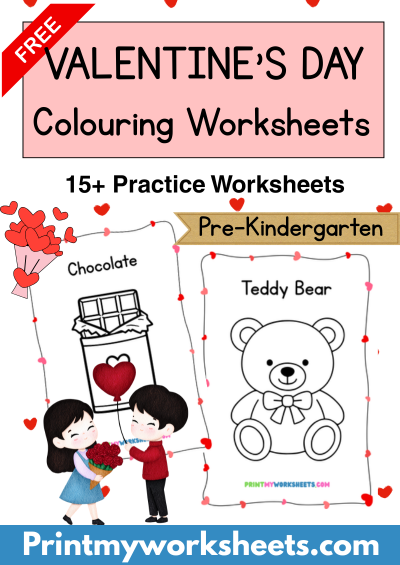


Pre-KG Valentine’s Day Coloring Worksheets PDF – Fun At-Home Holiday Activities for Preschool Kids
₹0.00
Continue Learning
Explore more worksheets to build your child’s English skills.

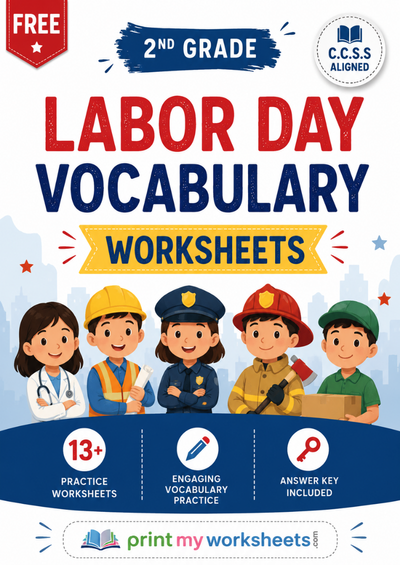
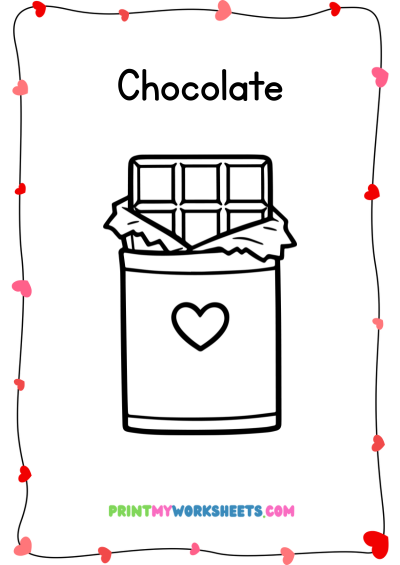
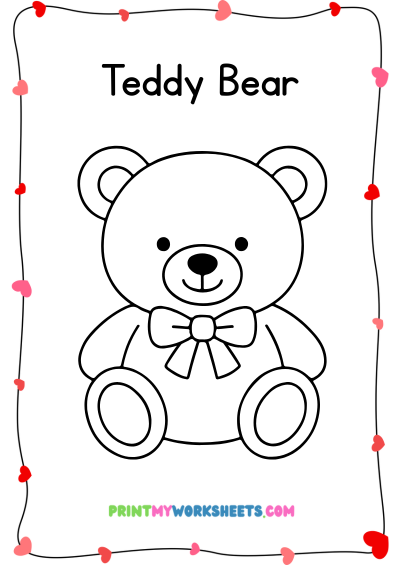
Make Valentine’s Day fun and educational with our Pre-Kindergarten Valentine’s Day Coloring Worksheets, specially designed for young learners in the US. These free downloadable PDF worksheets help preschoolers develop essential early learning skills while enjoying festive, hands-on activities.
Coloring plays a vital role in early childhood development. Valentine’s Day coloring worksheets help children strengthen fine motor skills, improve hand-eye coordination, and build pencil control—key skills needed for future writing success. As children color hearts, love-themed objects, and friendly characters, they also practice focus, creativity, and self-expression in a stress-free way.
Perfect for homeschool parents, preschool teachers, daycare providers, and parents, these worksheets are ideal for classroom centers, quiet time, holiday activities, or independent learning at home. The Valentine’s theme keeps children engaged and excited while reinforcing early learning habits such as following instructions and completing tasks.
Aligned with early learning goals for Pre-K students, these printable worksheets are simple, engaging, and age-appropriate. Download instantly, print easily, and enjoy meaningful Valentine’s Day learning activities that support creativity, confidence, and school readiness—completely free.
Frequently Asked Questions
Q1. What format is this worksheet available in?
This worksheet is available as a printable PDF file. It is black-and-white, printer-friendly, and works on any standard home or classroom printer using A4 or US Letter paper.
Q2. Is this worksheet free to download?
Yes, this worksheet is 100% free to download and print. No account, subscription, or payment is required. Click the Download Now button to get your free PDF instantly.
Q3. Can I use this worksheet for both classroom and home learning?
Yes, these worksheets are designed for use by classroom teachers, homeschool parents, and tutors. They can be used as morning work, homework, revision practice, or learning centre activities.
Q4. What skills does coloring develop in young children?
Coloring activities develop fine motor skills, pencil grip, hand-eye coordination, colour recognition, and focus — all essential skills for early childhood development.
Q5. Can this coloring worksheet be used as a classroom activity?
Yes, this worksheet works well as a quiet time activity, early finisher work, morning warm-up, or take-home creative activity.
You may also like…

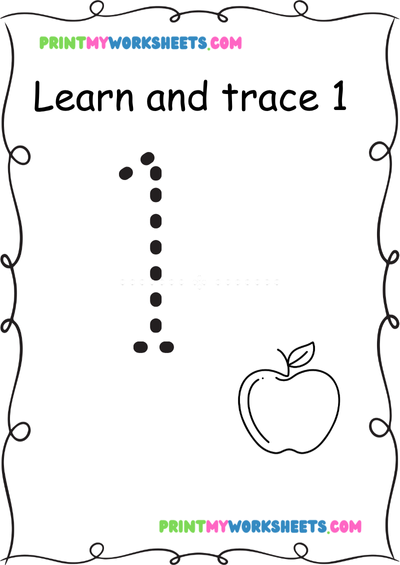
Pre Kindergarten Number Recognition 1-10 | Free Downloadable PDF
Pre Kindergarten Number Recognition 1-10
Early math learning begins with recognizing numbers and understanding what they represent. The Pre Kindergarten Number Recognition 1-10 worksheet set is designed to introduce young learners to numbers in a gentle, engaging, and developmentally appropriate way. Created for U.S. parents, preschool teachers, and homeschool families, these printable worksheets support early number awareness through simple, hands-on practice.
At the pre-kindergarten level, children are just beginning to make sense of numbers they see in books, games, and everyday life. Recognizing numbers from one to ten is a critical first step that supports counting, matching, and later math concepts. These worksheets help children visually identify numerals, connect them to quantities, and begin forming numbers through tracing and guided activities. With a clear layout and predictable structure, this free printable PDF makes early math practice feel approachable and enjoyable while building confidence and readiness for kindergarten.
What Students Will Learn?
These worksheets are carefully designed to support early number learning for young children. Students begin by identifying numerals from one to ten and learning to recognize them consistently across different activities. Through repeated exposure, children become familiar with how each number looks and how it connects to spoken number words.
Activities may include tracing numerals, circling the correct number, matching numbers to groups of objects, and counting simple sets. These tasks help children understand that numbers represent quantities, not just symbols on a page. Visual supports and simple instructions allow learners to focus on the concept without feeling overwhelmed.
The worksheets support structured learning by using consistent formats and clear expectations. This predictability helps pre-kindergarten students stay engaged and confident. Activities are aligned with age-appropriate learning goals, supporting early math skills such as counting, number identification, and one-to-one correspondence. By working within a small, manageable number range, children develop a strong foundation that prepares them for more advanced number work in kindergarten and beyond.
Educational Value & Skill Development
Early number recognition plays an important role in overall academic development. Using the Pre Kindergarten Number Recognition 1-10 worksheets helps children build essential math readiness skills while also supporting cognitive growth. Recognizing numbers accurately allows children to participate more confidently in classroom routines, games, and daily activities that involve counting or identifying numbers.
These worksheets also support memory and attention skills. Repeated practice helps children remember number shapes and associate them with quantities. Tracing and matching activities strengthen fine motor skills and hand-eye coordination, which are important for writing and other learning tasks.
Confidence and independence grow as children successfully complete familiar activities. When young learners recognize numbers quickly, they feel more capable and motivated to engage with math. This positive early experience helps reduce anxiety around numbers and encourages curiosity.
Skill progression is another key benefit. Mastery of numbers one through ten is the foundation for counting beyond ten, comparing numbers, and understanding basic addition concepts. These worksheets help ensure children are ready to move forward with confidence as math expectations increase.
Why Focus on Pre Kindergarten Number Recognition 1-10?
Learning to recognize numbers from one to ten is one of the most important early math skills. These numbers appear frequently in everyday life, from counting toys to identifying ages or reading simple books. Helping children recognize these numerals builds familiarity and comfort with math at an early age.
Strong number recognition supports future learning by allowing children to focus on problem-solving rather than struggling to identify numbers. When students know their numbers well, they are better prepared for counting, comparing quantities, and understanding simple math operations later on.
Repetition and guided practice are especially important for young learners. Worksheets provide a consistent and structured way to revisit numbers until recognition becomes automatic. These activities align with early learning standards commonly used across the United States, which emphasize number identification, counting skills, and readiness for kindergarten. By focusing on these foundational skills early, children develop a strong base for long-term math success.
How to Use These Worksheets?
These printable number worksheets are flexible and easy to use in a variety of learning environments. In homeschool settings, they can be included as part of a daily routine or used for short, focused practice sessions that match a child’s attention span. Parents can work alongside their child, counting objects together and discussing numbers aloud.
In preschool or classroom settings, teachers may use the worksheets during small-group instruction, math centers, or independent work time. They are also useful for reinforcing skills with children who need additional practice.
The Pre Kindergarten Number Recognition 1-10 worksheets are available as a free printable PDF, making them simple to download and reuse. Pages can be printed multiple times or placed in sheet protectors for repeated practice using dry-erase markers. This reusability allows families and educators to adapt the worksheets to individual learning needs while maintaining consistent instruction.
Related Worksheets / Extensions:
Frequently Asked Questions
Q1. Is this worksheet free to download?Yes, this worksheet is 100% free to download and print. No account, subscription, or payment is required. Click the Download Now button to get your free PDF instantly.Q2. What format is this worksheet available in?This worksheet is available as a printable PDF file. It is black-and-white, printer-friendly, and works on any standard home or classroom printer using A4 or US Letter paper.Q3. Can I use this worksheet for both classroom and home learning?Yes, these worksheets are designed for use by classroom teachers, homeschool parents, and tutors. They can be used as morning work, homework, revision practice, or learning centre activities.Q4. Is this worksheet suitable for extra practice or exam preparation?Yes, this worksheet is ideal for supplemental practice, homework reinforcement, test preparation, and homeschool math lessons.Q5. Does this math worksheet include an answer key?Yes, an answer key is included in the PDF so parents and teachers can quickly check student responses without manual calculation.Pre Kindergarten Number Recognition 1-10 | Free Downloadable PDF
Pre Kindergarten Number Recognition 1-10
Early math learning begins with recognizing numbers and understanding what they represent. The Pre Kindergarten Number Recognition 1-10 worksheet set is designed to introduce young learners to numbers in a gentle, engaging, and developmentally appropriate way. Created for U.S. parents, preschool teachers, and homeschool families, these printable worksheets support early number awareness through simple, hands-on practice.
At the pre-kindergarten level, children are just beginning to make sense of numbers they see in books, games, and everyday life. Recognizing numbers from one to ten is a critical first step that supports counting, matching, and later math concepts. These worksheets help children visually identify numerals, connect them to quantities, and begin forming numbers through tracing and guided activities. With a clear layout and predictable structure, this free printable PDF makes early math practice feel approachable and enjoyable while building confidence and readiness for kindergarten.
What Students Will Learn?
These worksheets are carefully designed to support early number learning for young children. Students begin by identifying numerals from one to ten and learning to recognize them consistently across different activities. Through repeated exposure, children become familiar with how each number looks and how it connects to spoken number words.
Activities may include tracing numerals, circling the correct number, matching numbers to groups of objects, and counting simple sets. These tasks help children understand that numbers represent quantities, not just symbols on a page. Visual supports and simple instructions allow learners to focus on the concept without feeling overwhelmed.
The worksheets support structured learning by using consistent formats and clear expectations. This predictability helps pre-kindergarten students stay engaged and confident. Activities are aligned with age-appropriate learning goals, supporting early math skills such as counting, number identification, and one-to-one correspondence. By working within a small, manageable number range, children develop a strong foundation that prepares them for more advanced number work in kindergarten and beyond.
Educational Value & Skill Development
Early number recognition plays an important role in overall academic development. Using the Pre Kindergarten Number Recognition 1-10 worksheets helps children build essential math readiness skills while also supporting cognitive growth. Recognizing numbers accurately allows children to participate more confidently in classroom routines, games, and daily activities that involve counting or identifying numbers.
These worksheets also support memory and attention skills. Repeated practice helps children remember number shapes and associate them with quantities. Tracing and matching activities strengthen fine motor skills and hand-eye coordination, which are important for writing and other learning tasks.
Confidence and independence grow as children successfully complete familiar activities. When young learners recognize numbers quickly, they feel more capable and motivated to engage with math. This positive early experience helps reduce anxiety around numbers and encourages curiosity.
Skill progression is another key benefit. Mastery of numbers one through ten is the foundation for counting beyond ten, comparing numbers, and understanding basic addition concepts. These worksheets help ensure children are ready to move forward with confidence as math expectations increase.
Why Focus on Pre Kindergarten Number Recognition 1-10?
Learning to recognize numbers from one to ten is one of the most important early math skills. These numbers appear frequently in everyday life, from counting toys to identifying ages or reading simple books. Helping children recognize these numerals builds familiarity and comfort with math at an early age.
Strong number recognition supports future learning by allowing children to focus on problem-solving rather than struggling to identify numbers. When students know their numbers well, they are better prepared for counting, comparing quantities, and understanding simple math operations later on.
Repetition and guided practice are especially important for young learners. Worksheets provide a consistent and structured way to revisit numbers until recognition becomes automatic. These activities align with early learning standards commonly used across the United States, which emphasize number identification, counting skills, and readiness for kindergarten. By focusing on these foundational skills early, children develop a strong base for long-term math success.
How to Use These Worksheets?
These printable number worksheets are flexible and easy to use in a variety of learning environments. In homeschool settings, they can be included as part of a daily routine or used for short, focused practice sessions that match a child’s attention span. Parents can work alongside their child, counting objects together and discussing numbers aloud.
In preschool or classroom settings, teachers may use the worksheets during small-group instruction, math centers, or independent work time. They are also useful for reinforcing skills with children who need additional practice.
The Pre Kindergarten Number Recognition 1-10 worksheets are available as a free printable PDF, making them simple to download and reuse. Pages can be printed multiple times or placed in sheet protectors for repeated practice using dry-erase markers. This reusability allows families and educators to adapt the worksheets to individual learning needs while maintaining consistent instruction.
Related Worksheets / Extensions:
Frequently Asked Questions
Q1. Is this worksheet free to download?Yes, this worksheet is 100% free to download and print. No account, subscription, or payment is required. Click the Download Now button to get your free PDF instantly.Q2. What format is this worksheet available in?This worksheet is available as a printable PDF file. It is black-and-white, printer-friendly, and works on any standard home or classroom printer using A4 or US Letter paper.Q3. Can I use this worksheet for both classroom and home learning?Yes, these worksheets are designed for use by classroom teachers, homeschool parents, and tutors. They can be used as morning work, homework, revision practice, or learning centre activities.Q4. Is this worksheet suitable for extra practice or exam preparation?Yes, this worksheet is ideal for supplemental practice, homework reinforcement, test preparation, and homeschool math lessons.Q5. Does this math worksheet include an answer key?Yes, an answer key is included in the PDF so parents and teachers can quickly check student responses without manual calculation.
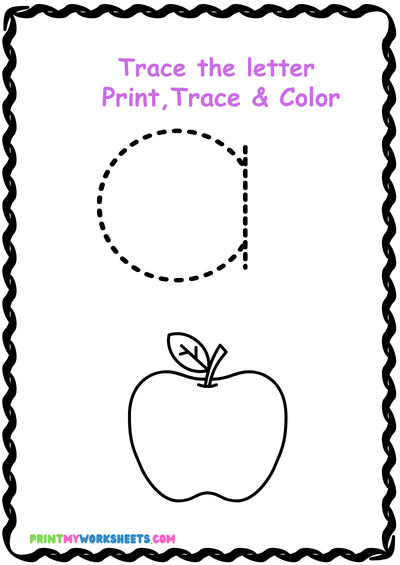
26 Pre-K Lowercase Alphabet Tracing Worksheets – Free PDF
26 Pre-K Lowercase Alphabet Tracing Worksheets
The 26 Pre-K Lowercase Alphabet Tracing Worksheets resource is designed to help young learners build strong early literacy skills through structured handwriting practice. This free printable PDF is created specifically for U.S. parents, preschool teachers, and homeschool families who want to support letter formation and alphabet recognition in a clear, developmentally appropriate way.
In Pre-K, children begin recognizing letters and understanding that each letter represents a sound. Learning to correctly trace and form lowercase letters is an essential step in early reading and writing development. Because most printed text uses lowercase letters, early familiarity builds confidence and prepares children for kindergarten readiness. These worksheets provide guided tracing practice for all 26 lowercase letters, helping young learners develop muscle memory, visual recognition, and foundational writing skills in an engaging and supportive format.
What Students Will Learn?
Through these lowercase alphabet tracing pages, children will learn how to correctly form each letter from a to z. Each worksheet focuses on a single lowercase letter, allowing students to concentrate on one shape at a time without feeling overwhelmed.
Students practice following directional strokes using dotted lines and guided tracing paths. This structured approach supports proper letter formation habits from the beginning. Children also strengthen their understanding of letter identification as they repeatedly see and trace each letter.
Activities may include large tracing lines for beginners, smaller practice rows for additional repetition, and simple letter recognition elements to reinforce learning. By working through all 26 letters, students gain familiarity with the full lowercase alphabet in a consistent and manageable way.
The clear layout and age-appropriate spacing ensure that young learners can focus on skill development. These tracing exercises align with early childhood literacy expectations across the United States and support smooth progression into kindergarten handwriting tasks.
Educational Value & Skill Development
The 26 Pre-K Lowercase Alphabet Tracing Worksheets provide meaningful educational value beyond simple handwriting practice. Tracing letters strengthens fine motor skills by encouraging proper pencil grip, hand stability, and controlled movements. These foundational motor skills are essential for future writing fluency.
Cognitive development is also supported as children connect visual letter shapes with hand movements. Repeated tracing helps build muscle memory, making letter formation more automatic over time. This reduces frustration and builds writing confidence.
In addition, early tracing practice supports phonemic awareness. As children recognize lowercase letters consistently, they are better prepared to connect letters to their corresponding sounds. This connection forms the basis for decoding and early reading skills.
Confidence grows as children master each letter. Completing all 26 letters gives young learners a sense of accomplishment and readiness for more advanced literacy activities. Consistent exposure through structured worksheets ensures gradual progress and reinforces classroom instruction or homeschool lessons.
Why Focus on Lowercase Alphabet Tracing?
Lowercase letters appear more frequently in everyday reading materials than uppercase letters. Books, worksheets, classroom charts, and printed text primarily use lowercase letters, making early familiarity essential for reading readiness.
In Pre-K, students are developing foundational literacy skills. Practicing lowercase letter formation ensures they learn correct stroke order before habits become difficult to change. Guided repetition supports accuracy and builds long-term writing fluency.
Repetition is especially important at this stage. Young learners benefit from consistent practice that allows them to revisit each letter multiple times. This repetition strengthens memory retention and reinforces recognition.
Early alphabet tracing also supports kindergarten readiness standards across the United States. Many kindergarten classrooms expect students to recognize and attempt writing lowercase letters independently. Developing these skills in Pre-K helps ease that transition and builds confidence in the classroom environment.
How to Use These Worksheets?
The 26 Pre-K Lowercase Alphabet Tracing Worksheets can be used in a variety of learning settings. Preschool teachers may incorporate them into daily literacy centers, small-group handwriting practice, or alphabet-focused lessons. Working alongside a teacher allows children to receive immediate guidance on proper stroke direction and pencil grip.
Homeschool parents can use the worksheets as part of a structured phonics routine. Completing one letter per day or per week creates a steady learning rhythm. Parents may also pair tracing activities with letter sound practice, alphabet songs, or hands-on activities such as forming letters with playdough.
Because this resource is a free printable PDF, families can easily download and print pages as needed. Worksheets can be reused for additional practice, review sessions, or reinforcement before advancing to independent writing tasks.
The simple, clean design allows children to focus on tracing without unnecessary distractions. Whether used in classrooms or at home, these worksheets provide structured and supportive alphabet practice.
Related Worksheets / Extensions:
You may also like:
Pre-K uppercase alphabet tracing worksheets
Preschool letter recognition activities
Beginning phonics worksheets for kindergarten
Alphabet matching and sound identification pages
The 26 Pre-K Lowercase Alphabet Tracing Worksheets work well alongside other early literacy resources that focus on phonics, letter sounds, and handwriting development. Combining tracing practice with sound recognition and simple word-building activities strengthens overall literacy growth. By reinforcing alphabet skills in multiple formats, young learners build the confidence and readiness needed for kindergarten reading and writing success.
Frequently Asked Questions
Q1. Is this worksheet free to download?Yes, this worksheet is 100% free to download and print. No account, subscription, or payment is required. Click the Download Now button to get your free PDF instantly.Q2. What format is this worksheet available in?This worksheet is available as a printable PDF file. It is black-and-white, printer-friendly, and works on any standard home or classroom printer using A4 or US Letter paper.Q3. Can I use this worksheet for both classroom and home learning?Yes, these worksheets are designed for use by classroom teachers, homeschool parents, and tutors. They can be used as morning work, homework, revision practice, or learning centre activities.Q4. Is this worksheet aligned with Common Core ELA standards?Yes, this English worksheet is aligned with U.S. Common Core English Language Arts standards and supports foundational literacy development.Q5. Is this worksheet suitable for ESL or ELL students?This worksheet can be used as a supplemental resource for ESL and ELL students, particularly for vocabulary building and language pattern practice.26 Pre-K Lowercase Alphabet Tracing Worksheets – Free PDF
26 Pre-K Lowercase Alphabet Tracing Worksheets
The 26 Pre-K Lowercase Alphabet Tracing Worksheets resource is designed to help young learners build strong early literacy skills through structured handwriting practice. This free printable PDF is created specifically for U.S. parents, preschool teachers, and homeschool families who want to support letter formation and alphabet recognition in a clear, developmentally appropriate way.
In Pre-K, children begin recognizing letters and understanding that each letter represents a sound. Learning to correctly trace and form lowercase letters is an essential step in early reading and writing development. Because most printed text uses lowercase letters, early familiarity builds confidence and prepares children for kindergarten readiness. These worksheets provide guided tracing practice for all 26 lowercase letters, helping young learners develop muscle memory, visual recognition, and foundational writing skills in an engaging and supportive format.
What Students Will Learn?
Through these lowercase alphabet tracing pages, children will learn how to correctly form each letter from a to z. Each worksheet focuses on a single lowercase letter, allowing students to concentrate on one shape at a time without feeling overwhelmed.
Students practice following directional strokes using dotted lines and guided tracing paths. This structured approach supports proper letter formation habits from the beginning. Children also strengthen their understanding of letter identification as they repeatedly see and trace each letter.
Activities may include large tracing lines for beginners, smaller practice rows for additional repetition, and simple letter recognition elements to reinforce learning. By working through all 26 letters, students gain familiarity with the full lowercase alphabet in a consistent and manageable way.
The clear layout and age-appropriate spacing ensure that young learners can focus on skill development. These tracing exercises align with early childhood literacy expectations across the United States and support smooth progression into kindergarten handwriting tasks.
Educational Value & Skill Development
The 26 Pre-K Lowercase Alphabet Tracing Worksheets provide meaningful educational value beyond simple handwriting practice. Tracing letters strengthens fine motor skills by encouraging proper pencil grip, hand stability, and controlled movements. These foundational motor skills are essential for future writing fluency.
Cognitive development is also supported as children connect visual letter shapes with hand movements. Repeated tracing helps build muscle memory, making letter formation more automatic over time. This reduces frustration and builds writing confidence.
In addition, early tracing practice supports phonemic awareness. As children recognize lowercase letters consistently, they are better prepared to connect letters to their corresponding sounds. This connection forms the basis for decoding and early reading skills.
Confidence grows as children master each letter. Completing all 26 letters gives young learners a sense of accomplishment and readiness for more advanced literacy activities. Consistent exposure through structured worksheets ensures gradual progress and reinforces classroom instruction or homeschool lessons.
Why Focus on Lowercase Alphabet Tracing?
Lowercase letters appear more frequently in everyday reading materials than uppercase letters. Books, worksheets, classroom charts, and printed text primarily use lowercase letters, making early familiarity essential for reading readiness.
In Pre-K, students are developing foundational literacy skills. Practicing lowercase letter formation ensures they learn correct stroke order before habits become difficult to change. Guided repetition supports accuracy and builds long-term writing fluency.
Repetition is especially important at this stage. Young learners benefit from consistent practice that allows them to revisit each letter multiple times. This repetition strengthens memory retention and reinforces recognition.
Early alphabet tracing also supports kindergarten readiness standards across the United States. Many kindergarten classrooms expect students to recognize and attempt writing lowercase letters independently. Developing these skills in Pre-K helps ease that transition and builds confidence in the classroom environment.
How to Use These Worksheets?
The 26 Pre-K Lowercase Alphabet Tracing Worksheets can be used in a variety of learning settings. Preschool teachers may incorporate them into daily literacy centers, small-group handwriting practice, or alphabet-focused lessons. Working alongside a teacher allows children to receive immediate guidance on proper stroke direction and pencil grip.
Homeschool parents can use the worksheets as part of a structured phonics routine. Completing one letter per day or per week creates a steady learning rhythm. Parents may also pair tracing activities with letter sound practice, alphabet songs, or hands-on activities such as forming letters with playdough.
Because this resource is a free printable PDF, families can easily download and print pages as needed. Worksheets can be reused for additional practice, review sessions, or reinforcement before advancing to independent writing tasks.
The simple, clean design allows children to focus on tracing without unnecessary distractions. Whether used in classrooms or at home, these worksheets provide structured and supportive alphabet practice.
Related Worksheets / Extensions:
You may also like:
Pre-K uppercase alphabet tracing worksheets
Preschool letter recognition activities
Beginning phonics worksheets for kindergarten
Alphabet matching and sound identification pages
The 26 Pre-K Lowercase Alphabet Tracing Worksheets work well alongside other early literacy resources that focus on phonics, letter sounds, and handwriting development. Combining tracing practice with sound recognition and simple word-building activities strengthens overall literacy growth. By reinforcing alphabet skills in multiple formats, young learners build the confidence and readiness needed for kindergarten reading and writing success.
Frequently Asked Questions
Q1. Is this worksheet free to download?Yes, this worksheet is 100% free to download and print. No account, subscription, or payment is required. Click the Download Now button to get your free PDF instantly.Q2. What format is this worksheet available in?This worksheet is available as a printable PDF file. It is black-and-white, printer-friendly, and works on any standard home or classroom printer using A4 or US Letter paper.Q3. Can I use this worksheet for both classroom and home learning?Yes, these worksheets are designed for use by classroom teachers, homeschool parents, and tutors. They can be used as morning work, homework, revision practice, or learning centre activities.Q4. Is this worksheet aligned with Common Core ELA standards?Yes, this English worksheet is aligned with U.S. Common Core English Language Arts standards and supports foundational literacy development.Q5. Is this worksheet suitable for ESL or ELL students?This worksheet can be used as a supplemental resource for ESL and ELL students, particularly for vocabulary building and language pattern practice.
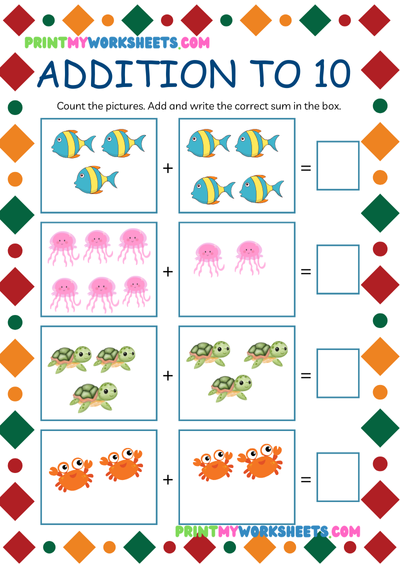
Pre Kindergarten Simple Addition Maths II – Easy Home Learning for Early Math Skills
Pre Kindergarten Simple Addition Maths II
The Pre Kindergarten Simple Addition Maths II worksheet is designed to help young learners build early math confidence through structured and engaging practice. Created for U.S. parents, preschool teachers, and homeschool families, this free printable PDF focuses on strengthening foundational addition skills in a developmentally appropriate way.
At the Pre-K level, children are just beginning to understand how numbers represent quantities. Simple addition activities help them see how two small groups can be combined to create a new total. Through clear visuals, counting exercises, and guided practice, this worksheet supports early number sense while keeping learning playful and accessible. Strong early math foundations are essential for kindergarten readiness, and consistent exposure to combining numbers helps children gain familiarity, confidence, and enthusiasm for learning.
What Students Will Learn?
This worksheet focuses on introducing and reinforcing the concept of combining small groups. Students practice counting objects in two separate sets and determining the total when those sets are joined together. Activities may include picture-based addition problems, matching number sentences to images, tracing totals, and circling correct answers.
Children develop one-to-one correspondence as they count each object carefully. They also begin recognizing common number combinations within 5 and within 10, depending on their readiness level. These early math experiences help children move from concrete counting to understanding simple number relationships.
The structure of the worksheet allows learners to progress step by step. Large illustrations and clearly spaced numbers reduce distractions and help children focus. By engaging in repeated practice with visual support, young learners begin to understand that addition represents “putting together” or “adding more,” which is a key early childhood math concept.
Educational Value & Skill Development
The Pre Kindergarten Simple Addition Maths II worksheet supports both academic growth and broader cognitive development. Early addition strengthens number sense, which is the foundation for all future math learning. When children combine groups and count totals, they begin to understand how numbers interact and change.
These activities encourage logical thinking and sequencing. Children learn to count one group, count another, and then count the total. This structured process builds attention to detail and problem-solving skills. Even simple math tasks require children to focus, follow steps, and check their work.
Fine motor development is also supported through tracing numbers, circling answers, and writing totals. Strengthening hand control and pencil grip prepares children for more advanced writing tasks in kindergarten.
Perhaps most importantly, early success in math builds confidence. When children consistently solve simple addition problems correctly, they begin to feel capable and motivated. Positive early math experiences reduce anxiety and create a strong foundation for future operations such as subtraction and basic word problems.
Why Focus on Simple Addition?
Simple addition is one of the earliest formal math concepts introduced in preschool. Understanding how two small quantities combine to form a new number is essential before children can move on to subtraction, larger sums, or story problems.
At the Pre-K level, repetition plays an important role. Children benefit from practicing similar problem types in multiple formats, such as counting animals, shapes, or everyday objects. This repetition strengthens memory and reinforces understanding.
Simple addition also connects to early learning standards used across the United States. Preschool math frameworks emphasize counting, understanding quantity, and recognizing number relationships. Combining groups is a natural extension of these early skills.
When children become comfortable with small sums, they enter kindergarten better prepared. A strong foundation in early addition supports smoother transitions into structured classroom instruction and sets the stage for long-term math success.
How to Use These Worksheets?
The Pre Kindergarten Simple Addition Maths II worksheet can be used flexibly in different learning settings. In preschool classrooms, teachers may include it in math centers, small-group instruction, or guided practice sessions. Working with a teacher allows children to use manipulatives like counters or small toys to physically combine groups before completing the worksheet.
Homeschool families can integrate the printable pages into a daily math routine. Parents may encourage children to count household items, snacks, or blocks alongside the printed problems to make learning hands-on and meaningful.
Because this resource is provided as a free printable PDF, it can be downloaded quickly and printed as often as needed. Pages may be reused for review, extra practice, or reinforcement before advancing to more challenging math tasks.
The simple and clear layout also supports independent work once children understand the directions. Whether used for practice, review, or introduction to addition, this worksheet provides consistent exposure to early math concepts.
Related Worksheets / Extensions:
Frequently Asked Questions
Q1. Is this worksheet free to download?Yes, this worksheet is 100% free to download and print. No account, subscription, or payment is required. Click the Download Now button to get your free PDF instantly.Q2. What format is this worksheet available in?This worksheet is available as a printable PDF file. It is black-and-white, printer-friendly, and works on any standard home or classroom printer using A4 or US Letter paper.Q3. Can I use this worksheet for both classroom and home learning?Yes, these worksheets are designed for use by classroom teachers, homeschool parents, and tutors. They can be used as morning work, homework, revision practice, or learning centre activities.Q4. Is this worksheet suitable for extra practice or exam preparation?Yes, this worksheet is ideal for supplemental practice, homework reinforcement, test preparation, and homeschool math lessons.Q5. Does this math worksheet include an answer key?Yes, an answer key is included in the PDF so parents and teachers can quickly check student responses without manual calculation.Pre Kindergarten Simple Addition Maths II – Easy Home Learning for Early Math Skills
Pre Kindergarten Simple Addition Maths II
The Pre Kindergarten Simple Addition Maths II worksheet is designed to help young learners build early math confidence through structured and engaging practice. Created for U.S. parents, preschool teachers, and homeschool families, this free printable PDF focuses on strengthening foundational addition skills in a developmentally appropriate way.
At the Pre-K level, children are just beginning to understand how numbers represent quantities. Simple addition activities help them see how two small groups can be combined to create a new total. Through clear visuals, counting exercises, and guided practice, this worksheet supports early number sense while keeping learning playful and accessible. Strong early math foundations are essential for kindergarten readiness, and consistent exposure to combining numbers helps children gain familiarity, confidence, and enthusiasm for learning.
What Students Will Learn?
This worksheet focuses on introducing and reinforcing the concept of combining small groups. Students practice counting objects in two separate sets and determining the total when those sets are joined together. Activities may include picture-based addition problems, matching number sentences to images, tracing totals, and circling correct answers.
Children develop one-to-one correspondence as they count each object carefully. They also begin recognizing common number combinations within 5 and within 10, depending on their readiness level. These early math experiences help children move from concrete counting to understanding simple number relationships.
The structure of the worksheet allows learners to progress step by step. Large illustrations and clearly spaced numbers reduce distractions and help children focus. By engaging in repeated practice with visual support, young learners begin to understand that addition represents “putting together” or “adding more,” which is a key early childhood math concept.
Educational Value & Skill Development
The Pre Kindergarten Simple Addition Maths II worksheet supports both academic growth and broader cognitive development. Early addition strengthens number sense, which is the foundation for all future math learning. When children combine groups and count totals, they begin to understand how numbers interact and change.
These activities encourage logical thinking and sequencing. Children learn to count one group, count another, and then count the total. This structured process builds attention to detail and problem-solving skills. Even simple math tasks require children to focus, follow steps, and check their work.
Fine motor development is also supported through tracing numbers, circling answers, and writing totals. Strengthening hand control and pencil grip prepares children for more advanced writing tasks in kindergarten.
Perhaps most importantly, early success in math builds confidence. When children consistently solve simple addition problems correctly, they begin to feel capable and motivated. Positive early math experiences reduce anxiety and create a strong foundation for future operations such as subtraction and basic word problems.
Why Focus on Simple Addition?
Simple addition is one of the earliest formal math concepts introduced in preschool. Understanding how two small quantities combine to form a new number is essential before children can move on to subtraction, larger sums, or story problems.
At the Pre-K level, repetition plays an important role. Children benefit from practicing similar problem types in multiple formats, such as counting animals, shapes, or everyday objects. This repetition strengthens memory and reinforces understanding.
Simple addition also connects to early learning standards used across the United States. Preschool math frameworks emphasize counting, understanding quantity, and recognizing number relationships. Combining groups is a natural extension of these early skills.
When children become comfortable with small sums, they enter kindergarten better prepared. A strong foundation in early addition supports smoother transitions into structured classroom instruction and sets the stage for long-term math success.
How to Use These Worksheets?
The Pre Kindergarten Simple Addition Maths II worksheet can be used flexibly in different learning settings. In preschool classrooms, teachers may include it in math centers, small-group instruction, or guided practice sessions. Working with a teacher allows children to use manipulatives like counters or small toys to physically combine groups before completing the worksheet.
Homeschool families can integrate the printable pages into a daily math routine. Parents may encourage children to count household items, snacks, or blocks alongside the printed problems to make learning hands-on and meaningful.
Because this resource is provided as a free printable PDF, it can be downloaded quickly and printed as often as needed. Pages may be reused for review, extra practice, or reinforcement before advancing to more challenging math tasks.
The simple and clear layout also supports independent work once children understand the directions. Whether used for practice, review, or introduction to addition, this worksheet provides consistent exposure to early math concepts.