
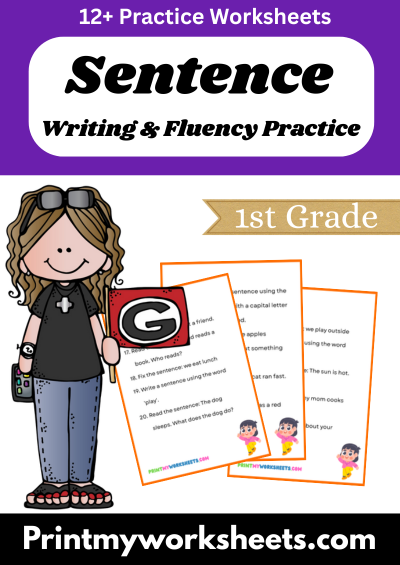


1st Grade Sentence Writing and Fluency Worksheets PDF – Free
These 1st Grade Sentence Writing and Fluency Worksheets PDF help students write complete sentences and read with confidence. Designed for US teachers and homeschool parents, the printable PDFs support early writing skills, reading fluency, grammar accuracy, and overall literacy development. It is completely aligned with U.S Curriculum.
Click below to access the free 1st Grade Sentence Writing and Fluency Worksheets PDF
Continue Learning
Explore more worksheets to build your child’s English skills.

1st Grade Sentence Writing and Fluency Worksheets PDF
Helping young learners express their ideas clearly in writing is an essential part of early literacy development. The 1st Grade Sentence Writing and Fluency Worksheets PDF is designed to support children as they learn how to form complete sentences and read them smoothly with confidence. Created for U.S. parents, classroom teachers, and homeschool families, this worksheet set provides structured, age-appropriate practice that fits naturally into first-grade literacy instruction.
In first grade, students transition from recognizing letters and words to writing simple, meaningful sentences. Developing sentence writing skills alongside reading fluency helps children communicate effectively and build a strong foundation for future reading and writing success. These printable worksheets guide students step by step as they practice sentence construction, spacing, punctuation, and reading with expression. With clear instructions and child-friendly layouts, this free printable PDF makes it easy to reinforce essential language arts skills in a supportive and engaging way.
What Students Will Learn?
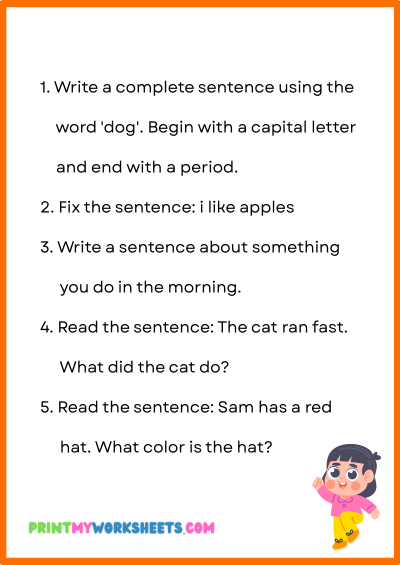
These worksheets focus on helping first graders understand how sentences work and how fluent reading supports comprehension. Students learn to identify what makes a complete sentence, including a clear subject, action, and proper ending punctuation. Through guided activities, children practice writing simple sentences using familiar vocabulary and sight words.
The worksheets include exercises that encourage students to read sentences aloud, improving pacing, accuracy, and expression. Activities may involve tracing sentences, rewriting them correctly, or choosing the best words to complete a thought. These tasks help reinforce sentence structure while strengthening reading fluency at the same time.
Designed with young learners in mind, the activities support structured learning without overwhelming students. Instructions are simple, visuals are clear, and tasks are broken into manageable steps. This approach aligns with first-grade expectations, where students are building confidence in both writing and reading. By practicing these skills together, learners begin to see how writing and reading work hand in hand.
Educational Value & Skill Development
Strong sentence writing and fluency skills play a vital role in early academic success, and the 1st Grade Sentence Writing and Fluency Worksheets PDF provides meaningful practice that supports multiple areas of development. Academically, these worksheets help students organize their thoughts, use correct grammar, and apply punctuation appropriately. Clear sentence writing also supports reading comprehension, as students better understand how ideas are connected in text.
From a cognitive standpoint, forming sentences strengthens memory, sequencing, and language processing skills. Reading sentences fluently requires children to recognize words automatically, freeing up mental energy to focus on meaning rather than decoding. This balance between writing and reading supports overall literacy growth.
Confidence and independence develop as students successfully complete tasks on their own. Repeated practice helps children internalize sentence patterns, making writing feel more natural and less intimidating. Over time, students progress from copying sentences to generating their own ideas in writing. This gradual skill development prepares learners for longer writing tasks and more advanced reading expectations in later grades.
Why Focus on Sentence Writing and Fluency?
Sentence writing and reading fluency are cornerstones of early language arts instruction. In first grade, students are expected to move beyond individual words and begin expressing complete thoughts in writing. Understanding how to form clear sentences helps children communicate ideas effectively and supports their overall language development.
Fluency is equally important because it allows students to read smoothly and with understanding. When children read fluently, they can focus on comprehension rather than struggling with each word. These skills work together, as writing reinforces reading patterns and reading strengthens writing awareness.
Repetition and guided practice are key to mastering these foundational skills. Worksheets provide consistent opportunities to practice sentence construction and fluent reading in a low-pressure setting. This approach aligns with U.S. early learning standards, which emphasize writing simple sentences, using correct conventions, and reading with accuracy and expression. Focusing on these skills early helps ensure long-term success in literacy.
How to Use These Worksheets?
These worksheets are designed to be flexible and easy to use across different learning environments. In classrooms, teachers can incorporate them into daily language arts lessons, literacy centers, or small-group instruction. They also work well as morning work or independent practice activities that reinforce previously taught skills.
For homeschool families, the worksheets provide a clear structure for practicing sentence writing and reading fluency at home. Parents can work alongside their child to model sentence reading or allow students to complete pages independently as confidence grows.
The 1st Grade Sentence Writing and Fluency Worksheets PDF is offered as a free printable PDF, making it simple to download and print as needed. Pages can be reused for review throughout the year or selected to target specific skills. This flexibility allows educators and families to adapt instruction to each child’s pace and learning style.
Related Worksheets / Extensions:
You may also like:


Frequently Asked Questions
Q1. What format is this worksheet available in?
This worksheet is available as a printable PDF file. It is black-and-white, printer-friendly, and works on any standard home or classroom printer using A4 or US Letter paper.
Q2. Is this worksheet free to download?
Yes, this worksheet is 100% free to download and print. No account, subscription, or payment is required. Click the Download Now button to get your free PDF instantly.
Q3. Can I use this worksheet for both classroom and home learning?
Yes, these worksheets are designed for use by classroom teachers, homeschool parents, and tutors. They can be used as morning work, homework, revision practice, or learning centre activities.
Q4. Can this worksheet be used for phonics instruction?
Yes, this worksheet supports phonics-based reading instruction and is suitable for early readers building letter-sound recognition skills.
Q5. Is this worksheet suitable for ESL or ELL students?
This worksheet can be used as a supplemental resource for ESL and ELL students, particularly for vocabulary building and language pattern practice.
You may also like…
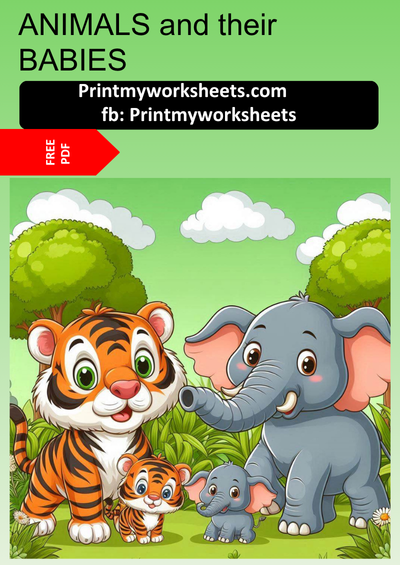
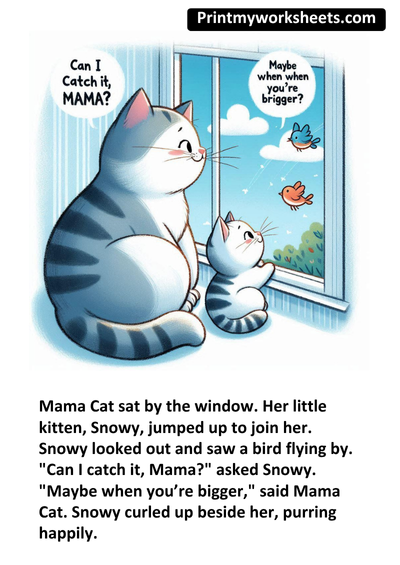
1st Grade Animals and Their Babies Worksheets PDF – Free
1st Grade Animals and Their Babies Worksheets PDF
Learning about animals is an exciting topic for young students, especially when they discover how animals grow and care for their young. The 1st Grade Animals and Their Babies Worksheets PDF introduces first grade learners to common animals and the names of their babies through engaging and age-appropriate activities. These printable worksheets are designed for U.S. teachers, parents, and homeschool families who want to strengthen science knowledge while supporting reading and observation skills.
In first grade, students begin to explore basic life science concepts, including animal families, habitats, and life cycles. Understanding how animals and their babies are related helps children build early scientific awareness and vocabulary. Activities that connect animals with their young also encourage curiosity about nature and the world around them.
The 1st Grade Animals and Their Babies Worksheets PDF provides simple, interactive exercises that help students recognize animals and their offspring while practicing reading, matching, and observation skills. These worksheets help children develop early science knowledge while building confidence through structured and engaging learning activities.
What Students Will Learn?
Animals and their babies worksheets help first grade students develop early science understanding while practicing reading and observation skills. These activities introduce common animals and the names of their young in ways that are easy for young learners to understand.
Students begin by identifying familiar animals such as cows, dogs, cats, ducks, chickens, and horses. They learn the correct names for baby animals, such as calf, puppy, kitten, duckling, chick, and foal.
Many worksheets include matching activities where students connect adult animals with their babies. These activities strengthen recognition skills while helping students understand the relationship between parents and offspring.
Students may also complete labeling or fill-in-the-blank exercises that encourage them to read simple words and identify animal families.
Some worksheets include simple reading sentences about animals and their babies. These short passages allow students to practice reading while learning science vocabulary.
Picture-based activities help students observe differences between adult animals and their young. These visual exercises support understanding and make the learning process more engaging.
Through these activities, first grade learners build knowledge about animals while strengthening vocabulary, observation, and basic reading skills.
Educational Value & Skill Development
The 1st Grade Animals and Their Babies Worksheets PDF supports both science learning and literacy development for first grade students.
One important benefit is building early science knowledge. By learning about animals and their young, students begin to understand life cycles and how living things grow and develop.
The 1st Grade Animals and Their Babies Worksheets PDF also helps strengthen vocabulary development. Students learn new words such as calf, kitten, cub, chick, and puppy, which expands their language skills.
These worksheets also improve observation skills. When students look at pictures of animals and their babies, they notice similarities and differences in size, shape, and features.
Another important benefit is strengthening reading skills. Many worksheets include simple words and sentences that encourage students to read while learning science concepts.
Matching and labeling activities also support critical thinking. Students must identify patterns and relationships between adult animals and their babies.
Completing worksheets independently helps students build confidence and responsibility for their learning. Successfully identifying animals and their babies encourages curiosity and motivation to explore more science topics.
By combining literacy and science concepts, these worksheets help students develop a balanced foundation for future learning.
Why Focus on Animals and Their Babies?
Learning about animals and their offspring is a fundamental science topic for early elementary students. It helps children understand how living things grow, reproduce, and care for their young.
This topic is particularly engaging for first grade learners because animals are familiar and interesting. Many children already recognize animals from books, farms, zoos, or pets at home.
Studying animal families also introduces basic biological concepts in a simple and accessible way. Students learn that baby animals grow into adult animals, which helps them understand life cycles.
Activities about animals and their babies also support vocabulary development. Learning specific terms such as kitten, calf, cub, and chick helps students expand their language skills.
This topic also encourages curiosity about nature and the environment. When children learn about animal families, they often become more interested in wildlife and science.
Teachers in the United States frequently include animal-related lessons in early science instruction because they connect easily with students’ everyday experiences.
Exploring animal families allows students to build foundational science knowledge while strengthening observation and reading skills.
How to Use These Worksheets?
The 1st Grade Animals and Their Babies Worksheets PDF can be used in many educational settings, including classrooms, homeschool lessons, and independent learning activities.
Teachers often include these worksheets during science units focused on animals, habitats, or life cycles. Students may begin by discussing different animals before completing the activities.
In classroom settings, teachers may guide students through matching exercises or group discussions about animal families. These activities encourage participation and strengthen understanding.
Parents who homeschool can incorporate these worksheets into science lessons at home. Children can complete the worksheets while discussing animals they have seen in books, farms, or zoos.
Because the worksheets are provided as a free printable PDF, they are easy to download and print whenever additional learning activities are needed.
These worksheets also work well for independent practice. Students can complete matching or labeling tasks at their own pace while reinforcing their science knowledge.
The printable format allows teachers and parents to reuse the activities for review sessions or additional practice throughout the school year.
Related Worksheets / Extensions:
Frequently Asked Questions
Q1. Is this worksheet free to download?Yes, this worksheet is 100% free to download and print. No account, subscription, or payment is required. Click the Download Now button to get your free PDF instantly.Q2. What format is this worksheet available in?This worksheet is available as a printable PDF file. It is black-and-white, printer-friendly, and works on any standard home or classroom printer using A4 or US Letter paper.Q3. Can I use this worksheet for both classroom and home learning?Yes, these worksheets are designed for use by classroom teachers, homeschool parents, and tutors. They can be used as morning work, homework, revision practice, or learning centre activities.Q4. Is this worksheet aligned with Common Core ELA standards?Yes, this English worksheet is aligned with U.S. Common Core English Language Arts standards and supports foundational literacy development.Q5. Can this worksheet be used for phonics instruction?Yes, this worksheet supports phonics-based reading instruction and is suitable for early readers building letter-sound recognition skills.1st Grade Animals and Their Babies Worksheets PDF – Free
1st Grade Animals and Their Babies Worksheets PDF
Learning about animals is an exciting topic for young students, especially when they discover how animals grow and care for their young. The 1st Grade Animals and Their Babies Worksheets PDF introduces first grade learners to common animals and the names of their babies through engaging and age-appropriate activities. These printable worksheets are designed for U.S. teachers, parents, and homeschool families who want to strengthen science knowledge while supporting reading and observation skills.
In first grade, students begin to explore basic life science concepts, including animal families, habitats, and life cycles. Understanding how animals and their babies are related helps children build early scientific awareness and vocabulary. Activities that connect animals with their young also encourage curiosity about nature and the world around them.
The 1st Grade Animals and Their Babies Worksheets PDF provides simple, interactive exercises that help students recognize animals and their offspring while practicing reading, matching, and observation skills. These worksheets help children develop early science knowledge while building confidence through structured and engaging learning activities.
What Students Will Learn?
Animals and their babies worksheets help first grade students develop early science understanding while practicing reading and observation skills. These activities introduce common animals and the names of their young in ways that are easy for young learners to understand.
Students begin by identifying familiar animals such as cows, dogs, cats, ducks, chickens, and horses. They learn the correct names for baby animals, such as calf, puppy, kitten, duckling, chick, and foal.
Many worksheets include matching activities where students connect adult animals with their babies. These activities strengthen recognition skills while helping students understand the relationship between parents and offspring.
Students may also complete labeling or fill-in-the-blank exercises that encourage them to read simple words and identify animal families.
Some worksheets include simple reading sentences about animals and their babies. These short passages allow students to practice reading while learning science vocabulary.
Picture-based activities help students observe differences between adult animals and their young. These visual exercises support understanding and make the learning process more engaging.
Through these activities, first grade learners build knowledge about animals while strengthening vocabulary, observation, and basic reading skills.
Educational Value & Skill Development
The 1st Grade Animals and Their Babies Worksheets PDF supports both science learning and literacy development for first grade students.
One important benefit is building early science knowledge. By learning about animals and their young, students begin to understand life cycles and how living things grow and develop.
The 1st Grade Animals and Their Babies Worksheets PDF also helps strengthen vocabulary development. Students learn new words such as calf, kitten, cub, chick, and puppy, which expands their language skills.
These worksheets also improve observation skills. When students look at pictures of animals and their babies, they notice similarities and differences in size, shape, and features.
Another important benefit is strengthening reading skills. Many worksheets include simple words and sentences that encourage students to read while learning science concepts.
Matching and labeling activities also support critical thinking. Students must identify patterns and relationships between adult animals and their babies.
Completing worksheets independently helps students build confidence and responsibility for their learning. Successfully identifying animals and their babies encourages curiosity and motivation to explore more science topics.
By combining literacy and science concepts, these worksheets help students develop a balanced foundation for future learning.
Why Focus on Animals and Their Babies?
Learning about animals and their offspring is a fundamental science topic for early elementary students. It helps children understand how living things grow, reproduce, and care for their young.
This topic is particularly engaging for first grade learners because animals are familiar and interesting. Many children already recognize animals from books, farms, zoos, or pets at home.
Studying animal families also introduces basic biological concepts in a simple and accessible way. Students learn that baby animals grow into adult animals, which helps them understand life cycles.
Activities about animals and their babies also support vocabulary development. Learning specific terms such as kitten, calf, cub, and chick helps students expand their language skills.
This topic also encourages curiosity about nature and the environment. When children learn about animal families, they often become more interested in wildlife and science.
Teachers in the United States frequently include animal-related lessons in early science instruction because they connect easily with students’ everyday experiences.
Exploring animal families allows students to build foundational science knowledge while strengthening observation and reading skills.
How to Use These Worksheets?
The 1st Grade Animals and Their Babies Worksheets PDF can be used in many educational settings, including classrooms, homeschool lessons, and independent learning activities.
Teachers often include these worksheets during science units focused on animals, habitats, or life cycles. Students may begin by discussing different animals before completing the activities.
In classroom settings, teachers may guide students through matching exercises or group discussions about animal families. These activities encourage participation and strengthen understanding.
Parents who homeschool can incorporate these worksheets into science lessons at home. Children can complete the worksheets while discussing animals they have seen in books, farms, or zoos.
Because the worksheets are provided as a free printable PDF, they are easy to download and print whenever additional learning activities are needed.
These worksheets also work well for independent practice. Students can complete matching or labeling tasks at their own pace while reinforcing their science knowledge.
The printable format allows teachers and parents to reuse the activities for review sessions or additional practice throughout the school year.
Related Worksheets / Extensions:
Frequently Asked Questions
Q1. Is this worksheet free to download?Yes, this worksheet is 100% free to download and print. No account, subscription, or payment is required. Click the Download Now button to get your free PDF instantly.Q2. What format is this worksheet available in?This worksheet is available as a printable PDF file. It is black-and-white, printer-friendly, and works on any standard home or classroom printer using A4 or US Letter paper.Q3. Can I use this worksheet for both classroom and home learning?Yes, these worksheets are designed for use by classroom teachers, homeschool parents, and tutors. They can be used as morning work, homework, revision practice, or learning centre activities.Q4. Is this worksheet aligned with Common Core ELA standards?Yes, this English worksheet is aligned with U.S. Common Core English Language Arts standards and supports foundational literacy development.Q5. Can this worksheet be used for phonics instruction?Yes, this worksheet supports phonics-based reading instruction and is suitable for early readers building letter-sound recognition skills.
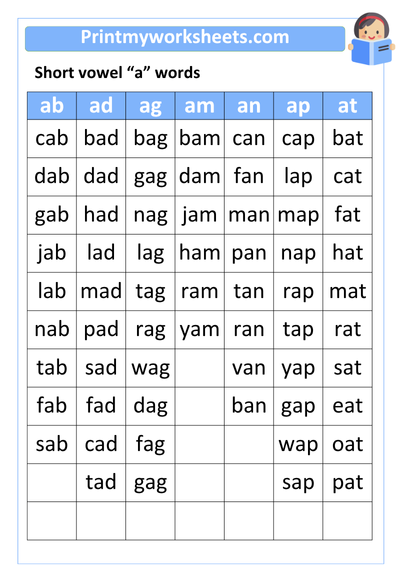
2nd Grade CVC Poem Worksheets PDF | Free Downloadable
2nd Grade CVC Poem Worksheets PDF
Reading development continues to grow significantly during second grade as students become more confident readers and writers. The 2nd Grade CVC Poem Worksheets PDF provides engaging reading activities that combine phonics practice with simple poetry. These printable worksheets are designed for U.S. teachers, parents, and homeschool families who want to support early literacy skills through structured yet enjoyable reading exercises.
CVC words—words that follow the consonant-vowel-consonant pattern—are a foundational part of early reading. Even in second grade, practicing CVC word patterns helps strengthen decoding skills and improves reading fluency. Short poems that include these patterns make learning enjoyable and easier to remember.
The 2nd Grade CVC Poem Worksheets PDF introduces students to short poems that reinforce familiar phonics patterns while encouraging expressive reading. Through reading and interacting with simple poems, children practice recognizing word families, understanding rhythm in language, and building reading confidence. These worksheets help young learners strengthen essential literacy skills while enjoying creative language activities.
What Students Will Learn?
CVC poem worksheets help second grade students strengthen their phonics knowledge while exploring poetry in a structured and engaging format. These activities combine reading practice with creative language exposure that supports literacy development.
Students begin by reading short poems that include common consonant-vowel-consonant word patterns. Words such as “cat,” “dog,” “sun,” and “bed” help reinforce familiar phonics patterns that students learned in earlier grades.
These poems often highlight word families and rhyming patterns. Recognizing rhymes allows students to identify similar sounds and spelling patterns, which improves decoding and reading accuracy.
Students also practice reading poems aloud. This activity helps improve fluency, rhythm, and expression while strengthening pronunciation skills.
Some worksheets include activities such as identifying rhyming words, circling CVC words, or filling in missing words within a poem. These exercises encourage students to analyze language patterns and apply their phonics knowledge.
Students may also answer simple comprehension questions related to the poem. This helps ensure they understand the meaning of the text while practicing reading skills.
Through these structured activities, second grade learners strengthen phonics skills, expand vocabulary, and develop a deeper appreciation for rhythm and language.
Educational Value & Skill Development
The 2nd Grade CVC Poem Worksheets PDF supports multiple literacy skills that are essential for second grade reading development.
One of the key benefits is strengthening phonics knowledge. CVC word patterns are among the earliest phonetic structures children learn, and continued practice helps reinforce accurate word recognition.
The 2nd Grade CVC Poem Worksheets PDF also supports reading fluency. Poetry naturally encourages rhythm and pacing, which helps students read more smoothly and confidently.
These worksheets also help build vocabulary. As students read poems and identify familiar word patterns, they encounter both known and new words within meaningful contexts.
Another important benefit is comprehension development. Reading poems and answering related questions encourages students to think about meaning, imagery, and the message within the poem.
Poetry also encourages expressive reading. When students read poems aloud, they learn to vary their tone and pacing, which strengthens communication and speaking skills.
Additionally, these worksheets help improve spelling awareness. Recognizing patterns within CVC words helps students understand how sounds connect to letters, which supports writing development.
By combining phonics, fluency, and creativity, these worksheets provide a balanced approach to literacy learning.
Why Focus on CVC Poems?
CVC words play an essential role in early literacy instruction. Even as students progress into second grade, continued exposure to these word patterns helps reinforce strong reading foundations.
Poetry is an effective tool for practicing phonics because it uses rhythm, repetition, and rhyme. These features make reading enjoyable while helping students remember word patterns more easily.
CVC poems introduce students to language in a creative format. Instead of simply reading lists of words, students see how these words function within sentences and meaningful contexts.
Poetry also helps students develop listening and speaking skills. Reading poems aloud encourages students to focus on pronunciation, pacing, and expression.
Another benefit is improved reading confidence. Short poems feel manageable for students, which makes them more willing to participate in reading activities.
Teachers across the United States often incorporate poetry into literacy instruction because it strengthens both phonics and comprehension skills. Poems also help students explore rhythm, creativity, and storytelling through language.
By practicing with structured phonics poems, students strengthen their reading abilities while developing a positive connection with literature.
How to Use These Worksheets?
The 2nd Grade CVC Poem Worksheets PDF can be used in a variety of learning environments, including classrooms, homeschool programs, and independent reading practice.
Teachers often include poem worksheets as part of literacy centers or guided reading sessions. Students may first read the poem quietly before reading it aloud with a teacher or group.
In small-group settings, teachers can guide students through identifying rhyming words, recognizing phonics patterns, and discussing the meaning of the poem.
Parents who homeschool can incorporate these worksheets into daily reading routines. Children may read the poem aloud and complete follow-up activities such as identifying word families or answering comprehension questions.
Because the worksheets are available as a free printable PDF, they are easy to download and print for repeated use. Teachers and parents can reuse the poems for fluency practice, reading review, or phonics reinforcement.
These worksheets also work well for independent learning. Students can read the poem, complete the phonics activity, and practice reading the poem again to improve fluency.
Related Worksheets / Extensions:
Frequently Asked Questions
Q1. Is this worksheet free to download?Yes, this worksheet is 100% free to download and print. No account, subscription, or payment is required. Click the Download Now button to get your free PDF instantly.Q2. What format is this worksheet available in?This worksheet is available as a printable PDF file. It is black-and-white, printer-friendly, and works on any standard home or classroom printer using A4 or US Letter paper.Q3. Can I use this worksheet for both classroom and home learning?Yes, these worksheets are designed for use by classroom teachers, homeschool parents, and tutors. They can be used as morning work, homework, revision practice, or learning centre activities.Q4. Is this worksheet aligned with Common Core ELA standards?Yes, this English worksheet is aligned with U.S. Common Core English Language Arts standards and supports foundational literacy development.Q5. Can this worksheet be used for phonics instruction?Yes, this worksheet supports phonics-based reading instruction and is suitable for early readers building letter-sound recognition skills.2nd Grade CVC Poem Worksheets PDF | Free Downloadable
2nd Grade CVC Poem Worksheets PDF
Reading development continues to grow significantly during second grade as students become more confident readers and writers. The 2nd Grade CVC Poem Worksheets PDF provides engaging reading activities that combine phonics practice with simple poetry. These printable worksheets are designed for U.S. teachers, parents, and homeschool families who want to support early literacy skills through structured yet enjoyable reading exercises.
CVC words—words that follow the consonant-vowel-consonant pattern—are a foundational part of early reading. Even in second grade, practicing CVC word patterns helps strengthen decoding skills and improves reading fluency. Short poems that include these patterns make learning enjoyable and easier to remember.
The 2nd Grade CVC Poem Worksheets PDF introduces students to short poems that reinforce familiar phonics patterns while encouraging expressive reading. Through reading and interacting with simple poems, children practice recognizing word families, understanding rhythm in language, and building reading confidence. These worksheets help young learners strengthen essential literacy skills while enjoying creative language activities.
What Students Will Learn?
CVC poem worksheets help second grade students strengthen their phonics knowledge while exploring poetry in a structured and engaging format. These activities combine reading practice with creative language exposure that supports literacy development.
Students begin by reading short poems that include common consonant-vowel-consonant word patterns. Words such as “cat,” “dog,” “sun,” and “bed” help reinforce familiar phonics patterns that students learned in earlier grades.
These poems often highlight word families and rhyming patterns. Recognizing rhymes allows students to identify similar sounds and spelling patterns, which improves decoding and reading accuracy.
Students also practice reading poems aloud. This activity helps improve fluency, rhythm, and expression while strengthening pronunciation skills.
Some worksheets include activities such as identifying rhyming words, circling CVC words, or filling in missing words within a poem. These exercises encourage students to analyze language patterns and apply their phonics knowledge.
Students may also answer simple comprehension questions related to the poem. This helps ensure they understand the meaning of the text while practicing reading skills.
Through these structured activities, second grade learners strengthen phonics skills, expand vocabulary, and develop a deeper appreciation for rhythm and language.
Educational Value & Skill Development
The 2nd Grade CVC Poem Worksheets PDF supports multiple literacy skills that are essential for second grade reading development.
One of the key benefits is strengthening phonics knowledge. CVC word patterns are among the earliest phonetic structures children learn, and continued practice helps reinforce accurate word recognition.
The 2nd Grade CVC Poem Worksheets PDF also supports reading fluency. Poetry naturally encourages rhythm and pacing, which helps students read more smoothly and confidently.
These worksheets also help build vocabulary. As students read poems and identify familiar word patterns, they encounter both known and new words within meaningful contexts.
Another important benefit is comprehension development. Reading poems and answering related questions encourages students to think about meaning, imagery, and the message within the poem.
Poetry also encourages expressive reading. When students read poems aloud, they learn to vary their tone and pacing, which strengthens communication and speaking skills.
Additionally, these worksheets help improve spelling awareness. Recognizing patterns within CVC words helps students understand how sounds connect to letters, which supports writing development.
By combining phonics, fluency, and creativity, these worksheets provide a balanced approach to literacy learning.
Why Focus on CVC Poems?
CVC words play an essential role in early literacy instruction. Even as students progress into second grade, continued exposure to these word patterns helps reinforce strong reading foundations.
Poetry is an effective tool for practicing phonics because it uses rhythm, repetition, and rhyme. These features make reading enjoyable while helping students remember word patterns more easily.
CVC poems introduce students to language in a creative format. Instead of simply reading lists of words, students see how these words function within sentences and meaningful contexts.
Poetry also helps students develop listening and speaking skills. Reading poems aloud encourages students to focus on pronunciation, pacing, and expression.
Another benefit is improved reading confidence. Short poems feel manageable for students, which makes them more willing to participate in reading activities.
Teachers across the United States often incorporate poetry into literacy instruction because it strengthens both phonics and comprehension skills. Poems also help students explore rhythm, creativity, and storytelling through language.
By practicing with structured phonics poems, students strengthen their reading abilities while developing a positive connection with literature.
How to Use These Worksheets?
The 2nd Grade CVC Poem Worksheets PDF can be used in a variety of learning environments, including classrooms, homeschool programs, and independent reading practice.
Teachers often include poem worksheets as part of literacy centers or guided reading sessions. Students may first read the poem quietly before reading it aloud with a teacher or group.
In small-group settings, teachers can guide students through identifying rhyming words, recognizing phonics patterns, and discussing the meaning of the poem.
Parents who homeschool can incorporate these worksheets into daily reading routines. Children may read the poem aloud and complete follow-up activities such as identifying word families or answering comprehension questions.
Because the worksheets are available as a free printable PDF, they are easy to download and print for repeated use. Teachers and parents can reuse the poems for fluency practice, reading review, or phonics reinforcement.
These worksheets also work well for independent learning. Students can read the poem, complete the phonics activity, and practice reading the poem again to improve fluency.
Related Worksheets / Extensions:
Frequently Asked Questions
Q1. Is this worksheet free to download?Yes, this worksheet is 100% free to download and print. No account, subscription, or payment is required. Click the Download Now button to get your free PDF instantly.Q2. What format is this worksheet available in?This worksheet is available as a printable PDF file. It is black-and-white, printer-friendly, and works on any standard home or classroom printer using A4 or US Letter paper.Q3. Can I use this worksheet for both classroom and home learning?Yes, these worksheets are designed for use by classroom teachers, homeschool parents, and tutors. They can be used as morning work, homework, revision practice, or learning centre activities.Q4. Is this worksheet aligned with Common Core ELA standards?Yes, this English worksheet is aligned with U.S. Common Core English Language Arts standards and supports foundational literacy development.Q5. Can this worksheet be used for phonics instruction?Yes, this worksheet supports phonics-based reading instruction and is suitable for early readers building letter-sound recognition skills.
1st Grade Dance and Motion Rhymes Worksheets PDF – Free
1st Grade Dance and Motion Rhymes Worksheets PDF
Young learners often enjoy activities that combine movement, rhythm, and language. The 1st Grade Dance and Motion Rhymes Worksheets PDF introduces students to simple rhymes that encourage physical movement while supporting early literacy development. These printable worksheets are designed for U.S. teachers, parents, and homeschool families who want to make learning more engaging through rhythm, rhyme, and motion-based activities.
In first grade, students continue developing reading fluency, listening skills, and coordination. Dance and motion rhymes provide a fun way for children to practice language patterns while actively participating in movement activities. Rhymes that include actions such as clapping, jumping, or spinning help students connect language with physical movement, making learning more memorable.
The 1st Grade Dance and Motion Rhymes Worksheets PDF provides simple rhymes and related activities that allow children to read, recite, and perform actions while learning. These worksheets help students build reading confidence, improve listening skills, and enjoy creative expression through movement-based learning experiences.
What Students Will Learn?
Dance and motion rhyme worksheets introduce first grade students to rhythmic language while encouraging movement and participation. These activities combine reading practice with physical actions, helping students engage with language in a creative way.
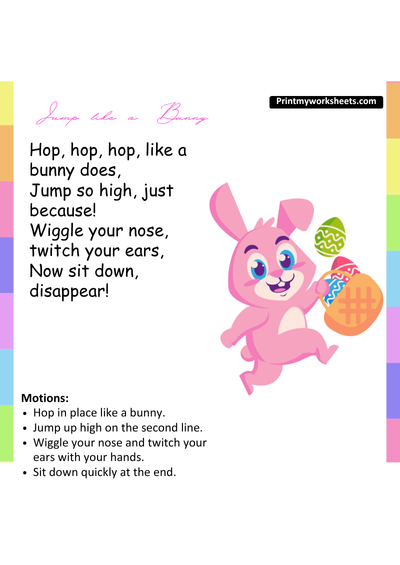
Students begin by reading or listening to short rhymes that include simple action words. These rhymes may describe movements such as clapping hands, tapping feet, spinning around, or jumping in place.
As students read the rhymes, they are encouraged to perform the actions described in the text. This combination of reading and movement helps reinforce comprehension and keeps students actively involved in the activity.
The worksheets may also include follow-up tasks such as identifying action words within the rhyme or sequencing movements in the correct order.
Students practice recognizing rhyming words and rhythm patterns in the text. These activities strengthen phonological awareness and help students understand how sounds work in language.
Some worksheets may encourage students to create their own movement rhymes using simple action verbs. This creative exercise helps students practice writing while thinking about rhythm and movement.
Through these activities, students develop stronger reading skills, listening abilities, and physical coordination while enjoying interactive learning experiences.
Educational Value & Skill Development
The 1st Grade Dance and Motion Rhymes Worksheets PDF supports several important areas of development for first grade learners.
One of the primary benefits is strengthening phonological awareness. Rhymes help students recognize sound patterns in language, which is essential for reading fluency and decoding skills.
The 1st Grade Dance and Motion Rhymes Worksheets PDF also improves reading confidence. Short, rhythmic texts are easier for young readers to follow, allowing them to practice reading aloud with expression.
Movement-based learning also supports physical development. Performing simple actions such as clapping, jumping, or stretching helps students improve coordination and motor skills.
These worksheets also encourage listening comprehension. Students must listen carefully to instructions within the rhyme in order to perform the correct movement.
Another benefit is improved memory retention. When language is combined with actions, students are more likely to remember the rhyme and its vocabulary.
Dance and motion rhymes also create a positive learning environment. Students often feel more relaxed and engaged when learning involves movement and creativity.
By combining literacy practice with physical activity, these worksheets provide a balanced learning experience that supports both cognitive and physical growth.
Why Focus on Dance and Motion Rhymes?
Movement and rhythm play an important role in early childhood learning. When students connect language with physical actions, they engage multiple parts of the brain, which strengthens learning and memory.
Dance and motion rhymes introduce students to language in a playful and interactive format. Instead of simply reading text, students become active participants in the learning process.
These activities also support kinesthetic learners who benefit from hands-on or movement-based experiences. Physical movement allows these students to stay focused and involved in classroom activities.
Rhymes also reinforce sound patterns and vocabulary development. Repeating rhythmic language helps students recognize similar sounds and understand how words connect.
In many first grade classrooms across the United States, teachers use songs, rhymes, and movement activities as part of daily instruction. These strategies help maintain student attention and encourage participation.
Dance and motion rhymes also promote social interaction. Students may perform actions together in small groups, which builds cooperation and communication skills.
Incorporating movement into literacy activities allows students to enjoy learning while strengthening both language and physical development.
How to Use These Worksheets?
The 1st Grade Dance and Motion Rhymes Worksheets PDF can be used in classrooms, homeschool lessons, or small-group learning environments.
Teachers often use motion rhymes during morning meetings, literacy centers, or transition activities between lessons. Students can read the rhyme together and perform the movements described in the text.
In classroom settings, teachers may first read the rhyme aloud while demonstrating the actions. Students then repeat the rhyme and perform the movements themselves.
Parents who homeschool can use these worksheets as part of daily reading practice. Children may read the rhyme aloud and follow the movement instructions, creating an interactive learning experience at home.
Because the worksheets are available as a free printable PDF, they can be easily downloaded and printed whenever additional activities are needed.
These worksheets are also helpful during group activities. Students can work together to perform the actions and practice reading the rhyme with expression.
The printable format allows teachers and parents to reuse the rhymes for repeated practice, helping students become more confident with the language and movements.
Related Worksheets / Extensions:
Frequently Asked Questions
Q1. Is this worksheet free to download?Yes, this worksheet is 100% free to download and print. No account, subscription, or payment is required. Click the Download Now button to get your free PDF instantly.Q2. What format is this worksheet available in?This worksheet is available as a printable PDF file. It is black-and-white, printer-friendly, and works on any standard home or classroom printer using A4 or US Letter paper.Q3. Can I use this worksheet for both classroom and home learning?Yes, these worksheets are designed for use by classroom teachers, homeschool parents, and tutors. They can be used as morning work, homework, revision practice, or learning centre activities.Q4. Is this worksheet aligned with Common Core ELA standards?Yes, this English worksheet is aligned with U.S. Common Core English Language Arts standards and supports foundational literacy development.Q5. Can this worksheet be used for phonics instruction?Yes, this worksheet supports phonics-based reading instruction and is suitable for early readers building letter-sound recognition skills.1st Grade Dance and Motion Rhymes Worksheets PDF – Free
1st Grade Dance and Motion Rhymes Worksheets PDF
Young learners often enjoy activities that combine movement, rhythm, and language. The 1st Grade Dance and Motion Rhymes Worksheets PDF introduces students to simple rhymes that encourage physical movement while supporting early literacy development. These printable worksheets are designed for U.S. teachers, parents, and homeschool families who want to make learning more engaging through rhythm, rhyme, and motion-based activities.
In first grade, students continue developing reading fluency, listening skills, and coordination. Dance and motion rhymes provide a fun way for children to practice language patterns while actively participating in movement activities. Rhymes that include actions such as clapping, jumping, or spinning help students connect language with physical movement, making learning more memorable.
The 1st Grade Dance and Motion Rhymes Worksheets PDF provides simple rhymes and related activities that allow children to read, recite, and perform actions while learning. These worksheets help students build reading confidence, improve listening skills, and enjoy creative expression through movement-based learning experiences.
What Students Will Learn?
Dance and motion rhyme worksheets introduce first grade students to rhythmic language while encouraging movement and participation. These activities combine reading practice with physical actions, helping students engage with language in a creative way.
Students begin by reading or listening to short rhymes that include simple action words. These rhymes may describe movements such as clapping hands, tapping feet, spinning around, or jumping in place.
As students read the rhymes, they are encouraged to perform the actions described in the text. This combination of reading and movement helps reinforce comprehension and keeps students actively involved in the activity.
The worksheets may also include follow-up tasks such as identifying action words within the rhyme or sequencing movements in the correct order.
Students practice recognizing rhyming words and rhythm patterns in the text. These activities strengthen phonological awareness and help students understand how sounds work in language.
Some worksheets may encourage students to create their own movement rhymes using simple action verbs. This creative exercise helps students practice writing while thinking about rhythm and movement.
Through these activities, students develop stronger reading skills, listening abilities, and physical coordination while enjoying interactive learning experiences.
Educational Value & Skill Development
The 1st Grade Dance and Motion Rhymes Worksheets PDF supports several important areas of development for first grade learners.
One of the primary benefits is strengthening phonological awareness. Rhymes help students recognize sound patterns in language, which is essential for reading fluency and decoding skills.
The 1st Grade Dance and Motion Rhymes Worksheets PDF also improves reading confidence. Short, rhythmic texts are easier for young readers to follow, allowing them to practice reading aloud with expression.
Movement-based learning also supports physical development. Performing simple actions such as clapping, jumping, or stretching helps students improve coordination and motor skills.
These worksheets also encourage listening comprehension. Students must listen carefully to instructions within the rhyme in order to perform the correct movement.
Another benefit is improved memory retention. When language is combined with actions, students are more likely to remember the rhyme and its vocabulary.
Dance and motion rhymes also create a positive learning environment. Students often feel more relaxed and engaged when learning involves movement and creativity.
By combining literacy practice with physical activity, these worksheets provide a balanced learning experience that supports both cognitive and physical growth.
Why Focus on Dance and Motion Rhymes?
Movement and rhythm play an important role in early childhood learning. When students connect language with physical actions, they engage multiple parts of the brain, which strengthens learning and memory.
Dance and motion rhymes introduce students to language in a playful and interactive format. Instead of simply reading text, students become active participants in the learning process.
These activities also support kinesthetic learners who benefit from hands-on or movement-based experiences. Physical movement allows these students to stay focused and involved in classroom activities.
Rhymes also reinforce sound patterns and vocabulary development. Repeating rhythmic language helps students recognize similar sounds and understand how words connect.
In many first grade classrooms across the United States, teachers use songs, rhymes, and movement activities as part of daily instruction. These strategies help maintain student attention and encourage participation.
Dance and motion rhymes also promote social interaction. Students may perform actions together in small groups, which builds cooperation and communication skills.
Incorporating movement into literacy activities allows students to enjoy learning while strengthening both language and physical development.
How to Use These Worksheets?
The 1st Grade Dance and Motion Rhymes Worksheets PDF can be used in classrooms, homeschool lessons, or small-group learning environments.
Teachers often use motion rhymes during morning meetings, literacy centers, or transition activities between lessons. Students can read the rhyme together and perform the movements described in the text.
In classroom settings, teachers may first read the rhyme aloud while demonstrating the actions. Students then repeat the rhyme and perform the movements themselves.
Parents who homeschool can use these worksheets as part of daily reading practice. Children may read the rhyme aloud and follow the movement instructions, creating an interactive learning experience at home.
Because the worksheets are available as a free printable PDF, they can be easily downloaded and printed whenever additional activities are needed.
These worksheets are also helpful during group activities. Students can work together to perform the actions and practice reading the rhyme with expression.
The printable format allows teachers and parents to reuse the rhymes for repeated practice, helping students become more confident with the language and movements.