
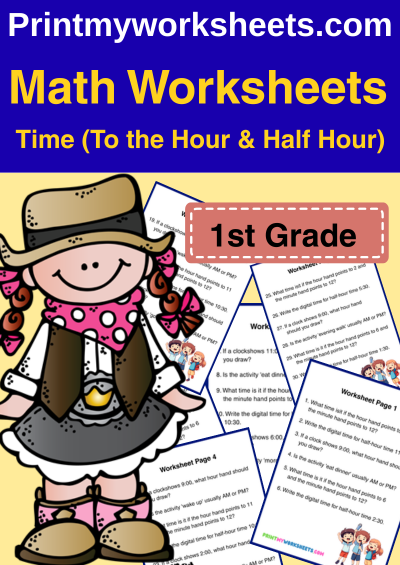
1st Grade Time Hour Half Hour Worksheets | Free Downloadable Maths
Our 1st Grade Time Hour Half Hour Worksheets help students learn to read clocks and understand time concepts. These free printable PDFs support U.S. curriculum-aligned math instruction while building time-telling skills, number sense, and daily life awareness. This is completely aligned with U.S Curriculum.
Click below to access the free 1st Grade Time Hour Half Hour Worksheets
Continue Learning
Explore more worksheets to build your child’s English skills.

1st Grade Time Hour Half Hour Worksheets
Learning how to tell time is an essential life skill that begins in early elementary school. The 1st Grade Time Hour Half Hour Worksheets are designed to help young learners understand how to read clocks and recognize time to the hour and half hour. These free printable worksheets are perfect for U.S. parents, teachers, and homeschool families looking to build foundational math and daily life skills.
In first grade, students are introduced to analog clocks and begin learning how time is measured throughout the day. Understanding time helps children follow routines, stay organized, and connect math concepts to real-world experiences.
The 1st Grade Time Hour Half Hour Worksheets provide structured and engaging practice that makes learning time simple and interactive. Through repeated exposure and hands-on activities, students gain confidence in reading clocks and understanding how time works in everyday situations.
What Students Will Learn?
Time worksheets for first grade are designed to help students develop a clear understanding of how to read and interpret clocks. These activities are aligned with grade-level expectations and support step-by-step learning.
Students begin by identifying the parts of a clock, including the hour hand and minute hand. Understanding how these parts work together is key to telling time accurately.
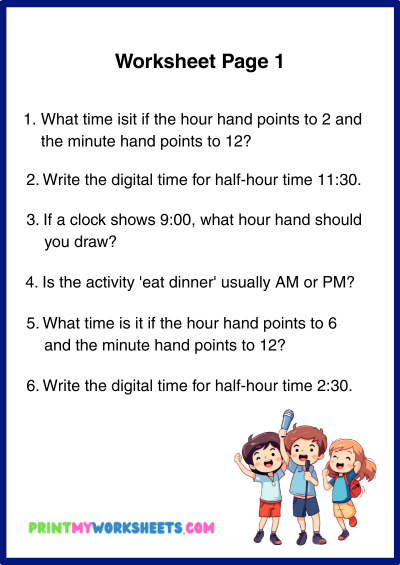
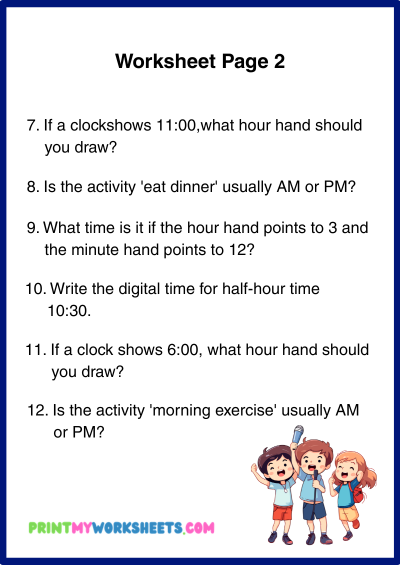
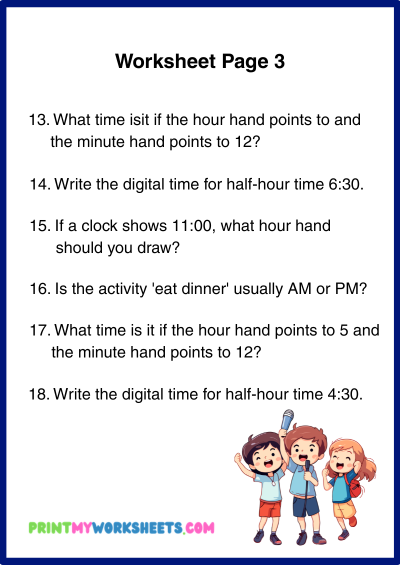
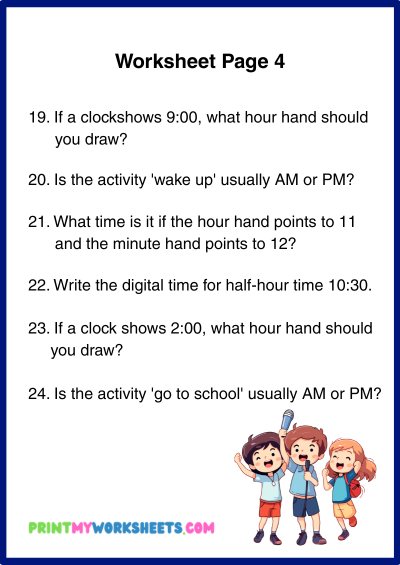
Many worksheets focus on reading time to the hour. Students learn to recognize when the minute hand points to 12 and how the hour hand indicates the correct time.
As they progress, students practice reading time to the half hour. They learn that when the minute hand points to 6, it represents 30 minutes past the hour.
Some worksheets include matching activities where students connect clocks to the correct time. This helps reinforce understanding through visual recognition.
Students may also work on drawing clock hands to show specific times. This activity strengthens both comprehension and application.
Word problems and daily routine activities may be included to help students understand how time relates to real-life events.
Through these activities, students develop the ability to read clocks confidently and understand basic time concepts.
Educational Value & Skill Development
The 1st Grade Time Hour Half Hour Worksheets support important developmental skills that extend beyond math.
One of the main benefits is building time awareness. Students learn how to interpret clocks and understand the sequence of daily events.
The 1st Grade Time Hour Half Hour Worksheets also strengthen visual and cognitive skills. Reading clocks requires students to process visual information and connect it to numerical values.
These worksheets support problem-solving abilities as students determine the correct time based on clock positions or given scenarios.
Another important benefit is increased independence. As students learn to tell time, they become more capable of managing routines and understanding schedules.
Time-telling activities also improve attention to detail. Students must carefully observe the position of the clock hands to determine the correct answer.
Additionally, these worksheets encourage consistent practice, which helps reinforce learning and build confidence.
By combining practical life skills with math concepts, these worksheets provide a well-rounded learning experience.
Why Focus on Time Hour Half Hour Worksheets?
Understanding time is a fundamental skill that students use every day. In first grade, learning to tell time to the hour and half hour is an important milestone.
This skill helps children develop a sense of structure and routine. Knowing how to read a clock allows them to understand when activities begin and end.
Time-telling also supports math development. Students practice counting by fives and understanding number sequences as they read the clock.
In classrooms across the United States, learning time is a key part of early math instruction. Teachers focus on both conceptual understanding and practical application.
Repetition and guided practice are essential for mastering this skill. Worksheets provide a structured way for students to practice and reinforce their learning.
Understanding time also prepares students for more advanced concepts, such as reading time to the minute and solving elapsed time problems.
By focusing on time to the hour and half hour, students build a strong foundation for future learning and everyday independence.
How to Use These Worksheets
The 1st Grade Time Hour Half Hour Worksheets can be used in classrooms, homeschool settings, and independent practice environments.
Teachers can include these worksheets as part of daily math lessons. Students may complete activities during class, in small groups, or as homework assignments.
In classroom settings, teachers can introduce clock concepts using visual aids before assigning worksheets. This helps students understand how clocks work.
Parents who homeschool can use these worksheets as part of a daily routine. Children can practice telling time regularly to build consistency and confidence.
Because the worksheets are available as a free printable PDF, they can be easily downloaded and printed for repeated use. This makes them convenient for ongoing practice and review.
These worksheets are also useful for small group instruction. Students can work together to match clocks and discuss their answers.
The printable format provides flexibility, allowing these worksheets to be used in different learning environments.
Related Worksheets / Extensions:
You may also like:
• kindergarten time worksheets
• clock reading worksheets for early learners
• counting by fives worksheets
• daily routine sequencing activities
• basic math worksheets for grade 1
The 1st Grade Time Hour Half Hour Worksheets work well alongside other early math and life skills resources. Combining these worksheets helps students build a strong understanding of time and number concepts.
Teachers and parents can extend learning by encouraging students to observe clocks at home or create their own daily schedules.
With consistent practice, first grade students develop strong time-telling skills, improved confidence, and a better understanding of daily routines.
You may also like:
Frequently Asked Questions
Q1. Is this worksheet free to download?
Yes, this worksheet is 100% free to download and print. No account, subscription, or payment is required. Click the Download Now button to get your free PDF instantly.
Q2. Do I need to create an account to download this worksheet?
No account or sign-up is required. All worksheets on Print My Worksheets are freely accessible to teachers, parents, and homeschool families without any registration.
Q3. Can I use this worksheet for both classroom and home learning?
Yes, these worksheets are designed for use by classroom teachers, homeschool parents, and tutors. They can be used as morning work, homework, revision practice, or learning centre activities.
Q4. Does this math worksheet include an answer key?
Yes, an answer key is included in the PDF so parents and teachers can quickly check student responses without manual calculation.
Q5. Is this worksheet suitable for extra practice or exam preparation?
Yes, this worksheet is ideal for supplemental practice, homework reinforcement, test preparation, and homeschool math lessons.
You may also like…

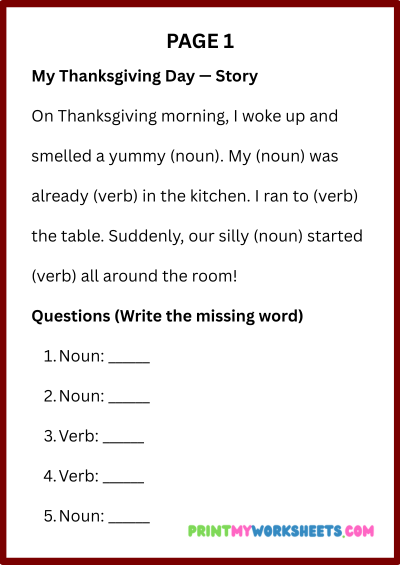
1st Grade Thanksgiving Fill-in-the-Blank Worksheets PDF
1st Grade Thanksgiving Fill-in-the-Blank Worksheets PDF
These worksheets are designed especially for US homeschool parents, teachers, and young learners, these engaging worksheets make literacy practice fun, festive, and effective. Each printable story encourages children to think critically as they choose the right words to complete the sentences, helping them understand sentence structure and improve grammar naturally.
Thanksgiving-themed stories keep kids excited while reinforcing essential early literacy skills. Children learn to recognize context clues, expand their vocabulary, build stronger storytelling abilities, and practice reading fluency. These worksheets are perfect for classroom warm-ups, holiday centers, small group activities, homework, or at-home holiday learning.
Parents and teachers love these worksheets because they promote creativity while teaching kids how to construct meaningful sentences. Plus, with fun seasonal illustrations, children stay motivated and eager to learn. The free downloadable PDF format makes printing fast and easy—ideal for last-minute lesson planning or Thanksgiving week activities.
Whether you’re teaching in a classroom or guiding your child at home, these Thanksgiving Fill-in-the-Blank Stories provide an enjoyable and educational learning experience that enhances language development and encourages confident young readers.
Frequently Asked Questions
Q1. What format is this worksheet available in?This worksheet is available as a printable PDF file. It is black-and-white, printer-friendly, and works on any standard home or classroom printer using A4 or US Letter paper.Q2. Is this worksheet free to download?Yes, this worksheet is 100% free to download and print. No account, subscription, or payment is required. Click the Download Now button to get your free PDF instantly.Q3. Can I use this worksheet for both classroom and home learning?Yes, these worksheets are designed for use by classroom teachers, homeschool parents, and tutors. They can be used as morning work, homework, revision practice, or learning centre activities.Q4. Can this worksheet be used for phonics instruction?Yes, this worksheet supports phonics-based reading instruction and is suitable for early readers building letter-sound recognition skills.Q5. Is this worksheet suitable for ESL or ELL students?This worksheet can be used as a supplemental resource for ESL and ELL students, particularly for vocabulary building and language pattern practice.1st Grade Thanksgiving Fill-in-the-Blank Worksheets PDF
1st Grade Thanksgiving Fill-in-the-Blank Worksheets PDF
These worksheets are designed especially for US homeschool parents, teachers, and young learners, these engaging worksheets make literacy practice fun, festive, and effective. Each printable story encourages children to think critically as they choose the right words to complete the sentences, helping them understand sentence structure and improve grammar naturally.
Thanksgiving-themed stories keep kids excited while reinforcing essential early literacy skills. Children learn to recognize context clues, expand their vocabulary, build stronger storytelling abilities, and practice reading fluency. These worksheets are perfect for classroom warm-ups, holiday centers, small group activities, homework, or at-home holiday learning.
Parents and teachers love these worksheets because they promote creativity while teaching kids how to construct meaningful sentences. Plus, with fun seasonal illustrations, children stay motivated and eager to learn. The free downloadable PDF format makes printing fast and easy—ideal for last-minute lesson planning or Thanksgiving week activities.
Whether you’re teaching in a classroom or guiding your child at home, these Thanksgiving Fill-in-the-Blank Stories provide an enjoyable and educational learning experience that enhances language development and encourages confident young readers.
Frequently Asked Questions
Q1. What format is this worksheet available in?This worksheet is available as a printable PDF file. It is black-and-white, printer-friendly, and works on any standard home or classroom printer using A4 or US Letter paper.Q2. Is this worksheet free to download?Yes, this worksheet is 100% free to download and print. No account, subscription, or payment is required. Click the Download Now button to get your free PDF instantly.Q3. Can I use this worksheet for both classroom and home learning?Yes, these worksheets are designed for use by classroom teachers, homeschool parents, and tutors. They can be used as morning work, homework, revision practice, or learning centre activities.Q4. Can this worksheet be used for phonics instruction?Yes, this worksheet supports phonics-based reading instruction and is suitable for early readers building letter-sound recognition skills.Q5. Is this worksheet suitable for ESL or ELL students?This worksheet can be used as a supplemental resource for ESL and ELL students, particularly for vocabulary building and language pattern practice.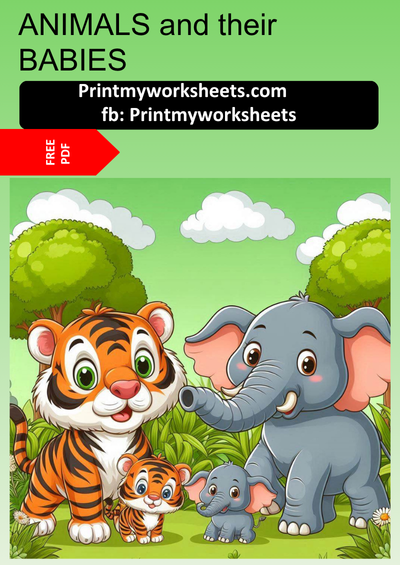
1st Grade Animals and Their Babies Worksheets PDF – Free
1st Grade Animals and Their Babies Worksheets PDF
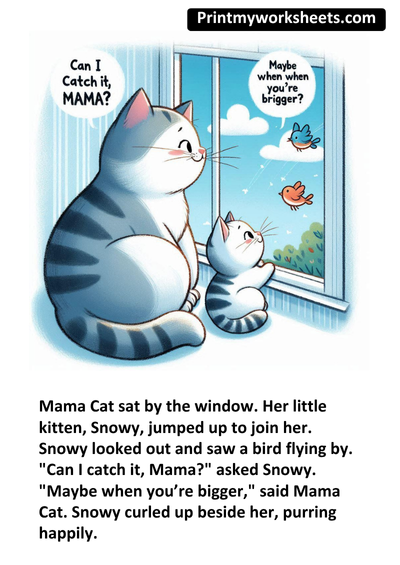
Learning about animals is an exciting topic for young students, especially when they discover how animals grow and care for their young. The 1st Grade Animals and Their Babies Worksheets PDF introduces first grade learners to common animals and the names of their babies through engaging and age-appropriate activities. These printable worksheets are designed for U.S. teachers, parents, and homeschool families who want to strengthen science knowledge while supporting reading and observation skills.
In first grade, students begin to explore basic life science concepts, including animal families, habitats, and life cycles. Understanding how animals and their babies are related helps children build early scientific awareness and vocabulary. Activities that connect animals with their young also encourage curiosity about nature and the world around them.
The 1st Grade Animals and Their Babies Worksheets PDF provides simple, interactive exercises that help students recognize animals and their offspring while practicing reading, matching, and observation skills. These worksheets help children develop early science knowledge while building confidence through structured and engaging learning activities.
What Students Will Learn?
Animals and their babies worksheets help first grade students develop early science understanding while practicing reading and observation skills. These activities introduce common animals and the names of their young in ways that are easy for young learners to understand.
Students begin by identifying familiar animals such as cows, dogs, cats, ducks, chickens, and horses. They learn the correct names for baby animals, such as calf, puppy, kitten, duckling, chick, and foal.
Many worksheets include matching activities where students connect adult animals with their babies. These activities strengthen recognition skills while helping students understand the relationship between parents and offspring.
Students may also complete labeling or fill-in-the-blank exercises that encourage them to read simple words and identify animal families.
Some worksheets include simple reading sentences about animals and their babies. These short passages allow students to practice reading while learning science vocabulary.
Picture-based activities help students observe differences between adult animals and their young. These visual exercises support understanding and make the learning process more engaging.
Through these activities, first grade learners build knowledge about animals while strengthening vocabulary, observation, and basic reading skills.
Educational Value & Skill Development
The 1st Grade Animals and Their Babies Worksheets PDF supports both science learning and literacy development for first grade students.
One important benefit is building early science knowledge. By learning about animals and their young, students begin to understand life cycles and how living things grow and develop.
The 1st Grade Animals and Their Babies Worksheets PDF also helps strengthen vocabulary development. Students learn new words such as calf, kitten, cub, chick, and puppy, which expands their language skills.
These worksheets also improve observation skills. When students look at pictures of animals and their babies, they notice similarities and differences in size, shape, and features.
Another important benefit is strengthening reading skills. Many worksheets include simple words and sentences that encourage students to read while learning science concepts.
Matching and labeling activities also support critical thinking. Students must identify patterns and relationships between adult animals and their babies.
Completing worksheets independently helps students build confidence and responsibility for their learning. Successfully identifying animals and their babies encourages curiosity and motivation to explore more science topics.
By combining literacy and science concepts, these worksheets help students develop a balanced foundation for future learning.
Why Focus on Animals and Their Babies?
Learning about animals and their offspring is a fundamental science topic for early elementary students. It helps children understand how living things grow, reproduce, and care for their young.
This topic is particularly engaging for first grade learners because animals are familiar and interesting. Many children already recognize animals from books, farms, zoos, or pets at home.
Studying animal families also introduces basic biological concepts in a simple and accessible way. Students learn that baby animals grow into adult animals, which helps them understand life cycles.
Activities about animals and their babies also support vocabulary development. Learning specific terms such as kitten, calf, cub, and chick helps students expand their language skills.
This topic also encourages curiosity about nature and the environment. When children learn about animal families, they often become more interested in wildlife and science.
Teachers in the United States frequently include animal-related lessons in early science instruction because they connect easily with students’ everyday experiences.
Exploring animal families allows students to build foundational science knowledge while strengthening observation and reading skills.
How to Use These Worksheets?
The 1st Grade Animals and Their Babies Worksheets PDF can be used in many educational settings, including classrooms, homeschool lessons, and independent learning activities.
Teachers often include these worksheets during science units focused on animals, habitats, or life cycles. Students may begin by discussing different animals before completing the activities.
In classroom settings, teachers may guide students through matching exercises or group discussions about animal families. These activities encourage participation and strengthen understanding.
Parents who homeschool can incorporate these worksheets into science lessons at home. Children can complete the worksheets while discussing animals they have seen in books, farms, or zoos.
Because the worksheets are provided as a free printable PDF, they are easy to download and print whenever additional learning activities are needed.
These worksheets also work well for independent practice. Students can complete matching or labeling tasks at their own pace while reinforcing their science knowledge.
The printable format allows teachers and parents to reuse the activities for review sessions or additional practice throughout the school year.
Related Worksheets / Extensions:
Frequently Asked Questions
Q1. Is this worksheet free to download?Yes, this worksheet is 100% free to download and print. No account, subscription, or payment is required. Click the Download Now button to get your free PDF instantly.Q2. What format is this worksheet available in?This worksheet is available as a printable PDF file. It is black-and-white, printer-friendly, and works on any standard home or classroom printer using A4 or US Letter paper.Q3. Can I use this worksheet for both classroom and home learning?Yes, these worksheets are designed for use by classroom teachers, homeschool parents, and tutors. They can be used as morning work, homework, revision practice, or learning centre activities.Q4. Is this worksheet aligned with Common Core ELA standards?Yes, this English worksheet is aligned with U.S. Common Core English Language Arts standards and supports foundational literacy development.Q5. Can this worksheet be used for phonics instruction?Yes, this worksheet supports phonics-based reading instruction and is suitable for early readers building letter-sound recognition skills.1st Grade Animals and Their Babies Worksheets PDF – Free
1st Grade Animals and Their Babies Worksheets PDF
Learning about animals is an exciting topic for young students, especially when they discover how animals grow and care for their young. The 1st Grade Animals and Their Babies Worksheets PDF introduces first grade learners to common animals and the names of their babies through engaging and age-appropriate activities. These printable worksheets are designed for U.S. teachers, parents, and homeschool families who want to strengthen science knowledge while supporting reading and observation skills.
In first grade, students begin to explore basic life science concepts, including animal families, habitats, and life cycles. Understanding how animals and their babies are related helps children build early scientific awareness and vocabulary. Activities that connect animals with their young also encourage curiosity about nature and the world around them.
The 1st Grade Animals and Their Babies Worksheets PDF provides simple, interactive exercises that help students recognize animals and their offspring while practicing reading, matching, and observation skills. These worksheets help children develop early science knowledge while building confidence through structured and engaging learning activities.
What Students Will Learn?
Animals and their babies worksheets help first grade students develop early science understanding while practicing reading and observation skills. These activities introduce common animals and the names of their young in ways that are easy for young learners to understand.
Students begin by identifying familiar animals such as cows, dogs, cats, ducks, chickens, and horses. They learn the correct names for baby animals, such as calf, puppy, kitten, duckling, chick, and foal.
Many worksheets include matching activities where students connect adult animals with their babies. These activities strengthen recognition skills while helping students understand the relationship between parents and offspring.
Students may also complete labeling or fill-in-the-blank exercises that encourage them to read simple words and identify animal families.
Some worksheets include simple reading sentences about animals and their babies. These short passages allow students to practice reading while learning science vocabulary.
Picture-based activities help students observe differences between adult animals and their young. These visual exercises support understanding and make the learning process more engaging.
Through these activities, first grade learners build knowledge about animals while strengthening vocabulary, observation, and basic reading skills.
Educational Value & Skill Development
The 1st Grade Animals and Their Babies Worksheets PDF supports both science learning and literacy development for first grade students.
One important benefit is building early science knowledge. By learning about animals and their young, students begin to understand life cycles and how living things grow and develop.
The 1st Grade Animals and Their Babies Worksheets PDF also helps strengthen vocabulary development. Students learn new words such as calf, kitten, cub, chick, and puppy, which expands their language skills.
These worksheets also improve observation skills. When students look at pictures of animals and their babies, they notice similarities and differences in size, shape, and features.
Another important benefit is strengthening reading skills. Many worksheets include simple words and sentences that encourage students to read while learning science concepts.
Matching and labeling activities also support critical thinking. Students must identify patterns and relationships between adult animals and their babies.
Completing worksheets independently helps students build confidence and responsibility for their learning. Successfully identifying animals and their babies encourages curiosity and motivation to explore more science topics.
By combining literacy and science concepts, these worksheets help students develop a balanced foundation for future learning.
Why Focus on Animals and Their Babies?
Learning about animals and their offspring is a fundamental science topic for early elementary students. It helps children understand how living things grow, reproduce, and care for their young.
This topic is particularly engaging for first grade learners because animals are familiar and interesting. Many children already recognize animals from books, farms, zoos, or pets at home.
Studying animal families also introduces basic biological concepts in a simple and accessible way. Students learn that baby animals grow into adult animals, which helps them understand life cycles.
Activities about animals and their babies also support vocabulary development. Learning specific terms such as kitten, calf, cub, and chick helps students expand their language skills.
This topic also encourages curiosity about nature and the environment. When children learn about animal families, they often become more interested in wildlife and science.
Teachers in the United States frequently include animal-related lessons in early science instruction because they connect easily with students’ everyday experiences.
Exploring animal families allows students to build foundational science knowledge while strengthening observation and reading skills.
How to Use These Worksheets?
The 1st Grade Animals and Their Babies Worksheets PDF can be used in many educational settings, including classrooms, homeschool lessons, and independent learning activities.
Teachers often include these worksheets during science units focused on animals, habitats, or life cycles. Students may begin by discussing different animals before completing the activities.
In classroom settings, teachers may guide students through matching exercises or group discussions about animal families. These activities encourage participation and strengthen understanding.
Parents who homeschool can incorporate these worksheets into science lessons at home. Children can complete the worksheets while discussing animals they have seen in books, farms, or zoos.
Because the worksheets are provided as a free printable PDF, they are easy to download and print whenever additional learning activities are needed.
These worksheets also work well for independent practice. Students can complete matching or labeling tasks at their own pace while reinforcing their science knowledge.
The printable format allows teachers and parents to reuse the activities for review sessions or additional practice throughout the school year.
Related Worksheets / Extensions:
Frequently Asked Questions
Q1. Is this worksheet free to download?Yes, this worksheet is 100% free to download and print. No account, subscription, or payment is required. Click the Download Now button to get your free PDF instantly.Q2. What format is this worksheet available in?This worksheet is available as a printable PDF file. It is black-and-white, printer-friendly, and works on any standard home or classroom printer using A4 or US Letter paper.Q3. Can I use this worksheet for both classroom and home learning?Yes, these worksheets are designed for use by classroom teachers, homeschool parents, and tutors. They can be used as morning work, homework, revision practice, or learning centre activities.Q4. Is this worksheet aligned with Common Core ELA standards?Yes, this English worksheet is aligned with U.S. Common Core English Language Arts standards and supports foundational literacy development.Q5. Can this worksheet be used for phonics instruction?Yes, this worksheet supports phonics-based reading instruction and is suitable for early readers building letter-sound recognition skills.
1st Grade Dance and Motion Rhymes Worksheets PDF – Free
1st Grade Dance and Motion Rhymes Worksheets PDF
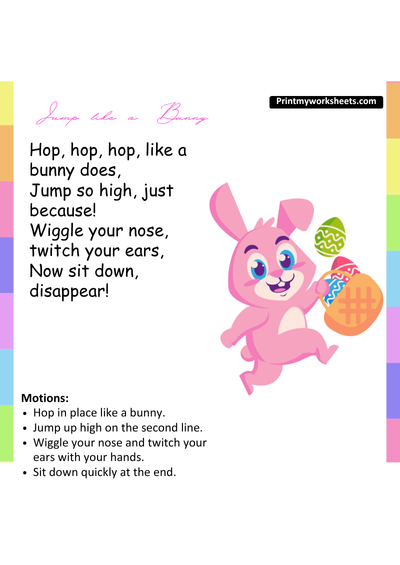
Young learners often enjoy activities that combine movement, rhythm, and language. The 1st Grade Dance and Motion Rhymes Worksheets PDF introduces students to simple rhymes that encourage physical movement while supporting early literacy development. These printable worksheets are designed for U.S. teachers, parents, and homeschool families who want to make learning more engaging through rhythm, rhyme, and motion-based activities.
In first grade, students continue developing reading fluency, listening skills, and coordination. Dance and motion rhymes provide a fun way for children to practice language patterns while actively participating in movement activities. Rhymes that include actions such as clapping, jumping, or spinning help students connect language with physical movement, making learning more memorable.
The 1st Grade Dance and Motion Rhymes Worksheets PDF provides simple rhymes and related activities that allow children to read, recite, and perform actions while learning. These worksheets help students build reading confidence, improve listening skills, and enjoy creative expression through movement-based learning experiences.
What Students Will Learn?
Dance and motion rhyme worksheets introduce first grade students to rhythmic language while encouraging movement and participation. These activities combine reading practice with physical actions, helping students engage with language in a creative way.
Students begin by reading or listening to short rhymes that include simple action words. These rhymes may describe movements such as clapping hands, tapping feet, spinning around, or jumping in place.
As students read the rhymes, they are encouraged to perform the actions described in the text. This combination of reading and movement helps reinforce comprehension and keeps students actively involved in the activity.
The worksheets may also include follow-up tasks such as identifying action words within the rhyme or sequencing movements in the correct order.
Students practice recognizing rhyming words and rhythm patterns in the text. These activities strengthen phonological awareness and help students understand how sounds work in language.
Some worksheets may encourage students to create their own movement rhymes using simple action verbs. This creative exercise helps students practice writing while thinking about rhythm and movement.
Through these activities, students develop stronger reading skills, listening abilities, and physical coordination while enjoying interactive learning experiences.
Educational Value & Skill Development
The 1st Grade Dance and Motion Rhymes Worksheets PDF supports several important areas of development for first grade learners.
One of the primary benefits is strengthening phonological awareness. Rhymes help students recognize sound patterns in language, which is essential for reading fluency and decoding skills.
The 1st Grade Dance and Motion Rhymes Worksheets PDF also improves reading confidence. Short, rhythmic texts are easier for young readers to follow, allowing them to practice reading aloud with expression.
Movement-based learning also supports physical development. Performing simple actions such as clapping, jumping, or stretching helps students improve coordination and motor skills.
These worksheets also encourage listening comprehension. Students must listen carefully to instructions within the rhyme in order to perform the correct movement.
Another benefit is improved memory retention. When language is combined with actions, students are more likely to remember the rhyme and its vocabulary.
Dance and motion rhymes also create a positive learning environment. Students often feel more relaxed and engaged when learning involves movement and creativity.
By combining literacy practice with physical activity, these worksheets provide a balanced learning experience that supports both cognitive and physical growth.
Why Focus on Dance and Motion Rhymes?
Movement and rhythm play an important role in early childhood learning. When students connect language with physical actions, they engage multiple parts of the brain, which strengthens learning and memory.
Dance and motion rhymes introduce students to language in a playful and interactive format. Instead of simply reading text, students become active participants in the learning process.
These activities also support kinesthetic learners who benefit from hands-on or movement-based experiences. Physical movement allows these students to stay focused and involved in classroom activities.
Rhymes also reinforce sound patterns and vocabulary development. Repeating rhythmic language helps students recognize similar sounds and understand how words connect.
In many first grade classrooms across the United States, teachers use songs, rhymes, and movement activities as part of daily instruction. These strategies help maintain student attention and encourage participation.
Dance and motion rhymes also promote social interaction. Students may perform actions together in small groups, which builds cooperation and communication skills.
Incorporating movement into literacy activities allows students to enjoy learning while strengthening both language and physical development.
How to Use These Worksheets?
The 1st Grade Dance and Motion Rhymes Worksheets PDF can be used in classrooms, homeschool lessons, or small-group learning environments.
Teachers often use motion rhymes during morning meetings, literacy centers, or transition activities between lessons. Students can read the rhyme together and perform the movements described in the text.
In classroom settings, teachers may first read the rhyme aloud while demonstrating the actions. Students then repeat the rhyme and perform the movements themselves.
Parents who homeschool can use these worksheets as part of daily reading practice. Children may read the rhyme aloud and follow the movement instructions, creating an interactive learning experience at home.
Because the worksheets are available as a free printable PDF, they can be easily downloaded and printed whenever additional activities are needed.
These worksheets are also helpful during group activities. Students can work together to perform the actions and practice reading the rhyme with expression.
The printable format allows teachers and parents to reuse the rhymes for repeated practice, helping students become more confident with the language and movements.
Related Worksheets / Extensions:
Frequently Asked Questions
Q1. Is this worksheet free to download?Yes, this worksheet is 100% free to download and print. No account, subscription, or payment is required. Click the Download Now button to get your free PDF instantly.Q2. What format is this worksheet available in?This worksheet is available as a printable PDF file. It is black-and-white, printer-friendly, and works on any standard home or classroom printer using A4 or US Letter paper.Q3. Can I use this worksheet for both classroom and home learning?Yes, these worksheets are designed for use by classroom teachers, homeschool parents, and tutors. They can be used as morning work, homework, revision practice, or learning centre activities.Q4. Is this worksheet aligned with Common Core ELA standards?Yes, this English worksheet is aligned with U.S. Common Core English Language Arts standards and supports foundational literacy development.Q5. Can this worksheet be used for phonics instruction?Yes, this worksheet supports phonics-based reading instruction and is suitable for early readers building letter-sound recognition skills.1st Grade Dance and Motion Rhymes Worksheets PDF – Free
1st Grade Dance and Motion Rhymes Worksheets PDF
Young learners often enjoy activities that combine movement, rhythm, and language. The 1st Grade Dance and Motion Rhymes Worksheets PDF introduces students to simple rhymes that encourage physical movement while supporting early literacy development. These printable worksheets are designed for U.S. teachers, parents, and homeschool families who want to make learning more engaging through rhythm, rhyme, and motion-based activities.
In first grade, students continue developing reading fluency, listening skills, and coordination. Dance and motion rhymes provide a fun way for children to practice language patterns while actively participating in movement activities. Rhymes that include actions such as clapping, jumping, or spinning help students connect language with physical movement, making learning more memorable.
The 1st Grade Dance and Motion Rhymes Worksheets PDF provides simple rhymes and related activities that allow children to read, recite, and perform actions while learning. These worksheets help students build reading confidence, improve listening skills, and enjoy creative expression through movement-based learning experiences.
What Students Will Learn?
Dance and motion rhyme worksheets introduce first grade students to rhythmic language while encouraging movement and participation. These activities combine reading practice with physical actions, helping students engage with language in a creative way.
Students begin by reading or listening to short rhymes that include simple action words. These rhymes may describe movements such as clapping hands, tapping feet, spinning around, or jumping in place.
As students read the rhymes, they are encouraged to perform the actions described in the text. This combination of reading and movement helps reinforce comprehension and keeps students actively involved in the activity.
The worksheets may also include follow-up tasks such as identifying action words within the rhyme or sequencing movements in the correct order.
Students practice recognizing rhyming words and rhythm patterns in the text. These activities strengthen phonological awareness and help students understand how sounds work in language.
Some worksheets may encourage students to create their own movement rhymes using simple action verbs. This creative exercise helps students practice writing while thinking about rhythm and movement.
Through these activities, students develop stronger reading skills, listening abilities, and physical coordination while enjoying interactive learning experiences.
Educational Value & Skill Development
The 1st Grade Dance and Motion Rhymes Worksheets PDF supports several important areas of development for first grade learners.
One of the primary benefits is strengthening phonological awareness. Rhymes help students recognize sound patterns in language, which is essential for reading fluency and decoding skills.
The 1st Grade Dance and Motion Rhymes Worksheets PDF also improves reading confidence. Short, rhythmic texts are easier for young readers to follow, allowing them to practice reading aloud with expression.
Movement-based learning also supports physical development. Performing simple actions such as clapping, jumping, or stretching helps students improve coordination and motor skills.
These worksheets also encourage listening comprehension. Students must listen carefully to instructions within the rhyme in order to perform the correct movement.
Another benefit is improved memory retention. When language is combined with actions, students are more likely to remember the rhyme and its vocabulary.
Dance and motion rhymes also create a positive learning environment. Students often feel more relaxed and engaged when learning involves movement and creativity.
By combining literacy practice with physical activity, these worksheets provide a balanced learning experience that supports both cognitive and physical growth.
Why Focus on Dance and Motion Rhymes?
Movement and rhythm play an important role in early childhood learning. When students connect language with physical actions, they engage multiple parts of the brain, which strengthens learning and memory.
Dance and motion rhymes introduce students to language in a playful and interactive format. Instead of simply reading text, students become active participants in the learning process.
These activities also support kinesthetic learners who benefit from hands-on or movement-based experiences. Physical movement allows these students to stay focused and involved in classroom activities.
Rhymes also reinforce sound patterns and vocabulary development. Repeating rhythmic language helps students recognize similar sounds and understand how words connect.
In many first grade classrooms across the United States, teachers use songs, rhymes, and movement activities as part of daily instruction. These strategies help maintain student attention and encourage participation.
Dance and motion rhymes also promote social interaction. Students may perform actions together in small groups, which builds cooperation and communication skills.
Incorporating movement into literacy activities allows students to enjoy learning while strengthening both language and physical development.
How to Use These Worksheets?
The 1st Grade Dance and Motion Rhymes Worksheets PDF can be used in classrooms, homeschool lessons, or small-group learning environments.
Teachers often use motion rhymes during morning meetings, literacy centers, or transition activities between lessons. Students can read the rhyme together and perform the movements described in the text.
In classroom settings, teachers may first read the rhyme aloud while demonstrating the actions. Students then repeat the rhyme and perform the movements themselves.
Parents who homeschool can use these worksheets as part of daily reading practice. Children may read the rhyme aloud and follow the movement instructions, creating an interactive learning experience at home.
Because the worksheets are available as a free printable PDF, they can be easily downloaded and printed whenever additional activities are needed.
These worksheets are also helpful during group activities. Students can work together to perform the actions and practice reading the rhyme with expression.
The printable format allows teachers and parents to reuse the rhymes for repeated practice, helping students become more confident with the language and movements.