
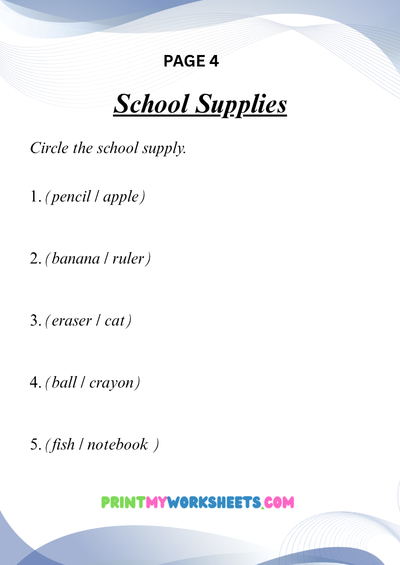
Kindergarten School Vocabulary Printable Worksheets | Free Downloadable PDF
₹0.00
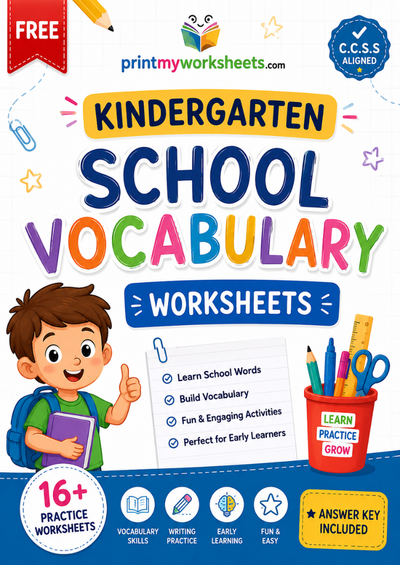
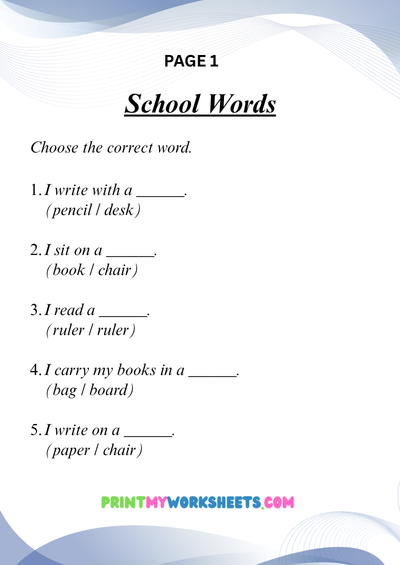
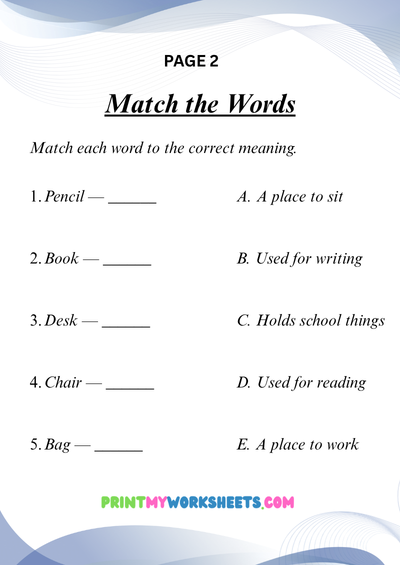
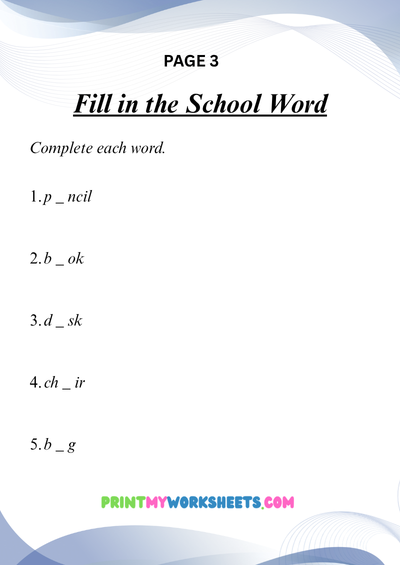
Download free Kindergarten School Vocabulary Printable Worksheets in printable PDF format. Perfect for homeschool parents, teachers, and kids, these engaging activities help children learn classroom, school supply, teacher, and routine vocabulary while strengthening word recognition, communication, early literacy, listening, and school-readiness skills. This is completely aligned with U.S Curriculum.
Click below to access the free Kindergarten School Vocabulary Printable Worksheets
Continue Learning
Explore more worksheets to build your child’s English skills.

Build essential vocabulary and school-readiness skills with our Kindergarten School Vocabulary Printable Worksheets, designed for homeschool families, teachers, and kindergarten students across the United States. These downloadable PDF worksheets introduce young learners to familiar school-related words through simple, engaging, and age-appropriate activities.
Children can practice recognizing and using vocabulary related to classrooms, teachers, classmates, school supplies, learning spaces, and everyday school routines. These activities help strengthen word recognition, communication, early literacy, listening skills, and confidence while helping children become more familiar with their school environment.
These no-prep worksheets are ideal for kindergarten classrooms, homeschool lessons, back-to-school activities, morning work, literacy centers, vocabulary practice, homework, and independent learning. Parents and teachers can easily download and print the PDF worksheets for convenient use at home or in the classroom.
Learning school vocabulary helps children connect new words with familiar experiences and supports effective communication in everyday school situations. Whether your child is preparing for kindergarten, learning school-related words for the first time, or reviewing familiar vocabulary, these worksheets provide meaningful opportunities for practice.
Download the Free Kindergarten School Vocabulary Worksheets PDF today and help young learners expand their vocabulary, strengthen early literacy skills, and feel more confident communicating about school through fun, structured learning activities.
Frequently Asked Questions
Q1. Is this worksheet free to download?
Yes, this worksheet is 100% free to download and print. No account, subscription, or payment is required. Click the Download Now button to get your free PDF instantly.
Q2. What format is this worksheet available in?
This worksheet is available as a printable PDF file. It is black-and-white, printer-friendly, and works on any standard home or classroom printer using A4 or US Letter paper.
Q3. Can I use this worksheet for both classroom and home learning?
Yes, these worksheets are designed for use by classroom teachers, homeschool parents, and tutors. They can be used as morning work, homework, revision practice, or learning centre activities.
Q4. Is this worksheet aligned with Common Core ELA standards?
Yes, this English worksheet is aligned with U.S. Common Core English Language Arts standards and supports foundational literacy development.
Q5. Can this worksheet be used for phonics instruction?
Yes, this worksheet supports phonics-based reading instruction and is suitable for early readers building letter-sound recognition skills.
Purchase now to read the book online.
Download NowYou may also like…
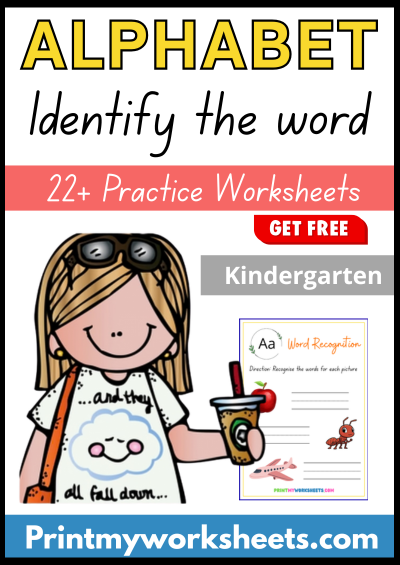
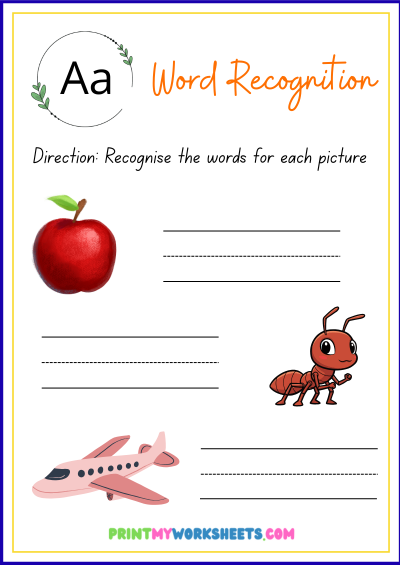
Kindergarten Alphabet Identify Word Worksheets PDF – Letter Recognition and Early Phonics Practice
Kindergarten Alphabet Identify Word Worksheets PDF | Free Downloadable PDF
Early literacy development begins with helping children recognize letters and connect them to meaningful words. The Kindergarten Alphabet Identify Word Worksheets PDF is designed to support young learners as they begin identifying letters of the alphabet and matching them with simple, familiar words. This printable worksheet set is ideal for U.S. parents, kindergarten teachers, and homeschool families who want structured, age-appropriate practice for early reading skills.
At the kindergarten level, children are learning to recognize uppercase and lowercase letters while building vocabulary and visual recognition. Alphabet identify word activities help bridge the gap between letter knowledge and word understanding. By using clear images, simple instructions, and repetition, these worksheets encourage confidence and independence. This skill is essential at this stage because it supports reading readiness, phonics development, and early comprehension, laying a strong foundation for future language learning.
What Students Will Learn?
These worksheets focus on helping kindergarten students identify letters of the alphabet and match them to corresponding words. Students practice recognizing letter shapes, connecting letters with beginning sounds, and visually identifying correct word matches. This reinforces both alphabet knowledge and early vocabulary.
Activities may include circling the word that starts with a given letter, matching pictures to words, tracing letters alongside images, and identifying the correct word from a small group of options. These tasks support structured learning by breaking down concepts into simple, manageable steps that young learners can understand.
The worksheets are designed to meet age-appropriate expectations by using familiar objects and words that children already encounter in daily life. Instructions are simple, visuals are clear, and the layout avoids distractions. This approach helps students stay focused while building early literacy skills that prepare them for phonics, reading, and writing activities in later grades.
Educational Value & Skill Development
The Kindergarten Alphabet Identify Word Worksheets PDF offers strong educational value by supporting multiple areas of early development. Academically, these worksheets strengthen letter recognition, word identification, and early reading readiness. Children learn to associate letters with words, which is a key step toward decoding and comprehension.
From a cognitive perspective, matching letters to words enhances memory, attention, and visual discrimination. Students practice making choices, comparing options, and identifying correct answers, all of which support critical thinking skills. Repeated exposure helps reinforce learning and build automatic recognition.
Confidence and independence grow as students complete worksheets successfully on their own. Familiar formats and consistent instructions allow children to feel comfortable with tasks, encouraging them to engage more actively. Over time, these activities support skill progression from simple letter recognition to more advanced phonics and reading tasks, creating a smooth transition into first-grade literacy expectations.
Why Focus on Alphabet Identify Word?
Identifying letters and matching them to words is a foundational literacy skill for kindergarten students. This skill helps children understand that letters have meaning and are connected to spoken language. When students can identify words associated with letters, they begin to recognize patterns in language and build early reading confidence.
This focus supports future learning by preparing students for phonics instruction, decoding, and spelling. Repetition and guided practice help reinforce connections between letters and words, making learning more effective. Alphabet identify word activities also align with U.S. kindergarten literacy standards, which emphasize letter recognition, vocabulary development, and early reading skills.
By practicing this skill consistently, children develop a strong base for reading comprehension and written expression, supporting long-term academic success.
How to Use These Worksheets?
These worksheets are flexible and easy to incorporate into different learning environments. In classrooms, teachers can use them during literacy centers, small-group instruction, morning work, or as independent practice. The clear layout allows students to work independently while teachers provide guidance as needed.
Homeschool families can include these worksheets in daily reading lessons or use them as a supplement to phonics instruction. The free printable PDF format makes it easy to print multiple copies or reuse pages for review. Parents can sit with children to discuss answers or allow independent completion to build confidence.
The Kindergarten Alphabet Identify Word Worksheets PDF also works well for review, early finishers, or additional support. Its simple structure makes it suitable for repeated use without overwhelming young learners.
Related Worksheets / Extensions:
Frequently Asked Questions
Q1. What format is this worksheet available in?This worksheet is available as a printable PDF file. It is black-and-white, printer-friendly, and works on any standard home or classroom printer using A4 or US Letter paper.Q2. Is this worksheet free to download?Yes, this worksheet is 100% free to download and print. No account, subscription, or payment is required. Click the Download Now button to get your free PDF instantly.Q3. Can I use this worksheet for both classroom and home learning?Yes, these worksheets are designed for use by classroom teachers, homeschool parents, and tutors. They can be used as morning work, homework, revision practice, or learning centre activities.Q4. Is this worksheet aligned with Common Core ELA standards?Yes, this English worksheet is aligned with U.S. Common Core English Language Arts standards and supports foundational literacy development.Q5. Can this worksheet be used for phonics instruction?Yes, this worksheet supports phonics-based reading instruction and is suitable for early readers building letter-sound recognition skills.Kindergarten Alphabet Identify Word Worksheets PDF – Letter Recognition and Early Phonics Practice
Kindergarten Alphabet Identify Word Worksheets PDF | Free Downloadable PDF
Early literacy development begins with helping children recognize letters and connect them to meaningful words. The Kindergarten Alphabet Identify Word Worksheets PDF is designed to support young learners as they begin identifying letters of the alphabet and matching them with simple, familiar words. This printable worksheet set is ideal for U.S. parents, kindergarten teachers, and homeschool families who want structured, age-appropriate practice for early reading skills.
At the kindergarten level, children are learning to recognize uppercase and lowercase letters while building vocabulary and visual recognition. Alphabet identify word activities help bridge the gap between letter knowledge and word understanding. By using clear images, simple instructions, and repetition, these worksheets encourage confidence and independence. This skill is essential at this stage because it supports reading readiness, phonics development, and early comprehension, laying a strong foundation for future language learning.
What Students Will Learn?
These worksheets focus on helping kindergarten students identify letters of the alphabet and match them to corresponding words. Students practice recognizing letter shapes, connecting letters with beginning sounds, and visually identifying correct word matches. This reinforces both alphabet knowledge and early vocabulary.
Activities may include circling the word that starts with a given letter, matching pictures to words, tracing letters alongside images, and identifying the correct word from a small group of options. These tasks support structured learning by breaking down concepts into simple, manageable steps that young learners can understand.
The worksheets are designed to meet age-appropriate expectations by using familiar objects and words that children already encounter in daily life. Instructions are simple, visuals are clear, and the layout avoids distractions. This approach helps students stay focused while building early literacy skills that prepare them for phonics, reading, and writing activities in later grades.
Educational Value & Skill Development
The Kindergarten Alphabet Identify Word Worksheets PDF offers strong educational value by supporting multiple areas of early development. Academically, these worksheets strengthen letter recognition, word identification, and early reading readiness. Children learn to associate letters with words, which is a key step toward decoding and comprehension.
From a cognitive perspective, matching letters to words enhances memory, attention, and visual discrimination. Students practice making choices, comparing options, and identifying correct answers, all of which support critical thinking skills. Repeated exposure helps reinforce learning and build automatic recognition.
Confidence and independence grow as students complete worksheets successfully on their own. Familiar formats and consistent instructions allow children to feel comfortable with tasks, encouraging them to engage more actively. Over time, these activities support skill progression from simple letter recognition to more advanced phonics and reading tasks, creating a smooth transition into first-grade literacy expectations.
Why Focus on Alphabet Identify Word?
Identifying letters and matching them to words is a foundational literacy skill for kindergarten students. This skill helps children understand that letters have meaning and are connected to spoken language. When students can identify words associated with letters, they begin to recognize patterns in language and build early reading confidence.
This focus supports future learning by preparing students for phonics instruction, decoding, and spelling. Repetition and guided practice help reinforce connections between letters and words, making learning more effective. Alphabet identify word activities also align with U.S. kindergarten literacy standards, which emphasize letter recognition, vocabulary development, and early reading skills.
By practicing this skill consistently, children develop a strong base for reading comprehension and written expression, supporting long-term academic success.
How to Use These Worksheets?
These worksheets are flexible and easy to incorporate into different learning environments. In classrooms, teachers can use them during literacy centers, small-group instruction, morning work, or as independent practice. The clear layout allows students to work independently while teachers provide guidance as needed.
Homeschool families can include these worksheets in daily reading lessons or use them as a supplement to phonics instruction. The free printable PDF format makes it easy to print multiple copies or reuse pages for review. Parents can sit with children to discuss answers or allow independent completion to build confidence.
The Kindergarten Alphabet Identify Word Worksheets PDF also works well for review, early finishers, or additional support. Its simple structure makes it suitable for repeated use without overwhelming young learners.
Related Worksheets / Extensions:
Frequently Asked Questions
Q1. What format is this worksheet available in?This worksheet is available as a printable PDF file. It is black-and-white, printer-friendly, and works on any standard home or classroom printer using A4 or US Letter paper.Q2. Is this worksheet free to download?Yes, this worksheet is 100% free to download and print. No account, subscription, or payment is required. Click the Download Now button to get your free PDF instantly.Q3. Can I use this worksheet for both classroom and home learning?Yes, these worksheets are designed for use by classroom teachers, homeschool parents, and tutors. They can be used as morning work, homework, revision practice, or learning centre activities.Q4. Is this worksheet aligned with Common Core ELA standards?Yes, this English worksheet is aligned with U.S. Common Core English Language Arts standards and supports foundational literacy development.Q5. Can this worksheet be used for phonics instruction?Yes, this worksheet supports phonics-based reading instruction and is suitable for early readers building letter-sound recognition skills.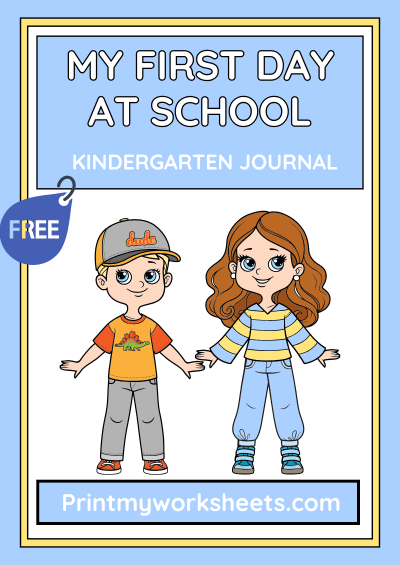

First Day at School Worksheets Kindergarten PDF – Free
Make the first day of Kindergarten a memorable learning experience with our First Day at School Worksheet, a free downloadable PDF created to support social-emotional learning and creative expression for young learners. This engaging and age-appropriate worksheet allows children to reflect on their emotions, draw a self-portrait, and write a sentence or two about their very first day in school.
Designed with U.S. Kindergarten curriculum and homeschool needs in mind, this worksheet helps build foundational literacy, emotional awareness, and communication skills in early learners. It also provides teachers and parents a valuable insight into the thoughts and feelings of their students during a milestone moment.
✅ Why This Worksheet Matters:
The first day of school is a mix of excitement, curiosity, and sometimes anxiety for kids. Giving children a structured way to reflect and express their experience through drawing and writing supports:
Emotional regulation
Language development
Memory building
Confidence boosting
Children gain more than literacy practice—they learn to make sense of their world.
✅ What’s Inside the Worksheet:
✔ Title: “My First Day at School”
✔ Drawing space for a self-portrait or classroom scene
✔ Sentence prompt: “I felt ________________ on my first day.”
✔ Optional fill-ins like “My teacher’s name is…” or “I made a friend named…”
✔ Black-and-white print-friendly format
✔ Designed for U.S. Letter size (8.5 x 11)
✅ Skills Developed:
📚 Early writing
✍️ Fine motor skills
🧠 Emotional expression
🎨 Creativity through drawing
🗣️ Oral language development
👩🏫 Classroom integration for SEL (social-emotional learning)
✅ Why Teach About the First Day of School:
💬 Promotes Self-Awareness: Helps children understand and name their emotions.
✍️ Strengthens Communication: Combines drawing and writing to support dual literacy modes.
💡 Boosts Engagement: Students feel seen and valued when encouraged to share personal stories.
📖 Supports Routine Building: Journaling can become part of daily or weekly learning routines.
✅ How Teachers and Parents Can Use This:
Ice-breaker activity on Day 1
Shared group reflection on the whiteboard
Included in “My School Year” memory books
SEL activity during circle time
Sent home for family reflection and discussion
✅ Target Audience:
Kindergarten classrooms
Homeschool educators
Daycare centers
After-school programs
Parents building first-week routines
Speech and language therapists
Download and print today to give your little learners the head start they deserve!
You may also like :
[gallery ids="4931,4693,4724"]Frequently Asked Questions
Q1. What format is this worksheet available in?This worksheet is available as a printable PDF file. It is black-and-white, printer-friendly, and works on any standard home or classroom printer using A4 or US Letter paper.Q2. Is this worksheet free to download?Yes, this worksheet is 100% free to download and print. No account, subscription, or payment is required. Click the Download Now button to get your free PDF instantly.Q3. Can I use this worksheet for both classroom and home learning?Yes, these worksheets are designed for use by classroom teachers, homeschool parents, and tutors. They can be used as morning work, homework, revision practice, or learning centre activities.Q4. Can this worksheet be used for phonics instruction?Yes, this worksheet supports phonics-based reading instruction and is suitable for early readers building letter-sound recognition skills.Q5. Is this worksheet suitable for ESL or ELL students?This worksheet can be used as a supplemental resource for ESL and ELL students, particularly for vocabulary building and language pattern practice.First Day at School Worksheets Kindergarten PDF – Free
Make the first day of Kindergarten a memorable learning experience with our First Day at School Worksheet, a free downloadable PDF created to support social-emotional learning and creative expression for young learners. This engaging and age-appropriate worksheet allows children to reflect on their emotions, draw a self-portrait, and write a sentence or two about their very first day in school.
Designed with U.S. Kindergarten curriculum and homeschool needs in mind, this worksheet helps build foundational literacy, emotional awareness, and communication skills in early learners. It also provides teachers and parents a valuable insight into the thoughts and feelings of their students during a milestone moment.
✅ Why This Worksheet Matters:
The first day of school is a mix of excitement, curiosity, and sometimes anxiety for kids. Giving children a structured way to reflect and express their experience through drawing and writing supports:
Emotional regulation
Language development
Memory building
Confidence boosting
Children gain more than literacy practice—they learn to make sense of their world.
✅ What’s Inside the Worksheet:
✔ Title: “My First Day at School”
✔ Drawing space for a self-portrait or classroom scene
✔ Sentence prompt: “I felt ________________ on my first day.”
✔ Optional fill-ins like “My teacher’s name is…” or “I made a friend named…”
✔ Black-and-white print-friendly format
✔ Designed for U.S. Letter size (8.5 x 11)
✅ Skills Developed:
📚 Early writing
✍️ Fine motor skills
🧠 Emotional expression
🎨 Creativity through drawing
🗣️ Oral language development
👩🏫 Classroom integration for SEL (social-emotional learning)
✅ Why Teach About the First Day of School:
💬 Promotes Self-Awareness: Helps children understand and name their emotions.
✍️ Strengthens Communication: Combines drawing and writing to support dual literacy modes.
💡 Boosts Engagement: Students feel seen and valued when encouraged to share personal stories.
📖 Supports Routine Building: Journaling can become part of daily or weekly learning routines.
✅ How Teachers and Parents Can Use This:
Ice-breaker activity on Day 1
Shared group reflection on the whiteboard
Included in “My School Year” memory books
SEL activity during circle time
Sent home for family reflection and discussion
✅ Target Audience:
Kindergarten classrooms
Homeschool educators
Daycare centers
After-school programs
Parents building first-week routines
Speech and language therapists
Download and print today to give your little learners the head start they deserve!
You may also like :
[gallery ids="4931,4693,4724"]Frequently Asked Questions
Q1. What format is this worksheet available in?This worksheet is available as a printable PDF file. It is black-and-white, printer-friendly, and works on any standard home or classroom printer using A4 or US Letter paper.Q2. Is this worksheet free to download?Yes, this worksheet is 100% free to download and print. No account, subscription, or payment is required. Click the Download Now button to get your free PDF instantly.Q3. Can I use this worksheet for both classroom and home learning?Yes, these worksheets are designed for use by classroom teachers, homeschool parents, and tutors. They can be used as morning work, homework, revision practice, or learning centre activities.Q4. Can this worksheet be used for phonics instruction?Yes, this worksheet supports phonics-based reading instruction and is suitable for early readers building letter-sound recognition skills.Q5. Is this worksheet suitable for ESL or ELL students?This worksheet can be used as a supplemental resource for ESL and ELL students, particularly for vocabulary building and language pattern practice.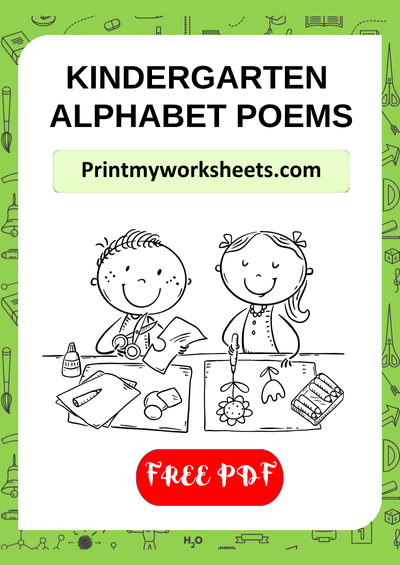
Kindergarten A–Z Phonics Worksheets PDF | Free English Downloadable
Kindergarten A–Z Phonics Worksheets PDF
Building a strong foundation in reading begins with understanding letters and their sounds. The Kindergarten A–Z Phonics Worksheets PDF is designed to help young learners develop essential phonics skills through structured and engaging activities. These printable worksheets are created for U.S. teachers, parents, and homeschool families who want to support early literacy development in a clear and effective way.
In kindergarten, students are introduced to the alphabet and begin connecting letters with their corresponding sounds. This process is a key step in learning how to read and write. Practicing phonics from A to Z helps children recognize letters, understand sound patterns, and build confidence in decoding simple words.
The Kindergarten A–Z Phonics Worksheets PDF provides a comprehensive set of activities that guide students through each letter of the alphabet. With consistent practice, children learn to identify letters, associate them with sounds, and begin forming words. These worksheets support early reading development while making learning enjoyable and easy to follow.
What Students Will Learn?
A–Z phonics worksheets provide kindergarten students with structured opportunities to learn and practice letter recognition and sound association. These activities are carefully designed to match the developmental level of young learners.
Students begin by identifying uppercase and lowercase letters from A to Z. Recognizing both forms of each letter helps build familiarity and prepares students for reading and writing tasks.
Each worksheet focuses on a specific letter and its corresponding sound. Students practice saying the sound aloud, which strengthens phonemic awareness and helps them understand how letters represent sounds in words.
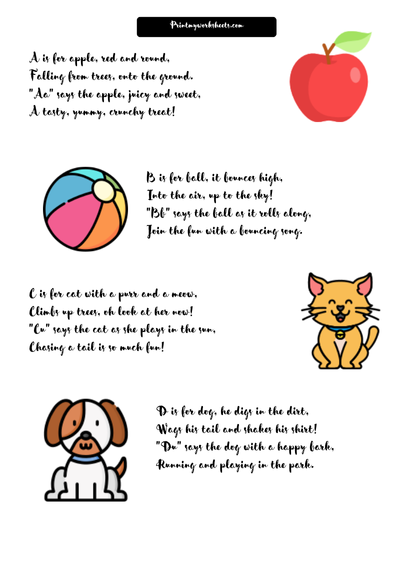
Activities often include tracing letters, circling the correct letter, and matching letters with pictures that begin with the same sound. For example, students may match the letter “B” with images like “ball” or “bird.”
Students also practice identifying beginning sounds in simple words. This helps them understand how sounds connect to letters and prepares them for reading short words.
Some worksheets include simple word-building activities that allow students to combine sounds and form basic words.
Through these structured exercises, kindergarten learners develop essential phonics skills that support early reading success.
Educational Value & Skill Development
The Kindergarten A–Z Phonics Worksheets PDF supports key areas of early literacy development and provides a strong foundation for reading and writing.
One of the primary benefits is improving letter recognition. By practicing each letter from A to Z, students become familiar with the alphabet and can quickly identify letters in different contexts.
The Kindergarten A–Z Phonics Worksheets PDF also strengthens phonemic awareness. Students learn to recognize individual sounds in words and understand how these sounds are represented by letters.
These worksheets help develop early decoding skills. As students connect letters with sounds, they begin to read simple words by blending sounds together.
Another important benefit is improving fine motor skills. Activities such as tracing letters and writing simple words help children develop hand control and coordination needed for writing.
Phonics practice also supports vocabulary development. When students match letters with pictures and words, they expand their understanding of language and word meanings.
Additionally, these worksheets build confidence. As children successfully complete activities and recognize letters and sounds, they feel more comfortable with reading tasks.
By combining visual, auditory, and hands-on activities, these worksheets provide a well-rounded approach to early literacy learning.
Why Focus on A–Z Phonics?
Phonics is one of the most important components of early reading instruction. Learning letter-sound relationships helps children understand how words are formed and how to read them.
Focusing on A–Z phonics ensures that students have a complete understanding of the alphabet. This knowledge is essential for recognizing words, spelling, and reading fluently.
In kindergarten classrooms across the United States, phonics instruction is a core part of the curriculum. Teachers use structured activities to help students connect letters with sounds and build early reading skills.
Learning phonics also supports writing development. When students understand how sounds correspond to letters, they can begin to write simple words independently.
Repetition and practice are key to mastering phonics. Regular exposure to letter sounds helps students remember and apply what they have learned.
Phonics activities also make learning interactive and engaging. Matching, tracing, and sound recognition tasks keep students actively involved in the learning process.
By focusing on A–Z phonics, students build a strong literacy foundation that supports reading comprehension and academic success in later grades.
How to Use These Worksheets?
The Kindergarten A–Z Phonics Worksheets PDF can be used in a variety of educational settings, including classrooms, homeschool environments, and independent learning activities.
Teachers often include phonics worksheets as part of daily literacy instruction. Students may complete one letter-focused worksheet each day to gradually build their understanding of the alphabet.
In classroom settings, teachers can guide students through activities such as identifying sounds, tracing letters, and matching pictures with beginning sounds.
Parents who homeschool can incorporate these worksheets into daily reading practice. Children can work on one or two letters at a time while reviewing previously learned sounds.
Because the worksheets are available as a free printable PDF, they are easy to download and print for repeated use. Teachers and parents can revisit the worksheets for review and reinforcement.
These worksheets also work well for small group instruction. Students can practice phonics together while receiving support and feedback from a teacher or parent.
The printable format allows for flexible use, making it easy to adapt the worksheets to different learning styles and needs.
Related Worksheets / Extensions:
You may also like:
• Kindergarten sight words worksheets
• Beginning sounds worksheets for early readers
• Letter tracing worksheets for handwriting practice
• CVC word worksheets for phonics development
• Early reading comprehension worksheets for kindergarten
The Kindergarten A–Z Phonics Worksheets PDF pairs well with other early literacy resources that focus on word building, sight words, and reading comprehension. Combining these materials helps students strengthen multiple language skills at the same time.
Teachers and parents can extend learning by encouraging children to practice letter sounds during everyday activities, such as identifying letters in books or objects around the home.
With consistent practice, kindergarten students develop strong phonics skills that prepare them for reading, writing, and continued academic success.
Frequently Asked Questions
Q1. Is this worksheet free to download?Yes, this worksheet is 100% free to download and print. No account, subscription, or payment is required. Click the Download Now button to get your free PDF instantly.Q2. What format is this worksheet available in?This worksheet is available as a printable PDF file. It is black-and-white, printer-friendly, and works on any standard home or classroom printer using A4 or US Letter paper.Q3. Can I use this worksheet for both classroom and home learning?Yes, these worksheets are designed for use by classroom teachers, homeschool parents, and tutors. They can be used as morning work, homework, revision practice, or learning centre activities.Q4. Is this worksheet aligned with Common Core ELA standards?Yes, this English worksheet is aligned with U.S. Common Core English Language Arts standards and supports foundational literacy development.Q5. Can this worksheet be used for phonics instruction?Yes, this worksheet supports phonics-based reading instruction and is suitable for early readers building letter-sound recognition skills.Kindergarten A–Z Phonics Worksheets PDF | Free English Downloadable
Kindergarten A–Z Phonics Worksheets PDF
Building a strong foundation in reading begins with understanding letters and their sounds. The Kindergarten A–Z Phonics Worksheets PDF is designed to help young learners develop essential phonics skills through structured and engaging activities. These printable worksheets are created for U.S. teachers, parents, and homeschool families who want to support early literacy development in a clear and effective way.
In kindergarten, students are introduced to the alphabet and begin connecting letters with their corresponding sounds. This process is a key step in learning how to read and write. Practicing phonics from A to Z helps children recognize letters, understand sound patterns, and build confidence in decoding simple words.
The Kindergarten A–Z Phonics Worksheets PDF provides a comprehensive set of activities that guide students through each letter of the alphabet. With consistent practice, children learn to identify letters, associate them with sounds, and begin forming words. These worksheets support early reading development while making learning enjoyable and easy to follow.
What Students Will Learn?
A–Z phonics worksheets provide kindergarten students with structured opportunities to learn and practice letter recognition and sound association. These activities are carefully designed to match the developmental level of young learners.
Students begin by identifying uppercase and lowercase letters from A to Z. Recognizing both forms of each letter helps build familiarity and prepares students for reading and writing tasks.
Each worksheet focuses on a specific letter and its corresponding sound. Students practice saying the sound aloud, which strengthens phonemic awareness and helps them understand how letters represent sounds in words.
Activities often include tracing letters, circling the correct letter, and matching letters with pictures that begin with the same sound. For example, students may match the letter “B” with images like “ball” or “bird.”
Students also practice identifying beginning sounds in simple words. This helps them understand how sounds connect to letters and prepares them for reading short words.
Some worksheets include simple word-building activities that allow students to combine sounds and form basic words.
Through these structured exercises, kindergarten learners develop essential phonics skills that support early reading success.
Educational Value & Skill Development
The Kindergarten A–Z Phonics Worksheets PDF supports key areas of early literacy development and provides a strong foundation for reading and writing.
One of the primary benefits is improving letter recognition. By practicing each letter from A to Z, students become familiar with the alphabet and can quickly identify letters in different contexts.
The Kindergarten A–Z Phonics Worksheets PDF also strengthens phonemic awareness. Students learn to recognize individual sounds in words and understand how these sounds are represented by letters.
These worksheets help develop early decoding skills. As students connect letters with sounds, they begin to read simple words by blending sounds together.
Another important benefit is improving fine motor skills. Activities such as tracing letters and writing simple words help children develop hand control and coordination needed for writing.
Phonics practice also supports vocabulary development. When students match letters with pictures and words, they expand their understanding of language and word meanings.
Additionally, these worksheets build confidence. As children successfully complete activities and recognize letters and sounds, they feel more comfortable with reading tasks.
By combining visual, auditory, and hands-on activities, these worksheets provide a well-rounded approach to early literacy learning.
Why Focus on A–Z Phonics?
Phonics is one of the most important components of early reading instruction. Learning letter-sound relationships helps children understand how words are formed and how to read them.
Focusing on A–Z phonics ensures that students have a complete understanding of the alphabet. This knowledge is essential for recognizing words, spelling, and reading fluently.
In kindergarten classrooms across the United States, phonics instruction is a core part of the curriculum. Teachers use structured activities to help students connect letters with sounds and build early reading skills.
Learning phonics also supports writing development. When students understand how sounds correspond to letters, they can begin to write simple words independently.
Repetition and practice are key to mastering phonics. Regular exposure to letter sounds helps students remember and apply what they have learned.
Phonics activities also make learning interactive and engaging. Matching, tracing, and sound recognition tasks keep students actively involved in the learning process.
By focusing on A–Z phonics, students build a strong literacy foundation that supports reading comprehension and academic success in later grades.
How to Use These Worksheets?
The Kindergarten A–Z Phonics Worksheets PDF can be used in a variety of educational settings, including classrooms, homeschool environments, and independent learning activities.
Teachers often include phonics worksheets as part of daily literacy instruction. Students may complete one letter-focused worksheet each day to gradually build their understanding of the alphabet.
In classroom settings, teachers can guide students through activities such as identifying sounds, tracing letters, and matching pictures with beginning sounds.
Parents who homeschool can incorporate these worksheets into daily reading practice. Children can work on one or two letters at a time while reviewing previously learned sounds.
Because the worksheets are available as a free printable PDF, they are easy to download and print for repeated use. Teachers and parents can revisit the worksheets for review and reinforcement.
These worksheets also work well for small group instruction. Students can practice phonics together while receiving support and feedback from a teacher or parent.
The printable format allows for flexible use, making it easy to adapt the worksheets to different learning styles and needs.
Related Worksheets / Extensions:
You may also like:
• Kindergarten sight words worksheets
• Beginning sounds worksheets for early readers
• Letter tracing worksheets for handwriting practice
• CVC word worksheets for phonics development
• Early reading comprehension worksheets for kindergarten
The Kindergarten A–Z Phonics Worksheets PDF pairs well with other early literacy resources that focus on word building, sight words, and reading comprehension. Combining these materials helps students strengthen multiple language skills at the same time.
Teachers and parents can extend learning by encouraging children to practice letter sounds during everyday activities, such as identifying letters in books or objects around the home.
With consistent practice, kindergarten students develop strong phonics skills that prepare them for reading, writing, and continued academic success.