
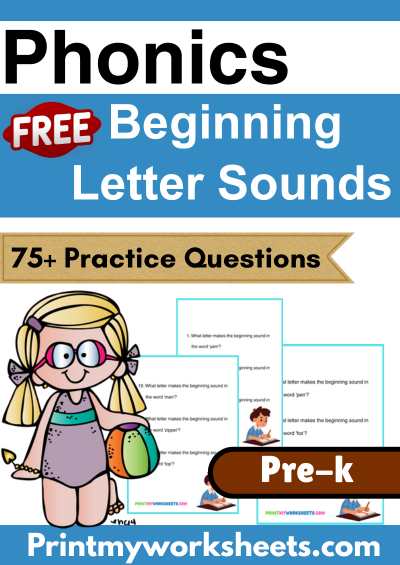


Pre-K Beginning Letter Sounds Worksheets PDF – Phonics Practice Pack for Early Literacy and Alphabet Recognition
Click below to access the free Pre-K Beginning Letter Sounds Worksheets PDF
Continue Learning
Explore more worksheets to build your child’s English skills.

Pre-K Beginning Letter Sounds Worksheets PDF
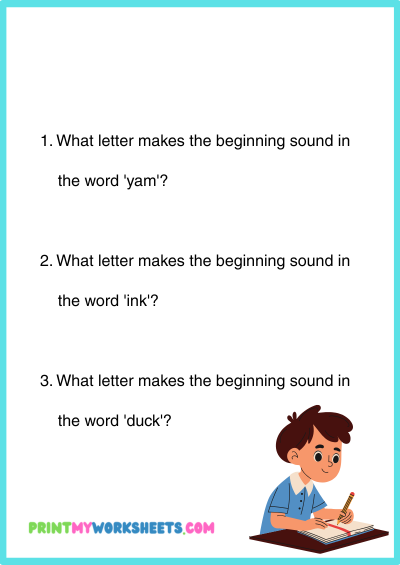
Early literacy begins with strong sound awareness, and helping young learners recognize beginning sounds is one of the most important steps in Pre-K reading readiness. These Pre-K Beginning Letter Sounds Worksheets PDF are designed to support children as they learn to connect letters with the sounds they hear in words. Created specifically for Pre-K students, this free printable resource is ideal for U.S. parents, preschool teachers, and homeschool families who want structured, age-appropriate phonics practice.
Beginning letter sounds form the foundation for phonemic awareness, early reading, and future spelling skills. At the Pre-K level, children are just starting to notice how spoken words are made up of sounds. With guided, repeated practice, they can begin identifying the first sound in familiar words and matching it to the correct letter. This worksheet set offers simple, clear activities that encourage listening, thinking, and early letter recognition without overwhelming young learners. Whether used at home or in the classroom, these worksheets support confident early learning in a developmentally appropriate way.
What Students Will Learn ?
These worksheets focus on helping Pre-K learners build essential early phonics skills through structured and engaging practice. Children will learn how to listen carefully to spoken words and identify the first sound they hear. This skill supports early reading development and helps children understand how language works.
The activities included encourage students to match beginning sounds to letters, recognize common letter-sound relationships, and build familiarity with the alphabet. Learners practice with simple, familiar words that are easy to say and recognize, making the activities accessible for young children. The worksheets are designed with a clear layout so students can focus on the task without distractions.
By working through these pages, children also develop important learning habits such as following directions, focusing on one task at a time, and completing age-appropriate independent work. The progression of activities supports gradual skill development while allowing flexibility for different learning paces. These worksheets align well with typical Pre-K expectations in U.S. early childhood programs and provide meaningful practice that supports early literacy growth.
Educational Value & Skill Development
Using Pre-K Beginning Letter Sounds Worksheets PDF as part of early literacy instruction offers strong educational benefits beyond letter recognition. Identifying beginning sounds strengthens phonemic awareness, which is a key predictor of later reading success. As children learn to hear and isolate sounds, they build the foundation needed for blending sounds into words in kindergarten and beyond.
These worksheets also support cognitive development by encouraging children to listen carefully, process information, and make simple connections. Completing the activities helps improve attention span, visual discrimination, and early problem-solving skills. For young learners, successfully identifying sounds and letters builds confidence and encourages a positive attitude toward learning.
From an instructional standpoint, the worksheets provide consistent practice that supports skill progression. Children move from listening and identifying to matching and recognizing, reinforcing learning through repetition without boredom. Teachers and parents can easily observe progress and identify areas where a child may need extra support. Overall, this resource promotes independence while reinforcing essential early literacy skills in a structured, child-friendly format.
Why Focus on Beginning Letter Sounds ?
Why Focus on Pre-K Beginning Letter Sounds Worksheets? Beginning letter sounds are one of the first phonics skills children learn, and they play a crucial role in early reading development. When children can recognize the first sound in a word, they begin to understand that words are made up of individual sounds.
This skill directly supports later abilities such as blending sounds to read simple words and segmenting sounds for spelling. Without a strong foundation in sound awareness, children may struggle as reading expectations increase in kindergarten and first grade. Practicing beginning sounds helps bridge the gap between spoken language and written text.
Repetition and guided practice are especially important at the Pre-K level. Young learners benefit from seeing and hearing the same letter-sound relationships multiple times in a variety of formats. These worksheets support early learning standards commonly used in U.S. preschool programs and provide the consistency children need to build confidence and readiness for the next stage of literacy instruction.
How to Use These Worksheets ?
These worksheets are flexible and easy to use in a variety of learning environments. In homeschool settings, parents can introduce one worksheet at a time, working alongside their child and discussing each word aloud. In classrooms, teachers can use the pages for literacy centers, small-group instruction, or independent practice during phonics time.
The worksheets also work well for intervention or review, allowing children to revisit beginning sounds as needed. Because they are provided as a free printable PDF, they are easy to download, print, and reuse. Laminating the pages allows for repeated practice with dry-erase markers.
For families and educators looking for structured phonics support, Pre-K Beginning Letter Sounds Worksheets PDF offer a simple way to reinforce skills consistently. The clear format makes them suitable for independent work, while the focused activities ensure meaningful practice without unnecessary distractions.
What’s Included in This PDF ?
This printable resource is designed to be practical and easy to use for both educators and families. Each worksheet focuses on a single skill to keep learning clear and manageable. Inside this worksheet set, you’ll find:
Multiple printable worksheets focused on beginning letter sounds
Activities that reinforce letter-sound recognition
A kid-friendly, uncluttered layout
Black-and-white pages for easy printing
Print-friendly design suitable for home or classroom use
Content aligned with U.S. Pre-K learning expectations
A free downloadable PDF format for quick access
You may also like:


Related Worksheets / Extensions :
If your child or students are ready for more phonics practice, you may also like exploring related early literacy resources. Consider pairing this set with alphabet recognition worksheets, letter tracing activities, or simple CVC sound practice designed for preschool learners. You can also extend learning by using similar activities for letter identification or matching uppercase and lowercase letters.
For families and teachers building a complete phonics toolkit, Pre-K Beginning Letter Sounds Worksheets PDF work well alongside other Pre-K literacy printables. Using related worksheets together helps reinforce skills through varied practice while keeping learning engaging and age-appropriate.
Frequently Asked Questions
Q1. What format is this worksheet available in?
This worksheet is available as a printable PDF file. It is black-and-white, printer-friendly, and works on any standard home or classroom printer using A4 or US Letter paper.
Q2. Is this worksheet free to download?
Yes, this worksheet is 100% free to download and print. No account, subscription, or payment is required. Click the Download Now button to get your free PDF instantly.
Q3. Can I use this worksheet for both classroom and home learning?
Yes, these worksheets are designed for use by classroom teachers, homeschool parents, and tutors. They can be used as morning work, homework, revision practice, or learning centre activities.
Q4. Is this worksheet aligned with Common Core ELA standards?
Yes, this English worksheet is aligned with U.S. Common Core English Language Arts standards and supports foundational literacy development.
Q5. Can this worksheet be used for phonics instruction?
Yes, this worksheet supports phonics-based reading instruction and is suitable for early readers building letter-sound recognition skills.
You may also like…
Pre-Kindergarten Sight Words Worksheets PDF | Free English II Downloadable
Pre-Kindergarten Sight Words Worksheets PDF
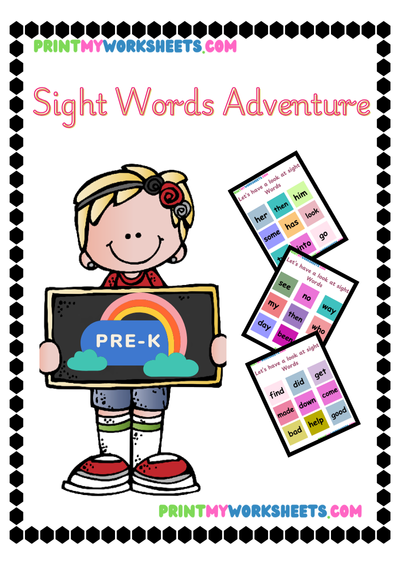
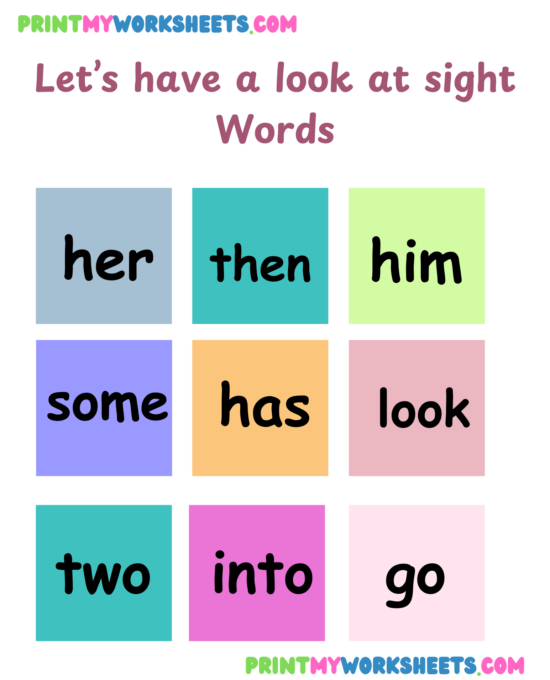
The Pre-Kindergarten Sight Words Worksheets PDF is designed to introduce young learners to common high-frequency words in a simple and engaging way. This free printable PDF is ideal for U.S. parents, preschool teachers, and homeschool families who want to build early literacy skills before kindergarten begins.
In Pre-Kindergarten, children are just beginning to explore letters, sounds, and simple word recognition. Introducing sight words at this stage helps students become familiar with everyday words they will encounter in books and classroom materials. Early exposure builds confidence and prepares children for structured reading instruction in kindergarten.
This worksheet collection provides age-appropriate activities that focus on recognizing, tracing, and identifying simple sight words. The activities are designed with young learners in mind, using clear layouts and manageable tasks that encourage success. With consistent practice, children begin to recognize familiar words more quickly and develop a positive attitude toward reading.
What Students Will Learn?
These Pre-K sight word worksheets focus on helping young children become comfortable with recognizing common words by sight. At this stage, the goal is familiarity rather than mastery. Students begin building a foundation that will support future reading success.
Children will practice:
Recognizing simple, high-frequency words
Matching words to pictures
Tracing basic sight words
Identifying words within simple phrases
Listening and repeating familiar words aloud
Strengthening visual word recognition
The activities are carefully structured to match the developmental level of Pre-K learners. Pages include large print, simple directions, and uncluttered designs that reduce distractions.
By repeatedly seeing and practicing the same words, students begin forming connections between spoken language and written text. The worksheets encourage multisensory learning by combining visual recognition with tracing and speaking activities.
These early literacy activities align with preschool readiness expectations across the United States. They support pre-reading skills while keeping the experience playful and positive. The emphasis is on exposure, repetition, and gentle reinforcement rather than formal assessment.
Educational Value & Skill Development
The Pre-Kindergarten Sight Words Worksheets PDF supports early cognitive and literacy development in meaningful ways. Although Pre-K students are not expected to read independently, exposure to sight words helps build familiarity with written language.
Academically, recognizing common words strengthens early reading readiness. When children repeatedly see simple words, they begin to understand that print carries meaning. This awareness is an essential first step toward reading.
Cognitively, sight word practice enhances memory and visual discrimination skills. Young learners learn to notice patterns in letters and shapes, improving their ability to distinguish between similar-looking words.
Tracing activities also strengthen fine motor development. As children practice writing basic words, they build hand-eye coordination and pencil control, which are critical for later writing tasks.
Confidence grows as children successfully recognize familiar words during story time or classroom activities. Positive early experiences with print create a strong foundation for kindergarten literacy instruction. By introducing structured yet gentle practice, these worksheets help children approach reading with curiosity and enthusiasm.
Why Focus on Sight Words?
Sight words are common words that appear frequently in early reading materials. Even before formal reading instruction begins, young children benefit from becoming familiar with a small set of simple words.
In Pre-Kindergarten, the goal is exposure. When children see words repeatedly in books, classroom labels, and daily routines, they begin to understand that printed words represent spoken language. This connection builds print awareness.
Repetition plays a key role. Seeing the same words in different contexts strengthens memory and recognition. Guided practice, combined with read-aloud activities, reinforces learning in a natural way.
Developing familiarity with high-frequency words helps smooth the transition into kindergarten reading programs. Students who have prior exposure often feel more comfortable and confident when formal phonics instruction begins.
Early literacy skills, including sight word recognition, contribute to long-term reading success. Building these skills gradually ensures children are prepared for the next stage of learning.
How to Use These Worksheets?
The Pre-Kindergarten Sight Words Worksheets PDF can be used in preschool classrooms, daycare centers, or homeschool settings. Teachers may incorporate the worksheets into literacy centers or circle-time activities. Parents can use them during short daily learning sessions at home.
Because the resource is provided as a free printable PDF, it can be easily downloaded and printed as needed. Pages may be reused throughout the year for reinforcement and review.
For best results, pair the worksheets with read-aloud time. When children hear the same words spoken while seeing them on paper, learning becomes more meaningful. Encouraging children to say the words aloud while tracing also strengthens retention.
These worksheets are ideal for small group instruction or one-on-one practice. Keeping sessions short and positive ensures young learners remain engaged. Repetition and gentle guidance help children gradually build familiarity with common words.
Related Worksheets / Extensions:
Frequently Asked Questions
Q1. Is this worksheet free to download?Yes, this worksheet is 100% free to download and print. No account, subscription, or payment is required. Click the Download Now button to get your free PDF instantly.Q2. What format is this worksheet available in?This worksheet is available as a printable PDF file. It is black-and-white, printer-friendly, and works on any standard home or classroom printer using A4 or US Letter paper.Q3. Can I use this worksheet for both classroom and home learning?Yes, these worksheets are designed for use by classroom teachers, homeschool parents, and tutors. They can be used as morning work, homework, revision practice, or learning centre activities.Q4. Is this worksheet aligned with Common Core ELA standards?Yes, this English worksheet is aligned with U.S. Common Core English Language Arts standards and supports foundational literacy development.Q5. Is this worksheet suitable for ESL or ELL students?This worksheet can be used as a supplemental resource for ESL and ELL students, particularly for vocabulary building and language pattern practice.Pre-Kindergarten Sight Words Worksheets PDF | Free English II Downloadable
Pre-Kindergarten Sight Words Worksheets PDF
The Pre-Kindergarten Sight Words Worksheets PDF is designed to introduce young learners to common high-frequency words in a simple and engaging way. This free printable PDF is ideal for U.S. parents, preschool teachers, and homeschool families who want to build early literacy skills before kindergarten begins.
In Pre-Kindergarten, children are just beginning to explore letters, sounds, and simple word recognition. Introducing sight words at this stage helps students become familiar with everyday words they will encounter in books and classroom materials. Early exposure builds confidence and prepares children for structured reading instruction in kindergarten.
This worksheet collection provides age-appropriate activities that focus on recognizing, tracing, and identifying simple sight words. The activities are designed with young learners in mind, using clear layouts and manageable tasks that encourage success. With consistent practice, children begin to recognize familiar words more quickly and develop a positive attitude toward reading.
What Students Will Learn?
These Pre-K sight word worksheets focus on helping young children become comfortable with recognizing common words by sight. At this stage, the goal is familiarity rather than mastery. Students begin building a foundation that will support future reading success.
Children will practice:
Recognizing simple, high-frequency words
Matching words to pictures
Tracing basic sight words
Identifying words within simple phrases
Listening and repeating familiar words aloud
Strengthening visual word recognition
The activities are carefully structured to match the developmental level of Pre-K learners. Pages include large print, simple directions, and uncluttered designs that reduce distractions.
By repeatedly seeing and practicing the same words, students begin forming connections between spoken language and written text. The worksheets encourage multisensory learning by combining visual recognition with tracing and speaking activities.
These early literacy activities align with preschool readiness expectations across the United States. They support pre-reading skills while keeping the experience playful and positive. The emphasis is on exposure, repetition, and gentle reinforcement rather than formal assessment.
Educational Value & Skill Development
The Pre-Kindergarten Sight Words Worksheets PDF supports early cognitive and literacy development in meaningful ways. Although Pre-K students are not expected to read independently, exposure to sight words helps build familiarity with written language.
Academically, recognizing common words strengthens early reading readiness. When children repeatedly see simple words, they begin to understand that print carries meaning. This awareness is an essential first step toward reading.
Cognitively, sight word practice enhances memory and visual discrimination skills. Young learners learn to notice patterns in letters and shapes, improving their ability to distinguish between similar-looking words.
Tracing activities also strengthen fine motor development. As children practice writing basic words, they build hand-eye coordination and pencil control, which are critical for later writing tasks.
Confidence grows as children successfully recognize familiar words during story time or classroom activities. Positive early experiences with print create a strong foundation for kindergarten literacy instruction. By introducing structured yet gentle practice, these worksheets help children approach reading with curiosity and enthusiasm.
Why Focus on Sight Words?
Sight words are common words that appear frequently in early reading materials. Even before formal reading instruction begins, young children benefit from becoming familiar with a small set of simple words.
In Pre-Kindergarten, the goal is exposure. When children see words repeatedly in books, classroom labels, and daily routines, they begin to understand that printed words represent spoken language. This connection builds print awareness.
Repetition plays a key role. Seeing the same words in different contexts strengthens memory and recognition. Guided practice, combined with read-aloud activities, reinforces learning in a natural way.
Developing familiarity with high-frequency words helps smooth the transition into kindergarten reading programs. Students who have prior exposure often feel more comfortable and confident when formal phonics instruction begins.
Early literacy skills, including sight word recognition, contribute to long-term reading success. Building these skills gradually ensures children are prepared for the next stage of learning.
How to Use These Worksheets?
The Pre-Kindergarten Sight Words Worksheets PDF can be used in preschool classrooms, daycare centers, or homeschool settings. Teachers may incorporate the worksheets into literacy centers or circle-time activities. Parents can use them during short daily learning sessions at home.
Because the resource is provided as a free printable PDF, it can be easily downloaded and printed as needed. Pages may be reused throughout the year for reinforcement and review.
For best results, pair the worksheets with read-aloud time. When children hear the same words spoken while seeing them on paper, learning becomes more meaningful. Encouraging children to say the words aloud while tracing also strengthens retention.
These worksheets are ideal for small group instruction or one-on-one practice. Keeping sessions short and positive ensures young learners remain engaged. Repetition and gentle guidance help children gradually build familiarity with common words.
Related Worksheets / Extensions:
Frequently Asked Questions
Q1. Is this worksheet free to download?Yes, this worksheet is 100% free to download and print. No account, subscription, or payment is required. Click the Download Now button to get your free PDF instantly.Q2. What format is this worksheet available in?This worksheet is available as a printable PDF file. It is black-and-white, printer-friendly, and works on any standard home or classroom printer using A4 or US Letter paper.Q3. Can I use this worksheet for both classroom and home learning?Yes, these worksheets are designed for use by classroom teachers, homeschool parents, and tutors. They can be used as morning work, homework, revision practice, or learning centre activities.Q4. Is this worksheet aligned with Common Core ELA standards?Yes, this English worksheet is aligned with U.S. Common Core English Language Arts standards and supports foundational literacy development.Q5. Is this worksheet suitable for ESL or ELL students?This worksheet can be used as a supplemental resource for ESL and ELL students, particularly for vocabulary building and language pattern practice.
Pre-K Beginning Sounds Worksheets PDF – Easy Home Phonics Practice for Preschoolers
Introduce your preschooler to the world of phonics with our Pre-K Beginning Sounds Worksheets PDF | Phonics Alphabet Practice for Early Learners. This engaging worksheet is designed to help children identify the starting sounds of words, a key skill in early reading and writing development.
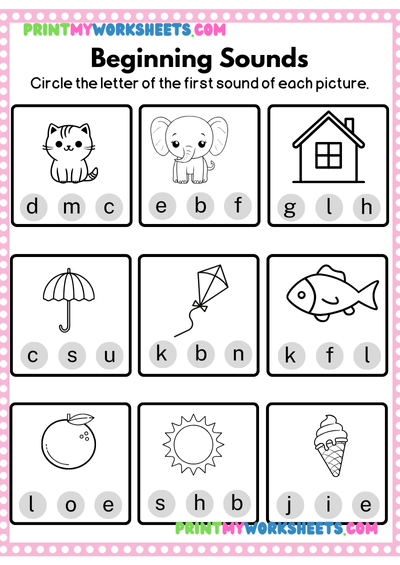
The worksheet features pictures of familiar objects alongside letters of the alphabet, encouraging kids to match each picture with its correct beginning sound. Activities like circling, coloring, and tracing make the practice interactive and fun. Through these exercises, children strengthen their phonemic awareness, letter recognition, and vocabulary while also building fine motor skills.
Why focus on beginning sounds in Pre-K? Mastering initial sounds helps children connect spoken language to written letters, laying the foundation for phonics, decoding, and independent reading. It also boosts listening skills, attention to detail, and confidence in sounding out new words. By practicing beginning sounds early, kids are better prepared for kindergarten-level literacy.
Perfect for homeschool parents, preschool teachers, and caregivers, this free printable PDF is easy to download, print, and use at home, in classrooms, or during small group practice.
Frequently Asked Questions
Q1. Is this worksheet free to download?Yes, this worksheet is 100% free to download and print. No account, subscription, or payment is required. Click the Download Now button to get your free PDF instantly.Q2. What format is this worksheet available in?This worksheet is available as a printable PDF file. It is black-and-white, printer-friendly, and works on any standard home or classroom printer using A4 or US Letter paper.Q3. Can I use this worksheet for both classroom and home learning?Yes, these worksheets are designed for use by classroom teachers, homeschool parents, and tutors. They can be used as morning work, homework, revision practice, or learning centre activities.Q4. Is this worksheet aligned with Common Core ELA standards?Yes, this English worksheet is aligned with U.S. Common Core English Language Arts standards and supports foundational literacy development.Q5. Is this worksheet suitable for ESL or ELL students?This worksheet can be used as a supplemental resource for ESL and ELL students, particularly for vocabulary building and language pattern practice.Pre-K Beginning Sounds Worksheets PDF – Easy Home Phonics Practice for Preschoolers
Introduce your preschooler to the world of phonics with our Pre-K Beginning Sounds Worksheets PDF | Phonics Alphabet Practice for Early Learners. This engaging worksheet is designed to help children identify the starting sounds of words, a key skill in early reading and writing development.
The worksheet features pictures of familiar objects alongside letters of the alphabet, encouraging kids to match each picture with its correct beginning sound. Activities like circling, coloring, and tracing make the practice interactive and fun. Through these exercises, children strengthen their phonemic awareness, letter recognition, and vocabulary while also building fine motor skills.
Why focus on beginning sounds in Pre-K? Mastering initial sounds helps children connect spoken language to written letters, laying the foundation for phonics, decoding, and independent reading. It also boosts listening skills, attention to detail, and confidence in sounding out new words. By practicing beginning sounds early, kids are better prepared for kindergarten-level literacy.
Perfect for homeschool parents, preschool teachers, and caregivers, this free printable PDF is easy to download, print, and use at home, in classrooms, or during small group practice.
Frequently Asked Questions
Q1. Is this worksheet free to download?Yes, this worksheet is 100% free to download and print. No account, subscription, or payment is required. Click the Download Now button to get your free PDF instantly.Q2. What format is this worksheet available in?This worksheet is available as a printable PDF file. It is black-and-white, printer-friendly, and works on any standard home or classroom printer using A4 or US Letter paper.Q3. Can I use this worksheet for both classroom and home learning?Yes, these worksheets are designed for use by classroom teachers, homeschool parents, and tutors. They can be used as morning work, homework, revision practice, or learning centre activities.Q4. Is this worksheet aligned with Common Core ELA standards?Yes, this English worksheet is aligned with U.S. Common Core English Language Arts standards and supports foundational literacy development.Q5. Is this worksheet suitable for ESL or ELL students?This worksheet can be used as a supplemental resource for ESL and ELL students, particularly for vocabulary building and language pattern practice.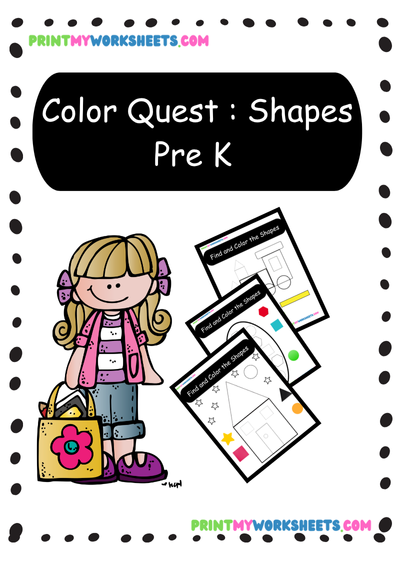
Pre-Kindergarten Color Quest Shapes – Fun Shape Learning Game for Home Practice
Pre-Kindergarten Color Quest Shapes
Early math learning in Pre-Kindergarten is all about exploration, recognition, and joyful discovery. The Pre-Kindergarten Color Quest Shapes worksheet is thoughtfully designed to help young learners identify, sort, and explore basic shapes through engaging color-based activities. Created for U.S. parents, teachers, and homeschool families, this free printable PDF supports early math development in a fun, low-pressure way that feels more like play than practice.
At the Pre-Kindergarten level, children are just beginning to notice shapes in their environment—circles in wheels, squares in windows, and triangles in signs. Combining shape recognition with color exploration strengthens visual perception and early problem-solving skills. The Pre-Kindergarten Color Quest Shapes worksheets guide children through hands-on activities that encourage observation, matching, and decision-making. With simple instructions and child-friendly layouts, these worksheets help young learners build confidence while developing essential early math and cognitive skills that prepare them for kindergarten success.
What Students Will Learn?
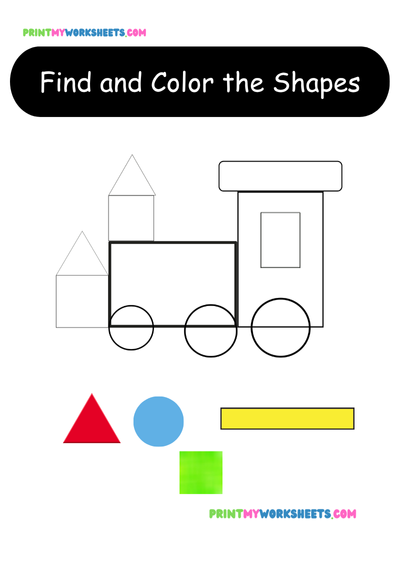
These worksheets are designed to introduce foundational shape concepts in a structured yet playful format. Children will learn to recognize common shapes such as circles, squares, triangles, rectangles, and ovals. Through guided activities, students explore how shapes look, how they differ, and how they can be identified using visual cues like color and size.
Activities include matching shapes to colors, identifying shapes within pictures, tracing simple shapes, and following color-based directions. These tasks support structured learning by helping children focus on one concept at a time while reinforcing it through repetition. Visual prompts and minimal text make the worksheets accessible for non-readers and early readers alike.
The activities align well with age-appropriate expectations for Pre-Kindergarten learners. Children are encouraged to observe carefully, make choices, and complete tasks independently or with light guidance. This balance supports early learning routines while allowing flexibility for different learning styles and developmental stages.
Educational Value & Skill Development
The Pre-Kindergarten Color Quest Shapes worksheets offer strong educational value by supporting multiple areas of early development. Academically, shape recognition is a key math readiness skill that prepares children for geometry concepts in later grades. Understanding shapes helps children categorize objects, recognize patterns, and make sense of their surroundings.
Cognitively, these activities strengthen visual discrimination, attention to detail, and memory. When children identify shapes based on color cues, they practice following directions and processing multiple pieces of information at once. This builds early executive functioning skills in an age-appropriate way.
Confidence and independence grow as children complete activities successfully. Simple tasks with clear outcomes help learners feel capable and motivated. Over time, students progress from basic recognition to applying shape knowledge in more complex ways, such as finding shapes within scenes or sorting by attributes. These gradual skill-building opportunities create a strong foundation for future math learning and classroom readiness.
Why Focus on Color Quest Shapes?
Shape recognition is one of the earliest math skills children develop, and it plays a crucial role in overall cognitive growth. Learning shapes helps children understand spatial relationships, compare objects, and describe the world around them. When shapes are combined with color-based activities, learning becomes more engaging and memorable for young learners.
This skill supports future academic success by laying the groundwork for geometry, problem-solving, and even early reading skills, as shape awareness contributes to letter recognition. Repetition and guided practice are especially important at the Pre-K level, where children learn best through consistent exposure and hands-on exploration.
Color-and-shape activities align closely with U.S. early learning standards, which emphasize identifying shapes, sorting objects, and following simple directions. By focusing on these skills early, children develop the confidence and familiarity they need to transition smoothly into kindergarten math instruction.
How to Use These Worksheets?
These worksheets are flexible and easy to use across a variety of learning environments. In classrooms, teachers can incorporate them into math centers, morning work, or small-group instruction. They work well as part of a themed unit on shapes, colors, or early math exploration.
For homeschool families, the worksheets provide a simple way to introduce or reinforce shape concepts at home. Parents can sit alongside their child to talk about shapes and colors or encourage independent work for short practice sessions. The Pre-Kindergarten Color Quest Shapes activities are ideal for keeping learning playful while still purposeful.
Because the worksheets are offered as a free printable PDF, they are easy to download and reuse. Pages can be printed multiple times for continued practice or used selectively based on a child’s readiness level. This adaptability makes them a practical resource for both structured lessons and informal learning moments.
Related Worksheets / Extensions:
To extend learning beyond this resource, children may also enjoy worksheets focused on color recognition, patterning, or counting with shapes. Shape scavenger hunts around the classroom or home can reinforce concepts learned on paper. Simple art activities, such as creating pictures using cut-out shapes, further support hands-on learning.
The Pre-Kindergarten Color Quest Shapes worksheets pair well with other early math and fine motor skill resources. Together, these activities help young learners build confidence, curiosity, and a strong foundation for future math success in a fun and supportive way.
Frequently Asked Questions
Q1. Is this worksheet free to download?Yes, this worksheet is 100% free to download and print. No account, subscription, or payment is required. Click the Download Now button to get your free PDF instantly.Q2. What format is this worksheet available in?This worksheet is available as a printable PDF file. It is black-and-white, printer-friendly, and works on any standard home or classroom printer using A4 or US Letter paper.Q3. Can I use this worksheet for both classroom and home learning?Yes, these worksheets are designed for use by classroom teachers, homeschool parents, and tutors. They can be used as morning work, homework, revision practice, or learning centre activities.Q4. Is this worksheet suitable for extra practice or exam preparation?Yes, this worksheet is ideal for supplemental practice, homework reinforcement, test preparation, and homeschool math lessons.Q5. Does this math worksheet include an answer key?Yes, an answer key is included in the PDF so parents and teachers can quickly check student responses without manual calculation.Pre-Kindergarten Color Quest Shapes – Fun Shape Learning Game for Home Practice
Pre-Kindergarten Color Quest Shapes
Early math learning in Pre-Kindergarten is all about exploration, recognition, and joyful discovery. The Pre-Kindergarten Color Quest Shapes worksheet is thoughtfully designed to help young learners identify, sort, and explore basic shapes through engaging color-based activities. Created for U.S. parents, teachers, and homeschool families, this free printable PDF supports early math development in a fun, low-pressure way that feels more like play than practice.
At the Pre-Kindergarten level, children are just beginning to notice shapes in their environment—circles in wheels, squares in windows, and triangles in signs. Combining shape recognition with color exploration strengthens visual perception and early problem-solving skills. The Pre-Kindergarten Color Quest Shapes worksheets guide children through hands-on activities that encourage observation, matching, and decision-making. With simple instructions and child-friendly layouts, these worksheets help young learners build confidence while developing essential early math and cognitive skills that prepare them for kindergarten success.
What Students Will Learn?
These worksheets are designed to introduce foundational shape concepts in a structured yet playful format. Children will learn to recognize common shapes such as circles, squares, triangles, rectangles, and ovals. Through guided activities, students explore how shapes look, how they differ, and how they can be identified using visual cues like color and size.
Activities include matching shapes to colors, identifying shapes within pictures, tracing simple shapes, and following color-based directions. These tasks support structured learning by helping children focus on one concept at a time while reinforcing it through repetition. Visual prompts and minimal text make the worksheets accessible for non-readers and early readers alike.
The activities align well with age-appropriate expectations for Pre-Kindergarten learners. Children are encouraged to observe carefully, make choices, and complete tasks independently or with light guidance. This balance supports early learning routines while allowing flexibility for different learning styles and developmental stages.
Educational Value & Skill Development
The Pre-Kindergarten Color Quest Shapes worksheets offer strong educational value by supporting multiple areas of early development. Academically, shape recognition is a key math readiness skill that prepares children for geometry concepts in later grades. Understanding shapes helps children categorize objects, recognize patterns, and make sense of their surroundings.
Cognitively, these activities strengthen visual discrimination, attention to detail, and memory. When children identify shapes based on color cues, they practice following directions and processing multiple pieces of information at once. This builds early executive functioning skills in an age-appropriate way.
Confidence and independence grow as children complete activities successfully. Simple tasks with clear outcomes help learners feel capable and motivated. Over time, students progress from basic recognition to applying shape knowledge in more complex ways, such as finding shapes within scenes or sorting by attributes. These gradual skill-building opportunities create a strong foundation for future math learning and classroom readiness.
Why Focus on Color Quest Shapes?
Shape recognition is one of the earliest math skills children develop, and it plays a crucial role in overall cognitive growth. Learning shapes helps children understand spatial relationships, compare objects, and describe the world around them. When shapes are combined with color-based activities, learning becomes more engaging and memorable for young learners.
This skill supports future academic success by laying the groundwork for geometry, problem-solving, and even early reading skills, as shape awareness contributes to letter recognition. Repetition and guided practice are especially important at the Pre-K level, where children learn best through consistent exposure and hands-on exploration.
Color-and-shape activities align closely with U.S. early learning standards, which emphasize identifying shapes, sorting objects, and following simple directions. By focusing on these skills early, children develop the confidence and familiarity they need to transition smoothly into kindergarten math instruction.
How to Use These Worksheets?
These worksheets are flexible and easy to use across a variety of learning environments. In classrooms, teachers can incorporate them into math centers, morning work, or small-group instruction. They work well as part of a themed unit on shapes, colors, or early math exploration.
For homeschool families, the worksheets provide a simple way to introduce or reinforce shape concepts at home. Parents can sit alongside their child to talk about shapes and colors or encourage independent work for short practice sessions. The Pre-Kindergarten Color Quest Shapes activities are ideal for keeping learning playful while still purposeful.
Because the worksheets are offered as a free printable PDF, they are easy to download and reuse. Pages can be printed multiple times for continued practice or used selectively based on a child’s readiness level. This adaptability makes them a practical resource for both structured lessons and informal learning moments.
Related Worksheets / Extensions:
To extend learning beyond this resource, children may also enjoy worksheets focused on color recognition, patterning, or counting with shapes. Shape scavenger hunts around the classroom or home can reinforce concepts learned on paper. Simple art activities, such as creating pictures using cut-out shapes, further support hands-on learning.
The Pre-Kindergarten Color Quest Shapes worksheets pair well with other early math and fine motor skill resources. Together, these activities help young learners build confidence, curiosity, and a strong foundation for future math success in a fun and supportive way.