
Pre-K Vegetable Coloring Worksheets PDF | Free Downloadable
Looking for an engaging way to teach your Pre-K child about healthy eating and build early English vocabulary? Our Pre-K Vegetable Coloring Worksheets PDF that combines fun with foundational learning. This delightful worksheet set is designed to help young learners recognize, name, and remember popular vegetables through hands-on coloring activities.
Children will enjoy coloring familiar veggies like carrots, broccoli, tomatoes, corn, eggplant, peas, and more—while absorbing the correct spelling and pronunciation of each word. Each page features large, bold illustrations perfect for little hands, along with simple vegetable names to strengthen vocabulary and letter recognition.
Why Learn with a Vegetable Coloring Book?
-
Encourages healthy food awareness from an early age
-
Boosts fine motor skills through coloring
-
Builds essential English vocabulary
-
Reinforces recognition of vegetables and their names
-
Provides a calm, screen-free learning experience
Ideal for homeschoolers, teachers, preschool centers, and parents seeking interactive, low-prep learning tools. Download and print the Vegetable Coloring Book PDF today to turn learning into a colorful adventure!
Download and print today to give your little learners the head start they deserve!
You may also like :
[gallery ids="5911,6401,6435"] Pre-K Vegetable Coloring Worksheets PDF | Free Downloadable
Looking for an engaging way to teach your Pre-K child about healthy eating and build early English vocabulary? Our Pre-K Vegetable Coloring Worksheets PDF that combines fun with foundational learning. This delightful worksheet set is designed to help young learners recognize, name, and remember popular vegetables through hands-on coloring activities.
Children will enjoy coloring familiar veggies like carrots, broccoli, tomatoes, corn, eggplant, peas, and more—while absorbing the correct spelling and pronunciation of each word. Each page features large, bold illustrations perfect for little hands, along with simple vegetable names to strengthen vocabulary and letter recognition.
Why Learn with a Vegetable Coloring Book?
-
Encourages healthy food awareness from an early age
-
Boosts fine motor skills through coloring
-
Builds essential English vocabulary
-
Reinforces recognition of vegetables and their names
-
Provides a calm, screen-free learning experience
Ideal for homeschoolers, teachers, preschool centers, and parents seeking interactive, low-prep learning tools. Download and print the Vegetable Coloring Book PDF today to turn learning into a colorful adventure!
Download and print today to give your little learners the head start they deserve!
You may also like :
[gallery ids="5911,6401,6435"]

Pre-K Vehicles Coloring Worksheets PDF | Free Colouring Book Downloadable
Bring the excitement of transportation into your child’s learning with our Pre-K Vehicles Coloring Worksheets PDF. Specially designed for the US audience, these worksheets combine coloring fun with early childhood education, making them perfect for homeschool parents, preschool teachers, and caregivers.
Each page features simple, bold vehicle outlines—cars, buses, trucks, trains, airplanes, and more—ideal for little hands to color. These activities not only spark creativity but also help develop fine motor skills, hand-eye coordination, and focus. Children can learn to identify different vehicles, talk about their uses, and even explore basic concepts like land, air, and water transport.
Why use vehicles as a coloring theme? Young children are naturally fascinated by things that move. Incorporating this interest into educational activities keeps them engaged and encourages vocabulary growth, observation skills, and early categorization abilities.
Our free printable PDF is easy to download, print, and use at home or in a classroom. With clear, large spaces for coloring, these worksheets promote confidence and creativity while reinforcing important preschool learning goals.
Download today and make learning about vehicles an exciting, hands-on adventure for your little one.
Download and print today to give your little learners the head start they deserve!
You may also like :
[gallery ids="4688,4885,4924"] Pre-K Vehicles Coloring Worksheets PDF | Free Colouring Book Downloadable
Bring the excitement of transportation into your child’s learning with our Pre-K Vehicles Coloring Worksheets PDF. Specially designed for the US audience, these worksheets combine coloring fun with early childhood education, making them perfect for homeschool parents, preschool teachers, and caregivers.
Each page features simple, bold vehicle outlines—cars, buses, trucks, trains, airplanes, and more—ideal for little hands to color. These activities not only spark creativity but also help develop fine motor skills, hand-eye coordination, and focus. Children can learn to identify different vehicles, talk about their uses, and even explore basic concepts like land, air, and water transport.
Why use vehicles as a coloring theme? Young children are naturally fascinated by things that move. Incorporating this interest into educational activities keeps them engaged and encourages vocabulary growth, observation skills, and early categorization abilities.
Our free printable PDF is easy to download, print, and use at home or in a classroom. With clear, large spaces for coloring, these worksheets promote confidence and creativity while reinforcing important preschool learning goals.
Download today and make learning about vehicles an exciting, hands-on adventure for your little one.
Download and print today to give your little learners the head start they deserve!
You may also like :
[gallery ids="4688,4885,4924"]
Pre-K Winter Coloring Worksheets PDF – Classroom Morning Work and Art Activities
Bring seasonal fun and creativity into early learning with our Pre-K Winter Coloring Worksheets PDF, designed for US teachers, homeschool parents, and young learners. These charming winter-themed pages feature snowflakes, snowmen, penguins, mittens, winter animals, and cozy seasonal scenes that encourage children to explore creativity while developing essential early skills.
Coloring activities play a vital role in early childhood development. These winter coloring worksheets help strengthen fine motor skills, hand–eye coordination, pencil grip, and focus. They also support early vocabulary development as children identify winter-related objects and scenes. The calming nature of coloring promotes concentration and helps children express themselves creatively, making learning both enjoyable and meaningful.
Teachers can use these worksheets for classroom art centers, quiet time activities, indoor recess, holiday units, or seasonal learning stations. Homeschool parents appreciate the printable PDF format and simple, screen-free activity that keeps children engaged during the winter months.
Download the free PDF today and give your Pre-K learner a fun, educational winter coloring experience. These winter-themed coloring book worksheets combine creativity and learning to support early development in an engaging and age-appropriate way.
You may also like:
[gallery ids="6483,6391,6435"] Pre-K Winter Coloring Worksheets PDF – Classroom Morning Work and Art Activities
Bring seasonal fun and creativity into early learning with our Pre-K Winter Coloring Worksheets PDF, designed for US teachers, homeschool parents, and young learners. These charming winter-themed pages feature snowflakes, snowmen, penguins, mittens, winter animals, and cozy seasonal scenes that encourage children to explore creativity while developing essential early skills.
Coloring activities play a vital role in early childhood development. These winter coloring worksheets help strengthen fine motor skills, hand–eye coordination, pencil grip, and focus. They also support early vocabulary development as children identify winter-related objects and scenes. The calming nature of coloring promotes concentration and helps children express themselves creatively, making learning both enjoyable and meaningful.
Teachers can use these worksheets for classroom art centers, quiet time activities, indoor recess, holiday units, or seasonal learning stations. Homeschool parents appreciate the printable PDF format and simple, screen-free activity that keeps children engaged during the winter months.
Download the free PDF today and give your Pre-K learner a fun, educational winter coloring experience. These winter-themed coloring book worksheets combine creativity and learning to support early development in an engaging and age-appropriate way.
You may also like:
[gallery ids="6483,6391,6435"]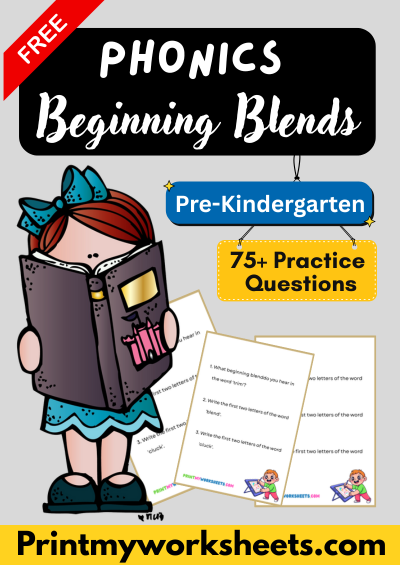
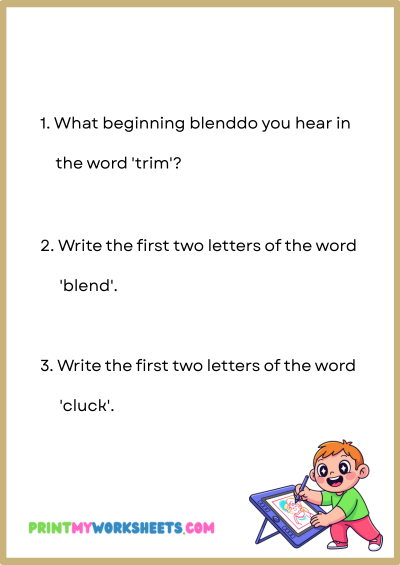
Pre-KG Beginning Blends Worksheets PDF – Phonics Practice for Consonant Blends and Early Reading Skills
Pre-KG Beginning Blends Worksheets PDF
Early phonics instruction helps young learners understand how sounds work together to form words. These Pre-K Beginning Blends Worksheets PDF are designed to introduce children to consonant blends in a gentle, age-appropriate way. Created for U.S. parents, preschool teachers, and homeschool families, this free printable resource supports early reading development through structured and engaging practice.
In Pre-K, children are building listening skills and learning how individual sounds combine in spoken language. Beginning blends, such as bl, st, or cr, are an important step beyond single-letter sounds. Exposure to these sound combinations prepares children for reading simple words as they move toward kindergarten. These worksheets provide clear, guided activities that help children recognize and work with beginning blends without feeling overwhelmed. With simple instructions and a consistent layout, this printable set supports early phonics learning while building confidence and readiness for future literacy instruction.
What Students Will Learn ?
This worksheet set focuses on helping Pre-K learners recognize and work with beginning consonant blends through structured practice. Children will learn to listen carefully to word sounds and notice when two consonants appear together at the start of a word. This skill supports early phonemic awareness and prepares students for decoding words later on.
The activities included encourage children to identify blends, connect sounds to letters, and practice early word recognition. Tasks may involve matching blends to words, identifying beginning sounds, or working with simple pictures and prompts that reinforce sound awareness. Each activity is designed to focus on one clear objective, helping young learners stay engaged and successful.
These worksheets support structured learning by following predictable routines that are easy for Pre-K students to understand. The content fits well within age-appropriate expectations in U.S. early childhood programs, offering just the right level of challenge. Whether used independently or with adult support, the worksheets help children build focus, listening skills, and early phonics confidence.
Educational Value & Skill Development
Beginning blend instruction plays an important role in early literacy development, and the Pre-K Beginning Blends Worksheets PDF offer meaningful educational benefits. Academically, these worksheets help children expand their understanding of how sounds work together, which is a key step toward reading and spelling simple words.
From a cognitive perspective, working with blends strengthens auditory discrimination, memory, and attention. Children learn to listen for subtle sound differences and recognize patterns within words. These skills support overall language development and prepare students for more advanced phonics instruction.
Using the Pre-K Beginning Blends Worksheets PDF also supports confidence and independence. Familiar formats and clear expectations help children feel successful as they complete activities. This sense of accomplishment encourages a positive attitude toward learning. Over time, repeated exposure to beginning blends supports skill progression from sound recognition to early decoding, helping children transition smoothly into kindergarten-level reading instruction.
Why Focus on Pre-K Beginning Blends Worksheets ?
eginning blends are an important bridge between single-letter sounds and more complex word structures. Understanding these sound combinations helps children recognize how spoken language connects to written words.
In Pre-K, students are developing foundational phonemic awareness skills. Introducing blends at this stage allows children to become familiar with common sound patterns they will encounter frequently in early reading. This familiarity makes future decoding tasks feel more manageable and less intimidating.
Repetition and guided practice are essential for mastering blends. Children need multiple opportunities to hear, see, and practice these sounds before they become comfortable recognizing them. These worksheets support early learning standards commonly used in U.S. preschool programs by reinforcing foundational phonics skills in a developmentally appropriate way. Early exposure to blends helps build a strong literacy foundation that supports reading success in kindergarten and beyond.
How to Use These Worksheets ?
These worksheets are flexible and easy to use in a variety of learning settings. In homeschool environments, parents can introduce one worksheet at a time, working alongside their child and discussing sounds out loud. This shared practice helps reinforce learning and builds confidence.
In classrooms, teachers can use the worksheets during phonics centers, small-group instruction, or independent practice. The activities also work well for review and reinforcement, allowing children to revisit blends they have already learned. Because the resource is provided as a free printable PDF, it is easy to download and print as needed.
Pages can be reused by placing them in sheet protectors or laminating for repeated practice. For families and educators looking for structured phonics support, Pre-K Beginning Blends Worksheets PDF offer a simple, effective way to reinforce early sound awareness skills.
What’s Included in This PDF ?
This printable worksheet set is designed to be clear, effective, and easy to use for young learners. Each page focuses on one skill to keep learning manageable and focused. Inside this PDF, you’ll find:
-
Multiple printable worksheets focused on beginning blends
-
Phonics activities that support sound recognition
-
A kid-friendly layout designed for Pre-K learners
-
Black-and-white, print-friendly pages
-
Content aligned with U.S. Pre-K literacy expectations
-
A free downloadable PDF format for convenient access
You may also like:
[gallery ids="6888,6875,6909"]Related Worksheets / Extensions
To support continued phonics development, you may want to pair these worksheets with other early literacy resources. Beginning sound activities, alphabet recognition pages, and CVC word worksheets can complement blend practice and provide balanced instruction.
You may also explore additional phonics printables designed for preschool learners. Resources like Pre-K Beginning Blends Worksheets PDF work well alongside early sound awareness activities, helping children build strong foundational skills through consistent, meaningful practice that supports future reading success.
Pre-KG Beginning Blends Worksheets PDF – Phonics Practice for Consonant Blends and Early Reading Skills
Pre-KG Beginning Blends Worksheets PDF
Early phonics instruction helps young learners understand how sounds work together to form words. These Pre-K Beginning Blends Worksheets PDF are designed to introduce children to consonant blends in a gentle, age-appropriate way. Created for U.S. parents, preschool teachers, and homeschool families, this free printable resource supports early reading development through structured and engaging practice.
In Pre-K, children are building listening skills and learning how individual sounds combine in spoken language. Beginning blends, such as bl, st, or cr, are an important step beyond single-letter sounds. Exposure to these sound combinations prepares children for reading simple words as they move toward kindergarten. These worksheets provide clear, guided activities that help children recognize and work with beginning blends without feeling overwhelmed. With simple instructions and a consistent layout, this printable set supports early phonics learning while building confidence and readiness for future literacy instruction.
What Students Will Learn ?
This worksheet set focuses on helping Pre-K learners recognize and work with beginning consonant blends through structured practice. Children will learn to listen carefully to word sounds and notice when two consonants appear together at the start of a word. This skill supports early phonemic awareness and prepares students for decoding words later on.
The activities included encourage children to identify blends, connect sounds to letters, and practice early word recognition. Tasks may involve matching blends to words, identifying beginning sounds, or working with simple pictures and prompts that reinforce sound awareness. Each activity is designed to focus on one clear objective, helping young learners stay engaged and successful.
These worksheets support structured learning by following predictable routines that are easy for Pre-K students to understand. The content fits well within age-appropriate expectations in U.S. early childhood programs, offering just the right level of challenge. Whether used independently or with adult support, the worksheets help children build focus, listening skills, and early phonics confidence.
Educational Value & Skill Development
Beginning blend instruction plays an important role in early literacy development, and the Pre-K Beginning Blends Worksheets PDF offer meaningful educational benefits. Academically, these worksheets help children expand their understanding of how sounds work together, which is a key step toward reading and spelling simple words.
From a cognitive perspective, working with blends strengthens auditory discrimination, memory, and attention. Children learn to listen for subtle sound differences and recognize patterns within words. These skills support overall language development and prepare students for more advanced phonics instruction.
Using the Pre-K Beginning Blends Worksheets PDF also supports confidence and independence. Familiar formats and clear expectations help children feel successful as they complete activities. This sense of accomplishment encourages a positive attitude toward learning. Over time, repeated exposure to beginning blends supports skill progression from sound recognition to early decoding, helping children transition smoothly into kindergarten-level reading instruction.
Why Focus on Pre-K Beginning Blends Worksheets ?
eginning blends are an important bridge between single-letter sounds and more complex word structures. Understanding these sound combinations helps children recognize how spoken language connects to written words.
In Pre-K, students are developing foundational phonemic awareness skills. Introducing blends at this stage allows children to become familiar with common sound patterns they will encounter frequently in early reading. This familiarity makes future decoding tasks feel more manageable and less intimidating.
Repetition and guided practice are essential for mastering blends. Children need multiple opportunities to hear, see, and practice these sounds before they become comfortable recognizing them. These worksheets support early learning standards commonly used in U.S. preschool programs by reinforcing foundational phonics skills in a developmentally appropriate way. Early exposure to blends helps build a strong literacy foundation that supports reading success in kindergarten and beyond.
How to Use These Worksheets ?
These worksheets are flexible and easy to use in a variety of learning settings. In homeschool environments, parents can introduce one worksheet at a time, working alongside their child and discussing sounds out loud. This shared practice helps reinforce learning and builds confidence.
In classrooms, teachers can use the worksheets during phonics centers, small-group instruction, or independent practice. The activities also work well for review and reinforcement, allowing children to revisit blends they have already learned. Because the resource is provided as a free printable PDF, it is easy to download and print as needed.
Pages can be reused by placing them in sheet protectors or laminating for repeated practice. For families and educators looking for structured phonics support, Pre-K Beginning Blends Worksheets PDF offer a simple, effective way to reinforce early sound awareness skills.
What’s Included in This PDF ?
This printable worksheet set is designed to be clear, effective, and easy to use for young learners. Each page focuses on one skill to keep learning manageable and focused. Inside this PDF, you’ll find:
-
Multiple printable worksheets focused on beginning blends
-
Phonics activities that support sound recognition
-
A kid-friendly layout designed for Pre-K learners
-
Black-and-white, print-friendly pages
-
Content aligned with U.S. Pre-K literacy expectations
-
A free downloadable PDF format for convenient access
You may also like:
[gallery ids="6888,6875,6909"]Related Worksheets / Extensions
To support continued phonics development, you may want to pair these worksheets with other early literacy resources. Beginning sound activities, alphabet recognition pages, and CVC word worksheets can complement blend practice and provide balanced instruction.
You may also explore additional phonics printables designed for preschool learners. Resources like Pre-K Beginning Blends Worksheets PDF work well alongside early sound awareness activities, helping children build strong foundational skills through consistent, meaningful practice that supports future reading success.
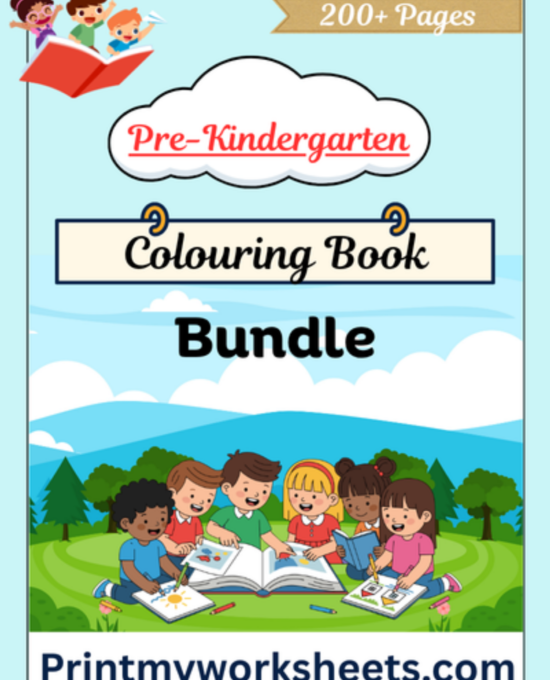
Pre-KG Coloring Worksheets Bundle | 200+ Pages Kids Activity Pack
🎨 Introducing the Ultimate Pre-KG Colouring Worksheets Bundle — 200+ Pages of Screen-Free Fun!
Looking for a creative activity that keeps your toddler or preschooler happily engaged for hours? Meet the Pre-Kindergarten Colouring Book Bundle from PrintMyWorksheets.com — a massive, print-at-home collection packed with gorgeous coloring pages designed especially for children ages 2 to 5.What's inside this bundle?
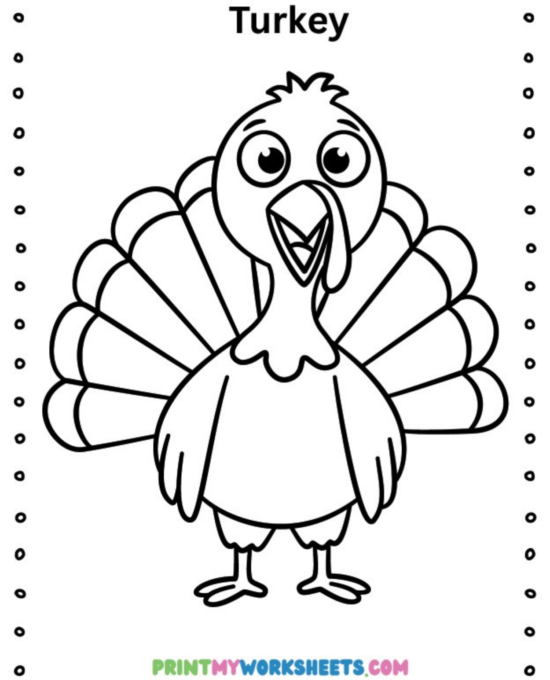
With 200+ beautifully illustrated pages, this bundle covers a rich variety of themes your child will absolutely love: 🐦 Animals — turkeys, foxes, cats, birds, and more 🍂 Seasonal scenes — autumn walks, cozy winter moments, festive celebrations 🎁 Everyday objects — gifts, gloves, flags, cakes, and familiar items kids recognize 🎻 People & activities — children playing music, playing outdoors, enjoying nature 🍓 Food & festive items — cranberry sauce, holiday dishes, and seasonal treatsWhy parents and teachers love it:
✅ Age-appropriate designs — thick, clean outlines are ideal for developing fine motor skills in pre-K children ✅ Mix of complexity — simple single-object pages for toddlers AND more detailed scenic illustrations for older pre-schoolers ✅ Zero prep required — download as a PDF and print as many copies as you need, whenever you need them ✅ Print-unlimited — use at home, in your classroom, at daycare, or as quiet-time activities on trips ✅ Screen-free entertainment — supports creativity, focus, and hand-eye coordination the old-fashioned wayPerfect for:
👩👧 Parents looking for enriching screen-free activities at home 👩🏫 Preschool & Pre-KG teachers needing ready-to-use classroom materials 🏡 Homeschooling families who want variety without the planning 🎄 Anyone looking for holiday activity ideas for young childrenHow it works:
After purchase, you'll receive an instant PDF download. Print at home on standard A4 or Letter-size paper — regular printer ink works perfectly. Hand your child some crayons, markers, or colored pencils and watch their imagination take off! ⭐ Loved by 1000s of parents and teachers on PrintMyWorksheets.com Pre-KG Coloring Worksheets Bundle | 200+ Pages Kids Activity Pack
🎨 Introducing the Ultimate Pre-KG Colouring Worksheets Bundle — 200+ Pages of Screen-Free Fun!
Looking for a creative activity that keeps your toddler or preschooler happily engaged for hours? Meet the Pre-Kindergarten Colouring Book Bundle from PrintMyWorksheets.com — a massive, print-at-home collection packed with gorgeous coloring pages designed especially for children ages 2 to 5.What's inside this bundle?
With 200+ beautifully illustrated pages, this bundle covers a rich variety of themes your child will absolutely love: 🐦 Animals — turkeys, foxes, cats, birds, and more 🍂 Seasonal scenes — autumn walks, cozy winter moments, festive celebrations 🎁 Everyday objects — gifts, gloves, flags, cakes, and familiar items kids recognize 🎻 People & activities — children playing music, playing outdoors, enjoying nature 🍓 Food & festive items — cranberry sauce, holiday dishes, and seasonal treatsWhy parents and teachers love it:
✅ Age-appropriate designs — thick, clean outlines are ideal for developing fine motor skills in pre-K children ✅ Mix of complexity — simple single-object pages for toddlers AND more detailed scenic illustrations for older pre-schoolers ✅ Zero prep required — download as a PDF and print as many copies as you need, whenever you need them ✅ Print-unlimited — use at home, in your classroom, at daycare, or as quiet-time activities on trips ✅ Screen-free entertainment — supports creativity, focus, and hand-eye coordination the old-fashioned wayPerfect for:
👩👧 Parents looking for enriching screen-free activities at home 👩🏫 Preschool & Pre-KG teachers needing ready-to-use classroom materials 🏡 Homeschooling families who want variety without the planning 🎄 Anyone looking for holiday activity ideas for young childrenHow it works:
After purchase, you'll receive an instant PDF download. Print at home on standard A4 or Letter-size paper — regular printer ink works perfectly. Hand your child some crayons, markers, or colored pencils and watch their imagination take off! ⭐ Loved by 1000s of parents and teachers on PrintMyWorksheets.com
Pre-KG Digraphs Worksheets PDF – Phonics Practice for Beginning and Ending Digraph Sounds
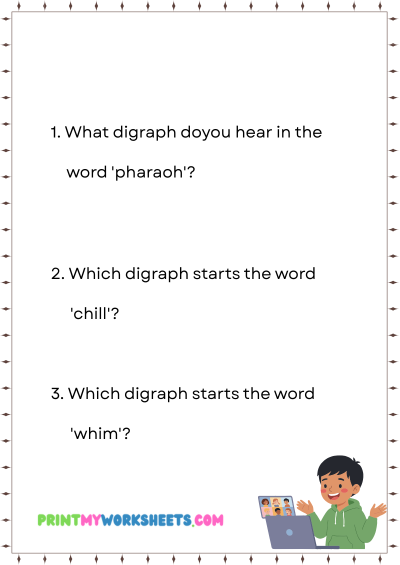
Our Pre-KG Digraphs Worksheets PDF are designed to help young learners understand letter pairs that work together to make a single sound. These free downloadable PDF worksheets are perfect for US homeschool parents, preschool teachers, and Pre-K children building early phonics and reading skills.
Digraphs such as sh, ch, th, and wh are an important step in phonics development. Learning digraphs helps children move beyond single-letter sounds and begin reading more complex words. These worksheets introduce digraph sounds in a simple, visual, and age-appropriate way using pictures, tracing, matching, and hands-on activities.
Practicing digraphs strengthens phonemic awareness, decoding skills, and pronunciation. When children can recognize digraph sounds quickly, they read more fluently and confidently. This skill also supports spelling development, listening skills, and early writing readiness.
Each worksheet includes engaging activities like identifying digraph sounds, matching pictures to words, circling correct answers, tracing letters, and coloring. Repetition and visual cues help children retain sounds and build confidence.
The printable PDF format makes these worksheets ideal for classroom phonics lessons, homeschooling routines, literacy centers, or independent practice at home. Whether introducing digraphs for the first time or reinforcing phonics skills, these worksheets provide an effective, engaging, and completely free resource aligned with US Pre-K literacy standards.
You may also like :
[gallery ids="6923,6743,6909"] Pre-KG Digraphs Worksheets PDF – Phonics Practice for Beginning and Ending Digraph Sounds
Our Pre-KG Digraphs Worksheets PDF are designed to help young learners understand letter pairs that work together to make a single sound. These free downloadable PDF worksheets are perfect for US homeschool parents, preschool teachers, and Pre-K children building early phonics and reading skills.
Digraphs such as sh, ch, th, and wh are an important step in phonics development. Learning digraphs helps children move beyond single-letter sounds and begin reading more complex words. These worksheets introduce digraph sounds in a simple, visual, and age-appropriate way using pictures, tracing, matching, and hands-on activities.
Practicing digraphs strengthens phonemic awareness, decoding skills, and pronunciation. When children can recognize digraph sounds quickly, they read more fluently and confidently. This skill also supports spelling development, listening skills, and early writing readiness.
Each worksheet includes engaging activities like identifying digraph sounds, matching pictures to words, circling correct answers, tracing letters, and coloring. Repetition and visual cues help children retain sounds and build confidence.
The printable PDF format makes these worksheets ideal for classroom phonics lessons, homeschooling routines, literacy centers, or independent practice at home. Whether introducing digraphs for the first time or reinforcing phonics skills, these worksheets provide an effective, engaging, and completely free resource aligned with US Pre-K literacy standards.
You may also like :
[gallery ids="6923,6743,6909"]
Pre-KG Easter Day Coloring Worksheets PDF | Free Downloadable
Pre-KG Easter Day Coloring Worksheets PDF
Seasonal activities are a wonderful way to make early learning fun and engaging for young children. The Pre-K Easter Day Coloring Worksheets PDF provides creative coloring pages designed especially for preschool learners. These printable worksheets are ideal for U.S. parents, teachers, and homeschool families who want to combine holiday-themed fun with early developmental skill building.
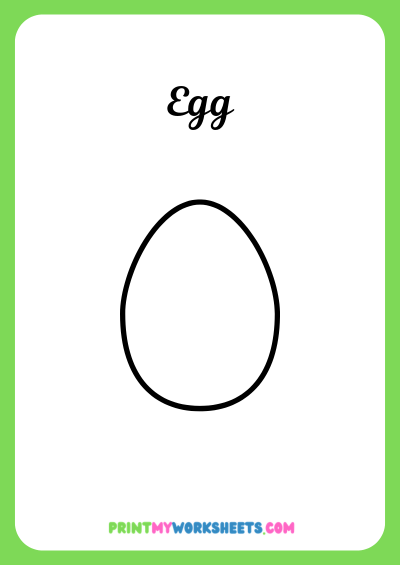
In Pre-K, children learn best through hands-on and visual activities. Coloring is one of the most effective ways to support creativity, fine motor development, and focus. Easter-themed worksheets, featuring images like eggs, bunnies, baskets, and chicks, make learning more exciting and relatable for young learners.
The Pre-K Easter Day Coloring Worksheets PDF offers simple and engaging illustrations that allow children to explore colors, improve coordination, and enjoy seasonal learning. These worksheets provide a balance of fun and skill development, helping preschool students build confidence while participating in creative activities.
What Students Will Learn?
Easter coloring worksheets introduce preschool students to creative expression while supporting essential early learning skills. These activities are designed to be simple, engaging, and appropriate for young learners.
Students begin by recognizing familiar Easter-themed objects such as eggs, bunnies, chicks, flowers, and baskets. Identifying these objects helps build vocabulary and visual recognition skills.
Coloring activities allow children to explore different colors and make creative choices. Students can use realistic colors or experiment with their own ideas, encouraging imagination.
These worksheets also help improve fine motor skills. As children hold crayons or markers and color within the lines, they develop hand strength and coordination needed for writing.
Students practice focus and attention by completing each coloring page. Staying engaged in an activity from start to finish helps build concentration and patience.
Some worksheets may include simple prompts, such as counting objects or identifying shapes, which add an extra layer of learning to the coloring activity.
Through these activities, preschool learners develop creativity, coordination, and early cognitive skills while enjoying a fun seasonal theme.
Educational Value & Skill Development
The Pre-K Easter Day Coloring Worksheets PDF supports multiple areas of development for preschool students.
One of the most important benefits is improving fine motor skills. Coloring helps strengthen the small muscles in children’s hands, which are essential for writing and drawing.
The Pre-K Easter Day Coloring Worksheets PDF also supports creativity and self-expression. Children can choose colors and create their own designs, which helps build confidence and individuality.
These worksheets also enhance visual recognition skills. By identifying Easter-themed objects, students learn to recognize shapes, patterns, and familiar items.
Another benefit is improved focus and attention. Coloring requires children to concentrate on staying within the lines and completing the activity.
Coloring activities also support early learning concepts such as colors, shapes, and counting. Teachers and parents can use the worksheets as opportunities to discuss these topics.
Additionally, these worksheets provide a calm and enjoyable learning experience. Creative activities help reduce stress and encourage positive engagement in learning.
By combining fun with skill development, these worksheets offer a balanced approach to early childhood education.
Why Focus on Easter Day Coloring?
Seasonal themes help make learning more meaningful and engaging for young children. Easter is a widely recognized holiday in the United States, making it a familiar and exciting topic for preschool learners.
Coloring Easter-themed images allows children to connect learning with real-world experiences. Many children recognize symbols such as eggs and bunnies, which makes the activity more enjoyable.
Holiday-based worksheets also encourage participation. Children are often more motivated to complete activities when they are connected to fun events or celebrations.
Easter coloring activities also support creativity. Students can experiment with colors and patterns while expressing their ideas through art.
In preschool classrooms across the United States, teachers often incorporate seasonal themes to keep lessons fresh and engaging. Easter worksheets provide an opportunity to combine creativity with learning.
These activities also encourage social interaction. Students may share their artwork or discuss their favorite Easter traditions with classmates.
Focusing on seasonal topics helps create a positive learning environment where children feel excited to participate and explore.
How to Use These Worksheets?
The Pre-K Easter Day Coloring Worksheets PDF can be used in classrooms, homeschool settings, and early learning centers.
Teachers often include coloring worksheets as part of holiday-themed lessons or art centers. Students can color Easter images while discussing the objects shown on the page.
In classroom settings, teachers may introduce the activity by talking about Easter symbols before students begin coloring. This helps build background knowledge and vocabulary.
Parents who homeschool can use these worksheets as part of creative learning time. Children can color the pages while discussing colors, shapes, or favorite holiday activities.
Because the worksheets are available as a free printable PDF, they can be easily downloaded and printed for repeated use. Teachers and parents can print multiple copies for group activities or individual practice.
These worksheets are also suitable for independent work. Children can complete the coloring pages at their own pace while practicing focus and creativity.
The printable format allows flexibility, making it easy to use the worksheets in different learning environments and schedules.
Related Worksheets / Extensions:
You may also like:
• Preschool spring coloring worksheets
• Holiday-themed coloring worksheets for young learners
• Shape and color recognition worksheets for Pre-K
• Creative art worksheets for preschool students
• Early learning activity sheets for seasonal themes
The Pre-K Easter Day Coloring Worksheets PDF pairs well with other seasonal and creative worksheets that focus on early childhood development. Combining these resources helps children explore different themes while strengthening their skills.
Teachers and parents can extend learning by encouraging children to create their own Easter drawings or decorate their coloring pages with additional designs.
With regular creative practice, preschool learners develop stronger motor skills, improved focus, and greater confidence while enjoying engaging, hands-on learning experiences.
You may also like:
[gallery ids="7002,6944,6951"] Pre-KG Easter Day Coloring Worksheets PDF | Free Downloadable
Pre-KG Easter Day Coloring Worksheets PDF
Seasonal activities are a wonderful way to make early learning fun and engaging for young children. The Pre-K Easter Day Coloring Worksheets PDF provides creative coloring pages designed especially for preschool learners. These printable worksheets are ideal for U.S. parents, teachers, and homeschool families who want to combine holiday-themed fun with early developmental skill building.
In Pre-K, children learn best through hands-on and visual activities. Coloring is one of the most effective ways to support creativity, fine motor development, and focus. Easter-themed worksheets, featuring images like eggs, bunnies, baskets, and chicks, make learning more exciting and relatable for young learners.
The Pre-K Easter Day Coloring Worksheets PDF offers simple and engaging illustrations that allow children to explore colors, improve coordination, and enjoy seasonal learning. These worksheets provide a balance of fun and skill development, helping preschool students build confidence while participating in creative activities.
What Students Will Learn?
Easter coloring worksheets introduce preschool students to creative expression while supporting essential early learning skills. These activities are designed to be simple, engaging, and appropriate for young learners.
Students begin by recognizing familiar Easter-themed objects such as eggs, bunnies, chicks, flowers, and baskets. Identifying these objects helps build vocabulary and visual recognition skills.
Coloring activities allow children to explore different colors and make creative choices. Students can use realistic colors or experiment with their own ideas, encouraging imagination.
These worksheets also help improve fine motor skills. As children hold crayons or markers and color within the lines, they develop hand strength and coordination needed for writing.
Students practice focus and attention by completing each coloring page. Staying engaged in an activity from start to finish helps build concentration and patience.
Some worksheets may include simple prompts, such as counting objects or identifying shapes, which add an extra layer of learning to the coloring activity.
Through these activities, preschool learners develop creativity, coordination, and early cognitive skills while enjoying a fun seasonal theme.
Educational Value & Skill Development
The Pre-K Easter Day Coloring Worksheets PDF supports multiple areas of development for preschool students.
One of the most important benefits is improving fine motor skills. Coloring helps strengthen the small muscles in children’s hands, which are essential for writing and drawing.
The Pre-K Easter Day Coloring Worksheets PDF also supports creativity and self-expression. Children can choose colors and create their own designs, which helps build confidence and individuality.
These worksheets also enhance visual recognition skills. By identifying Easter-themed objects, students learn to recognize shapes, patterns, and familiar items.
Another benefit is improved focus and attention. Coloring requires children to concentrate on staying within the lines and completing the activity.
Coloring activities also support early learning concepts such as colors, shapes, and counting. Teachers and parents can use the worksheets as opportunities to discuss these topics.
Additionally, these worksheets provide a calm and enjoyable learning experience. Creative activities help reduce stress and encourage positive engagement in learning.
By combining fun with skill development, these worksheets offer a balanced approach to early childhood education.
Why Focus on Easter Day Coloring?
Seasonal themes help make learning more meaningful and engaging for young children. Easter is a widely recognized holiday in the United States, making it a familiar and exciting topic for preschool learners.
Coloring Easter-themed images allows children to connect learning with real-world experiences. Many children recognize symbols such as eggs and bunnies, which makes the activity more enjoyable.
Holiday-based worksheets also encourage participation. Children are often more motivated to complete activities when they are connected to fun events or celebrations.
Easter coloring activities also support creativity. Students can experiment with colors and patterns while expressing their ideas through art.
In preschool classrooms across the United States, teachers often incorporate seasonal themes to keep lessons fresh and engaging. Easter worksheets provide an opportunity to combine creativity with learning.
These activities also encourage social interaction. Students may share their artwork or discuss their favorite Easter traditions with classmates.
Focusing on seasonal topics helps create a positive learning environment where children feel excited to participate and explore.
How to Use These Worksheets?
The Pre-K Easter Day Coloring Worksheets PDF can be used in classrooms, homeschool settings, and early learning centers.
Teachers often include coloring worksheets as part of holiday-themed lessons or art centers. Students can color Easter images while discussing the objects shown on the page.
In classroom settings, teachers may introduce the activity by talking about Easter symbols before students begin coloring. This helps build background knowledge and vocabulary.
Parents who homeschool can use these worksheets as part of creative learning time. Children can color the pages while discussing colors, shapes, or favorite holiday activities.
Because the worksheets are available as a free printable PDF, they can be easily downloaded and printed for repeated use. Teachers and parents can print multiple copies for group activities or individual practice.
These worksheets are also suitable for independent work. Children can complete the coloring pages at their own pace while practicing focus and creativity.
The printable format allows flexibility, making it easy to use the worksheets in different learning environments and schedules.
Related Worksheets / Extensions:
You may also like:
• Preschool spring coloring worksheets
• Holiday-themed coloring worksheets for young learners
• Shape and color recognition worksheets for Pre-K
• Creative art worksheets for preschool students
• Early learning activity sheets for seasonal themes
The Pre-K Easter Day Coloring Worksheets PDF pairs well with other seasonal and creative worksheets that focus on early childhood development. Combining these resources helps children explore different themes while strengthening their skills.
Teachers and parents can extend learning by encouraging children to create their own Easter drawings or decorate their coloring pages with additional designs.
With regular creative practice, preschool learners develop stronger motor skills, improved focus, and greater confidence while enjoying engaging, hands-on learning experiences.
You may also like:
[gallery ids="7002,6944,6951"]
Pre-KG Ending Blends Worksheets PDF – Phonics Practice for Final Consonant Clusters and Early Reading
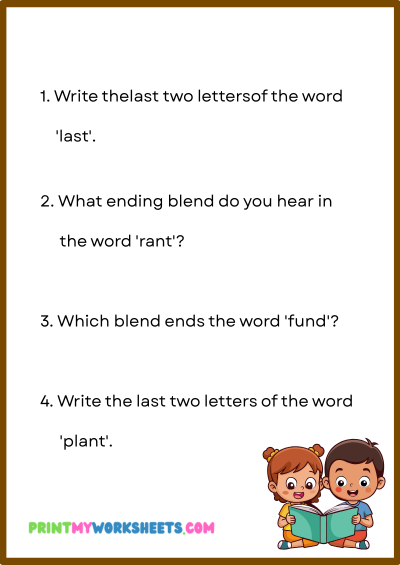
Our Pre-KG Ending Blends Worksheets PDF are designed to help young learners recognize and blend consonant sounds at the end of words. These free downloadable PDF worksheets are perfect for US homeschool parents, preschool teachers, and Pre-K children developing early phonics and reading skills.
Ending blends occur when two consonants appear together at the end of a word, such as nd, st, mp, and nt. Learning these blends helps children read words smoothly and accurately rather than sounding out each letter separately. These worksheets introduce ending blends in a simple, visual, and age-appropriate way using pictures and hands-on activities.
Practicing ending blends strengthens phonemic awareness, listening skills, and decoding ability. When children can identify ending sounds clearly, they become more confident readers and spellers. This skill also prepares students for reading longer words and understanding word structure as they progress toward kindergarten readiness.
Each worksheet includes engaging activities such as matching pictures to ending blends, circling correct sounds, identifying final sounds, tracing letters, and coloring. Repetition and visual support help reinforce learning and build confidence.
The printable PDF format makes these worksheets ideal for classroom phonics lessons, homeschooling routines, literacy centers, or independent practice at home. Whether introducing ending blends for the first time or reinforcing phonics skills, these worksheets provide an effective, engaging, and completely free resource aligned with US Pre-K literacy standards.
You may also like :
[gallery ids="6916,6909,6888"] Pre-KG Ending Blends Worksheets PDF – Phonics Practice for Final Consonant Clusters and Early Reading
Our Pre-KG Ending Blends Worksheets PDF are designed to help young learners recognize and blend consonant sounds at the end of words. These free downloadable PDF worksheets are perfect for US homeschool parents, preschool teachers, and Pre-K children developing early phonics and reading skills.
Ending blends occur when two consonants appear together at the end of a word, such as nd, st, mp, and nt. Learning these blends helps children read words smoothly and accurately rather than sounding out each letter separately. These worksheets introduce ending blends in a simple, visual, and age-appropriate way using pictures and hands-on activities.
Practicing ending blends strengthens phonemic awareness, listening skills, and decoding ability. When children can identify ending sounds clearly, they become more confident readers and spellers. This skill also prepares students for reading longer words and understanding word structure as they progress toward kindergarten readiness.
Each worksheet includes engaging activities such as matching pictures to ending blends, circling correct sounds, identifying final sounds, tracing letters, and coloring. Repetition and visual support help reinforce learning and build confidence.
The printable PDF format makes these worksheets ideal for classroom phonics lessons, homeschooling routines, literacy centers, or independent practice at home. Whether introducing ending blends for the first time or reinforcing phonics skills, these worksheets provide an effective, engaging, and completely free resource aligned with US Pre-K literacy standards.
You may also like :
[gallery ids="6916,6909,6888"]
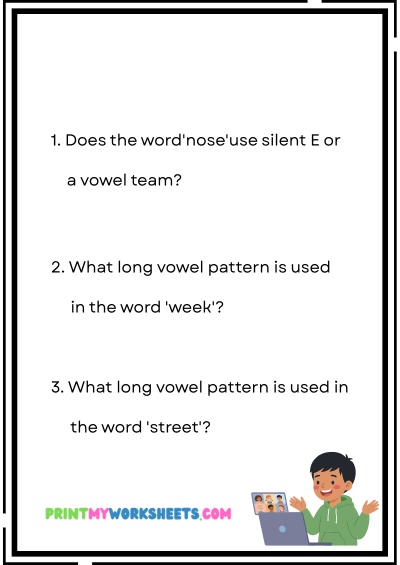
Pre-KG Long Vowel Sounds Worksheets PDF – Fun At-Home Reading Activities for Early Learners
Pre-KG Long Vowel Sounds Worksheets PDF
The Pre-KG Long Vowel Sounds Worksheets PDF is a thoughtfully created phonics resource designed to help young learners recognize and understand long vowel sounds in an age-appropriate way. This free printable worksheet set is ideal for parents, teachers, and homeschool families across the United States who are supporting early literacy development in Pre-K children. Long vowel sounds occur when vowels say their own names, such as in words like cake, bike, and home, and they play an important role in early reading readiness.
At the Pre-K level, children are developing strong listening skills and beginning to notice sound patterns in spoken language. Introducing long vowel sounds early helps children move beyond basic letter recognition and prepares them for more advanced phonics instruction. These worksheets provide structured, engaging practice that supports foundational reading skills without overwhelming young learners. With clear visuals, simple directions, and consistent routines, this resource builds confidence while helping children develop essential phonics awareness needed for future reading success.
What Students Will Learn ?
This worksheet set focuses on helping Pre-K learners recognize, hear, and understand long vowel sounds through guided phonics practice. Children learn that vowels can make different sounds and that long vowel sounds match the letter name. This understanding supports early decoding skills and prepares students for reading simple words.
The activities included are designed to be developmentally appropriate and engaging for young children. Students practice identifying long vowel sounds in familiar words, matching pictures to vowel sounds, and distinguishing between different vowel patterns. Visual supports play an important role in helping children connect sounds to meaning, making learning more accessible and enjoyable.
The worksheets support structured learning by introducing one concept at a time and reinforcing it through repetition. Tasks are short and focused, which helps maintain attention and reduces frustration. These activities fit well within Pre-K expectations by emphasizing listening, sound recognition, and early phonemic awareness rather than formal reading. Through consistent practice, students gain confidence and build a strong foundation for future phonics instruction.
Educational Value & Skill Development
Early exposure to long vowel sounds strengthens phonological awareness and supports long-term reading development. Understanding how vowels work in words helps children recognize sound patterns, which is essential for decoding and spelling as they progress through elementary school. The Pre-K Long Vowel Sounds Worksheets PDF supports this learning by offering focused practice that aligns with early literacy goals.
From a cognitive standpoint, these worksheets encourage careful listening, sound comparison, and memory skills. Children learn to slow down and focus on individual sounds, which supports attention and auditory processing. As they complete activities independently or with guidance, they also build confidence and a sense of accomplishment.
Skill progression is an important feature of this resource. Children move from simple sound recognition to applying long vowel knowledge within basic word contexts. This gradual approach helps prevent confusion and allows learners to develop skills at their own pace. Repeated exposure reinforces learning and helps children internalize vowel patterns, making future reading instruction smoother. These early successes contribute to a positive attitude toward reading and learning in general.
Why Focus on Pre-KG Long Vowel Sounds Worksheets ?
Long vowel sounds are a key part of phonics instruction because they appear frequently in early reading materials. Helping children recognize these sounds early makes it easier for them to decode words and understand spelling patterns later on. At the Pre-K level, children are especially receptive to sound-based learning, making this an ideal time to introduce long vowels.
Focusing on long vowel sounds supports future academic success by preparing children for kindergarten and first-grade phonics programs. Students who are familiar with vowel sounds are better equipped to read unfamiliar words and apply phonics rules with confidence. This early preparation reduces frustration and builds a strong foundation for reading fluency.
Repetition and guided practice are essential for mastering vowel sounds. Worksheets provide a consistent format that allows children to practice skills multiple times in a low-pressure environment. These activities align with early learning standards commonly used in U.S. preschool and Pre-K programs, supporting phonological awareness, listening skills, and early literacy development.
How to Use These Worksheets ?
These worksheets are designed to be flexible and easy to use in a variety of learning environments. In homeschool settings, they can be included in a daily phonics routine or used for short, focused practice sessions. Parents can work alongside their child, modeling sounds and encouraging discussion about words and pictures.
In classroom settings, teachers can use the worksheets during small group instruction, literacy centers, or independent practice time. The clear layout and simple instructions make them suitable for guided learning or review activities. They also work well for early intervention or additional phonics support.
The Pre-KG Long Vowel Sounds Worksheets PDF is provided as a free printable PDF, making it easy to download and reuse as needed. Pages can be printed multiple times for repeated practice or placed in dry-erase sleeves for extended use. This flexibility supports consistent reinforcement while allowing educators and families to adapt the resource to their specific needs.
Related Worksheets / Extensions :
To continue building early literacy skills, you may also like exploring related phonics resources such as short vowel worksheets, vowel teams practice, or CVC word activities. These topics naturally build on long vowel knowledge and help children apply sound patterns to early reading tasks.
Many families and educators combine vowel sound practice with blending and segmenting activities to strengthen phonemic awareness. Using the Pre-KG Long Vowel Sounds Worksheets PDF alongside these complementary resources supports a well-rounded approach to early phonics instruction and helps children develop strong reading foundations as they prepare for kindergarten.
You may also like:
[gallery ids="6937,6930,6743"] Pre-KG Long Vowel Sounds Worksheets PDF – Fun At-Home Reading Activities for Early Learners
Pre-KG Long Vowel Sounds Worksheets PDF
The Pre-KG Long Vowel Sounds Worksheets PDF is a thoughtfully created phonics resource designed to help young learners recognize and understand long vowel sounds in an age-appropriate way. This free printable worksheet set is ideal for parents, teachers, and homeschool families across the United States who are supporting early literacy development in Pre-K children. Long vowel sounds occur when vowels say their own names, such as in words like cake, bike, and home, and they play an important role in early reading readiness.
At the Pre-K level, children are developing strong listening skills and beginning to notice sound patterns in spoken language. Introducing long vowel sounds early helps children move beyond basic letter recognition and prepares them for more advanced phonics instruction. These worksheets provide structured, engaging practice that supports foundational reading skills without overwhelming young learners. With clear visuals, simple directions, and consistent routines, this resource builds confidence while helping children develop essential phonics awareness needed for future reading success.
What Students Will Learn ?
This worksheet set focuses on helping Pre-K learners recognize, hear, and understand long vowel sounds through guided phonics practice. Children learn that vowels can make different sounds and that long vowel sounds match the letter name. This understanding supports early decoding skills and prepares students for reading simple words.
The activities included are designed to be developmentally appropriate and engaging for young children. Students practice identifying long vowel sounds in familiar words, matching pictures to vowel sounds, and distinguishing between different vowel patterns. Visual supports play an important role in helping children connect sounds to meaning, making learning more accessible and enjoyable.
The worksheets support structured learning by introducing one concept at a time and reinforcing it through repetition. Tasks are short and focused, which helps maintain attention and reduces frustration. These activities fit well within Pre-K expectations by emphasizing listening, sound recognition, and early phonemic awareness rather than formal reading. Through consistent practice, students gain confidence and build a strong foundation for future phonics instruction.
Educational Value & Skill Development
Early exposure to long vowel sounds strengthens phonological awareness and supports long-term reading development. Understanding how vowels work in words helps children recognize sound patterns, which is essential for decoding and spelling as they progress through elementary school. The Pre-K Long Vowel Sounds Worksheets PDF supports this learning by offering focused practice that aligns with early literacy goals.
From a cognitive standpoint, these worksheets encourage careful listening, sound comparison, and memory skills. Children learn to slow down and focus on individual sounds, which supports attention and auditory processing. As they complete activities independently or with guidance, they also build confidence and a sense of accomplishment.
Skill progression is an important feature of this resource. Children move from simple sound recognition to applying long vowel knowledge within basic word contexts. This gradual approach helps prevent confusion and allows learners to develop skills at their own pace. Repeated exposure reinforces learning and helps children internalize vowel patterns, making future reading instruction smoother. These early successes contribute to a positive attitude toward reading and learning in general.
Why Focus on Pre-KG Long Vowel Sounds Worksheets ?
Long vowel sounds are a key part of phonics instruction because they appear frequently in early reading materials. Helping children recognize these sounds early makes it easier for them to decode words and understand spelling patterns later on. At the Pre-K level, children are especially receptive to sound-based learning, making this an ideal time to introduce long vowels.
Focusing on long vowel sounds supports future academic success by preparing children for kindergarten and first-grade phonics programs. Students who are familiar with vowel sounds are better equipped to read unfamiliar words and apply phonics rules with confidence. This early preparation reduces frustration and builds a strong foundation for reading fluency.
Repetition and guided practice are essential for mastering vowel sounds. Worksheets provide a consistent format that allows children to practice skills multiple times in a low-pressure environment. These activities align with early learning standards commonly used in U.S. preschool and Pre-K programs, supporting phonological awareness, listening skills, and early literacy development.
How to Use These Worksheets ?
These worksheets are designed to be flexible and easy to use in a variety of learning environments. In homeschool settings, they can be included in a daily phonics routine or used for short, focused practice sessions. Parents can work alongside their child, modeling sounds and encouraging discussion about words and pictures.
In classroom settings, teachers can use the worksheets during small group instruction, literacy centers, or independent practice time. The clear layout and simple instructions make them suitable for guided learning or review activities. They also work well for early intervention or additional phonics support.
The Pre-KG Long Vowel Sounds Worksheets PDF is provided as a free printable PDF, making it easy to download and reuse as needed. Pages can be printed multiple times for repeated practice or placed in dry-erase sleeves for extended use. This flexibility supports consistent reinforcement while allowing educators and families to adapt the resource to their specific needs.
Related Worksheets / Extensions :
To continue building early literacy skills, you may also like exploring related phonics resources such as short vowel worksheets, vowel teams practice, or CVC word activities. These topics naturally build on long vowel knowledge and help children apply sound patterns to early reading tasks.
Many families and educators combine vowel sound practice with blending and segmenting activities to strengthen phonemic awareness. Using the Pre-KG Long Vowel Sounds Worksheets PDF alongside these complementary resources supports a well-rounded approach to early phonics instruction and helps children develop strong reading foundations as they prepare for kindergarten.
You may also like:
[gallery ids="6937,6930,6743"]
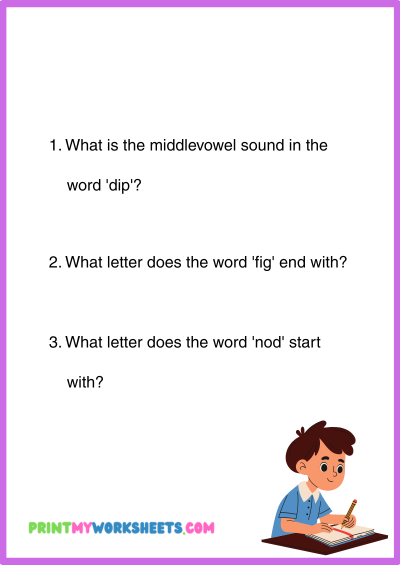
Pre-KG Phonics CVC Words Worksheets PDF – Early Reading Practice for Short Vowel Word Building
Pre-KG Phonics CVC Words Worksheets PDF
Early phonics instruction helps young learners understand how sounds connect to form words, which is a key step toward reading success. These Pre-K Phonics CVC Words Worksheets PDF are created to support children as they begin blending sounds into simple consonant-vowel-consonant words. Designed for U.S. parents, preschool teachers, and homeschool families, this free printable resource offers structured, age-appropriate practice that fits easily into early literacy routines.
At the Pre-K level, children are learning to recognize letter sounds and listen closely to how those sounds work together. Practicing CVC words helps bridge the gap between individual letter sounds and early word reading. This worksheet set focuses on clear, predictable activities that encourage repetition without pressure. With a simple layout and focused tasks, Pre-K Phonics CVC Words Worksheets PDF support foundational phonics skills while building confidence and readiness for kindergarten reading instruction.
What Students Will Learn ?
This worksheet set helps Pre-K learners develop early decoding skills through focused practice with simple word patterns. Students learn how to blend beginning, middle, and ending sounds to form short words, an essential milestone in early reading development. These activities strengthen phonemic awareness and introduce children to the idea that letters work together to create meaning.
The worksheets include a variety of structured activities that reinforce learning in multiple ways. Children may practice identifying sounds, matching letters to spoken words, or working with simple word-building tasks that emphasize consonant-vowel-consonant patterns. Each activity is designed to focus on one objective at a time, helping young learners stay engaged and successful.
These phonics worksheets support structured learning by using consistent formats and clear expectations. The tasks are developmentally appropriate for Pre-K students in the United States and can be completed with minimal frustration. Whether used independently or with adult guidance, the worksheets help children build focus, listening skills, and early confidence in working with printed words.
Educational Value & Skill Development
Consistent phonics practice provides strong academic benefits, and the Pre-K Phonics CVC Words Worksheets PDF support early literacy development across several areas. Academically, these worksheets help children understand how sounds blend together, which is essential for decoding and early reading fluency. Mastery of CVC patterns prepares students for more advanced phonics concepts in kindergarten.
Cognitively, working with simple word patterns strengthens memory, attention, and auditory processing. Children learn to listen carefully, recognize sound sequences, and apply what they know to new words. These skills contribute to overall language development and support learning across subjects.
The worksheets also promote confidence and independence. Familiar layouts and predictable routines help children understand expectations and complete tasks successfully. As students experience repeated success, they develop a positive attitude toward reading and learning. Over time, regular practice with Pre-K Phonics CVC Words Worksheets PDF supports skill progression from sound recognition to early word reading, creating a smooth transition into formal reading instruction.
Why Focus on Pre-K Phonics CVC Words Worksheets ?
CVC words are often the first complete words children learn to read on their own. These simple patterns follow consistent sound rules, making them ideal for early learners who are just beginning to blend sounds.
In Pre-K, children are developing phonemic awareness, which means they are learning to hear and work with individual sounds in spoken language. Practicing CVC patterns helps children understand how those sounds connect in written form. This understanding is critical for future decoding and spelling tasks.
Repetition and guided practice play an important role at this stage. Young learners need multiple opportunities to see, hear, and practice word patterns before they become comfortable. These worksheets support early learning standards commonly used in U.S. preschool programs by reinforcing foundational phonics skills in a developmentally appropriate way. Early exposure to CVC words builds a strong base for reading success in kindergarten and beyond.
How to Use These Worksheets ?
These worksheets are flexible and easy to use in a variety of learning environments. In homeschool settings, parents can introduce one worksheet at a time, reading words aloud together and discussing sounds. This shared practice helps reinforce learning and build confidence.
In classrooms, teachers can use the worksheets during phonics centers, small-group instruction, or independent work time. The activities also work well for review and reinforcement, allowing children to revisit skills they have already practiced. Because the resource is provided as a free printable PDF, downloading and printing is quick and convenient.
Pages can be reused by placing them in sheet protectors or laminating for repeated practice. For families and educators looking for structured phonics support, Pre-K Phonics CVC Words Worksheets PDF provide a practical way to reinforce early reading skills through consistent, focused practice.
What’s Included in This PDF ?
This printable worksheet set is designed to be simple, effective, and easy to integrate into daily learning routines. Each page focuses on meaningful skill practice without unnecessary distractions. Inside this PDF, you’ll find:
-
Multiple printable worksheets focused on CVC word practice
-
Phonics activities that support blending and decoding skills
-
A kid-friendly layout suitable for Pre-K learners
-
Black-and-white, print-friendly pages
-
Content aligned with U.S. Pre-K literacy expectations
-
A free downloadable PDF format for easy access
You may also like:
[gallery ids="6888,6875,6743"]Related Worksheets / Extensions :
To build a well-rounded early literacy routine, you may want to pair these worksheets with other phonics resources. Alphabet recognition pages, beginning sound activities, and short vowel worksheets can complement CVC word practice and support balanced instruction.
You may also explore additional phonics printables designed for preschool learners. Resources like Pre-K Phonics CVC Words Worksheets PDF work well alongside early sound awareness activities, helping children strengthen foundational skills through consistent, meaningful practice that supports future reading success.
Pre-KG Phonics CVC Words Worksheets PDF – Early Reading Practice for Short Vowel Word Building
Pre-KG Phonics CVC Words Worksheets PDF
Early phonics instruction helps young learners understand how sounds connect to form words, which is a key step toward reading success. These Pre-K Phonics CVC Words Worksheets PDF are created to support children as they begin blending sounds into simple consonant-vowel-consonant words. Designed for U.S. parents, preschool teachers, and homeschool families, this free printable resource offers structured, age-appropriate practice that fits easily into early literacy routines.
At the Pre-K level, children are learning to recognize letter sounds and listen closely to how those sounds work together. Practicing CVC words helps bridge the gap between individual letter sounds and early word reading. This worksheet set focuses on clear, predictable activities that encourage repetition without pressure. With a simple layout and focused tasks, Pre-K Phonics CVC Words Worksheets PDF support foundational phonics skills while building confidence and readiness for kindergarten reading instruction.
What Students Will Learn ?
This worksheet set helps Pre-K learners develop early decoding skills through focused practice with simple word patterns. Students learn how to blend beginning, middle, and ending sounds to form short words, an essential milestone in early reading development. These activities strengthen phonemic awareness and introduce children to the idea that letters work together to create meaning.
The worksheets include a variety of structured activities that reinforce learning in multiple ways. Children may practice identifying sounds, matching letters to spoken words, or working with simple word-building tasks that emphasize consonant-vowel-consonant patterns. Each activity is designed to focus on one objective at a time, helping young learners stay engaged and successful.
These phonics worksheets support structured learning by using consistent formats and clear expectations. The tasks are developmentally appropriate for Pre-K students in the United States and can be completed with minimal frustration. Whether used independently or with adult guidance, the worksheets help children build focus, listening skills, and early confidence in working with printed words.
Educational Value & Skill Development
Consistent phonics practice provides strong academic benefits, and the Pre-K Phonics CVC Words Worksheets PDF support early literacy development across several areas. Academically, these worksheets help children understand how sounds blend together, which is essential for decoding and early reading fluency. Mastery of CVC patterns prepares students for more advanced phonics concepts in kindergarten.
Cognitively, working with simple word patterns strengthens memory, attention, and auditory processing. Children learn to listen carefully, recognize sound sequences, and apply what they know to new words. These skills contribute to overall language development and support learning across subjects.
The worksheets also promote confidence and independence. Familiar layouts and predictable routines help children understand expectations and complete tasks successfully. As students experience repeated success, they develop a positive attitude toward reading and learning. Over time, regular practice with Pre-K Phonics CVC Words Worksheets PDF supports skill progression from sound recognition to early word reading, creating a smooth transition into formal reading instruction.
Why Focus on Pre-K Phonics CVC Words Worksheets ?
CVC words are often the first complete words children learn to read on their own. These simple patterns follow consistent sound rules, making them ideal for early learners who are just beginning to blend sounds.
In Pre-K, children are developing phonemic awareness, which means they are learning to hear and work with individual sounds in spoken language. Practicing CVC patterns helps children understand how those sounds connect in written form. This understanding is critical for future decoding and spelling tasks.
Repetition and guided practice play an important role at this stage. Young learners need multiple opportunities to see, hear, and practice word patterns before they become comfortable. These worksheets support early learning standards commonly used in U.S. preschool programs by reinforcing foundational phonics skills in a developmentally appropriate way. Early exposure to CVC words builds a strong base for reading success in kindergarten and beyond.
How to Use These Worksheets ?
These worksheets are flexible and easy to use in a variety of learning environments. In homeschool settings, parents can introduce one worksheet at a time, reading words aloud together and discussing sounds. This shared practice helps reinforce learning and build confidence.
In classrooms, teachers can use the worksheets during phonics centers, small-group instruction, or independent work time. The activities also work well for review and reinforcement, allowing children to revisit skills they have already practiced. Because the resource is provided as a free printable PDF, downloading and printing is quick and convenient.
Pages can be reused by placing them in sheet protectors or laminating for repeated practice. For families and educators looking for structured phonics support, Pre-K Phonics CVC Words Worksheets PDF provide a practical way to reinforce early reading skills through consistent, focused practice.
What’s Included in This PDF ?
This printable worksheet set is designed to be simple, effective, and easy to integrate into daily learning routines. Each page focuses on meaningful skill practice without unnecessary distractions. Inside this PDF, you’ll find:
-
Multiple printable worksheets focused on CVC word practice
-
Phonics activities that support blending and decoding skills
-
A kid-friendly layout suitable for Pre-K learners
-
Black-and-white, print-friendly pages
-
Content aligned with U.S. Pre-K literacy expectations
-
A free downloadable PDF format for easy access
You may also like:
[gallery ids="6888,6875,6743"]Related Worksheets / Extensions :
To build a well-rounded early literacy routine, you may want to pair these worksheets with other phonics resources. Alphabet recognition pages, beginning sound activities, and short vowel worksheets can complement CVC word practice and support balanced instruction.
You may also explore additional phonics printables designed for preschool learners. Resources like Pre-K Phonics CVC Words Worksheets PDF work well alongside early sound awareness activities, helping children strengthen foundational skills through consistent, meaningful practice that supports future reading success.
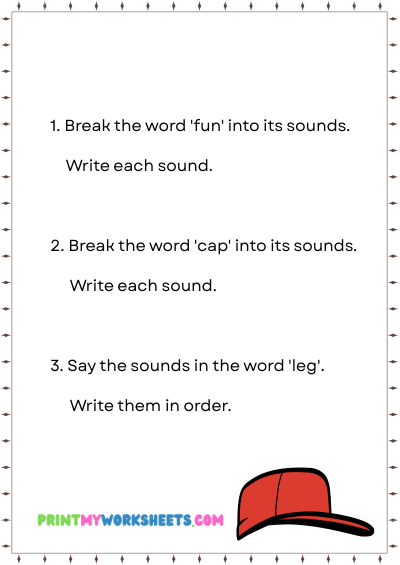
Pre-KG Segmenting and Blending Sounds Worksheets PDF – Phonemic Awareness Practice Pack
Pre-KG Segmenting and Blending Sounds Worksheets PDF
The Pre-K Segmenting and Blending Sounds Worksheets PDF is designed to support early phonics development for young learners who are just beginning their reading journey. Created specifically for PreKindergarten students, this free printable resource helps children practice breaking words into individual sounds and blending those sounds together to form words. These skills are foundational for reading success and are commonly introduced during the preschool and Pre-K years across the United States.
This worksheet set is ideal for parents, teachers, and homeschool families who want clear, age-appropriate phonics practice that aligns with early learning expectations. Segmenting and blending activities help children understand how spoken words are made up of sounds, which is a critical step before decoding printed words. With simple visuals, guided practice, and a child-friendly layout, these worksheets make early literacy practice approachable and effective.
Whether used at home or in a classroom, this resource supports structured phonics instruction while keeping learning developmentally appropriate for young children.
What Students Will Learn ?
These worksheets focus on building strong phonemic awareness skills that prepare children for reading and spelling. Students will learn how to listen carefully to words, identify individual sounds, and combine those sounds to make whole words. This process helps children understand how language works at a sound level before they begin formal reading.
Activities are designed to be simple and engaging for Pre-K learners. Children practice identifying beginning, middle, and ending sounds in familiar words. They are encouraged to blend sounds together slowly and clearly, reinforcing the connection between oral language and early reading skills. Many activities include picture cues to support comprehension and reduce frustration.
The worksheets follow a predictable structure that helps young learners feel confident and successful. Tasks are short, focused, and appropriate for limited attention spans. This structured approach supports early literacy development while allowing flexibility for different learning environments. By working through these activities, children gain the foundational skills needed for phonics instruction in kindergarten and beyond.
Educational Value & Skill Development
Phonemic awareness is one of the strongest predictors of future reading success. Worksheets that focus on segmenting and blending sounds help children develop the ability to hear and manipulate sounds in spoken language. This skill supports decoding, spelling, and reading fluency as students progress through elementary school.
Using the Pre-K Segmenting and Blending Sounds Worksheets PDF helps children build confidence with early language tasks. As they practice breaking words apart and putting them back together, they strengthen listening skills, memory, and attention. These cognitive skills are essential for classroom learning and independent work.
The activities also support language development by expanding vocabulary and improving pronunciation. Children learn to slow down and focus on individual sounds, which helps with clear speech and early spelling attempts. Over time, repeated practice helps children internalize sound patterns, making future reading instruction more accessible.
This type of guided phonics practice encourages independence while still providing structure. Children can work through activities with adult support or independently as they become more confident, supporting gradual skill progression.
Why Focus on Segmenting and Blending Sounds ?
Segmenting and blending sounds are core components of early literacy instruction. These skills allow children to understand that words are made up of individual sounds that can be separated and combined. Without this understanding, reading and spelling can feel confusing and overwhelming.
Focusing on these skills in Pre-K supports smoother transitions into kindergarten phonics programs. Children who are comfortable with sound manipulation are better prepared to decode simple words, recognize patterns, and apply phonics rules. This early preparation reduces frustration and builds confidence when formal reading instruction begins.
Repetition and guided practice are essential at this stage. Young learners benefit from hearing sounds repeatedly and practicing them in different contexts. Worksheets provide a consistent format that reinforces learning while allowing children to progress at their own pace.
Segmenting and blending activities also align with early learning standards commonly used in U.S. preschool and Pre-K programs. These skills support broader language goals, including listening comprehension, speaking clearly, and understanding word structure.
How to Use These Worksheets ?
These worksheets are flexible and easy to use in a variety of learning settings. In homeschool environments, they can be part of a daily phonics routine or used as short, focused practice sessions. Parents can work alongside their child, modeling sounds and encouraging repetition.
In classroom settings, teachers can use the worksheets for small group instruction, literacy centers, or early finisher activities. The clear layout makes them suitable for guided practice or independent work with minimal preparation.
The Pre-K Segmenting and Blending Sounds Worksheets PDF is available as a free printable PDF, making it easy to download and reuse as needed. Pages can be printed multiple times for repeated practice or used with dry-erase sleeves for extended use. This flexibility supports consistent skill reinforcement without additional materials.
Related Worksheets and Skill Extensions :
To continue building early literacy skills, you may also like exploring related phonics resources that focus on beginning sounds, CVC words, or letter recognition. These skills naturally build on segmenting and blending practice and help children apply sound awareness to printed words.
Families and teachers often pair this resource with additional practice using the Pre-K Segmenting and Blending Sounds Worksheets PDF alongside word family activities or simple sentence reading. Together, these worksheets support a well-rounded approach to early phonics instruction and help children progress confidently toward kindergarten readiness.
You may also like:
[gallery ids="6951,6944,6937"] Pre-KG Segmenting and Blending Sounds Worksheets PDF – Phonemic Awareness Practice Pack
Pre-KG Segmenting and Blending Sounds Worksheets PDF
The Pre-K Segmenting and Blending Sounds Worksheets PDF is designed to support early phonics development for young learners who are just beginning their reading journey. Created specifically for PreKindergarten students, this free printable resource helps children practice breaking words into individual sounds and blending those sounds together to form words. These skills are foundational for reading success and are commonly introduced during the preschool and Pre-K years across the United States.
This worksheet set is ideal for parents, teachers, and homeschool families who want clear, age-appropriate phonics practice that aligns with early learning expectations. Segmenting and blending activities help children understand how spoken words are made up of sounds, which is a critical step before decoding printed words. With simple visuals, guided practice, and a child-friendly layout, these worksheets make early literacy practice approachable and effective.
Whether used at home or in a classroom, this resource supports structured phonics instruction while keeping learning developmentally appropriate for young children.
What Students Will Learn ?
These worksheets focus on building strong phonemic awareness skills that prepare children for reading and spelling. Students will learn how to listen carefully to words, identify individual sounds, and combine those sounds to make whole words. This process helps children understand how language works at a sound level before they begin formal reading.
Activities are designed to be simple and engaging for Pre-K learners. Children practice identifying beginning, middle, and ending sounds in familiar words. They are encouraged to blend sounds together slowly and clearly, reinforcing the connection between oral language and early reading skills. Many activities include picture cues to support comprehension and reduce frustration.
The worksheets follow a predictable structure that helps young learners feel confident and successful. Tasks are short, focused, and appropriate for limited attention spans. This structured approach supports early literacy development while allowing flexibility for different learning environments. By working through these activities, children gain the foundational skills needed for phonics instruction in kindergarten and beyond.
Educational Value & Skill Development
Phonemic awareness is one of the strongest predictors of future reading success. Worksheets that focus on segmenting and blending sounds help children develop the ability to hear and manipulate sounds in spoken language. This skill supports decoding, spelling, and reading fluency as students progress through elementary school.
Using the Pre-K Segmenting and Blending Sounds Worksheets PDF helps children build confidence with early language tasks. As they practice breaking words apart and putting them back together, they strengthen listening skills, memory, and attention. These cognitive skills are essential for classroom learning and independent work.
The activities also support language development by expanding vocabulary and improving pronunciation. Children learn to slow down and focus on individual sounds, which helps with clear speech and early spelling attempts. Over time, repeated practice helps children internalize sound patterns, making future reading instruction more accessible.
This type of guided phonics practice encourages independence while still providing structure. Children can work through activities with adult support or independently as they become more confident, supporting gradual skill progression.
Why Focus on Segmenting and Blending Sounds ?
Segmenting and blending sounds are core components of early literacy instruction. These skills allow children to understand that words are made up of individual sounds that can be separated and combined. Without this understanding, reading and spelling can feel confusing and overwhelming.
Focusing on these skills in Pre-K supports smoother transitions into kindergarten phonics programs. Children who are comfortable with sound manipulation are better prepared to decode simple words, recognize patterns, and apply phonics rules. This early preparation reduces frustration and builds confidence when formal reading instruction begins.
Repetition and guided practice are essential at this stage. Young learners benefit from hearing sounds repeatedly and practicing them in different contexts. Worksheets provide a consistent format that reinforces learning while allowing children to progress at their own pace.
Segmenting and blending activities also align with early learning standards commonly used in U.S. preschool and Pre-K programs. These skills support broader language goals, including listening comprehension, speaking clearly, and understanding word structure.
How to Use These Worksheets ?
These worksheets are flexible and easy to use in a variety of learning settings. In homeschool environments, they can be part of a daily phonics routine or used as short, focused practice sessions. Parents can work alongside their child, modeling sounds and encouraging repetition.
In classroom settings, teachers can use the worksheets for small group instruction, literacy centers, or early finisher activities. The clear layout makes them suitable for guided practice or independent work with minimal preparation.
The Pre-K Segmenting and Blending Sounds Worksheets PDF is available as a free printable PDF, making it easy to download and reuse as needed. Pages can be printed multiple times for repeated practice or used with dry-erase sleeves for extended use. This flexibility supports consistent skill reinforcement without additional materials.
Related Worksheets and Skill Extensions :
To continue building early literacy skills, you may also like exploring related phonics resources that focus on beginning sounds, CVC words, or letter recognition. These skills naturally build on segmenting and blending practice and help children apply sound awareness to printed words.
Families and teachers often pair this resource with additional practice using the Pre-K Segmenting and Blending Sounds Worksheets PDF alongside word family activities or simple sentence reading. Together, these worksheets support a well-rounded approach to early phonics instruction and help children progress confidently toward kindergarten readiness.
You may also like:
[gallery ids="6951,6944,6937"]
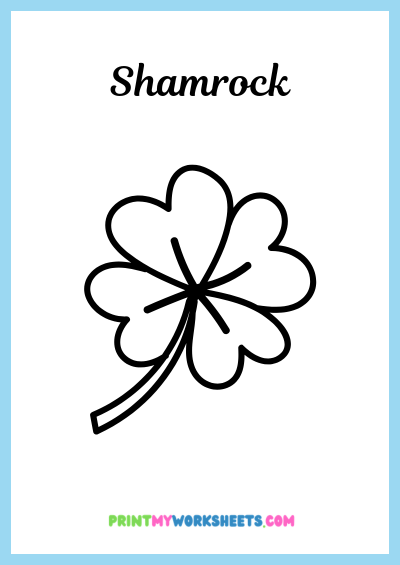
Pre-KG St Patricks Day Coloring Worksheets PDF | Free Downloadable
Pre-KG St Patricks Day Coloring Worksheets PDF
The Pre-KG St Patricks Day Coloring Worksheets PDF is a fun and developmentally appropriate activity pack designed especially for young learners. This free printable PDF is perfect for U.S. parents, preschool teachers, and homeschool families looking to celebrate St. Patrick’s Day while supporting early childhood skill development.
At the Pre-K level, children learn best through hands-on, creative activities. Coloring pages with simple holiday-themed images—such as shamrocks, rainbows, leprechaun hats, and pots of gold—help build fine motor skills and early visual recognition. These worksheets provide structured coloring practice while introducing seasonal vocabulary in a gentle, age-appropriate way.
Through engaging illustrations and clear outlines, children practice holding crayons, staying within lines, and identifying common holiday symbols. The activities are designed to encourage creativity, focus, and confidence, making them a valuable addition to any early learning routine during the St. Patrick’s Day season.
What Students Will Learn?
These Pre-KG St. Patrick’s Day coloring worksheets are designed to support early childhood development through structured art-based activities. While children may see coloring as play, it plays an important role in building foundational skills.
Students will practice:
-
Recognizing simple holiday-themed objects
-
Strengthening fine motor control through coloring
-
Identifying shapes and basic patterns
-
Following simple directions
-
Expanding seasonal vocabulary
-
Developing hand-eye coordination
The worksheets include large, easy-to-color illustrations that are suitable for small hands. Bold outlines help children focus on controlled coloring movements. Some pages may include simple prompts, such as coloring specific items a certain color, which encourages listening skills and direction-following.
These activities align with U.S. early learning standards that emphasize motor skill development, visual perception, and early language exposure. By combining creativity with structured tasks, children develop readiness skills that prepare them for kindergarten academics.
Educational Value & Skill Development
The Pre-K St Patricks Day Coloring Worksheets PDF provides meaningful developmental benefits beyond simple entertainment. Coloring activities play a significant role in strengthening essential early learning skills.
Fine motor development is one of the primary benefits. As children grip crayons and practice controlled movements, they build hand strength and coordination needed for writing. Staying within lines improves precision and control.
Cognitively, coloring helps children focus attention on a single task. Completing a page encourages concentration and patience, which are important for classroom readiness. Recognizing holiday symbols also strengthens visual discrimination skills.
Language development is supported as children learn and repeat new vocabulary related to St. Patrick’s Day. Discussing images such as shamrocks or rainbows helps expand descriptive language.
Creativity and self-expression are also nurtured. Children can choose colors and experiment with different artistic choices, building confidence in their decisions. Through structured yet flexible practice, these worksheets encourage independence while supporting foundational developmental milestones.
Why Focus on St Patricks Day Coloring?
Seasonal activities are valuable in early childhood education because they connect learning to real-world experiences. St. Patrick’s Day provides an engaging theme that captures children’s interest through bright colors and familiar symbols.
At the Pre-K level, hands-on activities are especially important. Coloring helps children practice foundational skills in a relaxed and enjoyable setting. When learning feels fun, children are more likely to stay engaged and motivated.
Repetition of fine motor tasks strengthens muscle control and prepares children for writing letters and numbers. Holiday-themed coloring also encourages conversation, which supports vocabulary growth and listening skills.
Seasonal worksheets help structure classroom routines while maintaining excitement. Integrating creative activities during holidays keeps learning dynamic and meaningful.
By focusing on coloring within a familiar holiday theme, educators support developmental progress while celebrating cultural traditions in an age-appropriate way.
How to Use These Worksheets?
The Pre-K St Patricks Day Coloring Worksheets PDF can be used in preschool classrooms, homeschool environments, or daycare settings. Teachers may include the pages as part of a themed learning center during the week of St. Patrick’s Day.
In small groups, educators can introduce vocabulary words before children begin coloring. Discussing the images helps build understanding and language skills. Parents in homeschool settings can use the worksheets as part of a daily creative time routine.
Because the resource is a free printable PDF, it can be downloaded and printed easily. Pages may be reused for multiple children or printed again for additional practice.
These worksheets are also ideal for independent work time. The simple layout allows children to focus without feeling overwhelmed. Finished pages can be displayed to celebrate effort and creativity.
Related Worksheets / Extensions:
Pre-KG St Patricks Day Coloring Worksheets PDF | Free Downloadable
Pre-KG St Patricks Day Coloring Worksheets PDF
The Pre-KG St Patricks Day Coloring Worksheets PDF is a fun and developmentally appropriate activity pack designed especially for young learners. This free printable PDF is perfect for U.S. parents, preschool teachers, and homeschool families looking to celebrate St. Patrick’s Day while supporting early childhood skill development.
At the Pre-K level, children learn best through hands-on, creative activities. Coloring pages with simple holiday-themed images—such as shamrocks, rainbows, leprechaun hats, and pots of gold—help build fine motor skills and early visual recognition. These worksheets provide structured coloring practice while introducing seasonal vocabulary in a gentle, age-appropriate way.
Through engaging illustrations and clear outlines, children practice holding crayons, staying within lines, and identifying common holiday symbols. The activities are designed to encourage creativity, focus, and confidence, making them a valuable addition to any early learning routine during the St. Patrick’s Day season.
What Students Will Learn?
These Pre-KG St. Patrick’s Day coloring worksheets are designed to support early childhood development through structured art-based activities. While children may see coloring as play, it plays an important role in building foundational skills.
Students will practice:
-
Recognizing simple holiday-themed objects
-
Strengthening fine motor control through coloring
-
Identifying shapes and basic patterns
-
Following simple directions
-
Expanding seasonal vocabulary
-
Developing hand-eye coordination
The worksheets include large, easy-to-color illustrations that are suitable for small hands. Bold outlines help children focus on controlled coloring movements. Some pages may include simple prompts, such as coloring specific items a certain color, which encourages listening skills and direction-following.
These activities align with U.S. early learning standards that emphasize motor skill development, visual perception, and early language exposure. By combining creativity with structured tasks, children develop readiness skills that prepare them for kindergarten academics.
Educational Value & Skill Development
The Pre-K St Patricks Day Coloring Worksheets PDF provides meaningful developmental benefits beyond simple entertainment. Coloring activities play a significant role in strengthening essential early learning skills.
Fine motor development is one of the primary benefits. As children grip crayons and practice controlled movements, they build hand strength and coordination needed for writing. Staying within lines improves precision and control.
Cognitively, coloring helps children focus attention on a single task. Completing a page encourages concentration and patience, which are important for classroom readiness. Recognizing holiday symbols also strengthens visual discrimination skills.
Language development is supported as children learn and repeat new vocabulary related to St. Patrick’s Day. Discussing images such as shamrocks or rainbows helps expand descriptive language.
Creativity and self-expression are also nurtured. Children can choose colors and experiment with different artistic choices, building confidence in their decisions. Through structured yet flexible practice, these worksheets encourage independence while supporting foundational developmental milestones.
Why Focus on St Patricks Day Coloring?
Seasonal activities are valuable in early childhood education because they connect learning to real-world experiences. St. Patrick’s Day provides an engaging theme that captures children’s interest through bright colors and familiar symbols.
At the Pre-K level, hands-on activities are especially important. Coloring helps children practice foundational skills in a relaxed and enjoyable setting. When learning feels fun, children are more likely to stay engaged and motivated.
Repetition of fine motor tasks strengthens muscle control and prepares children for writing letters and numbers. Holiday-themed coloring also encourages conversation, which supports vocabulary growth and listening skills.
Seasonal worksheets help structure classroom routines while maintaining excitement. Integrating creative activities during holidays keeps learning dynamic and meaningful.
By focusing on coloring within a familiar holiday theme, educators support developmental progress while celebrating cultural traditions in an age-appropriate way.
How to Use These Worksheets?
The Pre-K St Patricks Day Coloring Worksheets PDF can be used in preschool classrooms, homeschool environments, or daycare settings. Teachers may include the pages as part of a themed learning center during the week of St. Patrick’s Day.
In small groups, educators can introduce vocabulary words before children begin coloring. Discussing the images helps build understanding and language skills. Parents in homeschool settings can use the worksheets as part of a daily creative time routine.
Because the resource is a free printable PDF, it can be downloaded and printed easily. Pages may be reused for multiple children or printed again for additional practice.
These worksheets are also ideal for independent work time. The simple layout allows children to focus without feeling overwhelmed. Finished pages can be displayed to celebrate effort and creativity.
Related Worksheets / Extensions:
Pre-KG Valentine’s Day Coloring Worksheets PDF – Fun At-Home Holiday Activities for Preschool Kids
Make Valentine’s Day fun and educational with our Pre-Kindergarten Valentine’s Day Coloring Worksheets, specially designed for young learners in the US. These free downloadable PDF worksheets help preschoolers develop essential early learning skills while enjoying festive, hands-on activities.
Coloring plays a vital role in early childhood development. Valentine’s Day coloring worksheets help children strengthen fine motor skills, improve hand-eye coordination, and build pencil control—key skills needed for future writing success. As children color hearts, love-themed objects, and friendly characters, they also practice focus, creativity, and self-expression in a stress-free way.
Perfect for homeschool parents, preschool teachers, daycare providers, and parents, these worksheets are ideal for classroom centers, quiet time, holiday activities, or independent learning at home. The Valentine’s theme keeps children engaged and excited while reinforcing early learning habits such as following instructions and completing tasks.
Aligned with early learning goals for Pre-K students, these printable worksheets are simple, engaging, and age-appropriate. Download instantly, print easily, and enjoy meaningful Valentine’s Day learning activities that support creativity, confidence, and school readiness—completely free.
You may also like:
[gallery ids="6923,6951,6944"] Pre-KG Valentine’s Day Coloring Worksheets PDF – Fun At-Home Holiday Activities for Preschool Kids
Make Valentine’s Day fun and educational with our Pre-Kindergarten Valentine’s Day Coloring Worksheets, specially designed for young learners in the US. These free downloadable PDF worksheets help preschoolers develop essential early learning skills while enjoying festive, hands-on activities.
Coloring plays a vital role in early childhood development. Valentine’s Day coloring worksheets help children strengthen fine motor skills, improve hand-eye coordination, and build pencil control—key skills needed for future writing success. As children color hearts, love-themed objects, and friendly characters, they also practice focus, creativity, and self-expression in a stress-free way.
Perfect for homeschool parents, preschool teachers, daycare providers, and parents, these worksheets are ideal for classroom centers, quiet time, holiday activities, or independent learning at home. The Valentine’s theme keeps children engaged and excited while reinforcing early learning habits such as following instructions and completing tasks.
Aligned with early learning goals for Pre-K students, these printable worksheets are simple, engaging, and age-appropriate. Download instantly, print easily, and enjoy meaningful Valentine’s Day learning activities that support creativity, confidence, and school readiness—completely free.
You may also like:
[gallery ids="6923,6951,6944"]
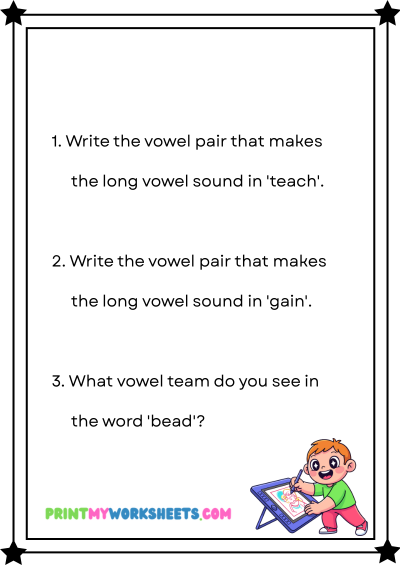
Pre-KG Vowel Teams Worksheets PDF – Literacy Centers and Small Group Phonics Lessons
Pre-KG Vowel Teams Worksheets PDF
The Pre-KG Vowel Teams Worksheets PDF is a carefully designed phonics resource created to support early readers as they begin to recognize and understand vowel team sounds. This printable worksheet set is intended for Pre-K learners and is well suited for use by parents, classroom teachers, and homeschool families across the United States. Vowel teams, also known as vowel pairs, are combinations of two vowels that work together to make one sound, such as ai, ee, oa, and oo.
At the Pre-K level, children are developing strong listening skills and beginning to notice sound patterns in spoken language. Introducing vowel teams at this stage helps children move beyond single-letter sounds and prepares them for more advanced phonics instruction. These worksheets provide structured, age-appropriate practice that supports early literacy development without overwhelming young learners. With clear visuals, simple instructions, and consistent routines, this resource helps children build confidence while strengthening foundational reading skills.
What Students Will Learn ?
his worksheet set focuses on helping young learners recognize and understand common vowel team patterns through guided phonics practice. Students will learn that when two vowels appear together, they can create a single sound that may be different from the sounds each vowel makes on its own. This understanding is an important step in early reading development.
Activities are designed to introduce vowel teams gradually and clearly. Children practice listening to vowel sounds, matching sounds to pictures, and identifying vowel pairs within simple words. Visual cues play an important role in supporting comprehension and keeping learning accessible for Pre-K students. Tasks often involve circling, matching, tracing, or coloring, which helps reinforce learning while supporting fine motor development.
The worksheets follow predictable patterns that help children feel comfortable and confident as they work. Each activity builds on previous skills, supporting structured learning and repetition. This approach aligns with age-appropriate expectations for Pre-K learners, who benefit from consistent routines and short, focused tasks. By completing these activities, students develop early phonics awareness that supports future reading instruction.
Educational Value & Skill Development
Early exposure to vowel teams strengthens a child’s phonemic awareness and supports long-term reading success. Understanding vowel pairs helps children recognize sound patterns more easily, which is essential for decoding words as they progress through elementary school. The Pre-K Vowel Teams Worksheets PDF supports this learning by offering targeted practice that is developmentally appropriate and easy to follow.
From a cognitive perspective, these worksheets encourage children to listen carefully, compare sounds, and make connections between spoken language and visual symbols. This process supports memory, attention, and auditory discrimination skills. As children practice identifying vowel teams, they also build confidence in their ability to work independently and complete tasks successfully.
The worksheets are designed to support gradual skill progression. Children move from simple sound recognition to applying vowel team knowledge within basic words. This progression helps prevent frustration and allows learners to build confidence at their own pace. Over time, repeated practice helps children internalize vowel patterns, making future phonics instruction smoother and more effective. These early successes contribute to a positive attitude toward reading and learning overall.
Why Focus on Pre-K Vowel Teams ?
Vowel teams are an important part of phonics instruction because they appear frequently in early reading materials. Helping children recognize these patterns early makes decoding easier and more intuitive as they begin reading simple words and sentences. At the Pre-K level, children are still developing sound awareness, making this an ideal time to introduce vowel pairs in a gentle, supportive way.
Learning vowel teams supports future academic success by preparing children for kindergarten and first-grade phonics programs. Students who are familiar with vowel pairs are better equipped to decode unfamiliar words and understand spelling patterns. This early preparation reduces confusion and builds confidence when reading instruction becomes more formal.
Repetition and guided practice are essential for mastering vowel team sounds. Worksheets provide a consistent format that allows children to practice skills multiple times without pressure. These activities align with early learning standards commonly used in U.S. preschool and Pre-K programs, supporting phonological awareness, listening skills, and early literacy development.
How to Use These Worksheets ?
These worksheets are flexible and easy to incorporate into a variety of learning environments. In homeschool settings, they can be used as part of a daily phonics routine or as short, focused practice sessions. Parents can work alongside their child, modeling sounds and offering encouragement.
In classroom settings, teachers can use the worksheets for small group instruction, literacy centers, or independent practice. The clear layout and simple instructions make them suitable for guided learning or review activities. They also work well for early intervention or additional phonics reinforcement.
The Pre-K Vowel Teams Worksheets PDF is available as a free printable PDF, making it easy to download and reuse as needed. Pages can be printed multiple times for repeated practice or used with dry-erase sleeves to extend usability. This flexibility allows educators and families to adapt the resource to their specific needs while supporting consistent skill development.
Related Worksheets / Extensions :
To continue building early literacy skills, you may also like exploring related phonics resources such as short vowel worksheets, beginning blends activities, or word family practice pages. These topics naturally build on vowel team knowledge and help children apply sound patterns to reading and spelling tasks.
Many families and educators pair vowel team practice with additional resources that focus on sound blending and simple word reading. Using the Pre-K Vowel Teams Worksheets PDF alongside these complementary activities supports a well-rounded approach to early phonics instruction and helps children develop strong reading foundations as they prepare for kindergarten.
You may also like:
[gallery ids="6944,6930,6937"] Pre-KG Vowel Teams Worksheets PDF – Literacy Centers and Small Group Phonics Lessons
Pre-KG Vowel Teams Worksheets PDF
The Pre-KG Vowel Teams Worksheets PDF is a carefully designed phonics resource created to support early readers as they begin to recognize and understand vowel team sounds. This printable worksheet set is intended for Pre-K learners and is well suited for use by parents, classroom teachers, and homeschool families across the United States. Vowel teams, also known as vowel pairs, are combinations of two vowels that work together to make one sound, such as ai, ee, oa, and oo.
At the Pre-K level, children are developing strong listening skills and beginning to notice sound patterns in spoken language. Introducing vowel teams at this stage helps children move beyond single-letter sounds and prepares them for more advanced phonics instruction. These worksheets provide structured, age-appropriate practice that supports early literacy development without overwhelming young learners. With clear visuals, simple instructions, and consistent routines, this resource helps children build confidence while strengthening foundational reading skills.
What Students Will Learn ?
his worksheet set focuses on helping young learners recognize and understand common vowel team patterns through guided phonics practice. Students will learn that when two vowels appear together, they can create a single sound that may be different from the sounds each vowel makes on its own. This understanding is an important step in early reading development.
Activities are designed to introduce vowel teams gradually and clearly. Children practice listening to vowel sounds, matching sounds to pictures, and identifying vowel pairs within simple words. Visual cues play an important role in supporting comprehension and keeping learning accessible for Pre-K students. Tasks often involve circling, matching, tracing, or coloring, which helps reinforce learning while supporting fine motor development.
The worksheets follow predictable patterns that help children feel comfortable and confident as they work. Each activity builds on previous skills, supporting structured learning and repetition. This approach aligns with age-appropriate expectations for Pre-K learners, who benefit from consistent routines and short, focused tasks. By completing these activities, students develop early phonics awareness that supports future reading instruction.
Educational Value & Skill Development
Early exposure to vowel teams strengthens a child’s phonemic awareness and supports long-term reading success. Understanding vowel pairs helps children recognize sound patterns more easily, which is essential for decoding words as they progress through elementary school. The Pre-K Vowel Teams Worksheets PDF supports this learning by offering targeted practice that is developmentally appropriate and easy to follow.
From a cognitive perspective, these worksheets encourage children to listen carefully, compare sounds, and make connections between spoken language and visual symbols. This process supports memory, attention, and auditory discrimination skills. As children practice identifying vowel teams, they also build confidence in their ability to work independently and complete tasks successfully.
The worksheets are designed to support gradual skill progression. Children move from simple sound recognition to applying vowel team knowledge within basic words. This progression helps prevent frustration and allows learners to build confidence at their own pace. Over time, repeated practice helps children internalize vowel patterns, making future phonics instruction smoother and more effective. These early successes contribute to a positive attitude toward reading and learning overall.
Why Focus on Pre-K Vowel Teams ?
Vowel teams are an important part of phonics instruction because they appear frequently in early reading materials. Helping children recognize these patterns early makes decoding easier and more intuitive as they begin reading simple words and sentences. At the Pre-K level, children are still developing sound awareness, making this an ideal time to introduce vowel pairs in a gentle, supportive way.
Learning vowel teams supports future academic success by preparing children for kindergarten and first-grade phonics programs. Students who are familiar with vowel pairs are better equipped to decode unfamiliar words and understand spelling patterns. This early preparation reduces confusion and builds confidence when reading instruction becomes more formal.
Repetition and guided practice are essential for mastering vowel team sounds. Worksheets provide a consistent format that allows children to practice skills multiple times without pressure. These activities align with early learning standards commonly used in U.S. preschool and Pre-K programs, supporting phonological awareness, listening skills, and early literacy development.
How to Use These Worksheets ?
These worksheets are flexible and easy to incorporate into a variety of learning environments. In homeschool settings, they can be used as part of a daily phonics routine or as short, focused practice sessions. Parents can work alongside their child, modeling sounds and offering encouragement.
In classroom settings, teachers can use the worksheets for small group instruction, literacy centers, or independent practice. The clear layout and simple instructions make them suitable for guided learning or review activities. They also work well for early intervention or additional phonics reinforcement.
The Pre-K Vowel Teams Worksheets PDF is available as a free printable PDF, making it easy to download and reuse as needed. Pages can be printed multiple times for repeated practice or used with dry-erase sleeves to extend usability. This flexibility allows educators and families to adapt the resource to their specific needs while supporting consistent skill development.
Related Worksheets / Extensions :
To continue building early literacy skills, you may also like exploring related phonics resources such as short vowel worksheets, beginning blends activities, or word family practice pages. These topics naturally build on vowel team knowledge and help children apply sound patterns to reading and spelling tasks.
Many families and educators pair vowel team practice with additional resources that focus on sound blending and simple word reading. Using the Pre-K Vowel Teams Worksheets PDF alongside these complementary activities supports a well-rounded approach to early phonics instruction and helps children develop strong reading foundations as they prepare for kindergarten.
You may also like:
[gallery ids="6944,6930,6937"]
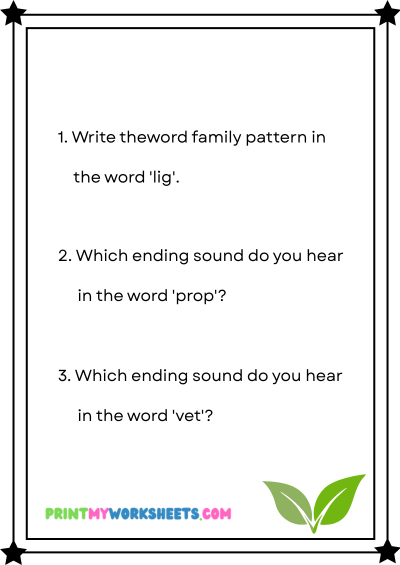
Pre-KG Word Families Worksheets PDF – Phonics Practice for CVC Patterns and Early Reading Fluency
Our Pre-KG Word Families Worksheets PDF are designed to help young learners recognize word patterns and build strong early reading skills. These free downloadable PDF worksheets are perfect for US homeschool parents, preschool teachers, and Pre-K children beginning to read simple words.
Word families group words with the same ending sounds, such as -at, -an, -it, and -op. Learning word families helps children notice patterns in words instead of memorizing each word separately. These worksheets introduce word families in a fun, visual, and age-appropriate way using pictures, tracing, matching, and word-building activities.
Practicing word families strengthens phonemic awareness, decoding skills, and reading fluency. When children recognize familiar word patterns, they can read new words more easily and with greater confidence. This skill also supports spelling development and prepares children for reading sentences and short stories.
Each worksheet includes engaging activities such as matching pictures to words, completing word family sets, circling correct words, tracing letters, and coloring. Repetition helps reinforce learning and improves retention while keeping young learners motivated.
The printable PDF format makes these worksheets ideal for classroom literacy centers, homeschooling routines, small-group instruction, or independent practice at home. Whether introducing phonics concepts or reinforcing early reading skills, these worksheets provide an effective, engaging, and completely free resource aligned with US Pre-K literacy standards.
You may also like:
[gallery ids="6930,6923,6916"] Pre-KG Word Families Worksheets PDF – Phonics Practice for CVC Patterns and Early Reading Fluency
Our Pre-KG Word Families Worksheets PDF are designed to help young learners recognize word patterns and build strong early reading skills. These free downloadable PDF worksheets are perfect for US homeschool parents, preschool teachers, and Pre-K children beginning to read simple words.
Word families group words with the same ending sounds, such as -at, -an, -it, and -op. Learning word families helps children notice patterns in words instead of memorizing each word separately. These worksheets introduce word families in a fun, visual, and age-appropriate way using pictures, tracing, matching, and word-building activities.
Practicing word families strengthens phonemic awareness, decoding skills, and reading fluency. When children recognize familiar word patterns, they can read new words more easily and with greater confidence. This skill also supports spelling development and prepares children for reading sentences and short stories.
Each worksheet includes engaging activities such as matching pictures to words, completing word family sets, circling correct words, tracing letters, and coloring. Repetition helps reinforce learning and improves retention while keeping young learners motivated.
The printable PDF format makes these worksheets ideal for classroom literacy centers, homeschooling routines, small-group instruction, or independent practice at home. Whether introducing phonics concepts or reinforcing early reading skills, these worksheets provide an effective, engaging, and completely free resource aligned with US Pre-K literacy standards.
You may also like:
[gallery ids="6930,6923,6916"]
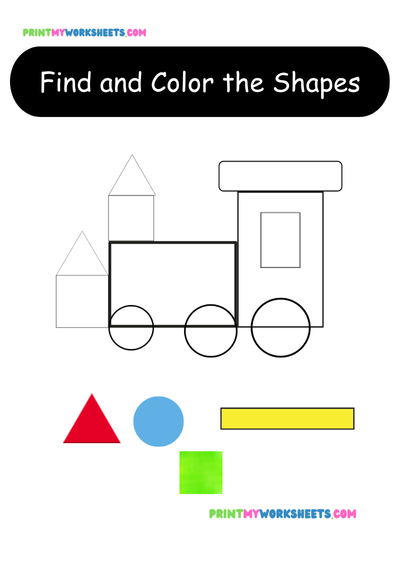
Pre-Kindergarten Color Quest Shapes – Fun Shape Learning Game for Home Practice
Pre-Kindergarten Color Quest Shapes
Early math learning in Pre-Kindergarten is all about exploration, recognition, and joyful discovery. The Pre-Kindergarten Color Quest Shapes worksheet is thoughtfully designed to help young learners identify, sort, and explore basic shapes through engaging color-based activities. Created for U.S. parents, teachers, and homeschool families, this free printable PDF supports early math development in a fun, low-pressure way that feels more like play than practice.
At the Pre-Kindergarten level, children are just beginning to notice shapes in their environment—circles in wheels, squares in windows, and triangles in signs. Combining shape recognition with color exploration strengthens visual perception and early problem-solving skills. The Pre-Kindergarten Color Quest Shapes worksheets guide children through hands-on activities that encourage observation, matching, and decision-making. With simple instructions and child-friendly layouts, these worksheets help young learners build confidence while developing essential early math and cognitive skills that prepare them for kindergarten success.
What Students Will Learn?
These worksheets are designed to introduce foundational shape concepts in a structured yet playful format. Children will learn to recognize common shapes such as circles, squares, triangles, rectangles, and ovals. Through guided activities, students explore how shapes look, how they differ, and how they can be identified using visual cues like color and size.
Activities include matching shapes to colors, identifying shapes within pictures, tracing simple shapes, and following color-based directions. These tasks support structured learning by helping children focus on one concept at a time while reinforcing it through repetition. Visual prompts and minimal text make the worksheets accessible for non-readers and early readers alike.
The activities align well with age-appropriate expectations for Pre-Kindergarten learners. Children are encouraged to observe carefully, make choices, and complete tasks independently or with light guidance. This balance supports early learning routines while allowing flexibility for different learning styles and developmental stages.
Educational Value & Skill Development
The Pre-Kindergarten Color Quest Shapes worksheets offer strong educational value by supporting multiple areas of early development. Academically, shape recognition is a key math readiness skill that prepares children for geometry concepts in later grades. Understanding shapes helps children categorize objects, recognize patterns, and make sense of their surroundings.
Cognitively, these activities strengthen visual discrimination, attention to detail, and memory. When children identify shapes based on color cues, they practice following directions and processing multiple pieces of information at once. This builds early executive functioning skills in an age-appropriate way.
Confidence and independence grow as children complete activities successfully. Simple tasks with clear outcomes help learners feel capable and motivated. Over time, students progress from basic recognition to applying shape knowledge in more complex ways, such as finding shapes within scenes or sorting by attributes. These gradual skill-building opportunities create a strong foundation for future math learning and classroom readiness.
Why Focus on Color Quest Shapes?
Shape recognition is one of the earliest math skills children develop, and it plays a crucial role in overall cognitive growth. Learning shapes helps children understand spatial relationships, compare objects, and describe the world around them. When shapes are combined with color-based activities, learning becomes more engaging and memorable for young learners.
This skill supports future academic success by laying the groundwork for geometry, problem-solving, and even early reading skills, as shape awareness contributes to letter recognition. Repetition and guided practice are especially important at the Pre-K level, where children learn best through consistent exposure and hands-on exploration.
Color-and-shape activities align closely with U.S. early learning standards, which emphasize identifying shapes, sorting objects, and following simple directions. By focusing on these skills early, children develop the confidence and familiarity they need to transition smoothly into kindergarten math instruction.
How to Use These Worksheets?
These worksheets are flexible and easy to use across a variety of learning environments. In classrooms, teachers can incorporate them into math centers, morning work, or small-group instruction. They work well as part of a themed unit on shapes, colors, or early math exploration.
For homeschool families, the worksheets provide a simple way to introduce or reinforce shape concepts at home. Parents can sit alongside their child to talk about shapes and colors or encourage independent work for short practice sessions. The Pre-Kindergarten Color Quest Shapes activities are ideal for keeping learning playful while still purposeful.
Because the worksheets are offered as a free printable PDF, they are easy to download and reuse. Pages can be printed multiple times for continued practice or used selectively based on a child’s readiness level. This adaptability makes them a practical resource for both structured lessons and informal learning moments.
Related Worksheets / Extensions:
To extend learning beyond this resource, children may also enjoy worksheets focused on color recognition, patterning, or counting with shapes. Shape scavenger hunts around the classroom or home can reinforce concepts learned on paper. Simple art activities, such as creating pictures using cut-out shapes, further support hands-on learning.
The Pre-Kindergarten Color Quest Shapes worksheets pair well with other early math and fine motor skill resources. Together, these activities help young learners build confidence, curiosity, and a strong foundation for future math success in a fun and supportive way.
You may also like:
[gallery ids="5848,5836,5393"] Pre-Kindergarten Color Quest Shapes – Fun Shape Learning Game for Home Practice
Pre-Kindergarten Color Quest Shapes
Early math learning in Pre-Kindergarten is all about exploration, recognition, and joyful discovery. The Pre-Kindergarten Color Quest Shapes worksheet is thoughtfully designed to help young learners identify, sort, and explore basic shapes through engaging color-based activities. Created for U.S. parents, teachers, and homeschool families, this free printable PDF supports early math development in a fun, low-pressure way that feels more like play than practice.
At the Pre-Kindergarten level, children are just beginning to notice shapes in their environment—circles in wheels, squares in windows, and triangles in signs. Combining shape recognition with color exploration strengthens visual perception and early problem-solving skills. The Pre-Kindergarten Color Quest Shapes worksheets guide children through hands-on activities that encourage observation, matching, and decision-making. With simple instructions and child-friendly layouts, these worksheets help young learners build confidence while developing essential early math and cognitive skills that prepare them for kindergarten success.
What Students Will Learn?
These worksheets are designed to introduce foundational shape concepts in a structured yet playful format. Children will learn to recognize common shapes such as circles, squares, triangles, rectangles, and ovals. Through guided activities, students explore how shapes look, how they differ, and how they can be identified using visual cues like color and size.
Activities include matching shapes to colors, identifying shapes within pictures, tracing simple shapes, and following color-based directions. These tasks support structured learning by helping children focus on one concept at a time while reinforcing it through repetition. Visual prompts and minimal text make the worksheets accessible for non-readers and early readers alike.
The activities align well with age-appropriate expectations for Pre-Kindergarten learners. Children are encouraged to observe carefully, make choices, and complete tasks independently or with light guidance. This balance supports early learning routines while allowing flexibility for different learning styles and developmental stages.
Educational Value & Skill Development
The Pre-Kindergarten Color Quest Shapes worksheets offer strong educational value by supporting multiple areas of early development. Academically, shape recognition is a key math readiness skill that prepares children for geometry concepts in later grades. Understanding shapes helps children categorize objects, recognize patterns, and make sense of their surroundings.
Cognitively, these activities strengthen visual discrimination, attention to detail, and memory. When children identify shapes based on color cues, they practice following directions and processing multiple pieces of information at once. This builds early executive functioning skills in an age-appropriate way.
Confidence and independence grow as children complete activities successfully. Simple tasks with clear outcomes help learners feel capable and motivated. Over time, students progress from basic recognition to applying shape knowledge in more complex ways, such as finding shapes within scenes or sorting by attributes. These gradual skill-building opportunities create a strong foundation for future math learning and classroom readiness.
Why Focus on Color Quest Shapes?
Shape recognition is one of the earliest math skills children develop, and it plays a crucial role in overall cognitive growth. Learning shapes helps children understand spatial relationships, compare objects, and describe the world around them. When shapes are combined with color-based activities, learning becomes more engaging and memorable for young learners.
This skill supports future academic success by laying the groundwork for geometry, problem-solving, and even early reading skills, as shape awareness contributes to letter recognition. Repetition and guided practice are especially important at the Pre-K level, where children learn best through consistent exposure and hands-on exploration.
Color-and-shape activities align closely with U.S. early learning standards, which emphasize identifying shapes, sorting objects, and following simple directions. By focusing on these skills early, children develop the confidence and familiarity they need to transition smoothly into kindergarten math instruction.
How to Use These Worksheets?
These worksheets are flexible and easy to use across a variety of learning environments. In classrooms, teachers can incorporate them into math centers, morning work, or small-group instruction. They work well as part of a themed unit on shapes, colors, or early math exploration.
For homeschool families, the worksheets provide a simple way to introduce or reinforce shape concepts at home. Parents can sit alongside their child to talk about shapes and colors or encourage independent work for short practice sessions. The Pre-Kindergarten Color Quest Shapes activities are ideal for keeping learning playful while still purposeful.
Because the worksheets are offered as a free printable PDF, they are easy to download and reuse. Pages can be printed multiple times for continued practice or used selectively based on a child’s readiness level. This adaptability makes them a practical resource for both structured lessons and informal learning moments.
Related Worksheets / Extensions:
To extend learning beyond this resource, children may also enjoy worksheets focused on color recognition, patterning, or counting with shapes. Shape scavenger hunts around the classroom or home can reinforce concepts learned on paper. Simple art activities, such as creating pictures using cut-out shapes, further support hands-on learning.
The Pre-Kindergarten Color Quest Shapes worksheets pair well with other early math and fine motor skill resources. Together, these activities help young learners build confidence, curiosity, and a strong foundation for future math success in a fun and supportive way.
You may also like:
[gallery ids="5848,5836,5393"]
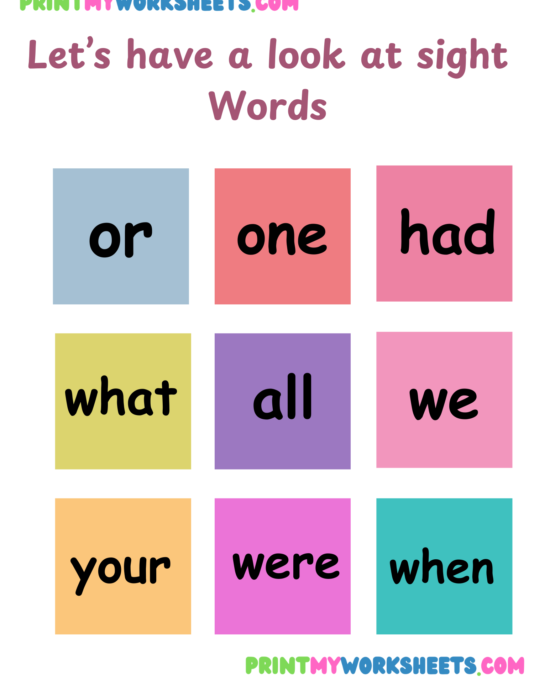
Pre-Kindergarten Sight Words Worksheets PDF | Free English I Downloadable
Pre-Kindergarten Sight Words Worksheets PDF
The Pre-Kindergarten Sight Words Worksheets PDF is designed to introduce young learners to common high-frequency words in a simple and engaging way. This free printable PDF is ideal for U.S. parents, preschool teachers, and homeschool families who want to build early literacy skills before kindergarten begins.
In Pre-Kindergarten, children are just beginning to explore letters, sounds, and simple word recognition. Introducing sight words at this stage helps students become familiar with everyday words they will encounter in books and classroom materials. Early exposure builds confidence and prepares children for structured reading instruction in kindergarten.
This worksheet collection provides age-appropriate activities that focus on recognizing, tracing, and identifying simple sight words. The activities are designed with young learners in mind, using clear layouts and manageable tasks that encourage success. With consistent practice, children begin to recognize familiar words more quickly and develop a positive attitude toward reading.
What Students Will Learn?
These Pre-K sight word worksheets focus on helping young children become comfortable with recognizing common words by sight. At this stage, the goal is familiarity rather than mastery. Students begin building a foundation that will support future reading success.
Children will practice:
-
Recognizing simple, high-frequency words
-
Matching words to pictures
-
Tracing basic sight words
-
Identifying words within simple phrases
-
Listening and repeating familiar words aloud
-
Strengthening visual word recognition
The activities are carefully structured to match the developmental level of Pre-K learners. Pages include large print, simple directions, and uncluttered designs that reduce distractions.
By repeatedly seeing and practicing the same words, students begin forming connections between spoken language and written text. The worksheets encourage multisensory learning by combining visual recognition with tracing and speaking activities.
These early literacy activities align with preschool readiness expectations across the United States. They support pre-reading skills while keeping the experience playful and positive. The emphasis is on exposure, repetition, and gentle reinforcement rather than formal assessment.
Educational Value & Skill Development
The Pre-Kindergarten Sight Words Worksheets PDF supports early cognitive and literacy development in meaningful ways. Although Pre-K students are not expected to read independently, exposure to sight words helps build familiarity with written language.
Academically, recognizing common words strengthens early reading readiness. When children repeatedly see simple words, they begin to understand that print carries meaning. This awareness is an essential first step toward reading.
Cognitively, sight word practice enhances memory and visual discrimination skills. Young learners learn to notice patterns in letters and shapes, improving their ability to distinguish between similar-looking words.
Tracing activities also strengthen fine motor development. As children practice writing basic words, they build hand-eye coordination and pencil control, which are critical for later writing tasks.
Confidence grows as children successfully recognize familiar words during story time or classroom activities. Positive early experiences with print create a strong foundation for kindergarten literacy instruction. By introducing structured yet gentle practice, these worksheets help children approach reading with curiosity and enthusiasm.
Why Focus on Sight Words?
Sight words are common words that appear frequently in early reading materials. Even before formal reading instruction begins, young children benefit from becoming familiar with a small set of simple words.
In Pre-Kindergarten, the goal is exposure. When children see words repeatedly in books, classroom labels, and daily routines, they begin to understand that printed words represent spoken language. This connection builds print awareness.
Repetition plays a key role. Seeing the same words in different contexts strengthens memory and recognition. Guided practice, combined with read-aloud activities, reinforces learning in a natural way.
Developing familiarity with high-frequency words helps smooth the transition into kindergarten reading programs. Students who have prior exposure often feel more comfortable and confident when formal phonics instruction begins.
Early literacy skills, including sight word recognition, contribute to long-term reading success. Building these skills gradually ensures children are prepared for the next stage of learning.
How to Use These Worksheets?
The Pre-Kindergarten Sight Words Worksheets PDF can be used in preschool classrooms, daycare centers, or homeschool settings. Teachers may incorporate the worksheets into literacy centers or circle-time activities. Parents can use them during short daily learning sessions at home.
Because the resource is provided as a free printable PDF, it can be easily downloaded and printed as needed. Pages may be reused throughout the year for reinforcement and review.
For best results, pair the worksheets with read-aloud time. When children hear the same words spoken while seeing them on paper, learning becomes more meaningful. Encouraging children to say the words aloud while tracing also strengthens retention.
These worksheets are ideal for small group instruction or one-on-one practice. Keeping sessions short and positive ensures young learners remain engaged. Repetition and gentle guidance help children gradually build familiarity with common words.
Related Worksheets / Extensions:
You may also like:
-
Pre-K alphabet tracing worksheets
-
Preschool letter recognition activities
-
Kindergarten sight word worksheets
-
Beginning phonics worksheets
-
Early reading readiness activities
The Pre-Kindergarten Sight Words Worksheets PDF works well alongside alphabet practice and phonemic awareness activities. Combining letter recognition, sound exploration, and early word familiarity creates a balanced approach to preschool literacy development. With consistent exposure and encouragement, young learners build the confidence and foundational skills needed for a successful transition into kindergarten reading instruction.
You may also like :
[gallery ids="5192,5229,5231"] Pre-Kindergarten Sight Words Worksheets PDF | Free English I Downloadable
Pre-Kindergarten Sight Words Worksheets PDF
The Pre-Kindergarten Sight Words Worksheets PDF is designed to introduce young learners to common high-frequency words in a simple and engaging way. This free printable PDF is ideal for U.S. parents, preschool teachers, and homeschool families who want to build early literacy skills before kindergarten begins.
In Pre-Kindergarten, children are just beginning to explore letters, sounds, and simple word recognition. Introducing sight words at this stage helps students become familiar with everyday words they will encounter in books and classroom materials. Early exposure builds confidence and prepares children for structured reading instruction in kindergarten.
This worksheet collection provides age-appropriate activities that focus on recognizing, tracing, and identifying simple sight words. The activities are designed with young learners in mind, using clear layouts and manageable tasks that encourage success. With consistent practice, children begin to recognize familiar words more quickly and develop a positive attitude toward reading.
What Students Will Learn?
These Pre-K sight word worksheets focus on helping young children become comfortable with recognizing common words by sight. At this stage, the goal is familiarity rather than mastery. Students begin building a foundation that will support future reading success.
Children will practice:
-
Recognizing simple, high-frequency words
-
Matching words to pictures
-
Tracing basic sight words
-
Identifying words within simple phrases
-
Listening and repeating familiar words aloud
-
Strengthening visual word recognition
The activities are carefully structured to match the developmental level of Pre-K learners. Pages include large print, simple directions, and uncluttered designs that reduce distractions.
By repeatedly seeing and practicing the same words, students begin forming connections between spoken language and written text. The worksheets encourage multisensory learning by combining visual recognition with tracing and speaking activities.
These early literacy activities align with preschool readiness expectations across the United States. They support pre-reading skills while keeping the experience playful and positive. The emphasis is on exposure, repetition, and gentle reinforcement rather than formal assessment.
Educational Value & Skill Development
The Pre-Kindergarten Sight Words Worksheets PDF supports early cognitive and literacy development in meaningful ways. Although Pre-K students are not expected to read independently, exposure to sight words helps build familiarity with written language.
Academically, recognizing common words strengthens early reading readiness. When children repeatedly see simple words, they begin to understand that print carries meaning. This awareness is an essential first step toward reading.
Cognitively, sight word practice enhances memory and visual discrimination skills. Young learners learn to notice patterns in letters and shapes, improving their ability to distinguish between similar-looking words.
Tracing activities also strengthen fine motor development. As children practice writing basic words, they build hand-eye coordination and pencil control, which are critical for later writing tasks.
Confidence grows as children successfully recognize familiar words during story time or classroom activities. Positive early experiences with print create a strong foundation for kindergarten literacy instruction. By introducing structured yet gentle practice, these worksheets help children approach reading with curiosity and enthusiasm.
Why Focus on Sight Words?
Sight words are common words that appear frequently in early reading materials. Even before formal reading instruction begins, young children benefit from becoming familiar with a small set of simple words.
In Pre-Kindergarten, the goal is exposure. When children see words repeatedly in books, classroom labels, and daily routines, they begin to understand that printed words represent spoken language. This connection builds print awareness.
Repetition plays a key role. Seeing the same words in different contexts strengthens memory and recognition. Guided practice, combined with read-aloud activities, reinforces learning in a natural way.
Developing familiarity with high-frequency words helps smooth the transition into kindergarten reading programs. Students who have prior exposure often feel more comfortable and confident when formal phonics instruction begins.
Early literacy skills, including sight word recognition, contribute to long-term reading success. Building these skills gradually ensures children are prepared for the next stage of learning.
How to Use These Worksheets?
The Pre-Kindergarten Sight Words Worksheets PDF can be used in preschool classrooms, daycare centers, or homeschool settings. Teachers may incorporate the worksheets into literacy centers or circle-time activities. Parents can use them during short daily learning sessions at home.
Because the resource is provided as a free printable PDF, it can be easily downloaded and printed as needed. Pages may be reused throughout the year for reinforcement and review.
For best results, pair the worksheets with read-aloud time. When children hear the same words spoken while seeing them on paper, learning becomes more meaningful. Encouraging children to say the words aloud while tracing also strengthens retention.
These worksheets are ideal for small group instruction or one-on-one practice. Keeping sessions short and positive ensures young learners remain engaged. Repetition and gentle guidance help children gradually build familiarity with common words.
Related Worksheets / Extensions:
You may also like:
-
Pre-K alphabet tracing worksheets
-
Preschool letter recognition activities
-
Kindergarten sight word worksheets
-
Beginning phonics worksheets
-
Early reading readiness activities
The Pre-Kindergarten Sight Words Worksheets PDF works well alongside alphabet practice and phonemic awareness activities. Combining letter recognition, sound exploration, and early word familiarity creates a balanced approach to preschool literacy development. With consistent exposure and encouragement, young learners build the confidence and foundational skills needed for a successful transition into kindergarten reading instruction.
You may also like :
[gallery ids="5192,5229,5231"]
Pre-Kindergarten Sight Words Worksheets PDF | Free English II Downloadable
Pre-Kindergarten Sight Words Worksheets PDF
The Pre-Kindergarten Sight Words Worksheets PDF is designed to introduce young learners to common high-frequency words in a simple and engaging way. This free printable PDF is ideal for U.S. parents, preschool teachers, and homeschool families who want to build early literacy skills before kindergarten begins.
In Pre-Kindergarten, children are just beginning to explore letters, sounds, and simple word recognition. Introducing sight words at this stage helps students become familiar with everyday words they will encounter in books and classroom materials. Early exposure builds confidence and prepares children for structured reading instruction in kindergarten.
This worksheet collection provides age-appropriate activities that focus on recognizing, tracing, and identifying simple sight words. The activities are designed with young learners in mind, using clear layouts and manageable tasks that encourage success. With consistent practice, children begin to recognize familiar words more quickly and develop a positive attitude toward reading.
What Students Will Learn?
These Pre-K sight word worksheets focus on helping young children become comfortable with recognizing common words by sight. At this stage, the goal is familiarity rather than mastery. Students begin building a foundation that will support future reading success.
Children will practice:
-
Recognizing simple, high-frequency words
-
Matching words to pictures
-
Tracing basic sight words
-
Identifying words within simple phrases
-
Listening and repeating familiar words aloud
-
Strengthening visual word recognition
The activities are carefully structured to match the developmental level of Pre-K learners. Pages include large print, simple directions, and uncluttered designs that reduce distractions.
By repeatedly seeing and practicing the same words, students begin forming connections between spoken language and written text. The worksheets encourage multisensory learning by combining visual recognition with tracing and speaking activities.
These early literacy activities align with preschool readiness expectations across the United States. They support pre-reading skills while keeping the experience playful and positive. The emphasis is on exposure, repetition, and gentle reinforcement rather than formal assessment.
Educational Value & Skill Development
The Pre-Kindergarten Sight Words Worksheets PDF supports early cognitive and literacy development in meaningful ways. Although Pre-K students are not expected to read independently, exposure to sight words helps build familiarity with written language.
Academically, recognizing common words strengthens early reading readiness. When children repeatedly see simple words, they begin to understand that print carries meaning. This awareness is an essential first step toward reading.
Cognitively, sight word practice enhances memory and visual discrimination skills. Young learners learn to notice patterns in letters and shapes, improving their ability to distinguish between similar-looking words.
Tracing activities also strengthen fine motor development. As children practice writing basic words, they build hand-eye coordination and pencil control, which are critical for later writing tasks.
Confidence grows as children successfully recognize familiar words during story time or classroom activities. Positive early experiences with print create a strong foundation for kindergarten literacy instruction. By introducing structured yet gentle practice, these worksheets help children approach reading with curiosity and enthusiasm.
Why Focus on Sight Words?
Sight words are common words that appear frequently in early reading materials. Even before formal reading instruction begins, young children benefit from becoming familiar with a small set of simple words.
In Pre-Kindergarten, the goal is exposure. When children see words repeatedly in books, classroom labels, and daily routines, they begin to understand that printed words represent spoken language. This connection builds print awareness.
Repetition plays a key role. Seeing the same words in different contexts strengthens memory and recognition. Guided practice, combined with read-aloud activities, reinforces learning in a natural way.
Developing familiarity with high-frequency words helps smooth the transition into kindergarten reading programs. Students who have prior exposure often feel more comfortable and confident when formal phonics instruction begins.
Early literacy skills, including sight word recognition, contribute to long-term reading success. Building these skills gradually ensures children are prepared for the next stage of learning.
How to Use These Worksheets?
The Pre-Kindergarten Sight Words Worksheets PDF can be used in preschool classrooms, daycare centers, or homeschool settings. Teachers may incorporate the worksheets into literacy centers or circle-time activities. Parents can use them during short daily learning sessions at home.
Because the resource is provided as a free printable PDF, it can be easily downloaded and printed as needed. Pages may be reused throughout the year for reinforcement and review.
For best results, pair the worksheets with read-aloud time. When children hear the same words spoken while seeing them on paper, learning becomes more meaningful. Encouraging children to say the words aloud while tracing also strengthens retention.
These worksheets are ideal for small group instruction or one-on-one practice. Keeping sessions short and positive ensures young learners remain engaged. Repetition and gentle guidance help children gradually build familiarity with common words.
Related Worksheets / Extensions:
Pre-Kindergarten Sight Words Worksheets PDF | Free English II Downloadable
Pre-Kindergarten Sight Words Worksheets PDF
The Pre-Kindergarten Sight Words Worksheets PDF is designed to introduce young learners to common high-frequency words in a simple and engaging way. This free printable PDF is ideal for U.S. parents, preschool teachers, and homeschool families who want to build early literacy skills before kindergarten begins.
In Pre-Kindergarten, children are just beginning to explore letters, sounds, and simple word recognition. Introducing sight words at this stage helps students become familiar with everyday words they will encounter in books and classroom materials. Early exposure builds confidence and prepares children for structured reading instruction in kindergarten.
This worksheet collection provides age-appropriate activities that focus on recognizing, tracing, and identifying simple sight words. The activities are designed with young learners in mind, using clear layouts and manageable tasks that encourage success. With consistent practice, children begin to recognize familiar words more quickly and develop a positive attitude toward reading.
What Students Will Learn?
These Pre-K sight word worksheets focus on helping young children become comfortable with recognizing common words by sight. At this stage, the goal is familiarity rather than mastery. Students begin building a foundation that will support future reading success.
Children will practice:
-
Recognizing simple, high-frequency words
-
Matching words to pictures
-
Tracing basic sight words
-
Identifying words within simple phrases
-
Listening and repeating familiar words aloud
-
Strengthening visual word recognition
The activities are carefully structured to match the developmental level of Pre-K learners. Pages include large print, simple directions, and uncluttered designs that reduce distractions.
By repeatedly seeing and practicing the same words, students begin forming connections between spoken language and written text. The worksheets encourage multisensory learning by combining visual recognition with tracing and speaking activities.
These early literacy activities align with preschool readiness expectations across the United States. They support pre-reading skills while keeping the experience playful and positive. The emphasis is on exposure, repetition, and gentle reinforcement rather than formal assessment.
Educational Value & Skill Development
The Pre-Kindergarten Sight Words Worksheets PDF supports early cognitive and literacy development in meaningful ways. Although Pre-K students are not expected to read independently, exposure to sight words helps build familiarity with written language.
Academically, recognizing common words strengthens early reading readiness. When children repeatedly see simple words, they begin to understand that print carries meaning. This awareness is an essential first step toward reading.
Cognitively, sight word practice enhances memory and visual discrimination skills. Young learners learn to notice patterns in letters and shapes, improving their ability to distinguish between similar-looking words.
Tracing activities also strengthen fine motor development. As children practice writing basic words, they build hand-eye coordination and pencil control, which are critical for later writing tasks.
Confidence grows as children successfully recognize familiar words during story time or classroom activities. Positive early experiences with print create a strong foundation for kindergarten literacy instruction. By introducing structured yet gentle practice, these worksheets help children approach reading with curiosity and enthusiasm.
Why Focus on Sight Words?
Sight words are common words that appear frequently in early reading materials. Even before formal reading instruction begins, young children benefit from becoming familiar with a small set of simple words.
In Pre-Kindergarten, the goal is exposure. When children see words repeatedly in books, classroom labels, and daily routines, they begin to understand that printed words represent spoken language. This connection builds print awareness.
Repetition plays a key role. Seeing the same words in different contexts strengthens memory and recognition. Guided practice, combined with read-aloud activities, reinforces learning in a natural way.
Developing familiarity with high-frequency words helps smooth the transition into kindergarten reading programs. Students who have prior exposure often feel more comfortable and confident when formal phonics instruction begins.
Early literacy skills, including sight word recognition, contribute to long-term reading success. Building these skills gradually ensures children are prepared for the next stage of learning.
How to Use These Worksheets?
The Pre-Kindergarten Sight Words Worksheets PDF can be used in preschool classrooms, daycare centers, or homeschool settings. Teachers may incorporate the worksheets into literacy centers or circle-time activities. Parents can use them during short daily learning sessions at home.
Because the resource is provided as a free printable PDF, it can be easily downloaded and printed as needed. Pages may be reused throughout the year for reinforcement and review.
For best results, pair the worksheets with read-aloud time. When children hear the same words spoken while seeing them on paper, learning becomes more meaningful. Encouraging children to say the words aloud while tracing also strengthens retention.
These worksheets are ideal for small group instruction or one-on-one practice. Keeping sessions short and positive ensures young learners remain engaged. Repetition and gentle guidance help children gradually build familiarity with common words.
Related Worksheets / Extensions:
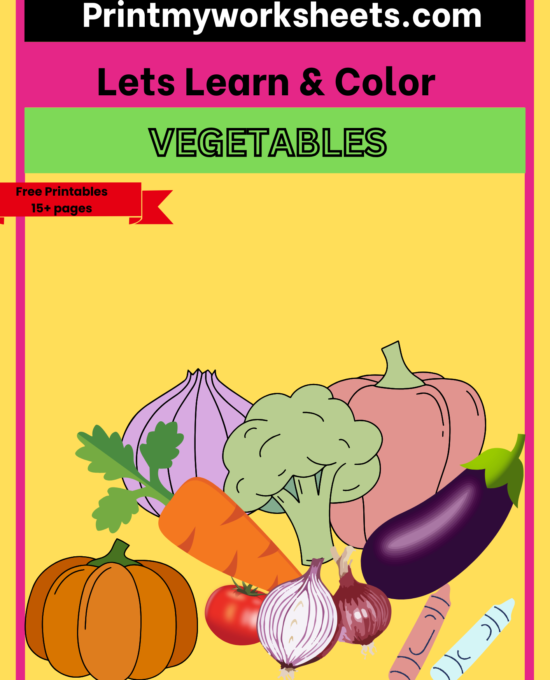
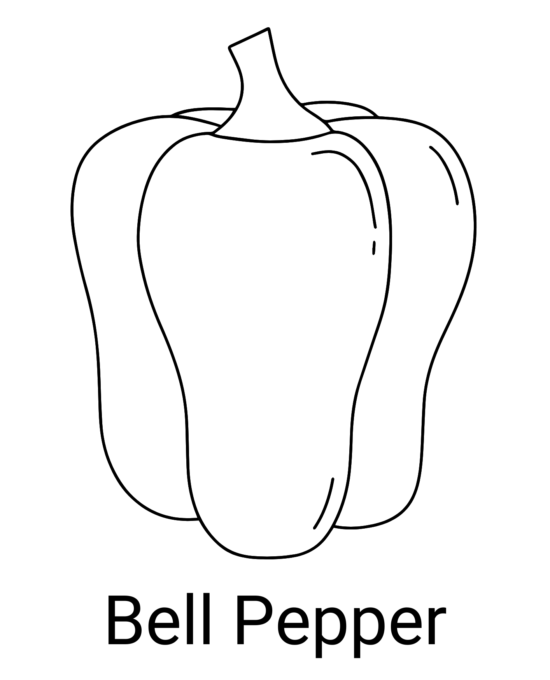
Pre-Kindergarten Vegetable Coloring Worksheets PDF | Free II Downloadable
Pre-Kindergarten Vegetable Coloring Worksheets PDF
The Pre-Kindergarten Vegetable Coloring Worksheets PDF is a fun and educational printable resource designed to support early learners in developing fine motor skills and creativity. This free printable PDF is ideal for U.S. parents, teachers, and homeschool families who want simple, structured coloring activities that introduce young children to healthy foods and basic vocabulary.
Coloring activities at the pre-kindergarten and early elementary levels help children strengthen hand muscles, improve pencil grip, and build focus. These worksheets combine art and early learning by featuring familiar vegetables that children can recognize, name, and color. While the theme is designed for younger learners, first grade students can also benefit from this resource as a reinforcement activity for art, health, and vocabulary lessons. By combining creativity with learning, these pages provide meaningful practice in a developmentally appropriate format.
What Students Will Learn?
These vegetable-themed coloring worksheets help young learners build foundational skills through hands-on engagement. Children will practice recognizing common vegetables such as carrots, broccoli, tomatoes, corn, and cucumbers while strengthening early academic abilities.
Through structured coloring pages, students will:
-
Identify and name different vegetables
-
Improve fine motor control and hand-eye coordination
-
Practice staying within lines to develop pencil control
-
Strengthen focus and attention to detail
-
Expand vocabulary related to healthy foods
The worksheets are designed with clear outlines and simple illustrations that are easy for young children to color. Some pages may include labeling opportunities where students trace or read the name of the vegetable. This supports early literacy development alongside artistic expression.
These activities align well with early childhood learning standards in the United States, where fine motor skills, vocabulary development, and thematic learning are important components of early education. By combining art with content learning, children build multiple skills at once in an engaging and accessible way.
Educational Value & Skill Development
The Pre-Kindergarten Vegetable Coloring Worksheets PDF supports academic growth, motor development, and creative expression. Coloring may seem simple, but it plays a critical role in early childhood education.
From a motor skills perspective, holding crayons or colored pencils strengthens the small muscles in a child’s hands and fingers. This development is essential for future writing skills. Controlled coloring movements help children build the coordination needed for letter formation in kindergarten and first grade.
Cognitively, coloring encourages focus and concentration. Students must pay attention to shapes, boundaries, and details. This type of sustained attention helps build classroom readiness and independent work habits.
The vegetable theme also supports early science and health awareness. Children begin to recognize different foods and may connect them to discussions about nutrition and healthy eating. Vocabulary growth occurs naturally as students learn to identify and pronounce new words.
Creative confidence grows as children make independent choices about colors and artistic expression. Completing a coloring page provides a sense of accomplishment, which strengthens self-esteem and encourages a positive attitude toward learning.
Why Focus on Vegetable Coloring?
Vegetable coloring activities combine creativity with early content learning. At the pre-kindergarten and early elementary level, children benefit from thematic instruction that connects art, vocabulary, and real-world knowledge.
Coloring vegetables introduces students to healthy food options in a simple and engaging way. Recognizing and naming foods builds early science understanding and supports conversations about nutrition. These early discussions lay the foundation for healthy habits.
Fine motor practice is especially important during the preschool and first grade years. Children are developing the control and coordination necessary for writing. Coloring structured images helps strengthen these skills in a low-pressure environment.
Repetition is also valuable. As children repeatedly color and name different vegetables, they build familiarity and confidence. This consistent practice supports language development, memory, and early academic readiness.
How to Use These Worksheets?
The Pre-Kindergarten Vegetable Coloring Worksheets PDF can be used in a variety of educational settings. In preschool or first grade classrooms, teachers can include these worksheets during art time, health units, or as part of a thematic lesson on food and nutrition.
In homeschool settings, parents can use the pages as part of a weekly theme focused on fruits and vegetables. Pair the coloring activity with reading a simple book about healthy foods or preparing a snack together to create a hands-on learning experience.
Because this resource is a free printable PDF, it is easy to download and print as needed. Teachers may print individual pages for centers or small groups, while parents can use them for quiet time or independent practice. The print-friendly design ensures that pages are easy to reproduce for multiple students.
These worksheets can also serve as reinforcement activities for students who need additional fine motor practice. The structured format makes them suitable for independent work with minimal guidance.
Related Worksheets / Extensions:
You may also like:
-
Fruit coloring worksheets for preschool and first grade
-
Healthy eating printable activities
-
Alphabet tracing worksheets
-
Fine motor skills practice pages
-
Simple drawing and coloring sheets
The Pre-Kindergarten Vegetable Coloring Worksheets PDF pairs well with other early childhood resources that focus on art, vocabulary, and thematic learning. Combining coloring activities with reading, discussion, and hands-on experiences helps children make meaningful connections. By integrating creative expression with structured practice, young learners develop both confidence and foundational skills that support future academic success.
You may also like :
[gallery ids="6280,6392,4960"] Pre-Kindergarten Vegetable Coloring Worksheets PDF | Free II Downloadable
Pre-Kindergarten Vegetable Coloring Worksheets PDF
The Pre-Kindergarten Vegetable Coloring Worksheets PDF is a fun and educational printable resource designed to support early learners in developing fine motor skills and creativity. This free printable PDF is ideal for U.S. parents, teachers, and homeschool families who want simple, structured coloring activities that introduce young children to healthy foods and basic vocabulary.
Coloring activities at the pre-kindergarten and early elementary levels help children strengthen hand muscles, improve pencil grip, and build focus. These worksheets combine art and early learning by featuring familiar vegetables that children can recognize, name, and color. While the theme is designed for younger learners, first grade students can also benefit from this resource as a reinforcement activity for art, health, and vocabulary lessons. By combining creativity with learning, these pages provide meaningful practice in a developmentally appropriate format.
What Students Will Learn?
These vegetable-themed coloring worksheets help young learners build foundational skills through hands-on engagement. Children will practice recognizing common vegetables such as carrots, broccoli, tomatoes, corn, and cucumbers while strengthening early academic abilities.
Through structured coloring pages, students will:
-
Identify and name different vegetables
-
Improve fine motor control and hand-eye coordination
-
Practice staying within lines to develop pencil control
-
Strengthen focus and attention to detail
-
Expand vocabulary related to healthy foods
The worksheets are designed with clear outlines and simple illustrations that are easy for young children to color. Some pages may include labeling opportunities where students trace or read the name of the vegetable. This supports early literacy development alongside artistic expression.
These activities align well with early childhood learning standards in the United States, where fine motor skills, vocabulary development, and thematic learning are important components of early education. By combining art with content learning, children build multiple skills at once in an engaging and accessible way.
Educational Value & Skill Development
The Pre-Kindergarten Vegetable Coloring Worksheets PDF supports academic growth, motor development, and creative expression. Coloring may seem simple, but it plays a critical role in early childhood education.
From a motor skills perspective, holding crayons or colored pencils strengthens the small muscles in a child’s hands and fingers. This development is essential for future writing skills. Controlled coloring movements help children build the coordination needed for letter formation in kindergarten and first grade.
Cognitively, coloring encourages focus and concentration. Students must pay attention to shapes, boundaries, and details. This type of sustained attention helps build classroom readiness and independent work habits.
The vegetable theme also supports early science and health awareness. Children begin to recognize different foods and may connect them to discussions about nutrition and healthy eating. Vocabulary growth occurs naturally as students learn to identify and pronounce new words.
Creative confidence grows as children make independent choices about colors and artistic expression. Completing a coloring page provides a sense of accomplishment, which strengthens self-esteem and encourages a positive attitude toward learning.
Why Focus on Vegetable Coloring?
Vegetable coloring activities combine creativity with early content learning. At the pre-kindergarten and early elementary level, children benefit from thematic instruction that connects art, vocabulary, and real-world knowledge.
Coloring vegetables introduces students to healthy food options in a simple and engaging way. Recognizing and naming foods builds early science understanding and supports conversations about nutrition. These early discussions lay the foundation for healthy habits.
Fine motor practice is especially important during the preschool and first grade years. Children are developing the control and coordination necessary for writing. Coloring structured images helps strengthen these skills in a low-pressure environment.
Repetition is also valuable. As children repeatedly color and name different vegetables, they build familiarity and confidence. This consistent practice supports language development, memory, and early academic readiness.
How to Use These Worksheets?
The Pre-Kindergarten Vegetable Coloring Worksheets PDF can be used in a variety of educational settings. In preschool or first grade classrooms, teachers can include these worksheets during art time, health units, or as part of a thematic lesson on food and nutrition.
In homeschool settings, parents can use the pages as part of a weekly theme focused on fruits and vegetables. Pair the coloring activity with reading a simple book about healthy foods or preparing a snack together to create a hands-on learning experience.
Because this resource is a free printable PDF, it is easy to download and print as needed. Teachers may print individual pages for centers or small groups, while parents can use them for quiet time or independent practice. The print-friendly design ensures that pages are easy to reproduce for multiple students.
These worksheets can also serve as reinforcement activities for students who need additional fine motor practice. The structured format makes them suitable for independent work with minimal guidance.
Related Worksheets / Extensions:
You may also like:
-
Fruit coloring worksheets for preschool and first grade
-
Healthy eating printable activities
-
Alphabet tracing worksheets
-
Fine motor skills practice pages
-
Simple drawing and coloring sheets
The Pre-Kindergarten Vegetable Coloring Worksheets PDF pairs well with other early childhood resources that focus on art, vocabulary, and thematic learning. Combining coloring activities with reading, discussion, and hands-on experiences helps children make meaningful connections. By integrating creative expression with structured practice, young learners develop both confidence and foundational skills that support future academic success.
You may also like :
[gallery ids="6280,6392,4960"]
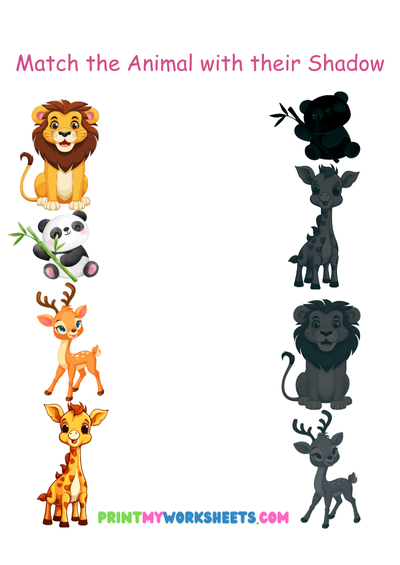
Shadow Matching Worksheet for Kindergarten – Fun Home Learning Activity Pack
Shadow Matching Worksheet for Kindergarten
The Shadow Matching Worksheet for Kindergarten is a fun and interactive activity designed to help young learners strengthen visual recognition and observation skills. This free printable PDF is ideal for U.S. parents, kindergarten teachers, and homeschool families who want to support early learning through engaging picture-based activities.
At the kindergarten level, children are developing important cognitive skills such as recognizing shapes, identifying patterns, and comparing visual information. Shadow matching activities encourage students to look carefully at objects and determine which shadow belongs to each picture. This simple but meaningful exercise helps children build focus, logical thinking, and early problem-solving abilities.
The Shadow Matching Worksheet for Kindergarten includes child-friendly images that make learning enjoyable and accessible. Students match objects with their corresponding silhouettes, helping them improve visual discrimination while reinforcing recognition of familiar items. These worksheets are designed to be both educational and entertaining, making them a valuable addition to classroom activities, homeschool lessons, or independent practice at home.
What Students Will Learn?
Shadow matching activities introduce kindergarten students to important visual learning concepts that support early academic development. Through simple picture-based exercises, children practice recognizing shapes, identifying differences, and connecting objects with their shadows.
Students will learn to carefully observe the outlines of objects and compare them to different shadow shapes. This process strengthens visual discrimination, which is the ability to notice similarities and differences between images. Developing this skill helps students recognize letters, numbers, and shapes more easily in future learning activities.
The worksheets also encourage pattern recognition. When students compare images and shadows, they begin understanding how objects maintain the same outline even when details or colors are removed. This type of thinking supports early problem-solving and reasoning skills.
Many of the activities include familiar objects such as animals, toys, fruits, and everyday items. These recognizable images help students connect the learning activity to real-life experiences.
By completing shadow matching tasks, kindergarten learners develop stronger attention to detail while practicing logical thinking in a playful and engaging format.
Educational Value & Skill Development
The Shadow Matching Worksheet for Kindergarten supports several important areas of early childhood development. Although the activity may appear simple, it encourages children to practice multiple cognitive and visual skills at the same time.
One of the most valuable benefits is visual discrimination development. Students learn to identify small differences between shapes and outlines, which is an essential skill for reading readiness. Recognizing subtle differences between letters such as “b” and “d” later depends on strong visual discrimination skills.
Shadow matching activities also promote logical thinking. Children must analyze the object and its shadow before deciding which shapes match. This type of reasoning strengthens problem-solving abilities and encourages students to think carefully before making decisions.
Another benefit is improved concentration. Students must focus on the task and study each shadow carefully before selecting the correct match. Practicing this skill helps children develop patience and attention to detail.
The Shadow Matching Worksheet for Kindergarten also encourages independence. Many children enjoy solving visual puzzles on their own, which helps build confidence and a sense of accomplishment. As students complete each page, they gain experience with analytical thinking that supports later academic learning.
Why Focus on Shadow Matching?
Shadow matching activities are widely used in early childhood education because they help children develop visual reasoning skills in a simple and engaging format. Young learners naturally enjoy puzzles and picture-based challenges, making this activity both educational and enjoyable.
Matching objects to their shadows encourages children to observe shapes carefully. Instead of focusing on colors or patterns, students must analyze the outline of each object. This strengthens their ability to recognize shapes and compare visual details.
These activities also support early critical thinking skills. Children must decide which shadow corresponds to each object, which requires reasoning and comparison. This type of thinking is important in many academic subjects, including reading, mathematics, and science.
Shadow matching also helps reinforce object recognition. Students see familiar items such as animals, toys, or foods and learn to identify their silhouettes. This strengthens memory and visual association skills.
Providing repeated practice with visual puzzles like shadow matching helps children become more confident in their ability to analyze images and solve problems independently.
How to Use These Worksheets?
The Shadow Matching Worksheet for Kindergarten can be used in a variety of educational settings, making it a flexible resource for both teachers and parents.
In classroom environments, teachers can use the worksheets during learning centers or small-group activities. Students can discuss their answers with classmates while practicing observation and reasoning skills. Teachers may also guide students by asking questions such as “Which shadow looks the same as the picture?” or “What shape do you notice in the shadow?”
Homeschool families can incorporate the worksheets into daily learning routines. Parents can introduce the activity by explaining what shadows are and how objects create silhouettes when light shines on them.
Because the worksheets are available as a free printable PDF, they can be downloaded and printed easily for immediate use. Teachers may print multiple copies for group work, while parents can reuse the worksheets for additional practice.
These activities are also suitable for independent learning time. The visual format allows students to complete the worksheets with minimal instructions while still gaining valuable practice with observation and reasoning.
Related Worksheets / Extensions:
You may also like:
• Kindergarten picture matching worksheets
• Pre-K visual discrimination worksheets
• Kindergarten shapes recognition activities
• Early logic puzzles for young learners
• Sorting and categorizing worksheets for kindergarten
The Shadow Matching Worksheet for Kindergarten works well alongside other visual learning activities such as picture matching, shape recognition, and sorting exercises. Combining these activities helps children practice observation, reasoning, and pattern recognition in different ways.
Teachers and parents may extend the learning by discussing shadows in everyday life. For example, children can observe how sunlight creates shadows outdoors and compare them with the worksheet activity.
By practicing visual matching exercises regularly, kindergarten students strengthen their observation skills, improve logical thinking, and gain confidence in solving simple puzzles. These early experiences help build a strong foundation for future learning in reading, mathematics, and science.
You may also like :
[gallery ids="5199,5212,5094"] Shadow Matching Worksheet for Kindergarten – Fun Home Learning Activity Pack
Shadow Matching Worksheet for Kindergarten
The Shadow Matching Worksheet for Kindergarten is a fun and interactive activity designed to help young learners strengthen visual recognition and observation skills. This free printable PDF is ideal for U.S. parents, kindergarten teachers, and homeschool families who want to support early learning through engaging picture-based activities.
At the kindergarten level, children are developing important cognitive skills such as recognizing shapes, identifying patterns, and comparing visual information. Shadow matching activities encourage students to look carefully at objects and determine which shadow belongs to each picture. This simple but meaningful exercise helps children build focus, logical thinking, and early problem-solving abilities.
The Shadow Matching Worksheet for Kindergarten includes child-friendly images that make learning enjoyable and accessible. Students match objects with their corresponding silhouettes, helping them improve visual discrimination while reinforcing recognition of familiar items. These worksheets are designed to be both educational and entertaining, making them a valuable addition to classroom activities, homeschool lessons, or independent practice at home.
What Students Will Learn?
Shadow matching activities introduce kindergarten students to important visual learning concepts that support early academic development. Through simple picture-based exercises, children practice recognizing shapes, identifying differences, and connecting objects with their shadows.
Students will learn to carefully observe the outlines of objects and compare them to different shadow shapes. This process strengthens visual discrimination, which is the ability to notice similarities and differences between images. Developing this skill helps students recognize letters, numbers, and shapes more easily in future learning activities.
The worksheets also encourage pattern recognition. When students compare images and shadows, they begin understanding how objects maintain the same outline even when details or colors are removed. This type of thinking supports early problem-solving and reasoning skills.
Many of the activities include familiar objects such as animals, toys, fruits, and everyday items. These recognizable images help students connect the learning activity to real-life experiences.
By completing shadow matching tasks, kindergarten learners develop stronger attention to detail while practicing logical thinking in a playful and engaging format.
Educational Value & Skill Development
The Shadow Matching Worksheet for Kindergarten supports several important areas of early childhood development. Although the activity may appear simple, it encourages children to practice multiple cognitive and visual skills at the same time.
One of the most valuable benefits is visual discrimination development. Students learn to identify small differences between shapes and outlines, which is an essential skill for reading readiness. Recognizing subtle differences between letters such as “b” and “d” later depends on strong visual discrimination skills.
Shadow matching activities also promote logical thinking. Children must analyze the object and its shadow before deciding which shapes match. This type of reasoning strengthens problem-solving abilities and encourages students to think carefully before making decisions.
Another benefit is improved concentration. Students must focus on the task and study each shadow carefully before selecting the correct match. Practicing this skill helps children develop patience and attention to detail.
The Shadow Matching Worksheet for Kindergarten also encourages independence. Many children enjoy solving visual puzzles on their own, which helps build confidence and a sense of accomplishment. As students complete each page, they gain experience with analytical thinking that supports later academic learning.
Why Focus on Shadow Matching?
Shadow matching activities are widely used in early childhood education because they help children develop visual reasoning skills in a simple and engaging format. Young learners naturally enjoy puzzles and picture-based challenges, making this activity both educational and enjoyable.
Matching objects to their shadows encourages children to observe shapes carefully. Instead of focusing on colors or patterns, students must analyze the outline of each object. This strengthens their ability to recognize shapes and compare visual details.
These activities also support early critical thinking skills. Children must decide which shadow corresponds to each object, which requires reasoning and comparison. This type of thinking is important in many academic subjects, including reading, mathematics, and science.
Shadow matching also helps reinforce object recognition. Students see familiar items such as animals, toys, or foods and learn to identify their silhouettes. This strengthens memory and visual association skills.
Providing repeated practice with visual puzzles like shadow matching helps children become more confident in their ability to analyze images and solve problems independently.
How to Use These Worksheets?
The Shadow Matching Worksheet for Kindergarten can be used in a variety of educational settings, making it a flexible resource for both teachers and parents.
In classroom environments, teachers can use the worksheets during learning centers or small-group activities. Students can discuss their answers with classmates while practicing observation and reasoning skills. Teachers may also guide students by asking questions such as “Which shadow looks the same as the picture?” or “What shape do you notice in the shadow?”
Homeschool families can incorporate the worksheets into daily learning routines. Parents can introduce the activity by explaining what shadows are and how objects create silhouettes when light shines on them.
Because the worksheets are available as a free printable PDF, they can be downloaded and printed easily for immediate use. Teachers may print multiple copies for group work, while parents can reuse the worksheets for additional practice.
These activities are also suitable for independent learning time. The visual format allows students to complete the worksheets with minimal instructions while still gaining valuable practice with observation and reasoning.
Related Worksheets / Extensions:
You may also like:
• Kindergarten picture matching worksheets
• Pre-K visual discrimination worksheets
• Kindergarten shapes recognition activities
• Early logic puzzles for young learners
• Sorting and categorizing worksheets for kindergarten
The Shadow Matching Worksheet for Kindergarten works well alongside other visual learning activities such as picture matching, shape recognition, and sorting exercises. Combining these activities helps children practice observation, reasoning, and pattern recognition in different ways.
Teachers and parents may extend the learning by discussing shadows in everyday life. For example, children can observe how sunlight creates shadows outdoors and compare them with the worksheet activity.
By practicing visual matching exercises regularly, kindergarten students strengthen their observation skills, improve logical thinking, and gain confidence in solving simple puzzles. These early experiences help build a strong foundation for future learning in reading, mathematics, and science.
You may also like :
[gallery ids="5199,5212,5094"]

Simple Addition Worksheets PDF for Kindergarten | Maths III Free Downloadable
Make early math learning fun and engaging with our Simple Addition Worksheets PDF for Kindergarten on Comparing Size, Height & Weight, designed especially for kindergarten students. This worksheet introduces children to basic addition while helping them understand real-world measurement concepts like size, height, and weight through fun, visual activities.
Each page includes colorful illustrations, counting exercises, and comparison problems that encourage critical thinking and observation skills. Children will practice adding objects, identifying which items are taller, shorter, heavier, or lighter, and solving simple math problems in an interactive way. These hands-on activities make math exciting, relatable, and easy to grasp for young learners.
Why are addition and comparison activities important in kindergarten? Learning to add and compare builds a strong foundation for logical reasoning, number recognition, and early problem-solving. It also develops fine motor skills, focus, and real-world understanding of math concepts.
Perfect for homeschooling, classroom teaching, or at-home practice, this free downloadable PDF is easy to print and reuse. Designed according to early math standards, it helps kids gain confidence in both addition and measurement while enjoying every activity.
You may also like :
[gallery ids="4543,4548,4605"] Simple Addition Worksheets PDF for Kindergarten | Maths III Free Downloadable
Make early math learning fun and engaging with our Simple Addition Worksheets PDF for Kindergarten on Comparing Size, Height & Weight, designed especially for kindergarten students. This worksheet introduces children to basic addition while helping them understand real-world measurement concepts like size, height, and weight through fun, visual activities.
Each page includes colorful illustrations, counting exercises, and comparison problems that encourage critical thinking and observation skills. Children will practice adding objects, identifying which items are taller, shorter, heavier, or lighter, and solving simple math problems in an interactive way. These hands-on activities make math exciting, relatable, and easy to grasp for young learners.
Why are addition and comparison activities important in kindergarten? Learning to add and compare builds a strong foundation for logical reasoning, number recognition, and early problem-solving. It also develops fine motor skills, focus, and real-world understanding of math concepts.
Perfect for homeschooling, classroom teaching, or at-home practice, this free downloadable PDF is easy to print and reuse. Designed according to early math standards, it helps kids gain confidence in both addition and measurement while enjoying every activity.