


1st Grade Back to School CVC Words Worksheets PDF – No Prep First Week Literacy Pack
1st Grade Back to School CVC Words Worksheets PDF
These worksheets are designed to help early readers strengthen phonics and decoding skills while easing into the new school year. These free downloadable PDF worksheets are perfect for US homeschool parents, first-grade teachers, and students building reading confidence.
CVC (Consonant–Vowel–Consonant) words are the foundation of early reading and spelling. Back-to-school themed CVC worksheets make phonics practice fun and meaningful by connecting learning to familiar classroom experiences. These worksheets help children sound out words, recognize letter patterns, and improve word recognition skills.
Learning CVC words supports phonemic awareness, reading fluency, and spelling accuracy. When children master CVC words, they gain the confidence to read independently and tackle more complex words. The back-to-school theme also helps students transition smoothly into learning routines after a break.
Each worksheet includes engaging activities such as reading CVC words, matching pictures, filling in missing letters, and writing simple words. The printable PDF format makes these worksheets ideal for classroom literacy centers, homeschooling routines, homework assignments, or independent practice at home.
Whether reinforcing phonics lessons or supporting early reading development, these worksheets provide an effective, engaging, and completely free resource aligned with US curriculum standards.
You may also like:
[gallery ids="6714,6707,6623"] 1st Grade Back to School CVC Words Worksheets PDF – No Prep First Week Literacy Pack
1st Grade Back to School CVC Words Worksheets PDF
These worksheets are designed to help early readers strengthen phonics and decoding skills while easing into the new school year. These free downloadable PDF worksheets are perfect for US homeschool parents, first-grade teachers, and students building reading confidence.
CVC (Consonant–Vowel–Consonant) words are the foundation of early reading and spelling. Back-to-school themed CVC worksheets make phonics practice fun and meaningful by connecting learning to familiar classroom experiences. These worksheets help children sound out words, recognize letter patterns, and improve word recognition skills.
Learning CVC words supports phonemic awareness, reading fluency, and spelling accuracy. When children master CVC words, they gain the confidence to read independently and tackle more complex words. The back-to-school theme also helps students transition smoothly into learning routines after a break.
Each worksheet includes engaging activities such as reading CVC words, matching pictures, filling in missing letters, and writing simple words. The printable PDF format makes these worksheets ideal for classroom literacy centers, homeschooling routines, homework assignments, or independent practice at home.
Whether reinforcing phonics lessons or supporting early reading development, these worksheets provide an effective, engaging, and completely free resource aligned with US curriculum standards.
You may also like:
[gallery ids="6714,6707,6623"]
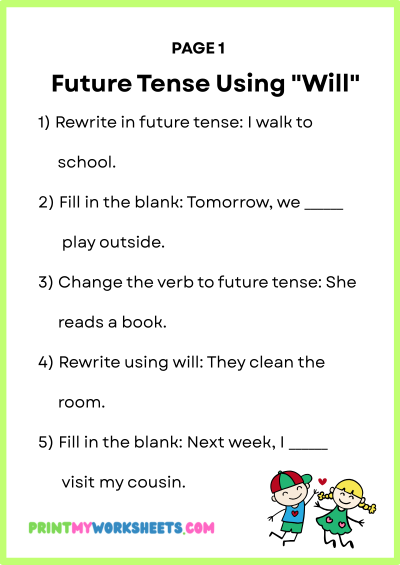
1st Grade Future Tense Worksheets PDF – Build Strong Sentence Writing Skills
1st Grade Future Tense Worksheets PDF
These worksheets are designed to help young learners understand how to talk and write about events that have not happened yet. These free downloadable PDF worksheets are perfect for US homeschool parents, first-grade teachers, and children building early grammar and sentence skills.
Future tense verbs help students express plans, goals, and upcoming actions using words like will and going to. Learning future tense is an important part of language development because it helps children communicate clearly about time and sequence. These worksheets introduce future tense concepts in a simple, age-appropriate way using familiar situations and easy sentence structures.
Understanding future tense improves sentence formation, storytelling, and reading comprehension. When students can recognize and use future tense correctly, their writing becomes clearer and more organized. These skills also support speaking confidence and classroom participation.
Each worksheet includes engaging activities such as identifying future tense verbs, completing sentences, matching actions to future events, and writing simple future-focused sentences. Repeated practice helps reinforce grammar skills and build confidence.
The printable PDF format makes these worksheets ideal for classroom grammar lessons, homeschooling routines, homework assignments, or independent practice at home. Whether introducing verb tenses for the first time or reinforcing learning, these worksheets provide an effective, engaging, and completely free resource aligned with US first-grade standards.
You may also like:
[gallery ids="6757,6764,6727"] 1st Grade Future Tense Worksheets PDF – Build Strong Sentence Writing Skills
1st Grade Future Tense Worksheets PDF
These worksheets are designed to help young learners understand how to talk and write about events that have not happened yet. These free downloadable PDF worksheets are perfect for US homeschool parents, first-grade teachers, and children building early grammar and sentence skills.
Future tense verbs help students express plans, goals, and upcoming actions using words like will and going to. Learning future tense is an important part of language development because it helps children communicate clearly about time and sequence. These worksheets introduce future tense concepts in a simple, age-appropriate way using familiar situations and easy sentence structures.
Understanding future tense improves sentence formation, storytelling, and reading comprehension. When students can recognize and use future tense correctly, their writing becomes clearer and more organized. These skills also support speaking confidence and classroom participation.
Each worksheet includes engaging activities such as identifying future tense verbs, completing sentences, matching actions to future events, and writing simple future-focused sentences. Repeated practice helps reinforce grammar skills and build confidence.
The printable PDF format makes these worksheets ideal for classroom grammar lessons, homeschooling routines, homework assignments, or independent practice at home. Whether introducing verb tenses for the first time or reinforcing learning, these worksheets provide an effective, engaging, and completely free resource aligned with US first-grade standards.
You may also like:
[gallery ids="6757,6764,6727"]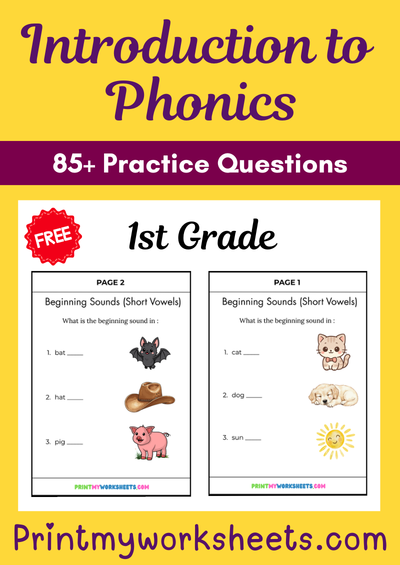
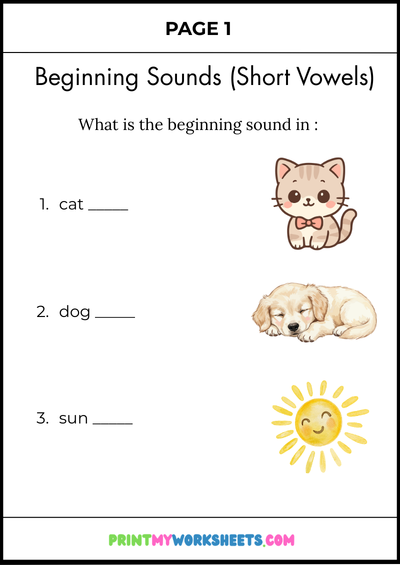
1st Grade Introduction to Phonics Worksheets PDF – Printable Beginner Reading Skills Practice with Answer Key
1st Grade Introduction to Phonics Worksheets PDF
The 1st Grade Introduction to Phonics Worksheets PDF is a structured literacy resource designed to help young learners build strong foundational reading skills. This free printable PDF is ideal for U.S. parents, teachers, and homeschool families who want clear, grade-appropriate phonics practice that supports early reading development.
In first grade, phonics instruction plays a critical role in helping students connect letters and sounds. Children learn how to decode words, blend sounds, and recognize spelling patterns. These essential skills allow students to move from simple word recognition to confident, independent reading.
This worksheet collection provides focused activities that reinforce phonemic awareness, decoding strategies, and word-building skills. With consistent practice, students strengthen their ability to read unfamiliar words accurately. The clear layout and simple directions make these worksheets easy to use in both classroom and home settings.
What Students Will Learn?
These first grade phonics worksheets are designed to build strong reading foundations through structured and engaging activities. Students will practice recognizing letter-sound relationships and applying phonics rules to decode words.
Through consistent practice, learners will:
-
Identify beginning, middle, and ending sounds
-
Blend consonant and vowel sounds to form words
-
Recognize common consonant blends and digraphs
-
Practice short and long vowel patterns
-
Read and write simple sentences using phonetic patterns
-
Strengthen spelling and decoding skills
The worksheets include a variety of activities such as matching sounds to pictures, filling in missing letters, circling correct word choices, and reading short passages. These exercises support structured learning while keeping tasks manageable and age-appropriate.
Aligned with U.S. first grade literacy standards, the activities gradually increase in difficulty. Students begin with simple sound recognition and progress toward blending and reading complete sentences. This step-by-step approach ensures steady skill development and reading confidence.
Educational Value & Skill Development
The 1st Grade Introduction to Phonics Worksheets PDF supports both academic and cognitive growth. Phonics instruction is essential in early elementary education because it provides students with tools to decode unfamiliar words independently.
Academically, strong phonics skills improve reading fluency and comprehension. When students can quickly recognize sound patterns, they spend less time struggling with individual words and more time understanding the text as a whole.
From a cognitive standpoint, phonics practice strengthens memory and pattern recognition. Students learn to identify recurring letter combinations and apply consistent rules. This structured thinking helps build logical reasoning skills.
Writing skills also improve as children connect sounds to spelling patterns. As students practice writing words that follow phonetic rules, they develop better spelling accuracy and sentence construction.
Confidence grows when learners successfully decode words on their own. Mastering phonics in first grade lays the foundation for long-term literacy success, preparing students for more advanced reading tasks in second grade and beyond.
Why Focus on Introduction to Phonics?
Phonics is a fundamental component of early reading instruction in U.S. elementary schools. First grade is a critical year for strengthening letter-sound relationships and building decoding skills.
When children understand how letters represent sounds, they gain independence as readers. Instead of memorizing words, they learn strategies for sounding out unfamiliar vocabulary. This empowers students to approach new texts with confidence.
Consistent practice is key. Repetition helps students internalize patterns such as consonant blends, vowel teams, and digraphs. Over time, decoding becomes automatic, which improves reading fluency.
Strong phonics skills also support writing development. Students who understand sound-letter relationships are better able to spell words correctly and construct complete sentences.
By focusing on phonics in first grade, educators and parents provide children with the essential tools needed for lifelong reading success.
How to Use These Worksheets?
The 1st Grade Introduction to Phonics Worksheets PDF can be used in classrooms, homeschool programs, and small-group instruction. Teachers may incorporate these worksheets into daily literacy centers, guided reading groups, or independent work time.
Homeschool families can use the pages as part of a structured reading routine. Reviewing sounds together before independent practice reinforces understanding and provides opportunities for discussion.
Because this resource is available as a free printable PDF, it can be downloaded and printed as needed. Families and educators may reprint worksheets for additional practice or review throughout the school year.
These worksheets are also helpful for reinforcement and intervention. Students who need extra support with blending sounds or recognizing vowel patterns can benefit from targeted practice. The clear, student-friendly layout allows young learners to work independently while building reading confidence.
Related Worksheets / Extensions:
You may also like:
-
1st grade sight word worksheets
-
CVC word practice pages
-
Beginning reading comprehension worksheets
-
Kindergarten phonics review worksheets
-
2nd grade spelling and word pattern worksheets
The 1st Grade Introduction to Phonics Worksheets PDF pairs well with additional early literacy resources that focus on vocabulary, spelling, and reading comprehension. Combining phonics instruction with sight word practice and guided reading activities creates a balanced literacy approach. With consistent practice and reinforcement, students develop the decoding skills and confidence needed for continued reading growth throughout elementary school.
You may also like:
[gallery ids="6974,6771,6832"] 1st Grade Introduction to Phonics Worksheets PDF – Printable Beginner Reading Skills Practice with Answer Key
1st Grade Introduction to Phonics Worksheets PDF
The 1st Grade Introduction to Phonics Worksheets PDF is a structured literacy resource designed to help young learners build strong foundational reading skills. This free printable PDF is ideal for U.S. parents, teachers, and homeschool families who want clear, grade-appropriate phonics practice that supports early reading development.
In first grade, phonics instruction plays a critical role in helping students connect letters and sounds. Children learn how to decode words, blend sounds, and recognize spelling patterns. These essential skills allow students to move from simple word recognition to confident, independent reading.
This worksheet collection provides focused activities that reinforce phonemic awareness, decoding strategies, and word-building skills. With consistent practice, students strengthen their ability to read unfamiliar words accurately. The clear layout and simple directions make these worksheets easy to use in both classroom and home settings.
What Students Will Learn?
These first grade phonics worksheets are designed to build strong reading foundations through structured and engaging activities. Students will practice recognizing letter-sound relationships and applying phonics rules to decode words.
Through consistent practice, learners will:
-
Identify beginning, middle, and ending sounds
-
Blend consonant and vowel sounds to form words
-
Recognize common consonant blends and digraphs
-
Practice short and long vowel patterns
-
Read and write simple sentences using phonetic patterns
-
Strengthen spelling and decoding skills
The worksheets include a variety of activities such as matching sounds to pictures, filling in missing letters, circling correct word choices, and reading short passages. These exercises support structured learning while keeping tasks manageable and age-appropriate.
Aligned with U.S. first grade literacy standards, the activities gradually increase in difficulty. Students begin with simple sound recognition and progress toward blending and reading complete sentences. This step-by-step approach ensures steady skill development and reading confidence.
Educational Value & Skill Development
The 1st Grade Introduction to Phonics Worksheets PDF supports both academic and cognitive growth. Phonics instruction is essential in early elementary education because it provides students with tools to decode unfamiliar words independently.
Academically, strong phonics skills improve reading fluency and comprehension. When students can quickly recognize sound patterns, they spend less time struggling with individual words and more time understanding the text as a whole.
From a cognitive standpoint, phonics practice strengthens memory and pattern recognition. Students learn to identify recurring letter combinations and apply consistent rules. This structured thinking helps build logical reasoning skills.
Writing skills also improve as children connect sounds to spelling patterns. As students practice writing words that follow phonetic rules, they develop better spelling accuracy and sentence construction.
Confidence grows when learners successfully decode words on their own. Mastering phonics in first grade lays the foundation for long-term literacy success, preparing students for more advanced reading tasks in second grade and beyond.
Why Focus on Introduction to Phonics?
Phonics is a fundamental component of early reading instruction in U.S. elementary schools. First grade is a critical year for strengthening letter-sound relationships and building decoding skills.
When children understand how letters represent sounds, they gain independence as readers. Instead of memorizing words, they learn strategies for sounding out unfamiliar vocabulary. This empowers students to approach new texts with confidence.
Consistent practice is key. Repetition helps students internalize patterns such as consonant blends, vowel teams, and digraphs. Over time, decoding becomes automatic, which improves reading fluency.
Strong phonics skills also support writing development. Students who understand sound-letter relationships are better able to spell words correctly and construct complete sentences.
By focusing on phonics in first grade, educators and parents provide children with the essential tools needed for lifelong reading success.
How to Use These Worksheets?
The 1st Grade Introduction to Phonics Worksheets PDF can be used in classrooms, homeschool programs, and small-group instruction. Teachers may incorporate these worksheets into daily literacy centers, guided reading groups, or independent work time.
Homeschool families can use the pages as part of a structured reading routine. Reviewing sounds together before independent practice reinforces understanding and provides opportunities for discussion.
Because this resource is available as a free printable PDF, it can be downloaded and printed as needed. Families and educators may reprint worksheets for additional practice or review throughout the school year.
These worksheets are also helpful for reinforcement and intervention. Students who need extra support with blending sounds or recognizing vowel patterns can benefit from targeted practice. The clear, student-friendly layout allows young learners to work independently while building reading confidence.
Related Worksheets / Extensions:
You may also like:
-
1st grade sight word worksheets
-
CVC word practice pages
-
Beginning reading comprehension worksheets
-
Kindergarten phonics review worksheets
-
2nd grade spelling and word pattern worksheets
The 1st Grade Introduction to Phonics Worksheets PDF pairs well with additional early literacy resources that focus on vocabulary, spelling, and reading comprehension. Combining phonics instruction with sight word practice and guided reading activities creates a balanced literacy approach. With consistent practice and reinforcement, students develop the decoding skills and confidence needed for continued reading growth throughout elementary school.
You may also like:
[gallery ids="6974,6771,6832"]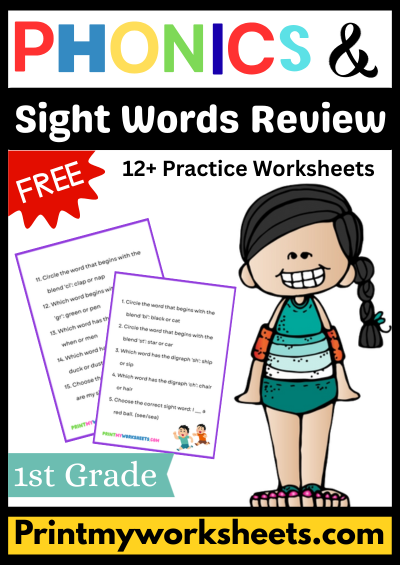
1st Grade Phonics and Sight Words Worksheets PDF – Build Early Literacy Confidence
1st Grade Phonics and Sight Words Worksheets PDF
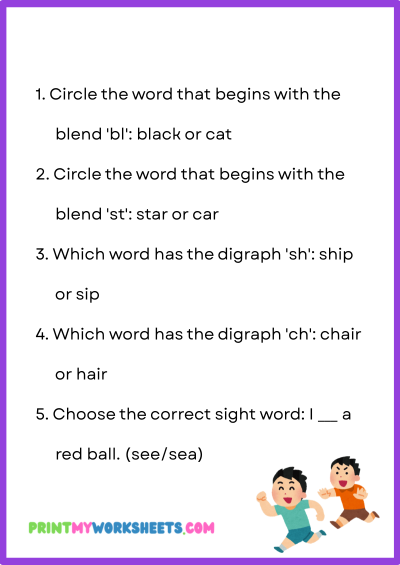
These worksheets are designed to help young learners strengthen early reading skills through structured and consistent practice. These free downloadable PDF worksheets are perfect for US homeschool parents, first-grade teachers, and students developing reading confidence.
Phonics helps children understand how letters and sounds work together, while sight words allow students to recognize frequently used words instantly. Reviewing both skills together builds reading fluency and comprehension. These worksheets provide balanced practice that reinforces decoding skills and automatic word recognition.
Learning phonics and sight words is essential for early reading success. When students can sound out words and quickly recognize common sight words, they read more smoothly and confidently. This allows them to focus on understanding the text rather than struggling with individual words. Strong phonics and sight word knowledge also supports spelling, writing, and vocabulary development.
Each worksheet includes engaging activities such as word matching, reading practice, fill-in-the-blanks, and sentence building. The review-based format helps reinforce previously learned skills and prevents learning gaps.
The printable PDF format makes these worksheets ideal for classroom literacy centers, homeschooling routines, homework assignments, or independent practice at home. Whether reinforcing daily lessons or preparing students for reading assessments, these worksheets provide an effective, engaging, and completely free resource aligned with US curriculum standards.
You may also like:
[gallery ids="6727,6714,6707"] 1st Grade Phonics and Sight Words Worksheets PDF – Build Early Literacy Confidence
1st Grade Phonics and Sight Words Worksheets PDF
These worksheets are designed to help young learners strengthen early reading skills through structured and consistent practice. These free downloadable PDF worksheets are perfect for US homeschool parents, first-grade teachers, and students developing reading confidence.
Phonics helps children understand how letters and sounds work together, while sight words allow students to recognize frequently used words instantly. Reviewing both skills together builds reading fluency and comprehension. These worksheets provide balanced practice that reinforces decoding skills and automatic word recognition.
Learning phonics and sight words is essential for early reading success. When students can sound out words and quickly recognize common sight words, they read more smoothly and confidently. This allows them to focus on understanding the text rather than struggling with individual words. Strong phonics and sight word knowledge also supports spelling, writing, and vocabulary development.
Each worksheet includes engaging activities such as word matching, reading practice, fill-in-the-blanks, and sentence building. The review-based format helps reinforce previously learned skills and prevents learning gaps.
The printable PDF format makes these worksheets ideal for classroom literacy centers, homeschooling routines, homework assignments, or independent practice at home. Whether reinforcing daily lessons or preparing students for reading assessments, these worksheets provide an effective, engaging, and completely free resource aligned with US curriculum standards.
You may also like:
[gallery ids="6727,6714,6707"]

1st Grade Reading Comprehension Fluency Worksheets PDF – Printable Practice for Building Reading Confidence
1st Grade Reading Comprehension Fluency Worksheets PDF
Helping young readers understand what they read is one of the most important goals of early elementary learning. These printable resources are designed to support that goal through structured, age-appropriate practice. The 1st Grade Reading Comprehension Fluency Worksheets PDF is created for U.S. parents, classroom teachers, and homeschool families who want simple, effective reading materials that fit easily into daily lessons.
This worksheet set focuses on building comprehension skills while also encouraging smooth, confident reading. At the first-grade level, students are moving from learning to read toward reading to learn. They need short passages, clear questions, and consistent practice to make that transition successful. These worksheets provide guided opportunities for students to read carefully, think about meaning, and respond in complete thoughts.
Whether used at home or in the classroom, these free printable pages support early literacy development in a way that feels manageable for young learners. The activities are aligned with U.S. educational expectations and help reinforce essential reading skills at a critical stage of academic growth.
What Students Will Learn?
These reading worksheets are designed to strengthen foundational comprehension skills while supporting fluency development. Students practice reading short passages that match first-grade reading levels, allowing them to focus on meaning without becoming overwhelmed by complex vocabulary or sentence structure.
Each activity encourages students to identify key details, understand the main idea, and make simple connections to the text. Question formats are varied to keep learners engaged and to support different learning styles. Some prompts ask students to recall facts directly from the passage, while others guide them to think a little deeper about what they read.
The worksheets also support structured learning by following a predictable format. This consistency helps students know what to expect, reducing frustration and building confidence. Teachers and parents can easily integrate these pages into lesson plans, literacy centers, or independent reading time.
By practicing regularly, students develop stronger reading habits and become more comfortable answering questions about text. These skills align with age-appropriate expectations for first grade and prepare students for more advanced reading tasks in later grades.
Educational Value & Skill Development
Strong reading comprehension skills are closely connected to long-term academic success. These worksheets help students build those skills through repeated, focused practice. By working with short passages and targeted questions, children learn to slow down, read carefully, and think about what the text is saying.
Using the 1st Grade Reading Comprehension Fluency Worksheets PDF regularly can support vocabulary growth, sentence understanding, and logical thinking. As students answer questions independently, they begin to develop confidence in their ability to understand written information. This confidence often carries over into other subject areas, including science and social studies, where reading comprehension is equally important.
The worksheets also support cognitive development by encouraging attention, memory, and reasoning. Students must remember details from the passage, follow instructions, and organize their responses. Over time, this process helps strengthen focus and persistence.
Because the activities are designed for independent or guided use, they also promote responsibility and self-directed learning. These habits are essential as students progress through elementary school and encounter more complex texts and assignments.
Why Focus on Reading Comprehension?
Reading comprehension is a foundational skill that supports nearly every area of learning. In first grade, students are expected not only to read words accurately but also to understand what those words mean together. Without strong comprehension skills, reading becomes a mechanical task rather than a meaningful one.
Focusing on comprehension at an early age helps students build the ability to follow instructions, answer questions accurately, and express their understanding clearly. These skills are essential for success in later grades, where reading demands increase across all subjects.
Repetition and guided practice play a key role in developing comprehension. When students regularly engage with short, manageable texts, they gain confidence and improve steadily. These worksheets provide that consistent practice in a structured format that supports early learning standards commonly used across the United States.
By strengthening comprehension skills now, students are better prepared for more advanced reading tasks, including longer passages, written responses, and critical thinking activities in future grades.
How to Use These Worksheets
These printable reading worksheets are flexible and easy to use in a variety of learning environments. In homeschool settings, they can be included as part of a daily reading routine or used for extra practice when a child needs reinforcement. Parents can review answers together with their child, encouraging discussion and deeper understanding.
In classrooms, teachers can use these pages for small group instruction, literacy centers, or independent work. The consistent structure makes them suitable for substitute plans or quick assessments. They are also helpful for review sessions before moving on to new reading skills.
The 1st Grade Reading Comprehension Fluency Worksheets PDF is available as a free printable PDF, making it easy to download and reuse as needed. Pages can be printed multiple times or placed in protective sleeves for repeated practice with dry-erase markers. This flexibility allows educators and families to adapt the worksheets to their specific needs.
Related Worksheets / Extensions:
1st Grade Reading Comprehension Fluency Worksheets PDF – Printable Practice for Building Reading Confidence
1st Grade Reading Comprehension Fluency Worksheets PDF
Helping young readers understand what they read is one of the most important goals of early elementary learning. These printable resources are designed to support that goal through structured, age-appropriate practice. The 1st Grade Reading Comprehension Fluency Worksheets PDF is created for U.S. parents, classroom teachers, and homeschool families who want simple, effective reading materials that fit easily into daily lessons.
This worksheet set focuses on building comprehension skills while also encouraging smooth, confident reading. At the first-grade level, students are moving from learning to read toward reading to learn. They need short passages, clear questions, and consistent practice to make that transition successful. These worksheets provide guided opportunities for students to read carefully, think about meaning, and respond in complete thoughts.
Whether used at home or in the classroom, these free printable pages support early literacy development in a way that feels manageable for young learners. The activities are aligned with U.S. educational expectations and help reinforce essential reading skills at a critical stage of academic growth.
What Students Will Learn?
These reading worksheets are designed to strengthen foundational comprehension skills while supporting fluency development. Students practice reading short passages that match first-grade reading levels, allowing them to focus on meaning without becoming overwhelmed by complex vocabulary or sentence structure.
Each activity encourages students to identify key details, understand the main idea, and make simple connections to the text. Question formats are varied to keep learners engaged and to support different learning styles. Some prompts ask students to recall facts directly from the passage, while others guide them to think a little deeper about what they read.
The worksheets also support structured learning by following a predictable format. This consistency helps students know what to expect, reducing frustration and building confidence. Teachers and parents can easily integrate these pages into lesson plans, literacy centers, or independent reading time.
By practicing regularly, students develop stronger reading habits and become more comfortable answering questions about text. These skills align with age-appropriate expectations for first grade and prepare students for more advanced reading tasks in later grades.
Educational Value & Skill Development
Strong reading comprehension skills are closely connected to long-term academic success. These worksheets help students build those skills through repeated, focused practice. By working with short passages and targeted questions, children learn to slow down, read carefully, and think about what the text is saying.
Using the 1st Grade Reading Comprehension Fluency Worksheets PDF regularly can support vocabulary growth, sentence understanding, and logical thinking. As students answer questions independently, they begin to develop confidence in their ability to understand written information. This confidence often carries over into other subject areas, including science and social studies, where reading comprehension is equally important.
The worksheets also support cognitive development by encouraging attention, memory, and reasoning. Students must remember details from the passage, follow instructions, and organize their responses. Over time, this process helps strengthen focus and persistence.
Because the activities are designed for independent or guided use, they also promote responsibility and self-directed learning. These habits are essential as students progress through elementary school and encounter more complex texts and assignments.
Why Focus on Reading Comprehension?
Reading comprehension is a foundational skill that supports nearly every area of learning. In first grade, students are expected not only to read words accurately but also to understand what those words mean together. Without strong comprehension skills, reading becomes a mechanical task rather than a meaningful one.
Focusing on comprehension at an early age helps students build the ability to follow instructions, answer questions accurately, and express their understanding clearly. These skills are essential for success in later grades, where reading demands increase across all subjects.
Repetition and guided practice play a key role in developing comprehension. When students regularly engage with short, manageable texts, they gain confidence and improve steadily. These worksheets provide that consistent practice in a structured format that supports early learning standards commonly used across the United States.
By strengthening comprehension skills now, students are better prepared for more advanced reading tasks, including longer passages, written responses, and critical thinking activities in future grades.
How to Use These Worksheets
These printable reading worksheets are flexible and easy to use in a variety of learning environments. In homeschool settings, they can be included as part of a daily reading routine or used for extra practice when a child needs reinforcement. Parents can review answers together with their child, encouraging discussion and deeper understanding.
In classrooms, teachers can use these pages for small group instruction, literacy centers, or independent work. The consistent structure makes them suitable for substitute plans or quick assessments. They are also helpful for review sessions before moving on to new reading skills.
The 1st Grade Reading Comprehension Fluency Worksheets PDF is available as a free printable PDF, making it easy to download and reuse as needed. Pages can be printed multiple times or placed in protective sleeves for repeated practice with dry-erase markers. This flexibility allows educators and families to adapt the worksheets to their specific needs.
Related Worksheets / Extensions:
1st Grade Sentence Writing and Fluency Worksheets PDF – Build Reading and Writing Confidence
1st Grade Sentence Writing and Fluency Worksheets PDF
Helping young learners express their ideas clearly in writing is an essential part of early literacy development. The 1st Grade Sentence Writing and Fluency Worksheets PDF is designed to support children as they learn how to form complete sentences and read them smoothly with confidence. Created for U.S. parents, classroom teachers, and homeschool families, this worksheet set provides structured, age-appropriate practice that fits naturally into first-grade literacy instruction.
In first grade, students transition from recognizing letters and words to writing simple, meaningful sentences. Developing sentence writing skills alongside reading fluency helps children communicate effectively and build a strong foundation for future reading and writing success. These printable worksheets guide students step by step as they practice sentence construction, spacing, punctuation, and reading with expression. With clear instructions and child-friendly layouts, this free printable PDF makes it easy to reinforce essential language arts skills in a supportive and engaging way.
What Students Will Learn?
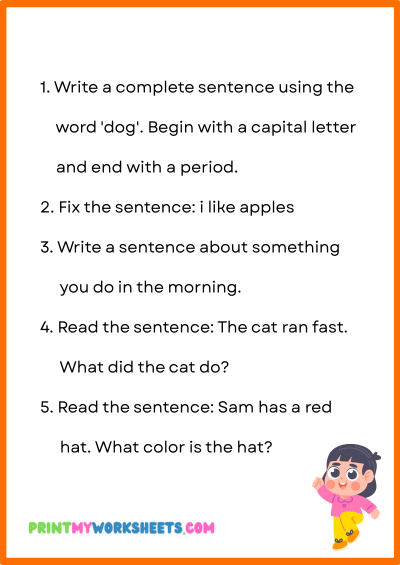
These worksheets focus on helping first graders understand how sentences work and how fluent reading supports comprehension. Students learn to identify what makes a complete sentence, including a clear subject, action, and proper ending punctuation. Through guided activities, children practice writing simple sentences using familiar vocabulary and sight words.
The worksheets include exercises that encourage students to read sentences aloud, improving pacing, accuracy, and expression. Activities may involve tracing sentences, rewriting them correctly, or choosing the best words to complete a thought. These tasks help reinforce sentence structure while strengthening reading fluency at the same time.
Designed with young learners in mind, the activities support structured learning without overwhelming students. Instructions are simple, visuals are clear, and tasks are broken into manageable steps. This approach aligns with first-grade expectations, where students are building confidence in both writing and reading. By practicing these skills together, learners begin to see how writing and reading work hand in hand.
Educational Value & Skill Development
Strong sentence writing and fluency skills play a vital role in early academic success, and the 1st Grade Sentence Writing and Fluency Worksheets PDF provides meaningful practice that supports multiple areas of development. Academically, these worksheets help students organize their thoughts, use correct grammar, and apply punctuation appropriately. Clear sentence writing also supports reading comprehension, as students better understand how ideas are connected in text.
From a cognitive standpoint, forming sentences strengthens memory, sequencing, and language processing skills. Reading sentences fluently requires children to recognize words automatically, freeing up mental energy to focus on meaning rather than decoding. This balance between writing and reading supports overall literacy growth.
Confidence and independence develop as students successfully complete tasks on their own. Repeated practice helps children internalize sentence patterns, making writing feel more natural and less intimidating. Over time, students progress from copying sentences to generating their own ideas in writing. This gradual skill development prepares learners for longer writing tasks and more advanced reading expectations in later grades.
Why Focus on Sentence Writing and Fluency?
Sentence writing and reading fluency are cornerstones of early language arts instruction. In first grade, students are expected to move beyond individual words and begin expressing complete thoughts in writing. Understanding how to form clear sentences helps children communicate ideas effectively and supports their overall language development.
Fluency is equally important because it allows students to read smoothly and with understanding. When children read fluently, they can focus on comprehension rather than struggling with each word. These skills work together, as writing reinforces reading patterns and reading strengthens writing awareness.
Repetition and guided practice are key to mastering these foundational skills. Worksheets provide consistent opportunities to practice sentence construction and fluent reading in a low-pressure setting. This approach aligns with U.S. early learning standards, which emphasize writing simple sentences, using correct conventions, and reading with accuracy and expression. Focusing on these skills early helps ensure long-term success in literacy.
How to Use These Worksheets?
These worksheets are designed to be flexible and easy to use across different learning environments. In classrooms, teachers can incorporate them into daily language arts lessons, literacy centers, or small-group instruction. They also work well as morning work or independent practice activities that reinforce previously taught skills.
For homeschool families, the worksheets provide a clear structure for practicing sentence writing and reading fluency at home. Parents can work alongside their child to model sentence reading or allow students to complete pages independently as confidence grows.
The 1st Grade Sentence Writing and Fluency Worksheets PDF is offered as a free printable PDF, making it simple to download and print as needed. Pages can be reused for review throughout the year or selected to target specific skills. This flexibility allows educators and families to adapt instruction to each child’s pace and learning style.
Related Worksheets / Extensions:
You may also like:
[gallery ids="6757,6727,6704"] 1st Grade Sentence Writing and Fluency Worksheets PDF – Build Reading and Writing Confidence
1st Grade Sentence Writing and Fluency Worksheets PDF
Helping young learners express their ideas clearly in writing is an essential part of early literacy development. The 1st Grade Sentence Writing and Fluency Worksheets PDF is designed to support children as they learn how to form complete sentences and read them smoothly with confidence. Created for U.S. parents, classroom teachers, and homeschool families, this worksheet set provides structured, age-appropriate practice that fits naturally into first-grade literacy instruction.
In first grade, students transition from recognizing letters and words to writing simple, meaningful sentences. Developing sentence writing skills alongside reading fluency helps children communicate effectively and build a strong foundation for future reading and writing success. These printable worksheets guide students step by step as they practice sentence construction, spacing, punctuation, and reading with expression. With clear instructions and child-friendly layouts, this free printable PDF makes it easy to reinforce essential language arts skills in a supportive and engaging way.
What Students Will Learn?
These worksheets focus on helping first graders understand how sentences work and how fluent reading supports comprehension. Students learn to identify what makes a complete sentence, including a clear subject, action, and proper ending punctuation. Through guided activities, children practice writing simple sentences using familiar vocabulary and sight words.
The worksheets include exercises that encourage students to read sentences aloud, improving pacing, accuracy, and expression. Activities may involve tracing sentences, rewriting them correctly, or choosing the best words to complete a thought. These tasks help reinforce sentence structure while strengthening reading fluency at the same time.
Designed with young learners in mind, the activities support structured learning without overwhelming students. Instructions are simple, visuals are clear, and tasks are broken into manageable steps. This approach aligns with first-grade expectations, where students are building confidence in both writing and reading. By practicing these skills together, learners begin to see how writing and reading work hand in hand.
Educational Value & Skill Development
Strong sentence writing and fluency skills play a vital role in early academic success, and the 1st Grade Sentence Writing and Fluency Worksheets PDF provides meaningful practice that supports multiple areas of development. Academically, these worksheets help students organize their thoughts, use correct grammar, and apply punctuation appropriately. Clear sentence writing also supports reading comprehension, as students better understand how ideas are connected in text.
From a cognitive standpoint, forming sentences strengthens memory, sequencing, and language processing skills. Reading sentences fluently requires children to recognize words automatically, freeing up mental energy to focus on meaning rather than decoding. This balance between writing and reading supports overall literacy growth.
Confidence and independence develop as students successfully complete tasks on their own. Repeated practice helps children internalize sentence patterns, making writing feel more natural and less intimidating. Over time, students progress from copying sentences to generating their own ideas in writing. This gradual skill development prepares learners for longer writing tasks and more advanced reading expectations in later grades.
Why Focus on Sentence Writing and Fluency?
Sentence writing and reading fluency are cornerstones of early language arts instruction. In first grade, students are expected to move beyond individual words and begin expressing complete thoughts in writing. Understanding how to form clear sentences helps children communicate ideas effectively and supports their overall language development.
Fluency is equally important because it allows students to read smoothly and with understanding. When children read fluently, they can focus on comprehension rather than struggling with each word. These skills work together, as writing reinforces reading patterns and reading strengthens writing awareness.
Repetition and guided practice are key to mastering these foundational skills. Worksheets provide consistent opportunities to practice sentence construction and fluent reading in a low-pressure setting. This approach aligns with U.S. early learning standards, which emphasize writing simple sentences, using correct conventions, and reading with accuracy and expression. Focusing on these skills early helps ensure long-term success in literacy.
How to Use These Worksheets?
These worksheets are designed to be flexible and easy to use across different learning environments. In classrooms, teachers can incorporate them into daily language arts lessons, literacy centers, or small-group instruction. They also work well as morning work or independent practice activities that reinforce previously taught skills.
For homeschool families, the worksheets provide a clear structure for practicing sentence writing and reading fluency at home. Parents can work alongside their child to model sentence reading or allow students to complete pages independently as confidence grows.
The 1st Grade Sentence Writing and Fluency Worksheets PDF is offered as a free printable PDF, making it simple to download and print as needed. Pages can be reused for review throughout the year or selected to target specific skills. This flexibility allows educators and families to adapt instruction to each child’s pace and learning style.
Related Worksheets / Extensions:
You may also like:
[gallery ids="6757,6727,6704"]
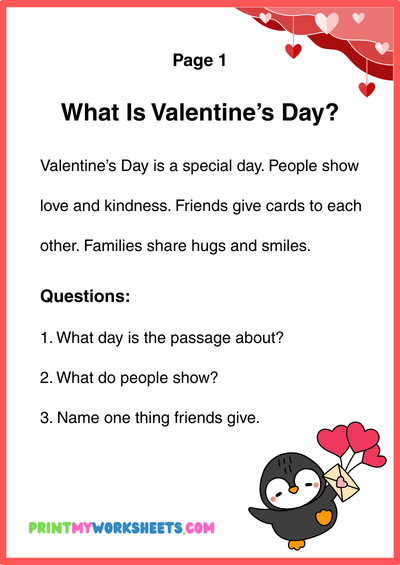
1st Grade Valentine’s Day Reading Worksheets PDF – Phonics, Comprehension & February Literacy Activities
1st Grade Valentine’s Day Reading Worksheets PDF
Seasonal themes can make reading practice more engaging while still supporting important academic goals. These 1st Grade Valentine’s Day Reading Worksheets PDF are designed to help young readers strengthen essential literacy skills through age-appropriate, structured activities. Created for U.S. parents, classroom teachers, and homeschool families, this free printable resource blends meaningful reading practice with a familiar holiday theme that keeps students interested and focused.
In first grade, children move beyond basic decoding and begin developing reading fluency, comprehension, and confidence. Consistent practice with short passages, phonics-based activities, and simple comprehension tasks helps reinforce these skills. Valentine’s Day-themed worksheets provide a fresh way to revisit reading concepts without disrupting established routines. This printable set supports daily literacy instruction, review, or extra practice while keeping learning calm, purposeful, and developmentally appropriate for first-grade learners.
What Students Will Learn ?
This worksheet set is designed to support first-grade reading development through structured, skill-focused activities. Students will practice reading short passages, identifying key details, and responding to simple questions that check understanding. These activities help strengthen decoding skills, fluency, and early comprehension.
The worksheets include a variety of reading tasks that encourage students to engage with text in meaningful ways. Learners may read short sentences or passages, answer comprehension questions, and practice phonics-based skills aligned with first-grade expectations. Each activity focuses on one objective at a time, helping students stay focused and successful.
The layout and content are carefully designed for first graders. Instructions are clear, text is readable, and tasks are manageable for independent or guided practice. These worksheets fit well within U.S. first-grade literacy goals by reinforcing foundational reading skills while gently introducing higher-level thinking, such as recalling details and understanding simple story elements.
Educational Value & Skill Development
Reading worksheets play an important role in reinforcing classroom instruction, and the 1st Grade Valentine’s Day Reading Worksheets PDF offer meaningful educational value beyond seasonal appeal. Academically, these worksheets support reading fluency by giving students repeated exposure to age-appropriate text. As children practice reading smoothly and accurately, they build confidence and stamina.
Cognitively, reading activities encourage focus, memory, and comprehension. Students learn to process information, recall details, and make simple connections within a text. These skills are essential for success in all subject areas as reading becomes a primary way students access information.
Using the 1st Grade Valentine’s Day Reading Worksheets PDF also supports independence. Familiar formats and predictable routines help students understand expectations and complete tasks with less assistance. Over time, this independence contributes to stronger self-confidence and a positive attitude toward reading. The progression of activities supports skill growth from basic decoding to more thoughtful engagement with text, preparing students for the increasing reading demands of later grades.
Why Focus on 1st Grade Valentine’s Day Reading Worksheets ?
Why Focus on 1st Grade Valentine’s Day Reading Worksheets? First grade is a critical year for reading development. Students are expected to move from learning to read toward reading with purpose and understanding. Focused reading practice helps solidify this transition.
Holiday-themed worksheets provide an opportunity to revisit core skills while maintaining student interest. Valentine’s Day themes feel familiar and enjoyable, which can help reduce resistance to practice and encourage participation. When students are engaged, they are more likely to complete tasks carefully and retain what they learn.
Repetition and guided practice are essential for developing fluency and comprehension. Reading skills improve when students interact with text regularly in structured ways. These worksheets align with early learning standards commonly used in U.S. schools by reinforcing phonics, fluency, and comprehension skills. Consistent reading practice at this stage builds a strong foundation for second grade and supports long-term academic success.
How to Use These Worksheets ?
These worksheets are flexible and easy to use in different learning environments. In homeschool settings, parents can include them as part of a daily reading routine or use them as seasonal enrichment. In classrooms, teachers may use the pages for morning work, literacy centers, small-group instruction, or independent practice.
The worksheets are also effective for review and reinforcement. Students can revisit reading concepts they have already learned, helping strengthen retention through repeated exposure. Because the resource is offered as a free printable PDF, it is easy to download and print as needed. Pages can be reused by placing them in sheet protectors or laminating for continued practice.
For educators and families looking for themed reading support, 1st Grade Valentine’s Day Reading Worksheets PDF provide a simple, practical way to reinforce literacy skills while keeping instruction engaging and purposeful.
What’s Included in This PDF ?
This printable worksheet set is designed to support first-grade reading instruction in a clear and organized way. Each page focuses on meaningful skill practice without unnecessary distractions. Inside this PDF, you’ll find:
-
Multiple printable worksheets focused on first-grade reading skills
-
Short reading passages with comprehension activities
-
Phonics and reading-based exercises appropriate for first grade
-
A clean, kid-friendly layout that supports focus
-
Black-and-white, print-friendly pages
-
Worksheets aligned with U.S. first-grade curriculum expectations
-
A free downloadable PDF format for convenient access
You may also like:
[gallery ids="6771,6764,6832"]Related Worksheets / Extensions :
To extend learning beyond this set, consider pairing these worksheets with additional first-grade literacy resources. Phonics review pages, sight word practice, or simple writing prompts can complement reading instruction and support balanced literacy development.
You may also explore similar seasonal or holiday-themed reading printables for different times of the year. Resources like 1st Grade Valentine’s Day Reading Worksheets PDF work well alongside year-round reading practice, helping students strengthen comprehension and fluency through consistent, engaging activities that support ongoing reading growth.
1st Grade Valentine’s Day Reading Worksheets PDF – Phonics, Comprehension & February Literacy Activities
1st Grade Valentine’s Day Reading Worksheets PDF
Seasonal themes can make reading practice more engaging while still supporting important academic goals. These 1st Grade Valentine’s Day Reading Worksheets PDF are designed to help young readers strengthen essential literacy skills through age-appropriate, structured activities. Created for U.S. parents, classroom teachers, and homeschool families, this free printable resource blends meaningful reading practice with a familiar holiday theme that keeps students interested and focused.
In first grade, children move beyond basic decoding and begin developing reading fluency, comprehension, and confidence. Consistent practice with short passages, phonics-based activities, and simple comprehension tasks helps reinforce these skills. Valentine’s Day-themed worksheets provide a fresh way to revisit reading concepts without disrupting established routines. This printable set supports daily literacy instruction, review, or extra practice while keeping learning calm, purposeful, and developmentally appropriate for first-grade learners.
What Students Will Learn ?
This worksheet set is designed to support first-grade reading development through structured, skill-focused activities. Students will practice reading short passages, identifying key details, and responding to simple questions that check understanding. These activities help strengthen decoding skills, fluency, and early comprehension.
The worksheets include a variety of reading tasks that encourage students to engage with text in meaningful ways. Learners may read short sentences or passages, answer comprehension questions, and practice phonics-based skills aligned with first-grade expectations. Each activity focuses on one objective at a time, helping students stay focused and successful.
The layout and content are carefully designed for first graders. Instructions are clear, text is readable, and tasks are manageable for independent or guided practice. These worksheets fit well within U.S. first-grade literacy goals by reinforcing foundational reading skills while gently introducing higher-level thinking, such as recalling details and understanding simple story elements.
Educational Value & Skill Development
Reading worksheets play an important role in reinforcing classroom instruction, and the 1st Grade Valentine’s Day Reading Worksheets PDF offer meaningful educational value beyond seasonal appeal. Academically, these worksheets support reading fluency by giving students repeated exposure to age-appropriate text. As children practice reading smoothly and accurately, they build confidence and stamina.
Cognitively, reading activities encourage focus, memory, and comprehension. Students learn to process information, recall details, and make simple connections within a text. These skills are essential for success in all subject areas as reading becomes a primary way students access information.
Using the 1st Grade Valentine’s Day Reading Worksheets PDF also supports independence. Familiar formats and predictable routines help students understand expectations and complete tasks with less assistance. Over time, this independence contributes to stronger self-confidence and a positive attitude toward reading. The progression of activities supports skill growth from basic decoding to more thoughtful engagement with text, preparing students for the increasing reading demands of later grades.
Why Focus on 1st Grade Valentine’s Day Reading Worksheets ?
Why Focus on 1st Grade Valentine’s Day Reading Worksheets? First grade is a critical year for reading development. Students are expected to move from learning to read toward reading with purpose and understanding. Focused reading practice helps solidify this transition.
Holiday-themed worksheets provide an opportunity to revisit core skills while maintaining student interest. Valentine’s Day themes feel familiar and enjoyable, which can help reduce resistance to practice and encourage participation. When students are engaged, they are more likely to complete tasks carefully and retain what they learn.
Repetition and guided practice are essential for developing fluency and comprehension. Reading skills improve when students interact with text regularly in structured ways. These worksheets align with early learning standards commonly used in U.S. schools by reinforcing phonics, fluency, and comprehension skills. Consistent reading practice at this stage builds a strong foundation for second grade and supports long-term academic success.
How to Use These Worksheets ?
These worksheets are flexible and easy to use in different learning environments. In homeschool settings, parents can include them as part of a daily reading routine or use them as seasonal enrichment. In classrooms, teachers may use the pages for morning work, literacy centers, small-group instruction, or independent practice.
The worksheets are also effective for review and reinforcement. Students can revisit reading concepts they have already learned, helping strengthen retention through repeated exposure. Because the resource is offered as a free printable PDF, it is easy to download and print as needed. Pages can be reused by placing them in sheet protectors or laminating for continued practice.
For educators and families looking for themed reading support, 1st Grade Valentine’s Day Reading Worksheets PDF provide a simple, practical way to reinforce literacy skills while keeping instruction engaging and purposeful.
What’s Included in This PDF ?
This printable worksheet set is designed to support first-grade reading instruction in a clear and organized way. Each page focuses on meaningful skill practice without unnecessary distractions. Inside this PDF, you’ll find:
-
Multiple printable worksheets focused on first-grade reading skills
-
Short reading passages with comprehension activities
-
Phonics and reading-based exercises appropriate for first grade
-
A clean, kid-friendly layout that supports focus
-
Black-and-white, print-friendly pages
-
Worksheets aligned with U.S. first-grade curriculum expectations
-
A free downloadable PDF format for convenient access
You may also like:
[gallery ids="6771,6764,6832"]Related Worksheets / Extensions :
To extend learning beyond this set, consider pairing these worksheets with additional first-grade literacy resources. Phonics review pages, sight word practice, or simple writing prompts can complement reading instruction and support balanced literacy development.
You may also explore similar seasonal or holiday-themed reading printables for different times of the year. Resources like 1st Grade Valentine’s Day Reading Worksheets PDF work well alongside year-round reading practice, helping students strengthen comprehension and fluency through consistent, engaging activities that support ongoing reading growth.


2nd Grade Action and Helping Verbs Worksheets PDF – Build Stronger Sentences and Writing Skills
2nd Grade Action and Helping Verbs Worksheets PDF
Understanding how verbs work is an essential part of early grammar development, especially as students begin writing and reading more complete sentences. The 2nd Grade Action and Helping Verbs Worksheets PDF is designed to help young learners clearly understand the difference between action verbs and helping verbs through structured, age-appropriate practice. This printable worksheet set is created for U.S. parents, classroom teachers, and homeschool families who want to support strong language foundations at home or school.
In second grade, students move beyond basic sentence recognition and begin learning how words work together to show action and time. Action and helping verbs play a major role in sentence meaning and fluency. These worksheets introduce verbs in a simple, guided way that builds confidence without overwhelming learners. With a clean layout and engaging activities, this free printable PDF helps students strengthen grammar skills while improving reading comprehension and writing clarity during a critical stage of language development.
What Students Will Learn?
These worksheets focus on helping students understand what verbs are and how they function in sentences. Learners begin by identifying action verbs, which show what someone or something is doing, such as run, jump, or write. They also explore helping verbs, which work with main verbs to show time or add meaning, such as is, are, was, and were.
Activities are designed to move step by step from recognition to application. Students may circle verbs in sentences, match verbs to pictures, or choose the correct verb to complete a sentence. Some activities guide students to identify when a sentence needs a helping verb and how it works with an action verb.
The worksheets support structured learning with clear instructions and predictable formats. This consistency helps second-grade students stay focused and confident. The activities align with grade-level expectations by strengthening sentence structure, grammar awareness, and reading comprehension. Through regular practice, students gain a stronger understanding of how verbs work and begin using them correctly in their own writing.
Educational Value & Skill Development
Strong verb knowledge supports both reading and writing development. The 2nd Grade Action and Helping Verbs Worksheets PDF helps students understand how actions and verb phrases shape sentence meaning. When students recognize verbs accurately, they are better able to understand what is happening in a story or informational text.
These worksheets also support cognitive development by encouraging students to analyze sentence structure and context. Choosing the correct verb requires attention, reasoning, and understanding of time and action. This kind of thinking builds important language-processing skills.
Confidence and independence grow as students successfully complete grammar tasks. Repeated exposure to familiar sentence patterns helps learners feel comfortable identifying and using verbs correctly. Over time, students begin to apply these skills naturally in both speaking and writing.
Skill progression is carefully supported. Mastering action and helping verbs in second grade prepares students for more advanced grammar concepts in later grades, including verb tenses, subject-verb agreement, and sentence expansion. These worksheets help build a solid foundation for long-term language success.
Why Focus on Action and Helping Verbs?
Verbs are the heart of every sentence. Without a clear understanding of verbs, students may struggle to express ideas accurately or understand what they read. In second grade, students begin working with longer sentences and more detailed writing, making verb knowledge especially important.
Action verbs help students describe what is happening, while helping verbs add important details about time and meaning. Learning how these verbs work together allows students to form clearer, more complete sentences. This skill directly supports reading fluency, writing development, and oral communication.
Repetition and guided practice are key to mastering grammar concepts at this age. Worksheets provide a structured way for students to practice identifying and using verbs in different contexts. These activities align with U.S. language arts standards, which emphasize grammar usage, sentence structure, and clarity in early elementary grades. By focusing on verbs now, students build confidence and readiness for more complex grammar and writing tasks in the future.
How to Use These Worksheets?
These printable grammar worksheets are flexible and easy to use in a variety of learning settings. In homeschool environments, they can be included as part of a daily language arts routine or used for focused practice when a child needs extra support with verbs. Parents can review answers with students and talk about why certain verbs are correct.
In classrooms, teachers may use the worksheets during whole-group lessons, small-group instruction, literacy centers, or independent work time. They also work well for homework assignments or quick reviews before assessments.
The 2nd Grade Action and Helping Verbs Worksheets PDF is available as a free printable PDF, making it simple to download and reuse throughout the school year. Pages can be printed multiple times or placed in sheet protectors for repeated practice. This reusability allows educators to provide consistent reinforcement while adjusting instruction to meet different learning needs.
Related Worksheets / Extensions:
To continue strengthening grammar skills, you may also explore worksheets focused on nouns, adjectives, adverbs, and sentence structure. These topics help students understand how different parts of speech work together. Reading comprehension activities that highlight verb usage can also support real-world application.
The 2nd Grade Action and Helping Verbs Worksheets PDF pairs well with first-grade verb review worksheets for reinforcement and third-grade grammar worksheets for extension. Using related resources across grade levels helps students build consistency, strengthen retention, and gain confidence in their language skills as they continue to grow.
You may also like:
[gallery ids="6491,5883,6458"] 2nd Grade Action and Helping Verbs Worksheets PDF – Build Stronger Sentences and Writing Skills
2nd Grade Action and Helping Verbs Worksheets PDF
Understanding how verbs work is an essential part of early grammar development, especially as students begin writing and reading more complete sentences. The 2nd Grade Action and Helping Verbs Worksheets PDF is designed to help young learners clearly understand the difference between action verbs and helping verbs through structured, age-appropriate practice. This printable worksheet set is created for U.S. parents, classroom teachers, and homeschool families who want to support strong language foundations at home or school.
In second grade, students move beyond basic sentence recognition and begin learning how words work together to show action and time. Action and helping verbs play a major role in sentence meaning and fluency. These worksheets introduce verbs in a simple, guided way that builds confidence without overwhelming learners. With a clean layout and engaging activities, this free printable PDF helps students strengthen grammar skills while improving reading comprehension and writing clarity during a critical stage of language development.
What Students Will Learn?
These worksheets focus on helping students understand what verbs are and how they function in sentences. Learners begin by identifying action verbs, which show what someone or something is doing, such as run, jump, or write. They also explore helping verbs, which work with main verbs to show time or add meaning, such as is, are, was, and were.
Activities are designed to move step by step from recognition to application. Students may circle verbs in sentences, match verbs to pictures, or choose the correct verb to complete a sentence. Some activities guide students to identify when a sentence needs a helping verb and how it works with an action verb.
The worksheets support structured learning with clear instructions and predictable formats. This consistency helps second-grade students stay focused and confident. The activities align with grade-level expectations by strengthening sentence structure, grammar awareness, and reading comprehension. Through regular practice, students gain a stronger understanding of how verbs work and begin using them correctly in their own writing.
Educational Value & Skill Development
Strong verb knowledge supports both reading and writing development. The 2nd Grade Action and Helping Verbs Worksheets PDF helps students understand how actions and verb phrases shape sentence meaning. When students recognize verbs accurately, they are better able to understand what is happening in a story or informational text.
These worksheets also support cognitive development by encouraging students to analyze sentence structure and context. Choosing the correct verb requires attention, reasoning, and understanding of time and action. This kind of thinking builds important language-processing skills.
Confidence and independence grow as students successfully complete grammar tasks. Repeated exposure to familiar sentence patterns helps learners feel comfortable identifying and using verbs correctly. Over time, students begin to apply these skills naturally in both speaking and writing.
Skill progression is carefully supported. Mastering action and helping verbs in second grade prepares students for more advanced grammar concepts in later grades, including verb tenses, subject-verb agreement, and sentence expansion. These worksheets help build a solid foundation for long-term language success.
Why Focus on Action and Helping Verbs?
Verbs are the heart of every sentence. Without a clear understanding of verbs, students may struggle to express ideas accurately or understand what they read. In second grade, students begin working with longer sentences and more detailed writing, making verb knowledge especially important.
Action verbs help students describe what is happening, while helping verbs add important details about time and meaning. Learning how these verbs work together allows students to form clearer, more complete sentences. This skill directly supports reading fluency, writing development, and oral communication.
Repetition and guided practice are key to mastering grammar concepts at this age. Worksheets provide a structured way for students to practice identifying and using verbs in different contexts. These activities align with U.S. language arts standards, which emphasize grammar usage, sentence structure, and clarity in early elementary grades. By focusing on verbs now, students build confidence and readiness for more complex grammar and writing tasks in the future.
How to Use These Worksheets?
These printable grammar worksheets are flexible and easy to use in a variety of learning settings. In homeschool environments, they can be included as part of a daily language arts routine or used for focused practice when a child needs extra support with verbs. Parents can review answers with students and talk about why certain verbs are correct.
In classrooms, teachers may use the worksheets during whole-group lessons, small-group instruction, literacy centers, or independent work time. They also work well for homework assignments or quick reviews before assessments.
The 2nd Grade Action and Helping Verbs Worksheets PDF is available as a free printable PDF, making it simple to download and reuse throughout the school year. Pages can be printed multiple times or placed in sheet protectors for repeated practice. This reusability allows educators to provide consistent reinforcement while adjusting instruction to meet different learning needs.
Related Worksheets / Extensions:
To continue strengthening grammar skills, you may also explore worksheets focused on nouns, adjectives, adverbs, and sentence structure. These topics help students understand how different parts of speech work together. Reading comprehension activities that highlight verb usage can also support real-world application.
The 2nd Grade Action and Helping Verbs Worksheets PDF pairs well with first-grade verb review worksheets for reinforcement and third-grade grammar worksheets for extension. Using related resources across grade levels helps students build consistency, strengthen retention, and gain confidence in their language skills as they continue to grow.
You may also like:
[gallery ids="6491,5883,6458"]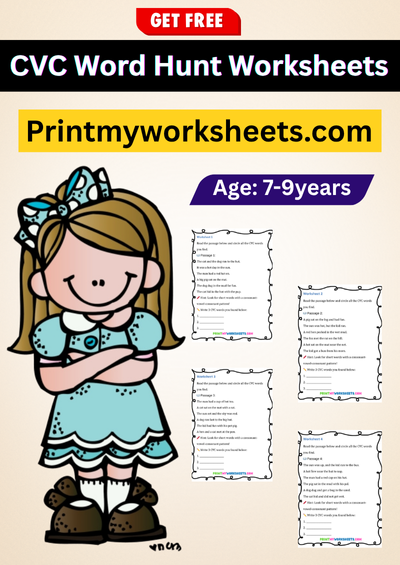
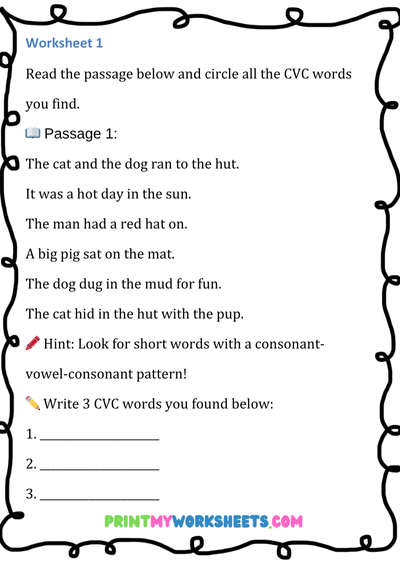
2nd Grade CVC Word Hunt Worksheets PDF – Phonics Word Search Practice Pack
Help your child strengthen reading and spelling skills with our 2nd Grade CVC Word Hunt Worksheets PDF, thoughtfully designed for US homeschool parents, teachers, and classrooms.
These engaging worksheets focus on CVC words (Consonant-Vowel-Consonant)—the building blocks of early reading. Children will search, identify, and write simple three-letter words such as cat, bed, pig, sun, and dog. Each page features fun word hunt activities, letter recognition tasks, and writing practice that promote phonemic awareness, spelling accuracy, and vocabulary growth.
Why are CVC Word Hunt Worksheets important? At this stage, kids are transitioning from phonics practice to independent reading. Learning to decode and recognize CVC words helps them understand sound patterns, improve pronunciation, and boost reading confidence. Word hunts add an interactive, game-like approach that keeps students motivated while reinforcing critical literacy skills.
Perfect for classroom centers, homeschool practice, or independent reading exercises, this free printable PDF is easy to download, print, and use anytime.
Download and print today to give your little learners the head start they deserve!
You may also like:
[caption id="attachment_6458" align="alignnone" width="212"] 2nd Grade Thanksgiving Compound Words Worksheets PDF[/caption]
[caption id="attachment_5351" align="alignnone" width="212"]
2nd Grade Thanksgiving Compound Words Worksheets PDF[/caption]
[caption id="attachment_5351" align="alignnone" width="212"] 2nd Grade Word Problem Worksheets PDF[/caption]
[caption id="attachment_5320" align="alignnone" width="212"]
2nd Grade Word Problem Worksheets PDF[/caption]
[caption id="attachment_5320" align="alignnone" width="212"] 2nd Grade Reading Comprehension Worksheets PDF[/caption]
[caption id="attachment_6491" align="alignnone" width="212"]
2nd Grade Reading Comprehension Worksheets PDF[/caption]
[caption id="attachment_6491" align="alignnone" width="212"] 2nd Grade Thanksgiving CVC Word Fill in the blank Worksheets PDF[/caption]
 2nd Grade CVC Word Hunt Worksheets PDF – Phonics Word Search Practice Pack
Help your child strengthen reading and spelling skills with our 2nd Grade CVC Word Hunt Worksheets PDF, thoughtfully designed for US homeschool parents, teachers, and classrooms.
These engaging worksheets focus on CVC words (Consonant-Vowel-Consonant)—the building blocks of early reading. Children will search, identify, and write simple three-letter words such as cat, bed, pig, sun, and dog. Each page features fun word hunt activities, letter recognition tasks, and writing practice that promote phonemic awareness, spelling accuracy, and vocabulary growth.
Why are CVC Word Hunt Worksheets important? At this stage, kids are transitioning from phonics practice to independent reading. Learning to decode and recognize CVC words helps them understand sound patterns, improve pronunciation, and boost reading confidence. Word hunts add an interactive, game-like approach that keeps students motivated while reinforcing critical literacy skills.
Perfect for classroom centers, homeschool practice, or independent reading exercises, this free printable PDF is easy to download, print, and use anytime.
Download and print today to give your little learners the head start they deserve!
You may also like:
[caption id="attachment_6458" align="alignnone" width="212"] 2nd Grade Thanksgiving Compound Words Worksheets PDF[/caption]
[caption id="attachment_5351" align="alignnone" width="212"] 2nd Grade Word Problem Worksheets PDF[/caption]
[caption id="attachment_5320" align="alignnone" width="212"] 2nd Grade Reading Comprehension Worksheets PDF[/caption]
[caption id="attachment_6491" align="alignnone" width="212"] 2nd Grade Thanksgiving CVC Word Fill in the blank Worksheets PDF[/caption]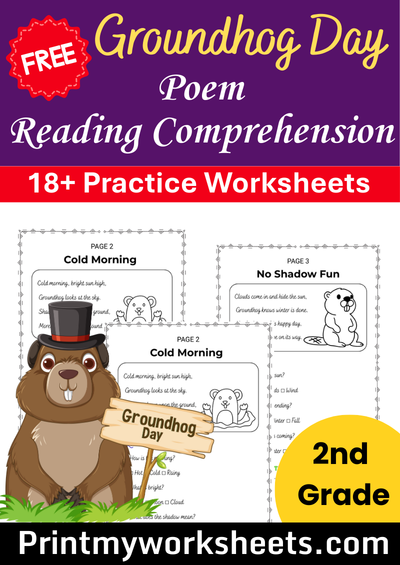
2nd Grade Groundhog Day Poem Reading Worksheet PDF – February Poetry Comprehension and Fluency Practice
Celebrate seasonal learning with our 2nd Grade Groundhog Day Poem Reading Comprehension Worksheets, designed to build early literacy skills through fun, rhythmic poetry. These free downloadable PDF worksheets are perfect for US homeschool parents, classroom teachers, and young learners looking for engaging holiday-themed reading practice.
Poem-based reading comprehension helps children develop fluency, rhythm, and expression while improving their ability to understand meaning, vocabulary, and story elements. Groundhog Day poems make reading enjoyable and relatable, encouraging students to connect with text through seasonal themes and predictable patterns.
These worksheets guide students to read short poems and answer comprehension questions that focus on identifying main ideas, understanding details, sequencing events, and recognizing rhyming words. Poetry also supports listening skills and builds confidence for reluctant readers by using shorter, engaging text.
Ideal for literacy centers, morning work, independent practice, classroom celebrations, or homeschool lessons, these worksheets align with US curriculum standards for second grade. Download instantly, print easily, and give students a creative way to strengthen reading comprehension while enjoying Groundhog Day—completely free and ready to use.
You may also like:
[gallery ids="6854,6861,6869"] 2nd Grade Groundhog Day Poem Reading Worksheet PDF – February Poetry Comprehension and Fluency Practice
Celebrate seasonal learning with our 2nd Grade Groundhog Day Poem Reading Comprehension Worksheets, designed to build early literacy skills through fun, rhythmic poetry. These free downloadable PDF worksheets are perfect for US homeschool parents, classroom teachers, and young learners looking for engaging holiday-themed reading practice.
Poem-based reading comprehension helps children develop fluency, rhythm, and expression while improving their ability to understand meaning, vocabulary, and story elements. Groundhog Day poems make reading enjoyable and relatable, encouraging students to connect with text through seasonal themes and predictable patterns.
These worksheets guide students to read short poems and answer comprehension questions that focus on identifying main ideas, understanding details, sequencing events, and recognizing rhyming words. Poetry also supports listening skills and builds confidence for reluctant readers by using shorter, engaging text.
Ideal for literacy centers, morning work, independent practice, classroom celebrations, or homeschool lessons, these worksheets align with US curriculum standards for second grade. Download instantly, print easily, and give students a creative way to strengthen reading comprehension while enjoying Groundhog Day—completely free and ready to use.
You may also like:
[gallery ids="6854,6861,6869"]

2nd Grade Groundhog Day Reading Worksheets PDF – February Comprehension Passages and Literacy Activities
Celebrate seasonal learning with our 2nd Grade Groundhog Day Reading Worksheets PDF, created to build strong reading skills through fun, themed passages. These free downloadable PDF worksheets are perfect for US homeschool parents, classroom teachers, tutors, and young learners who enjoy holiday-based activities.
Reading comprehension is a critical skill in early elementary education. Ground Day–themed worksheets help children practice reading fluency, understanding key details, sequencing events, and answering questions based on short passages. Using a familiar seasonal theme keeps students engaged while helping them connect reading to real-world traditions and topics.
These worksheets also support vocabulary development and sentence understanding while encouraging children to read carefully and think critically about what they read. Ideal for literacy centers, independent practice, homework, or holiday classroom activities, they provide meaningful learning without feeling overwhelming.
Aligned with US curriculum standards, these printable worksheets are age-appropriate, easy to use, and designed to support confident readers. Whether you’re teaching at home or in school, these Ground Day reading comprehension worksheets make learning enjoyable, focused, and effective—while giving kids a fun seasonal reading experience at no cost.
You may also like:
[gallery ids="6869,6861,6825"] 2nd Grade Groundhog Day Reading Worksheets PDF – February Comprehension Passages and Literacy Activities
Celebrate seasonal learning with our 2nd Grade Groundhog Day Reading Worksheets PDF, created to build strong reading skills through fun, themed passages. These free downloadable PDF worksheets are perfect for US homeschool parents, classroom teachers, tutors, and young learners who enjoy holiday-based activities.
Reading comprehension is a critical skill in early elementary education. Ground Day–themed worksheets help children practice reading fluency, understanding key details, sequencing events, and answering questions based on short passages. Using a familiar seasonal theme keeps students engaged while helping them connect reading to real-world traditions and topics.
These worksheets also support vocabulary development and sentence understanding while encouraging children to read carefully and think critically about what they read. Ideal for literacy centers, independent practice, homework, or holiday classroom activities, they provide meaningful learning without feeling overwhelming.
Aligned with US curriculum standards, these printable worksheets are age-appropriate, easy to use, and designed to support confident readers. Whether you’re teaching at home or in school, these Ground Day reading comprehension worksheets make learning enjoyable, focused, and effective—while giving kids a fun seasonal reading experience at no cost.
You may also like:
[gallery ids="6869,6861,6825"]
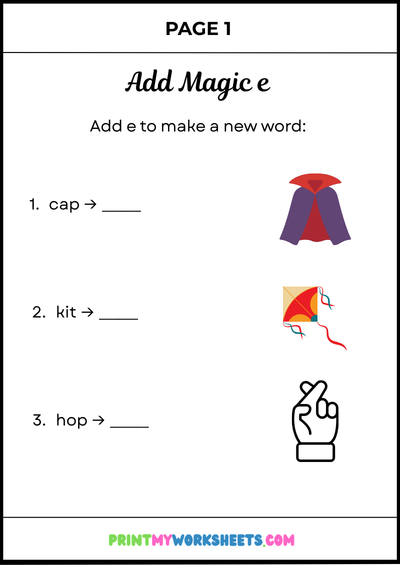
2nd Grade Magic E Words Worksheets PDF – Printable Phonics Practice with Answer Key
2nd Grade Magic E Words Worksheets PDF
The 2nd Grade Magic E Words Worksheets PDF is designed to help students strengthen their understanding of long vowel patterns through structured phonics practice. This free printable PDF is ideal for U.S. parents, teachers, and homeschool families who want focused literacy support aligned with second grade reading standards.
In second grade, students expand their decoding skills by learning more advanced spelling patterns. One important concept is the “Magic E” rule, where a silent “e” at the end of a word changes the vowel sound from short to long. For example, “cap” becomes “cape,” and “kit” becomes “kite.” Understanding this rule helps students read and spell longer words with accuracy.
This worksheet collection provides targeted practice with Magic E words in a clear and organized format. With consistent reinforcement, students build confidence in decoding, spelling, and reading fluency.
What Students Will Learn?
These second grade Magic E worksheets focus on helping students recognize and apply long vowel patterns created by a silent “e.” The activities are structured to promote understanding through repetition and varied practice.
Students will learn to:
-
Identify short and long vowel patterns
-
Recognize how a silent “e” changes a vowel sound
-
Convert short vowel words into long vowel words
-
Read Magic E word families
-
Complete sentences using long vowel words
-
Strengthen spelling through word-building exercises
Activities may include matching exercises, fill-in-the-blank sentences, word sorting, and reading short passages containing long vowel words. These tasks encourage students to actively apply phonics rules rather than memorize isolated examples.
The worksheets align with U.S. second grade literacy expectations, which emphasize decoding multi-syllable words and mastering common spelling patterns. By practicing regularly, students strengthen their ability to read new words independently.
Educational Value & Skill Development
The 2nd Grade Magic E Words Worksheets PDF supports essential reading development by reinforcing predictable spelling patterns. Mastering the Magic E rule improves both decoding and spelling accuracy.
Academically, understanding long vowel patterns increases reading fluency. When students can quickly recognize the effect of a silent “e,” they spend less time guessing and more time reading smoothly. This improves overall comprehension.
Cognitively, applying phonics rules strengthens analytical thinking. Students learn to observe patterns, compare word pairs, and identify sound changes. These skills contribute to stronger language processing abilities.
Spelling also improves as students connect phonics rules to written expression. By practicing how a final “e” changes pronunciation, learners develop greater confidence when writing sentences and short paragraphs.
Confidence is a major benefit of mastering phonics patterns. As students recognize that English spelling follows predictable rules, they feel more capable of reading unfamiliar words. This independence supports continued literacy growth throughout elementary school.
Why Focus on Magic E Words?
Magic E words are a key component of second grade phonics instruction. The silent “e” rule is one of the most common spelling patterns in English, making it essential for students to understand and apply correctly.
Without this knowledge, students may misread or misspell common words. Recognizing the pattern allows learners to decode words like “make,” “hope,” and “time” with confidence.
Repetition and guided practice are crucial for mastery. Students benefit from seeing multiple examples of short-to-long vowel transformations. Over time, the rule becomes automatic.
This skill also connects to broader literacy standards in the United States, which emphasize decoding accuracy and spelling proficiency. A solid understanding of vowel patterns prepares students for more complex word study in third grade and beyond.
How to Use These Worksheets?
The 2nd Grade Magic E Words Worksheets PDF can be used in classrooms, homeschool settings, and small-group instruction. Teachers may assign the worksheets during phonics lessons, literacy centers, or as independent practice.
Homeschool parents can incorporate these pages into weekly reading routines. Reviewing the Magic E rule together before completing the worksheet helps reinforce understanding.
Since this resource is provided as a free printable PDF, it can be easily downloaded and printed as needed. Worksheets may be reused for review sessions, test preparation, or skill reinforcement throughout the school year.
These pages are also helpful for targeted intervention. Students who need additional support with long vowel patterns can benefit from structured repetition. Clear instructions and organized layouts allow students to work independently while building phonics confidence.
Related Worksheets / Extensions:
You may also like:
-
2nd grade long vowel worksheets
-
Silent letters practice pages
-
Word family worksheets
-
1st grade phonics review worksheets
-
3rd grade spelling pattern worksheets
The 2nd Grade Magic E Words Worksheets PDF pairs well with additional phonics and spelling resources. Combining long vowel practice with reading comprehension and vocabulary exercises creates a balanced literacy approach. With consistent practice, students strengthen their decoding skills and build the foundation needed for advanced reading and writing tasks in upper elementary grades.
You may also like:
[gallery ids="7018,7004,6825"] 2nd Grade Magic E Words Worksheets PDF – Printable Phonics Practice with Answer Key
2nd Grade Magic E Words Worksheets PDF
The 2nd Grade Magic E Words Worksheets PDF is designed to help students strengthen their understanding of long vowel patterns through structured phonics practice. This free printable PDF is ideal for U.S. parents, teachers, and homeschool families who want focused literacy support aligned with second grade reading standards.
In second grade, students expand their decoding skills by learning more advanced spelling patterns. One important concept is the “Magic E” rule, where a silent “e” at the end of a word changes the vowel sound from short to long. For example, “cap” becomes “cape,” and “kit” becomes “kite.” Understanding this rule helps students read and spell longer words with accuracy.
This worksheet collection provides targeted practice with Magic E words in a clear and organized format. With consistent reinforcement, students build confidence in decoding, spelling, and reading fluency.
What Students Will Learn?
These second grade Magic E worksheets focus on helping students recognize and apply long vowel patterns created by a silent “e.” The activities are structured to promote understanding through repetition and varied practice.
Students will learn to:
-
Identify short and long vowel patterns
-
Recognize how a silent “e” changes a vowel sound
-
Convert short vowel words into long vowel words
-
Read Magic E word families
-
Complete sentences using long vowel words
-
Strengthen spelling through word-building exercises
Activities may include matching exercises, fill-in-the-blank sentences, word sorting, and reading short passages containing long vowel words. These tasks encourage students to actively apply phonics rules rather than memorize isolated examples.
The worksheets align with U.S. second grade literacy expectations, which emphasize decoding multi-syllable words and mastering common spelling patterns. By practicing regularly, students strengthen their ability to read new words independently.
Educational Value & Skill Development
The 2nd Grade Magic E Words Worksheets PDF supports essential reading development by reinforcing predictable spelling patterns. Mastering the Magic E rule improves both decoding and spelling accuracy.
Academically, understanding long vowel patterns increases reading fluency. When students can quickly recognize the effect of a silent “e,” they spend less time guessing and more time reading smoothly. This improves overall comprehension.
Cognitively, applying phonics rules strengthens analytical thinking. Students learn to observe patterns, compare word pairs, and identify sound changes. These skills contribute to stronger language processing abilities.
Spelling also improves as students connect phonics rules to written expression. By practicing how a final “e” changes pronunciation, learners develop greater confidence when writing sentences and short paragraphs.
Confidence is a major benefit of mastering phonics patterns. As students recognize that English spelling follows predictable rules, they feel more capable of reading unfamiliar words. This independence supports continued literacy growth throughout elementary school.
Why Focus on Magic E Words?
Magic E words are a key component of second grade phonics instruction. The silent “e” rule is one of the most common spelling patterns in English, making it essential for students to understand and apply correctly.
Without this knowledge, students may misread or misspell common words. Recognizing the pattern allows learners to decode words like “make,” “hope,” and “time” with confidence.
Repetition and guided practice are crucial for mastery. Students benefit from seeing multiple examples of short-to-long vowel transformations. Over time, the rule becomes automatic.
This skill also connects to broader literacy standards in the United States, which emphasize decoding accuracy and spelling proficiency. A solid understanding of vowel patterns prepares students for more complex word study in third grade and beyond.
How to Use These Worksheets?
The 2nd Grade Magic E Words Worksheets PDF can be used in classrooms, homeschool settings, and small-group instruction. Teachers may assign the worksheets during phonics lessons, literacy centers, or as independent practice.
Homeschool parents can incorporate these pages into weekly reading routines. Reviewing the Magic E rule together before completing the worksheet helps reinforce understanding.
Since this resource is provided as a free printable PDF, it can be easily downloaded and printed as needed. Worksheets may be reused for review sessions, test preparation, or skill reinforcement throughout the school year.
These pages are also helpful for targeted intervention. Students who need additional support with long vowel patterns can benefit from structured repetition. Clear instructions and organized layouts allow students to work independently while building phonics confidence.
Related Worksheets / Extensions:
You may also like:
-
2nd grade long vowel worksheets
-
Silent letters practice pages
-
Word family worksheets
-
1st grade phonics review worksheets
-
3rd grade spelling pattern worksheets
The 2nd Grade Magic E Words Worksheets PDF pairs well with additional phonics and spelling resources. Combining long vowel practice with reading comprehension and vocabulary exercises creates a balanced literacy approach. With consistent practice, students strengthen their decoding skills and build the foundation needed for advanced reading and writing tasks in upper elementary grades.
You may also like:
[gallery ids="7018,7004,6825"]
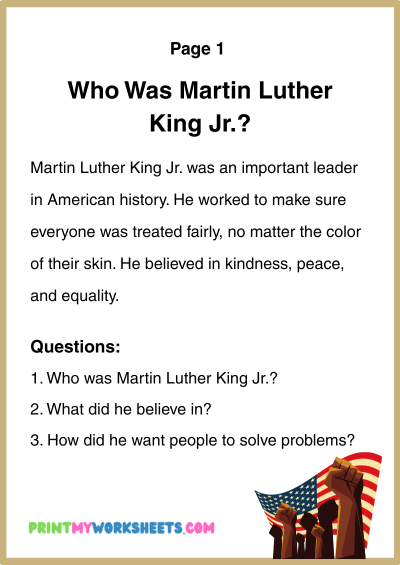
2nd Grade MLK Reading Comprehension PDF – Martin Luther King Jr Passage with Questions & Literacy Activities
Our 2nd Grade MLK Reading Comprehension PDF are designed to help young learners understand the life, values, and legacy of Dr. Martin Luther King Jr. through age-appropriate reading practice. These free downloadable PDF worksheets are perfect for US homeschool parents, elementary teachers, and second-grade students learning about history, character education, and reading comprehension.
These worksheets introduce Dr. King’s message of kindness, equality, and peaceful change using simple language and engaging passages suitable for young readers. Comprehension questions guide students to identify main ideas, key details, and important vocabulary while reflecting on the meaning of fairness and respect.
Learning through Martin Luther King Jr. reading comprehension worksheets supports both literacy and social studies education. Students improve reading skills while developing empathy, critical thinking, and an understanding of important American history. These lessons help children connect historical events to values they can practice in daily life.
Each worksheet includes short passages followed by questions such as multiple choice, fill-in-the-blanks, and short answers. The printable PDF format makes them ideal for classroom lessons, homeschooling routines, Martin Luther King Jr. Day activities, homework, or independent reading practice.
Whether teaching history, promoting kindness, or strengthening reading comprehension, these worksheets provide an engaging, meaningful, and completely free learning resource aligned with US Grade 2 standards.
You may also like:
[gallery ids="6854,6787,6778"] 2nd Grade MLK Reading Comprehension PDF – Martin Luther King Jr Passage with Questions & Literacy Activities
Our 2nd Grade MLK Reading Comprehension PDF are designed to help young learners understand the life, values, and legacy of Dr. Martin Luther King Jr. through age-appropriate reading practice. These free downloadable PDF worksheets are perfect for US homeschool parents, elementary teachers, and second-grade students learning about history, character education, and reading comprehension.
These worksheets introduce Dr. King’s message of kindness, equality, and peaceful change using simple language and engaging passages suitable for young readers. Comprehension questions guide students to identify main ideas, key details, and important vocabulary while reflecting on the meaning of fairness and respect.
Learning through Martin Luther King Jr. reading comprehension worksheets supports both literacy and social studies education. Students improve reading skills while developing empathy, critical thinking, and an understanding of important American history. These lessons help children connect historical events to values they can practice in daily life.
Each worksheet includes short passages followed by questions such as multiple choice, fill-in-the-blanks, and short answers. The printable PDF format makes them ideal for classroom lessons, homeschooling routines, Martin Luther King Jr. Day activities, homework, or independent reading practice.
Whether teaching history, promoting kindness, or strengthening reading comprehension, these worksheets provide an engaging, meaningful, and completely free learning resource aligned with US Grade 2 standards.
You may also like:
[gallery ids="6854,6787,6778"]
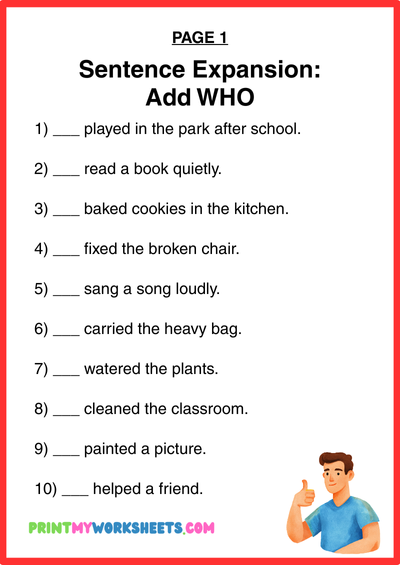
2nd Grade Sentence Expansion Worksheets PDF – Writing Practice with Answer Key
2nd Grade Sentence Expansion Worksheets PDF
These worksheets are designed to help students improve writing clarity by turning short sentences into detailed, meaningful ones. These free downloadable PDF worksheets are perfect for US homeschool parents, elementary teachers, and second-grade learners developing stronger writing and language skills.
Sentence expansion teaches children how to add details using adjectives, adverbs, phrases, and correct word order. These worksheets guide students step by step to answer questions like who, what, where, when, and how, helping them express ideas more fully and clearly. This structured approach builds confidence and encourages creativity in writing.
Learning sentence expansion skills improves reading comprehension and writing fluency. When students understand how sentences can grow, they better understand descriptive language in books and can apply similar techniques in their own writing. These skills are especially important for storytelling, paragraph writing, and written responses across subjects.
Each worksheet includes engaging activities such as expanding basic sentences, adding descriptive words, completing guided prompts, and rewriting sentences with more detail. Repeated practice strengthens grammar, vocabulary, and sentence structure.
The printable PDF format makes these worksheets ideal for classroom writing centers, homeschooling routines, homework assignments, or independent practice. Whether reinforcing writing lessons or helping students grow as writers, these worksheets provide an effective, engaging, and completely free resource aligned with US curriculum standards.
You may also like:
[gallery ids="5883,6778,6794"] 2nd Grade Sentence Expansion Worksheets PDF – Writing Practice with Answer Key
2nd Grade Sentence Expansion Worksheets PDF
These worksheets are designed to help students improve writing clarity by turning short sentences into detailed, meaningful ones. These free downloadable PDF worksheets are perfect for US homeschool parents, elementary teachers, and second-grade learners developing stronger writing and language skills.
Sentence expansion teaches children how to add details using adjectives, adverbs, phrases, and correct word order. These worksheets guide students step by step to answer questions like who, what, where, when, and how, helping them express ideas more fully and clearly. This structured approach builds confidence and encourages creativity in writing.
Learning sentence expansion skills improves reading comprehension and writing fluency. When students understand how sentences can grow, they better understand descriptive language in books and can apply similar techniques in their own writing. These skills are especially important for storytelling, paragraph writing, and written responses across subjects.
Each worksheet includes engaging activities such as expanding basic sentences, adding descriptive words, completing guided prompts, and rewriting sentences with more detail. Repeated practice strengthens grammar, vocabulary, and sentence structure.
The printable PDF format makes these worksheets ideal for classroom writing centers, homeschooling routines, homework assignments, or independent practice. Whether reinforcing writing lessons or helping students grow as writers, these worksheets provide an effective, engaging, and completely free resource aligned with US curriculum standards.
You may also like:
[gallery ids="5883,6778,6794"]
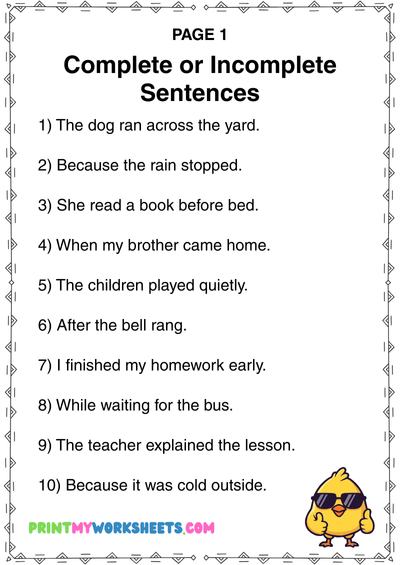
2nd Grade Sentence Skills Worksheets PDF – Grammar and Writing Practice with Answer Key
2nd Grade Sentence Skills Worksheets PDF
These worksheets are designed to help students build strong sentence structure, grammar, and writing confidence. These free downloadable PDF worksheets are perfect for US homeschool parents, elementary teachers, and second-grade learners developing foundational writing skills.
Sentence skills include forming complete sentences, using correct capitalization and punctuation, choosing appropriate words, and organizing ideas clearly. These worksheets guide students step by step through sentence construction using simple, age-appropriate examples. Structured practice helps children understand how sentences work and apply these skills in their own writing.
Learning sentence skills is essential for reading comprehension, writing clarity, and effective communication. When students can recognize and write complete sentences, they better understand what they read and express ideas more confidently. These skills support storytelling, written responses, grammar assessments, and classroom participation.
Each worksheet includes engaging activities such as sentence completion, sentence correction, word ordering, and writing prompts. Repeated practice helps reinforce grammar rules and improve fluency over time.
The printable PDF format makes these worksheets easy to use for classroom lessons, homeschooling routines, homework assignments, writing centers, or independent practice at home. Whether introducing sentence skills or strengthening existing knowledge, these worksheets provide an effective, engaging, and completely free resource aligned with US curriculum standards.
You may also like:
[gallery ids="6787,6778,5351"] 2nd Grade Sentence Skills Worksheets PDF – Grammar and Writing Practice with Answer Key
2nd Grade Sentence Skills Worksheets PDF
These worksheets are designed to help students build strong sentence structure, grammar, and writing confidence. These free downloadable PDF worksheets are perfect for US homeschool parents, elementary teachers, and second-grade learners developing foundational writing skills.
Sentence skills include forming complete sentences, using correct capitalization and punctuation, choosing appropriate words, and organizing ideas clearly. These worksheets guide students step by step through sentence construction using simple, age-appropriate examples. Structured practice helps children understand how sentences work and apply these skills in their own writing.
Learning sentence skills is essential for reading comprehension, writing clarity, and effective communication. When students can recognize and write complete sentences, they better understand what they read and express ideas more confidently. These skills support storytelling, written responses, grammar assessments, and classroom participation.
Each worksheet includes engaging activities such as sentence completion, sentence correction, word ordering, and writing prompts. Repeated practice helps reinforce grammar rules and improve fluency over time.
The printable PDF format makes these worksheets easy to use for classroom lessons, homeschooling routines, homework assignments, writing centers, or independent practice at home. Whether introducing sentence skills or strengthening existing knowledge, these worksheets provide an effective, engaging, and completely free resource aligned with US curriculum standards.
You may also like:
[gallery ids="6787,6778,5351"]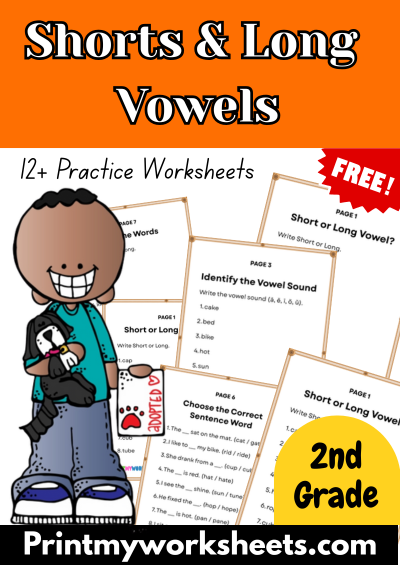
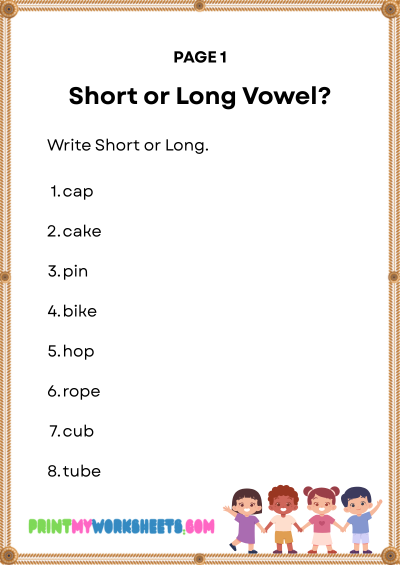
2nd Grade Short and Long Vowels Worksheets PDF – Phonics Practice Pack for Literacy Centers & Homeschool Reading
2nd Grade Short and Long Vowels Worksheets PDF
Learning to clearly hear, identify, and use vowel sounds is a key milestone in early literacy. The 2nd Grade Short and Long Vowels Worksheets PDF is designed to help young learners strengthen their understanding of vowel patterns in a structured and approachable way. Created for U.S. parents, classroom teachers, and homeschool families, this worksheet set supports phonics instruction through consistent practice and engaging activities.
In second grade, students move beyond basic letter sounds and begin applying phonics rules to reading and writing. Understanding the difference between short and long vowel sounds helps children decode unfamiliar words, improve spelling accuracy, and read with greater fluency. These printable worksheets provide targeted practice that fits easily into daily lessons, literacy centers, or independent work time. With clear instructions and student-friendly layouts, this free printable PDF helps reinforce foundational reading skills while building confidence and independence in young readers.
What Students Will Learn?
These worksheets focus on helping second graders clearly distinguish between short and long vowel sounds in words. Students practice identifying vowel sounds through a variety of phonics-based activities, including word sorting, sound recognition, and vowel pattern matching. By working with common spelling patterns such as silent e, vowel teams, and simple CVC words, children learn how vowel sounds change within different word structures.
The activities encourage students to listen carefully, read closely, and apply phonics rules in meaningful ways. Learners may circle correct vowel sounds, complete words with missing vowels, or group words by sound type. These tasks support structured learning by gradually increasing in complexity, allowing students to build understanding step by step.
Designed to match age-appropriate expectations, the worksheets balance review and challenge. They reinforce skills introduced in earlier grades while extending learning to meet second-grade reading goals. Through consistent practice, students develop stronger decoding skills and begin to apply vowel knowledge more confidently in both reading and writing.
Educational Value & Skill Development
Strong vowel knowledge is essential for reading success, and the 2nd Grade Short and Long Vowels Worksheets PDF offers valuable practice that supports multiple areas of literacy development. Academically, these worksheets help students decode words more accurately, which leads to improved reading fluency and comprehension. When children understand how vowel sounds work, they are better equipped to tackle new vocabulary independently.
From a cognitive perspective, identifying vowel patterns strengthens phonemic awareness and auditory discrimination. Students learn to hear subtle differences in sounds and connect them to written letters, supporting long-term reading development. These skills also contribute to spelling accuracy, as children begin to recognize predictable patterns in words.
Confidence and independence grow as students successfully complete activities on their own. Clear instructions and familiar formats reduce frustration and allow learners to focus on mastering the skill. Over time, repeated exposure helps students internalize vowel rules, making reading feel less like guesswork and more like a manageable process. This steady skill progression prepares students for more advanced phonics and spelling concepts in later grades.
Why Focus on Short and Long Vowels?
Vowel sounds are at the heart of English reading and spelling. In second grade, students are expected to move beyond simple decoding and begin reading with accuracy and expression. Understanding the difference between short and long vowels helps children read unfamiliar words, recognize patterns, and avoid common spelling mistakes.
Short and long vowel instruction supports future learning by laying the groundwork for more complex phonics concepts such as multisyllabic words and advanced spelling rules. Without a solid grasp of vowel sounds, students may struggle with reading fluency and comprehension in later grades.
Repetition and guided practice are essential for mastering vowel sounds. Worksheets provide a structured way to reinforce learning without overwhelming students. These activities align with U.S. English Language Arts standards, which emphasize phonics, word recognition, and reading accuracy in the early elementary years. By focusing on vowel sounds now, students build a strong foundation for long-term literacy success.
How to Use These Worksheets?
These vowel worksheets are flexible and easy to incorporate into a variety of learning environments. In classrooms, teachers can use them during phonics lessons, literacy centers, or small-group instruction. They also work well as morning work or review activities before reading sessions.
For homeschool families, the worksheets fit naturally into daily reading practice. Parents can work alongside children to review vowel sounds or allow students to complete pages independently for skill reinforcement. The clear layout makes it easy for learners to understand expectations without constant guidance.
The 2nd Grade Short and Long Vowels Worksheets PDF is available as a free printable PDF, making it simple to download, print, and reuse as needed. Pages can be revisited throughout the year for review or used selectively to target specific vowel patterns. This flexibility allows educators and parents to adapt instruction to individual learning needs.
Related Worksheets / Extensions:
You may also like:
[gallery ids="6787,6794,6803"] 2nd Grade Short and Long Vowels Worksheets PDF – Phonics Practice Pack for Literacy Centers & Homeschool Reading
2nd Grade Short and Long Vowels Worksheets PDF
Learning to clearly hear, identify, and use vowel sounds is a key milestone in early literacy. The 2nd Grade Short and Long Vowels Worksheets PDF is designed to help young learners strengthen their understanding of vowel patterns in a structured and approachable way. Created for U.S. parents, classroom teachers, and homeschool families, this worksheet set supports phonics instruction through consistent practice and engaging activities.
In second grade, students move beyond basic letter sounds and begin applying phonics rules to reading and writing. Understanding the difference between short and long vowel sounds helps children decode unfamiliar words, improve spelling accuracy, and read with greater fluency. These printable worksheets provide targeted practice that fits easily into daily lessons, literacy centers, or independent work time. With clear instructions and student-friendly layouts, this free printable PDF helps reinforce foundational reading skills while building confidence and independence in young readers.
What Students Will Learn?
These worksheets focus on helping second graders clearly distinguish between short and long vowel sounds in words. Students practice identifying vowel sounds through a variety of phonics-based activities, including word sorting, sound recognition, and vowel pattern matching. By working with common spelling patterns such as silent e, vowel teams, and simple CVC words, children learn how vowel sounds change within different word structures.
The activities encourage students to listen carefully, read closely, and apply phonics rules in meaningful ways. Learners may circle correct vowel sounds, complete words with missing vowels, or group words by sound type. These tasks support structured learning by gradually increasing in complexity, allowing students to build understanding step by step.
Designed to match age-appropriate expectations, the worksheets balance review and challenge. They reinforce skills introduced in earlier grades while extending learning to meet second-grade reading goals. Through consistent practice, students develop stronger decoding skills and begin to apply vowel knowledge more confidently in both reading and writing.
Educational Value & Skill Development
Strong vowel knowledge is essential for reading success, and the 2nd Grade Short and Long Vowels Worksheets PDF offers valuable practice that supports multiple areas of literacy development. Academically, these worksheets help students decode words more accurately, which leads to improved reading fluency and comprehension. When children understand how vowel sounds work, they are better equipped to tackle new vocabulary independently.
From a cognitive perspective, identifying vowel patterns strengthens phonemic awareness and auditory discrimination. Students learn to hear subtle differences in sounds and connect them to written letters, supporting long-term reading development. These skills also contribute to spelling accuracy, as children begin to recognize predictable patterns in words.
Confidence and independence grow as students successfully complete activities on their own. Clear instructions and familiar formats reduce frustration and allow learners to focus on mastering the skill. Over time, repeated exposure helps students internalize vowel rules, making reading feel less like guesswork and more like a manageable process. This steady skill progression prepares students for more advanced phonics and spelling concepts in later grades.
Why Focus on Short and Long Vowels?
Vowel sounds are at the heart of English reading and spelling. In second grade, students are expected to move beyond simple decoding and begin reading with accuracy and expression. Understanding the difference between short and long vowels helps children read unfamiliar words, recognize patterns, and avoid common spelling mistakes.
Short and long vowel instruction supports future learning by laying the groundwork for more complex phonics concepts such as multisyllabic words and advanced spelling rules. Without a solid grasp of vowel sounds, students may struggle with reading fluency and comprehension in later grades.
Repetition and guided practice are essential for mastering vowel sounds. Worksheets provide a structured way to reinforce learning without overwhelming students. These activities align with U.S. English Language Arts standards, which emphasize phonics, word recognition, and reading accuracy in the early elementary years. By focusing on vowel sounds now, students build a strong foundation for long-term literacy success.
How to Use These Worksheets?
These vowel worksheets are flexible and easy to incorporate into a variety of learning environments. In classrooms, teachers can use them during phonics lessons, literacy centers, or small-group instruction. They also work well as morning work or review activities before reading sessions.
For homeschool families, the worksheets fit naturally into daily reading practice. Parents can work alongside children to review vowel sounds or allow students to complete pages independently for skill reinforcement. The clear layout makes it easy for learners to understand expectations without constant guidance.
The 2nd Grade Short and Long Vowels Worksheets PDF is available as a free printable PDF, making it simple to download, print, and reuse as needed. Pages can be revisited throughout the year for review or used selectively to target specific vowel patterns. This flexibility allows educators and parents to adapt instruction to individual learning needs.
Related Worksheets / Extensions:
You may also like:
[gallery ids="6787,6794,6803"]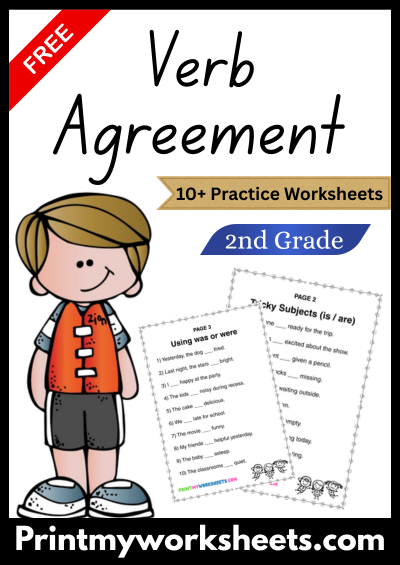
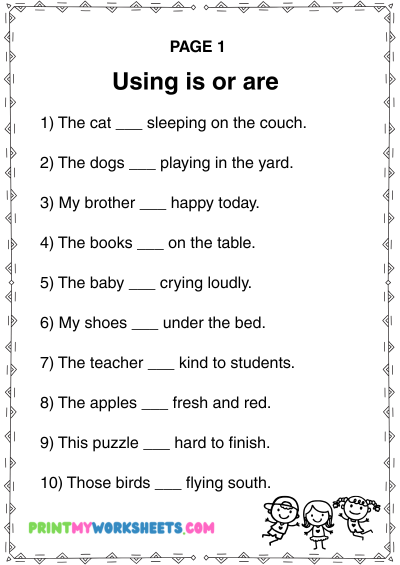
2nd Grade Verb Agreement Worksheets PDF – Easy Grammar Practice for Home Learning
2nd Grade Verb Agreement Worksheets PDF
These worksheets are designed to help students understand how verbs correctly match their subjects in sentences. These free downloadable PDF worksheets are perfect for US homeschool parents, elementary teachers, and second-grade learners building strong grammar foundations.
Verb agreement, also known as subject-verb agreement, teaches students to choose the correct verb form based on whether the subject is singular or plural. Learning this skill helps children write clear, grammatically correct sentences and improves overall communication. These worksheets introduce verb agreement concepts in a simple, age-appropriate way using familiar examples and guided practice.
Understanding verb agreement strengthens writing accuracy, reading comprehension, and speaking confidence. When students recognize correct sentence structure, they can better understand what they read and express ideas clearly in writing. Mastery of verb agreement also supports success in storytelling, grammar assessments, and standardized tests.
Each worksheet includes engaging activities such as selecting correct verbs, correcting sentence errors, completing sentences, and identifying subject-verb pairs. Repeated practice helps reinforce grammar skills and build confidence.
The printable PDF format makes these worksheets ideal for classroom grammar lessons, homeschooling routines, homework assignments, or independent practice at home. Whether introducing subject-verb agreement or reinforcing daily lessons, these worksheets provide an effective, engaging, and completely free resource aligned with US curriculum standards.
You may also like:
[gallery ids="6458,5883,5320"] 2nd Grade Verb Agreement Worksheets PDF – Easy Grammar Practice for Home Learning
2nd Grade Verb Agreement Worksheets PDF
These worksheets are designed to help students understand how verbs correctly match their subjects in sentences. These free downloadable PDF worksheets are perfect for US homeschool parents, elementary teachers, and second-grade learners building strong grammar foundations.
Verb agreement, also known as subject-verb agreement, teaches students to choose the correct verb form based on whether the subject is singular or plural. Learning this skill helps children write clear, grammatically correct sentences and improves overall communication. These worksheets introduce verb agreement concepts in a simple, age-appropriate way using familiar examples and guided practice.
Understanding verb agreement strengthens writing accuracy, reading comprehension, and speaking confidence. When students recognize correct sentence structure, they can better understand what they read and express ideas clearly in writing. Mastery of verb agreement also supports success in storytelling, grammar assessments, and standardized tests.
Each worksheet includes engaging activities such as selecting correct verbs, correcting sentence errors, completing sentences, and identifying subject-verb pairs. Repeated practice helps reinforce grammar skills and build confidence.
The printable PDF format makes these worksheets ideal for classroom grammar lessons, homeschooling routines, homework assignments, or independent practice at home. Whether introducing subject-verb agreement or reinforcing daily lessons, these worksheets provide an effective, engaging, and completely free resource aligned with US curriculum standards.
You may also like:
[gallery ids="6458,5883,5320"]

3rd Grade Past Tense Worksheets PDF – Easy Grammar Practice for Home Learning
3rd Grade Past Tense Worksheets PDF
These worksheets are designed to help students understand and correctly use past tense verbs in everyday writing and reading. These free downloadable PDF worksheets are ideal for US homeschool parents, elementary teachers, and third-grade learners strengthening their grammar skills.
Understanding past tense verbs is essential for clear communication. These worksheets focus on both regular and irregular past tense forms, helping students learn how actions that already happened are expressed correctly in sentences. Through structured practice, students gain confidence in forming past tense verbs and using them in context.
Learning past tense improves writing clarity, storytelling, and reading comprehension. When students correctly use past tense verbs, their sentences make more sense, and their writing becomes more accurate and engaging. These skills are especially important for narrative writing, personal stories, and classroom assignments. Mastery of past tense also supports success on grammar assessments and standardized tests.
Each worksheet includes age-appropriate activities such as verb identification, sentence completion, correcting verb errors, and writing practice. The printable PDF format makes these worksheets easy to use in classrooms, homeschooling routines, homework assignments, or independent practice.
Whether reinforcing grammar lessons or building strong writing foundations, these worksheets provide an effective, engaging, and completely free resource aligned with US curriculum standards.
You may also like:
[gallery ids="5949,6141,6134"] 3rd Grade Past Tense Worksheets PDF – Easy Grammar Practice for Home Learning
3rd Grade Past Tense Worksheets PDF
These worksheets are designed to help students understand and correctly use past tense verbs in everyday writing and reading. These free downloadable PDF worksheets are ideal for US homeschool parents, elementary teachers, and third-grade learners strengthening their grammar skills.
Understanding past tense verbs is essential for clear communication. These worksheets focus on both regular and irregular past tense forms, helping students learn how actions that already happened are expressed correctly in sentences. Through structured practice, students gain confidence in forming past tense verbs and using them in context.
Learning past tense improves writing clarity, storytelling, and reading comprehension. When students correctly use past tense verbs, their sentences make more sense, and their writing becomes more accurate and engaging. These skills are especially important for narrative writing, personal stories, and classroom assignments. Mastery of past tense also supports success on grammar assessments and standardized tests.
Each worksheet includes age-appropriate activities such as verb identification, sentence completion, correcting verb errors, and writing practice. The printable PDF format makes these worksheets easy to use in classrooms, homeschooling routines, homework assignments, or independent practice.
Whether reinforcing grammar lessons or building strong writing foundations, these worksheets provide an effective, engaging, and completely free resource aligned with US curriculum standards.
You may also like:
[gallery ids="5949,6141,6134"]
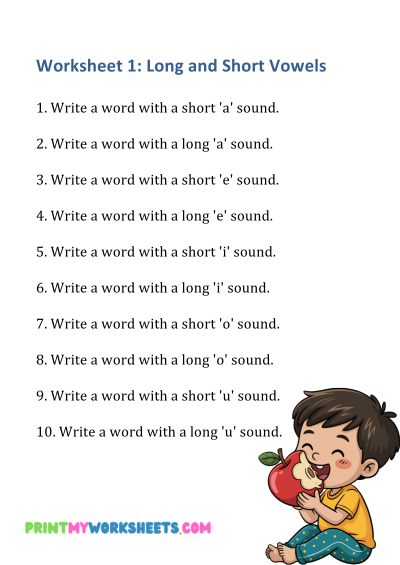
3rd Grade Spelling and Word Patterns Worksheets PDF – Easy Home Spelling Review Pack
3rd Grade Spelling and Word Patterns Worksheets PDF
These worksheets are designed for US homeschool parents, teachers, and classrooms. These fun and interactive worksheets help children strengthen their spelling, reading, and phonics skills by exploring common word patterns, blends, and letter combinations.
Each worksheet includes word families, rhyming words, vowel patterns, consonant blends, and spelling practice activities that make learning English both engaging and effective. By identifying patterns in words, kids learn how to read and spell new words with confidence, improving their writing fluency and vocabulary.
Why learn spelling and word patterns?
Mastering these concepts helps students recognize word structure, pronunciation, and meaning, which enhances reading comprehension and language accuracy. It also boosts memory retention and encourages logical thinking when forming or decoding new words.
Perfect for classroom learning, homeschool practice, or extra at-home study, this free printable PDF supports consistent spelling improvement and phonics mastery.
Download and print today to give your little learners the head start they deserve!
You may also like :
[gallery ids="6134,5570,5442"] 3rd Grade Spelling and Word Patterns Worksheets PDF – Easy Home Spelling Review Pack
3rd Grade Spelling and Word Patterns Worksheets PDF
These worksheets are designed for US homeschool parents, teachers, and classrooms. These fun and interactive worksheets help children strengthen their spelling, reading, and phonics skills by exploring common word patterns, blends, and letter combinations.
Each worksheet includes word families, rhyming words, vowel patterns, consonant blends, and spelling practice activities that make learning English both engaging and effective. By identifying patterns in words, kids learn how to read and spell new words with confidence, improving their writing fluency and vocabulary.
Why learn spelling and word patterns?
Mastering these concepts helps students recognize word structure, pronunciation, and meaning, which enhances reading comprehension and language accuracy. It also boosts memory retention and encourages logical thinking when forming or decoding new words.
Perfect for classroom learning, homeschool practice, or extra at-home study, this free printable PDF supports consistent spelling improvement and phonics mastery.
Download and print today to give your little learners the head start they deserve!
You may also like :
[gallery ids="6134,5570,5442"]
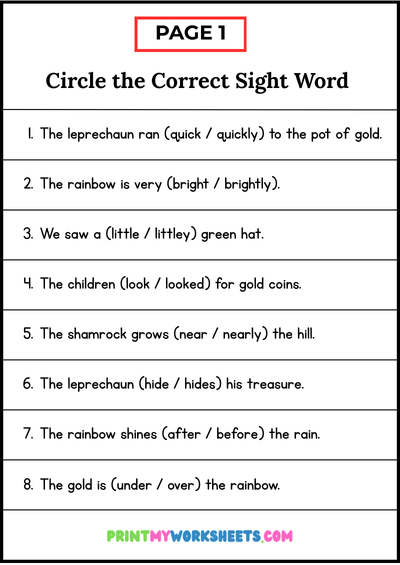
3rd Grade St Patricks Day Sight Words Worksheets PDF | Free Downloadable
3rd Grade St Patricks Day Sight Words Worksheets PDF
The 3rd Grade St Patricks Day Sight Words Worksheets PDF provides an engaging way for students to strengthen reading fluency while celebrating a seasonal classroom theme. This free printable PDF is designed for U.S. parents, teachers, and homeschool families who want to support literacy development through fun and structured learning activities.
Sight words are an essential part of reading instruction, especially as students progress through elementary school. By third grade, children are expected to recognize a wide range of high-frequency words quickly and accurately. Practicing these words regularly helps students read more smoothly and focus on understanding the meaning of what they read.
The 3rd Grade St Patricks Day Sight Words Worksheets PDF combines essential reading practice with a festive theme inspired by St. Patrick’s Day. Students work through engaging activities that help reinforce sight word recognition while keeping learning enjoyable. These worksheets encourage reading confidence, vocabulary development, and sentence understanding while providing an interactive approach to literacy practice during seasonal classroom activities.
What Students Will Learn?
Sight word practice at the third-grade level focuses on improving reading speed, word recognition, and comprehension. These worksheets help students strengthen their ability to recognize commonly used words automatically while developing deeper reading skills.
Students will practice identifying high-frequency words that appear regularly in grade-level reading materials. Recognizing these words quickly allows students to focus more on understanding stories, informational text, and classroom reading assignments.
Many activities encourage students to read words within sentences rather than in isolation. This helps children understand how words function in context and supports overall comprehension.
The worksheets may also include matching exercises, fill-in-the-blank sentences, word searches, and short reading tasks. These activities allow students to engage with sight words in multiple ways, reinforcing recognition through repetition and varied practice.
Because the worksheets include a seasonal St. Patrick’s Day theme, they also encourage engagement and motivation. The combination of themed learning and literacy practice helps students remain interested while strengthening reading skills.
Through consistent practice with structured activities, students improve reading fluency and become more confident readers.
Educational Value & Skill Development
The 3rd Grade St Patricks Day Sight Words Worksheets PDF supports several important areas of literacy development. One of the primary benefits is improved reading fluency. When students recognize high-frequency words instantly, they can read more smoothly and focus on understanding the meaning of the text.
Sight word mastery also strengthens overall reading comprehension. Instead of stopping to decode every word, students can move through sentences more easily and concentrate on the message of the passage.
Another important benefit is vocabulary growth. As children practice reading and using common words in sentences, they develop a stronger understanding of how language works in everyday communication.
The worksheets also promote independent learning. Many activities encourage students to work through exercises on their own, which helps build confidence and responsibility in their academic work.
The 3rd Grade St Patricks Day Sight Words Worksheets PDF also supports cognitive development by encouraging pattern recognition, attention to detail, and language processing skills. Students must read carefully, identify correct words, and understand how words fit within a sentence structure.
Seasonal learning activities can also make literacy practice more engaging. The St. Patrick’s Day theme provides a creative context for practicing reading skills while maintaining a focus on academic growth.
Why Focus on St Patricks Day Sight Words?
Sight words play a key role in reading fluency because they appear frequently in everyday text. By the time students reach third grade, they are expected to recognize many of these words automatically.
Practicing sight words regularly helps students read more efficiently. When children no longer need to pause to decode common words, they can concentrate on understanding longer sentences and more complex passages.
Themed activities, such as those related to St. Patrick’s Day, can make reading practice more engaging. Seasonal worksheets encourage participation and help maintain student interest during literacy instruction.
Integrating themed content into reading activities also allows teachers to connect academic learning with classroom celebrations and seasonal lessons. This helps create a more dynamic learning environment while still reinforcing essential reading skills.
Sight word practice also supports writing development. As students become familiar with frequently used words, they can use them more confidently when writing their own sentences and stories.
Consistent exposure to high-frequency words prepares students for more advanced reading materials in later grades. Strong sight word recognition is an important foundation for lifelong reading success.
Related Worksheets / Extensions:
You may also like:
• 3rd grade sight word worksheets
• St. Patrick’s Day reading comprehension activities
• Seasonal vocabulary worksheets for elementary students
• Reading fluency worksheets for grades 2–4
• Word recognition and vocabulary practice activities
The 3rd Grade St Patricks Day Sight Words Worksheets PDF works well alongside other literacy resources that focus on vocabulary development and reading comprehension. Combining sight word practice with sentence reading and short passages helps students develop stronger reading skills.
Teachers and parents may also extend learning by encouraging students to write their own sentences using the sight words they practice. Creative writing activities help reinforce vocabulary while allowing students to apply their reading skills in meaningful ways.
With regular practice and engaging activities, third-grade students can continue building the reading fluency and language skills needed for more advanced academic learning.
You may also like:
[gallery ids="7080,6750,6141"] 3rd Grade St Patricks Day Sight Words Worksheets PDF | Free Downloadable
3rd Grade St Patricks Day Sight Words Worksheets PDF
The 3rd Grade St Patricks Day Sight Words Worksheets PDF provides an engaging way for students to strengthen reading fluency while celebrating a seasonal classroom theme. This free printable PDF is designed for U.S. parents, teachers, and homeschool families who want to support literacy development through fun and structured learning activities.
Sight words are an essential part of reading instruction, especially as students progress through elementary school. By third grade, children are expected to recognize a wide range of high-frequency words quickly and accurately. Practicing these words regularly helps students read more smoothly and focus on understanding the meaning of what they read.
The 3rd Grade St Patricks Day Sight Words Worksheets PDF combines essential reading practice with a festive theme inspired by St. Patrick’s Day. Students work through engaging activities that help reinforce sight word recognition while keeping learning enjoyable. These worksheets encourage reading confidence, vocabulary development, and sentence understanding while providing an interactive approach to literacy practice during seasonal classroom activities.
What Students Will Learn?
Sight word practice at the third-grade level focuses on improving reading speed, word recognition, and comprehension. These worksheets help students strengthen their ability to recognize commonly used words automatically while developing deeper reading skills.
Students will practice identifying high-frequency words that appear regularly in grade-level reading materials. Recognizing these words quickly allows students to focus more on understanding stories, informational text, and classroom reading assignments.
Many activities encourage students to read words within sentences rather than in isolation. This helps children understand how words function in context and supports overall comprehension.
The worksheets may also include matching exercises, fill-in-the-blank sentences, word searches, and short reading tasks. These activities allow students to engage with sight words in multiple ways, reinforcing recognition through repetition and varied practice.
Because the worksheets include a seasonal St. Patrick’s Day theme, they also encourage engagement and motivation. The combination of themed learning and literacy practice helps students remain interested while strengthening reading skills.
Through consistent practice with structured activities, students improve reading fluency and become more confident readers.
Educational Value & Skill Development
The 3rd Grade St Patricks Day Sight Words Worksheets PDF supports several important areas of literacy development. One of the primary benefits is improved reading fluency. When students recognize high-frequency words instantly, they can read more smoothly and focus on understanding the meaning of the text.
Sight word mastery also strengthens overall reading comprehension. Instead of stopping to decode every word, students can move through sentences more easily and concentrate on the message of the passage.
Another important benefit is vocabulary growth. As children practice reading and using common words in sentences, they develop a stronger understanding of how language works in everyday communication.
The worksheets also promote independent learning. Many activities encourage students to work through exercises on their own, which helps build confidence and responsibility in their academic work.
The 3rd Grade St Patricks Day Sight Words Worksheets PDF also supports cognitive development by encouraging pattern recognition, attention to detail, and language processing skills. Students must read carefully, identify correct words, and understand how words fit within a sentence structure.
Seasonal learning activities can also make literacy practice more engaging. The St. Patrick’s Day theme provides a creative context for practicing reading skills while maintaining a focus on academic growth.
Why Focus on St Patricks Day Sight Words?
Sight words play a key role in reading fluency because they appear frequently in everyday text. By the time students reach third grade, they are expected to recognize many of these words automatically.
Practicing sight words regularly helps students read more efficiently. When children no longer need to pause to decode common words, they can concentrate on understanding longer sentences and more complex passages.
Themed activities, such as those related to St. Patrick’s Day, can make reading practice more engaging. Seasonal worksheets encourage participation and help maintain student interest during literacy instruction.
Integrating themed content into reading activities also allows teachers to connect academic learning with classroom celebrations and seasonal lessons. This helps create a more dynamic learning environment while still reinforcing essential reading skills.
Sight word practice also supports writing development. As students become familiar with frequently used words, they can use them more confidently when writing their own sentences and stories.
Consistent exposure to high-frequency words prepares students for more advanced reading materials in later grades. Strong sight word recognition is an important foundation for lifelong reading success.
Related Worksheets / Extensions:
You may also like:
• 3rd grade sight word worksheets
• St. Patrick’s Day reading comprehension activities
• Seasonal vocabulary worksheets for elementary students
• Reading fluency worksheets for grades 2–4
• Word recognition and vocabulary practice activities
The 3rd Grade St Patricks Day Sight Words Worksheets PDF works well alongside other literacy resources that focus on vocabulary development and reading comprehension. Combining sight word practice with sentence reading and short passages helps students develop stronger reading skills.
Teachers and parents may also extend learning by encouraging students to write their own sentences using the sight words they practice. Creative writing activities help reinforce vocabulary while allowing students to apply their reading skills in meaningful ways.
With regular practice and engaging activities, third-grade students can continue building the reading fluency and language skills needed for more advanced academic learning.
You may also like:
[gallery ids="7080,6750,6141"]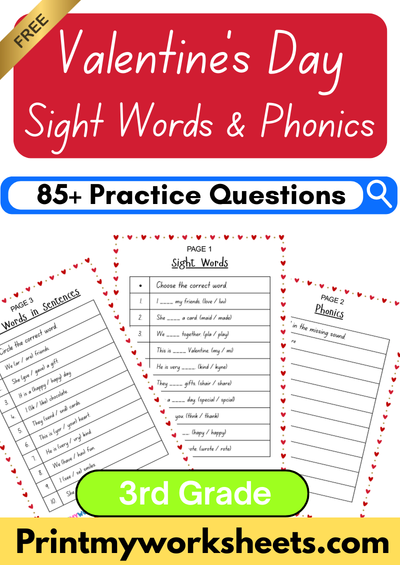
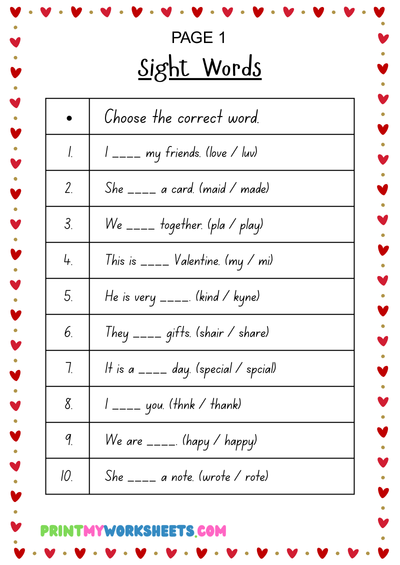
3rd Grade Valentines Day Sight Words Phonics PDF – Fun February Literacy Activities for Homeschool & Classroom Centers
3rd Grade Valentines Day Sight Words Phonics PDF
Seasonal learning activities can be a powerful way to keep students motivated and engaged, especially in elementary classrooms. The 3rd Grade Valentines Day Sight Words Phonics PDF is designed to combine essential literacy practice with a fun, holiday-themed approach that appeals to young learners. This worksheet set is created for U.S. parents, classroom teachers, and homeschool families who want to reinforce sight words and phonics skills while adding a festive element to reading instruction.
By third grade, students are expected to recognize sight words automatically and apply phonics strategies fluently when reading and writing. Valentine’s Day–themed activities help maintain interest while providing meaningful practice with commonly used words and sound patterns. These worksheets support reading fluency, spelling accuracy, and overall comprehension, making them a valuable addition to literacy lessons during the Valentine’s Day season or anytime students need extra practice.
What Students Will Learn?
These worksheets focus on strengthening sight word recognition and phonics understanding through engaging, grade-appropriate activities. Students practice reading and identifying commonly used sight words while also reinforcing phonics patterns that support decoding and word analysis. Activities may include word identification, fill-in-the-blank exercises, sentence completion, and reading short passages with targeted vocabulary.
The structured layout helps students move from recognition to application, ensuring that learning goes beyond memorization. Learners are encouraged to read words in context, spell them correctly, and understand how phonics patterns influence pronunciation. This balanced approach supports both accuracy and fluency.
All activities are aligned with third-grade literacy expectations, making them suitable for students who are transitioning from learning to read toward reading to learn. The Valentine’s Day theme adds interest without distracting from instructional goals, keeping learning focused and effective.
Educational Value & Skill Development
The 3rd Grade Valentines Day Sight Words Phonics PDF offers strong educational value by supporting key reading and language skills. Academically, these worksheets reinforce sight word mastery, phonics application, and reading fluency—skills that are critical for comprehension across all subject areas. Regular practice helps students read more smoothly, with fewer pauses and errors.
From a cognitive standpoint, working with words in different formats strengthens memory, pattern recognition, and language processing. Students learn to quickly identify familiar words while using phonics strategies to decode unfamiliar ones. This combination improves confidence and reduces frustration during independent reading.
As students successfully complete activities, they develop independence and a positive attitude toward reading. Skill progression is supported through repeated exposure and varied practice, allowing learners to build on what they already know while preparing for more complex texts in upper elementary grades.
Why Focus on Valentines Day Sight Words?
Sight words and phonics skills form the foundation of fluent reading. In third grade, students are expected to recognize high-frequency words instantly and apply phonics rules automatically. When these skills are not solid, reading comprehension and academic performance can suffer.
Using themed worksheets, such as Valentine’s Day literacy activities, helps maintain student engagement while reinforcing essential skills. Repetition in a meaningful context supports long-term retention and builds reading confidence. Guided practice with sight words and phonics patterns aligns with U.S. literacy standards that emphasize fluency, accuracy, and comprehension.
Focusing on these skills during seasonal lessons also allows teachers and parents to refresh learning routines without losing instructional value, making literacy practice both effective and enjoyable.
How to Use These Worksheets?
These worksheets are flexible and easy to integrate into various learning environments. In classrooms, teachers can use them as part of literacy centers, morning work, small-group instruction, or holiday-themed lesson plans. The clear instructions and student-friendly format make them suitable for independent practice as well.
Homeschool families can include the 3rd Grade Valentines Day Sight Words Phonics PDF as part of daily reading lessons or as supplemental practice during the Valentine’s Day season. Since the worksheets are provided as a free printable PDF, they are easy to download, print, and reuse as needed.
They can also be used for review, remediation, or extra practice for students who need additional support with sight words and phonics skills.
Related Worksheets / Extensions:
3rd Grade Valentines Day Sight Words Phonics PDF – Fun February Literacy Activities for Homeschool & Classroom Centers
3rd Grade Valentines Day Sight Words Phonics PDF
Seasonal learning activities can be a powerful way to keep students motivated and engaged, especially in elementary classrooms. The 3rd Grade Valentines Day Sight Words Phonics PDF is designed to combine essential literacy practice with a fun, holiday-themed approach that appeals to young learners. This worksheet set is created for U.S. parents, classroom teachers, and homeschool families who want to reinforce sight words and phonics skills while adding a festive element to reading instruction.
By third grade, students are expected to recognize sight words automatically and apply phonics strategies fluently when reading and writing. Valentine’s Day–themed activities help maintain interest while providing meaningful practice with commonly used words and sound patterns. These worksheets support reading fluency, spelling accuracy, and overall comprehension, making them a valuable addition to literacy lessons during the Valentine’s Day season or anytime students need extra practice.
What Students Will Learn?
These worksheets focus on strengthening sight word recognition and phonics understanding through engaging, grade-appropriate activities. Students practice reading and identifying commonly used sight words while also reinforcing phonics patterns that support decoding and word analysis. Activities may include word identification, fill-in-the-blank exercises, sentence completion, and reading short passages with targeted vocabulary.
The structured layout helps students move from recognition to application, ensuring that learning goes beyond memorization. Learners are encouraged to read words in context, spell them correctly, and understand how phonics patterns influence pronunciation. This balanced approach supports both accuracy and fluency.
All activities are aligned with third-grade literacy expectations, making them suitable for students who are transitioning from learning to read toward reading to learn. The Valentine’s Day theme adds interest without distracting from instructional goals, keeping learning focused and effective.
Educational Value & Skill Development
The 3rd Grade Valentines Day Sight Words Phonics PDF offers strong educational value by supporting key reading and language skills. Academically, these worksheets reinforce sight word mastery, phonics application, and reading fluency—skills that are critical for comprehension across all subject areas. Regular practice helps students read more smoothly, with fewer pauses and errors.
From a cognitive standpoint, working with words in different formats strengthens memory, pattern recognition, and language processing. Students learn to quickly identify familiar words while using phonics strategies to decode unfamiliar ones. This combination improves confidence and reduces frustration during independent reading.
As students successfully complete activities, they develop independence and a positive attitude toward reading. Skill progression is supported through repeated exposure and varied practice, allowing learners to build on what they already know while preparing for more complex texts in upper elementary grades.
Why Focus on Valentines Day Sight Words?
Sight words and phonics skills form the foundation of fluent reading. In third grade, students are expected to recognize high-frequency words instantly and apply phonics rules automatically. When these skills are not solid, reading comprehension and academic performance can suffer.
Using themed worksheets, such as Valentine’s Day literacy activities, helps maintain student engagement while reinforcing essential skills. Repetition in a meaningful context supports long-term retention and builds reading confidence. Guided practice with sight words and phonics patterns aligns with U.S. literacy standards that emphasize fluency, accuracy, and comprehension.
Focusing on these skills during seasonal lessons also allows teachers and parents to refresh learning routines without losing instructional value, making literacy practice both effective and enjoyable.
How to Use These Worksheets?
These worksheets are flexible and easy to integrate into various learning environments. In classrooms, teachers can use them as part of literacy centers, morning work, small-group instruction, or holiday-themed lesson plans. The clear instructions and student-friendly format make them suitable for independent practice as well.
Homeschool families can include the 3rd Grade Valentines Day Sight Words Phonics PDF as part of daily reading lessons or as supplemental practice during the Valentine’s Day season. Since the worksheets are provided as a free printable PDF, they are easy to download, print, and reuse as needed.
They can also be used for review, remediation, or extra practice for students who need additional support with sight words and phonics skills.
Related Worksheets / Extensions:
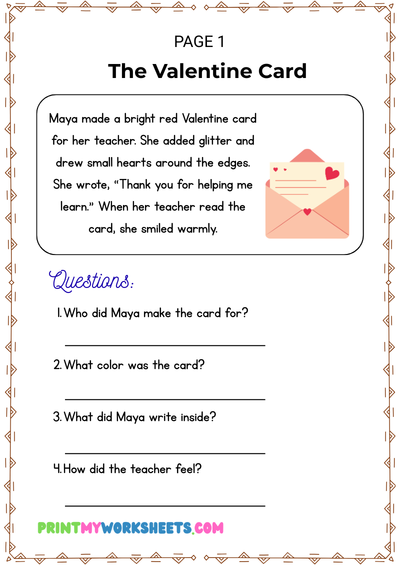
3rd Grade Valentines Reading Comprehension PDF – February Passages with Questions and ELA Skill Practice
3rd Grade Valentines Reading Comprehension PDF
The 3rd Grade Valentines Reading Comprehension PDF is a thoughtfully designed printable resource that helps students strengthen reading skills through engaging, seasonal content. Created for U.S. parents, classroom teachers, and homeschool families, this worksheet set combines meaningful reading passages with standards-aligned comprehension questions tailored specifically for third graders.
At the third-grade level, students are expected to move beyond basic decoding and begin analyzing text more deeply. They learn to identify main ideas, describe characters, understand vocabulary in context, and draw conclusions from what they read. Valentine-themed reading activities make this practice both relatable and enjoyable while maintaining academic focus. With structured passages and purposeful questions, this printable PDF supports literacy growth in a way that feels motivating and developmentally appropriate for eight- and nine-year-old learners.
What Students Will Learn?
These worksheets help students practice essential third-grade reading comprehension skills in a structured and engaging format. Each passage is written at an appropriate reading level and focuses on clear story structure, descriptive details, and meaningful themes related to friendship, kindness, and seasonal traditions.
Students will work on identifying the main idea and supporting details within short stories or informational texts. They will practice answering multiple-choice and short-response questions that require them to refer back to the text for evidence. Additional activities may include sequencing events, determining the meaning of unfamiliar words using context clues, and identifying character traits.
The reading tasks are carefully organized to build confidence step by step. Questions begin with literal comprehension and gradually move toward inferential thinking. This progression supports age-appropriate expectations and aligns with U.S. third-grade literacy standards. By practicing regularly, students strengthen both reading fluency and comprehension accuracy while building stronger analytical skills.
Educational Value & Skill Development
The 3rd Grade Valentines Reading Comprehension PDF provides strong academic and developmental value for growing readers. Academically, it reinforces essential literacy skills such as summarizing, identifying themes, and explaining answers using textual evidence. These skills are foundational for upper elementary reading success.
Cognitively, comprehension practice improves focus, memory retention, and critical thinking. Students must read carefully, process information, and respond thoughtfully to questions. This helps develop analytical habits that extend beyond reading into other academic subjects.
Working with structured reading passages also promotes independence. As students gain confidence in answering comprehension questions on their own, they develop stronger self-monitoring skills. They learn to reread when necessary, check their answers, and correct misunderstandings.
Additionally, themed reading materials can increase engagement. Seasonal topics like Valentine’s Day provide a familiar and positive context for practicing literacy skills. When students enjoy what they are reading, they are more likely to stay motivated and complete assignments carefully.
Why Focus on Valentines Reading Comprehension?
Reading comprehension is one of the most important academic skills developed in third grade. At this stage, students transition from “learning to read” to “reading to learn.” Practicing comprehension with themed passages helps maintain interest while strengthening core literacy abilities.
Seasonal reading activities encourage repeated exposure to structured texts without feeling repetitive. Students encounter new vocabulary, varied sentence structures, and different text formats while staying engaged with a consistent theme. This repetition builds fluency and understanding over time.
Comprehension skills practiced in third grade directly support future academic success. Students who can analyze passages, draw conclusions, and cite evidence are better prepared for more advanced reading tasks in later grades. Guided and independent practice with structured worksheets ensures students meet grade-level expectations while developing long-term reading confidence.
How to Use These Worksheets?
The 3rd Grade Valentines Reading Comprehension PDF is flexible and easy to use in multiple learning settings. In classrooms, teachers can incorporate the worksheets into literacy centers, small-group reading sessions, or independent practice time. They also work well as seasonal assignments during February.
For homeschool families, this free printable PDF can be added to a daily reading routine. Parents may choose to read passages aloud together first and then guide children through the comprehension questions. Alternatively, students can complete the worksheets independently and review answers afterward.
Because the resource is available as a free printable PDF, it can be downloaded quickly and printed as needed. Teachers and parents may organize pages into a literacy binder or use them for review before reading assessments. The worksheets are designed to be reusable and adaptable, making them a practical addition to any third-grade reading plan.
Related Worksheets / Extensions:
You may also like:
-
3rd grade reading comprehension passages for other seasons
-
Character analysis worksheets
-
Main idea and supporting details practice pages
-
Vocabulary and context clues activities
The 3rd Grade Valentines Reading Comprehension PDF can be paired with additional reading resources to create a balanced literacy plan. Combining themed comprehension practice with vocabulary, writing prompts, and fluency exercises helps students strengthen multiple skills at once. Regular exposure to diverse reading materials ensures steady progress and prepares students for more advanced text analysis in future grades.
You may also like:
[gallery ids="7080,6750,5987"] 3rd Grade Valentines Reading Comprehension PDF – February Passages with Questions and ELA Skill Practice
3rd Grade Valentines Reading Comprehension PDF
The 3rd Grade Valentines Reading Comprehension PDF is a thoughtfully designed printable resource that helps students strengthen reading skills through engaging, seasonal content. Created for U.S. parents, classroom teachers, and homeschool families, this worksheet set combines meaningful reading passages with standards-aligned comprehension questions tailored specifically for third graders.
At the third-grade level, students are expected to move beyond basic decoding and begin analyzing text more deeply. They learn to identify main ideas, describe characters, understand vocabulary in context, and draw conclusions from what they read. Valentine-themed reading activities make this practice both relatable and enjoyable while maintaining academic focus. With structured passages and purposeful questions, this printable PDF supports literacy growth in a way that feels motivating and developmentally appropriate for eight- and nine-year-old learners.
What Students Will Learn?
These worksheets help students practice essential third-grade reading comprehension skills in a structured and engaging format. Each passage is written at an appropriate reading level and focuses on clear story structure, descriptive details, and meaningful themes related to friendship, kindness, and seasonal traditions.
Students will work on identifying the main idea and supporting details within short stories or informational texts. They will practice answering multiple-choice and short-response questions that require them to refer back to the text for evidence. Additional activities may include sequencing events, determining the meaning of unfamiliar words using context clues, and identifying character traits.
The reading tasks are carefully organized to build confidence step by step. Questions begin with literal comprehension and gradually move toward inferential thinking. This progression supports age-appropriate expectations and aligns with U.S. third-grade literacy standards. By practicing regularly, students strengthen both reading fluency and comprehension accuracy while building stronger analytical skills.
Educational Value & Skill Development
The 3rd Grade Valentines Reading Comprehension PDF provides strong academic and developmental value for growing readers. Academically, it reinforces essential literacy skills such as summarizing, identifying themes, and explaining answers using textual evidence. These skills are foundational for upper elementary reading success.
Cognitively, comprehension practice improves focus, memory retention, and critical thinking. Students must read carefully, process information, and respond thoughtfully to questions. This helps develop analytical habits that extend beyond reading into other academic subjects.
Working with structured reading passages also promotes independence. As students gain confidence in answering comprehension questions on their own, they develop stronger self-monitoring skills. They learn to reread when necessary, check their answers, and correct misunderstandings.
Additionally, themed reading materials can increase engagement. Seasonal topics like Valentine’s Day provide a familiar and positive context for practicing literacy skills. When students enjoy what they are reading, they are more likely to stay motivated and complete assignments carefully.
Why Focus on Valentines Reading Comprehension?
Reading comprehension is one of the most important academic skills developed in third grade. At this stage, students transition from “learning to read” to “reading to learn.” Practicing comprehension with themed passages helps maintain interest while strengthening core literacy abilities.
Seasonal reading activities encourage repeated exposure to structured texts without feeling repetitive. Students encounter new vocabulary, varied sentence structures, and different text formats while staying engaged with a consistent theme. This repetition builds fluency and understanding over time.
Comprehension skills practiced in third grade directly support future academic success. Students who can analyze passages, draw conclusions, and cite evidence are better prepared for more advanced reading tasks in later grades. Guided and independent practice with structured worksheets ensures students meet grade-level expectations while developing long-term reading confidence.
How to Use These Worksheets?
The 3rd Grade Valentines Reading Comprehension PDF is flexible and easy to use in multiple learning settings. In classrooms, teachers can incorporate the worksheets into literacy centers, small-group reading sessions, or independent practice time. They also work well as seasonal assignments during February.
For homeschool families, this free printable PDF can be added to a daily reading routine. Parents may choose to read passages aloud together first and then guide children through the comprehension questions. Alternatively, students can complete the worksheets independently and review answers afterward.
Because the resource is available as a free printable PDF, it can be downloaded quickly and printed as needed. Teachers and parents may organize pages into a literacy binder or use them for review before reading assessments. The worksheets are designed to be reusable and adaptable, making them a practical addition to any third-grade reading plan.
Related Worksheets / Extensions:
You may also like:
-
3rd grade reading comprehension passages for other seasons
-
Character analysis worksheets
-
Main idea and supporting details practice pages
-
Vocabulary and context clues activities
The 3rd Grade Valentines Reading Comprehension PDF can be paired with additional reading resources to create a balanced literacy plan. Combining themed comprehension practice with vocabulary, writing prompts, and fluency exercises helps students strengthen multiple skills at once. Regular exposure to diverse reading materials ensures steady progress and prepares students for more advanced text analysis in future grades.
You may also like:
[gallery ids="7080,6750,5987"]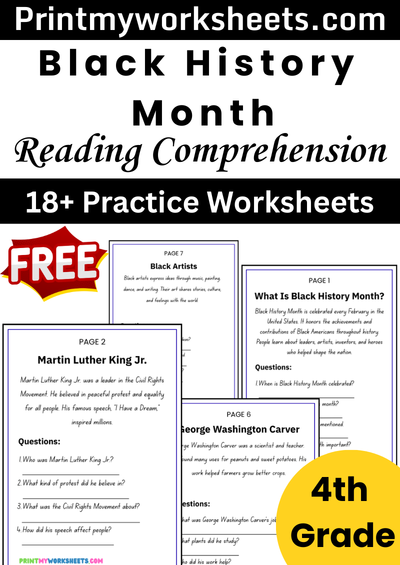
4th Grade Black History Reading Comprehension PDF – Informational Text Passages with Questions and ELA Practice
Support meaningful learning with our 4th Grade Black History Reading Comprehension PDF, thoughtfully designed to help students build strong reading skills while learning about important historical figures, events, and contributions. These free downloadable PDF worksheets are ideal for US homeschool parents, classroom teachers, and students seeking engaging, educational content during Black History Month.
Reading comprehension worksheets help students improve fluency, vocabulary, and critical thinking by encouraging them to read carefully and respond to text-based questions. Using a Black History Month theme adds cultural relevance and historical awareness, helping children understand the significance of African American history in the United States.
These worksheets include age-appropriate passages and comprehension questions that promote deeper understanding, discussion, and reflection. Students practice identifying main ideas, key details, sequencing, and drawing conclusions—essential skills for academic success across all subjects.
Perfect for classroom lessons, literacy centers, independent practice, homework, or homeschool learning, these worksheets align with US curriculum standards and support inclusive education. Download instantly, print easily, and give students an opportunity to strengthen reading comprehension while learning important historical lessons—completely free and ready to use.
You may also like :
[gallery ids="6645,5785,5758"] 4th Grade Black History Reading Comprehension PDF – Informational Text Passages with Questions and ELA Practice
Support meaningful learning with our 4th Grade Black History Reading Comprehension PDF, thoughtfully designed to help students build strong reading skills while learning about important historical figures, events, and contributions. These free downloadable PDF worksheets are ideal for US homeschool parents, classroom teachers, and students seeking engaging, educational content during Black History Month.
Reading comprehension worksheets help students improve fluency, vocabulary, and critical thinking by encouraging them to read carefully and respond to text-based questions. Using a Black History Month theme adds cultural relevance and historical awareness, helping children understand the significance of African American history in the United States.
These worksheets include age-appropriate passages and comprehension questions that promote deeper understanding, discussion, and reflection. Students practice identifying main ideas, key details, sequencing, and drawing conclusions—essential skills for academic success across all subjects.
Perfect for classroom lessons, literacy centers, independent practice, homework, or homeschool learning, these worksheets align with US curriculum standards and support inclusive education. Download instantly, print easily, and give students an opportunity to strengthen reading comprehension while learning important historical lessons—completely free and ready to use.
You may also like :
[gallery ids="6645,5785,5758"]

4th Grade Reading Comprehension Worksheets PDF – Fiction and Nonfiction Practice with Answer Key
4th Grade Reading Comprehension Worksheets PDF
These worksheets are created for US teachers, homeschool parents, and elementary learners. These worksheets help students go beyond reading words to truly understanding text. Each worksheet includes age-appropriate passages followed by comprehension questions that focus on main ideas, key details, sequencing, vocabulary in context, cause and effect, and making inferences.
Reading comprehension is a critical skill in 4th grade, as students begin working with longer texts and more complex ideas across all subjects. These worksheets support academic success by helping children analyze what they read, think critically, and express their understanding clearly. Through regular practice, students improve focus, memory, and confidence while reading both fiction and nonfiction passages.
Teachers can use these worksheets for guided reading lessons, literacy centers, test preparation, homework, or independent practice. Homeschool parents appreciate the printable PDF format, curriculum-aligned content, and clear structure that supports independent learning at home.
Download the free PDF today and help your 4th grader build strong comprehension skills that will support success in reading, writing, and learning across all subjects.
You may also like:
[gallery ids="6417,5730,5742"] 4th Grade Reading Comprehension Worksheets PDF – Fiction and Nonfiction Practice with Answer Key
4th Grade Reading Comprehension Worksheets PDF
These worksheets are created for US teachers, homeschool parents, and elementary learners. These worksheets help students go beyond reading words to truly understanding text. Each worksheet includes age-appropriate passages followed by comprehension questions that focus on main ideas, key details, sequencing, vocabulary in context, cause and effect, and making inferences.
Reading comprehension is a critical skill in 4th grade, as students begin working with longer texts and more complex ideas across all subjects. These worksheets support academic success by helping children analyze what they read, think critically, and express their understanding clearly. Through regular practice, students improve focus, memory, and confidence while reading both fiction and nonfiction passages.
Teachers can use these worksheets for guided reading lessons, literacy centers, test preparation, homework, or independent practice. Homeschool parents appreciate the printable PDF format, curriculum-aligned content, and clear structure that supports independent learning at home.
Download the free PDF today and help your 4th grader build strong comprehension skills that will support success in reading, writing, and learning across all subjects.
You may also like:
[gallery ids="6417,5730,5742"]
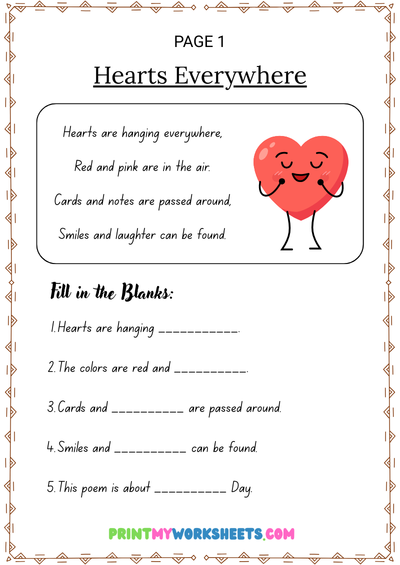
4th Grade Valentines Day Poem Reading Worksheet PDF – Fun Holiday Reading Practice for At-Home Learning
4th Grade Valentines Day Poem Reading Worksheet PDF
Make Valentine’s Day learning engaging and meaningful with our 4th Grade Valentines Day Poem Reading WorksheetPDF These free downloadable PDF worksheets combine poetry, comprehension, and vocabulary practice to help students strengthen reading and language skills in a fun, seasonal way.
Reading comprehension poems help students improve fluency, rhythm, and expression while developing deeper understanding of text. The fill-in-the-blanks activities encourage children to read carefully, use context clues, and apply vocabulary knowledge, strengthening both comprehension and critical thinking skills. Using a Valentine’s Day theme increases motivation and keeps students actively involved in the learning process.
These worksheets support key literacy skills such as identifying main ideas, understanding poetic language, recognizing figurative expressions, and building sentence structure awareness. They are ideal for homeschool parents, classroom teachers, and tutors looking for creative literacy activities that align with US curriculum standards.
Perfect for literacy centers, holiday lessons, independent practice, homework, or small-group instruction, these printable worksheets provide structured yet enjoyable reading practice. Download instantly, print easily, and help students build strong comprehension and vocabulary skills while celebrating Valentine’s Day—completely free and classroom-ready.
You may also like:
[gallery ids="7011,6645,5758"] 4th Grade Valentines Day Poem Reading Worksheet PDF – Fun Holiday Reading Practice for At-Home Learning
4th Grade Valentines Day Poem Reading Worksheet PDF
Make Valentine’s Day learning engaging and meaningful with our 4th Grade Valentines Day Poem Reading WorksheetPDF These free downloadable PDF worksheets combine poetry, comprehension, and vocabulary practice to help students strengthen reading and language skills in a fun, seasonal way.
Reading comprehension poems help students improve fluency, rhythm, and expression while developing deeper understanding of text. The fill-in-the-blanks activities encourage children to read carefully, use context clues, and apply vocabulary knowledge, strengthening both comprehension and critical thinking skills. Using a Valentine’s Day theme increases motivation and keeps students actively involved in the learning process.
These worksheets support key literacy skills such as identifying main ideas, understanding poetic language, recognizing figurative expressions, and building sentence structure awareness. They are ideal for homeschool parents, classroom teachers, and tutors looking for creative literacy activities that align with US curriculum standards.
Perfect for literacy centers, holiday lessons, independent practice, homework, or small-group instruction, these printable worksheets provide structured yet enjoyable reading practice. Download instantly, print easily, and help students build strong comprehension and vocabulary skills while celebrating Valentine’s Day—completely free and classroom-ready.
You may also like:
[gallery ids="7011,6645,5758"]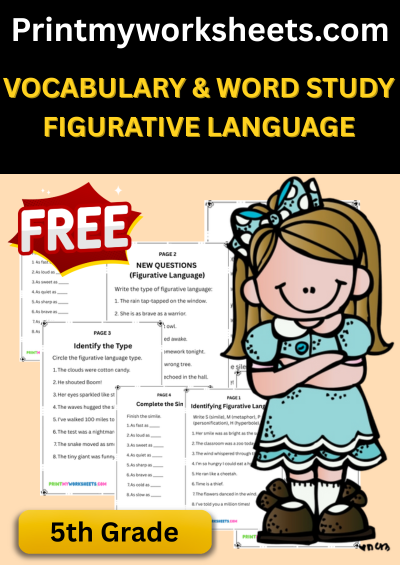
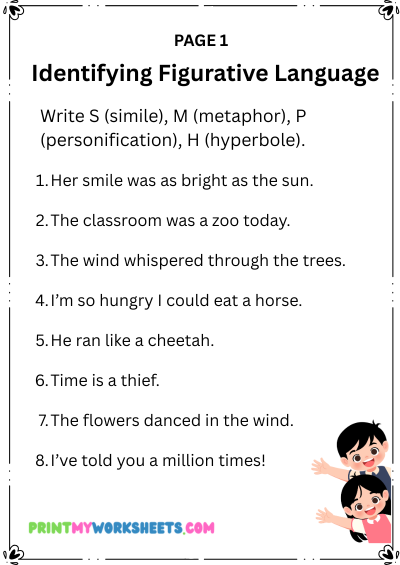
5th Grade Figurative Language Worksheets PDF – Literary Devices Practice with Answer Key
5th Grade Figurative Language Worksheets PDF
These worksheets has been thoughtfully created to support teachers and homeschool parents who want a reliable, standards-aligned, and engaging resource for their students.
These worksheets introduce students to the seven most essential forms of figurative language—similes, metaphors, idioms, personification, hyperbole, alliteration, and onomatopoeia—through a mix of explanation, discovery, and hands-on application. Instead of simply defining each term, the worksheets guide students in recognizing how figurative language appears across different genres, including fiction, nonfiction, poetry, and everyday conversation. This helps students understand not just what figurative language is, but why authors use it and how it enhances meaning. With reading expectations increasing significantly in 5th grade, students must be able to interpret text beyond its literal meaning, and these activities give them the structured practice they need to strengthen comprehension skills such as inference, visualization, and interpretation of tone and mood.
Each page in this PDF has been intentionally designed with upper-elementary learners in mind. Students complete tasks such as identifying examples in short passages, matching expressions to their definitions, analyzing an author’s craft, and creating their own original figurative sentences. These varied activities encourage students to think critically while providing natural opportunities to build vocabulary and reinforce academic language. By analyzing figurative expressions, students learn to slow down, consider context, and read with a deeper level of attention—all essential skills for strong literacy development.
Teachers appreciate that the worksheets can be used flexibly throughout the school year: as part of a focused reading lesson, in writing workshops, during literacy centers, in small-group instruction, or as independent practice for homework or early finishers. Homeschool parents value the clarity, pacing, and kid-friendly design that keeps learners engaged without overwhelming them. The worksheets follow a logical sequence, making them suitable for both introducing new concepts and reviewing previously taught skills.
Why in 5th Grade ?
One of the most important benefits of teaching figurative language in 5th grade is the impact it has on writing fluency. Students who understand figurative devices naturally begin to incorporate expressive language into their own writing. They craft more descriptive narratives, write richer responses to literature, and develop stronger author’s voice. These worksheets include opportunities for students to create similes, metaphors, and idioms of their own, helping them practice the craft of writing in meaningful, creative ways.
This 5th Grade Figurative Language Worksheets PDF is also ideal for test preparation, as understanding figurative language is a common expectation in state assessments. The tasks mirror the types of questions students may encounter on standardized tests, helping them practice reading stamina, comprehension strategies, and textual analysis in a low-pressure, student-friendly format. The printable format makes it easy for teachers to use these pages year after year, and the clean layout ensures they work equally well in digital or print-based learning environments.
Benefit for Teachers and Parents :
Teachers and parents benefit from ready-to-use, standards-aligned worksheets that save planning time, simplify instruction, support independent learning, and provide consistent, reliable ELA practice for 5th graders.
By downloading this free PDF, you’re giving your 5th grader a meaningful, engaging, and academically sound way to explore figurative language, build confidence, strengthen vocabulary, and improve both reading comprehension and writing abilities. This is more than just a worksheet set—it is a thoughtfully crafted learning tool designed to support real growth in literacy.
You may also like :
[gallery ids="6297,6322,5648"] 5th Grade Figurative Language Worksheets PDF – Literary Devices Practice with Answer Key
5th Grade Figurative Language Worksheets PDF
These worksheets has been thoughtfully created to support teachers and homeschool parents who want a reliable, standards-aligned, and engaging resource for their students.
These worksheets introduce students to the seven most essential forms of figurative language—similes, metaphors, idioms, personification, hyperbole, alliteration, and onomatopoeia—through a mix of explanation, discovery, and hands-on application. Instead of simply defining each term, the worksheets guide students in recognizing how figurative language appears across different genres, including fiction, nonfiction, poetry, and everyday conversation. This helps students understand not just what figurative language is, but why authors use it and how it enhances meaning. With reading expectations increasing significantly in 5th grade, students must be able to interpret text beyond its literal meaning, and these activities give them the structured practice they need to strengthen comprehension skills such as inference, visualization, and interpretation of tone and mood.
Each page in this PDF has been intentionally designed with upper-elementary learners in mind. Students complete tasks such as identifying examples in short passages, matching expressions to their definitions, analyzing an author’s craft, and creating their own original figurative sentences. These varied activities encourage students to think critically while providing natural opportunities to build vocabulary and reinforce academic language. By analyzing figurative expressions, students learn to slow down, consider context, and read with a deeper level of attention—all essential skills for strong literacy development.
Teachers appreciate that the worksheets can be used flexibly throughout the school year: as part of a focused reading lesson, in writing workshops, during literacy centers, in small-group instruction, or as independent practice for homework or early finishers. Homeschool parents value the clarity, pacing, and kid-friendly design that keeps learners engaged without overwhelming them. The worksheets follow a logical sequence, making them suitable for both introducing new concepts and reviewing previously taught skills.
Why in 5th Grade ?
One of the most important benefits of teaching figurative language in 5th grade is the impact it has on writing fluency. Students who understand figurative devices naturally begin to incorporate expressive language into their own writing. They craft more descriptive narratives, write richer responses to literature, and develop stronger author’s voice. These worksheets include opportunities for students to create similes, metaphors, and idioms of their own, helping them practice the craft of writing in meaningful, creative ways.
This 5th Grade Figurative Language Worksheets PDF is also ideal for test preparation, as understanding figurative language is a common expectation in state assessments. The tasks mirror the types of questions students may encounter on standardized tests, helping them practice reading stamina, comprehension strategies, and textual analysis in a low-pressure, student-friendly format. The printable format makes it easy for teachers to use these pages year after year, and the clean layout ensures they work equally well in digital or print-based learning environments.
Benefit for Teachers and Parents :
Teachers and parents benefit from ready-to-use, standards-aligned worksheets that save planning time, simplify instruction, support independent learning, and provide consistent, reliable ELA practice for 5th graders.
By downloading this free PDF, you’re giving your 5th grader a meaningful, engaging, and academically sound way to explore figurative language, build confidence, strengthen vocabulary, and improve both reading comprehension and writing abilities. This is more than just a worksheet set—it is a thoughtfully crafted learning tool designed to support real growth in literacy.
You may also like :
[gallery ids="6297,6322,5648"]
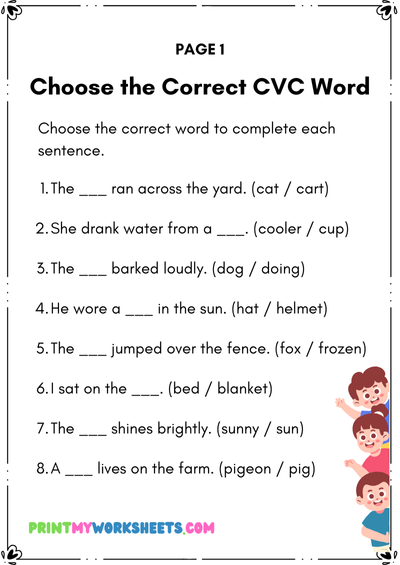
6th Grade CVC Words in Sentences Worksheets PDF – Phonics Practice with Reading Fluency Activities
6th Grade CVC Words in Sentences Worksheets PDF
These worksheets are designed to strengthen foundational phonics skills through contextual sentence practice. These free downloadable PDF worksheets are ideal for US homeschool parents, teachers, intervention specialists, and students who benefit from revisiting core decoding and spelling concepts.
CVC (Consonant–Vowel–Consonant) words are essential building blocks of reading. While typically introduced in early grades, revising CVC words in sentence form at the 6th grade level is especially helpful for remediation, literacy intervention, ESL learners, or students who need extra phonics reinforcement. These worksheets move beyond isolated words and focus on using CVC words correctly within complete sentences.
Learning CVC words in sentences improves decoding accuracy, reading fluency, spelling, and comprehension. When students practice phonics skills in context, they better understand meaning, sentence structure, and word usage. This helps reduce reading hesitation and increases confidence across all subjects that require reading and writing.
Each worksheet includes targeted activities such as identifying CVC words in sentences, completing sentences with correct words, correcting errors, and reading for meaning. The printable PDF format makes them easy to use for classroom intervention, homeschooling routines, tutoring sessions, or independent practice.
Whether closing learning gaps or reinforcing essential literacy foundations, these worksheets provide an effective, supportive, and completely free resource aligned with US reading goals.
You may also like:
[gallery ids="6127,6099,6070"] 6th Grade CVC Words in Sentences Worksheets PDF – Phonics Practice with Reading Fluency Activities
6th Grade CVC Words in Sentences Worksheets PDF
These worksheets are designed to strengthen foundational phonics skills through contextual sentence practice. These free downloadable PDF worksheets are ideal for US homeschool parents, teachers, intervention specialists, and students who benefit from revisiting core decoding and spelling concepts.
CVC (Consonant–Vowel–Consonant) words are essential building blocks of reading. While typically introduced in early grades, revising CVC words in sentence form at the 6th grade level is especially helpful for remediation, literacy intervention, ESL learners, or students who need extra phonics reinforcement. These worksheets move beyond isolated words and focus on using CVC words correctly within complete sentences.
Learning CVC words in sentences improves decoding accuracy, reading fluency, spelling, and comprehension. When students practice phonics skills in context, they better understand meaning, sentence structure, and word usage. This helps reduce reading hesitation and increases confidence across all subjects that require reading and writing.
Each worksheet includes targeted activities such as identifying CVC words in sentences, completing sentences with correct words, correcting errors, and reading for meaning. The printable PDF format makes them easy to use for classroom intervention, homeschooling routines, tutoring sessions, or independent practice.
Whether closing learning gaps or reinforcing essential literacy foundations, these worksheets provide an effective, supportive, and completely free resource aligned with US reading goals.
You may also like:
[gallery ids="6127,6099,6070"]
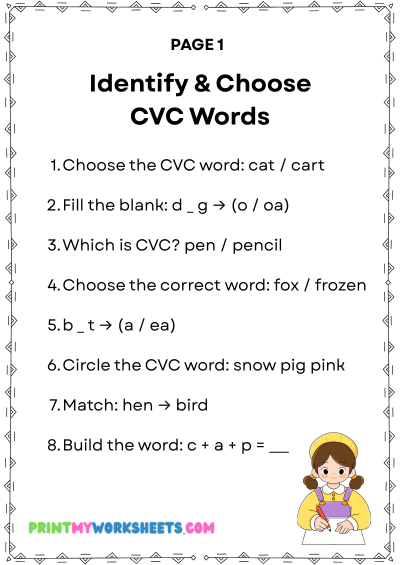
6th Grade CVC Words Phonics Revision Worksheets PDF – Targeted Reading Review with Answer Key
6th Grade CVC Words Phonics Revision Worksheets PDF
These worksheets are designed to reinforce foundational decoding and spelling skills for learners who need targeted phonics review. These free downloadable PDF worksheets are ideal for US homeschool parents, teachers, and students who benefit from revisiting core phonics concepts to strengthen reading accuracy and confidence.
CVC (Consonant–Vowel–Consonant) words form the building blocks of phonics. While commonly introduced in earlier grades, revisiting CVC patterns in 6th grade can be especially helpful for intervention, remediation, ESL learners, or students needing additional literacy support. These worksheets focus on reinforcing sound–letter relationships, decoding strategies, and spelling patterns in a clear, structured way.
Learning CVC phonics through revision improves word recognition, reading fluency, and spelling accuracy. When students master basic phonics patterns, they read more smoothly and focus better on comprehension rather than decoding. This foundational strength supports success across all subjects that require reading and written responses.
Each worksheet includes engaging activities such as identifying CVC patterns, completing words, sorting sounds, and applying phonics skills in short contexts. The printable PDF format makes them easy to use for classroom intervention, homeschooling routines, tutoring sessions, or independent practice.
Whether closing learning gaps or reinforcing essential skills, these worksheets provide an effective, supportive, and completely free phonics resource aligned with US literacy goals.
You may also like:
[gallery ids="6113,6070,6127"] 6th Grade CVC Words Phonics Revision Worksheets PDF – Targeted Reading Review with Answer Key
6th Grade CVC Words Phonics Revision Worksheets PDF
These worksheets are designed to reinforce foundational decoding and spelling skills for learners who need targeted phonics review. These free downloadable PDF worksheets are ideal for US homeschool parents, teachers, and students who benefit from revisiting core phonics concepts to strengthen reading accuracy and confidence.
CVC (Consonant–Vowel–Consonant) words form the building blocks of phonics. While commonly introduced in earlier grades, revisiting CVC patterns in 6th grade can be especially helpful for intervention, remediation, ESL learners, or students needing additional literacy support. These worksheets focus on reinforcing sound–letter relationships, decoding strategies, and spelling patterns in a clear, structured way.
Learning CVC phonics through revision improves word recognition, reading fluency, and spelling accuracy. When students master basic phonics patterns, they read more smoothly and focus better on comprehension rather than decoding. This foundational strength supports success across all subjects that require reading and written responses.
Each worksheet includes engaging activities such as identifying CVC patterns, completing words, sorting sounds, and applying phonics skills in short contexts. The printable PDF format makes them easy to use for classroom intervention, homeschooling routines, tutoring sessions, or independent practice.
Whether closing learning gaps or reinforcing essential skills, these worksheets provide an effective, supportive, and completely free phonics resource aligned with US literacy goals.
You may also like:
[gallery ids="6113,6070,6127"]

6th Grade Future Perfect Tense Worksheets PDF – Grammar Practice with Answer Key
Build advanced grammar skills with our 6th Grade Future Perfect Tense Worksheets PDF, designed for US homeschool parents, teachers, and students. These interactive worksheets help children understand how to describe actions that will be completed before a specific time in the future — using the “will have + past participle” structure.
Each worksheet includes fill-in-the-blank exercises, sentence rewriting tasks, and short writing prompts to strengthen understanding through practical examples. Students will learn how to correctly form and use the future perfect tense in sentences, helping them improve clarity, precision, and fluency in their writing.
Why learn the future perfect tense? Mastering this tense enables students to express future actions with accuracy, improving both written and spoken communication. It also helps build a deeper understanding of verb tenses, timelines, and logical sequencing, which are essential for storytelling, essays, and advanced grammar mastery.
Perfect for classroom lessons, homeschool learning, or independent practice, this free printable PDF makes grammar study simple and engaging.
Download and print today to give your little learners the head start they deserve!
You may also like:
[caption id="attachment_6063" align="alignnone" width="212"] 6th Grade Active and Passive Voice Worksheets PDF[/caption]
[caption id="attachment_6070" align="alignnone" width="212"]
6th Grade Active and Passive Voice Worksheets PDF[/caption]
[caption id="attachment_6070" align="alignnone" width="212"] 6th Grade Sentence Combining Worksheets PDF[/caption]
[caption id="attachment_6127" align="alignnone" width="212"]
6th Grade Sentence Combining Worksheets PDF[/caption]
[caption id="attachment_6127" align="alignnone" width="212"] 6th Grade Homophones and Homonyms Worksheets PDF[/caption]
 6th Grade Future Perfect Tense Worksheets PDF – Grammar Practice with Answer Key
Build advanced grammar skills with our 6th Grade Future Perfect Tense Worksheets PDF, designed for US homeschool parents, teachers, and students. These interactive worksheets help children understand how to describe actions that will be completed before a specific time in the future — using the “will have + past participle” structure.
Each worksheet includes fill-in-the-blank exercises, sentence rewriting tasks, and short writing prompts to strengthen understanding through practical examples. Students will learn how to correctly form and use the future perfect tense in sentences, helping them improve clarity, precision, and fluency in their writing.
Why learn the future perfect tense? Mastering this tense enables students to express future actions with accuracy, improving both written and spoken communication. It also helps build a deeper understanding of verb tenses, timelines, and logical sequencing, which are essential for storytelling, essays, and advanced grammar mastery.
Perfect for classroom lessons, homeschool learning, or independent practice, this free printable PDF makes grammar study simple and engaging.
Download and print today to give your little learners the head start they deserve!
You may also like:
[caption id="attachment_6063" align="alignnone" width="212"] 6th Grade Active and Passive Voice Worksheets PDF[/caption]
[caption id="attachment_6070" align="alignnone" width="212"] 6th Grade Sentence Combining Worksheets PDF[/caption]
[caption id="attachment_6127" align="alignnone" width="212"] 6th Grade Homophones and Homonyms Worksheets PDF[/caption]

6th Grade Grammar Mechanics Worksheets PDF – Editing and Language Practice
Master the rules of writing with our 6th Grade Grammar Mechanics Worksheets PDF, designed for US homeschool parents, teachers, and classrooms. These worksheets help students build strong grammar foundations by focusing on essential writing mechanics such as punctuation, capitalization, sentence structure, and proper word usage.
Each worksheet includes fun, interactive exercises that challenge students to identify and correct grammatical errors, rewrite sentences, and apply rules in context. By practicing grammar mechanics, children enhance their writing fluency, clarity, and communication skills, preparing them for advanced academic writing.
Why are grammar mechanics important? Understanding the mechanics of language helps students communicate effectively and write with confidence. It encourages precision in expression, improves reading comprehension, and strengthens vocabulary. These skills are crucial not only for school success but also for lifelong literacy and effective communication.
Perfect for classroom lessons, homeschool assignments, or self-paced learning, this free printable PDF makes English grammar practice easy and engaging.
Download and print today to give your little learners the head start they deserve!
You may also like:
[caption id="attachment_5428" align="alignnone" width="212"] 6th Grade Reading Comprehension Fiction Worksheets PDF[/caption]
[caption id="attachment_5484" align="alignnone" width="212"]
6th Grade Reading Comprehension Fiction Worksheets PDF[/caption]
[caption id="attachment_5484" align="alignnone" width="212"] 6th Grade Fractions Worksheets PDF[/caption]
[caption id="attachment_5549" align="alignnone" width="212"]
6th Grade Fractions Worksheets PDF[/caption]
[caption id="attachment_5549" align="alignnone" width="212"] 6th Grade Integers Worksheets PDF[/caption]
 6th Grade Grammar Mechanics Worksheets PDF – Editing and Language Practice
Master the rules of writing with our 6th Grade Grammar Mechanics Worksheets PDF, designed for US homeschool parents, teachers, and classrooms. These worksheets help students build strong grammar foundations by focusing on essential writing mechanics such as punctuation, capitalization, sentence structure, and proper word usage.
Each worksheet includes fun, interactive exercises that challenge students to identify and correct grammatical errors, rewrite sentences, and apply rules in context. By practicing grammar mechanics, children enhance their writing fluency, clarity, and communication skills, preparing them for advanced academic writing.
Why are grammar mechanics important? Understanding the mechanics of language helps students communicate effectively and write with confidence. It encourages precision in expression, improves reading comprehension, and strengthens vocabulary. These skills are crucial not only for school success but also for lifelong literacy and effective communication.
Perfect for classroom lessons, homeschool assignments, or self-paced learning, this free printable PDF makes English grammar practice easy and engaging.
Download and print today to give your little learners the head start they deserve!
You may also like:
[caption id="attachment_5428" align="alignnone" width="212"] 6th Grade Reading Comprehension Fiction Worksheets PDF[/caption]
[caption id="attachment_5484" align="alignnone" width="212"] 6th Grade Fractions Worksheets PDF[/caption]
[caption id="attachment_5549" align="alignnone" width="212"] 6th Grade Integers Worksheets PDF[/caption]

6th Grade Progressive Tense Worksheets PDF – Verb Tense Practice with Answer Key
Help your child master verb tenses with our 6th Grade Progressive Tense Worksheets PDF, designed for US homeschool parents, teachers, and classrooms. These engaging worksheets teach students how to use the progressive (continuous) tense — present, past, and future — to describe ongoing actions effectively.
Through interactive exercises, fill-in-the-blank sentences, and short writing prompts, students will learn how to form and identify progressive tenses correctly using am/is/are + verb-ing structures. These worksheets make grammar practice both fun and meaningful while improving students’ sentence fluency and writing accuracy.
Why is learning the progressive tense important? Understanding progressive verbs helps students communicate actions that happen over time, making their writing more dynamic, descriptive, and precise. It also strengthens grammar skills essential for storytelling, essays, and real-life communication.
Perfect for homeschool lessons, classroom use, or after-school study, these free printable PDF worksheets encourage independent learning and self-correction while reinforcing key English grammar skills.
Download and print today to give your little learners the head start they deserve!
6th Grade Progressive Tense Worksheets PDF – Verb Tense Practice with Answer Key
Help your child master verb tenses with our 6th Grade Progressive Tense Worksheets PDF, designed for US homeschool parents, teachers, and classrooms. These engaging worksheets teach students how to use the progressive (continuous) tense — present, past, and future — to describe ongoing actions effectively.
Through interactive exercises, fill-in-the-blank sentences, and short writing prompts, students will learn how to form and identify progressive tenses correctly using am/is/are + verb-ing structures. These worksheets make grammar practice both fun and meaningful while improving students’ sentence fluency and writing accuracy.
Why is learning the progressive tense important? Understanding progressive verbs helps students communicate actions that happen over time, making their writing more dynamic, descriptive, and precise. It also strengthens grammar skills essential for storytelling, essays, and real-life communication.
Perfect for homeschool lessons, classroom use, or after-school study, these free printable PDF worksheets encourage independent learning and self-correction while reinforcing key English grammar skills.
Download and print today to give your little learners the head start they deserve!
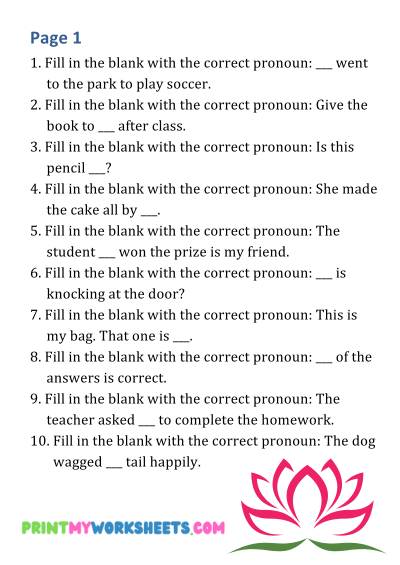
6th Grade Pronouns Worksheets PDF – Grammar Practice with Answer Key
Master grammar easily with our 6th Grade Pronouns Worksheets PDF, designed especially for kids to strengthen their understanding of pronouns in fun and engaging ways. These worksheets help students identify, use, and differentiate between various types of pronouns — including personal, possessive, reflexive, demonstrative, and relative pronouns.
By practicing through interactive exercises, fill-in-the-blanks, and sentence correction activities, learners build a strong foundation in grammar and sentence structure. Understanding pronouns improves writing clarity, eliminates repetition, and enhances overall communication skills — a crucial part of English language development.
These worksheets are perfect for homeschool parents, teachers, and 6th-grade classrooms in the US who want to make grammar lessons interactive and meaningful. Each printable page encourages independent learning and boosts students’ confidence in constructing grammatically correct sentences.
Give your child the advantage of mastering pronouns through practical learning and real-world examples. Download these Free Pronouns Worksheets PDFs today and make grammar practice an enjoyable experience for your learners!
Download and print today to give your little learners the head start they deserve!
6th Grade Pronouns Worksheets PDF – Grammar Practice with Answer Key
Master grammar easily with our 6th Grade Pronouns Worksheets PDF, designed especially for kids to strengthen their understanding of pronouns in fun and engaging ways. These worksheets help students identify, use, and differentiate between various types of pronouns — including personal, possessive, reflexive, demonstrative, and relative pronouns.
By practicing through interactive exercises, fill-in-the-blanks, and sentence correction activities, learners build a strong foundation in grammar and sentence structure. Understanding pronouns improves writing clarity, eliminates repetition, and enhances overall communication skills — a crucial part of English language development.
These worksheets are perfect for homeschool parents, teachers, and 6th-grade classrooms in the US who want to make grammar lessons interactive and meaningful. Each printable page encourages independent learning and boosts students’ confidence in constructing grammatically correct sentences.
Give your child the advantage of mastering pronouns through practical learning and real-world examples. Download these Free Pronouns Worksheets PDFs today and make grammar practice an enjoyable experience for your learners!
Download and print today to give your little learners the head start they deserve!
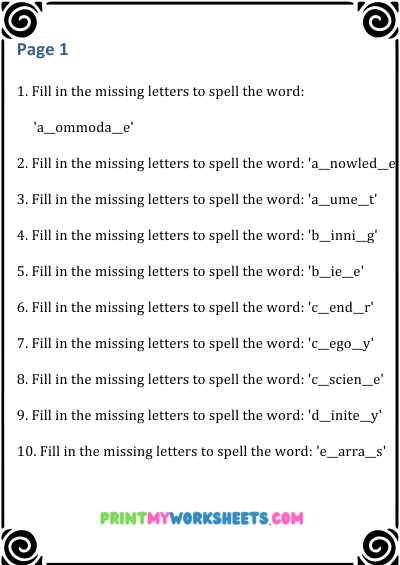
6th Grade Spelling Worksheets PDF – Word Study Practice with Answer Key
Strengthen your child’s vocabulary and writing skills with our 6th Grade Spelling Worksheets PDF, created for US homeschool parents, teachers, and students. These worksheets are designed to make spelling practice engaging and effective through interactive activities that improve both language and comprehension skills.
Each worksheet includes word lists, fill-in-the-blank exercises, crossword puzzles, sentence completion tasks, and spelling challenges to help students master new words and apply them correctly in context. The activities are carefully aligned with grade-level standards to expand vocabulary and reinforce correct spelling patterns.
Why are spelling worksheets important? Good spelling supports strong writing, reading comprehension, and communication. When students spell accurately, they write more confidently and clearly express their ideas. These worksheets also help develop phonetic awareness, memory retention, and word recognition, which are key skills for academic success.
Perfect for classroom lessons, homeschool practice, or at-home enrichment, this free printable PDF is easy to download and use.
Download and print today to give your little learners the head start they deserve!
6th Grade Spelling Worksheets PDF – Word Study Practice with Answer Key
Strengthen your child’s vocabulary and writing skills with our 6th Grade Spelling Worksheets PDF, created for US homeschool parents, teachers, and students. These worksheets are designed to make spelling practice engaging and effective through interactive activities that improve both language and comprehension skills.
Each worksheet includes word lists, fill-in-the-blank exercises, crossword puzzles, sentence completion tasks, and spelling challenges to help students master new words and apply them correctly in context. The activities are carefully aligned with grade-level standards to expand vocabulary and reinforce correct spelling patterns.
Why are spelling worksheets important? Good spelling supports strong writing, reading comprehension, and communication. When students spell accurately, they write more confidently and clearly express their ideas. These worksheets also help develop phonetic awareness, memory retention, and word recognition, which are key skills for academic success.
Perfect for classroom lessons, homeschool practice, or at-home enrichment, this free printable PDF is easy to download and use.
Download and print today to give your little learners the head start they deserve!


6th Grade Synonyms and Antonyms Worksheets PDF – Build Strong Word Meaning Skills
Enhance your child’s vocabulary and language skills with our 6th Grade Synonyms and Antonyms Worksheets PDF, designed for US homeschool parents, teachers, and classrooms. These engaging worksheets help students strengthen their understanding of word relationships by exploring words with similar meanings (synonyms) and opposite meanings (antonyms).
Each worksheet includes matching activities, fill-in-the-blank exercises, multiple-choice questions, and sentence-building tasks that make learning both fun and effective. Students will learn to choose the right words for better expression, improve their writing variety, and enhance reading comprehension through contextual word usage.
Why learn synonyms and antonyms? Mastering these concepts helps kids expand vocabulary, improve spelling, and strengthen communication and writing clarity. It teaches them how to use diverse words to convey emotions, ideas, and actions more effectively — key skills for success in academic writing and creative storytelling.
Perfect for classroom lessons, homeschool learning, or at-home language practice, this free printable PDF is an excellent resource to make English vocabulary interactive and enjoyable.
Download and print today to give your little learners the head start they deserve!
You may also like:
[caption id="attachment_6113" align="alignnone" width="212"] 6th Grade Future Perfect Tense Worksheets PDF[/caption]
[caption id="attachment_6106" align="alignnone" width="212"]
6th Grade Future Perfect Tense Worksheets PDF[/caption]
[caption id="attachment_6106" align="alignnone" width="212"] 6th Grade Progressive Tense Worksheets PDF[/caption]
[caption id="attachment_6056" align="alignnone" width="212"]
6th Grade Progressive Tense Worksheets PDF[/caption]
[caption id="attachment_6056" align="alignnone" width="212"] 6th Grade Vocabulary and Language Worksheets PDF[/caption]
 6th Grade Synonyms and Antonyms Worksheets PDF – Build Strong Word Meaning Skills
Enhance your child’s vocabulary and language skills with our 6th Grade Synonyms and Antonyms Worksheets PDF, designed for US homeschool parents, teachers, and classrooms. These engaging worksheets help students strengthen their understanding of word relationships by exploring words with similar meanings (synonyms) and opposite meanings (antonyms).
Each worksheet includes matching activities, fill-in-the-blank exercises, multiple-choice questions, and sentence-building tasks that make learning both fun and effective. Students will learn to choose the right words for better expression, improve their writing variety, and enhance reading comprehension through contextual word usage.
Why learn synonyms and antonyms? Mastering these concepts helps kids expand vocabulary, improve spelling, and strengthen communication and writing clarity. It teaches them how to use diverse words to convey emotions, ideas, and actions more effectively — key skills for success in academic writing and creative storytelling.
Perfect for classroom lessons, homeschool learning, or at-home language practice, this free printable PDF is an excellent resource to make English vocabulary interactive and enjoyable.
Download and print today to give your little learners the head start they deserve!
You may also like:
[caption id="attachment_6113" align="alignnone" width="212"] 6th Grade Future Perfect Tense Worksheets PDF[/caption]
[caption id="attachment_6106" align="alignnone" width="212"] 6th Grade Progressive Tense Worksheets PDF[/caption]
[caption id="attachment_6056" align="alignnone" width="212"] 6th Grade Vocabulary and Language Worksheets PDF[/caption]

7th Grade Adjectives and Adverbs Worksheets PDF – Strengthen Writing and Language Skills
7th Grade Adjectives and Adverbs Worksheets PDF
These worksheets help students understand how descriptive words improve sentence meaning, clarity, and detail. These free downloadable PDF worksheets are designed for US homeschool parents, middle school teachers, and students who need effective grammar practice aligned with US curriculum standards.
Adjectives describe nouns, while adverbs modify verbs, adjectives, and other adverbs. Learning the difference is essential for clear writing and accurate communication. These worksheets guide students through identifying, comparing, and correctly using adjectives and adverbs in meaningful sentence contexts. Regular practice helps reduce common grammar mistakes and strengthens overall language skills.
Understanding adjectives and adverbs enhances reading comprehension by helping students recognize tone, mood, and detail in texts. In writing, these parts of speech allow students to create more vivid descriptions, improve sentence variety, and express ideas more precisely. Strong descriptive skills are especially important for essays, creative writing, and standardized tests.
Each worksheet includes age-appropriate exercises that promote critical thinking and real-world application. The printable PDF format makes them easy to use for classroom instruction, homeschooling, homework assignments, grammar centers, or independent practice.
Whether reinforcing lessons or building long-term grammar mastery, these worksheets provide an engaging, reliable, and completely free resource for improving language skills.
You may also like:
[gallery ids="6674,6666,5668"] 7th Grade Adjectives and Adverbs Worksheets PDF – Strengthen Writing and Language Skills
7th Grade Adjectives and Adverbs Worksheets PDF
These worksheets help students understand how descriptive words improve sentence meaning, clarity, and detail. These free downloadable PDF worksheets are designed for US homeschool parents, middle school teachers, and students who need effective grammar practice aligned with US curriculum standards.
Adjectives describe nouns, while adverbs modify verbs, adjectives, and other adverbs. Learning the difference is essential for clear writing and accurate communication. These worksheets guide students through identifying, comparing, and correctly using adjectives and adverbs in meaningful sentence contexts. Regular practice helps reduce common grammar mistakes and strengthens overall language skills.
Understanding adjectives and adverbs enhances reading comprehension by helping students recognize tone, mood, and detail in texts. In writing, these parts of speech allow students to create more vivid descriptions, improve sentence variety, and express ideas more precisely. Strong descriptive skills are especially important for essays, creative writing, and standardized tests.
Each worksheet includes age-appropriate exercises that promote critical thinking and real-world application. The printable PDF format makes them easy to use for classroom instruction, homeschooling, homework assignments, grammar centers, or independent practice.
Whether reinforcing lessons or building long-term grammar mastery, these worksheets provide an engaging, reliable, and completely free resource for improving language skills.
You may also like:
[gallery ids="6674,6666,5668"]

7th Grade Nouns Worksheets PDF – Easy Home Grammar Review for Middle School
7th Grade Nouns Worksheets PDF
Nouns Spiral Review Worksheets for 7th grade are an essential grammar resource designed to help students build a strong foundation in parts of speech through consistent, structured practice. These free downloadable PDF worksheets are perfect for US homeschool parents, teachers, and middle school kids who want to strengthen noun skills in an engaging and effective way.
Spiral review is a proven learning strategy that revisits key concepts regularly, helping students retain knowledge over time. With these worksheets, learners practice identifying and using common nouns, proper nouns, abstract nouns, and collective nouns across multiple exercises. This repeated exposure improves grammar accuracy, writing clarity, and overall language confidence.
For homeschool families, these worksheets offer a ready-to-use, curriculum-aligned solution that saves planning time while ensuring quality learning. Teachers can easily incorporate them into classroom instruction, homework, or test prep. Kids benefit from clear instructions, age-appropriate examples, and printable activities that make grammar practice less overwhelming and more approachable.
By mastering nouns through spiral review, students develop stronger sentence structure, improved reading comprehension, and better writing skills—critical for success in middle school and beyond. Download these free 7th grade noun worksheets today and make grammar practice simple, consistent, and effective.
You may also like:
[gallery ids="5675,5668,5543"] 7th Grade Nouns Worksheets PDF – Easy Home Grammar Review for Middle School
7th Grade Nouns Worksheets PDF
Nouns Spiral Review Worksheets for 7th grade are an essential grammar resource designed to help students build a strong foundation in parts of speech through consistent, structured practice. These free downloadable PDF worksheets are perfect for US homeschool parents, teachers, and middle school kids who want to strengthen noun skills in an engaging and effective way.
Spiral review is a proven learning strategy that revisits key concepts regularly, helping students retain knowledge over time. With these worksheets, learners practice identifying and using common nouns, proper nouns, abstract nouns, and collective nouns across multiple exercises. This repeated exposure improves grammar accuracy, writing clarity, and overall language confidence.
For homeschool families, these worksheets offer a ready-to-use, curriculum-aligned solution that saves planning time while ensuring quality learning. Teachers can easily incorporate them into classroom instruction, homework, or test prep. Kids benefit from clear instructions, age-appropriate examples, and printable activities that make grammar practice less overwhelming and more approachable.
By mastering nouns through spiral review, students develop stronger sentence structure, improved reading comprehension, and better writing skills—critical for success in middle school and beyond. Download these free 7th grade noun worksheets today and make grammar practice simple, consistent, and effective.
You may also like:
[gallery ids="5675,5668,5543"]
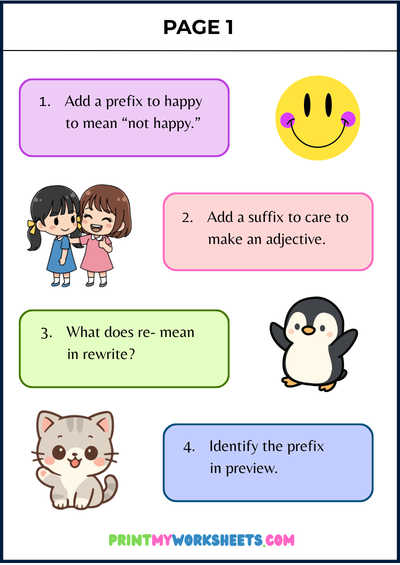
7th Grade Prefixes Suffixes Worksheets PDF – Vocabulary Building Practice with Answer Key
7th Grade Prefixes Suffixes Worksheets PDF
The 7th Grade Prefixes Suffixes Worksheets PDF is a structured literacy resource designed to strengthen vocabulary development and word analysis skills. This free printable PDF is ideal for U.S. parents, teachers, and homeschool families who want targeted language arts practice aligned with middle school standards.
In seventh grade, students are expected to understand how prefixes and suffixes change the meaning and function of words. Mastery of affixes helps students decode unfamiliar vocabulary, improve reading comprehension, and enhance writing clarity. Rather than memorizing isolated word lists, learners benefit from understanding how word parts work together.
This worksheet collection provides focused practice that encourages students to analyze word structure, identify patterns, and apply affixes accurately. By strengthening morphological awareness, students gain tools that support academic reading across subjects, including science, history, and literature.
What Students Will Learn?
These seventh grade prefixes and suffixes worksheets are designed to build strong word analysis skills. Students will explore how prefixes and suffixes modify root words and how those changes affect meaning and grammar.
Through structured exercises, students will:
-
Identify common prefixes such as “pre-,” “re-,” “mis-,” and “un-”
-
Recognize suffixes like “-ful,” “-less,” “-ment,” and “-able”
-
Determine the meaning of unfamiliar words using context clues
-
Create new words by adding appropriate affixes
-
Distinguish between changes in word meaning and word form
Activities may include matching exercises, fill-in-the-blank sentences, word-building tasks, and short reading passages. These varied formats help reinforce understanding through repetition and application.
The worksheets align with U.S. middle school English Language Arts standards, which emphasize vocabulary acquisition and word structure analysis. By practicing consistently, students develop a stronger grasp of language patterns that support reading comprehension and academic success across multiple subjects.
Educational Value & Skill Development
The 7th Grade Prefixes Suffixes Worksheets PDF supports vocabulary growth and critical thinking skills. Morphological awareness—the understanding of how words are formed—plays a major role in reading comprehension and writing development.
Academically, students benefit from recognizing patterns in language. When they understand common prefixes and suffixes, they can decode unfamiliar words more confidently. This reduces reliance on memorization and encourages analytical thinking.
Cognitively, analyzing word parts strengthens logical reasoning. Students must break words into components, identify the root, and determine how added affixes alter meaning. This structured thinking supports problem-solving skills beyond language arts.
Confidence increases as students gain independence in vocabulary learning. Instead of skipping challenging words while reading, they learn strategies to determine meaning on their own. This skill becomes increasingly important in seventh grade, where texts grow more complex in all academic subjects.
Regular practice with affixes also enhances writing. Students expand their vocabulary choices and understand how to use words accurately in context. Over time, this strengthens both clarity and expression in written assignments.
Why Focus on Prefixes and Suffixes?
Understanding prefixes and suffixes is essential for middle school students because it supports advanced vocabulary development. Many academic words in English are built from recognizable word parts. When students understand these parts, they unlock thousands of new words.
Seventh grade reading materials often include complex vocabulary in literature, science, and social studies texts. Word structure analysis allows students to approach unfamiliar terms with confidence rather than frustration.
Repetition and guided practice are key to mastery. Students benefit from seeing the same prefixes and suffixes used in multiple contexts. This reinforces memory and deepens understanding.
This skill also aligns with U.S. language arts standards that emphasize word analysis and vocabulary acquisition. Strong knowledge of affixes prepares students for more advanced reading and writing tasks in eighth grade and beyond.
How to Use These Worksheets?
The 7th Grade Prefixes Suffixes Worksheets PDF can be used in classrooms, homeschool settings, and small-group instruction. Teachers may assign the worksheets during vocabulary lessons, literacy centers, or as homework reinforcement.
In homeschool environments, parents can integrate these pages into weekly language arts practice. Reviewing a few example problems together before independent work helps clarify expectations and strengthen understanding.
Because this resource is provided as a free printable PDF, it is easy to download and print as needed. Worksheets can be reused for review sessions or vocabulary refreshers throughout the school year.
These pages also work well for intervention or enrichment. Students who need extra support with vocabulary can benefit from targeted practice, while advanced learners can expand their word-building skills by exploring additional examples.
Related Worksheets / Extensions:
You may also like:
-
7th grade context clues worksheets
-
Greek and Latin root word worksheets
-
6th grade vocabulary building activities
-
8th grade word analysis practice pages
-
Reading comprehension worksheets for middle school
The 7th Grade Prefixes Suffixes Worksheets PDF pairs well with additional vocabulary and reading comprehension resources. Combining affix practice with contextual reading tasks helps students apply their knowledge in meaningful ways. By building strong word analysis skills, learners develop the confidence and academic vocabulary needed for success in middle school and beyond.
You may also like:
[gallery ids="6681,6674,6659"] 7th Grade Prefixes Suffixes Worksheets PDF – Vocabulary Building Practice with Answer Key
7th Grade Prefixes Suffixes Worksheets PDF
The 7th Grade Prefixes Suffixes Worksheets PDF is a structured literacy resource designed to strengthen vocabulary development and word analysis skills. This free printable PDF is ideal for U.S. parents, teachers, and homeschool families who want targeted language arts practice aligned with middle school standards.
In seventh grade, students are expected to understand how prefixes and suffixes change the meaning and function of words. Mastery of affixes helps students decode unfamiliar vocabulary, improve reading comprehension, and enhance writing clarity. Rather than memorizing isolated word lists, learners benefit from understanding how word parts work together.
This worksheet collection provides focused practice that encourages students to analyze word structure, identify patterns, and apply affixes accurately. By strengthening morphological awareness, students gain tools that support academic reading across subjects, including science, history, and literature.
What Students Will Learn?
These seventh grade prefixes and suffixes worksheets are designed to build strong word analysis skills. Students will explore how prefixes and suffixes modify root words and how those changes affect meaning and grammar.
Through structured exercises, students will:
-
Identify common prefixes such as “pre-,” “re-,” “mis-,” and “un-”
-
Recognize suffixes like “-ful,” “-less,” “-ment,” and “-able”
-
Determine the meaning of unfamiliar words using context clues
-
Create new words by adding appropriate affixes
-
Distinguish between changes in word meaning and word form
Activities may include matching exercises, fill-in-the-blank sentences, word-building tasks, and short reading passages. These varied formats help reinforce understanding through repetition and application.
The worksheets align with U.S. middle school English Language Arts standards, which emphasize vocabulary acquisition and word structure analysis. By practicing consistently, students develop a stronger grasp of language patterns that support reading comprehension and academic success across multiple subjects.
Educational Value & Skill Development
The 7th Grade Prefixes Suffixes Worksheets PDF supports vocabulary growth and critical thinking skills. Morphological awareness—the understanding of how words are formed—plays a major role in reading comprehension and writing development.
Academically, students benefit from recognizing patterns in language. When they understand common prefixes and suffixes, they can decode unfamiliar words more confidently. This reduces reliance on memorization and encourages analytical thinking.
Cognitively, analyzing word parts strengthens logical reasoning. Students must break words into components, identify the root, and determine how added affixes alter meaning. This structured thinking supports problem-solving skills beyond language arts.
Confidence increases as students gain independence in vocabulary learning. Instead of skipping challenging words while reading, they learn strategies to determine meaning on their own. This skill becomes increasingly important in seventh grade, where texts grow more complex in all academic subjects.
Regular practice with affixes also enhances writing. Students expand their vocabulary choices and understand how to use words accurately in context. Over time, this strengthens both clarity and expression in written assignments.
Why Focus on Prefixes and Suffixes?
Understanding prefixes and suffixes is essential for middle school students because it supports advanced vocabulary development. Many academic words in English are built from recognizable word parts. When students understand these parts, they unlock thousands of new words.
Seventh grade reading materials often include complex vocabulary in literature, science, and social studies texts. Word structure analysis allows students to approach unfamiliar terms with confidence rather than frustration.
Repetition and guided practice are key to mastery. Students benefit from seeing the same prefixes and suffixes used in multiple contexts. This reinforces memory and deepens understanding.
This skill also aligns with U.S. language arts standards that emphasize word analysis and vocabulary acquisition. Strong knowledge of affixes prepares students for more advanced reading and writing tasks in eighth grade and beyond.
How to Use These Worksheets?
The 7th Grade Prefixes Suffixes Worksheets PDF can be used in classrooms, homeschool settings, and small-group instruction. Teachers may assign the worksheets during vocabulary lessons, literacy centers, or as homework reinforcement.
In homeschool environments, parents can integrate these pages into weekly language arts practice. Reviewing a few example problems together before independent work helps clarify expectations and strengthen understanding.
Because this resource is provided as a free printable PDF, it is easy to download and print as needed. Worksheets can be reused for review sessions or vocabulary refreshers throughout the school year.
These pages also work well for intervention or enrichment. Students who need extra support with vocabulary can benefit from targeted practice, while advanced learners can expand their word-building skills by exploring additional examples.
Related Worksheets / Extensions:
You may also like:
-
7th grade context clues worksheets
-
Greek and Latin root word worksheets
-
6th grade vocabulary building activities
-
8th grade word analysis practice pages
-
Reading comprehension worksheets for middle school
The 7th Grade Prefixes Suffixes Worksheets PDF pairs well with additional vocabulary and reading comprehension resources. Combining affix practice with contextual reading tasks helps students apply their knowledge in meaningful ways. By building strong word analysis skills, learners develop the confidence and academic vocabulary needed for success in middle school and beyond.
You may also like:
[gallery ids="6681,6674,6659"]

8th Grade Connotation and Denotation Worksheets PDF – Vocabulary Practice with Answer Key
8th Grade Connotation and Denotation Worksheets PDF
These worksheets are designed for US homeschool parents, teachers, and classrooms. These engaging worksheets help students understand the difference between denotation (the literal meaning of a word) and connotation (the emotional or cultural association behind it).
Each worksheet includes sentence analysis, matching activities, word comparison tasks, and short writing exercises that help learners identify how word choice affects tone and meaning in writing. By exploring examples like “cheap vs. affordable” or “curious vs. nosy,” students learn how subtle word differences shape communication and interpretation.
Why learn connotation and denotation?
Understanding these concepts is key to reading comprehension, effective writing, and critical thinking. It empowers students to select words purposefully, interpret author intent, and recognize emotional impact in both literature and everyday language.
Perfect for classroom lessons, homeschool study, or independent practice, this free printable PDF makes vocabulary learning interactive and meaningful.
Download and print today to give your little learners the head start they deserve!
You may also like :
[gallery ids="6170,4878,6155"] 8th Grade Connotation and Denotation Worksheets PDF – Vocabulary Practice with Answer Key
8th Grade Connotation and Denotation Worksheets PDF
These worksheets are designed for US homeschool parents, teachers, and classrooms. These engaging worksheets help students understand the difference between denotation (the literal meaning of a word) and connotation (the emotional or cultural association behind it).
Each worksheet includes sentence analysis, matching activities, word comparison tasks, and short writing exercises that help learners identify how word choice affects tone and meaning in writing. By exploring examples like “cheap vs. affordable” or “curious vs. nosy,” students learn how subtle word differences shape communication and interpretation.
Why learn connotation and denotation?
Understanding these concepts is key to reading comprehension, effective writing, and critical thinking. It empowers students to select words purposefully, interpret author intent, and recognize emotional impact in both literature and everyday language.
Perfect for classroom lessons, homeschool study, or independent practice, this free printable PDF makes vocabulary learning interactive and meaningful.
Download and print today to give your little learners the head start they deserve!
You may also like :
[gallery ids="6170,4878,6155"]
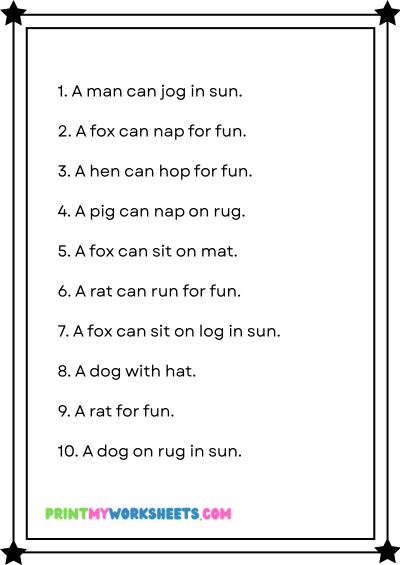
Kindergarten CVC Reading Fluency Sentences Worksheets – Literacy Centers and Small Group Lessons
Kindergarten CVC Reading Fluency Sentences Worksheets
Building reading fluency is one of the most important goals in kindergarten literacy instruction. These Kindergarten CVC Reading Fluency Sentences Worksheets are designed to help young learners move from decoding individual words to reading short sentences with confidence and accuracy. Created for U.S. parents, classroom teachers, and homeschool families, this free printable PDF provides structured, age-appropriate reading practice that fits easily into daily learning routines.
At the kindergarten level, students are learning how sounds blend together and how words work within sentences. Practicing CVC-based sentences allows children to apply phonics skills in a meaningful context while developing smooth, steady reading habits. This worksheet set focuses on simple sentence structures that support repetition without frustration. With clear directions and a predictable layout, these worksheets help children strengthen fluency, build confidence, and develop early comprehension skills that are essential for success in first grade and beyond.
What Students Will Learn ?
This worksheet set supports kindergarten students as they develop reading fluency through consistent practice with short, decodable sentences. Students will learn how to read CVC-based sentences smoothly by blending sounds accurately and maintaining a steady reading pace. These activities help children move beyond word-by-word reading toward more natural sentence flow.
The worksheets include structured reading tasks that reinforce phonics skills while encouraging sentence-level reading. Students may read simple sentences aloud, track words from left to right, and practice recognizing familiar word patterns. The focus remains on accuracy and fluency rather than speed, helping children build strong foundational habits.
Each activity is designed to support structured learning. Sentences are short, clear, and developmentally appropriate for kindergarten learners. The worksheets fit well within U.S. kindergarten reading expectations by reinforcing phonics, fluency, and early comprehension skills. Whether used independently or with adult guidance, these activities support focused practice that helps students gain confidence and consistency in reading simple sentences.
Educational Value & Skill Development
Reading fluency practice provides significant academic and developmental benefits, and the Kindergarten CVC Reading Fluency Sentences Worksheets support growth across multiple areas. Academically, these worksheets help students strengthen decoding skills while learning to read connected text. Practicing sentence-level reading supports smoother transitions into more complex texts.
From a cognitive perspective, fluency practice improves attention, memory, and processing speed. Students learn to recognize word patterns quickly, reducing the effort required to decode each word. This allows them to focus more on meaning and comprehension as they read.
These worksheets also promote confidence and independence. Familiar sentence structures and predictable formats help children understand expectations and complete tasks successfully. As students experience repeated success, they develop a more positive attitude toward reading. Over time, consistent practice with Kindergarten CVC Reading Fluency Sentences Worksheets supports skill progression from decoding individual words to reading full sentences with clarity and confidence, preparing students for more advanced reading tasks in first grade.
Why Focus on Kindergarten CVC Reading Fluency Sentences Worksheets ?
Why Focus on Kindergarten CVC Reading Fluency Sentences Worksheets? Reading fluency is a key component of early literacy, and kindergarten is the ideal time to develop this skill. When children can read simple sentences smoothly, they are better prepared to understand what they read.
CVC-based sentences provide an effective starting point because they rely on consistent phonics patterns that young learners can decode successfully. Practicing these sentences helps students apply phonics skills in context, rather than in isolation. This supports a deeper understanding of how words work together to form meaning.
Repetition and guided practice are essential for fluency development. Children need multiple opportunities to read similar sentence structures before fluency becomes automatic. These worksheets align with early literacy expectations commonly used in U.S. schools by emphasizing accuracy, consistency, and confidence. Regular sentence-level practice helps bridge the gap between phonics instruction and independent reading, setting the stage for long-term reading success.
How to Use These Worksheets ?
These worksheets are flexible and easy to use in a variety of learning environments. In homeschool settings, parents can include them in daily reading routines, encouraging children to read sentences aloud and discuss meaning. This supports both fluency and comprehension.
In classrooms, teachers can use the worksheets during literacy centers, small-group instruction, or independent reading practice. They allow students to revisit fluency skills regularly. Because the resource is provided as a free printable PDF, it is easy to download and print as needed.
Pages can be reused by placing them in sheet protectors or laminating for repeated practice. For families and educators seeking structured fluency support, Kindergarten CVC Reading Fluency Sentences Worksheets offer a practical, consistent way to strengthen early reading skills.
What’s Included in This PDF ?
This printable worksheet set is designed to support kindergarten reading instruction with clarity and simplicity. Each page focuses on meaningful fluency practice without unnecessary distractions. Inside this PDF, you’ll find:
-
Multiple printable worksheets focused on CVC sentence reading
-
Sentence-level fluency activities for kindergarten learners
-
A kid-friendly layout that supports independent reading
-
Black-and-white, print-friendly pages
-
Content aligned with U.S. kindergarten literacy expectations
-
A free downloadable PDF format for easy access
You may also like:
[gallery ids="6895,6839,6689"]Related Worksheets / Extensions :
To support continued literacy development, you may want to pair these worksheets with other early reading resources. CVC word lists, phonics worksheets, and sight word practice pages can complement sentence fluency activities and provide balanced instruction.
You may also explore similar fluency resources for different grade levels or reading stages. Materials like Kindergarten CVC Reading Fluency Sentences Worksheets work well alongside year-round reading practice, helping students build accuracy, confidence, and comprehension through consistent, structured reading activities.
Kindergarten CVC Reading Fluency Sentences Worksheets – Literacy Centers and Small Group Lessons
Kindergarten CVC Reading Fluency Sentences Worksheets
Building reading fluency is one of the most important goals in kindergarten literacy instruction. These Kindergarten CVC Reading Fluency Sentences Worksheets are designed to help young learners move from decoding individual words to reading short sentences with confidence and accuracy. Created for U.S. parents, classroom teachers, and homeschool families, this free printable PDF provides structured, age-appropriate reading practice that fits easily into daily learning routines.
At the kindergarten level, students are learning how sounds blend together and how words work within sentences. Practicing CVC-based sentences allows children to apply phonics skills in a meaningful context while developing smooth, steady reading habits. This worksheet set focuses on simple sentence structures that support repetition without frustration. With clear directions and a predictable layout, these worksheets help children strengthen fluency, build confidence, and develop early comprehension skills that are essential for success in first grade and beyond.
What Students Will Learn ?
This worksheet set supports kindergarten students as they develop reading fluency through consistent practice with short, decodable sentences. Students will learn how to read CVC-based sentences smoothly by blending sounds accurately and maintaining a steady reading pace. These activities help children move beyond word-by-word reading toward more natural sentence flow.
The worksheets include structured reading tasks that reinforce phonics skills while encouraging sentence-level reading. Students may read simple sentences aloud, track words from left to right, and practice recognizing familiar word patterns. The focus remains on accuracy and fluency rather than speed, helping children build strong foundational habits.
Each activity is designed to support structured learning. Sentences are short, clear, and developmentally appropriate for kindergarten learners. The worksheets fit well within U.S. kindergarten reading expectations by reinforcing phonics, fluency, and early comprehension skills. Whether used independently or with adult guidance, these activities support focused practice that helps students gain confidence and consistency in reading simple sentences.
Educational Value & Skill Development
Reading fluency practice provides significant academic and developmental benefits, and the Kindergarten CVC Reading Fluency Sentences Worksheets support growth across multiple areas. Academically, these worksheets help students strengthen decoding skills while learning to read connected text. Practicing sentence-level reading supports smoother transitions into more complex texts.
From a cognitive perspective, fluency practice improves attention, memory, and processing speed. Students learn to recognize word patterns quickly, reducing the effort required to decode each word. This allows them to focus more on meaning and comprehension as they read.
These worksheets also promote confidence and independence. Familiar sentence structures and predictable formats help children understand expectations and complete tasks successfully. As students experience repeated success, they develop a more positive attitude toward reading. Over time, consistent practice with Kindergarten CVC Reading Fluency Sentences Worksheets supports skill progression from decoding individual words to reading full sentences with clarity and confidence, preparing students for more advanced reading tasks in first grade.
Why Focus on Kindergarten CVC Reading Fluency Sentences Worksheets ?
Why Focus on Kindergarten CVC Reading Fluency Sentences Worksheets? Reading fluency is a key component of early literacy, and kindergarten is the ideal time to develop this skill. When children can read simple sentences smoothly, they are better prepared to understand what they read.
CVC-based sentences provide an effective starting point because they rely on consistent phonics patterns that young learners can decode successfully. Practicing these sentences helps students apply phonics skills in context, rather than in isolation. This supports a deeper understanding of how words work together to form meaning.
Repetition and guided practice are essential for fluency development. Children need multiple opportunities to read similar sentence structures before fluency becomes automatic. These worksheets align with early literacy expectations commonly used in U.S. schools by emphasizing accuracy, consistency, and confidence. Regular sentence-level practice helps bridge the gap between phonics instruction and independent reading, setting the stage for long-term reading success.
How to Use These Worksheets ?
These worksheets are flexible and easy to use in a variety of learning environments. In homeschool settings, parents can include them in daily reading routines, encouraging children to read sentences aloud and discuss meaning. This supports both fluency and comprehension.
In classrooms, teachers can use the worksheets during literacy centers, small-group instruction, or independent reading practice. They allow students to revisit fluency skills regularly. Because the resource is provided as a free printable PDF, it is easy to download and print as needed.
Pages can be reused by placing them in sheet protectors or laminating for repeated practice. For families and educators seeking structured fluency support, Kindergarten CVC Reading Fluency Sentences Worksheets offer a practical, consistent way to strengthen early reading skills.
What’s Included in This PDF ?
This printable worksheet set is designed to support kindergarten reading instruction with clarity and simplicity. Each page focuses on meaningful fluency practice without unnecessary distractions. Inside this PDF, you’ll find:
-
Multiple printable worksheets focused on CVC sentence reading
-
Sentence-level fluency activities for kindergarten learners
-
A kid-friendly layout that supports independent reading
-
Black-and-white, print-friendly pages
-
Content aligned with U.S. kindergarten literacy expectations
-
A free downloadable PDF format for easy access
You may also like:
[gallery ids="6895,6839,6689"]Related Worksheets / Extensions :
To support continued literacy development, you may want to pair these worksheets with other early reading resources. CVC word lists, phonics worksheets, and sight word practice pages can complement sentence fluency activities and provide balanced instruction.
You may also explore similar fluency resources for different grade levels or reading stages. Materials like Kindergarten CVC Reading Fluency Sentences Worksheets work well alongside year-round reading practice, helping students build accuracy, confidence, and comprehension through consistent, structured reading activities.
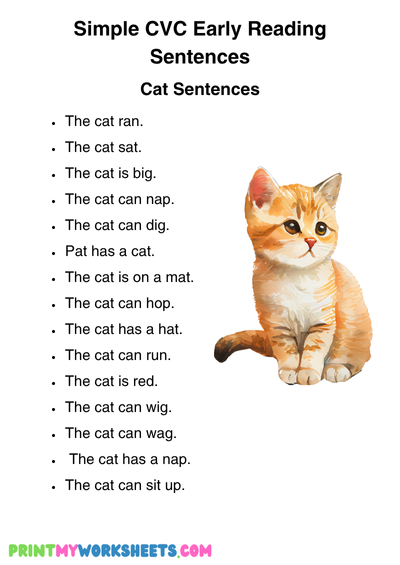
Kindergarten CVC Reading Sentences Worksheets PDF | Free Downloadable
Kindergarten CVC Reading Sentences Worksheets PDF
Learning to read is one of the most important milestones in kindergarten, and early success depends on strong phonics instruction. These CVC reading sentences worksheets are created to help young learners move from sounding out individual words to reading simple, meaningful sentences with confidence. Designed for U.S. parents, classroom teachers, and homeschool families, this free printable resource supports daily phonics practice in a clear and approachable way. The Kindergarten CVC Reading Sentences Worksheets PDF focuses on consonant-vowel-consonant word patterns that are commonly taught in kindergarten classrooms. At this stage, children are developing the ability to blend sounds smoothly and recognize short vowel words automatically. Practicing CVC words within sentences helps students understand how phonics skills apply to real reading. These worksheets provide structured, age-appropriate reading practice that supports early literacy development and prepares children for more complex reading tasks ahead.
What Students Will Learn ?
These worksheets are designed with clear learning goals that align with kindergarten reading expectations. Students will practice reading simple sentences that include common CVC words, early sight words, and predictable sentence patterns. Each activity encourages children to blend sounds, recognize word families, and build fluency through repetition. By working with short sentences rather than isolated words, students begin to understand how words work together to convey meaning. The worksheets support left-to-right tracking, proper spacing between words, and basic sentence structure, all of which are essential reading skills at this level. Activities are intentionally structured to allow for independent practice, making them suitable for children who are still developing confidence as readers. With regular use, students strengthen decoding skills, improve word recognition, and develop early comprehension. These outcomes support reading readiness and help kindergarten learners build a solid foundation for future literacy instruction.If your child is learning CVC sentences, you may also want to practice with these related CVC worksheets:
[caption id="attachment_7193" align="alignnone" width="212"] Kindergarten Vehicles CVC Sentences Worksheets PDF[/caption]
[caption id="attachment_6966" align="alignnone" width="212"]
Kindergarten Vehicles CVC Sentences Worksheets PDF[/caption]
[caption id="attachment_6966" align="alignnone" width="212"] Kindergarten CVC Reading Fluency Sentences Worksheets[/caption]
Educational Value & Skill Development
Strong phonics instruction plays a key role in early academic success, and these worksheets are designed to support that growth in meaningful ways. Reading CVC sentences helps children develop phonemic awareness by reinforcing the connection between sounds and letters. As students repeatedly decode short vowel words in sentence form, they begin to read more smoothly and accurately, supporting early fluency development. The Kindergarten CVC Reading Sentences Worksheets PDF also encourage cognitive skills such as attention, memory, and problem-solving as children work through each sentence. Reading simple text builds confidence and motivates young learners to engage more actively with reading tasks. In addition to literacy skills, these worksheets support fine motor development when students track words, point to text, or complete written responses. By combining phonics practice with sentence-level reading, this resource supports a natural progression from sound recognition to meaningful reading, helping children become more confident and independent learners.Why Focus on CVC Reading Sentences?
CVC reading sentences are a critical step in early literacy instruction because they bridge the gap between word decoding and actual reading. In kindergarten, students are expected to apply phonics skills in real reading situations, not just recognize individual sounds. CVC words are often the first words children can successfully decode, making them ideal for early sentence reading. Practicing these words in sentence form helps students understand context, build comprehension, and recognize patterns in language. This approach aligns with early learning standards commonly used across U.S. schools, which emphasize phonics, decoding, and basic comprehension. Repetition is especially important for young learners, as repeated exposure to similar sentence structures strengthens memory and automaticity. Regular practice with CVC sentences supports smoother reading and prepares students for longer texts in first grade. Focusing on this skill helps ensure children develop a strong and confident start in reading.How to Use These Worksheets ?
These CVC reading sentence worksheets are flexible and easy to use in a variety of learning settings. In homeschool environments, they can be used as part of a daily phonics routine or reading lesson. Classroom teachers may incorporate them into morning work, literacy centers, small group instruction, or independent practice time. The worksheets are also helpful for extra practice or review, allowing students to reinforce skills they have already learned. Because the Kindergarten CVC Reading Sentences Worksheets PDF is provided as a free printable PDF, it is simple to download, print, and reuse throughout the school year. Parents can use the worksheets for short reading sessions at home, while teachers can print multiple copies for classroom use. The straightforward design makes them easy to implement without extensive preparation or additional materials.Explore more Kindergarten worksheets :
[gallery ids="5088,5083,6603"]Related Worksheets / Extensions :
You may also like exploring additional phonics and early reading resources that support skill progression. Related worksheets may include CVC word reading activities, short vowel word families, phonics sentence comprehension pages, or early sight word practice. These extensions help reinforce the same foundational skills while adding variety to reading instruction. Families and teachers looking to build a complete phonics practice routine can pair this resource with other early literacy worksheets for consistent reinforcement. The Kindergarten CVC Reading Sentences Worksheets PDF also works well alongside printable activities for phonemic awareness, word blending, and early writing. Using related worksheets together supports steady skill development and helps young learners gain confidence as they continue building their reading abilities.Frequently Asked Questions
Q1. Is this worksheet free to download? Yes, this worksheet is available as a free printable PDF for personal and classroom use. Q2. Does this worksheet include an answer key? Yes, an answer key is included to help teachers and parents quickly check student work. Q3. What grade level is this worksheet for? This worksheet is designed for Kindergarten students and aligns with grade-level english standards. Q4. Can I use this worksheet for homeschooling? Absolutely! It is perfect for homeschooling, classroom practice, homework, and test prep. Kindergarten CVC Reading Sentences Worksheets PDF | Free Downloadable
Kindergarten CVC Reading Sentences Worksheets PDF
Learning to read is one of the most important milestones in kindergarten, and early success depends on strong phonics instruction. These CVC reading sentences worksheets are created to help young learners move from sounding out individual words to reading simple, meaningful sentences with confidence. Designed for U.S. parents, classroom teachers, and homeschool families, this free printable resource supports daily phonics practice in a clear and approachable way. The Kindergarten CVC Reading Sentences Worksheets PDF focuses on consonant-vowel-consonant word patterns that are commonly taught in kindergarten classrooms. At this stage, children are developing the ability to blend sounds smoothly and recognize short vowel words automatically. Practicing CVC words within sentences helps students understand how phonics skills apply to real reading. These worksheets provide structured, age-appropriate reading practice that supports early literacy development and prepares children for more complex reading tasks ahead.
What Students Will Learn ?
These worksheets are designed with clear learning goals that align with kindergarten reading expectations. Students will practice reading simple sentences that include common CVC words, early sight words, and predictable sentence patterns. Each activity encourages children to blend sounds, recognize word families, and build fluency through repetition. By working with short sentences rather than isolated words, students begin to understand how words work together to convey meaning. The worksheets support left-to-right tracking, proper spacing between words, and basic sentence structure, all of which are essential reading skills at this level. Activities are intentionally structured to allow for independent practice, making them suitable for children who are still developing confidence as readers. With regular use, students strengthen decoding skills, improve word recognition, and develop early comprehension. These outcomes support reading readiness and help kindergarten learners build a solid foundation for future literacy instruction.If your child is learning CVC sentences, you may also want to practice with these related CVC worksheets:
[caption id="attachment_7193" align="alignnone" width="212"] Kindergarten Vehicles CVC Sentences Worksheets PDF[/caption]
[caption id="attachment_6966" align="alignnone" width="212"] Kindergarten CVC Reading Fluency Sentences Worksheets[/caption]
Educational Value & Skill Development
Strong phonics instruction plays a key role in early academic success, and these worksheets are designed to support that growth in meaningful ways. Reading CVC sentences helps children develop phonemic awareness by reinforcing the connection between sounds and letters. As students repeatedly decode short vowel words in sentence form, they begin to read more smoothly and accurately, supporting early fluency development. The Kindergarten CVC Reading Sentences Worksheets PDF also encourage cognitive skills such as attention, memory, and problem-solving as children work through each sentence. Reading simple text builds confidence and motivates young learners to engage more actively with reading tasks. In addition to literacy skills, these worksheets support fine motor development when students track words, point to text, or complete written responses. By combining phonics practice with sentence-level reading, this resource supports a natural progression from sound recognition to meaningful reading, helping children become more confident and independent learners.Why Focus on CVC Reading Sentences?
CVC reading sentences are a critical step in early literacy instruction because they bridge the gap between word decoding and actual reading. In kindergarten, students are expected to apply phonics skills in real reading situations, not just recognize individual sounds. CVC words are often the first words children can successfully decode, making them ideal for early sentence reading. Practicing these words in sentence form helps students understand context, build comprehension, and recognize patterns in language. This approach aligns with early learning standards commonly used across U.S. schools, which emphasize phonics, decoding, and basic comprehension. Repetition is especially important for young learners, as repeated exposure to similar sentence structures strengthens memory and automaticity. Regular practice with CVC sentences supports smoother reading and prepares students for longer texts in first grade. Focusing on this skill helps ensure children develop a strong and confident start in reading.How to Use These Worksheets ?
These CVC reading sentence worksheets are flexible and easy to use in a variety of learning settings. In homeschool environments, they can be used as part of a daily phonics routine or reading lesson. Classroom teachers may incorporate them into morning work, literacy centers, small group instruction, or independent practice time. The worksheets are also helpful for extra practice or review, allowing students to reinforce skills they have already learned. Because the Kindergarten CVC Reading Sentences Worksheets PDF is provided as a free printable PDF, it is simple to download, print, and reuse throughout the school year. Parents can use the worksheets for short reading sessions at home, while teachers can print multiple copies for classroom use. The straightforward design makes them easy to implement without extensive preparation or additional materials.Explore more Kindergarten worksheets :
[gallery ids="5088,5083,6603"]Related Worksheets / Extensions :
You may also like exploring additional phonics and early reading resources that support skill progression. Related worksheets may include CVC word reading activities, short vowel word families, phonics sentence comprehension pages, or early sight word practice. These extensions help reinforce the same foundational skills while adding variety to reading instruction. Families and teachers looking to build a complete phonics practice routine can pair this resource with other early literacy worksheets for consistent reinforcement. The Kindergarten CVC Reading Sentences Worksheets PDF also works well alongside printable activities for phonemic awareness, word blending, and early writing. Using related worksheets together supports steady skill development and helps young learners gain confidence as they continue building their reading abilities.Frequently Asked Questions
Q1. Is this worksheet free to download? Yes, this worksheet is available as a free printable PDF for personal and classroom use. Q2. Does this worksheet include an answer key? Yes, an answer key is included to help teachers and parents quickly check student work. Q3. What grade level is this worksheet for? This worksheet is designed for Kindergarten students and aligns with grade-level english standards. Q4. Can I use this worksheet for homeschooling? Absolutely! It is perfect for homeschooling, classroom practice, homework, and test prep.
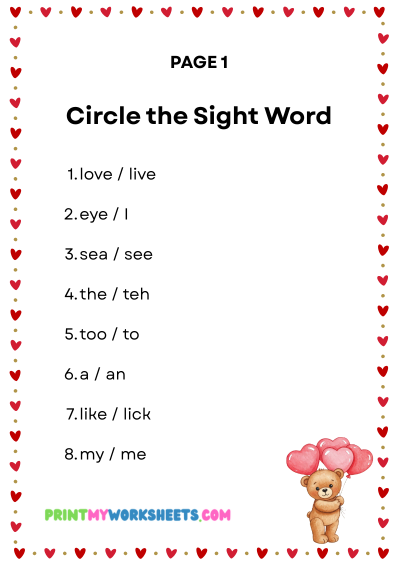
Kindergarten Valentine’s Day Sight Words Worksheets PDF – February Literacy Centers and Holiday Reading Practice
Kindergarten Valentine’s Day Sight Words Worksheets PDF
Seasonal learning activities can be a powerful way to keep young learners engaged while reinforcing essential skills. These Kindergarten Valentine’s Day Sight Words Worksheets PDF are designed to help children practice high-frequency words in a fun, age-appropriate way while staying focused on meaningful reading development. Created for U.S. parents, classroom teachers, and homeschool families, this free printable resource blends early literacy instruction with a familiar seasonal theme that children enjoy.
Sight words are a core part of kindergarten reading instruction. At this stage, students are learning to recognize common words automatically so they can read simple sentences with confidence and fluency. These worksheets provide structured practice that supports that goal without relying on distractions or complex instructions. By combining sight word review with a Valentine’s Day theme, children stay motivated while reinforcing skills they need throughout the school year. This printable set works well as supplemental practice, review, or small-group instruction during the winter months.
What Students Will Learn ?
This worksheet set focuses on strengthening sight word recognition, an essential kindergarten literacy skill. Students practice identifying, reading, and engaging with commonly used words that appear frequently in early reading materials. The activities are designed to help children recognize these words quickly and accurately, supporting smoother reading experiences.
The worksheets include a variety of age-appropriate tasks that encourage repeated exposure to sight words in different formats. Students may trace, read, match, or identify words within simple contexts, helping reinforce memory through consistent practice. Each activity supports structured learning by focusing on one skill at a time, which is important for young learners still developing attention and focus.
These worksheets align with kindergarten expectations in U.S. classrooms by reinforcing foundational reading skills without overwhelming students. The layout is clear and predictable, allowing children to work independently or with light guidance. By completing these activities, students build familiarity with essential words while developing confidence and early reading habits that support long-term academic success.
Educational Value & Skill Development
Sight word practice plays a key role in early literacy development, and using themed resources can increase student engagement without compromising instructional value. The Kindergarten Valentine’s Day Sight Words Worksheets PDF support academic growth by helping students recognize high-frequency words automatically, which is critical for reading fluency.
As children practice these words, they strengthen visual memory, attention to detail, and word recognition skills. Automatic sight word recall reduces cognitive load, allowing students to focus on comprehension rather than decoding every word. This progression supports smoother transitions into sentence reading and early comprehension activities.
Beyond academics, these worksheets also promote independence and confidence. Completing familiar tasks successfully helps children feel capable and motivated to continue learning. The consistent structure allows students to understand expectations quickly, making the worksheets suitable for independent practice, review, or small-group instruction. Over time, repeated exposure to sight words through varied activities supports long-term retention and prepares students for more advanced reading tasks in later grades.
Why Focus on Kindergarten Valentine’s Day Sight Words Worksheets ?
Why Focus on Kindergarten Valentine’s Day Sight Words Worksheets? Sight words form the backbone of early reading instruction. In kindergarten, students are expected to recognize many common words instantly, without sounding them out. This ability directly supports reading fluency and comprehension.
Seasonal worksheets offer an effective way to provide repetition while maintaining student interest. When children are engaged, they are more likely to stay focused and complete practice activities with care. Valentine’s Day-themed worksheets provide a familiar context that feels enjoyable while still reinforcing core skills.
Regular, guided practice is essential for mastery. Sight words require repeated exposure in multiple formats to move from short-term recognition to long-term memory. These worksheets support early learning standards commonly used in U.S. schools by emphasizing consistent review, skill reinforcement, and gradual progression. By focusing on sight words at this stage, educators and parents help students build a strong foundation for reading success in first grade and beyond.
How to Use These Worksheets ?
These worksheets are flexible and easy to integrate into different learning environments. In homeschool settings, parents can use them as part of a daily reading routine or as a seasonal literacy activity. Teachers may include them in classroom literacy centers, morning work, or small-group instruction focused on sight word review.
The worksheets also work well for independent practice, allowing students to reinforce skills at their own pace. Because they are provided as a free printable PDF, downloading and printing is simple. Pages can be reused for review by placing them in sheet protectors or laminating for repeated practice.
For families and educators looking for themed literacy support, Kindergarten Valentine’s Day Sight Words Worksheets PDF offer a practical way to reinforce essential skills while keeping learning engaging. They are suitable for review, reinforcement, or extra practice throughout the Valentine’s Day season.
What’s Included in This PDF ?
This printable worksheet set is designed to be simple, effective, and easy to use in any learning setting. Each page focuses on clear skill practice without unnecessary distractions. Inside this PDF, you’ll find:
-
Multiple printable worksheets focused on kindergarten sight words
-
Activities that support reading recognition and recall
-
A clean, kid-friendly layout for young learners
-
Black-and-white pages for print-friendly use
-
Worksheets aligned with U.S. kindergarten literacy expectations
-
A free downloadable PDF format for quick access
You may also like:
[gallery ids="6839,6689,6603"]Related Worksheets / Extensions
If you are looking to extend learning beyond this set, consider pairing these pages with additional sight word or early reading resources. Alphabet review worksheets, sentence reading practice, or phonics activities can complement sight word instruction and provide balanced literacy support.
You may also explore other seasonal or holiday-themed reading printables designed for kindergarten learners. Resources like Kindergarten Valentine’s Day Sight Words Worksheets PDF work well alongside year-round sight word practice, helping students stay engaged while reinforcing essential reading skills through consistent, meaningful practice.
Kindergarten Valentine’s Day Sight Words Worksheets PDF – February Literacy Centers and Holiday Reading Practice
Kindergarten Valentine’s Day Sight Words Worksheets PDF
Seasonal learning activities can be a powerful way to keep young learners engaged while reinforcing essential skills. These Kindergarten Valentine’s Day Sight Words Worksheets PDF are designed to help children practice high-frequency words in a fun, age-appropriate way while staying focused on meaningful reading development. Created for U.S. parents, classroom teachers, and homeschool families, this free printable resource blends early literacy instruction with a familiar seasonal theme that children enjoy.
Sight words are a core part of kindergarten reading instruction. At this stage, students are learning to recognize common words automatically so they can read simple sentences with confidence and fluency. These worksheets provide structured practice that supports that goal without relying on distractions or complex instructions. By combining sight word review with a Valentine’s Day theme, children stay motivated while reinforcing skills they need throughout the school year. This printable set works well as supplemental practice, review, or small-group instruction during the winter months.
What Students Will Learn ?
This worksheet set focuses on strengthening sight word recognition, an essential kindergarten literacy skill. Students practice identifying, reading, and engaging with commonly used words that appear frequently in early reading materials. The activities are designed to help children recognize these words quickly and accurately, supporting smoother reading experiences.
The worksheets include a variety of age-appropriate tasks that encourage repeated exposure to sight words in different formats. Students may trace, read, match, or identify words within simple contexts, helping reinforce memory through consistent practice. Each activity supports structured learning by focusing on one skill at a time, which is important for young learners still developing attention and focus.
These worksheets align with kindergarten expectations in U.S. classrooms by reinforcing foundational reading skills without overwhelming students. The layout is clear and predictable, allowing children to work independently or with light guidance. By completing these activities, students build familiarity with essential words while developing confidence and early reading habits that support long-term academic success.
Educational Value & Skill Development
Sight word practice plays a key role in early literacy development, and using themed resources can increase student engagement without compromising instructional value. The Kindergarten Valentine’s Day Sight Words Worksheets PDF support academic growth by helping students recognize high-frequency words automatically, which is critical for reading fluency.
As children practice these words, they strengthen visual memory, attention to detail, and word recognition skills. Automatic sight word recall reduces cognitive load, allowing students to focus on comprehension rather than decoding every word. This progression supports smoother transitions into sentence reading and early comprehension activities.
Beyond academics, these worksheets also promote independence and confidence. Completing familiar tasks successfully helps children feel capable and motivated to continue learning. The consistent structure allows students to understand expectations quickly, making the worksheets suitable for independent practice, review, or small-group instruction. Over time, repeated exposure to sight words through varied activities supports long-term retention and prepares students for more advanced reading tasks in later grades.
Why Focus on Kindergarten Valentine’s Day Sight Words Worksheets ?
Why Focus on Kindergarten Valentine’s Day Sight Words Worksheets? Sight words form the backbone of early reading instruction. In kindergarten, students are expected to recognize many common words instantly, without sounding them out. This ability directly supports reading fluency and comprehension.
Seasonal worksheets offer an effective way to provide repetition while maintaining student interest. When children are engaged, they are more likely to stay focused and complete practice activities with care. Valentine’s Day-themed worksheets provide a familiar context that feels enjoyable while still reinforcing core skills.
Regular, guided practice is essential for mastery. Sight words require repeated exposure in multiple formats to move from short-term recognition to long-term memory. These worksheets support early learning standards commonly used in U.S. schools by emphasizing consistent review, skill reinforcement, and gradual progression. By focusing on sight words at this stage, educators and parents help students build a strong foundation for reading success in first grade and beyond.
How to Use These Worksheets ?
These worksheets are flexible and easy to integrate into different learning environments. In homeschool settings, parents can use them as part of a daily reading routine or as a seasonal literacy activity. Teachers may include them in classroom literacy centers, morning work, or small-group instruction focused on sight word review.
The worksheets also work well for independent practice, allowing students to reinforce skills at their own pace. Because they are provided as a free printable PDF, downloading and printing is simple. Pages can be reused for review by placing them in sheet protectors or laminating for repeated practice.
For families and educators looking for themed literacy support, Kindergarten Valentine’s Day Sight Words Worksheets PDF offer a practical way to reinforce essential skills while keeping learning engaging. They are suitable for review, reinforcement, or extra practice throughout the Valentine’s Day season.
What’s Included in This PDF ?
This printable worksheet set is designed to be simple, effective, and easy to use in any learning setting. Each page focuses on clear skill practice without unnecessary distractions. Inside this PDF, you’ll find:
-
Multiple printable worksheets focused on kindergarten sight words
-
Activities that support reading recognition and recall
-
A clean, kid-friendly layout for young learners
-
Black-and-white pages for print-friendly use
-
Worksheets aligned with U.S. kindergarten literacy expectations
-
A free downloadable PDF format for quick access
You may also like:
[gallery ids="6839,6689,6603"]Related Worksheets / Extensions
If you are looking to extend learning beyond this set, consider pairing these pages with additional sight word or early reading resources. Alphabet review worksheets, sentence reading practice, or phonics activities can complement sight word instruction and provide balanced literacy support.
You may also explore other seasonal or holiday-themed reading printables designed for kindergarten learners. Resources like Kindergarten Valentine’s Day Sight Words Worksheets PDF work well alongside year-round sight word practice, helping students stay engaged while reinforcing essential reading skills through consistent, meaningful practice.
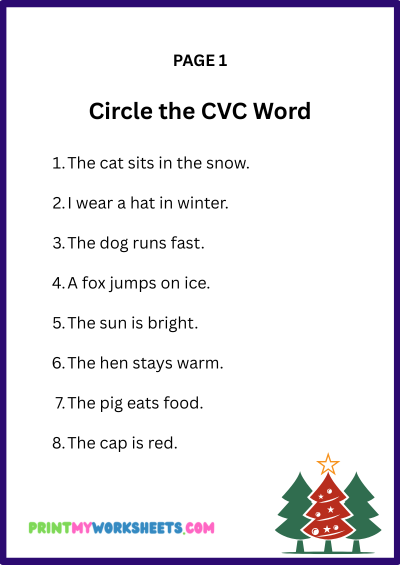
Kindergarten Winter CVC Words Worksheets PDF – Build Early Literacy Skills This Winter
Kindergarten Winter CVC Words Worksheets PDF
Seasonal themes can make early reading practice more engaging while still supporting core literacy goals. These Kindergarten Winter CVC Words Worksheets PDF are designed to help young learners practice consonant-vowel-consonant word patterns in a calm, structured, and age-appropriate way. Created for U.S. parents, classroom teachers, and homeschool families, this free printable resource combines foundational reading skills with a winter theme that feels familiar and motivating for kindergarten students.
CVC words play a critical role in early phonics instruction. In kindergarten, children are learning how individual letter sounds blend together to form simple words. Mastery of these patterns helps students move from letter recognition to confident early reading. These worksheets provide consistent practice with short, decodable words while keeping tasks clear and manageable. With simple directions and a predictable layout, this printable set supports early reading development while building confidence and independence during the winter months.
What Students Will Learn ?
This worksheet set focuses on strengthening early decoding skills through consistent practice with CVC words. Students will learn how to blend beginning, middle, and ending sounds to read simple three-letter words. This skill is a key milestone in kindergarten literacy and supports the transition from recognizing letters to reading words.
The worksheets include a range of structured activities that reinforce learning in multiple ways. Students may practice reading CVC words, matching sounds to letters, completing simple word-building tasks, or identifying words within short, controlled contexts. Each activity targets one clear objective, helping young learners stay focused and successful.
The design of these worksheets aligns with age-appropriate expectations for kindergarten students in the United States. Tasks are short, instructions are clear, and visual layouts are uncluttered. Whether used independently or with adult guidance, these activities support daily phonics routines while helping children develop accuracy, confidence, and early reading habits.
Educational Value & Skill Development
Consistent CVC word practice provides meaningful academic benefits, and the Kindergarten Winter CVC Words Worksheets PDF support early literacy development in several important ways. Academically, these worksheets help students strengthen decoding skills by reinforcing sound-letter relationships and blending strategies. This foundation is essential for reading fluency in later grades.
Cognitively, working with CVC words supports phonemic awareness, memory, and attention. Students learn to listen carefully to sounds, recognize patterns, and apply those patterns to new words. These processes build essential language skills that extend beyond reading.
The worksheets also encourage independence and confidence. Familiar formats and predictable routines help students understand expectations and complete tasks with minimal support. As children experience success, they become more willing to engage with reading activities. Over time, repeated practice with simple word patterns supports skill progression, preparing students for more complex phonics concepts and longer words as they advance through kindergarten and into first grade.
Why Focus on Kindergarten Winter CVC Words Worksheets ?
CVC words are one of the first word patterns children learn to read independently. Understanding these simple structures helps students grasp how sounds work together in written language.
In kindergarten, reading instruction emphasizes phonics and decoding. CVC words provide an ideal starting point because they follow consistent sound patterns that are easy for young learners to practice and remember. Focusing on these words helps students build confidence as they begin reading real words instead of isolated sounds.
Repetition and guided practice are especially important at this stage. Children need multiple opportunities to see, say, and read CVC words before the skill becomes automatic. These worksheets support early learning standards commonly used in U.S. schools by reinforcing foundational phonics skills through structured, repeatable activities. Seasonal themes add interest without distracting from instructional goals, helping students stay engaged while practicing essential reading skills.
How to Use These Worksheets ?
These worksheets are flexible and easy to use across different learning environments. In homeschool settings, parents can introduce one page at a time as part of a daily reading routine. Reading words aloud together and discussing sounds can deepen understanding and reinforce learning.
In classrooms, teachers can use the worksheets during literacy centers, small-group phonics instruction, or independent work time. They are also effective for review and reinforcement, allowing students to revisit CVC patterns they have already learned.
Because the resource is provided as a free printable PDF, it is simple to download and print as needed. Pages can be reused by placing them in sheet protectors or laminating for repeated practice. For educators and families looking for seasonal phonics support, Kindergarten Winter CVC Words Worksheets PDF offer a practical way to reinforce early reading skills in a structured, student-friendly format.
What’s Included in This PDF ?
This printable worksheet set is designed to support kindergarten phonics instruction with clarity and consistency. Each page focuses on meaningful skill practice without unnecessary distractions. Inside this PDF, you’ll find:
-
Multiple printable worksheets focused on CVC word practice
-
Activities that reinforce blending and decoding skills
-
A clean, kid-friendly layout suitable for young learners
-
Black-and-white pages for easy, print-friendly use
-
Content aligned with U.S. kindergarten literacy expectations
-
A free downloadable PDF format for quick and convenient access
You may also like:
[gallery ids="6329,5914,6406"]Related Worksheets / Extensions
To support continued reading development, you may want to pair these worksheets with other early literacy resources. Sight word practice, beginning sound activities, and short vowel worksheets can complement CVC word instruction and provide balanced phonics support.
You may also explore additional seasonal reading resources for kindergarten learners. Resources like Kindergarten Winter CVC Words Worksheets PDF work well alongside year-round phonics practice, helping students strengthen decoding skills through consistent, engaging activities that support early reading success.
Kindergarten Winter CVC Words Worksheets PDF – Build Early Literacy Skills This Winter
Kindergarten Winter CVC Words Worksheets PDF
Seasonal themes can make early reading practice more engaging while still supporting core literacy goals. These Kindergarten Winter CVC Words Worksheets PDF are designed to help young learners practice consonant-vowel-consonant word patterns in a calm, structured, and age-appropriate way. Created for U.S. parents, classroom teachers, and homeschool families, this free printable resource combines foundational reading skills with a winter theme that feels familiar and motivating for kindergarten students.
CVC words play a critical role in early phonics instruction. In kindergarten, children are learning how individual letter sounds blend together to form simple words. Mastery of these patterns helps students move from letter recognition to confident early reading. These worksheets provide consistent practice with short, decodable words while keeping tasks clear and manageable. With simple directions and a predictable layout, this printable set supports early reading development while building confidence and independence during the winter months.
What Students Will Learn ?
This worksheet set focuses on strengthening early decoding skills through consistent practice with CVC words. Students will learn how to blend beginning, middle, and ending sounds to read simple three-letter words. This skill is a key milestone in kindergarten literacy and supports the transition from recognizing letters to reading words.
The worksheets include a range of structured activities that reinforce learning in multiple ways. Students may practice reading CVC words, matching sounds to letters, completing simple word-building tasks, or identifying words within short, controlled contexts. Each activity targets one clear objective, helping young learners stay focused and successful.
The design of these worksheets aligns with age-appropriate expectations for kindergarten students in the United States. Tasks are short, instructions are clear, and visual layouts are uncluttered. Whether used independently or with adult guidance, these activities support daily phonics routines while helping children develop accuracy, confidence, and early reading habits.
Educational Value & Skill Development
Consistent CVC word practice provides meaningful academic benefits, and the Kindergarten Winter CVC Words Worksheets PDF support early literacy development in several important ways. Academically, these worksheets help students strengthen decoding skills by reinforcing sound-letter relationships and blending strategies. This foundation is essential for reading fluency in later grades.
Cognitively, working with CVC words supports phonemic awareness, memory, and attention. Students learn to listen carefully to sounds, recognize patterns, and apply those patterns to new words. These processes build essential language skills that extend beyond reading.
The worksheets also encourage independence and confidence. Familiar formats and predictable routines help students understand expectations and complete tasks with minimal support. As children experience success, they become more willing to engage with reading activities. Over time, repeated practice with simple word patterns supports skill progression, preparing students for more complex phonics concepts and longer words as they advance through kindergarten and into first grade.
Why Focus on Kindergarten Winter CVC Words Worksheets ?
CVC words are one of the first word patterns children learn to read independently. Understanding these simple structures helps students grasp how sounds work together in written language.
In kindergarten, reading instruction emphasizes phonics and decoding. CVC words provide an ideal starting point because they follow consistent sound patterns that are easy for young learners to practice and remember. Focusing on these words helps students build confidence as they begin reading real words instead of isolated sounds.
Repetition and guided practice are especially important at this stage. Children need multiple opportunities to see, say, and read CVC words before the skill becomes automatic. These worksheets support early learning standards commonly used in U.S. schools by reinforcing foundational phonics skills through structured, repeatable activities. Seasonal themes add interest without distracting from instructional goals, helping students stay engaged while practicing essential reading skills.
How to Use These Worksheets ?
These worksheets are flexible and easy to use across different learning environments. In homeschool settings, parents can introduce one page at a time as part of a daily reading routine. Reading words aloud together and discussing sounds can deepen understanding and reinforce learning.
In classrooms, teachers can use the worksheets during literacy centers, small-group phonics instruction, or independent work time. They are also effective for review and reinforcement, allowing students to revisit CVC patterns they have already learned.
Because the resource is provided as a free printable PDF, it is simple to download and print as needed. Pages can be reused by placing them in sheet protectors or laminating for repeated practice. For educators and families looking for seasonal phonics support, Kindergarten Winter CVC Words Worksheets PDF offer a practical way to reinforce early reading skills in a structured, student-friendly format.
What’s Included in This PDF ?
This printable worksheet set is designed to support kindergarten phonics instruction with clarity and consistency. Each page focuses on meaningful skill practice without unnecessary distractions. Inside this PDF, you’ll find:
-
Multiple printable worksheets focused on CVC word practice
-
Activities that reinforce blending and decoding skills
-
A clean, kid-friendly layout suitable for young learners
-
Black-and-white pages for easy, print-friendly use
-
Content aligned with U.S. kindergarten literacy expectations
-
A free downloadable PDF format for quick and convenient access
You may also like:
[gallery ids="6329,5914,6406"]Related Worksheets / Extensions
To support continued reading development, you may want to pair these worksheets with other early literacy resources. Sight word practice, beginning sound activities, and short vowel worksheets can complement CVC word instruction and provide balanced phonics support.
You may also explore additional seasonal reading resources for kindergarten learners. Resources like Kindergarten Winter CVC Words Worksheets PDF work well alongside year-round phonics practice, helping students strengthen decoding skills through consistent, engaging activities that support early reading success.
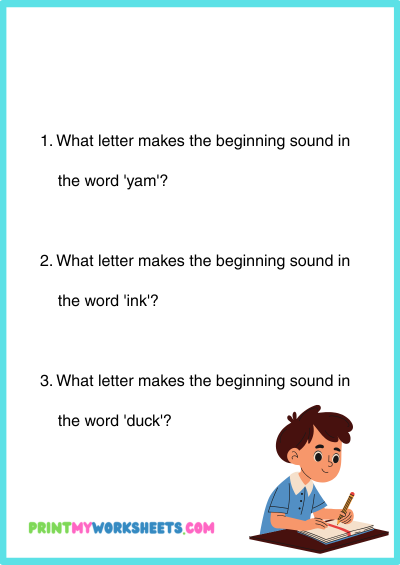
Pre-K Beginning Letter Sounds Worksheets PDF – Phonics Practice Pack for Early Literacy and Alphabet Recognition
Pre-K Beginning Letter Sounds Worksheets PDF
Early literacy begins with strong sound awareness, and helping young learners recognize beginning sounds is one of the most important steps in Pre-K reading readiness. These Pre-K Beginning Letter Sounds Worksheets PDF are designed to support children as they learn to connect letters with the sounds they hear in words. Created specifically for Pre-K students, this free printable resource is ideal for U.S. parents, preschool teachers, and homeschool families who want structured, age-appropriate phonics practice.
Beginning letter sounds form the foundation for phonemic awareness, early reading, and future spelling skills. At the Pre-K level, children are just starting to notice how spoken words are made up of sounds. With guided, repeated practice, they can begin identifying the first sound in familiar words and matching it to the correct letter. This worksheet set offers simple, clear activities that encourage listening, thinking, and early letter recognition without overwhelming young learners. Whether used at home or in the classroom, these worksheets support confident early learning in a developmentally appropriate way.
What Students Will Learn ?
These worksheets focus on helping Pre-K learners build essential early phonics skills through structured and engaging practice. Children will learn how to listen carefully to spoken words and identify the first sound they hear. This skill supports early reading development and helps children understand how language works.
The activities included encourage students to match beginning sounds to letters, recognize common letter-sound relationships, and build familiarity with the alphabet. Learners practice with simple, familiar words that are easy to say and recognize, making the activities accessible for young children. The worksheets are designed with a clear layout so students can focus on the task without distractions.
By working through these pages, children also develop important learning habits such as following directions, focusing on one task at a time, and completing age-appropriate independent work. The progression of activities supports gradual skill development while allowing flexibility for different learning paces. These worksheets align well with typical Pre-K expectations in U.S. early childhood programs and provide meaningful practice that supports early literacy growth.
Educational Value & Skill Development
Using Pre-K Beginning Letter Sounds Worksheets PDF as part of early literacy instruction offers strong educational benefits beyond letter recognition. Identifying beginning sounds strengthens phonemic awareness, which is a key predictor of later reading success. As children learn to hear and isolate sounds, they build the foundation needed for blending sounds into words in kindergarten and beyond.
These worksheets also support cognitive development by encouraging children to listen carefully, process information, and make simple connections. Completing the activities helps improve attention span, visual discrimination, and early problem-solving skills. For young learners, successfully identifying sounds and letters builds confidence and encourages a positive attitude toward learning.
From an instructional standpoint, the worksheets provide consistent practice that supports skill progression. Children move from listening and identifying to matching and recognizing, reinforcing learning through repetition without boredom. Teachers and parents can easily observe progress and identify areas where a child may need extra support. Overall, this resource promotes independence while reinforcing essential early literacy skills in a structured, child-friendly format.
Why Focus on Beginning Letter Sounds ?
Why Focus on Pre-K Beginning Letter Sounds Worksheets? Beginning letter sounds are one of the first phonics skills children learn, and they play a crucial role in early reading development. When children can recognize the first sound in a word, they begin to understand that words are made up of individual sounds.
This skill directly supports later abilities such as blending sounds to read simple words and segmenting sounds for spelling. Without a strong foundation in sound awareness, children may struggle as reading expectations increase in kindergarten and first grade. Practicing beginning sounds helps bridge the gap between spoken language and written text.
Repetition and guided practice are especially important at the Pre-K level. Young learners benefit from seeing and hearing the same letter-sound relationships multiple times in a variety of formats. These worksheets support early learning standards commonly used in U.S. preschool programs and provide the consistency children need to build confidence and readiness for the next stage of literacy instruction.
How to Use These Worksheets ?
These worksheets are flexible and easy to use in a variety of learning environments. In homeschool settings, parents can introduce one worksheet at a time, working alongside their child and discussing each word aloud. In classrooms, teachers can use the pages for literacy centers, small-group instruction, or independent practice during phonics time.
The worksheets also work well for intervention or review, allowing children to revisit beginning sounds as needed. Because they are provided as a free printable PDF, they are easy to download, print, and reuse. Laminating the pages allows for repeated practice with dry-erase markers.
For families and educators looking for structured phonics support, Pre-K Beginning Letter Sounds Worksheets PDF offer a simple way to reinforce skills consistently. The clear format makes them suitable for independent work, while the focused activities ensure meaningful practice without unnecessary distractions.
What’s Included in This PDF ?
This printable resource is designed to be practical and easy to use for both educators and families. Each worksheet focuses on a single skill to keep learning clear and manageable. Inside this worksheet set, you’ll find:
-
Multiple printable worksheets focused on beginning letter sounds
-
Activities that reinforce letter-sound recognition
-
A kid-friendly, uncluttered layout
-
Black-and-white pages for easy printing
-
Print-friendly design suitable for home or classroom use
-
Content aligned with U.S. Pre-K learning expectations
-
A free downloadable PDF format for quick access
You may also like:
[gallery ids="6743,6696,6392"]Related Worksheets / Extensions :
If your child or students are ready for more phonics practice, you may also like exploring related early literacy resources. Consider pairing this set with alphabet recognition worksheets, letter tracing activities, or simple CVC sound practice designed for preschool learners. You can also extend learning by using similar activities for letter identification or matching uppercase and lowercase letters.
For families and teachers building a complete phonics toolkit, Pre-K Beginning Letter Sounds Worksheets PDF work well alongside other Pre-K literacy printables. Using related worksheets together helps reinforce skills through varied practice while keeping learning engaging and age-appropriate.
Pre-K Beginning Letter Sounds Worksheets PDF – Phonics Practice Pack for Early Literacy and Alphabet Recognition
Pre-K Beginning Letter Sounds Worksheets PDF
Early literacy begins with strong sound awareness, and helping young learners recognize beginning sounds is one of the most important steps in Pre-K reading readiness. These Pre-K Beginning Letter Sounds Worksheets PDF are designed to support children as they learn to connect letters with the sounds they hear in words. Created specifically for Pre-K students, this free printable resource is ideal for U.S. parents, preschool teachers, and homeschool families who want structured, age-appropriate phonics practice.
Beginning letter sounds form the foundation for phonemic awareness, early reading, and future spelling skills. At the Pre-K level, children are just starting to notice how spoken words are made up of sounds. With guided, repeated practice, they can begin identifying the first sound in familiar words and matching it to the correct letter. This worksheet set offers simple, clear activities that encourage listening, thinking, and early letter recognition without overwhelming young learners. Whether used at home or in the classroom, these worksheets support confident early learning in a developmentally appropriate way.
What Students Will Learn ?
These worksheets focus on helping Pre-K learners build essential early phonics skills through structured and engaging practice. Children will learn how to listen carefully to spoken words and identify the first sound they hear. This skill supports early reading development and helps children understand how language works.
The activities included encourage students to match beginning sounds to letters, recognize common letter-sound relationships, and build familiarity with the alphabet. Learners practice with simple, familiar words that are easy to say and recognize, making the activities accessible for young children. The worksheets are designed with a clear layout so students can focus on the task without distractions.
By working through these pages, children also develop important learning habits such as following directions, focusing on one task at a time, and completing age-appropriate independent work. The progression of activities supports gradual skill development while allowing flexibility for different learning paces. These worksheets align well with typical Pre-K expectations in U.S. early childhood programs and provide meaningful practice that supports early literacy growth.
Educational Value & Skill Development
Using Pre-K Beginning Letter Sounds Worksheets PDF as part of early literacy instruction offers strong educational benefits beyond letter recognition. Identifying beginning sounds strengthens phonemic awareness, which is a key predictor of later reading success. As children learn to hear and isolate sounds, they build the foundation needed for blending sounds into words in kindergarten and beyond.
These worksheets also support cognitive development by encouraging children to listen carefully, process information, and make simple connections. Completing the activities helps improve attention span, visual discrimination, and early problem-solving skills. For young learners, successfully identifying sounds and letters builds confidence and encourages a positive attitude toward learning.
From an instructional standpoint, the worksheets provide consistent practice that supports skill progression. Children move from listening and identifying to matching and recognizing, reinforcing learning through repetition without boredom. Teachers and parents can easily observe progress and identify areas where a child may need extra support. Overall, this resource promotes independence while reinforcing essential early literacy skills in a structured, child-friendly format.
Why Focus on Beginning Letter Sounds ?
Why Focus on Pre-K Beginning Letter Sounds Worksheets? Beginning letter sounds are one of the first phonics skills children learn, and they play a crucial role in early reading development. When children can recognize the first sound in a word, they begin to understand that words are made up of individual sounds.
This skill directly supports later abilities such as blending sounds to read simple words and segmenting sounds for spelling. Without a strong foundation in sound awareness, children may struggle as reading expectations increase in kindergarten and first grade. Practicing beginning sounds helps bridge the gap between spoken language and written text.
Repetition and guided practice are especially important at the Pre-K level. Young learners benefit from seeing and hearing the same letter-sound relationships multiple times in a variety of formats. These worksheets support early learning standards commonly used in U.S. preschool programs and provide the consistency children need to build confidence and readiness for the next stage of literacy instruction.
How to Use These Worksheets ?
These worksheets are flexible and easy to use in a variety of learning environments. In homeschool settings, parents can introduce one worksheet at a time, working alongside their child and discussing each word aloud. In classrooms, teachers can use the pages for literacy centers, small-group instruction, or independent practice during phonics time.
The worksheets also work well for intervention or review, allowing children to revisit beginning sounds as needed. Because they are provided as a free printable PDF, they are easy to download, print, and reuse. Laminating the pages allows for repeated practice with dry-erase markers.
For families and educators looking for structured phonics support, Pre-K Beginning Letter Sounds Worksheets PDF offer a simple way to reinforce skills consistently. The clear format makes them suitable for independent work, while the focused activities ensure meaningful practice without unnecessary distractions.
What’s Included in This PDF ?
This printable resource is designed to be practical and easy to use for both educators and families. Each worksheet focuses on a single skill to keep learning clear and manageable. Inside this worksheet set, you’ll find:
-
Multiple printable worksheets focused on beginning letter sounds
-
Activities that reinforce letter-sound recognition
-
A kid-friendly, uncluttered layout
-
Black-and-white pages for easy printing
-
Print-friendly design suitable for home or classroom use
-
Content aligned with U.S. Pre-K learning expectations
-
A free downloadable PDF format for quick access
You may also like:
[gallery ids="6743,6696,6392"]Related Worksheets / Extensions :
If your child or students are ready for more phonics practice, you may also like exploring related early literacy resources. Consider pairing this set with alphabet recognition worksheets, letter tracing activities, or simple CVC sound practice designed for preschool learners. You can also extend learning by using similar activities for letter identification or matching uppercase and lowercase letters.
For families and teachers building a complete phonics toolkit, Pre-K Beginning Letter Sounds Worksheets PDF work well alongside other Pre-K literacy printables. Using related worksheets together helps reinforce skills through varied practice while keeping learning engaging and age-appropriate.
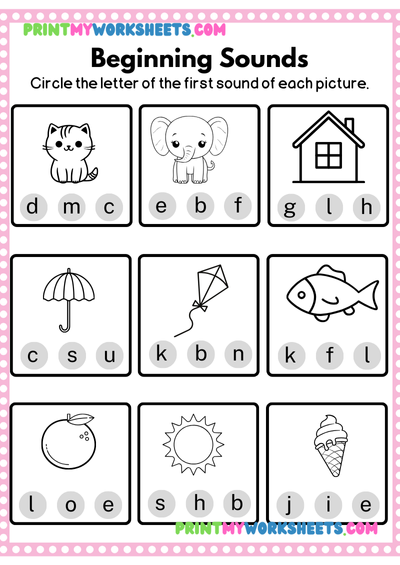
Pre-K Beginning Sounds Worksheets PDF – Easy Home Phonics Practice for Preschoolers
Introduce your preschooler to the world of phonics with our Pre-K Beginning Sounds Worksheets PDF | Phonics Alphabet Practice for Early Learners. This engaging worksheet is designed to help children identify the starting sounds of words, a key skill in early reading and writing development.
The worksheet features pictures of familiar objects alongside letters of the alphabet, encouraging kids to match each picture with its correct beginning sound. Activities like circling, coloring, and tracing make the practice interactive and fun. Through these exercises, children strengthen their phonemic awareness, letter recognition, and vocabulary while also building fine motor skills.
Why focus on beginning sounds in Pre-K? Mastering initial sounds helps children connect spoken language to written letters, laying the foundation for phonics, decoding, and independent reading. It also boosts listening skills, attention to detail, and confidence in sounding out new words. By practicing beginning sounds early, kids are better prepared for kindergarten-level literacy.
Perfect for homeschool parents, preschool teachers, and caregivers, this free printable PDF is easy to download, print, and use at home, in classrooms, or during small group practice.
You may also like :
[gallery ids="6280,5911,5393"] Pre-K Beginning Sounds Worksheets PDF – Easy Home Phonics Practice for Preschoolers
Introduce your preschooler to the world of phonics with our Pre-K Beginning Sounds Worksheets PDF | Phonics Alphabet Practice for Early Learners. This engaging worksheet is designed to help children identify the starting sounds of words, a key skill in early reading and writing development.
The worksheet features pictures of familiar objects alongside letters of the alphabet, encouraging kids to match each picture with its correct beginning sound. Activities like circling, coloring, and tracing make the practice interactive and fun. Through these exercises, children strengthen their phonemic awareness, letter recognition, and vocabulary while also building fine motor skills.
Why focus on beginning sounds in Pre-K? Mastering initial sounds helps children connect spoken language to written letters, laying the foundation for phonics, decoding, and independent reading. It also boosts listening skills, attention to detail, and confidence in sounding out new words. By practicing beginning sounds early, kids are better prepared for kindergarten-level literacy.
Perfect for homeschool parents, preschool teachers, and caregivers, this free printable PDF is easy to download, print, and use at home, in classrooms, or during small group practice.
You may also like :
[gallery ids="6280,5911,5393"]
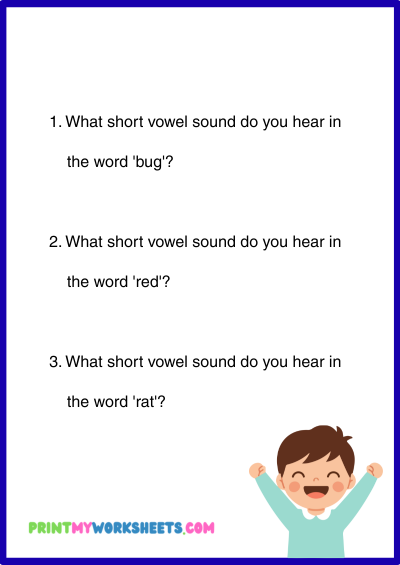
Pre-K Short Vowel Worksheets PDF – Phonics Practice for Early Reading and CVC Word Building
Pre-K Short Vowel Worksheets PDF
Early phonics instruction lays the groundwork for future reading success, and short vowel sounds are a key part of that foundation. These Pre-K Short Vowel Worksheets PDF are designed to introduce young learners to short vowel sounds in a clear, supportive, and age-appropriate way. Created for U.S. parents, preschool teachers, and homeschool families, this free printable resource helps children begin to recognize how vowels sound within simple words.
At the Pre-K level, children are learning to listen closely to spoken language and notice sound patterns. Short vowel sounds often appear in early reading and spelling activities, making early exposure especially important. These worksheets provide structured practice that helps children hear, identify, and work with short vowel sounds without pressure or confusion. With simple tasks and a predictable format, this printable set supports early phonics development while building confidence and readiness for kindergarten literacy instruction.
What Students Will Learn ?
This worksheet set focuses on helping Pre-K learners become familiar with short vowel sounds through guided and repeated practice. Children will learn to listen for vowel sounds in simple words and recognize how those sounds are used in early reading. These activities support phonemic awareness, which is an essential skill at this stage of development.
The worksheets include a variety of activities designed to reinforce learning in multiple ways. Students may practice identifying vowel sounds, matching sounds to letters, or working with simple word patterns that highlight short vowels. Each activity is carefully structured to focus on one concept at a time, helping young learners stay engaged and successful.
These phonics worksheets fit well within age-appropriate expectations for Pre-K students in the United States. Instructions are simple, layouts are uncluttered, and tasks are designed to be completed with minimal frustration. Whether used independently or with adult guidance, the worksheets support early learning routines while encouraging focus, listening skills, and confidence in working with letters and sounds.
Educational Value & Skill Development
Short vowel instruction is an important stepping stone in early literacy, and the Pre-K Short Vowel Worksheets PDF provide meaningful practice that supports multiple areas of development. Academically, these worksheets help children build early phonics skills that are necessary for reading simple words later on. Recognizing vowel sounds prepares students for blending sounds and understanding basic word structures.
From a cognitive perspective, children strengthen listening skills, memory, and attention as they work through each activity. Identifying vowel sounds requires careful listening and thoughtful responses, which supports overall language development. The predictable structure of the worksheets also helps children understand expectations and complete tasks independently.
Using the Pre-K Short Vowel Worksheets PDF consistently can also build confidence. As children successfully complete activities, they gain a sense of accomplishment and become more comfortable engaging with early literacy tasks. Over time, this repeated exposure supports skill progression from sound recognition to early word reading, creating a smooth transition into kindergarten-level phonics instruction.
Why Focus on Pre-K Short Vowel Worksheets ?
Why Focus on Pre-K Short Vowel Worksheets? Short vowel sounds are among the first vowel patterns children encounter when learning to read. Understanding these sounds helps young learners make sense of simple words they will see often in early reading materials.
At the Pre-K level, children are still developing phonemic awareness, which means they are learning to hear and work with individual sounds in words. Focusing on short vowels supports this process by helping children recognize consistent sound patterns. This skill is essential for later tasks such as blending sounds to read CVC words and segmenting sounds for spelling.
Repetition and guided practice are especially important for young learners. Short vowel sounds need to be heard, practiced, and revisited over time to become familiar. These worksheets support early learning standards commonly used in U.S. preschool programs by emphasizing foundational phonics skills in a developmentally appropriate way. Early practice with vowel sounds helps set the stage for confident reading in kindergarten and beyond.
How to Use These Worksheets ?
These worksheets are flexible and easy to use in a variety of learning settings. In homeschool environments, parents can introduce one worksheet at a time, working alongside their child and discussing each sound out loud. In classrooms, teachers can use the pages for phonics centers, small-group instruction, or quiet independent work.
The worksheets are also useful for review and reinforcement. Children can revisit short vowel activities as needed, helping strengthen retention through repeated exposure. Because the resource is provided as a free printable PDF, downloading and printing is quick and convenient. Pages can be reused by placing them in sheet protectors or laminating for ongoing practice.
For families and educators seeking structured phonics support, Pre-K Short Vowel Worksheets PDF offer a practical tool for reinforcing early literacy skills in a calm, focused way.
What’s Included in This PDF ?
This printable resource is designed to be simple, effective, and easy to integrate into daily learning routines. Each worksheet targets short vowel skills without unnecessary distractions. Inside this PDF, you’ll find:
-
Multiple printable worksheets focused on short vowel sounds
-
Skill-specific phonics activities for Pre-K learners
-
A clean, kid-friendly layout that supports focus
-
Black-and-white pages for print-friendly use
-
Content aligned with U.S. Pre-K literacy expectations
-
A free downloadable PDF format for easy access
You may also like:
[gallery ids="6875,6696,6743"]Related Worksheets / Extensions :
To build a well-rounded early literacy routine, you may want to pair these worksheets with other phonics resources. Alphabet recognition pages, beginning sound activities, and simple CVC word practice can complement short vowel instruction and provide balanced learning opportunities.
You may also explore additional phonics printables designed for preschool learners. Resources like Pre-K Short Vowel Worksheets PDF work well alongside early reading and sound awareness activities, helping children strengthen foundational skills through consistent, meaningful practice that supports future reading success.
Pre-K Short Vowel Worksheets PDF – Phonics Practice for Early Reading and CVC Word Building
Pre-K Short Vowel Worksheets PDF
Early phonics instruction lays the groundwork for future reading success, and short vowel sounds are a key part of that foundation. These Pre-K Short Vowel Worksheets PDF are designed to introduce young learners to short vowel sounds in a clear, supportive, and age-appropriate way. Created for U.S. parents, preschool teachers, and homeschool families, this free printable resource helps children begin to recognize how vowels sound within simple words.
At the Pre-K level, children are learning to listen closely to spoken language and notice sound patterns. Short vowel sounds often appear in early reading and spelling activities, making early exposure especially important. These worksheets provide structured practice that helps children hear, identify, and work with short vowel sounds without pressure or confusion. With simple tasks and a predictable format, this printable set supports early phonics development while building confidence and readiness for kindergarten literacy instruction.
What Students Will Learn ?
This worksheet set focuses on helping Pre-K learners become familiar with short vowel sounds through guided and repeated practice. Children will learn to listen for vowel sounds in simple words and recognize how those sounds are used in early reading. These activities support phonemic awareness, which is an essential skill at this stage of development.
The worksheets include a variety of activities designed to reinforce learning in multiple ways. Students may practice identifying vowel sounds, matching sounds to letters, or working with simple word patterns that highlight short vowels. Each activity is carefully structured to focus on one concept at a time, helping young learners stay engaged and successful.
These phonics worksheets fit well within age-appropriate expectations for Pre-K students in the United States. Instructions are simple, layouts are uncluttered, and tasks are designed to be completed with minimal frustration. Whether used independently or with adult guidance, the worksheets support early learning routines while encouraging focus, listening skills, and confidence in working with letters and sounds.
Educational Value & Skill Development
Short vowel instruction is an important stepping stone in early literacy, and the Pre-K Short Vowel Worksheets PDF provide meaningful practice that supports multiple areas of development. Academically, these worksheets help children build early phonics skills that are necessary for reading simple words later on. Recognizing vowel sounds prepares students for blending sounds and understanding basic word structures.
From a cognitive perspective, children strengthen listening skills, memory, and attention as they work through each activity. Identifying vowel sounds requires careful listening and thoughtful responses, which supports overall language development. The predictable structure of the worksheets also helps children understand expectations and complete tasks independently.
Using the Pre-K Short Vowel Worksheets PDF consistently can also build confidence. As children successfully complete activities, they gain a sense of accomplishment and become more comfortable engaging with early literacy tasks. Over time, this repeated exposure supports skill progression from sound recognition to early word reading, creating a smooth transition into kindergarten-level phonics instruction.
Why Focus on Pre-K Short Vowel Worksheets ?
Why Focus on Pre-K Short Vowel Worksheets? Short vowel sounds are among the first vowel patterns children encounter when learning to read. Understanding these sounds helps young learners make sense of simple words they will see often in early reading materials.
At the Pre-K level, children are still developing phonemic awareness, which means they are learning to hear and work with individual sounds in words. Focusing on short vowels supports this process by helping children recognize consistent sound patterns. This skill is essential for later tasks such as blending sounds to read CVC words and segmenting sounds for spelling.
Repetition and guided practice are especially important for young learners. Short vowel sounds need to be heard, practiced, and revisited over time to become familiar. These worksheets support early learning standards commonly used in U.S. preschool programs by emphasizing foundational phonics skills in a developmentally appropriate way. Early practice with vowel sounds helps set the stage for confident reading in kindergarten and beyond.
How to Use These Worksheets ?
These worksheets are flexible and easy to use in a variety of learning settings. In homeschool environments, parents can introduce one worksheet at a time, working alongside their child and discussing each sound out loud. In classrooms, teachers can use the pages for phonics centers, small-group instruction, or quiet independent work.
The worksheets are also useful for review and reinforcement. Children can revisit short vowel activities as needed, helping strengthen retention through repeated exposure. Because the resource is provided as a free printable PDF, downloading and printing is quick and convenient. Pages can be reused by placing them in sheet protectors or laminating for ongoing practice.
For families and educators seeking structured phonics support, Pre-K Short Vowel Worksheets PDF offer a practical tool for reinforcing early literacy skills in a calm, focused way.
What’s Included in This PDF ?
This printable resource is designed to be simple, effective, and easy to integrate into daily learning routines. Each worksheet targets short vowel skills without unnecessary distractions. Inside this PDF, you’ll find:
-
Multiple printable worksheets focused on short vowel sounds
-
Skill-specific phonics activities for Pre-K learners
-
A clean, kid-friendly layout that supports focus
-
Black-and-white pages for print-friendly use
-
Content aligned with U.S. Pre-K literacy expectations
-
A free downloadable PDF format for easy access
You may also like:
[gallery ids="6875,6696,6743"]Related Worksheets / Extensions :
To build a well-rounded early literacy routine, you may want to pair these worksheets with other phonics resources. Alphabet recognition pages, beginning sound activities, and simple CVC word practice can complement short vowel instruction and provide balanced learning opportunities.
You may also explore additional phonics printables designed for preschool learners. Resources like Pre-K Short Vowel Worksheets PDF work well alongside early reading and sound awareness activities, helping children strengthen foundational skills through consistent, meaningful practice that supports future reading success.
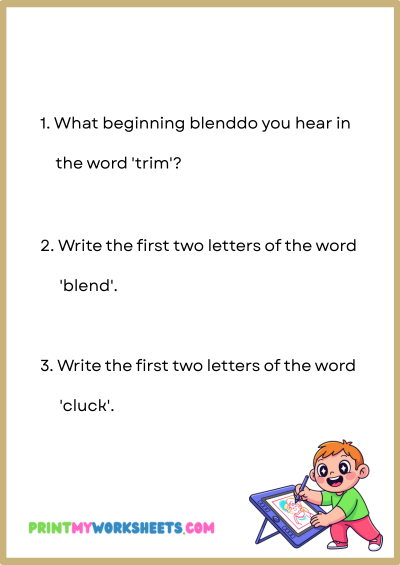
Pre-KG Beginning Blends Worksheets PDF – Phonics Practice for Consonant Blends and Early Reading Skills
Pre-KG Beginning Blends Worksheets PDF
Early phonics instruction helps young learners understand how sounds work together to form words. These Pre-K Beginning Blends Worksheets PDF are designed to introduce children to consonant blends in a gentle, age-appropriate way. Created for U.S. parents, preschool teachers, and homeschool families, this free printable resource supports early reading development through structured and engaging practice.
In Pre-K, children are building listening skills and learning how individual sounds combine in spoken language. Beginning blends, such as bl, st, or cr, are an important step beyond single-letter sounds. Exposure to these sound combinations prepares children for reading simple words as they move toward kindergarten. These worksheets provide clear, guided activities that help children recognize and work with beginning blends without feeling overwhelmed. With simple instructions and a consistent layout, this printable set supports early phonics learning while building confidence and readiness for future literacy instruction.
What Students Will Learn ?
This worksheet set focuses on helping Pre-K learners recognize and work with beginning consonant blends through structured practice. Children will learn to listen carefully to word sounds and notice when two consonants appear together at the start of a word. This skill supports early phonemic awareness and prepares students for decoding words later on.
The activities included encourage children to identify blends, connect sounds to letters, and practice early word recognition. Tasks may involve matching blends to words, identifying beginning sounds, or working with simple pictures and prompts that reinforce sound awareness. Each activity is designed to focus on one clear objective, helping young learners stay engaged and successful.
These worksheets support structured learning by following predictable routines that are easy for Pre-K students to understand. The content fits well within age-appropriate expectations in U.S. early childhood programs, offering just the right level of challenge. Whether used independently or with adult support, the worksheets help children build focus, listening skills, and early phonics confidence.
Educational Value & Skill Development
Beginning blend instruction plays an important role in early literacy development, and the Pre-K Beginning Blends Worksheets PDF offer meaningful educational benefits. Academically, these worksheets help children expand their understanding of how sounds work together, which is a key step toward reading and spelling simple words.
From a cognitive perspective, working with blends strengthens auditory discrimination, memory, and attention. Children learn to listen for subtle sound differences and recognize patterns within words. These skills support overall language development and prepare students for more advanced phonics instruction.
Using the Pre-K Beginning Blends Worksheets PDF also supports confidence and independence. Familiar formats and clear expectations help children feel successful as they complete activities. This sense of accomplishment encourages a positive attitude toward learning. Over time, repeated exposure to beginning blends supports skill progression from sound recognition to early decoding, helping children transition smoothly into kindergarten-level reading instruction.
Why Focus on Pre-K Beginning Blends Worksheets ?
eginning blends are an important bridge between single-letter sounds and more complex word structures. Understanding these sound combinations helps children recognize how spoken language connects to written words.
In Pre-K, students are developing foundational phonemic awareness skills. Introducing blends at this stage allows children to become familiar with common sound patterns they will encounter frequently in early reading. This familiarity makes future decoding tasks feel more manageable and less intimidating.
Repetition and guided practice are essential for mastering blends. Children need multiple opportunities to hear, see, and practice these sounds before they become comfortable recognizing them. These worksheets support early learning standards commonly used in U.S. preschool programs by reinforcing foundational phonics skills in a developmentally appropriate way. Early exposure to blends helps build a strong literacy foundation that supports reading success in kindergarten and beyond.
How to Use These Worksheets ?
These worksheets are flexible and easy to use in a variety of learning settings. In homeschool environments, parents can introduce one worksheet at a time, working alongside their child and discussing sounds out loud. This shared practice helps reinforce learning and builds confidence.
In classrooms, teachers can use the worksheets during phonics centers, small-group instruction, or independent practice. The activities also work well for review and reinforcement, allowing children to revisit blends they have already learned. Because the resource is provided as a free printable PDF, it is easy to download and print as needed.
Pages can be reused by placing them in sheet protectors or laminating for repeated practice. For families and educators looking for structured phonics support, Pre-K Beginning Blends Worksheets PDF offer a simple, effective way to reinforce early sound awareness skills.
What’s Included in This PDF ?
This printable worksheet set is designed to be clear, effective, and easy to use for young learners. Each page focuses on one skill to keep learning manageable and focused. Inside this PDF, you’ll find:
-
Multiple printable worksheets focused on beginning blends
-
Phonics activities that support sound recognition
-
A kid-friendly layout designed for Pre-K learners
-
Black-and-white, print-friendly pages
-
Content aligned with U.S. Pre-K literacy expectations
-
A free downloadable PDF format for convenient access
You may also like:
[gallery ids="6888,6875,6909"]Related Worksheets / Extensions
To support continued phonics development, you may want to pair these worksheets with other early literacy resources. Beginning sound activities, alphabet recognition pages, and CVC word worksheets can complement blend practice and provide balanced instruction.
You may also explore additional phonics printables designed for preschool learners. Resources like Pre-K Beginning Blends Worksheets PDF work well alongside early sound awareness activities, helping children build strong foundational skills through consistent, meaningful practice that supports future reading success.
Pre-KG Beginning Blends Worksheets PDF – Phonics Practice for Consonant Blends and Early Reading Skills
Pre-KG Beginning Blends Worksheets PDF
Early phonics instruction helps young learners understand how sounds work together to form words. These Pre-K Beginning Blends Worksheets PDF are designed to introduce children to consonant blends in a gentle, age-appropriate way. Created for U.S. parents, preschool teachers, and homeschool families, this free printable resource supports early reading development through structured and engaging practice.
In Pre-K, children are building listening skills and learning how individual sounds combine in spoken language. Beginning blends, such as bl, st, or cr, are an important step beyond single-letter sounds. Exposure to these sound combinations prepares children for reading simple words as they move toward kindergarten. These worksheets provide clear, guided activities that help children recognize and work with beginning blends without feeling overwhelmed. With simple instructions and a consistent layout, this printable set supports early phonics learning while building confidence and readiness for future literacy instruction.
What Students Will Learn ?
This worksheet set focuses on helping Pre-K learners recognize and work with beginning consonant blends through structured practice. Children will learn to listen carefully to word sounds and notice when two consonants appear together at the start of a word. This skill supports early phonemic awareness and prepares students for decoding words later on.
The activities included encourage children to identify blends, connect sounds to letters, and practice early word recognition. Tasks may involve matching blends to words, identifying beginning sounds, or working with simple pictures and prompts that reinforce sound awareness. Each activity is designed to focus on one clear objective, helping young learners stay engaged and successful.
These worksheets support structured learning by following predictable routines that are easy for Pre-K students to understand. The content fits well within age-appropriate expectations in U.S. early childhood programs, offering just the right level of challenge. Whether used independently or with adult support, the worksheets help children build focus, listening skills, and early phonics confidence.
Educational Value & Skill Development
Beginning blend instruction plays an important role in early literacy development, and the Pre-K Beginning Blends Worksheets PDF offer meaningful educational benefits. Academically, these worksheets help children expand their understanding of how sounds work together, which is a key step toward reading and spelling simple words.
From a cognitive perspective, working with blends strengthens auditory discrimination, memory, and attention. Children learn to listen for subtle sound differences and recognize patterns within words. These skills support overall language development and prepare students for more advanced phonics instruction.
Using the Pre-K Beginning Blends Worksheets PDF also supports confidence and independence. Familiar formats and clear expectations help children feel successful as they complete activities. This sense of accomplishment encourages a positive attitude toward learning. Over time, repeated exposure to beginning blends supports skill progression from sound recognition to early decoding, helping children transition smoothly into kindergarten-level reading instruction.
Why Focus on Pre-K Beginning Blends Worksheets ?
eginning blends are an important bridge between single-letter sounds and more complex word structures. Understanding these sound combinations helps children recognize how spoken language connects to written words.
In Pre-K, students are developing foundational phonemic awareness skills. Introducing blends at this stage allows children to become familiar with common sound patterns they will encounter frequently in early reading. This familiarity makes future decoding tasks feel more manageable and less intimidating.
Repetition and guided practice are essential for mastering blends. Children need multiple opportunities to hear, see, and practice these sounds before they become comfortable recognizing them. These worksheets support early learning standards commonly used in U.S. preschool programs by reinforcing foundational phonics skills in a developmentally appropriate way. Early exposure to blends helps build a strong literacy foundation that supports reading success in kindergarten and beyond.
How to Use These Worksheets ?
These worksheets are flexible and easy to use in a variety of learning settings. In homeschool environments, parents can introduce one worksheet at a time, working alongside their child and discussing sounds out loud. This shared practice helps reinforce learning and builds confidence.
In classrooms, teachers can use the worksheets during phonics centers, small-group instruction, or independent practice. The activities also work well for review and reinforcement, allowing children to revisit blends they have already learned. Because the resource is provided as a free printable PDF, it is easy to download and print as needed.
Pages can be reused by placing them in sheet protectors or laminating for repeated practice. For families and educators looking for structured phonics support, Pre-K Beginning Blends Worksheets PDF offer a simple, effective way to reinforce early sound awareness skills.
What’s Included in This PDF ?
This printable worksheet set is designed to be clear, effective, and easy to use for young learners. Each page focuses on one skill to keep learning manageable and focused. Inside this PDF, you’ll find:
-
Multiple printable worksheets focused on beginning blends
-
Phonics activities that support sound recognition
-
A kid-friendly layout designed for Pre-K learners
-
Black-and-white, print-friendly pages
-
Content aligned with U.S. Pre-K literacy expectations
-
A free downloadable PDF format for convenient access
You may also like:
[gallery ids="6888,6875,6909"]Related Worksheets / Extensions
To support continued phonics development, you may want to pair these worksheets with other early literacy resources. Beginning sound activities, alphabet recognition pages, and CVC word worksheets can complement blend practice and provide balanced instruction.
You may also explore additional phonics printables designed for preschool learners. Resources like Pre-K Beginning Blends Worksheets PDF work well alongside early sound awareness activities, helping children build strong foundational skills through consistent, meaningful practice that supports future reading success.

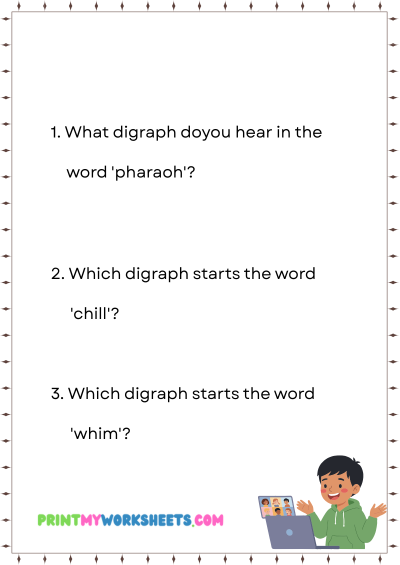
Pre-KG Digraphs Worksheets PDF – Phonics Practice for Beginning and Ending Digraph Sounds
Our Pre-KG Digraphs Worksheets PDF are designed to help young learners understand letter pairs that work together to make a single sound. These free downloadable PDF worksheets are perfect for US homeschool parents, preschool teachers, and Pre-K children building early phonics and reading skills.
Digraphs such as sh, ch, th, and wh are an important step in phonics development. Learning digraphs helps children move beyond single-letter sounds and begin reading more complex words. These worksheets introduce digraph sounds in a simple, visual, and age-appropriate way using pictures, tracing, matching, and hands-on activities.
Practicing digraphs strengthens phonemic awareness, decoding skills, and pronunciation. When children can recognize digraph sounds quickly, they read more fluently and confidently. This skill also supports spelling development, listening skills, and early writing readiness.
Each worksheet includes engaging activities like identifying digraph sounds, matching pictures to words, circling correct answers, tracing letters, and coloring. Repetition and visual cues help children retain sounds and build confidence.
The printable PDF format makes these worksheets ideal for classroom phonics lessons, homeschooling routines, literacy centers, or independent practice at home. Whether introducing digraphs for the first time or reinforcing phonics skills, these worksheets provide an effective, engaging, and completely free resource aligned with US Pre-K literacy standards.
You may also like :
[gallery ids="6923,6743,6909"] Pre-KG Digraphs Worksheets PDF – Phonics Practice for Beginning and Ending Digraph Sounds
Our Pre-KG Digraphs Worksheets PDF are designed to help young learners understand letter pairs that work together to make a single sound. These free downloadable PDF worksheets are perfect for US homeschool parents, preschool teachers, and Pre-K children building early phonics and reading skills.
Digraphs such as sh, ch, th, and wh are an important step in phonics development. Learning digraphs helps children move beyond single-letter sounds and begin reading more complex words. These worksheets introduce digraph sounds in a simple, visual, and age-appropriate way using pictures, tracing, matching, and hands-on activities.
Practicing digraphs strengthens phonemic awareness, decoding skills, and pronunciation. When children can recognize digraph sounds quickly, they read more fluently and confidently. This skill also supports spelling development, listening skills, and early writing readiness.
Each worksheet includes engaging activities like identifying digraph sounds, matching pictures to words, circling correct answers, tracing letters, and coloring. Repetition and visual cues help children retain sounds and build confidence.
The printable PDF format makes these worksheets ideal for classroom phonics lessons, homeschooling routines, literacy centers, or independent practice at home. Whether introducing digraphs for the first time or reinforcing phonics skills, these worksheets provide an effective, engaging, and completely free resource aligned with US Pre-K literacy standards.
You may also like :
[gallery ids="6923,6743,6909"]
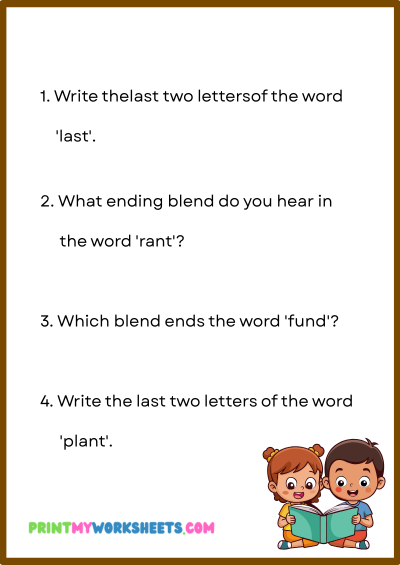
Pre-KG Ending Blends Worksheets PDF – Phonics Practice for Final Consonant Clusters and Early Reading
Our Pre-KG Ending Blends Worksheets PDF are designed to help young learners recognize and blend consonant sounds at the end of words. These free downloadable PDF worksheets are perfect for US homeschool parents, preschool teachers, and Pre-K children developing early phonics and reading skills.
Ending blends occur when two consonants appear together at the end of a word, such as nd, st, mp, and nt. Learning these blends helps children read words smoothly and accurately rather than sounding out each letter separately. These worksheets introduce ending blends in a simple, visual, and age-appropriate way using pictures and hands-on activities.
Practicing ending blends strengthens phonemic awareness, listening skills, and decoding ability. When children can identify ending sounds clearly, they become more confident readers and spellers. This skill also prepares students for reading longer words and understanding word structure as they progress toward kindergarten readiness.
Each worksheet includes engaging activities such as matching pictures to ending blends, circling correct sounds, identifying final sounds, tracing letters, and coloring. Repetition and visual support help reinforce learning and build confidence.
The printable PDF format makes these worksheets ideal for classroom phonics lessons, homeschooling routines, literacy centers, or independent practice at home. Whether introducing ending blends for the first time or reinforcing phonics skills, these worksheets provide an effective, engaging, and completely free resource aligned with US Pre-K literacy standards.
You may also like :
[gallery ids="6916,6909,6888"] Pre-KG Ending Blends Worksheets PDF – Phonics Practice for Final Consonant Clusters and Early Reading
Our Pre-KG Ending Blends Worksheets PDF are designed to help young learners recognize and blend consonant sounds at the end of words. These free downloadable PDF worksheets are perfect for US homeschool parents, preschool teachers, and Pre-K children developing early phonics and reading skills.
Ending blends occur when two consonants appear together at the end of a word, such as nd, st, mp, and nt. Learning these blends helps children read words smoothly and accurately rather than sounding out each letter separately. These worksheets introduce ending blends in a simple, visual, and age-appropriate way using pictures and hands-on activities.
Practicing ending blends strengthens phonemic awareness, listening skills, and decoding ability. When children can identify ending sounds clearly, they become more confident readers and spellers. This skill also prepares students for reading longer words and understanding word structure as they progress toward kindergarten readiness.
Each worksheet includes engaging activities such as matching pictures to ending blends, circling correct sounds, identifying final sounds, tracing letters, and coloring. Repetition and visual support help reinforce learning and build confidence.
The printable PDF format makes these worksheets ideal for classroom phonics lessons, homeschooling routines, literacy centers, or independent practice at home. Whether introducing ending blends for the first time or reinforcing phonics skills, these worksheets provide an effective, engaging, and completely free resource aligned with US Pre-K literacy standards.
You may also like :
[gallery ids="6916,6909,6888"]
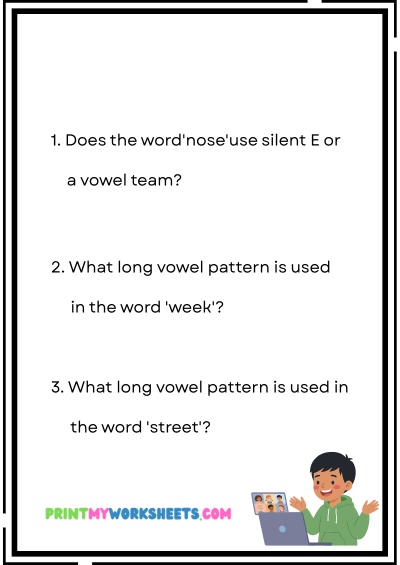
Pre-KG Long Vowel Sounds Worksheets PDF – Fun At-Home Reading Activities for Early Learners
Pre-KG Long Vowel Sounds Worksheets PDF
The Pre-KG Long Vowel Sounds Worksheets PDF is a thoughtfully created phonics resource designed to help young learners recognize and understand long vowel sounds in an age-appropriate way. This free printable worksheet set is ideal for parents, teachers, and homeschool families across the United States who are supporting early literacy development in Pre-K children. Long vowel sounds occur when vowels say their own names, such as in words like cake, bike, and home, and they play an important role in early reading readiness.
At the Pre-K level, children are developing strong listening skills and beginning to notice sound patterns in spoken language. Introducing long vowel sounds early helps children move beyond basic letter recognition and prepares them for more advanced phonics instruction. These worksheets provide structured, engaging practice that supports foundational reading skills without overwhelming young learners. With clear visuals, simple directions, and consistent routines, this resource builds confidence while helping children develop essential phonics awareness needed for future reading success.
What Students Will Learn ?
This worksheet set focuses on helping Pre-K learners recognize, hear, and understand long vowel sounds through guided phonics practice. Children learn that vowels can make different sounds and that long vowel sounds match the letter name. This understanding supports early decoding skills and prepares students for reading simple words.
The activities included are designed to be developmentally appropriate and engaging for young children. Students practice identifying long vowel sounds in familiar words, matching pictures to vowel sounds, and distinguishing between different vowel patterns. Visual supports play an important role in helping children connect sounds to meaning, making learning more accessible and enjoyable.
The worksheets support structured learning by introducing one concept at a time and reinforcing it through repetition. Tasks are short and focused, which helps maintain attention and reduces frustration. These activities fit well within Pre-K expectations by emphasizing listening, sound recognition, and early phonemic awareness rather than formal reading. Through consistent practice, students gain confidence and build a strong foundation for future phonics instruction.
Educational Value & Skill Development
Early exposure to long vowel sounds strengthens phonological awareness and supports long-term reading development. Understanding how vowels work in words helps children recognize sound patterns, which is essential for decoding and spelling as they progress through elementary school. The Pre-K Long Vowel Sounds Worksheets PDF supports this learning by offering focused practice that aligns with early literacy goals.
From a cognitive standpoint, these worksheets encourage careful listening, sound comparison, and memory skills. Children learn to slow down and focus on individual sounds, which supports attention and auditory processing. As they complete activities independently or with guidance, they also build confidence and a sense of accomplishment.
Skill progression is an important feature of this resource. Children move from simple sound recognition to applying long vowel knowledge within basic word contexts. This gradual approach helps prevent confusion and allows learners to develop skills at their own pace. Repeated exposure reinforces learning and helps children internalize vowel patterns, making future reading instruction smoother. These early successes contribute to a positive attitude toward reading and learning in general.
Why Focus on Pre-KG Long Vowel Sounds Worksheets ?
Long vowel sounds are a key part of phonics instruction because they appear frequently in early reading materials. Helping children recognize these sounds early makes it easier for them to decode words and understand spelling patterns later on. At the Pre-K level, children are especially receptive to sound-based learning, making this an ideal time to introduce long vowels.
Focusing on long vowel sounds supports future academic success by preparing children for kindergarten and first-grade phonics programs. Students who are familiar with vowel sounds are better equipped to read unfamiliar words and apply phonics rules with confidence. This early preparation reduces frustration and builds a strong foundation for reading fluency.
Repetition and guided practice are essential for mastering vowel sounds. Worksheets provide a consistent format that allows children to practice skills multiple times in a low-pressure environment. These activities align with early learning standards commonly used in U.S. preschool and Pre-K programs, supporting phonological awareness, listening skills, and early literacy development.
How to Use These Worksheets ?
These worksheets are designed to be flexible and easy to use in a variety of learning environments. In homeschool settings, they can be included in a daily phonics routine or used for short, focused practice sessions. Parents can work alongside their child, modeling sounds and encouraging discussion about words and pictures.
In classroom settings, teachers can use the worksheets during small group instruction, literacy centers, or independent practice time. The clear layout and simple instructions make them suitable for guided learning or review activities. They also work well for early intervention or additional phonics support.
The Pre-KG Long Vowel Sounds Worksheets PDF is provided as a free printable PDF, making it easy to download and reuse as needed. Pages can be printed multiple times for repeated practice or placed in dry-erase sleeves for extended use. This flexibility supports consistent reinforcement while allowing educators and families to adapt the resource to their specific needs.
Related Worksheets / Extensions :
To continue building early literacy skills, you may also like exploring related phonics resources such as short vowel worksheets, vowel teams practice, or CVC word activities. These topics naturally build on long vowel knowledge and help children apply sound patterns to early reading tasks.
Many families and educators combine vowel sound practice with blending and segmenting activities to strengthen phonemic awareness. Using the Pre-KG Long Vowel Sounds Worksheets PDF alongside these complementary resources supports a well-rounded approach to early phonics instruction and helps children develop strong reading foundations as they prepare for kindergarten.
You may also like:
[gallery ids="6937,6930,6743"] Pre-KG Long Vowel Sounds Worksheets PDF – Fun At-Home Reading Activities for Early Learners
Pre-KG Long Vowel Sounds Worksheets PDF
The Pre-KG Long Vowel Sounds Worksheets PDF is a thoughtfully created phonics resource designed to help young learners recognize and understand long vowel sounds in an age-appropriate way. This free printable worksheet set is ideal for parents, teachers, and homeschool families across the United States who are supporting early literacy development in Pre-K children. Long vowel sounds occur when vowels say their own names, such as in words like cake, bike, and home, and they play an important role in early reading readiness.
At the Pre-K level, children are developing strong listening skills and beginning to notice sound patterns in spoken language. Introducing long vowel sounds early helps children move beyond basic letter recognition and prepares them for more advanced phonics instruction. These worksheets provide structured, engaging practice that supports foundational reading skills without overwhelming young learners. With clear visuals, simple directions, and consistent routines, this resource builds confidence while helping children develop essential phonics awareness needed for future reading success.
What Students Will Learn ?
This worksheet set focuses on helping Pre-K learners recognize, hear, and understand long vowel sounds through guided phonics practice. Children learn that vowels can make different sounds and that long vowel sounds match the letter name. This understanding supports early decoding skills and prepares students for reading simple words.
The activities included are designed to be developmentally appropriate and engaging for young children. Students practice identifying long vowel sounds in familiar words, matching pictures to vowel sounds, and distinguishing between different vowel patterns. Visual supports play an important role in helping children connect sounds to meaning, making learning more accessible and enjoyable.
The worksheets support structured learning by introducing one concept at a time and reinforcing it through repetition. Tasks are short and focused, which helps maintain attention and reduces frustration. These activities fit well within Pre-K expectations by emphasizing listening, sound recognition, and early phonemic awareness rather than formal reading. Through consistent practice, students gain confidence and build a strong foundation for future phonics instruction.
Educational Value & Skill Development
Early exposure to long vowel sounds strengthens phonological awareness and supports long-term reading development. Understanding how vowels work in words helps children recognize sound patterns, which is essential for decoding and spelling as they progress through elementary school. The Pre-K Long Vowel Sounds Worksheets PDF supports this learning by offering focused practice that aligns with early literacy goals.
From a cognitive standpoint, these worksheets encourage careful listening, sound comparison, and memory skills. Children learn to slow down and focus on individual sounds, which supports attention and auditory processing. As they complete activities independently or with guidance, they also build confidence and a sense of accomplishment.
Skill progression is an important feature of this resource. Children move from simple sound recognition to applying long vowel knowledge within basic word contexts. This gradual approach helps prevent confusion and allows learners to develop skills at their own pace. Repeated exposure reinforces learning and helps children internalize vowel patterns, making future reading instruction smoother. These early successes contribute to a positive attitude toward reading and learning in general.
Why Focus on Pre-KG Long Vowel Sounds Worksheets ?
Long vowel sounds are a key part of phonics instruction because they appear frequently in early reading materials. Helping children recognize these sounds early makes it easier for them to decode words and understand spelling patterns later on. At the Pre-K level, children are especially receptive to sound-based learning, making this an ideal time to introduce long vowels.
Focusing on long vowel sounds supports future academic success by preparing children for kindergarten and first-grade phonics programs. Students who are familiar with vowel sounds are better equipped to read unfamiliar words and apply phonics rules with confidence. This early preparation reduces frustration and builds a strong foundation for reading fluency.
Repetition and guided practice are essential for mastering vowel sounds. Worksheets provide a consistent format that allows children to practice skills multiple times in a low-pressure environment. These activities align with early learning standards commonly used in U.S. preschool and Pre-K programs, supporting phonological awareness, listening skills, and early literacy development.
How to Use These Worksheets ?
These worksheets are designed to be flexible and easy to use in a variety of learning environments. In homeschool settings, they can be included in a daily phonics routine or used for short, focused practice sessions. Parents can work alongside their child, modeling sounds and encouraging discussion about words and pictures.
In classroom settings, teachers can use the worksheets during small group instruction, literacy centers, or independent practice time. The clear layout and simple instructions make them suitable for guided learning or review activities. They also work well for early intervention or additional phonics support.
The Pre-KG Long Vowel Sounds Worksheets PDF is provided as a free printable PDF, making it easy to download and reuse as needed. Pages can be printed multiple times for repeated practice or placed in dry-erase sleeves for extended use. This flexibility supports consistent reinforcement while allowing educators and families to adapt the resource to their specific needs.
Related Worksheets / Extensions :
To continue building early literacy skills, you may also like exploring related phonics resources such as short vowel worksheets, vowel teams practice, or CVC word activities. These topics naturally build on long vowel knowledge and help children apply sound patterns to early reading tasks.
Many families and educators combine vowel sound practice with blending and segmenting activities to strengthen phonemic awareness. Using the Pre-KG Long Vowel Sounds Worksheets PDF alongside these complementary resources supports a well-rounded approach to early phonics instruction and helps children develop strong reading foundations as they prepare for kindergarten.
You may also like:
[gallery ids="6937,6930,6743"]
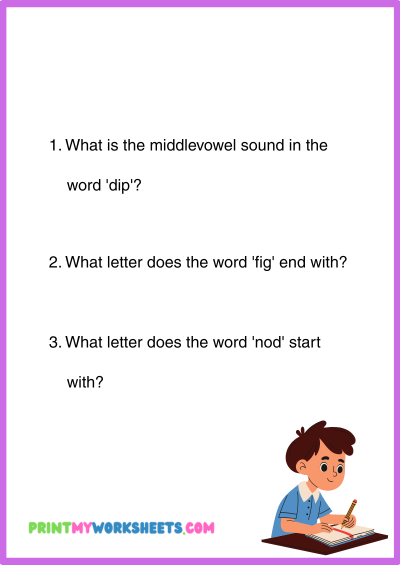
Pre-KG Phonics CVC Words Worksheets PDF – Early Reading Practice for Short Vowel Word Building
Pre-KG Phonics CVC Words Worksheets PDF
Early phonics instruction helps young learners understand how sounds connect to form words, which is a key step toward reading success. These Pre-K Phonics CVC Words Worksheets PDF are created to support children as they begin blending sounds into simple consonant-vowel-consonant words. Designed for U.S. parents, preschool teachers, and homeschool families, this free printable resource offers structured, age-appropriate practice that fits easily into early literacy routines.
At the Pre-K level, children are learning to recognize letter sounds and listen closely to how those sounds work together. Practicing CVC words helps bridge the gap between individual letter sounds and early word reading. This worksheet set focuses on clear, predictable activities that encourage repetition without pressure. With a simple layout and focused tasks, Pre-K Phonics CVC Words Worksheets PDF support foundational phonics skills while building confidence and readiness for kindergarten reading instruction.
What Students Will Learn ?
This worksheet set helps Pre-K learners develop early decoding skills through focused practice with simple word patterns. Students learn how to blend beginning, middle, and ending sounds to form short words, an essential milestone in early reading development. These activities strengthen phonemic awareness and introduce children to the idea that letters work together to create meaning.
The worksheets include a variety of structured activities that reinforce learning in multiple ways. Children may practice identifying sounds, matching letters to spoken words, or working with simple word-building tasks that emphasize consonant-vowel-consonant patterns. Each activity is designed to focus on one objective at a time, helping young learners stay engaged and successful.
These phonics worksheets support structured learning by using consistent formats and clear expectations. The tasks are developmentally appropriate for Pre-K students in the United States and can be completed with minimal frustration. Whether used independently or with adult guidance, the worksheets help children build focus, listening skills, and early confidence in working with printed words.
Educational Value & Skill Development
Consistent phonics practice provides strong academic benefits, and the Pre-K Phonics CVC Words Worksheets PDF support early literacy development across several areas. Academically, these worksheets help children understand how sounds blend together, which is essential for decoding and early reading fluency. Mastery of CVC patterns prepares students for more advanced phonics concepts in kindergarten.
Cognitively, working with simple word patterns strengthens memory, attention, and auditory processing. Children learn to listen carefully, recognize sound sequences, and apply what they know to new words. These skills contribute to overall language development and support learning across subjects.
The worksheets also promote confidence and independence. Familiar layouts and predictable routines help children understand expectations and complete tasks successfully. As students experience repeated success, they develop a positive attitude toward reading and learning. Over time, regular practice with Pre-K Phonics CVC Words Worksheets PDF supports skill progression from sound recognition to early word reading, creating a smooth transition into formal reading instruction.
Why Focus on Pre-K Phonics CVC Words Worksheets ?
CVC words are often the first complete words children learn to read on their own. These simple patterns follow consistent sound rules, making them ideal for early learners who are just beginning to blend sounds.
In Pre-K, children are developing phonemic awareness, which means they are learning to hear and work with individual sounds in spoken language. Practicing CVC patterns helps children understand how those sounds connect in written form. This understanding is critical for future decoding and spelling tasks.
Repetition and guided practice play an important role at this stage. Young learners need multiple opportunities to see, hear, and practice word patterns before they become comfortable. These worksheets support early learning standards commonly used in U.S. preschool programs by reinforcing foundational phonics skills in a developmentally appropriate way. Early exposure to CVC words builds a strong base for reading success in kindergarten and beyond.
How to Use These Worksheets ?
These worksheets are flexible and easy to use in a variety of learning environments. In homeschool settings, parents can introduce one worksheet at a time, reading words aloud together and discussing sounds. This shared practice helps reinforce learning and build confidence.
In classrooms, teachers can use the worksheets during phonics centers, small-group instruction, or independent work time. The activities also work well for review and reinforcement, allowing children to revisit skills they have already practiced. Because the resource is provided as a free printable PDF, downloading and printing is quick and convenient.
Pages can be reused by placing them in sheet protectors or laminating for repeated practice. For families and educators looking for structured phonics support, Pre-K Phonics CVC Words Worksheets PDF provide a practical way to reinforce early reading skills through consistent, focused practice.
What’s Included in This PDF ?
This printable worksheet set is designed to be simple, effective, and easy to integrate into daily learning routines. Each page focuses on meaningful skill practice without unnecessary distractions. Inside this PDF, you’ll find:
-
Multiple printable worksheets focused on CVC word practice
-
Phonics activities that support blending and decoding skills
-
A kid-friendly layout suitable for Pre-K learners
-
Black-and-white, print-friendly pages
-
Content aligned with U.S. Pre-K literacy expectations
-
A free downloadable PDF format for easy access
You may also like:
[gallery ids="6888,6875,6743"]Related Worksheets / Extensions :
To build a well-rounded early literacy routine, you may want to pair these worksheets with other phonics resources. Alphabet recognition pages, beginning sound activities, and short vowel worksheets can complement CVC word practice and support balanced instruction.
You may also explore additional phonics printables designed for preschool learners. Resources like Pre-K Phonics CVC Words Worksheets PDF work well alongside early sound awareness activities, helping children strengthen foundational skills through consistent, meaningful practice that supports future reading success.
Pre-KG Phonics CVC Words Worksheets PDF – Early Reading Practice for Short Vowel Word Building
Pre-KG Phonics CVC Words Worksheets PDF
Early phonics instruction helps young learners understand how sounds connect to form words, which is a key step toward reading success. These Pre-K Phonics CVC Words Worksheets PDF are created to support children as they begin blending sounds into simple consonant-vowel-consonant words. Designed for U.S. parents, preschool teachers, and homeschool families, this free printable resource offers structured, age-appropriate practice that fits easily into early literacy routines.
At the Pre-K level, children are learning to recognize letter sounds and listen closely to how those sounds work together. Practicing CVC words helps bridge the gap between individual letter sounds and early word reading. This worksheet set focuses on clear, predictable activities that encourage repetition without pressure. With a simple layout and focused tasks, Pre-K Phonics CVC Words Worksheets PDF support foundational phonics skills while building confidence and readiness for kindergarten reading instruction.
What Students Will Learn ?
This worksheet set helps Pre-K learners develop early decoding skills through focused practice with simple word patterns. Students learn how to blend beginning, middle, and ending sounds to form short words, an essential milestone in early reading development. These activities strengthen phonemic awareness and introduce children to the idea that letters work together to create meaning.
The worksheets include a variety of structured activities that reinforce learning in multiple ways. Children may practice identifying sounds, matching letters to spoken words, or working with simple word-building tasks that emphasize consonant-vowel-consonant patterns. Each activity is designed to focus on one objective at a time, helping young learners stay engaged and successful.
These phonics worksheets support structured learning by using consistent formats and clear expectations. The tasks are developmentally appropriate for Pre-K students in the United States and can be completed with minimal frustration. Whether used independently or with adult guidance, the worksheets help children build focus, listening skills, and early confidence in working with printed words.
Educational Value & Skill Development
Consistent phonics practice provides strong academic benefits, and the Pre-K Phonics CVC Words Worksheets PDF support early literacy development across several areas. Academically, these worksheets help children understand how sounds blend together, which is essential for decoding and early reading fluency. Mastery of CVC patterns prepares students for more advanced phonics concepts in kindergarten.
Cognitively, working with simple word patterns strengthens memory, attention, and auditory processing. Children learn to listen carefully, recognize sound sequences, and apply what they know to new words. These skills contribute to overall language development and support learning across subjects.
The worksheets also promote confidence and independence. Familiar layouts and predictable routines help children understand expectations and complete tasks successfully. As students experience repeated success, they develop a positive attitude toward reading and learning. Over time, regular practice with Pre-K Phonics CVC Words Worksheets PDF supports skill progression from sound recognition to early word reading, creating a smooth transition into formal reading instruction.
Why Focus on Pre-K Phonics CVC Words Worksheets ?
CVC words are often the first complete words children learn to read on their own. These simple patterns follow consistent sound rules, making them ideal for early learners who are just beginning to blend sounds.
In Pre-K, children are developing phonemic awareness, which means they are learning to hear and work with individual sounds in spoken language. Practicing CVC patterns helps children understand how those sounds connect in written form. This understanding is critical for future decoding and spelling tasks.
Repetition and guided practice play an important role at this stage. Young learners need multiple opportunities to see, hear, and practice word patterns before they become comfortable. These worksheets support early learning standards commonly used in U.S. preschool programs by reinforcing foundational phonics skills in a developmentally appropriate way. Early exposure to CVC words builds a strong base for reading success in kindergarten and beyond.
How to Use These Worksheets ?
These worksheets are flexible and easy to use in a variety of learning environments. In homeschool settings, parents can introduce one worksheet at a time, reading words aloud together and discussing sounds. This shared practice helps reinforce learning and build confidence.
In classrooms, teachers can use the worksheets during phonics centers, small-group instruction, or independent work time. The activities also work well for review and reinforcement, allowing children to revisit skills they have already practiced. Because the resource is provided as a free printable PDF, downloading and printing is quick and convenient.
Pages can be reused by placing them in sheet protectors or laminating for repeated practice. For families and educators looking for structured phonics support, Pre-K Phonics CVC Words Worksheets PDF provide a practical way to reinforce early reading skills through consistent, focused practice.
What’s Included in This PDF ?
This printable worksheet set is designed to be simple, effective, and easy to integrate into daily learning routines. Each page focuses on meaningful skill practice without unnecessary distractions. Inside this PDF, you’ll find:
-
Multiple printable worksheets focused on CVC word practice
-
Phonics activities that support blending and decoding skills
-
A kid-friendly layout suitable for Pre-K learners
-
Black-and-white, print-friendly pages
-
Content aligned with U.S. Pre-K literacy expectations
-
A free downloadable PDF format for easy access
You may also like:
[gallery ids="6888,6875,6743"]Related Worksheets / Extensions :
To build a well-rounded early literacy routine, you may want to pair these worksheets with other phonics resources. Alphabet recognition pages, beginning sound activities, and short vowel worksheets can complement CVC word practice and support balanced instruction.
You may also explore additional phonics printables designed for preschool learners. Resources like Pre-K Phonics CVC Words Worksheets PDF work well alongside early sound awareness activities, helping children strengthen foundational skills through consistent, meaningful practice that supports future reading success.
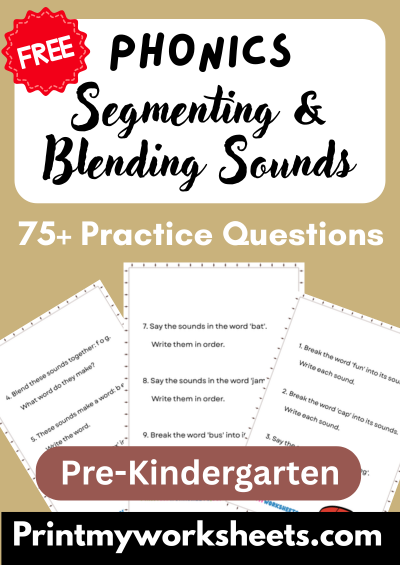
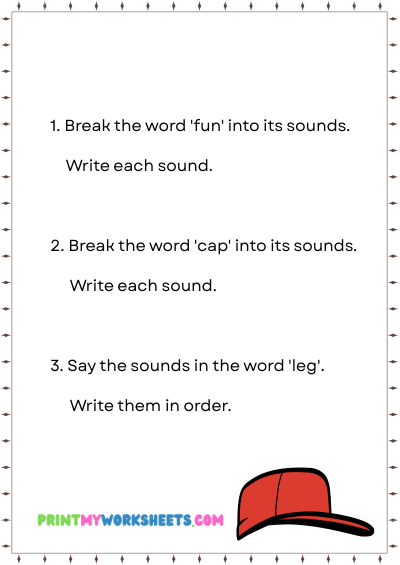
Pre-KG Segmenting and Blending Sounds Worksheets PDF – Phonemic Awareness Practice Pack
Pre-KG Segmenting and Blending Sounds Worksheets PDF
The Pre-K Segmenting and Blending Sounds Worksheets PDF is designed to support early phonics development for young learners who are just beginning their reading journey. Created specifically for PreKindergarten students, this free printable resource helps children practice breaking words into individual sounds and blending those sounds together to form words. These skills are foundational for reading success and are commonly introduced during the preschool and Pre-K years across the United States.
This worksheet set is ideal for parents, teachers, and homeschool families who want clear, age-appropriate phonics practice that aligns with early learning expectations. Segmenting and blending activities help children understand how spoken words are made up of sounds, which is a critical step before decoding printed words. With simple visuals, guided practice, and a child-friendly layout, these worksheets make early literacy practice approachable and effective.
Whether used at home or in a classroom, this resource supports structured phonics instruction while keeping learning developmentally appropriate for young children.
What Students Will Learn ?
These worksheets focus on building strong phonemic awareness skills that prepare children for reading and spelling. Students will learn how to listen carefully to words, identify individual sounds, and combine those sounds to make whole words. This process helps children understand how language works at a sound level before they begin formal reading.
Activities are designed to be simple and engaging for Pre-K learners. Children practice identifying beginning, middle, and ending sounds in familiar words. They are encouraged to blend sounds together slowly and clearly, reinforcing the connection between oral language and early reading skills. Many activities include picture cues to support comprehension and reduce frustration.
The worksheets follow a predictable structure that helps young learners feel confident and successful. Tasks are short, focused, and appropriate for limited attention spans. This structured approach supports early literacy development while allowing flexibility for different learning environments. By working through these activities, children gain the foundational skills needed for phonics instruction in kindergarten and beyond.
Educational Value & Skill Development
Phonemic awareness is one of the strongest predictors of future reading success. Worksheets that focus on segmenting and blending sounds help children develop the ability to hear and manipulate sounds in spoken language. This skill supports decoding, spelling, and reading fluency as students progress through elementary school.
Using the Pre-K Segmenting and Blending Sounds Worksheets PDF helps children build confidence with early language tasks. As they practice breaking words apart and putting them back together, they strengthen listening skills, memory, and attention. These cognitive skills are essential for classroom learning and independent work.
The activities also support language development by expanding vocabulary and improving pronunciation. Children learn to slow down and focus on individual sounds, which helps with clear speech and early spelling attempts. Over time, repeated practice helps children internalize sound patterns, making future reading instruction more accessible.
This type of guided phonics practice encourages independence while still providing structure. Children can work through activities with adult support or independently as they become more confident, supporting gradual skill progression.
Why Focus on Segmenting and Blending Sounds ?
Segmenting and blending sounds are core components of early literacy instruction. These skills allow children to understand that words are made up of individual sounds that can be separated and combined. Without this understanding, reading and spelling can feel confusing and overwhelming.
Focusing on these skills in Pre-K supports smoother transitions into kindergarten phonics programs. Children who are comfortable with sound manipulation are better prepared to decode simple words, recognize patterns, and apply phonics rules. This early preparation reduces frustration and builds confidence when formal reading instruction begins.
Repetition and guided practice are essential at this stage. Young learners benefit from hearing sounds repeatedly and practicing them in different contexts. Worksheets provide a consistent format that reinforces learning while allowing children to progress at their own pace.
Segmenting and blending activities also align with early learning standards commonly used in U.S. preschool and Pre-K programs. These skills support broader language goals, including listening comprehension, speaking clearly, and understanding word structure.
How to Use These Worksheets ?
These worksheets are flexible and easy to use in a variety of learning settings. In homeschool environments, they can be part of a daily phonics routine or used as short, focused practice sessions. Parents can work alongside their child, modeling sounds and encouraging repetition.
In classroom settings, teachers can use the worksheets for small group instruction, literacy centers, or early finisher activities. The clear layout makes them suitable for guided practice or independent work with minimal preparation.
The Pre-K Segmenting and Blending Sounds Worksheets PDF is available as a free printable PDF, making it easy to download and reuse as needed. Pages can be printed multiple times for repeated practice or used with dry-erase sleeves for extended use. This flexibility supports consistent skill reinforcement without additional materials.
Related Worksheets and Skill Extensions :
To continue building early literacy skills, you may also like exploring related phonics resources that focus on beginning sounds, CVC words, or letter recognition. These skills naturally build on segmenting and blending practice and help children apply sound awareness to printed words.
Families and teachers often pair this resource with additional practice using the Pre-K Segmenting and Blending Sounds Worksheets PDF alongside word family activities or simple sentence reading. Together, these worksheets support a well-rounded approach to early phonics instruction and help children progress confidently toward kindergarten readiness.
You may also like:
[gallery ids="6951,6944,6937"] Pre-KG Segmenting and Blending Sounds Worksheets PDF – Phonemic Awareness Practice Pack
Pre-KG Segmenting and Blending Sounds Worksheets PDF
The Pre-K Segmenting and Blending Sounds Worksheets PDF is designed to support early phonics development for young learners who are just beginning their reading journey. Created specifically for PreKindergarten students, this free printable resource helps children practice breaking words into individual sounds and blending those sounds together to form words. These skills are foundational for reading success and are commonly introduced during the preschool and Pre-K years across the United States.
This worksheet set is ideal for parents, teachers, and homeschool families who want clear, age-appropriate phonics practice that aligns with early learning expectations. Segmenting and blending activities help children understand how spoken words are made up of sounds, which is a critical step before decoding printed words. With simple visuals, guided practice, and a child-friendly layout, these worksheets make early literacy practice approachable and effective.
Whether used at home or in a classroom, this resource supports structured phonics instruction while keeping learning developmentally appropriate for young children.
What Students Will Learn ?
These worksheets focus on building strong phonemic awareness skills that prepare children for reading and spelling. Students will learn how to listen carefully to words, identify individual sounds, and combine those sounds to make whole words. This process helps children understand how language works at a sound level before they begin formal reading.
Activities are designed to be simple and engaging for Pre-K learners. Children practice identifying beginning, middle, and ending sounds in familiar words. They are encouraged to blend sounds together slowly and clearly, reinforcing the connection between oral language and early reading skills. Many activities include picture cues to support comprehension and reduce frustration.
The worksheets follow a predictable structure that helps young learners feel confident and successful. Tasks are short, focused, and appropriate for limited attention spans. This structured approach supports early literacy development while allowing flexibility for different learning environments. By working through these activities, children gain the foundational skills needed for phonics instruction in kindergarten and beyond.
Educational Value & Skill Development
Phonemic awareness is one of the strongest predictors of future reading success. Worksheets that focus on segmenting and blending sounds help children develop the ability to hear and manipulate sounds in spoken language. This skill supports decoding, spelling, and reading fluency as students progress through elementary school.
Using the Pre-K Segmenting and Blending Sounds Worksheets PDF helps children build confidence with early language tasks. As they practice breaking words apart and putting them back together, they strengthen listening skills, memory, and attention. These cognitive skills are essential for classroom learning and independent work.
The activities also support language development by expanding vocabulary and improving pronunciation. Children learn to slow down and focus on individual sounds, which helps with clear speech and early spelling attempts. Over time, repeated practice helps children internalize sound patterns, making future reading instruction more accessible.
This type of guided phonics practice encourages independence while still providing structure. Children can work through activities with adult support or independently as they become more confident, supporting gradual skill progression.
Why Focus on Segmenting and Blending Sounds ?
Segmenting and blending sounds are core components of early literacy instruction. These skills allow children to understand that words are made up of individual sounds that can be separated and combined. Without this understanding, reading and spelling can feel confusing and overwhelming.
Focusing on these skills in Pre-K supports smoother transitions into kindergarten phonics programs. Children who are comfortable with sound manipulation are better prepared to decode simple words, recognize patterns, and apply phonics rules. This early preparation reduces frustration and builds confidence when formal reading instruction begins.
Repetition and guided practice are essential at this stage. Young learners benefit from hearing sounds repeatedly and practicing them in different contexts. Worksheets provide a consistent format that reinforces learning while allowing children to progress at their own pace.
Segmenting and blending activities also align with early learning standards commonly used in U.S. preschool and Pre-K programs. These skills support broader language goals, including listening comprehension, speaking clearly, and understanding word structure.
How to Use These Worksheets ?
These worksheets are flexible and easy to use in a variety of learning settings. In homeschool environments, they can be part of a daily phonics routine or used as short, focused practice sessions. Parents can work alongside their child, modeling sounds and encouraging repetition.
In classroom settings, teachers can use the worksheets for small group instruction, literacy centers, or early finisher activities. The clear layout makes them suitable for guided practice or independent work with minimal preparation.
The Pre-K Segmenting and Blending Sounds Worksheets PDF is available as a free printable PDF, making it easy to download and reuse as needed. Pages can be printed multiple times for repeated practice or used with dry-erase sleeves for extended use. This flexibility supports consistent skill reinforcement without additional materials.
Related Worksheets and Skill Extensions :
To continue building early literacy skills, you may also like exploring related phonics resources that focus on beginning sounds, CVC words, or letter recognition. These skills naturally build on segmenting and blending practice and help children apply sound awareness to printed words.
Families and teachers often pair this resource with additional practice using the Pre-K Segmenting and Blending Sounds Worksheets PDF alongside word family activities or simple sentence reading. Together, these worksheets support a well-rounded approach to early phonics instruction and help children progress confidently toward kindergarten readiness.
You may also like:
[gallery ids="6951,6944,6937"]
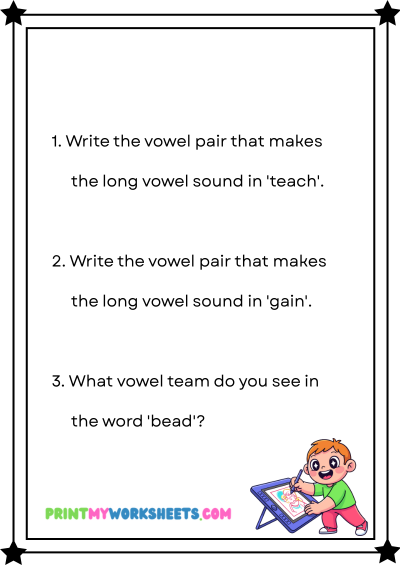
Pre-KG Vowel Teams Worksheets PDF – Literacy Centers and Small Group Phonics Lessons
Pre-KG Vowel Teams Worksheets PDF
The Pre-KG Vowel Teams Worksheets PDF is a carefully designed phonics resource created to support early readers as they begin to recognize and understand vowel team sounds. This printable worksheet set is intended for Pre-K learners and is well suited for use by parents, classroom teachers, and homeschool families across the United States. Vowel teams, also known as vowel pairs, are combinations of two vowels that work together to make one sound, such as ai, ee, oa, and oo.
At the Pre-K level, children are developing strong listening skills and beginning to notice sound patterns in spoken language. Introducing vowel teams at this stage helps children move beyond single-letter sounds and prepares them for more advanced phonics instruction. These worksheets provide structured, age-appropriate practice that supports early literacy development without overwhelming young learners. With clear visuals, simple instructions, and consistent routines, this resource helps children build confidence while strengthening foundational reading skills.
What Students Will Learn ?
his worksheet set focuses on helping young learners recognize and understand common vowel team patterns through guided phonics practice. Students will learn that when two vowels appear together, they can create a single sound that may be different from the sounds each vowel makes on its own. This understanding is an important step in early reading development.
Activities are designed to introduce vowel teams gradually and clearly. Children practice listening to vowel sounds, matching sounds to pictures, and identifying vowel pairs within simple words. Visual cues play an important role in supporting comprehension and keeping learning accessible for Pre-K students. Tasks often involve circling, matching, tracing, or coloring, which helps reinforce learning while supporting fine motor development.
The worksheets follow predictable patterns that help children feel comfortable and confident as they work. Each activity builds on previous skills, supporting structured learning and repetition. This approach aligns with age-appropriate expectations for Pre-K learners, who benefit from consistent routines and short, focused tasks. By completing these activities, students develop early phonics awareness that supports future reading instruction.
Educational Value & Skill Development
Early exposure to vowel teams strengthens a child’s phonemic awareness and supports long-term reading success. Understanding vowel pairs helps children recognize sound patterns more easily, which is essential for decoding words as they progress through elementary school. The Pre-K Vowel Teams Worksheets PDF supports this learning by offering targeted practice that is developmentally appropriate and easy to follow.
From a cognitive perspective, these worksheets encourage children to listen carefully, compare sounds, and make connections between spoken language and visual symbols. This process supports memory, attention, and auditory discrimination skills. As children practice identifying vowel teams, they also build confidence in their ability to work independently and complete tasks successfully.
The worksheets are designed to support gradual skill progression. Children move from simple sound recognition to applying vowel team knowledge within basic words. This progression helps prevent frustration and allows learners to build confidence at their own pace. Over time, repeated practice helps children internalize vowel patterns, making future phonics instruction smoother and more effective. These early successes contribute to a positive attitude toward reading and learning overall.
Why Focus on Pre-K Vowel Teams ?
Vowel teams are an important part of phonics instruction because they appear frequently in early reading materials. Helping children recognize these patterns early makes decoding easier and more intuitive as they begin reading simple words and sentences. At the Pre-K level, children are still developing sound awareness, making this an ideal time to introduce vowel pairs in a gentle, supportive way.
Learning vowel teams supports future academic success by preparing children for kindergarten and first-grade phonics programs. Students who are familiar with vowel pairs are better equipped to decode unfamiliar words and understand spelling patterns. This early preparation reduces confusion and builds confidence when reading instruction becomes more formal.
Repetition and guided practice are essential for mastering vowel team sounds. Worksheets provide a consistent format that allows children to practice skills multiple times without pressure. These activities align with early learning standards commonly used in U.S. preschool and Pre-K programs, supporting phonological awareness, listening skills, and early literacy development.
How to Use These Worksheets ?
These worksheets are flexible and easy to incorporate into a variety of learning environments. In homeschool settings, they can be used as part of a daily phonics routine or as short, focused practice sessions. Parents can work alongside their child, modeling sounds and offering encouragement.
In classroom settings, teachers can use the worksheets for small group instruction, literacy centers, or independent practice. The clear layout and simple instructions make them suitable for guided learning or review activities. They also work well for early intervention or additional phonics reinforcement.
The Pre-K Vowel Teams Worksheets PDF is available as a free printable PDF, making it easy to download and reuse as needed. Pages can be printed multiple times for repeated practice or used with dry-erase sleeves to extend usability. This flexibility allows educators and families to adapt the resource to their specific needs while supporting consistent skill development.
Related Worksheets / Extensions :
To continue building early literacy skills, you may also like exploring related phonics resources such as short vowel worksheets, beginning blends activities, or word family practice pages. These topics naturally build on vowel team knowledge and help children apply sound patterns to reading and spelling tasks.
Many families and educators pair vowel team practice with additional resources that focus on sound blending and simple word reading. Using the Pre-K Vowel Teams Worksheets PDF alongside these complementary activities supports a well-rounded approach to early phonics instruction and helps children develop strong reading foundations as they prepare for kindergarten.
You may also like:
[gallery ids="6944,6930,6937"] Pre-KG Vowel Teams Worksheets PDF – Literacy Centers and Small Group Phonics Lessons
Pre-KG Vowel Teams Worksheets PDF
The Pre-KG Vowel Teams Worksheets PDF is a carefully designed phonics resource created to support early readers as they begin to recognize and understand vowel team sounds. This printable worksheet set is intended for Pre-K learners and is well suited for use by parents, classroom teachers, and homeschool families across the United States. Vowel teams, also known as vowel pairs, are combinations of two vowels that work together to make one sound, such as ai, ee, oa, and oo.
At the Pre-K level, children are developing strong listening skills and beginning to notice sound patterns in spoken language. Introducing vowel teams at this stage helps children move beyond single-letter sounds and prepares them for more advanced phonics instruction. These worksheets provide structured, age-appropriate practice that supports early literacy development without overwhelming young learners. With clear visuals, simple instructions, and consistent routines, this resource helps children build confidence while strengthening foundational reading skills.
What Students Will Learn ?
his worksheet set focuses on helping young learners recognize and understand common vowel team patterns through guided phonics practice. Students will learn that when two vowels appear together, they can create a single sound that may be different from the sounds each vowel makes on its own. This understanding is an important step in early reading development.
Activities are designed to introduce vowel teams gradually and clearly. Children practice listening to vowel sounds, matching sounds to pictures, and identifying vowel pairs within simple words. Visual cues play an important role in supporting comprehension and keeping learning accessible for Pre-K students. Tasks often involve circling, matching, tracing, or coloring, which helps reinforce learning while supporting fine motor development.
The worksheets follow predictable patterns that help children feel comfortable and confident as they work. Each activity builds on previous skills, supporting structured learning and repetition. This approach aligns with age-appropriate expectations for Pre-K learners, who benefit from consistent routines and short, focused tasks. By completing these activities, students develop early phonics awareness that supports future reading instruction.
Educational Value & Skill Development
Early exposure to vowel teams strengthens a child’s phonemic awareness and supports long-term reading success. Understanding vowel pairs helps children recognize sound patterns more easily, which is essential for decoding words as they progress through elementary school. The Pre-K Vowel Teams Worksheets PDF supports this learning by offering targeted practice that is developmentally appropriate and easy to follow.
From a cognitive perspective, these worksheets encourage children to listen carefully, compare sounds, and make connections between spoken language and visual symbols. This process supports memory, attention, and auditory discrimination skills. As children practice identifying vowel teams, they also build confidence in their ability to work independently and complete tasks successfully.
The worksheets are designed to support gradual skill progression. Children move from simple sound recognition to applying vowel team knowledge within basic words. This progression helps prevent frustration and allows learners to build confidence at their own pace. Over time, repeated practice helps children internalize vowel patterns, making future phonics instruction smoother and more effective. These early successes contribute to a positive attitude toward reading and learning overall.
Why Focus on Pre-K Vowel Teams ?
Vowel teams are an important part of phonics instruction because they appear frequently in early reading materials. Helping children recognize these patterns early makes decoding easier and more intuitive as they begin reading simple words and sentences. At the Pre-K level, children are still developing sound awareness, making this an ideal time to introduce vowel pairs in a gentle, supportive way.
Learning vowel teams supports future academic success by preparing children for kindergarten and first-grade phonics programs. Students who are familiar with vowel pairs are better equipped to decode unfamiliar words and understand spelling patterns. This early preparation reduces confusion and builds confidence when reading instruction becomes more formal.
Repetition and guided practice are essential for mastering vowel team sounds. Worksheets provide a consistent format that allows children to practice skills multiple times without pressure. These activities align with early learning standards commonly used in U.S. preschool and Pre-K programs, supporting phonological awareness, listening skills, and early literacy development.
How to Use These Worksheets ?
These worksheets are flexible and easy to incorporate into a variety of learning environments. In homeschool settings, they can be used as part of a daily phonics routine or as short, focused practice sessions. Parents can work alongside their child, modeling sounds and offering encouragement.
In classroom settings, teachers can use the worksheets for small group instruction, literacy centers, or independent practice. The clear layout and simple instructions make them suitable for guided learning or review activities. They also work well for early intervention or additional phonics reinforcement.
The Pre-K Vowel Teams Worksheets PDF is available as a free printable PDF, making it easy to download and reuse as needed. Pages can be printed multiple times for repeated practice or used with dry-erase sleeves to extend usability. This flexibility allows educators and families to adapt the resource to their specific needs while supporting consistent skill development.
Related Worksheets / Extensions :
To continue building early literacy skills, you may also like exploring related phonics resources such as short vowel worksheets, beginning blends activities, or word family practice pages. These topics naturally build on vowel team knowledge and help children apply sound patterns to reading and spelling tasks.
Many families and educators pair vowel team practice with additional resources that focus on sound blending and simple word reading. Using the Pre-K Vowel Teams Worksheets PDF alongside these complementary activities supports a well-rounded approach to early phonics instruction and helps children develop strong reading foundations as they prepare for kindergarten.
You may also like:
[gallery ids="6944,6930,6937"]
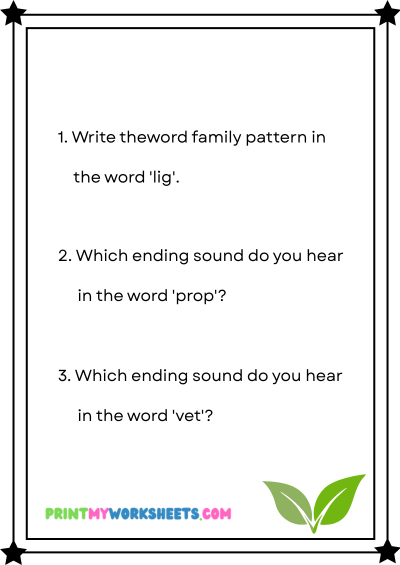
Pre-KG Word Families Worksheets PDF – Phonics Practice for CVC Patterns and Early Reading Fluency
Our Pre-KG Word Families Worksheets PDF are designed to help young learners recognize word patterns and build strong early reading skills. These free downloadable PDF worksheets are perfect for US homeschool parents, preschool teachers, and Pre-K children beginning to read simple words.
Word families group words with the same ending sounds, such as -at, -an, -it, and -op. Learning word families helps children notice patterns in words instead of memorizing each word separately. These worksheets introduce word families in a fun, visual, and age-appropriate way using pictures, tracing, matching, and word-building activities.
Practicing word families strengthens phonemic awareness, decoding skills, and reading fluency. When children recognize familiar word patterns, they can read new words more easily and with greater confidence. This skill also supports spelling development and prepares children for reading sentences and short stories.
Each worksheet includes engaging activities such as matching pictures to words, completing word family sets, circling correct words, tracing letters, and coloring. Repetition helps reinforce learning and improves retention while keeping young learners motivated.
The printable PDF format makes these worksheets ideal for classroom literacy centers, homeschooling routines, small-group instruction, or independent practice at home. Whether introducing phonics concepts or reinforcing early reading skills, these worksheets provide an effective, engaging, and completely free resource aligned with US Pre-K literacy standards.
You may also like:
[gallery ids="6930,6923,6916"] Pre-KG Word Families Worksheets PDF – Phonics Practice for CVC Patterns and Early Reading Fluency
Our Pre-KG Word Families Worksheets PDF are designed to help young learners recognize word patterns and build strong early reading skills. These free downloadable PDF worksheets are perfect for US homeschool parents, preschool teachers, and Pre-K children beginning to read simple words.
Word families group words with the same ending sounds, such as -at, -an, -it, and -op. Learning word families helps children notice patterns in words instead of memorizing each word separately. These worksheets introduce word families in a fun, visual, and age-appropriate way using pictures, tracing, matching, and word-building activities.
Practicing word families strengthens phonemic awareness, decoding skills, and reading fluency. When children recognize familiar word patterns, they can read new words more easily and with greater confidence. This skill also supports spelling development and prepares children for reading sentences and short stories.
Each worksheet includes engaging activities such as matching pictures to words, completing word family sets, circling correct words, tracing letters, and coloring. Repetition helps reinforce learning and improves retention while keeping young learners motivated.
The printable PDF format makes these worksheets ideal for classroom literacy centers, homeschooling routines, small-group instruction, or independent practice at home. Whether introducing phonics concepts or reinforcing early reading skills, these worksheets provide an effective, engaging, and completely free resource aligned with US Pre-K literacy standards.